Tag Archives: love

The eternal search – for the perfect coffee

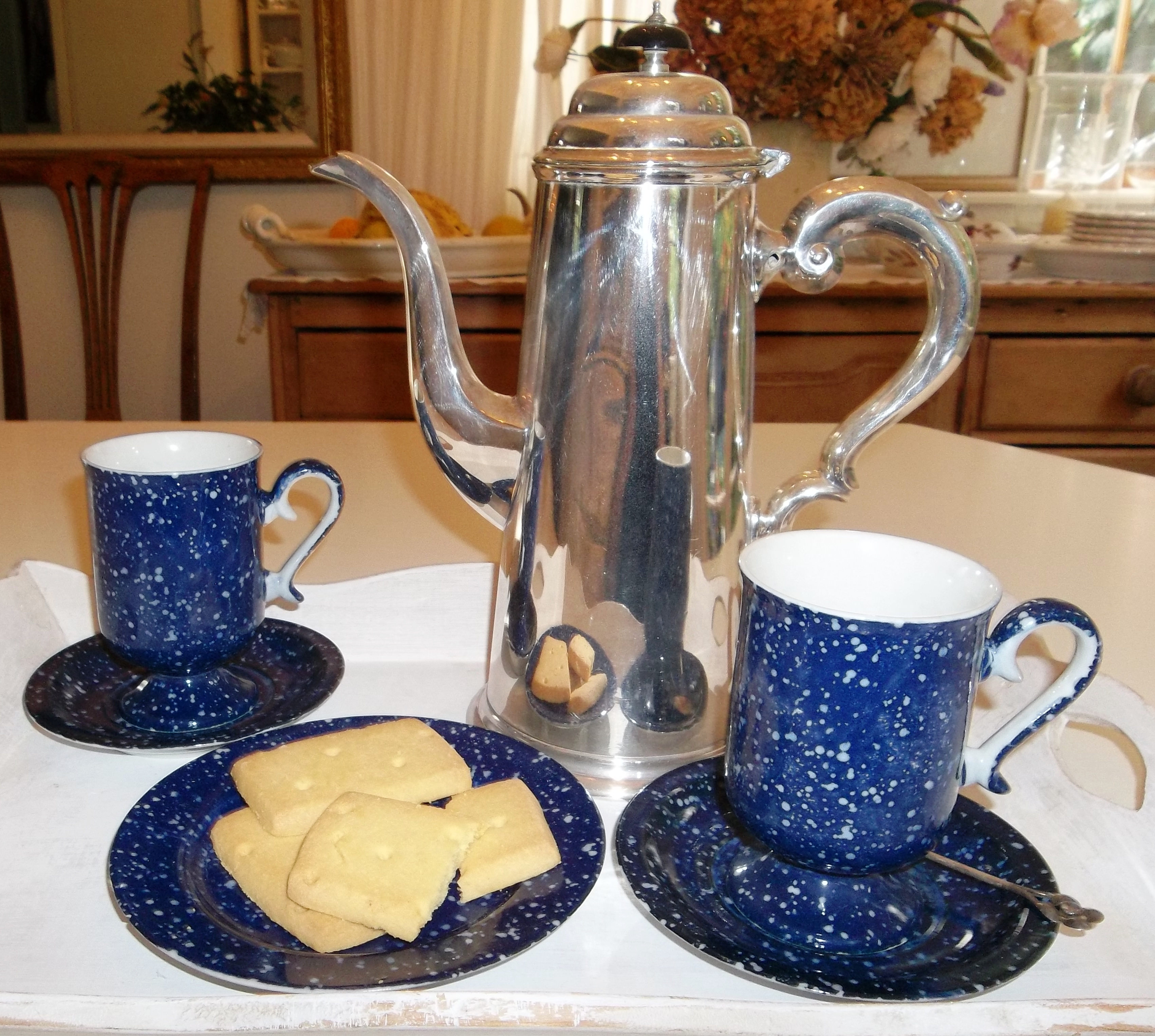
100_0834

I lost my wallet the other day. Going to pay for the dry cleaning, I found my big red Guy Laroche wallet given to me by my generous daughter had disappeared. Panic. The last place I’d had it was at the garden centre a mile away. And since I’d paid for the plants, the wallet must still be sitting in the trolley. More panic.

I ran through the things that mattered in my mind… credit cards … but ‘they’ wouldn’t know my pin number. Pain to have to cancel… forget them for now. Money? Who cared. But oh, my photographs of the grandchildren and moments caught in time that I wanted to remember… they were irreplaceable… and the two little love letters with terrible spelling and seven year old scrawls from them … one which I had found written in the diary they always used to keep when they came to stay with me… on this occasion they had decided that they would stay permanently and be home-schooled by me:

‘Five time a week I have fun. It can be so wonderful. I will like to say that I am writing this because it came from my hart and I kodn’t get it out of my hed….I hope that we can stay heer for homeschool it will be so fun and it will asol be fun because I love my granny so much it can be fun every day but I love staying heer and I like feeding the eels’… how could I replace a letter like that? My heart curled over at the thought of such a loss…

What else?  Oh … my collection of coffee cards. Each one stamped for every coffee I’d had, and nearly ready for a free coffee. The restaurant down by the river, the cafe in the garden where they make pottery, the lovely place where they also make hand-made chocolates, my stopping off place in town…

Zipping up my stiff upper lip I hurried back to the garden centre, and there was the red wallet, waiting for me at the office. (gardeners are good  people!) “It was my coffee cards I was worried about,” I explained when I picked it up, and everyone laughed because they knew how I felt.

I have travelled the length and breadth of one country, which shall remain nameless for fear of hurting millions of people’s feelings, looking for a decent cup of coffee. I finally found one in a far-flung cathedral crypt cafe.  I will drive for miles for the sake of that elusive perfect cup.

I know as soon as it’s put in front of me if it’s going to be a good one. The cream will be thick and won’t just dwindle into a thin froth when stirred. It will be smooth and not too creamy and not too strong. The most memorable coffee I’ve ever had was in an Italian restaurant in Melbourne.

Creating this ambrosia obviously came naturally to the maker… and in that search for the perfect cup, I’ve discovered that the maker actually matters. Yes, I know the machine has to be properly cleaned so the coffee doesn’t taste bitter, and the milk the right temperature, but there’s more to it than that. And the deciding factor in the quality of a cup of coffee for me, seems to be the person.

Everyone makes the coffee the same way on the same sort of machines I’m assured, but it doesn’t work out like that. Every barista is different and so is their coffee. A grumpy barista does not produce a good cup of coffee. A good cup of coffee is hand-crafted and a work of love, so I know if it’s going to be delicious by the quality of the barista’s smile. A nice person makes great coffee! They even do lovely patterns in the froth, like a Christmas tree at Christmas time, or a flower or smiley face at other times!

And what despair and thwarted desire when I arrive at a favourite coffee place to find a new member of staff, or the nice coffee person has taken off overseas, and we have to start all over again, with a learner driver as it were!  Or the tantalising times when the best coffee maker is busy cutting cake or sorting spoons, and not at her post, and I have to make do with a cup which I know won’t be as good as hers.  C’est la vie, but coffee is so much more than beans, milk and water!

And when the perfect coffee arrives, what sybaritic pleasure – the delicate sinking of the spoon into the froth, and a gentle stirring. Sometimes a fragrant teaspoon of coffee crystals for the sheer pleasure of stirring and dissolving them in the glorious liquid. And then a sip, and a contented settling into satisfaction as I slowly savour one of civilisation’s minor works of art.

Sadly the second cup never reaches the same level of pleasure as the first. And I’ve even read that scientific research has proved this to be true. No wonder it matters that that first cup is as good as it can get!


Food for Threadbare Gourmets

One of my favourite coffee places serves gingerbread with their coffee. I love it. To make it myself, I use two eggs, a cup of sugar, a cup of milk and a cup of golden syrup (the cup rinsed out with oil before measuring the syrup). Beat them together. Melt 225g butter. Mix two cups SR flour, two teasp or more of ground ginger, a teasp each of mixed spice and of cinnamon, and a teasp of baking soda into the egg mixture and then stir in the melted butter.

Pour into a loaf tin with the base lined with baking paper. Bake at 180 degrees for an hour. If you’re using a fan-bake oven test after 45 minutes. Let it cool in the tin for 30 minutes before turning out. You can ice it, but I like it cut into slices and spread with a little butter.

Food for Thought

“The artist’s task is to save the soul of mankind; and anything less is a dithering while Rome burns. If artists cannot find the way, then the way cannot be found.”
Terence McKenna  (1946 –  2000) was an American philosopher, ethnobotanist, lecturer, writer and author of several books.. He was also the creator of a mathematical theory of time based on patterns found in the I Ching which he termed novelty theory.[1]



65 Comments

Filed under cookery/recipes, culture, great days, happiness, humour, life/style, love, philosophy, The Sound of Water, Thoughts on writing and life

A rose is a rose is a hose !

100_0532

This was supposed to be a picture of a rose. When I developed it, it turned out to be a picture of a hose. I was shocked. How could I have been so one-eyed, and not seen what was shouting at me in a loud turquoise voice? I only see what I want to see, and eliminate even the obvious, it seems.

So when I went for my walk in the summer evening, I reminded myself to actually look, and not to assume or to expect. I wanted to see what was there, not what I thought was there. Down near the harbour where I usually turn around I always end up by a bougainvillaea sprawling through the trees, and just out its reach, a queen of the night holding her own. Braving bougainvillaea prickles, I can just reach the greenery-yallery sprigs of tiny flowerheads.

Two nights ago I broke one off and carried it back with me, sniffing the glorious fragrance, and ending up sitting on the warm marble bench in the cemetery at the other end of the peninsula, still smelling the sweet blossoms. I did what I’d never thought of doing before, and took it in and put it in a glass in the bed-room. The scent filled the whole room, and whenever I turned over in my sleep, the scent was drifting past.

The next day the tiny pale green flowers closed up, and the sprig sat nondescriptly on the window- sill all day, before bursting into glorious scent in the evening again. So now I plan to keep a permanent supply of these modest blossoms that don’t look big enough to be able to scent a whole room… The scent lasts for three nights I’ve discovered.

Walking back tonight with a fresh sprig of blossom, I passed a big shrub on the road where it dips and there’s a muddy spring.  Before now I’ve smelt its fragrance, but not given it a passing glance. Its reputation as a deadly poison and hallucinogen had somehow got in the way of me actually seeing this innocent plant. Tonight I looked at it, and ended up gently holding one incredibly beautiful flower-head after another, each one slightly different, gazing at their two layers of frilly white petals, and seeing deep inside the long white tube, white stamens pushing their way up to the light. The pendulous buds are so yellow it’s a surprise that the flowers are so white

The slender pale green calyx was smooth and soft and somehow tender to touch and to hold, and ended where the green- veined white trumpet – shaped flower began. Its ugly official name is brugmansia, but its folk name is angels trumpets. Angels trumpets spread their scent so far that long before I get there I can smell them.

Enchanted now with the idea of white scented flowers, I noticed the exquisite waxy looking candle-shaped buds of the king magnolia further down the road, the dark shiny leaves supporting each smooth creamy bud like a candlestick. Only one flower had opened, but it was enough. The scent of just one flower wafted past me.

I walked down the long drive to some friends’ house, knowing they were not there, but that they wouldn’t mind me visiting the frangipani plant flourishing by their veranda. The scent of frangipani takes me back to Singapore when it was still an eastern city and I was a girl, where all the alleys were hung with long bamboo poles suspended from every window on each floor, drying thin cotton tropical clothes in the brilliant un-ending sunshine.

We were staying in a hotel just around the corner from the famous Raffles Hotel, and the entrance was flanked with rows of frangipani trees.  Their fragrance followed us into the hotel courtyard and drifted in through the big open bedroom windows where we slept with no air conditioners, but beneath draped mosquito nets.

And when the velvet tropical night had fallen promptly at six thirty, every night in the darkness I would look down from the bedroom and see small groups of people squatting on the pavement in a circle. They would have tiny flickering lights and little spirit stoves in their midst to cook their dinner, delicious smells rising tantalisingly through the frangipanis, and I would hear their soft chatter and their laughter.

There were no blossoms on the frangipani growing here in New Zealand… wrong time of year perhaps. Back home, there was one white gardenia open.  I savoured the perfume before bringing it inside and putting it in a shallow bowl, floating on the water. So though no angels trumpets, I have queen of the night, gardenia and creamy honeysuckle from the porch scenting the house – even the names are poetry.

I don’t know whether I did what I intended when I began my walk, or whether I saw what was really there, but just by looking – truly looking at the beautiful angels trumpets – unnoticed before –  the walk turned into something else – a successful quest for white scented flowers. And like all successful quests, that was good enough.

And I wonder if this is how life is… we set off in one direction and find that imperceptibly we’ve drifted down other unsuspected paths; and looking back, we see that it was the perfect journey, and our travelling had a purpose, and was not random at all.


Food for Threadbare Gourmets

Friends for dinner before they left after the summer holiday to go back to the city. On a summer evening cold food seemed appropriate. So we had chicken with curry mayonnaise on rice salad. The cooked chicken chopped and mixed into a bowl of good bought mayonnaise, with about a big tablesp of golden syrup and desert sopn of curry powder to taste… I taste until I like it. Stir through enough cream to make it a soft consistency to stick to the chicken.

Cold basmati rice is jollied up with a vinaigrette dressing with salt, plenty of freshly ground black pepper, mustard, and sugar. Add to the rice generous helpings both of peas and sultanas soaked in boiling water, lots of crunchy chopped almonds lightly toasted in a frying pan, and lots of chopped parsley. Nice with a salad and chilled pinot gris .

In deference to our French connections we now have the cheese course before the pudding! This was some of our plums cooked to Nigella’s lovely recipe in red wine, one star anise, two cloves, teasp of cinnamon and a bay leaf, plus honey to taste. We had them with a mix of plain yogurt, whipped cream and runny honey stirred gently together, and a little shortbread biscuit.


Food for thought

That mighty power that sways the tides and works the million miracles of spring is ranged forever on the side of love.

The writer: known only to God .  Seen on an embroidered sampler hanging over a bedroom fireplace in an English cottage


73 Comments

Filed under cookery/recipes, flowers, food, gardens, great days, happiness, life/style, love, perfume, spiritual, Thoughts on writing and life, Uncategorized

We’re all born brainy !

100_0108When Catherine Windsor aka Kate Middleton drove away from hospital the other week with her day old baby she did an interesting thing. She waved to the ecstatic crowds with her left hand, but her right hand was resting gently on the baby’s stomach as he lay in his car seat for the first time in his short life. She was so tuned in to her baby that she knew instinctively not to let go physical contact with him, but to re-assure him with her touch. It was rather beautiful, and I wished that all babies could have had that gentle bonding with their parents, meaning I wished that all babies could be secure and happy!

I find it incredible that we all, from day one, possess nearly all the neurons in the brain that we will ever have – nerve cells to you and me – even though most are not yet connected in networks. And this connecting process is so rapid in the first year, that by twelve months, the baby’s brain is close to the adult brain. Sound, sight, touch, taste and smell are the senses through which from birth to one year we learn about the world, usually through playing.

From eighteen months to three years, when the brain is at its most active, children are like sponges, soaking up words, information and new skills. It’s amazing to me that between the ages of eighteen months and three, the toddler’s brain is twice as active as the adult brain.

And this is also when the structures of the brain that are sensitive to language and social-emotional responses develop, while motor development, or physical skills are developing at a rapid pace too.

When we actually look at what babies learn to do in those first few years of life, the range of skills, physical, mental and emotional is awe-inspiring. By the time children reach three to six years, they enter the fastest growth period for the frontal lobe networks, including emotional development, speed of processing, memory and problem solving. By six years, the brain is at ninety per cent of its adult weight.

And at the same time babies are learning how to be people! Modern research has shown that when babies are happy, talked to, sung to, cuddled, included, and have lots of eye contact, what are known in neuropsychology as the “ the hormones of loving connection” nourish the brain and stimulate the growth of connections in the regions of the brain to do with emotions. The simple things that loving parents do with their babies, help them to grow into considerate, loving and confident people from the very beginning.

This nourishment for the emotional centres of the growing brains makes babies feel secure and happy, and means they tend to be more independent, confident, more resilient, empathetic and caring. Babies who are comforted when they’re upset, grow up knowing that nothing is really a disaster, so they are the ones who don’t panic or go into despair when things go wrong.

Because they learned when they were little that everything passes, they can cope. Adults who didn’t get this sort of  supportive parenting tend to re-act to stress with behaviour like flying off the handle, losing their temper, blaming other people, or going into despair and depression -because they grew up with a lot of fear and no faith that life would support them.

Researchers now know that when a baby is left to cry, cortisol levels rise in the brain. If the baby is lovingly comforted after a stressful incident, the body absorbs the excess cortisol. But if the stress happens regularly the cortisol levels remain high and become toxic to the brain cells. Cortisol can cause damage to the emotional centres of the brain, and if this happens regularly children grow up prone to anxiety, anger and depression. The old advice to leave a baby to cry has meant many insecure and sad children, and sometimes, angry violent adults.

Enlightened child experts now feel that this deprivation of loving attention, comfort and understanding of a baby is responsible for many problems in older children – problems ranging from ADHD, depression, panic attacks, phobias, eating disorders, anxiety and substance abuse. So children and young adults with these problems are not innately troublesome or born with a pre-disposition to these problems. They simply didn’t get enough emotional food for the brain – those hormones of loving connection.

I researched this stuff for an article in a parenting magazine I write for. It blew me away to realise what intelligence and potential are already contained within those tiny wizened little day-old babies. It’s so easy to think that just because they can’t talk or communicate with us yet, that they don’t have the thoughts and feelings that research shows us they do. Maybe it’s we who need to work on our communication skills, rather than the babies, who seem to be doing huge amounts of unseen work and learning while we change their nappies and feed them and put them to sleep.

They are so hard-wired to learn and absorb and connect with our world, that as long as we cuddle and talk and sing to them, they seem to do most of the work themselves. Babies are such miracles of complexity and potential, and each single one, wherever it is born in the world, has all this potential and complexity. And yet at this moment we all know too, that only some babies will have the chance to become who they were born to be.

Food for Threadbare Gourmets

When I want to spoil my grandchildren – and that is all the time – I make them their favourite pudding. For one it’s chocolate mousse, for another a family favourite we call pink pudding, and for everyone – a lemon meringue tart.

I usually make the pastry case ahead, so all there is to do later is to squeeze two lemons and make up their juice to half a pint with water. Use some of the liquid to mix with an ounce of cornflour, and boil the rest before stirring it on the cornflour mixture. In a pan, boil it for three minutes, then stir in an ounce of butter, an ounce of sugar and the grated rind from the two lemons. Cool slightly, add three egg yolks and pour this mixture into the tart case. Bake in a moderate oven for about 25 minutes or until set.

Whisk the egg whites until stiff, gently fold in three ounces of castor sugar, and pile onto the lemon tart. Dredge with castor sugar and return to a cool oven until the meringue is set and slightly browned.

 Food for thought

If you have not often felt the joy of doing a kind act, you have neglected much, and most of all yourself.   Anonymous


76 Comments

Filed under babies, consciousness, cookery/recipes, family, great days, happiness, human potential, The Sound of Water, Thoughts on writing and life, Uncategorized

Places in the Heart

100_0223The printed word has a lot to answer for and has changed the course of many lives.

On this occasion when it changed mine, I was cursorily scanning the personal columns of the Daily Telegraph looking for somewhere to live. My husband was away with his regiment on manoeuvres or practise camp, and I was filling in the trying gap between the baby’s ten o’clock and two o’clock feed.

We had to find somewhere to live for a year, and this night I found a few lines offering a country house in the right area for nearly the right price – for a year. The next day I rang. The owner was delighted – he was off to Greenwich Naval College and wanted someone to keep his house warm. “Chudor, ya’ know,” he told me, listing the bedrooms… We arranged a time that weekend to inspect the place, and when my husband returned the next day he went off on what he called a recce. He came back looking rather panic-stricken. “It’s bigger than Hampton Court,” he said, “and looks like it too, all red brick.”  Undaunted, I persevered, rather fancying the idea of a stately home. We’d never be able to heat it, he argued, and then I saw the light – with an eighteen month old and a four month old, that mattered.

So I returned to the personal columns, and struck gold a week later. “This one sounds OK”, I said,” right area, right rent, and only five bedrooms” (my ideas had expanded considerably since my brush with Layer Marney Towers the previous week). I rang the owner – same story – wanted someone to live in it for a year, this time while he wound up his boat building business in East Anglia. “You’ll love it,” he said, “there’s the garden bedroom, the oak bedroom, the red bedroom, the four poster bedroom, and the end bedroom…” My husband panicked again.

But a few days later we set off on a light June evening driving through quiet Essex lanes, with honeysuckle and dog roses winding in among the high hazel, hawthorn and elderberry hedges. We found Newney Hall dreaming between fields and hedgerows, a small lake – which in the twilight was almost black, and edged with a tangle of lilacs and shrubs – lying between it and the road. The house, Tudor red brick, and Essex pantiles on the upper floor with casement windows, stretched beyond the lake, reaching into a circular lawn with a cedar in the middle. Beyond that, a walled orchard.

As we walked down the gravel drive I could hear the sounds of music coming from the house. A knock on the door revealed a rather vague looking woman with a viola tucked under one arm, and the bow held in her other, as though she could hardly bear to stop between bars to open the door. “George!” she called imperiously, and the seigneur hurried to welcome us. Within minutes the deal was done, and we moved in a week or so later.

The house had been built in the time of Edward the Sixth, Henry the Eighth’s son, and all the land around had been gifted to Wadham College, Oxford in the same reign, so nothing in the landscape had changed for over four hundred years. The fields and trees, lanes and barns were untouched by time, and since there was no sound of traffic, no jet planes practising, and only occasionally the sound of a distant tractor, the whole place lay wrapped in an almost primeval peace. There was no other house in sight.

Wood pigeons cooed incessantly somewhere in the trees, cocooning us in their summer sounds, the donkey in the next field brayed occasionally, the cows mooed as they shambled past to the milking shed at the farm beyond the house. The old red-tiled barns, grain sheds on staddle stones, and stables were laid out around a square, where the cows sheltered in winter. I walked across to the cow- shed every day with a baby on my hip, my eighteen month old trotting beside me, and carrying a big cream- ware jug to collect my fresh milk. We also went there to pick up new-laid eggs from the farmer.

The house was built from huge beams, and filled in between them with a mixture of mud and straw. They were plastered over, and the walls were about three feet thick, with deep window ledges where I put books and vases of flowers. Two old aunts had been living in the house before expiring and gifting it to George. In the mid-sixties they were over ninety, and the house was unchanged since the days when they had been born back in the 1870’s. So was the dust. When I moved an antique chest of drawers to dust behind it, a thrush disintegrated into fine powder.

I spring cleaned from top to bottom, washed curtains, scrubbed floors, polished Sheraton  tables and dusted Chippendale chairs. It was like living in a time warp. No heating, a gas stove so old I’d never seen one like it, and neither had the serviceman when he came. If it’s working, best leave it, he said, shaking his head. I had a big kitchen with a big square scrubbed table in the middle, red and white checked tile floor which needed scrubbing every week, and a real larder with marble slab. My only gadgets a pop-up toaster and a wooden spoon!

At weekends a stream of friends came through, a childhood friend getting used to having MS, school friends with their babies and husbands, army friends with theirs, a friend of my husband, shell- shocked after being court- martialled – a Polish/ French student who had nowhere to go, a girl who was pregnant and needed somewhere to stay – she moved on, didn’t like my food, I think – cousins, godparents, in-laws, family… and then back to primeval peace during the week.

Once I dumped his steak and kidney pudding and vegetables on my husband’s head. Mistake. Apart from reprisals, lots of cleaning up to do. And later, I lay in the long sweet smelling grass in the orchard, where I’d seen the red fox glide through, and cried my eyes out under the late evening summer sky. At twenty six I thought no-one would ever love me again.

Not long after, we left that beautiful house to go to Hongkong, where the hectic life and chaos of those times obliterated the memories of that year in the country. But for years I have dreamt of it. In my dreams it’s bigger, and there are many more rooms. The furniture is more elegant and the rooms more beautiful. There is one room which is filled with such treasures that I only go into it sometimes… it feels sacred. I have no idea why I dream so often of this house I lived in for a short year so long ago. I don’t know what it symbolizes. I’ve lived in other houses and places just as magical…  no doubt a psychologist would mine some profound Jungian theory from these dreams, delving into the unconscious and maybe coming up with an archetype!

Daphne du Maurier was obsessed with Menabilly the house she immortalised as Manderley in ‘Rebecca’,  and wrote about her dreams of it, while another writer, Elizabeth Bowen, clung to the memories of her ancestral home in Ireland, Bowen House. Evelyn Waugh immortalised Lygon Hall in his book ‘Brideshead Revisited’.  Like du Maurier writing about Manderley, Waugh’s writing about Brideshead breathes love, nostalgia and an ache, a longing to return.

It isn’t just writers who long for these enchanted places from the past. It’s as though the romance of their lost beauty, surrounded by dreaming country-side, grows tendrils into the heart which can never be untangled. …  and this is not just the experience of a few. For some, it’s the house by the sea, for others, the log – hut in the wood… a longing perhaps for memories of happiness and holidays past, innocent times of laughter and love, for the sweet days of years gone by. It rarely seems to be a house in town that arouses these emotions … mostly these lost demesnes are part of an idyllic landscape. As the years go by, these landscapes become almost mythical places of perfection…

And once we’ve left, we can only return in our dreams. Though we have left something of ourselves behind in these special places, it is a different self, a younger self seeing the world as it was then. To return in the physical is to invite dis-illusion or disappointment. Things change, new owners improve on the simplicity that we treasured, the light is harsher, the house smaller, the garden neglected or smartened, trees and shrubs overgrown or cut down, the lake stagnant, and nothing is the same. So memories and dreams are the best we can have. And they are precious, and time cannot warp them or fade them. These are our private, personal paradises – our places in the heart.


Food for Threadbare Gourmets

Friend popped in for a girl’s drink. I still had some delectable rose from lunch together a couple of days before, so she came to help me finish it. Too late to get to the shops, I found I had nothing to nibble… no thin brown bread for smoked salmon and lemon juice, so blinis  were fished out of the deep freeze, but then I had no cream cheese.

So I improvised by hard boiling a couple of eggs, slicing them thinly, and placing a slice on each buttered blini. Next layer was mayonnaise on the eggs, and lastly the salmon with a sprinkling of parsley. I cut the salmon in two pieces for each blini, so it was easy to bite them without wrecking the whole edifice!  They went down a treat, and we had a happy hour laughing at ourselves and the world, before returning to the inescapable task of feeding our always hungry husbands.


Food for Thought

“’One pure act of acceptance is worth more than a hundred thousand exercises of one’s will,’ since it is a state of interior silence and quietude from which at the right time, the right action emerges without any volition.”

From ‘Taoism – The Way of the Mystic’  by Jean C Cooper 1905 – 1999  Born in China to missionaries, she grew up learning about Confucianism, Taoism and Buddhism from her amahs. After studying philosophy at St Andrews, Edinbrugh, and lecturing in comparative religions, she lived with her husband in a remote Cumberland home (the lake district) where she had to generate her own electricity from a stream.


70 Comments

Filed under birds, cookery/recipes, family, great days, happiness, life/style, love, spiritual, The Sound of Water, Thoughts on writing and life, Uncategorized, village life

Their many-splendoured thing

0001138To get to the truth of this love story was a journey through two thousand years of male chauvinism and prejudice.

I’ve discovered that the story of Caesar and Cleopatra’s love has been distorted for centuries, belittled, and encrusted with calumnies of Cleopatra. Even Caesar’s twentieth century biographers seem to have had their judgement warped and their vision dulled by some unconscious hostility towards one of the great charmers of history – the last Queen of Egypt.

 I think I could have fallen in love with Caesar. He was a strikingly good looking man with sensitive features and piercing eyes according to contemporary sources; a brilliant orator -second only to Cicero – who kept his legions loyal both with his oratory and his generosity to them, getting land for them to settle on, and doubling their pay. He was a prodigious horseman with enormous stamina and a reputation for travelling a hundred miles a day in a light carriage in those days on those roads, while writing letters and reports to Rome – sounds like Napoleon…

 Caesar’s Gallic Wars may have been the torment of generations of school-children (‘ Gaul was divided into three parts,’ etc) but they are esteemed for their historic record, and admired for their taut elegant Latin prose style. He was intelligent, and tackled Rome’s chronic debt problems and began to find a solution for the huge under-class of unemployed people in Rome. And he was one of the greatest generals in history.

 When he met Cleopatra, she’d been queen since she was fourteen, but had just been deposed by her younger brother and his power brokers. Young Ptolomy’s men had seized Pompey, Caesar’s enemy, when he had fled to Egypt, and according to some accounts, beheaded him then and there in front of his wife and children. When Caesar arrived in Alexandria two days later to deal with Pompey, Ptolomy presented him with his enemy’s head, thinking to gain his favour. But Caesar was disgusted and so antagonised the Egyptians.

 Twenty-one year old Cleopatra had decided that she would get Caesar on her side to win back her crown. Barred from Alexandria by her brother, she sailed up to Caesar’s palace at dusk. A servant named Appollodorus, the Sicilian, carried her in a carpet past Ptolomy’s guards, and in this exotic way she met the great Roman general. What courage! What audacity!Who wouldn’t fall for such a high-spirited and ravishing young creature? Fifty-two year old Caesar was enchanted.

 And Cleopatra?  No contest! We all know why, thanks to Henry Kissinger’s helpful advice to his aide  – “ you’d have no way of knowing, Pederson, but power is the greatest aphrodisiac,”  – and so it was with Caesar. Cleopatra stayed there in the palace with him, and when a few months later, his legions arrived from Italy, he defeated the Egyptians at a battle on the Nile, where Ptolomy was drowned.

 Caesar was a descendant of the mythical Aneas, who had fled the sack of Troy, popped in on Dido in Africa, and then left her, thereby bequeathing to us another of opera’s greatest songs,  ‘Dido’s Lament’, and finally ended up in Italy. The fabulously rich and beautiful Cleopatra was a descendant of one of Alexander the Great’s generals, who was Satrap governing Egypt when Alexander died. He proclaimed himself  Pharoah, and the Ptolomies reigned in Egypt for nearly three hundred years.

 They had continued to speak Greek throughout this time, though clever Cleopatra had actually taken the trouble to learn Egyptian. So it would have been no problem to converse with Caesar, since Greek would have been their common language, spoken by all educated people in those days.

 After Caesar had defeated her brother, he re-instated Cleopatra on the throne, and before rushing off to mop up the rest of Pompey’s supporters in Spain (he certainly got around) he spent several months cruising on the Nile with his beloved. They were accompanied by 400 craft, and the picture of them in my mind, reclining on cushioned couches under draped awnings, soft voices, perfumes, music and beauty all around them, makes me think of the words:

They live in such delight,

       Such pleasure and such play,

               As that to them a thousand years

                              Doth seem as yesterday.

 Then, while Caesar went rushing about his empire putting down riots and rebellions from the fall-out of his quarrel with Pompey – he spared his enemies, which meant trouble for him later – Cleopatra gave birth to his only son, called Caesarion. For the next two years, their love must have been sustained by relays of couriers delivering papyruses. It’s very hard to work out the chronology of their love affair as different commentators and historians dropped facts or fudged them; and they prefered to write that ‘Caesar aligned himself with her’, as though it was just political policy, rather than admit that he loved her.

 One of them says that when Caesar went back to Alexandria, he was putting down a remnant of Pompey’s force – really?  A handful of leaderless dissidents, hanging out in Egypt for two years, while the legions he had left behind to protect Cleopatra ignored them? Of course he had gone to see Cleopatra. This time she followed him to Rome with their baby and her young brother, technically her co-monarch. Taking him with her, meant that other factions couldn’t cause trouble back home on his behalf.

 Caesar installed his mistress in one of his villas. It caused a scandal of course. He was already married to Calpurnia, but clearly adored Cleopatra in spite of her detractors insinuating that she was not important to him. He had a gold statue of her made and placed in the temple of his ancestors. Cicero hated her, as did many others, who feared her influence over Caesar. But in spite of every historian’s attempts to write Cleopatra out of Caesar’s story, this one action shows the depths of his commitment to the fascinating Queen.

 As proof of this lack of commitment to her they say that he failed to make their son his heir. But why would he nominate a three- year- old illegitimate half- foreigner to run Rome, when he’d already named his adult great- nephew Octavian, who became Emperor Augustus? Historians also say that she “claimed” that Caesarion was Caesar’s – how insulting – at one stroke this implies she was promiscuous, and the child’s father unknown.

 A twentieth century biographer makes no mention of Cleopatra when he describes Caesar’s innovation of creating public libraries like the one attached to the Great Library of Alexandria. He also tells how Caesar used an Egyptian astronomer to re-organise the calendar, and institute the Julian Calendar, which was used throughout the western world for over fifteen hundred years. Gradually countries changed over to the slightly more accurate Gregorian calendar in the seventeenth century, but to do so caused riots in many countries. Russia didn’t change over until the Revolution in1918, and Berber Arabs and the monks of Mt Athos still use Caesar’s calendar.

 Despite the Egyptian astronomer, historians pretend this too had nothing to do with Cleopatra. The one thing they’re happy to sheet back to her, was that Caesar grew more dictatorial, which they claimed was due to her Ptolomy influence – not to the circumstances in Rome and his increasing age? At the end of two years, Caesar was assassinated, by enemies claiming that he was aiming for too much power. He died on the steps of the Senate on the Ides of March, 44BC.

Cleopatra fled back to Egypt. None of these heartless male historians ever credit her with a broken heart, but how could she not have been broken-hearted?  She and her lover had been together for four years. If Caesar had lived, where would the story have ended? Roman writers denigrated her and de-valued her place in Caesar’s heart, but admitted that her great beauty and her wit, charm and ‘sweetness in the tones of her voice,’ according to Plutarch, were legendary. “Brilliant to look upon and to listen to,” wrote another. Shakespeare had the famous last words: ‘Age shall not wither her, not custom stale her infinite variety’…

And when four years later, Mark Antony summoned her to meet him at Tarsus to answer for her loyalty to Caesar – at nearly thirty, and at the height of her radiant beauty – she famously pulled out all the stops for him; her life and her throne depended on it. Yet ten years on, the rather unreliable and vain-glorious Mark Anthony failed her, and she committed suicide rather than be dragged in chains through Rome as part of the Triumph of Mark Anthony’s enemy – Caesar’s great-nephew, Octavian.  Honesta mors turpi vita potior – an honourable death is better than a dishonourable  life – Roman historian Tacitus

 P. S. Seventeen- year old Caesarion was killed by Octavian – ‘too many Caesar’s’ –  thus proving, despite the sneers,  that he was Caesar’s son. Cleopatra’s twins and a son by Mark Anthony, were brought up by Octavia, Mark Anthony’s divorced wife – an act of generosity and goodness in the circumstances.

PPS   The poem comes from an old hymn called ‘Jerusalem, my happy home’. It was written circa 1580 by an anonymous Catholic priest and based on the writings of St Augustine in 400AD.


Food for Threadbare Gourmets

 Shopping for vegetables this morning, I saw some fresh cos lettuce. I don’t really like salads in winter, but promised myself a nice Caesar salad. It was only when I reached home, I realised the hilarious workings of my unconscious!

Anyway, we had one – this is my down home version: a few rashers of organic bacon chopped and fried. Some crisp croutons fried to golden brown. I either poach the eggs or boil them very lightly. I don’t use anchovies, as my husband doesn’t like them and the original recipe used some drops of Worcestershire sauce, which is what gives the faint anchovy flavour. Toss it all together, except for the egg and sprinkle with a good vinaigrette dressing which has some crushed garlic in it. Then add grated parmesan, which amalgamates with the dressing, and then with the egg yolk when the egg is added and broken. Delicious – even in winter!

 Food for Thought

Something going on here – after using the words below in a conversation with a friend the other day, I decided to put them on the end of this rather long blog – nice and short Food for Thought!  When I Googled to check who had written these words, I was astonished to find that they date from the same times as Julius Caesar!

If I am not for myself, then who will be for me? …. And if not now, when?”

Rabbi Hillel – Great Jewish teacher who lived at the same time as Julius Caesar and later, King Herod, dying in 10 AD.

The modern version is “If not me –who? If not now – when? “


48 Comments

Filed under cookery/recipes, culture, great days, history, life/style, love, philosophy, The Sound of Water, Thoughts on writing and life, Uncategorized

Cricketers, bridge-players and great white hunters

100_0183

These I have loved, to quote Rupert Brooke. I think I’m a serial monogamist – but didn’t dare put that in the title and invite a torrent of prurient spam into the file! Neither did I dare put ‘men’ in the title – that would have meant more Viagra ads.

I started young and can date the first love of my life back to age nine. Stuck in a London flat with two new parents, waiting to move north, bored with playing in the park and endless games of ludo, these two strange adults took us to the cinema one afternoon. ‘The Scarlet Pimpernel’ no less. My heart did a tumble – Leslie Howard alias Sir Percy Blakeney, standing, quizzing glass raised in one hand, one long leg in pantaloons and buckled shoe resting on a chair, lace cravat tumbling from his neck, and laughingly baiting his pursuers with his little ditty: “ They seek him here, they seek him there, those Frenchies seek him everywhere. Is he in heaven or is he in hell, that damned elusive Pimpernel?” Oh, his gaiety, his nonchalance, his recklessness…

My heart was his. I sought out Baroness Orxy’s Scarlet Pimpernel books and they sustained me for some years, until the glowing image dissolved when I found ‘Jane Eyre’. Mr Rochester!  He truly enslaved me. I read the book over and over, memorising every scene in which my (rather doubtful) hero figured. I found him terrifying and mesmerising. I used to terrify my dormitory at school too, sitting on the end of the bed in the dark, reciting the latest instalment of Charlotte Bronte’s homage to plain women and masterful men.

Mr Rochester’s black beauty faded on board ship to Malaya, when I discovered that Cupid really could throw darts. I was fourteen the night we boarded at Southampton, and my father suggested that he and I take a stroll around the decks to watch the bustle of embarkation. As we passed an open window where a posse of young naval officers were making merry, one of them glanced out of the window. A pair of deep blue eyes looked straight into mine, and for the rest of the five week voyage I thought of nothing else. I craned to see the possessor of these magnetic blue eyes whenever we were all in the dining room, and pined between meals.

I rejoiced when we were delayed in the Suez Canal for a few extra days after a crashed oil tanker blocked our passage. I glowed when I found him playing tennis at Mount Lavinia in Columbo while we had afternoon tea. I never spoke to him. I cried for days when we landed in Singapore and he sailed on to Hong Kong, immaculate and oblivious in his white tropical uniform. I think my parents must have gone mad with irritation, never knowing when I was going to dissolve into what they probably thought were hormonal tears. My secret was locked in my non-existent bosom. I never even knew his name.

Then along came ‘Gone with the Wind. My father, knowing nothing of my amorous past, assumed I would come home crazy about Clark Gable, and decided to put a spoke in Mr Gables ‘s wheels before I left, by telling me to watch how his ears waggled when he spoke ( they did!) This malicious dart fell harmlessly by the way. There was my new/old love, Ashley Wilkes, with his brooding blue eyes, his noble brow, his elegance and his honour! I watched ‘Gone With The Wind eleven times before I was over Leslie Howard. My father was disgusted that I would love such a wet!

But time has revealed that not only was he a talented stage actor, playwright and producer, but also a patriotic man who left comfortable Hollywood to return to war-time England, and who died when the Luftwaffe shot down his plane on a flight outside the war zone. He was reputed to have been on an intelligence mission. He also had a reputation for womanising (who doesn’t?). He himself said he: “didn’t chase women… but couldn’t always be bothered to run away”.

By the time I’d worked through the eleven viewings of ‘Gone With The Wind’ in various parts of the world, some years had passed, and I then became pre-occupied with flesh and blood. But come re-marriage, contentment and a deeper appreciation of the beauty of men, I became a serial lover again.

My first new love was the noted Pakistani cricketer, Sarfraz Nawaz, who discovered ‘reverse swing’, and taught it to Imran Khan and other Pakistani cricketing greats. But I loved Sarfraz before he achieved greatness ( you could almost say I discovered him!) and having seen him by chance on TV while my new husband was watching a test match, I demanded to be taken to the cricket to see him live.

This was the early to mid-seventies when great – or rather infamous events were a-foot in Washington, and a tall gentleman with a twinkle in his eye shot to fame, as they say. Archibald Cox. Some may remember him. I loved him for his rumpled suits, fine intelligence and un-assailable integrity. My exasperated husband triumphantly waved a wire photo he’d found in the office, hoping to break his spell. But I thought Archibald Cox lolling in his  chair with his long legs propped on his desk, and the leather soles of his shoes facing the camera – sporting two large holes – was irresistible.

If I had loathed Nixon before, my hatred knew no bounds when he famously sacked my man, and I never saw him again. So that left me with Andrew Young, (another groan from husband) Ambassador to the UN. I looked at a recent photo of this interesting man, and it just didn’t do justice to his youthful fire and fierce good looks. But even he couldn’t compete with that spectacular entrance of Omar Sharif emerging from the desert on his camel, jingling and shimmering and enigmatic in ‘Lawrence of Arabia’.

When he re-appeared as Dr Zhivago that was it! My husband was as usual, chagrined, and assured me that all this gorgeous man ever did was to play bridge… he was brilliant apparently  and wrote books and newspaper columns about a subject that is a closed book to me.

This was disappointing, so for a few years I transferred my affections to Robert Redford as the handsome, eccentric and very decent great white hunter Denis Finch Hatton in ‘Out of Africa’… he had a lot in common with Sir Percy Blakeney and Ashley Wilkes.

But like all my other loves, Robert Redford is aging, and is not the glorious young man he once was. So in my twilight years, my loves have been fewer, and indeed, I thought my love life was over, until we went on a cruise a few years ago. Reader – to quote Charlotte Bronte – I, like every the woman on our dining table, fell hopelessly in love with our handsome young Indian waiter.

All the husbands ground their teeth, knowing they couldn’t compete with this charming clever and exquisite young man. He dispensed sour green apples to a woman he’d noticed hovering on the edge of sea- sickness, cherished an autistic teenage girl, attended to each of us as though we were each the only woman in his life, and in my eyes, at least, achieved perfection when I discovered that he was deeply spiritual. He was a devout Hindu, a vegetarian and a man who saw all religions as having the same value. In other words – a good man.

Well, he sailed away of course, and I now face the unpalatable truth that men my own age are not figures of romance. But I don’t want to become a cougar … a term I’m told which describes older women who pursue younger men. So I will just have to fall back on the sweet memories of my youth… though you never know… they say the party isn’t over till the fat lady sings…  I mean the slightly over-weight lady… oh – that could be me!

Food for Threadbare Gourmets

The most useful thing I learned when I was in the army was how to keep peeled potatoes fresh. Sitting in the cook house at night as a recruit peeling hundred of potatoes for all the hundreds of women the next day, I had to put a knob of clean coal in the water to keep the potatoes fresh and the water clear. The tragedy of my life is that I haven’t seen coal for years, so can’t use this pearl of wisdom myself…

Food for Thought

While we wonder what will happen next in North Korea, I found this, written nearly two hundred years ago, and it seems that nothing has changed since then.  “What experience and history teach us is this – that nations and governments have never learned anything from history, or acted upon any lessons they might have drawn from it.

Georg Wilhelm Friedrich Hegel. 1779 – 1831 Influential German philosopher.

37 Comments

Filed under cookery/recipes, films, food, great days, life/style, love, The Sound of Water, Thoughts on writing and life, Uncategorized

Carrying On With The Army Again (part 4)

100_0179

This is the continuing story of ‘my brilliant career’ in the army! I had returned from my regime of prayer and fasting, otherwise known as a Religious Leadership course, none the wiser, but many times lighter from the in-edible food provided along with regular religious services by the Army Chaplain’s Department..

Back at my all women unit I prepared for my next adventure, and another opportunity to meet the young men we yearned to fall in love with, but never got within coo-ee of. Going on a  course was the only opportunity of meeting the opposite sex, so this time I’d sent my name in for a fire fighting course.

The instructions told me to bring a boiler suit. This did not bode well for a non-athletic person, but I accordingly went to the quarter-master, a grim north countrywoman who’d served all through World War Two, and didn’t approve of frivolous young things like me. Accordingly she issued me with a khaki boiler suit with its outrageous measurements listed on a label stitched to my bottom. It was so huge I had to wear a belt round the middle of my newly skinny frame to keep it up, and was, as I assumed the quartermaster had intended, a perfect antidote to any masculine interest!

Arriving at the squalid house where a harpy ripped off the army by giving us abominable food and beds, I walked into the ante room, where a group of attractive -looking young men stopped talking and sat in frozen silence, while I wondered what on earth to say or do. Luckily an old boy friend arrived and took me out to dinner (my last decent food for a fortnight), and told me that while he waited for me to go and change, one of these young men addressed the room, and declaimed: “What was that!”

The next day we all gathered at the Maidstone Fire Station. We began with a long introductory lecture, the gist of which I found hard to follow, as the Chief Fire Officer repeatedly emphasized that there would be no blue jokes and sexual innuendo. Every time these remarks were re-iterated, the various young men stole sideways looks at me, and I sat there completely mystified. But after a few days of lectures, when the practical work began, light dawned. From now on, as we reeled hoses, and ran up and down directing icy water, and manhandled female couplings, man holes, male-female connections and a number of other technical terms, I realised what these kindly firemen had tried to spare me!

Every day when we staggered back to our digs on freezing foggy December afternoons, I for one, was absolutely shattered with reeling and running and sliding down greasy poles and even climbing out of a tower on what seemed to be a piece of white cotton, and being lowered to the ground. (where my knees gave way from the aftermath of terror, and I fell on them).

I made sure I was first into the bathroom to warm up with a hot bath, and it was only on the last day, I discovered that the extreme chivalry of my fellow sufferers had caused them to hide from me the fact that that was the only hot bath in the cistern. There was no more hot water until the next morning when I had my early morning bath! On the last day too, the lovely men at the Fire Brigade staged a ceremony at which they gave me their badge mounted on a piece of leather for me to wear as a medal, and said I could come back and join their brigade any time I wanted.

Back to my nunnery at the depot, I thankfully forgot about fire fighting, and never gave it another thought. Two years later, when I had unexpectedly been made a captain at the early age of twenty two, I was posted with this rank to another all-women unit – the training centre! Did they have something against me at the War Office?

When I was taking over the job from a much older and rather sporty woman who drove the latest model expensive sports car – a cream TR4 –  she pointed out that I would also be taking over as fire officer from her as well.  “Did you do that awful course at Maidstone?” she asked in her clipped tones.  I nodded, feeling slightly intimidated by this very assured person. “Some bloody Amazon had done it just before me,” she continued, “and I was expected to run around and climb out of towers and generally behave as though I was on an outward bound course.”

Good heavens, I thought to myself. That must have been me. Didn’t I have to do all those hefty horrendous fire- fighting exercises? No wonder the Maidstone Fire Brigade had taken me to their hearts, given me their badge and offered me a job! My fire fighting duties here at Liphook were not too onerous, and consisted of regularly inspecting the seven rather dim General Duties soldiers, allotted to us to do any heavy work. When lined up for inspection they looked rather like the seven dwarfs. Our fire-fighting equipment consisted of rows of three red – painted galvanised steel fire-buckets filled with sand lined up outside each hut, along with a stirrup pump. Naturally we made sure that the ancient stirrup pumps were in good working order!

The camp was surrounded by bracken covered heath which often caught fire, and I would hear the Liphook volunteer fire fighters sounding their siren. One night I turned over hearing the siren again, and was just sleepily thinking that it sounded much nearer than usual, when my bedroom door flew open, and there stood my stout colonel, fearsome in riding breeches and a duffle coat flung on over her pyjamas. “That’s Our fire alarm,” she barked!

To be continued ! Three previous instalments of this account of my brilliant army career are in the archives under: ‘A Soldiers Life is Terrible Hard’ and: ‘Carrying on with the Army.’


Food for Threadbare Gourmets


I’ve spent the Easter break knocking up dinners, lunches and morning teas for relays of family and friends who’ve come every day of the holidays. At the beginning of the holiday I baked a fruit cake which would last for the whole holiday, moist and too filling to gobble up.

It’s simplicity itself. The basic recipe is one pound of mixed fruit, half a pound of butter and a bit less of sugar, three eggs, half a pound of flour, pinch of salt and vanilla. You simmer the fruit in a little water until soft, then add sugar, butter, essence and salt, and when cool add the beaten eggs and the flour. Bake in a medium to slow oven for an hour or until cooked.

I’ve never made the basic recipe. I add extra fruit, things like chopped dates, finely chopped figs and sometimes prunes, a spoonful of fig and ginger jam or apricot, I use brown sugar, treacle or golden syrup instead of some of the sugar, and sometimes add spices and nutmeg, or orange and lemon juice…ginger marmalade…  sometimes ground almonds, or oatmeal or whole meal flour – anything that I think will be delicious! It never tastes the same, but it’s always moist and more-ish. I dredge the top with sugar, so it has a nice crisp sweet top. Simple!


Food for Thought

Let all the strains of joy mingle in my last song – the joy that makes the earth flow over in the riotous excess of the grass, the joy that sets the twin brothers, life and death, dancing over the wide world, the joy that sweeps in with the tempest, shaking and waking all life with laughter, the joy that sits still with its tears on the open lotus of pain, and the joy that throws everything it has upon the dust, and knows not a word.

Rabindranath Tagore, the very sound of whose name is poetry, is one of my favourite poets. He was a Bengali, and lived from 1861 to 1941


43 Comments

Filed under army, british soldiers, cookery/recipes, great days, humour, life/style, love, poetry, The Sound of Water, Thoughts on writing and life, Uncategorized

The Pursuit of Love and Other Interests!


100_0233

When I was twenty and longing to fall in love, I came across a book that seemed made for me. It was called The Pursuit of Love.

But far from being chick-lit (a term which hadn’t been invented then) it was an elegant, deliciously funny work of literature. Back then with no internet, and no Wikipedia, it was almost impossible to find out anything about the writer, Nancy Mitford, but when her next book appeared, I was waiting with eager open hands. Since however, a whole library of books has been written about Nancy Mitford and her extraordinary six sisters.

Actually The Pursuit of Love has wickedly funny descriptions of most of her sisters, and her parents too. Uncle Mathew – her father – having passed into legend. Nancy was the eldest, and had a series of love affairs and a miserable marriage until she met General de Gaulle’s chef de mission, a philanderer called Gaston de Palewski. She fell hopelessly in love with him, and after the war moved to Paris to be near him, swallowing his other affairs with difficulty. She went on to write a series of witty and sparkling best-sellers, including historical books. She was probably the most brilliant of the sisters.

Pam, next in line, was superficially the least interesting of the sisters – her idea of bliss was working a farm and milking. Poet John Betjeman wanted to marry her, and wrote poetry about her, but she ended up marrying a famous physicist, millionaire and amateur jockey, who won the Grand National, the most famous race in England, and also became a much decorated RAF pilot. There’s no room here for more of his extraordinary life and serial marriages! But when their fourteen year old marriage broke up, Pam became a lesbian, a farmer, bred dogs, and practised re-cyling so obsessively that she was the laugh of the family – but in hindsight, may have been one of the first conservationists.

Diana, the next, was a great beauty, and like all her sisters possessed of great intelligence and spirit. Married for a couple of years to a rich Guinness heir, she threw it all away for love of Sir Oswald Moseley, another philanderer, who was ravishing not only his wife but her two sisters at the same time that he was  seducing Diana. When his wife died of appendicitis, Moseley, founder of the British fascists, the Blackshirts, married Diana. As fascist friends of Hitler and co, their wedding took place in Goebbel’s home, and Hitler strolled over from his office with a wedding present, to celebrate the occasion with them.

Back in England when the war broke out, Diana and her husband were imprisoned as potential traitors for most of the war, and Pam looked after their children. After the war, the Moseleys settled in a famously beautiful country home outside Paris, where he carried on his trouble making politics and his philandering, while Diana wrote and edited a fascist magazine plus her books. She never recanted her belief in the goodness of Hitler, and to her dying day said what had happened was exaggerated, or that his underlings had done it without his knowledge.

Unity the fourth sister, a tall imposing blonde, went to Germany to learn the language and fell in love with Hitler. Being a snob, as well as a racist, he found the blonde Aryan- looking aristocrat  intriguing, and they became good friends. She introduced all her family to him, except for Nancy, and her two younger sisters. They were all very taken with Germany’s dictator who showered favours upon them. When war broke out, Unity shot herself in the head, but survived, and Hitler paid her medical expenses, and sent her on a special ambulance train to Switzerland, from where her parents could retrieve her. It caused a sensation! Unity survived until three years after the war, with the mind of a twelve year old, incontinent, and confused. She died of meningitis caused by the head wound.

Jessica ‘s story is in The Pursuit of Love – how she saved all her pocket money throughout her childhood for her running – away fund, and on meeting Esmond Romilly a troubled and truculent nephew of Winston Churchill, they eloped together at eighteen to join in the Spanish Civil War. Nancy Mitford’s account of their escapade is very funny, she had a gift for sending life up. Back in England, their first child died at a few months old, and they went to the US, as convinced communists.

When war broke out, Esmond joined the air force, and was killed, leaving Jessica with a daughter and no money. Eventually she married another communist and they had numerous problems during the McCarthy era, when they worked to help blacks in California. She made a name for herself in America writing books exposing scandals like the funeral parlour business – The American Way of Death etc. and her best- selling autobiography,‘ Hons and Rebels’.

Deborah, the youngest, married a Guards officer. His eldest brother, who was married to President Kennedy’s sister Kathleen, was killed in Normandy, so the young guards officer became the Duke of Devonshire. John Kennedy, Deborah’s brother in law was very fond of her, and invited her to his In-auguration where she sat beside him to watch the parade, and she attended his funeral of course, broken hearted.

As chatelaine of Chatsworth, one of the greatest houses in England, she restored it, made it a prosperous business so the family can afford to live there, and preserved all its treasures so the public can enjoy them too. She opened farm shops, bred and showed dying breeds of hens, cattle and ponies, has written wry witty books, preserved her marriage to her alcoholic philandering husband and survived several miscarriages to bring up a happy family.( So many of the Mitford girls’ men seemed to be both powerful and philanderers, unlike their rigidly upright father)

The story I like best about Deborah was when war broke out when she was nineteen. She was staying on a remote Scottish Island in the Hebrides with her mother, and had to get her goat, her Labrador and her whippet back to Oxfordshire. To get from the island there was a long walk from the house across a slippery sea-weed covered causeway at low tide to reach their boat. This meant leaving in the dark at 6.30 am. Once in the boat and having reached the Isle of Mull, there was another long and hazardous walk over rocks to the tin hut where their car was kept. From here she drove across Mull to catch the ferry to the mainland. The ferry took three hours to get to Oban, where she waited all day with all the animals for the London train. To pass the time, she went shopping around Oban. Accompanied by the goat and two dogs, and buying their lunch from a butcher and a greengrocer!

The train arrived at Stirling in the middle of the night, where she had to change trains and wait an hour for the London train. She took the animals into the first class waiting room, which she characteristically mentions she shouldn’t have done since she only had a third class ticket. Here she milked the goat, and gave it to the dogs to drink. Then off to London in the train, a taxi to her sister Nancy’s house, where the goat cleaned up her garden while they waited another two hours for the train to Oxfordshire. Now that’s what I call an epic journey. Deborah is still alive and lively at ninety three, her son now being the present duke.

The only son in this extraordinary family whose father, Lord Redesdale, prospected fruitlessly for years in the 1920 Gold Rush in Ontario, was a lawyer, musician and soldier who was killed in Burma. Book lovers like me have a whole library on this coterie of girls who were related to, or knew many of the main players in history at that time, including Winston Churchill who was their uncle. There are all their books, their letters to people like Evelyn Waugh, and Patrick Leigh Fermor, autobiographies, biographies, their novels plus memories of them written by others – a real niche market – and I have them all. Like ‘em or hate ‘em, they were an extraordinary phenomena, who unself-consciously lived lives less ordinary.

And this is why I prefer fact to fiction – facts are so interesting and truly, in that old cliché – so much stranger than fiction.

Food for Threadbare Gourmets

This recipe for courgette slice was given me by a friend twenty five years ago. It’s one of the most blotched and spotted recipes in my book, as I often use it at this time of year when courgettes /zucchini are cheap and plentiful. The original recipe used three slices of bacon, but I use a tin of salmon. Beat five eggs, and add a chopped onion which has been gently fried in butter, a cup of cheese, chopped bacon or drained tin of salmon, and about four or five grated courgettes – 12 ounces in weight. Mix well with a cup of flour and half a cup of oil, add salt and pepper, and if using salmon, a good helping of dill.

Bake in a moderate oven. I serve it hot with new potatoes, green vegetables, and sometimes make a quick tomato sauce, frying tomatoes in olive oil, adding a little sugar, salt and pepper. I prefer it luke warm or cold, when it’s good with salad and summer vegetables. It’s great to take on a picnic, and cut off slices, or in a packed lunch. This amount serves six, but I often make double the quantity and freeze one.

Food for Thought

“Through respect for Divine Order, patience is cultivated. This brings knowledge of proper timing. In that is great intelligence. Often other issues and other needs have to be worked out before your plans can unfold, before your place can be set at the table. By respecting all things, and most especially Divine Order, you will attain peace and patience. Through this, you will be directed to the most efficient use of your life, so that you can experience self respect to the fullest…”

“ Love Without End – Jesus Speaks”  by Glenda Green


42 Comments

Filed under animals/pets, books, cookery/recipes, culture, great days, history, life/style, literature, philosophy, spiritual, The Sound of Water, Thoughts on writing and life, Uncategorized

Thinking isn’t Always the Answer

The old chap used to be a great reader of the small ads at the back of magazines, until the print got so small he couldn’t read them anymore.

One of them in a farming magazine caused him to whistle and read it out loud. “What a rip-off”, he exclaimed as he read out: “ Someone to look after our small farmlet for six weeks – three children, two dogs, three cats, a pig, five goats, two guinea pigs and eight hens. “ They’ll be lucky” he scoffed.

My response was “ Fancy getting a stranger to look after your children.”

Until that moment, I had thought we thought alike. But this was a eureka moment, when I realised that everyone looks at everything from their own perspective and experience. And we ‘re also influenced by the thoughts of others, and then they get another twist as they go through our lens of perception.

I had a discussion with a fundamental Christian the other day, who felt that only people who had a relationship with Jesus would be ‘saved’. I supposed this meant that they were the only people who were going to escape hell. Everyone else is doomed. I protested that if God was a loving God, why would he want to make most of his creation miserable, but I only got chapter and verse back from the Bible, (and the veracity of the Gospels, the first of which was written ninety years after Jesus’s death, is another story).

Dipak Chopra has discussed people’s perception of God, which goes through different stages as they change and deepen their spiritual life. The most basic beliefs  are those of a punishing judgemental father, he suggests, but as people  move deeper into their spiritual understandings, they do actually reach a point where God is indeed loving and inclusive, rather than excluding.

It’s always amazed me that though people believe in God all over the world, unless they use the same word for God as us, they are not OK. So Christians call the Creator God, Muslims call Him Allah, Jews call Him Jehovah, American Indians call Him Great Spirit. And according to some fundamental religious beliefs, if people don’t speak English, and therefore call God by a different name, they are heathen. Similarly many Muslims who call God Allah believe that people who speak another language and personify Him with the name of God, are infidels – unbelievers.

And then there are the divisions among Christians, Catholic, Presbyterian, Baptist, Anglican, while the Muslims are split down the middle between Sunni’s and Shia’s and then sects within those groupings.

The same stuff goes on with politics – sometimes religion and politics are intertwined). One set of people have one set of beliefs and others think differently. That would be okay, but we judge people who think differently from us, and fear  and condemn them.

One of the basic differences between the East and the West according to Erich Fromm, philosopher and psychologist, is that the Christian ethic is based on what we think, while the eastern ethic is based on what we do. (I think he was thinking of Buddhism)

If we didn’t think the right way, in the past, it has meant burning, and torture and outlawry… it was very dangerous to think differently, no matter how virtuous your life. I don’t think there is a similar history in the east of being killed because of how you think. And yet we still have conflict between Muslims and Hindus and other religions.

Queen Elizabeth the First refused to go along with the hostility between Catholics, Protestants, Puritans and others, saying she didn’t want a window into men’s souls. She was right, our souls are our own business. Our actions are what matter, even if they are reduced to the lowest common denominator of the Golden Rule.

‘Do unto others as you would do unto yourself’, is a dictum which sounds a little like self interest. The other injunction,’ love your neighbour as yourself’, has  a deeper resonance… if it means what it says, it means we love ourselves, no ifs or buts, no inner jabs and put-downs: “ you shouldn’t have said that, you should do this, you ought to , you didn’t “…

I love the words from Rose Macaulay’s Towers of Trebizond: ‘One mustn’t lose sight of the hard core, which is do this, do that, love your friends and like your neighbours, be just, be extravagantly generous, be honest, be tolerant, have courage, have compassion, use your wits and your imagination, understand the world you live in and be on terms with it, don’t dramatize and dream and escape…’

Later she writes; ‘Life, for all its agonies of despair and loss and guilt, is exciting and beautiful, amusing and artful and endearing, full of liking and of love, at times a poem and a high adventure, at all times noble and at times very gay; and whatever ( if anything) is to come after it, we shall not have this life again.’

Yes, life is to revel in – no ifs or buts or second thoughts!

Food for Threadbare Gourmets

Needing something to cleanse the system after all the rich foods we’ve been eating over the holiday period, I went to this drink at the back of my recipe book. The blueberry has lots going for it, including a function of cleaning up damaged proteins which can reduce the brain’s efficiency by interfering with the sending of nerve signals. This amount is enough for six.

Tip into the blender, 125 gms of fresh blueberries, blackberries, and raspberries with 400ml of cranberry juice. Add two cups of de-seeded and cubed watermelon, blend until smooth, and drink at once. I sometimes use frozen fruit, and also vary the berries, blueberries being the constant.

Food for Thought

I don’t know where I found this, but it always makes me giggle… some twitchers-as birdwatchers are known – travel all over the world to complete the list of birds they want to see, and establish records for having seen the most birds…the most famous is in his nineties, with the longest list completed!

*Epitaph for a hurricane-chasing birder (not original):
Here he lies
A little wet
But he got
His lifelist met.

53 Comments

Filed under cookery/recipes, great days, happiness, history, life and death, life/style, philosophy, spiritual, The Sound of Water, Thoughts on writing and life, Uncategorized

When Elephants Wept and Gorillas danced

Kiwis are not just New Zealanders. They are the a rare and unique breed of bird. And a few weeks ago after heavy rain in the South Island, a kiwi’s nest was threatened by floods pouring through its enclosure. The male and female kiwi had been conscientiously nursing their egg, a precious one, since they are an endangered species.

As the water began surge through, threatening to wash their nest and egg away, the male kiwi sprang into action. He seized twigs and grass and any materials he could find to stuff under the nest to raise it above water level. Outside, conservation staff began digging drainage too.

What this told me is that that kiwi father understood the principles of engineering.  Knowing that by levering his nest up with whatever he could find, he could try to save his offspring. He did.

The week before, I had seen some amazing pictures in an English newspaper. Two gorillas who had been born in a zoo and had grown up together, were parted, when the elder was sent to another zoo for a breeding programme. After three years, coming to the conclusion that the giant black gorilla was infertile, the zoo decided to send him back to join his brother, who during this time had been shuttled off to another zoo.

The pictures were of their re-union. Recognising each other straight away, they ran to each other, making sounds, hugging each other, rolling on the ground together in ecstasy, and dancing with joy.

What this told me is that separating animals and shunting them around to zoos and breeding programmes is as cruel as it was to break up slave families and sell mothers away from their children, and split up fathers and brothers in the days before Abolition. I read many years ago of a woman who decided to make feta cheese, and began breeding a small flock of sheep. As each generation was born, mothers, grannies, great grannies and children all remained in their family groups, and when she banged on the pail each day to gather them in for milking, they came in their family groups.

And yet we take lambs and calves from their mothers all the time, and foals from their mothers to race them as yearlings before their bones have matured, which is why so many young racehorses come to grief. Horses are not fully grown for six to seven years. Treating animals with no regard to their rights is called speciesism, a term coined by Australian philosopher and animal campaigner Peter Singer. He likens it to sexism, and racism.

In March this year, legendary conservationist Lawrence Anthony died in Africa. He was known as ‘The Elephant Whisperer’. He had learned to calm and heal traumatized elephants who were sent to Thula Thula where he lived. The first herd arrived enraged from the death of a mother and her calf. The fifteen year old son of the dead mother charged him and his rangers, trumpeting his rage, his mother and baby sister having been shot in front of his eyes; a heartbreakingly brave teenager, defending his herd.

The traumatised elephants were herded into an enclosure to keep them safe until they were calm enough to move out into the reserve. The huge matriarch gathered her clan, and charged the electric fence, getting an 8,000-volt. She stepped back, and with the family in tow strode round the entire perimeter, checking for vibrations from the electric current. That night, the herd somehow found the generator, trampled it, pulled out the concrete embedded posts like matchsticks, and headed out, in danger from waiting poachers with guns at the ready.

Recaptured, Anthony knew it was only a matter of time before they escaped again. He talked to Nana the huge matriarch, telling her they would be killed if they broke out again. He feared he would be killed too, if he didn’t make a connection with them before they charged him. Momentarily he did feel a spark of connection with Nana, and then decided that the only way he could help them was to live with them and get to know them. And this was the start of many troubled elephants being brought to him for healing.

When Anthony died, there were two elephant herds in the reserve. They hadn’t visited Anthony’s house for eighteen months. But when he died in March, both herds made their way to his house. It would have taken them about twelve hours to make the journey, one herd arriving the day after, and the second a day later. The two herds hung around the house for two days, grieving, and then made their way back into the bush.

Feminist and Fulbright scholar Rabbi Leila Gal Berner is reported as saying… ‘If ever there were a time, when we can truly sense the wondrous ‘interconnectedness of all beings’ it is when we reflect on the elephants of Thula. A man’s heart stops, and hundreds of elephant’s hearts are grieving. This man’s oh-so abundantly loving heart offered healing to these elephants, and now, they came to pay loving homage to their friend.’

Some years ago another herd of elephants descended on a herd of antelopes who’d been penned up preparatory to being transplanted to another part of Africa. The rangers saw this herd of elephants bearing down on them and thought they’d come to kill the antelopes. What they did was trample down the enclosure so that the antelopes could escape.

I find all these stories of animals unbearably moving, because they all illustrate intelligence, emotional depths, and extra consciousnesses that man doesn’t possess. We say we are superior because we can reason – didn’t the kiwi reason – because we are self conscious – has that been a blessing or a curse – because we can use tools – but many animals can, as research is now showing us – because we have souls- why are we so sure that animals don’t?

Maybe American writer Henry Beston, who wrote the classic ‘The Outermost House’, put it best when he wrote: ‘We patronize them for their incompleteness, for their tragic fate in having taken form so far below ourselves. And therein we err, and greatly err. For the animal shall not be measured by man. In a world older and more complete than ours they live finished and complete, gifted with extension of the senses we have lost or never attained, living by voices we shall never hear. They are not brethren; they are not underlings; they are other nations, caught with ourselves in the net of life and time, fellow prisoners of the splendour and travail of the earth.’

It seems to me that it’s man who has the splendour of the earth, and animals who have the travail. Maybe, as more and more of us care about them, that will change.


Food for Threadbare Gourmets

The old chap’s 83rd birthday, and some of the family for lunch to celebrate. I made it an easy one, roast chicken breasts for them, stuffed with sausage meat and sage, and wrapped in bacon – all free range and organic. The usual, a big dish for people to help themselves – roasted parsnips, onions, potatoes boiled in their skins, and then slightly crushed with plenty of butter, spring carrots and Brussels sprouts, plus the famous mushrooms in cream, parsley and garlic instead of gravy. Pudding was easy, using the same oven, and on another shelf, I baked some apples, cored and stuffed with spoonfuls of Christmas mincemeat, placed in a dish with cream and whisky poured over. This juice is heavenly. Serve the apples with crème fraiche or ice cream and a little shortbread biscuit. It was good with coffee served at the same time.


Food for Thought

A friend sent me this poem, and I offer it to all my fellow bloggers:

“..a poet/writer is someone

Who can pour light into a spoon

And then raise it

To nourish your parched holy mouth’

Hafez  1315 -1390   Renowned Persian lyric poet

35 Comments

Filed under animals/pets, cookery/recipes, environment, environment, food, great days, life and death, love, philosophy, poetry, spiritual, The Sound of Water, Thoughts on writing and life, wild life