Category Archives: happiness

Places in the Heart

100_0223The printed word has a lot to answer for and has changed the course of many lives.

On this occasion when it changed mine, I was cursorily scanning the personal columns of the Daily Telegraph looking for somewhere to live. My husband was away with his regiment on manoeuvres or practise camp, and I was filling in the trying gap between the baby’s ten o’clock and two o’clock feed.

We had to find somewhere to live for a year, and this night I found a few lines offering a country house in the right area for nearly the right price – for a year. The next day I rang. The owner was delighted – he was off to Greenwich Naval College and wanted someone to keep his house warm. “Chudor, ya’ know,” he told me, listing the bedrooms… We arranged a time that weekend to inspect the place, and when my husband returned the next day he went off on what he called a recce. He came back looking rather panic-stricken. “It’s bigger than Hampton Court,” he said, “and looks like it too, all red brick.”  Undaunted, I persevered, rather fancying the idea of a stately home. We’d never be able to heat it, he argued, and then I saw the light – with an eighteen month old and a four month old, that mattered.

So I returned to the personal columns, and struck gold a week later. “This one sounds OK”, I said,” right area, right rent, and only five bedrooms” (my ideas had expanded considerably since my brush with Layer Marney Towers the previous week). I rang the owner – same story – wanted someone to live in it for a year, this time while he wound up his boat building business in East Anglia. “You’ll love it,” he said, “there’s the garden bedroom, the oak bedroom, the red bedroom, the four poster bedroom, and the end bedroom…” My husband panicked again.

But a few days later we set off on a light June evening driving through quiet Essex lanes, with honeysuckle and dog roses winding in among the high hazel, hawthorn and elderberry hedges. We found Newney Hall dreaming between fields and hedgerows, a small lake – which in the twilight was almost black, and edged with a tangle of lilacs and shrubs – lying between it and the road. The house, Tudor red brick, and Essex pantiles on the upper floor with casement windows, stretched beyond the lake, reaching into a circular lawn with a cedar in the middle. Beyond that, a walled orchard.

As we walked down the gravel drive I could hear the sounds of music coming from the house. A knock on the door revealed a rather vague looking woman with a viola tucked under one arm, and the bow held in her other, as though she could hardly bear to stop between bars to open the door. “George!” she called imperiously, and the seigneur hurried to welcome us. Within minutes the deal was done, and we moved in a week or so later.

The house had been built in the time of Edward the Sixth, Henry the Eighth’s son, and all the land around had been gifted to Wadham College, Oxford in the same reign, so nothing in the landscape had changed for over four hundred years. The fields and trees, lanes and barns were untouched by time, and since there was no sound of traffic, no jet planes practising, and only occasionally the sound of a distant tractor, the whole place lay wrapped in an almost primeval peace. There was no other house in sight.

Wood pigeons cooed incessantly somewhere in the trees, cocooning us in their summer sounds, the donkey in the next field brayed occasionally, the cows mooed as they shambled past to the milking shed at the farm beyond the house. The old red-tiled barns, grain sheds on staddle stones, and stables were laid out around a square, where the cows sheltered in winter. I walked across to the cow- shed every day with a baby on my hip, my eighteen month old trotting beside me, and carrying a big cream- ware jug to collect my fresh milk. We also went there to pick up new-laid eggs from the farmer.

The house was built from huge beams, and filled in between them with a mixture of mud and straw. They were plastered over, and the walls were about three feet thick, with deep window ledges where I put books and vases of flowers. Two old aunts had been living in the house before expiring and gifting it to George. In the mid-sixties they were over ninety, and the house was unchanged since the days when they had been born back in the 1870’s. So was the dust. When I moved an antique chest of drawers to dust behind it, a thrush disintegrated into fine powder.

I spring cleaned from top to bottom, washed curtains, scrubbed floors, polished Sheraton  tables and dusted Chippendale chairs. It was like living in a time warp. No heating, a gas stove so old I’d never seen one like it, and neither had the serviceman when he came. If it’s working, best leave it, he said, shaking his head. I had a big kitchen with a big square scrubbed table in the middle, red and white checked tile floor which needed scrubbing every week, and a real larder with marble slab. My only gadgets a pop-up toaster and a wooden spoon!

At weekends a stream of friends came through, a childhood friend getting used to having MS, school friends with their babies and husbands, army friends with theirs, a friend of my husband, shell- shocked after being court- martialled – a Polish/ French student who had nowhere to go, a girl who was pregnant and needed somewhere to stay – she moved on, didn’t like my food, I think – cousins, godparents, in-laws, family… and then back to primeval peace during the week.

Once I dumped his steak and kidney pudding and vegetables on my husband’s head. Mistake. Apart from reprisals, lots of cleaning up to do. And later, I lay in the long sweet smelling grass in the orchard, where I’d seen the red fox glide through, and cried my eyes out under the late evening summer sky. At twenty six I thought no-one would ever love me again.

Not long after, we left that beautiful house to go to Hongkong, where the hectic life and chaos of those times obliterated the memories of that year in the country. But for years I have dreamt of it. In my dreams it’s bigger, and there are many more rooms. The furniture is more elegant and the rooms more beautiful. There is one room which is filled with such treasures that I only go into it sometimes… it feels sacred. I have no idea why I dream so often of this house I lived in for a short year so long ago. I don’t know what it symbolizes. I’ve lived in other houses and places just as magical…  no doubt a psychologist would mine some profound Jungian theory from these dreams, delving into the unconscious and maybe coming up with an archetype!

Daphne du Maurier was obsessed with Menabilly the house she immortalised as Manderley in ‘Rebecca’,  and wrote about her dreams of it, while another writer, Elizabeth Bowen, clung to the memories of her ancestral home in Ireland, Bowen House. Evelyn Waugh immortalised Lygon Hall in his book ‘Brideshead Revisited’.  Like du Maurier writing about Manderley, Waugh’s writing about Brideshead breathes love, nostalgia and an ache, a longing to return.

It isn’t just writers who long for these enchanted places from the past. It’s as though the romance of their lost beauty, surrounded by dreaming country-side, grows tendrils into the heart which can never be untangled. …  and this is not just the experience of a few. For some, it’s the house by the sea, for others, the log – hut in the wood… a longing perhaps for memories of happiness and holidays past, innocent times of laughter and love, for the sweet days of years gone by. It rarely seems to be a house in town that arouses these emotions … mostly these lost demesnes are part of an idyllic landscape. As the years go by, these landscapes become almost mythical places of perfection…

And once we’ve left, we can only return in our dreams. Though we have left something of ourselves behind in these special places, it is a different self, a younger self seeing the world as it was then. To return in the physical is to invite dis-illusion or disappointment. Things change, new owners improve on the simplicity that we treasured, the light is harsher, the house smaller, the garden neglected or smartened, trees and shrubs overgrown or cut down, the lake stagnant, and nothing is the same. So memories and dreams are the best we can have. And they are precious, and time cannot warp them or fade them. These are our private, personal paradises – our places in the heart.


Food for Threadbare Gourmets

Friend popped in for a girl’s drink. I still had some delectable rose from lunch together a couple of days before, so she came to help me finish it. Too late to get to the shops, I found I had nothing to nibble… no thin brown bread for smoked salmon and lemon juice, so blinis  were fished out of the deep freeze, but then I had no cream cheese.

So I improvised by hard boiling a couple of eggs, slicing them thinly, and placing a slice on each buttered blini. Next layer was mayonnaise on the eggs, and lastly the salmon with a sprinkling of parsley. I cut the salmon in two pieces for each blini, so it was easy to bite them without wrecking the whole edifice!  They went down a treat, and we had a happy hour laughing at ourselves and the world, before returning to the inescapable task of feeding our always hungry husbands.


Food for Thought

“’One pure act of acceptance is worth more than a hundred thousand exercises of one’s will,’ since it is a state of interior silence and quietude from which at the right time, the right action emerges without any volition.”

From ‘Taoism – The Way of the Mystic’  by Jean C Cooper 1905 – 1999  Born in China to missionaries, she grew up learning about Confucianism, Taoism and Buddhism from her amahs. After studying philosophy at St Andrews, Edinbrugh, and lecturing in comparative religions, she lived with her husband in a remote Cumberland home (the lake district) where she had to generate her own electricity from a stream.


70 Comments

Filed under birds, cookery/recipes, family, great days, happiness, life/style, love, spiritual, The Sound of Water, Thoughts on writing and life, Uncategorized, village life

Storms of Delight

100_0377I awoke to the roaring of a savage sea hurling itself onto the rocks below. The window is always open so that I can hear the sea.

Looking out, it was a grey wolf sea, with a steel-grey haze obliterating the islands that hover on the horizon. White capped rollers raced in across cruel grey and glacier- green water, and when the waves hit the rocks spilled over in sheets of white foam blowing high in the air. Low tide is almost more spectacular than high tide, because the water hits the rocks instead of flowing over most of them.

 Later, I put on a hood and jacket and walked out into the storm. The wind was thrashing the trees and making much the same sound as the roaring sea. First I walked to the garden of some friends overlooking the little harbour. It’s usually like a shining green jewel set deep in high rock and forested walls. It was calm, the only sign of the storm being the muddy-looking water.

 These friends own the goats and are away overseas for some weeks, so I pocketed the lemons lying under the tree. It was only a little tree, but had been so nurtured and well fed, that where one lemon would normally hang, between five and ten weighted down each fragile branch. The scent of the blossom still growing swirled round the tree before flying in the wind.

 As I walked down their long drive, between two rows of palm trees, three little speckled red hens came running out of a nearby garden, and solemnly picked their way behind me in single file. I felt like turning round to stroke them, but they weren’t keen on this. The way they followed me reminded me of Konrad Lorenz’s imprinted geese, and I hoped these little hens weren’t busy imprinting themselves on me. They gave up in the end, and returned home to where their supper was awaiting them in the hands of a pretty girl in a cream poncho.

 Strolling back in the flying rain I walked down the cul de sac to say hello to the three goats, and give them a little leafy, twiggy treat. Robert, the grumpy old billy- goat, would keep dropping his mouthful in order to snatch the little darlings’ twigs from their mouths. So I had to do a dodgy dance to try to fend him off while the babies managed an uninterrupted munch for a few minutes.

 As I turned round to come home, I heard a piteous whine. It was Zeb, the black and white pointer who lives opposite the goats, and sometimes escapes to come and see me. She had her head to the fence, hoping I’d come and say hello to her too. Of course I did, and while I was doing so, Kate, her owner, came out and asked if I’d like some new-laid eggs. Would I? So when Zeb and I had finished our tete- a- tete, I returned home the delighted carrier of six fresh eggs.

 I laid them carefully with the glowing yellow lemons on the garden seat at the top of the steps, and continued my wander in the storm. We live on a tiny peninsula sticking out into the sea, our house facing one way, and on the other side of the little neck of land, the old village graveyard faces out to sea in the other direction. Beneath spreading trees, it holds the graves of the earliest settlers in this place, and the latest inhabitants.

 I walked on the wet grass between the graves, heading for the end of the cemetery where it ends in a deep crevasse where the sea throws itself against this neck of land. Here I look down on a flat rock fifty feet below. The seas crash over it in rough weather, or lap against the sides on calm days, revealing tempting still green depths and white rock below the waterline, where I’d love to swim if I could get down there. Today it was almost invisible beneath thick sheets of green water swirling over it and spumes of foam flying through the air.

As I stood looking down here, as I so often do, I realised that every time I come here, I think of Pincher Martin, and William Golding’s description of hell. Pincher Martin scrabbling desperately to escape the raging seas, and clinging onto the slippery rock and slipping back down again into the tormenting cauldron of murderous waves… over and over again … not a pleasant remembrance, and one I try to banish, but it always comes back … just as I never see the spire of Salisbury Cathedral, in the flesh or in pictures, without thinking of Golding’s ‘The Spire’ and his painful story of spiritual disintegration. Thank goodness I’ve avoided reading ‘The Lord of the Flies’, as I know I would be tormented by that too.

Today, the wind crashing through the old pohutakawa trees – which were probably growing here when my hero, Captain James Cook sailed past in 1769 – was bringing down lots of small twigs and gnarly broken branches. When they’re dry they’re wonderful to start the fire with, and the peasant in me can’t resist gathering bundles. This was a successful foray and I returned home with a big armful of wet branches and twigs to dry out in the garage. Pohutakawa trees grow to the size of a good oak tree, and have dark green, hard, crunchy leaves all the year round. They’re sometimes called the New Zealand Christmas tree because at Christmas they’re smothered in flaming red blossom, and here, where the whole coast is ringed with them, they are a unique sight.

 And so back home to a blazing log fire, with the haunting and tender sounds of Handel’s opera Julius Caesar still ringing through my head. I went to see it for the second time in three days yesterday, five hours of it, and would see it again – and again, if it was available. Today I Googled Caesar and Cleopatra, since I only knew of Anthony and Cleopatra. And yes, Handel hadn’t messed around with history, Caesar and Cleopatra had had a love affair, she had borne his only son, and she stayed with him in Rome until his assassination.

 So well before her alliance with Mark Anthony, she had loved Caesar, and he her.Knowing this made the exquisite songs of their love affair in opera seem even more poignant.Cleopatra inveigled her way into Caesar’s presence rolled up in a carpet, and in the opera sang a song of enchantment for him. I read somewhere that Cleopatra’s glorious song to Caesar:  “v’adoro pupille” (I adore you, eyes,) is the most seductive love song ever written. I can believe it. In Natalie Dessay’s version she didn’t seduce, she poured out her heart. It was beautiful.

 And this life seems so beautiful too, with all its gifts and grace notes, allusive thoughts and memories, the stormy seas and wild winds, the hens and the goats, the centuries of music and aeons of love, the lemons, the eggs and the firewood!


Food for Threadbare Gourmets

 The pantry was bare. So I made a treat I haven’t made for years – cheese aigrettes. All I needed were things like eggs, flour, and grated Parmesan which I always have in the deep freeze. So into a saucepan went two oz butter and half a pint of water. When boiling I added 4 oz flour and stirred hard until the whole mixture was coming away from the sides of the saucepan, leaving it clean.

 Off the heat I mixed in 3oz Parmesan and two egg yolks, beating them in separately. Add salt and pepper, and then fold in the stiffly whisked egg whites.That’s the easy part. When the mixture is cold, drop small rough pieces, about a teasp size or bigger, into hot fat. Don’t fry too quickly or the outside will brown before it’s cooked inside. But if the fat is too cold, the aigrettes will become greasy. It takes about four minutes for  each batch to cook.

Fish them out with a slotted spoon onto some kitchen paper to drain, and serve with grated parmesan sprinkled over, and a dash of cayenne pepper. With salad, they’re crunchy, filling and delicious.

 Food for Thought

 Life, for all its agonies of despair and loss and guilt, is exciting and beautiful, amusing and artful and endearing, full of liking, and of love, at times a poem and a high adventure, at times noble and at times very gay; and whatever (if anything) is to come after it, we shall not have this life again.

From Towers of Trebizond by Rose Macaulay English novelist 1881 – 1958


81 Comments

Filed under books, cookery/recipes, culture, environment, great days, happiness, life/style, literature, love, spiritual, The Sound of Water, Thoughts on writing and life, Uncategorized, village life

Domestic dramas and our daily bread

100_0392Life’s rich pageant is sometimes not quite what I expect. The last week or so was one of those times.  I’ll start with the good times… coffee with Friend at a garden cafe. At the entrance the glade of persimmon trees was a flaming circle, though the trees have shed half their leaves. Those that are left hanging are tawny orange, and round ripe red fruit hang from every branch, decorating every twig like an elegant Christmas tree. The whole grove was a blaze of glowing colour and sound, birds perched in every tree, singing, whistling and feasting.

There were tuis whose bright turquoise plumage glistened richly against the red of the fruit, acid green silver eyes flitting from branch to twig, and a host of sparrows, a few thrushes and blackbirds. The green grass sprouting after all the rain was littered with the empty flame- red carcasses of persimmons expertly cleaned out by tiny beaks. It was a busy and happy scene.

The next day began at seven am with me pulling back the curtains of the French windows from where I can glimpse the road. I saw a flash of white, and then another … just too big to be a dog. Oh no, I thought, Anna and Mike’s new baby goats. No time to ring someone to catch them they were going so fast. It was down to me! Luckily I had my slippers on (fluffy), and I prayed that it was too early for any friendly village pervs to be going about their business, as I dashed out in my pyjamas. (Age is irrelevant … the mere word pyjamas electrifies some elderly gents!)

Rushing up to the top of the garden, and down the road, I clapped my hands and called them – they are known as the little darlings. Easy-peasy, they came running, relieved to find a person who would look after them. Slowly I edged and skipped sideways in the fluffy slippers, and led them back down the cul de sac to where their field lay. Robert, the in-house, elderly billy-goat gave them heaps when I pushed them back into the field. They have little white pointed faces, sensitive and exquisite. Saanen goats originally came from Switzerland – these two from the SPCA shelter – neutered, and male, so unwanted since they can’t produce milk! The official description of these goats is rather charming – they are described as large, kind, and friendly. These ones are little, sweet and friendly.

I thought I’d give them a handful of goat treats, and had to crawl into the back of their hut up on the side of the hill-side to get their bowl out. Before I could say knife, all three goats were in and around me, as I scrabbled for the bowl on my hands and knees and was jostled by three determined bodies, and twelve dainty legs. I finally retrieved my dignity and the bowl, and fobbed them off with the goodies.

Back home and off to the big smoke with Friend for a farewell lunch with the various sprightly and foot-loose octogenarians who were about to leave for energetic tours around Germany, Italy or Alaska, we two returning to our frail husbands who cannot be left. “We were lucky to find a tour that would let over – eighties join,” said one… “We have to carry our own luggage around Italy,” chirped another.

The next morning, overcome by tooth-ache, the dentist squeezed me in, and an hour later and some thousands of dollars lighter, I was the bemused possessor of half a bridge, until the whole one had been made to measure. Things went from ache to worse in that department, and I was back again, if not writhing in pain, certainly not a happy camper, a few days later. And there’s more today!

Later, as I backed out of the garage in the rain to return a book to a neighbour, I heard a horrendous bang, and slammed on the brakes. Shaken I climbed out of the car to survey the damage. A wicked squalling wind had just blown off the sea, caught the very high tilt door, designed to let boats in, and slammed it down on the back of the moving car. The electric door was hanging dangerously off the runners at an angle, and badly dented, while the back of the car was chewed up, red glass from the lights scattered everywhere. I backed it out while I could still get it out of the garage.

So now we need a new door, and a new back on the car. Insurance, yes, but by the time the excess is paid on both, it’s a sizeable chunk of money just for a second in the wind. Later, as I searched my soul for the reason for this kick in the back-side, I got the message. Just regretful now that I must have been so dense, and that it took something so dramatic to learn a life’s lesson!

And all the while there’s blogs to read, and birds to feed. The tuis and wax-eyes, and blackbirds love the apples and persimmons I nail onto the fence-line, so I can watch them from the sitting room window. And now I’m looking for a Perspex or glass bowl to hold frozen peas and frozen sweet corn. This is food for wood pigeons. Both the loquat fruit and the guava harvest having failed after the drought this year, the pigeons are hungry and likely to starve through the winter. A bird rescue centre advises us to put the food in a glass bowl so the pigeons can see them, and wedge the said bowl in a pururi tree… in my case, it’ll be the guava tree which they already know, and which I can reach easily.

“Bit expensive, isn’t it?” murmured my other half un-easily.

“That’s the price we have to pay for preserving our wild life,” I returned briskly and pompously. But it did the trick, and silenced the poor chap.

So this is life these days… in ‘The Pursuit of LoveNancy Mitford once described this humdrum of ordinary existence as the wholemeal bread of life… and so it is… but even so, I sometimes long, like Kubla Khan, to feed on honeydew and drink the milk of paradise.

So as I went to put another log on the fire last night, I was thinking to myself that yet again, I hadn’t done much with my day, when I remembered Michel de Montaigne’s wonderful words. He was a lovely man and a writer and philosopher in sixteenth century France, who has often cheered me up and given me confidence, since most of his writing is about himself and his thoughts… like mine!  In his essays he used anecdotes and personal ruminations which his contemporaries thought was self-indulgent, and detrimental to proper style. But he said: ‘I am myself the matter of my book’, and his popularity has lasted, while his critics have disappeared.

His words which came into my mind were: “Alas, I have done nothing this day! What! Have you not lived? It is not only the fundamental but the noblest of your occupations”.  Thank you Michel de Montaigne – that gives me a whole new appreciation of my wholemeal bread! Persimmons and pigeons, goats and garage, the daily bread of life, they all have a place in the hidden scheme of things… and my part is to love them and live with them, and value them, and to remember that this is a noble occupation.

Food for Threadbare Gourmets

Wet, cold wintry weather demands hot, satisfying stodge, so to ring the changes I decided we’d have onion tart. First step is the shortcrust pastry shell, in this case I’m afraid, ready-made, not my normal style, but needs must…. While it’s baking blind in the oven for ten minutes, I peeled and gently sautéed eight big onions – plenty- in four ounces of butter. Don’t let them brown, but gently cook until they’re a soft yellow mass. Beat an egg with two tablesp of white wine, stir in quarter of a pint of cream, salt and black pepper and a good pinch or grind of nutmeg. Stir into the onions, and cook very gently until it begins to thicken, then pour into the pastry case. Return to a moderately hot oven for about thirty minutes, until the top is lightly browned. You can also add two ounces of dry grated cheese like Gruyere.

Food for Thought

Kindness in another’s trouble, courage in one’s own … motto of Princess Diana 1961- 1997.

She also practised and advocated: ‘random acts of kindness.’


48 Comments

Filed under animals/pets, birds, cookery/recipes, great days, happiness, life/style, philosophy, spiritual, The Sound of Water, Thoughts on writing and life, Uncategorized

My Wizard of Oz

100_0347He was a wizard, and he flew from Australia – always known as Oz in Down-under. So of course I called him the Wizard of Oz, even though he was basically an inspired and eccentric architect, and an inscrutable, irascible, metaphysical teacher who couldn’t stand fools. This meant it was tricky asking a question. I had the feeling that if you needed to ask the question, then you weren’t worthy to receive the answer!

His devotees were doctors, including a very illustrious one, teachers, estate agents, salesmen, housewives, seekers. I studied with him for several years at the end of the eighties, ostensibly learning about herbs and nutritional medicine. The herbs were an old idea, the nutritional stuff quite new, much of it channelled. He had studied with other New Age luminaries like Stuart Wilde and Denise Linn in London.

We learned lots of other things besides herbs and supplements – at the time they seemed avant garde, and a bit out of left field, but we now read reports on just what he told us back then – that pouring boiling water on coffee draws the oil out, which is a no-no… so never make coffee with boiling water he told us. So we didn’t. Never drink instant coffee either he said, drawing our attention to the smell of dry cleaning fluid emanating from it. Eat butter, not chemicals was another nugget of wisdom!

He told us that teenagers have their best sleep between seven and eleven a.m. and that they need it. Twenty five years later, one secondary school here doesn’t start lessons until after ten in deference to what is now known about teenagers’ sleep needs. I think of him every morning when I test, using a method like muscle testing, to see what nutrients I need … sometimes I need more calcium, sometimes more amino acids, or niacin… or whatever. This way I almost never have a cold, flu or other health problems. My husband has always called me a New Age Nutter, but the proof is in the pudding.

During the years I worked with the Wizard, we were required to have a thirty minute afternoon nap, he said it was good for the system and kept us young. I still do. Starting off with Reiki, before I know it, I’m deeply asleep, and wake exactly on time.  Our spiritual destiny is to be in the right place at the right time, he mentioned almost as an aside. And since wherever we are, is right place, right time, this was immensely comforting – and practical.

One of the disciplines that he suggested when we were working with him, has now become a way of life for me. The world you live in is not a violent world, he said, so why pollute it by connecting with the fear and violence in other people’s worlds?

Watching fear-based programmes or reading about disasters simply feeds your mind with negativity and unnecessary fear, he said. So I stopped watching the TV news. I had never read the crime pages – why read about people who’ve had dreadful lives making their lives and the lives of others worse, or waste time reading about crooks and crims – I used to say. It felt like voyeurism or schadenfreud. And by avoiding stories that were violent or negative in newspapers or magazines, and having never watched violent thrillers, horror movies or any fear-based plays, films, or TV programmes, my world became very peaceful indeed.

I used to joke that I only watched the weather, there was plenty of action and excitement there – floods and hurricanes, snowstorms and thunder-storms, earthquakes and tornadoes, tsunamis, droughts and forest fires – but without the drug of violence or voyeuristic sex. Now, I don’t even bother to watch the weather, finding it far more interesting to take what comes. If I want to know the weather to plan what to wear for a day away from home, there are plenty of people to ask, from my husband to the shopkeeper in the village. Nearly everyone seems to listen to the news and weather, except me. Some people seem almost addicted to news programmes, as though listening and watching make them feel that they are involved in life and all that’s going on.

But I find that this actually gets in the way of me having my own life and trying to be mindful.  I don’t need to hear about other people’s dramas and traumas, or disasters and scandals to make me feel I’m alive. Sometimes something so horrendous happens that of course I hear about it, and want to send my compassion, but no-one needs my curiosity.

Now though, with all the reading that I do with blogs, another insidious fear has crept up on me. I’ve been aware for the last forty years (who hasn’t) that we don’t treat our planet with the respect and understanding that will keep us and the planet in good health. But in the last year of reading informative and expert evaluations of the various threats to our world – Arctic melting, drilling for oil, fracking, carbon dioxide levels, destruction of forests, GM infiltration, death of bees, polluted oceans, dying species of fish, birds and animals – the list goes on – I’ve become so well informed that I realise I’ve begun to get sucked into anxiety and negativity.

For we rarely hear about the numberless organisations, groups and individuals who in their own way are making a positive difference to their communities, and therefore our world. Sadly, the good news doesn’t sell news or newspapers. And yet there is good news all around us. So now I feel I have to take the Wizard of Oz’s discipline a bit further.  Stop reading all the doom and gloom about climate change, desertification, rhinoceros poachers, Monsanto and the rest, and instead actively seek out the good news.

When I went into my local town yesterday, in each shop I visited I met gentle good people, living gentle good lives. Knowing them as I do, I know they put a hundred per cent into their vocations and work. And then there’s the girl at Tai Chi, who with her husband buys up Christmas trees every year. They take their cars and a trailer each, and go off separately to other towns selling the trees and then give the money to charity.

There’s the fun, wonderful woman working with refugees and indigenous communities, and who started her local branch of the hilarious Red Hat Society; the teachers in the local school who use The Virtues Programme in their schools; the organic farm which teaches sustainability, where people come from all over the world to work there and learn. The local council now takes their advice.

There’s the business man who mentors fatherless boys, and the amazing woman who finds homes for unwanted animals and who secretly rescues battered wives, taking them to hide in her home until they sort out their lives. And Greenpeace have just e-mailed to say that New Zealand will soon become the third market in the world in which all major canned tuna brands have committed to use only tuna that is caught by more sustainable fishing methods.

This is the sort of news I want to know about. This is the sort of information that comforts the soul and inspires hope for the world. And most encouraging of all, is to know children and young people who are growing up fully conscious of all the ills of power and hypocrisy, greed and moral equivocation, and who are evolving their own code of such integrity that the world will be safe in their hands in the future. Our children and grandchildren are up with the play, they are wise and knowing. So no worries then, as they say in this neck of the woods. ‘All is well, and all shall be well, and all manner of things shall be well’…. as long as I monitor my fear and violence intake !

Food for Threadbare Gourmets

Mushrooms were on ‘special’ at the grocer, so I bought a lavish tray of them, and brought them back home to use some for a quick lunch. I used sour dough bread toasted and buttered, and sliced plenty of mushrooms in butter and finely chopped garlic. When they were lightly cooked, I stirred in parsley and enough cream to bubble up and thicken. Poured straight onto the waiting toast, they were filling and delicious. I’ve also used sherry instead of cream in the past, and that’s good too. Shitaake mushrooms are delicious this way too, and any of the big tasty mushrooms are scrumptious – unfortunately they make me ill – so it’s button mushrooms or Shitaake for me.

Food for Thought

This is a postscript to a blog called ‘Voices from the Void’, which I wrote back in February about the ‘Voice ‘ which so many people hear when they are in a dangerous or difficult place. Reading a biography of Queen Victoria last night, I came across this quote from her after the early death of her beloved husband Albert, when she was still a young woman. Writing to her unhappy daughter, the Empress of Germany she said: ”I too wanted once to put an end to my life here, but a Voice told me… no, “Still Endure”.

This made an indelible impression on the Queen, who used “Still Endure” as a motto for the rest of her life.


74 Comments

Filed under cookery/recipes, environment, great days, happiness, life/style, peace, philosophy, pollution, spiritual, sustainability, The Sound of Water, Thoughts on writing and life, Uncategorized

The drug we can’t live without

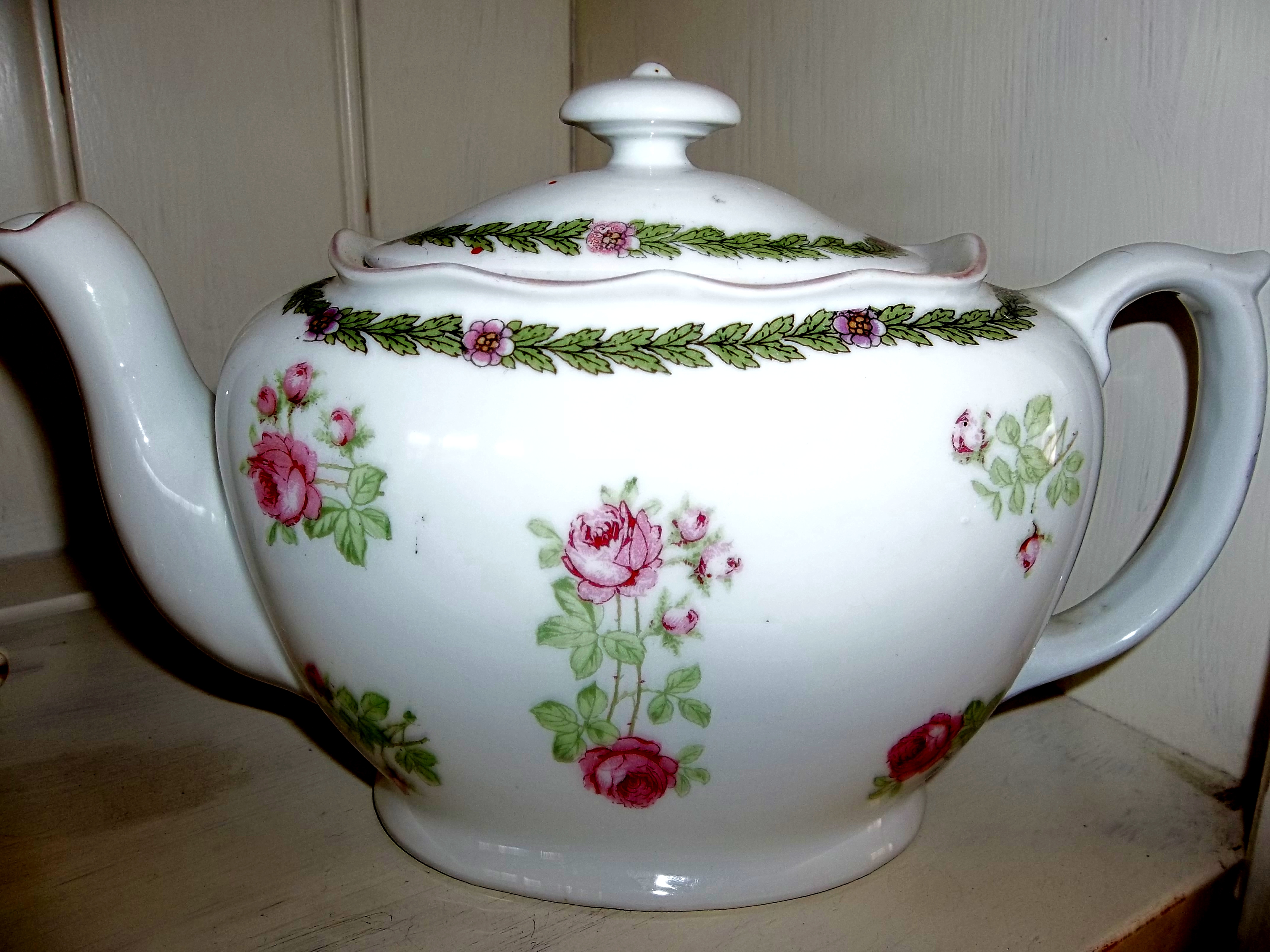
0000621 “Thank God for tea! What would the world do without tea! How did it exist? I am glad I was not born before tea.”  I couldn’t agree more with Sidney Smith, an Anglican clergyman, who died in over a hundred and fifty years ago. And as far as I’m concerned it can’t be any old tea. And certainly not a tea-bag, a monstrous invention that I suspect is just tissue paper filled with tea-dust left in the bottom of the tea chest after my proper tea leaves have been packaged.

And for me the only tea worth drinking is Twining’s Lapsang Souchong. It comes from Fujian Province in China. According to the packet: “the delicious smoky flavour is produced by lying the leaves on bamboo trays, and allowing the smoke from pinewood to permeate through them”. Ah, so … other tea now tastes quite crude to me after years of drinking nothing but this brew.

Though the Twining family may be surprised to hear this, I always feel quite connected to them, as I had a great friend who was a Twining, and my former in-laws had lived in a rose- coloured, brick Georgian house built by Elizabeth Twining down by the River Thames. I spent a lot of time there in that beautiful house, very conscious of Elizabeth. The firm of Twinings has been selling tea for three hundred years from premises in The Strand in London, so when the latest head of the Twining family came out to NZ to talk tea, naturally I heeded his instructions on how to make it.

Always happy to take the least trouble, I was delighted to hear from him (on the radio) that we don’t need to heat the tea-pot –  swishing boiling water around the pot before putting the tea-leaves in. Previously it had been an essential part of the ritual of making a pot of tea. But my tea leaves now go into a cold tea-pot. I missed the rest of his talk so I don’t know whether he addressed the thorny problem of milk. To have or not to have – that is the question. Purists don’t. I’m not a purist. I’m a conservative who has had milk in my tea for more than seventy years.

There‘s a further twist to the milk problem – known as MIF. Legend has it (which is not always reliable) that the Royal family refer to people as MIF’s. But I don’t believe this snobbish canard. MIF means exactly that – milk in first. And this is what the late Nancy Mitford used to funningly call non-U.  (U meant upper class, and non-U the opposite!) Milk in first means you’re probably the sort of person who’d lift the port decanter and push it across the table instead of sliding it along clockwise around the table – horrors – or would say: ‘pleased to meet you,’ instead of:’ how do you do!’ – shudders!  Incredibly, when I grew up these snobbish rituals defined the man – or woman.

So for most of my life, I had put the tea in first. But the worm turned about fifteen years ago, when I discovered that the tea tastes much nicer when you do MIF ! This puts me firmly on the wrong side of the tracks – but the bonus is delicious tea.

If I’m offered a cup of tea that I know will not meet my impossible standards of taste and strength – other people’s tea is always too strong for me – I add sugar, and then it becomes something else. Tea out of a mug is not the same as tea out of a bone china flowered cup and saucer. I dread the day when I’m plonked in an old people’s home, and will have no lapsang souchong and no bone china tea-cup.

Life without tea is unthinkable. There was no bombing so bad in the Blitz, that you weren’t offered a cup of tea after it; no shortage of water in the Western desert so tight, that there wasn’t always enough for a pot of tea brewed by the tanks; no misery so deep that a cup of tea doesn’t at least give the sufferer a second’s respite; no cold so deep that a cup of hot tea doesn’t warm the innards;  no thirst so terrible in the tropics, that a cup of tea doesn’t quench it, and no morning in the office so boring that a cup of tea doesn’t briefly break the monotony .

I often jokingly use the poet Cowper’s delicious phrase: ‘the cup that cheers but doth not inebriate!’ My grandmother always had a trolley laid for such a cup – on a lace tea-cloth with two tea-cups and saucers, sugar pot and tea-spoons, and the milk jug covered with a crocheted lace doily weighted with coloured beads. (Milk that wasn’t mucked about with didn’t go sour like it does today!)

In her book ‘Urban Shaman’, American writer CE Murphy writes a delicious description of having a cup of tea: “In Ireland, you go to someone’s house, and she asks you if you want a cup of tea. You say no, thank you, you’re really just fine. She asks if you’re sure. You say of course you’re sure, really, you don’t need a thing. Except they pronounce it ting. You don’t need a ting. Well, she says then, I was going to get myself some anyway, so it would be no trouble. Ah, you say, well, if you were going to get yourself some, I wouldn’t mind a spot of tea, at that, so long as it’s no trouble and I can give you a hand in the kitchen. Then you go through the whole thing all over again until you both end up in the kitchen drinking tea and chatting.

“In America, someone asks you if you want a cup of tea, you say no, and then you don’t get any damned tea. I liked the Irish way better.”

She must have forgotten that the American way with tea is simply to toss it into Boston Harbour!

Food for Threadbare Gourmets

This is the perfect cake to have with a cup of tea – if you’re not planning on cucumber sandwiches! It’s the classic French cake with equal quantities of everything. So it’s four eggs, and the same weight of butter, sugar and flour. You can halve the amounts for a smaller cake. Soften the butter, and beat it with the sugar – until it’s almost white and fluffy. Add the eggs whole, one at a time and beat. If it starts to look grainy, add a spoonful of sieved flour. When all the eggs are in, fold in the flour a spoonful at a time, using a metal spoon.

Add enough milk to make a soft smooth mixture which drops off the spoon. Stir in the grated rind of half a lemon. Gently push into a buttered cake tin, the base lined with greaseproof paper, and bake in a moderate oven around 180 degrees. Bake for fifty minutes … if it’s still soft and hissing, cook for another ten minutes.

Leave the cake in the tin for a few minutes, and then tip onto a rack to cool. I make a butter icing for this, soft butter, icing sugar and lemon juice and the other half of the grated lemon rind, all beaten together.
Food for Thought

Development cannot fly in the face of happiness; development should promote human happiness, love and human relati0ns between parents and children and friends. Life is the most important  treasure we have and when we fight, we must fight for human happiness.” Jose Mujica, President of Uruguay at the Rio Conference


.

66 Comments

Filed under cookery/recipes, food, great days, happiness, humour, life/style, philosophy, The Sound of Water, Thoughts on writing and life, Uncategorized

The fun of fashion

100_0175

What to wear has occupied many happy  hours and years of my thinking life. So though some research has claimed that little girls and boys are conditioned to be male and female… pink versus blue…  I’m not convinced!

I don’t think any little boy could have felt the bliss that I did at three when I finally got to wear a sun-suit that had been too big for me. I remember the day I was allowed to wear it, I shall never forget the pattern of navy, pink, yellow and blue tiny flowers all over it. It was linen, it had tiny buttons down the front, and was the most beautiful thing I’d ever worn. I remember the glory of running to catch up the big girls next door, skipping through long fine grass that grew beneath the pine trees, and the shafts of sun-light beaming down between the rough trunks. And above all, the rapture of knowing that I was wearing such a wonderful thing.

Not quite the same rapture over my white petticoats trimmed with broderie anglaise, and the smocked pink dress and the blue dress, made of ninon – a fine muslin type fabric with soft little bobbles sprinkled all over it – but I still enjoyed them. A year older, and winter, I revelled in the Fair Isle berets and matching gloves my mother bought me and my sister.

I stood and watched with some disapproval as she preened herself in the two new coats she had just bought, one a black fluffy material with gold buttons, the other a smooth jade green wool with green and gold buttons. She had said she couldn’t resist them. I remember precociously thinking that there would be no more clothes coupons left for us.  I was five, and in war-time we had an allowance of coupons for the year, which once used, meant no new clothes until the following year.

School uniform was a treat then too, with beautiful quality velour hats with big brims and a wide ribbon round it for winter, and a Panama hat the same shape with another big ribbon round it for summer.

When my Victorian grandmother came to care for us after my mother had gone, she dressed me according to her firmly held notions. I went to school one day in an anguish of embarrassment, wearing soft leather full- length gaiters right up my legs with hundreds of tiny leather buttons. We needed a button hook to do them all up.  But I couldn’t get them off for PT (Physical Training), so she abandoned those, thank goodness. She spent hours at her treadle sewing machine making me pink satin, lace- trimmed dresses and the like, and sent me off to church in a new brown tweed coat which was agony every time I sat down. It turned out she had sewed up the scissors into the deep hem.

Worst of all were the bright purple fluffy mittens she got hold of – warm – but hideous. It lacerated my fashion- conscious soul every time I put them on. At my best friend’s seventh birthday party I left them behind at her house, hoping that that would be the end of them. But further humiliation ensued when my grandmother made me go back to get them, and so then every-one knew that these frightful objects were mine.

Bundled off to my new parents at nine and a half, they threw away all the clothes my grandmother had lovingly made me, and took us shopping in London, where we were equipped with little tweed velvet- collared coats and matching berets, pretty dresses, and best of all, check shirts and shorts, just like the girls wore in Enid Blyton’s books. Fine feathers indeed.

But they had to last… that was the last time we enjoyed such largesse. When I grew out of them, there were no replacements, and I had to manage on various hand-me-downs, and odd birthday presents. So when I started earning, the best thing about it was never again having to wear clothes that embarassed me. But though I wanted fine feathers, I had also learned the lesson we all did on reading ‘Little Women.’

The scene in which Meg, also humiliated by her worn clothes, allows her frivolous friends to turn her into a fashion plate for a party, and overhears some older women commenting, what a pity that that pretty modest girl had spoiled her appearance with frills and flounces, and crimped curls, had struck deep. Meg feels overcome with shame for not being true to herself.  So I wanted fine feathers, but not fashion overkill!

Oh, the lovely cut of winter clothes, the fabrics, the wool and tweed, the gabardine and mohair, the lambs-wool and cashmere, the knits and jersey, velvet and corduroy; the colours, rich plum reds and pine greens, the russet tones, and mustards, the navy blues and chocolate browns – breathes there a woman with soul so dead – to paraphrase Sir Walter Scott – whose heart doesn’t leap when confronted with these riches?

And for summer, we had linens and cottons and seersuckers and silk, the muslins and tulle, taffetas and brocades for evening. We’d never heard of denim then, and nylon was something for parachutes and stockings. Fashion for a teenager earning money at last, meant a circular felt skirt, a wide elastic waspie to nip in our waists, over a frilly starched cotton slip and worn with  a Marilyn Monroe sweater and flat pumps. In this get-up, we twirled and swooped, dancing to rock and roll, and skiffle, though we could still waltz and do Scottish dances at formal balls, in long romantic evening dresses accessorised with long white gloves. And then there was the mini!

But times have changed of course. I’ve just read a survey which claims that women’s waists now are seven inches bigger than they were in nineteen-fifty. The average woman’s waist then, they claimed, was twenty- seven- inches, and it’s now thirty-four. I think they’ve got it wrong – my waist was twenty-five then, and I envied the possessors of twenty-four inch waists. The research also says that women are square and waistless now, and that the old hour-glass figure has gone. I had noticed how waists are disappearing, and have wondered how anyone could wear a waspie any more, while circular skirts would not do much for expanded hips these days.

So it seems to me that women are not so much the slaves of fashion, as that fashion is the slave of women’s diet. And now that spartan war-time food, not just in England and Europe but probably in other parts of the world too, is no longer on the menu,  fast food and tampered- with food, and Too much of everything, seem to have re-shaped the female figure. And fashion in the shape of towering platforms and spiked heels seems to have hobbled women quite as successfully as bound feet in China.

So give me beautiful clothes, but not haute couture, fine feathers but not high fashion… and I will probably still be planning what to wear when I’m on my death-bed – maybe I should write a book about clothes – what to wear from the cradle to the grave. And I haven’t even mentioned hats!

Food for Threadbare Gourmets

That apple cake! It was scrumptious, but so crumbly that we needed a fork to eat it with. So maybe a bit less apple and a bit more flour would hold it together. And whipped cream lifts it to another level!

Tonight, roast lamb, which rarely crosses this threshold, but it’s a special occasion. So along with all the usual trimmings, I’m making onions in white sauce. Peel and chop several onions, and boil with salt and pepper until cooked. In another saucepan melt two ounces of butter, and add enough flour to make a stiff roux. I pour in about a cup of milk, and then a cup of the onion- flavoured water, and stir briskly. Put it back on the heat and bring to the boil, stirring all the time until thick. Add nutmeg to taste, salt and pepper and the onion. You might need more milk, though I like the sauce quite thick. I usually add a dollop of cream…

Food for Thought

Beauty is a choir of singers, a chorus of dreamers, a concert of aspirations, an orchestra of goals, a symphony of ambition and a ballet of productions.

Glenda Green  Born 1945. Artist and author of ‘Love without end. Jesus Speaks’

56 Comments

Filed under cookery/recipes, fashion, food, great days, happiness, life/style, The Sound of Water, Thoughts on writing and life, Uncategorized

Seize the day!

0000674

Today was not one of those days, but One of Those Days.  Yesterday, as I watched the tiny, greenery- yallery birds we call silver- eyes in the trees, hunting for insects and the like, I thought how I hadn’t seen the cock pheasant for months. He must have found another home, I thought.

When I awoke this morning I jumped out of bed and looked out of the open window to the sea as usual. There, right below my window, was the pheasant, in the garden bed with the bromeliads. He slowly pecked and ambled his way down through the vegetable beds to the petanque court, and then sauntereded off down the path into the wild patch. A moment earlier or later, and I would have missed him. Do I believe in coincidences, or did the pheasant pick up my wave-length?

It was one of those glorious late summer days. The colours bright, the air sparkling.  In the morning I rendezvoused with two old friends at an art gallery in the next village, to see an exhibition in a barn in the orchard. The gnarled branches of the old fruit trees were blanketed in fluffy celadon-green lichen, and hung with knobbly green quinces and pink and yellow apples. The barn was full of pottery, paintings, sculpture and furniture.

Robin knew one of the painters, who told us a dealer had wanted to see her work, so the painter had suggested that the dealer come to the exhibition. The artist led the dealer into the barn, and before she could show off her vividly coloured abstract flower paintings, the poor painter told us with some chagrin, that the dealer had instead pounced on a set of black and brown geometrical abstracts, and said she’d buy the lot. These black and brown works of art were composed of cow dung, clay and other mixtures, and smelt richly of a farm yard!

After a cup of coffee by the river, and a whip round the gallery there, we drove on to Tawharanui National Park, and the “Exhibition in a Woolshed”. Never has the sea looked so blue, the islands so green and purple, and the sands so white. The rolling hills were burnt gold in the flaming sun, and the gum trees which lined the last stretches of the dusty, winding gravel road gave us grateful dappled shade.

At the National Park we enjoyed the pungent smell of a real woolshed, and savoured the integrity of the wooden slats and fences, smoothed and polished by the hands of generations of sheep shearers – hands – no doubt, impregnated with oil from the fleeces. Another collection of absorbing paintings, pottery and sculpture, and then a walk around the sculpture park edging the turquoise sea.

The day flowed from one treat to another. Late in the afternoon we arrived at another cafe for lunch, exhausted with art and walking in the midday sun. We sat outside in the shade of the trees, where we could see the waterfall. We go back through twenty nine years of gruelling growth courses, endless lunches, regular birthday parties, shared experiences and watching our children grow up, marry, have their children, break-up, divorce and struggle on, in sickness and in health…

Two of the paintings in the woolshed were accompanied by poems by Fernando Pessoa. They were numbered and called “The Keeper of the Sheep”…. my favourite lines from number 11 were:                                                                                                                                                      “The world wasn’t made for us to think about it…                                                                                                                                                                          But to look at it and to be in agreement”.

And then, number XXX1X:                                                                                                                                                                                                                        “… the only hidden meanings of things                                                                                                                                                                                                   Is that they have no hidden meaning.                                                                                                                                                                                                        … things are really what they seem to be                                                                                                                                                                                          And there’s nothing to understand.”

Words which were a wonderful antidote to artistic pretension and cow dung! As we left the woolshed, outside in the sheep pen there was a battered old farm noticeboard which read:

‘Cows: bulls, steers, heifers, calves.’

Sheep:  rams, wethers, ewes, hoggets lambs.’                                                                                                                                                                                 The names were as evocative as a poem, a hymn to a rural past that few people now remember or experience.

Sheep seem to be in my consciousness at the moment. Last night, I’d been reading an artist’s account of her decision to find a lamb to photograph while she was painting Jesus, so she’d get it right. She went to a local market, but saw only a sorry collection of scraggly mixed breeds – no lambs. She was about to turn away when a sparkling white ewe emerged from the flock and approached her. She was pregnant.

The artist decided to buy her, and the dealer told her the sheep’s breed was a ‘mouflon’. On the way home, she was suddenly struck by the fear that the sheep might be some sort of new hybrid which had not existed when Jesus had been on earth, since she had never seen a sheep like her, in spite of growing up on a ranch.

After establishing the sheep in her new home, the artist set off for the library, where she found that the mouflon was the oldest domesticated breed of sheep in Europe, and had  been herded in the Middle East two thousand years ago. Since they were living in the US, it was an amazing synchronicity to find the exact type of sheep she needed, especially since she hadn’t known that she did need it!

The perfection of the interlocking factors in this story reflect a little of how I feel today. It’s as though I know in my heart, and not just in my mind, that all is well, and that if we let go trying to make the right thing happen, the perfect thing happens. And it may not be what we planned or thought we wanted. This means a sense of peace, a calm, and a certainty. There is no need to keep striving, because when we surrender, life falls into place anyway.

And I’m learning to let go the distinction between the earthly and the spiritual. There is no distinction. Everything is sacred. So the laughter of today has the same value as this morning’s early meditation. As I hummed the pop song:  “Take my heart to higher ground’, a la Streisand, I felt it was as sacred as a Bach cantata. Feeling that every moment has a hidden significance, means the days are lived at a particular level of commitment

Making the most of each day, and knowing that the sum of these days add up to life well lived, is its own reward, and so in the words of that old Jewish saying, we can go on our way stringing pearls for heaven. And maybe try for heaven on earth… and carpe diem.

Food for Threadbare Gourmets

Browsing through Sally’s latest blog at mybeautifulthings@wordpress.com , I saw her picture of lunch at Falmouth – salmon fishcakes, spinach, poached egg and Hollandaise sauce. My taste buds sizzled, and I thought this is what we’re going to have for supper. I actually had some salmon, plenty of Agria potatoes – best for mashing, and all the trimmings – fresh eggs, spinach in the deep freeze, and a recipe for a quick hollandaise sauce.

Here’s my recipe for the quick hollandaise sauce. Blend the juice and zest of two lemons, four egg yolks and two teasps of mild mustard.  Melt the butter, and keeping the motor running, pour the butter into the eggs in a slow stream. Process until just thickened and no more. Season to taste, and keep at room temperature until using it. This makes two cups. Extravagant and delicious!

I used fresh smoked salmon and dill in the fish cakes and rolled them in flour before frying them in a mix of butter and oil. I think if I was feeling threadbare, a tin of red salmon, or even pink salmon jazzed up with plenty of herbs would work.

Food for Thought

I am done with great things and big plans, great institutions and big success. I am for those tiny, invisible loving human forces that work from individual to individual, creeping through the crannies of the world like so many rootlets…

William James 1842 -1910   Sometimes called the father of American psychology, and also best known for his book ‘The Varieties of Religious Experience.’

55 Comments

Filed under animals/pets, birds, cookery/recipes, culture, great days, happiness, life/style, philosophy, poetry, spiritual, The Sound of Water, Thoughts on writing and life, Uncategorized

The good enough life


0000787

Back in the last century, a psychologist called Dr Winnicott coined the comforting phrase ‘A good – enough mother’ …. I looked back at yesterday, and thought, yes, I suppose it was a good enough day …

I woke to the sound of the sea smashing onto the rocks. Good, I thought. I love it when there’s a thundering sea running. Up early to take my husband for minor surgery, I went to the cliff edge to see the white foam breaking over the rocks, and looked out to the horizon. The sun was just rising, a flaming red band above the sea, fading to amber, and then to palest turquoise, the few clouds black in the pearly lightening sky. Still. Not a breath of wind in spite of the pounding waves.

I fed the birds and then drove into our nearest country town, and it was chill enough for rags of white mist to drape the hollows, and drift across the dips in the road. By the time we had reached the surgical centre, the sun was up and the burnt gold and brown fields were lying defenceless in the baking heat again. Animals lying heaped in scraps of precious shade …

Leaving the old chap to the anaesthetic and the knife, I searched for a cafe open at 7.30 to have some breakfast, and decided that Eggs Benedict would help to while away the two hours  until I fetched him. But by the time I’d picked up the invalid and driven back home with my wonky liver making its grumpy presence known, I realised that Eggs Benedict that early in the day was not a good idea.

Later the morning soared into joy with a long phone call from eldest grandson, completing a double degree in arts and science at Uni. By the time we’d debated GM experimentation and the environment, knocked off Schopenhauer and his will to live, breezed through Nietzsche, explored  his theory of the nature of pain, tried to define happiness a propos Nietzsche and his fulfilment of will,  covered the architecture of Paris, categorised various behaviours as schizoid, narcissistic etc,  explored Maslow’s concept of peak experiences, agreed on beauty, argued about the number of different species of birds, butterflies and animals, discussed his fitness regime and the nuances of rock climbing, I felt as though my brain had had its own peak experience and a mental workout as well.

I put down the phone smiling like a Cheshire cat. Nothing – not even a peak experience – beats talking to my grandchildren.  Lunch was a breeze, as a neighbour had dropped in some hot savoury scones and cheese turnovers, so I didn’t have to cook. I replenished the bird’s various feeding bowls with wheat, and then tooled back into town to the surgeon for the invalid’s dressing to be changed, and various instructions for his care. At the chemist, picking up the prescriptions to administer, I was greeted warmly by another customer, a youngish woman in a huge multi-coloured caftan to disguise her weight, and only one arm. As her joyful goodness enveloped me, I felt ashamed of my livery grumpiness.

So I’m now not only cook, bottle-washer, car-washer, gardener, log- carrier, accountant, chauffeur but also nurse. Not, my friends tell me, the sort of cheeky flirty sort that they were in their young days, “ All the men in my ward fell in love with me,” giggled one still beautiful seventy- year- old on the phone…

Stopping at the village shop for milk on the way home I found a parcel waiting for me. It was ‘Carolina Cavalier’, the biography of James Johnston Pettigrew, the other General who led Pickett’s Charge at Gettysburg. One of his descendants, a dear friend, had sent it, knowing my fascination for the Civil War.

Early to bed, too tired to start my new book – I just needed some mental knitting – so skipped happily through a Georgette Heyer. Before putting out the light, and opening the window wide so that the sound of the sea would fill the room and all the spaces of the night, I thought about that phrase, a good enough day… and remembered that old legend about the poor man who had a horse he treasured.

One day it disappeared, and all the villagers commiserated with him about his bad luck. But he brushed aside their sympathy saying it wasn’t good and it wasn’t bad. A few days later the horse re-appeared bringing with him a herd of wild horses. Everyone congratulated the old man on his good fortune, but he again brushed it off, saying it was neither good nor bad. His son began breaking in the horses, so that they could sell them, but one day he was thrown, and broke his leg.

More commiserating moans from the villagers, and once more the old man shrugged and refused to judge what had happened. While the son was laid up, the king levied a call on all young men to join the army to fight for their country. How lucky you are that your son can’t go, exclaimed the villagers. And the old man made no comment again. He never judged anything that happened, recognising that he actually never knew whether what happened was fortunate or unfortunate. Life just is.

So I looked back on another daily round filled with common tasks, which furnished all we ought to ask, in the words of the hymn, and there were unexpected gifts as well as the expected challenges. I don’t know what the hidden significance of any of it is… maybe one day I will. Maybe I will never know. Maybe I will know when I reach the other side. It was simply another good enough day. Neither good nor bad. The stuff of life.


Food for Threadbare Gourmets

I have people coming for dinner on Sunday. It started out as four of us, but visiting overseas mutual friends, means that we’re now eight. So I’ve decided to haul a small turkey out of the deep freeze. I’m also going to Benjamin Britten’s War Requiem in Auckland on Saturday night with my daughter, and a party afterwards, and know I won’t be as on the ball on Sunday as I’d like to be. So I cooked the pudding today and it will reheat perfectly. Because it’s a sort of Christmas turkey, I thought I’d do one Christmassy- type pudding, and one refresher – a lemon cream. The Christmassy option is apple crumble, the stewed apple mixed with Christmas mincemeat. It lifts apple crumble into another realm, especially with a little brandy added to the apple- mincemeat mixture, and the crumble a really rich one.

For the crumble – a big one – I used ten ounces of flour, and two of ground almonds, six ounces of butter and eight ounces of sugar, plus grated lemon rind. Mix the butter into the flour, add the rest of the ingredients, tip over the fruit in an ovenproof dish, and bake for forty minutes or so in a medium to hot oven. It will wait in the fridge, and re-heat on the day. I’ll serve it with crème fraiche.


Food for Thought

Life will give you whatever experience is most helpful for the evolution of your consciousness. How do you know this is the experience you need? Because this is the experience you are having at the moment.

Eckhart Tolle  born 1948  Influential teacher, philosopher, and best- selling author of spiritual books


55 Comments

Filed under birds, cookery/recipes, family, gettysburg, great days, happiness, life/style, philosophy, spiritual, The Sound of Water, Thoughts on writing and life, village life

Goodness, peace and bloggers

100_0185

Last night I read a novel by a distinguished prizewinning writer. I polished it off in a few hours, turned over and went to sleep.

This morning I awoke thinking how depressing it was… not one man or woman who was inspirational, kind, or good – everyone ambivalent and self-absorbed. And then I remembered one peripheral historical character, whose real life contribution to the care of the wounded in World War One is one of the more fascinating true stories of that time. He was a man of integrity, compassion and genuine goodness.

And as I thought about him, I could feel my whole body relaxing, and a smile on my face. I thought to myself how much I love reading about goodness.

I thought about Mildred Norman, the Peace Pilgrim, that amazing woman who for twenty-eight years walked the length and breadth of the States seven times. She carried nothing but a few items in the pockets of her jerkin which was emblazoned with the words Peace Pilgrim. From 1953 to 1981 when she was killed in a car crash, she walked to remind people of peace.

She walked through the Korean War, all through the Vietnam War, and on through all the other conflicts, until the day she died. She had no means of sustenance, she ate when she was given food, and slept wherever she was, and usually people recognised her goodness and gave her a bed…” walking until given shelter, fasting until given food”. When she reached 25,000 miles in 1964, she gave up counting.

Wherever she went she talked of peace, saying: “We who work for peace must not falter. We must continue to pray for peace and to act for peace in whatever way we can, we must continue to speak for peace and to live the way of peace; to inspire others, we must continue to think of peace and to know that peace is possible.”

Ironically she was killed in a car crash while being taken to speak to a meeting. But her disciples carry on her message. She was seventy -one, a gentle, silver- haired blue-eyed woman with a tanned complexion.

Then there was Don Ritchie, ‘The Angel of the Gap’. I can’t read about this beautiful man without tears blurring my eyes. He retired as a salesman, bought a house with a marvellous view of the ocean just outside Sydney, which also overlooked a famous suicide spot. He spent the rest of his life looking out of the window at that famous view. Not to enjoy the view, but – “for a far greater purpose,” as one obituary put it – to rescue those who came to end their lives.

As soon as he saw someone lingering there, he walked across to them smiling, with his hands out, palms up (what a beautiful, instinctive gesture of peace and non-violence). “Is there something I can do to help you?” he asked.  He talked to them until they were ready to pick up their shoes and their wallet and their note, and to come back to his house where his wife had a cup of tea waiting for them.

Sometimes he risked his life struggling with those who were determined to jump. The official count of the lives he saved is 164, but those who knew him believe the figure to be nearer 500. Bottles of champagne and cards arrived for him for years after from those whose lives he’d saved.

He used to say: “never under-estimate the power of a kind word and a smile”. He died last year at eighty-six, proof that no-one needs special training to serve their world, that love makes a difference, that great goodness is to be found in ‘ordinary’ people ( if indeed they are ordinary) as well as in spiritual mentors…

And then there are some of the bloggers whose posts I never miss… not witty or intellectual or spiritual, but filled with a sweetness and a simple goodness that lights up my day… they make me think of that haunting little Shaker hymn ‘Simple Gifts’… because their goodness is a gift, and it’s a simple uncomplicated sort of goodness, spontaneous and undemanding. Reading these gentle blogs about ordinary events and everyday lives filled with weather and  animals and growing things is like smelling a flower.

But unless one is a Pollyanna, I have a shadow to face too – cyber-bullying. It’s hard to remember that we are all one, when  encountering words and actions of destructive malice, and this is when the words of the sages like the Peace Pilgrim help me keep my balance. It’s then that I try to be thankful for this shadow, because it shows me that there must be some place in me where I don’t love myself as my neighbour, and so some inner work to do. And it’s that test of one’s character and integrity to be unmoved by such psychic attacks.

Miguel Ruiz’s words carry me through these moments that could unbalance me. His second agreement reads: “Don’t take anything personally. Nothing others do is because of you. What others do and say is a projection of their own reality, their own dream. When you are immune to the opinions and actions of others you won’t be the victim of needless suffering”.

These words of wisdom are what can keep me on the path of peace… because though the Peace Pilgrim talked about world peace, and the end of war, the wars won’t end until our own lives are at peace and ‘peace is every step’, in the words of Thich Nhat Hahn… Peace to us all.

Food for Threadbare Gourmets

Summer means lots of tomatoes, and I often use them the way I remember from living in Vienne, Central France as a child. I remember huge – probably- beefsteak tomatoes, with their middles cut out, and filled with thick golden mayonnaise. If I do them today, one each is enough for us, for a light lunch, served with some crusty rolls. If I do them as a starter, I use smaller tomatoes, and surround them with glorious sweet smelling basil. I serve them on green plates, and they look gorgeous.

The mayonnaise is the usual. Using a stick beater, in the beaker break one whole egg – both yolk and white – plus salt, pepper, a good slurp of white wine vinegar or lemon juice and a good teasp of mixed mustard. Pour in some grape oil or other gentle tasting oil but Not olive oil, to just under halfway up the height of the beaker, and then press the button! Whizz, whizz, and mayonnaise is ready! This process spoils the taste of the olive oil – hence the need for alternatives.

Food for Thought

The more faithfully you listen to the voice within you, the better you will hear what is happening outside. And only she who listens can speak.

From ‘Markings’ by Dag Hammarskjold, second UN Secretary General. 1905 – 1961 Diplomat, and writer, son of a Swedish Prime Minister, descendant of generations who had served the Swedish crown and people since the 17th century.   A spiritual man, during his time at the UN he organised and supervised every detail of a meditation room there. His plane crashed in suspicious circumstances on a peace mission in Africa. He’s the only person to have been awarded the Nobel Peace Prize posthumously.

I’m learning to take pictures, but haven’t got the hang of captions yet!  This is the crepuscule rose in my garden

59 Comments

Filed under bloggers, cookery/recipes, happiness, life and death, love, peace, philosophy, spiritual, The Sound of Water, Thoughts on writing and life, Uncategorized

The challenge of meditation

When a Korean soldier went berserk many years ago, and shot sixteen of his mates, his excuse was that they’d been making a noise when he was meditating.

My children roared with laughter when they read this, and said they knew exactly how it would have happened, remembering all the times I had exploded out of my bedroom when I couldn’t stand their unconscious attention seeking noise every time I went to meditate. (It was the same if I was on the phone to a friend – sure as eggs were eggs, they’d end up squabbling or making some commotion to get my attention again)

I learned to meditate in the palmy days of the Maharishi and his disciples the Beatles. Transcendental Meditation they called it. ‘Transcendental’ being the word that hooked us all in, thinking we’d find bliss in meditation and transcend our normal consciousness… it sounded safe and blissful at the same time… better than drugs…

It wasn’t like that of course… I went to a tatty hippy house, where a motley collection of us tackled the mantra, with lots of hocus pocus about it being specially designed for each one of us, hibiscus flowers, joss sticks and candles setting the scene for the whispering of this magic word.

And so I began, and found for the first few weeks that I fell into a deep sleep each time I meditated, but I felt ok about that, as they’d warned us that we’d catch up on what they called our sleep debt. Now with some experience behind me, I think that the tiredness which came up could have been the life-time’s effort of keeping feelings bottled up – for meditation, as it relaxes us – puts us in touch with our buried feelings. Then that anger started to rise, and I couldn’t handle the children’s noise. But I persevered, and had had so much practice at bottling up my feelings all my life that the meditation didn’t do too much harm. I remember a friend telling me she’d started meditating too: “I thought it was meant to make you feel peaceful, but I feel so angry.”

Some years later serendipity meant that I helped set up a personal growth movement in NZ, run by a talented and inspired couple who had realised what a powerful and sometimes dangerous practise unsupervised meditation can be ( see Korean policeman). They devised a series of courses designed to handle the emotions and buried feelings that meditation brings up in people. I remember at the end of one weekend a psychologist who’d just done the course, saying that people had cleared in a weekend what would have taken seven years in therapy.

One of the important lessons I learned  was not to treat meditation lightly. I read some comments the other day from people who said they’d given up meditating, they felt uncomfortable and didn’t enjoy it. I felt  sad – because they’d been given a powerful tool and not enough knowledge to use it, a bit like being given a piano and not knowing how to play it.

Meditation was the basis of the courses I did, and on one course, an old woman (she was about sixty, and I was a heedless forty-five) couldn’t settle while we meditated on the first day. As she fidgeted and shifted in her seat, the teacher signalled to me to take her out. We went into a counselling room where she lay on a mattress and I asked a few questions.

She started to tell me about her childhood with the step-mother she hated as much as she felt the woman had hated her. I noticed as she was talking, her right hand was fidgeting, so I suggested that she let it shake as much as it wanted. The hand took over, then her arms, then her whole body, and she shook all the bottled up rage of her childhood out of her body, on and on…  when she’d finished, she was gasping with joy at having shifted this huge burden, her eyes were sparkling, she moved quite differently, and went back to meditation calm and happy.

It was a graphic example of how powerful meditation can be, and why some people find it an uncomfortable experience. In all the great religions in which meditation is practised, it’s done with a mentor, precisely because it is a technique which can’t be treated lightly. It has to be done consciously, with awareness. But if we’re on our own, and aware of what meditation can do, we can start to deal with its side-effects.

When we feel fidgety or have some discomfort, it’s possible to look at where this energy block is. Some people become so in touch with their inner self that they can immediately identify what the feeling is, when they first felt it, what it’s about and then let it go.

Another way of dealing with it is to use something called the pain banishing technique which was very popular in the eighties, and even used in some hospitals, but now seems to have fallen into disuse. It can be used on a head-ache,(unless it’s a de-hydrating head-ache, in which case, drinking is the answer) discomfort in the body, or any sort of physical pain. If it doesn’t work then you need to see a doctor. So when I sprained a knee skiing, it contained the pain for three days until I got to a doctor, but when I fell last year and used it on the pain in my arm it didn’t work, because I ‘d broken it and needed immediate treatment.

The pain banishing technique consists of six questions. The person can ask the questions themselves, or they can get someone else to ask them.

Where is it? This needs to be answered in detail. “On my left leg two inches below the knee, on the left hand side….

How big is it? Sometimes it’s enormous. When I scalded my finger-tips, the pain was ten inches out from my fingers …

Has it got a shape? Has it got a colour? Has it got a texture? … like wire wool, steel, rubber?

On a scale of discomfort from one to ten, where would you rate it?

You do this three or four times, by which time the pain has diminished or it’s gone.

It works because the place that was crying out for attention has got the attention… whether it’s a physical pain or an emotional pain. With a child who’s fallen over, I say “Does it really hurt?” ”Yes,” they’ll answer tearfully. “Is it still there?” You can see them thinking at this point, and then they’ll say “No”, and skip off happy.

Any time a person is fidgeting during meditation, something is coming to the surface, and this is why it helps to have a technique to use if a person is meditating without a mentor. Sometimes even talking or reading about it makes a person feel uncomfortable. It brings up in us what we’ve been trying to ignore all our lives, which is why it often feels disturbing. But properly used, meditation does bring – if not transcendent bliss – certainly peace of mind, a calm spirit, and an ability to find a different way of being, instead of fight or flight.

People have written whole books about it, so it’s presumptuous of me to write this inadequate description. But if it helps explain why it isn’t always easy to meditate, it may have been useful to someone.

Food for Threadbare Gourmets

I needed a cake to take to a summer gathering, so made my quick standby, a lemon and olive oil cake – a Spanish recipe from Elizabeth Luard, an English food writer who lived in Spain with her children. Take 175 gms of flour, sugar and olive oil, three eggs, a pinch of salt and the zest and juice of a lemon. I also put in some drops of vanilla in memory of my grandmother who put vanilla in all her cakes! Mix everything together, and tip into a greased lined tin – I use a loaf tin. I then add a thick dredging of sugar on the top to cheer it up, and cook it in a moderate oven for forty five minutes or more, or until cooked.

Food for Thought

‘Do you pray for the senators, Dr Hale? ‘No, I look at the senators and pray for the country.’ Dr Edward Everett Hale 1822-1909  Chaplain of the US Senate

47 Comments

Filed under cookery/recipes, great days, happiness, life/style, spiritual, The Sound of Water, Thoughts on writing and life, Uncategorized