Category Archives: life/style

The magic and the mystery of blogging


100_0360An ikon I’d never seen before popped up on the right hand side! Word Press, bless their little cotton socks, telling me I’ve been blogging for a year.

Really?  A whole year of writing, reading, liking, commenting, enjoying, sighing, worrying, wondering, exulting, agonising, delighting, puzzling, slaving over a hot computer?

A whole year of writing for pleasure, knowing that no-one is going to stab me in the back? This is the amazing gift of blogging. Unlike journalism, where bouquets are few and far between, but angry, argumentative put- down letters are easy to write to a person whose name is in a newspaper, blogging has its own set of conventions.

The best one is that bloggers don’t criticise or judge. They comment, they put another point of view, but they live and let live. When I first veered off the light and trivial and started to write about things I feel deeply about, I used to feel a bit sick when I pressed the Publish button, wondering what I had let myself in for … much the same as I used to feel when I was writing columns in magazines and newspapers, sending them off with trepidation, wondering who would attack me this week.

The first time I did this, and saw the yellow button flash Comment, I opened it nervously, and when I saw the comment, exulted with relief. And so it went with every Like and Comment.  This encouragement and courtesy means that bloggers can write honestly and from their heart, knowing that they won’t be judged and found wanting. If you don’t agree, just press delete, and read another blog and no-one is hurt or discouraged.

This day a year ago, my printer had set up the blog, told me I could see the stats at the top of the page, and talked me through writing a post. He then pushed my boat off into the ocean of bloggers, and I wonder how many other bloggers began their voyage over this great uncharted ocean on that day… I was like someone adrift in a little rowing boat, who knew how to row, but didn’t know where to go or how to get there, how to read the stars or a map or the weather. It was only after about two months that I discovered what Tags were, and that they mattered, nearly five months before I discovered that the yellow light at the top right hand side meant there was a message awaiting the lucky blogger, and I still don’t know what a click or a referrer is.

I puzzle over Stats, and still don’t understand the code… as far as I can see, from trying to do surreptitious checks when I think Word Press isn’t watching, followers don’t show up in Stats – or do they?  And how does someone have 5,000 views and 18,000 followers… I don’t get it. But since I never deciphered  algebra, geometry, logarithms, or even simple arithmetic  at school, it’s not surprising that the intricacies of technology elude me.

I learn that the first blogger was a student writing from Swarthmore College – a Quaker establishment – in 1994, but that blogging really took off in the late 1990’s. I also learn that there’s a whole vocabulary around different types of blogging now, and that in some countries it’s banned or that bloggers have to be registered. Google tells me that Tim O’Reilly, the founder of O’Reilly Media and a supporter of the free software and open source movements, suggested a Blogger’s Code of Conduct.

He and others came up with a list of seven ideas which included: taking responsibility not just for your own words, but for the comments you allow on your blog; lowering your tolerance level for abusive comments; considering eliminating anonymous comments; ignoring the trolls… and if you know someone who is behaving badly, tell them so; don’t say anything online that you wouldn’t say to the person.

My experience of blogging has meant that bloggers practise far more than this basic list of protocols. They share kindness, encouragement, and friendship, they support each other, share helpful information, even love each other, and this sort of community is what makes blogging the experience it is. Investigating blogging has surprised me – apparently more men than women blog – I’d have thought it the other way around – 60 per cent to 40 per cent. Word Press alone has 42,000,000 bloggers – thank you for remembering my anniversary, chaps – and 500,000 posts daily, with 400,000 daily comments – wow.

Blogging is more than this though. In my experience, I’ve become a better writer, without the fear of sub-editors changing my copy, or readers clobbering me. I dare to be true to myself. I constantly learn from other people’s blogs, and this stimulation, I find, is improving my memory, plus the research involved in checking my facts. This means I’m feeling more creative too, and have such a sense of fulfilment every time I press Publish, and then the fun begins and the conversations take off.

Maybe the most incredible thing about blogging is that we are all tapping into the global brain, and contributing to it too. And more importantly, we are also dipping into the global ocean of goodwill and deepening it with our courtesy and kindness, and that maybe, will be the salvation of the world.

Food for Threadbare Gourmets.

With a lovely big bowl of jellied chicken stock from steamed chicken, I had lots of possibilities, but plumped for risotto. Frying onions and garlic until soft, and then chopped mushrooms, I used a cup of Arborio rice, poured into the onion and gently sauting until it became translucent. I added half a glass of good white wine, and when the alcohol had been boiled away, ladled in boiling chicken stock, and two sage leaves. When the rice was almost soft, I added the chicken scraps from the carcass, a handful of frozen peas, salt and pepper,  and a knob of butter and some cream. I covered it for five minutes when cooked, and then served it with freshly grated Parmesan and salad. Yum. Enough for three normal people, or two incredibly greedy people.

Food for Thought

Youth is a gift of nature. Aging is a work of art. Anonymous


120 Comments

Filed under bloggers, cookery/recipes, great days, humour, life/style, technology, The Sound of Water, Thoughts on writing and life, Uncategorized

The noble art of reading in bed


100_0088cropped bedroomWhen I was young and naive, and a novice journalist, I wrote an article in a woman’s magazine which began:’ I got most of my education under the bed-clothes’, and went on to discuss children’s reading. Some wag must have been reading his wife’s copy, and the clipping appeared on the office notice-board amid crude male guffaws. Thank you chaps, I got the message! Not a quick learner, but I got there in the end!

Reading under the bed – clothes was the refuge of a child who was sent to bed at seven o clock every night, and allowed to read for fifteen minutes. Fifteen minutes! When I got older, and had more homework bed was set back to seven thirty, but the fifteen minute reading restriction still applied.  Only a non-reader could have stipulated this ridiculous time limit, so under the bed clothes it was. When I had no torch I knelt for hours, freezing in my night clothes squinting to read by the crack of light under the door from the hall light.

Occasionally I tried the loo or the bathroom, but this was risky, as books aren’t easily hidden by a skinny child under a thin nightie. When I was fourteen I picked up Jane Eyre in the library. It exploded into my consciousness. I felt dazed and obsessed by the strange, compelling self-centred story. I could think of nothing else. I read it over and over again.  I read it under the desk at school, in the bus and on the train, and of course, in bed.

Once the parents had gone to bed, I switched my light on with impunity, and read until I had finished Jane Eyre, and then started  ‘Villette’, by which time it was heading for five o clock in the morning. Since I had to get up at six to cook my breakfast and catch the school bus at seven am, it seemed safer to stay awake, and soldier on. And having done it once, and finding it was possible to keep going without sleep, I quite often sacrificed my sleep for a good book after that.

Boarding school was tricky, but once again, there was always the bathroom. When I left home and became my own master, reading in bed became one of my favourite pastimes. Mostly literature and poetry in those palmy days. And usually then I had a bowl of apples to munch meditatively as the hours went by, or better still, a bar of chocolate. Sometimes decadence overcame me and I had a glass of lemonade. Marriage and motherhood dished all that of course, and reading in bed became a distant remembered pleasure.

But in the last few years since my husband’s snores have become so loud they wake me even when I’m sleeping in another room, we’ve taken a page out of the Royal Family’s domestic habits, and now sleep in separate rooms. This means I can read without disturbing him, and I’ve raised this noble pastime to a fine art.

Usually three books go to bed with me… something that I call mental knitting, a relaxing series like Georgette Heyer, (a much under-rated, very funny, witty and clever writer) or other light-hearted books like the hilarious Adrian Mole Diaries, or ‘The Jane Austen Book Club’. Georgette Heyer is sort of Jane Austen lite – but the  blessed Jane is also a regular companion, along with the Thomas Hardy’s, George Eliot’s, Anthony Trollope’s, to re-read for the sheer pleasure of enjoying their writing again. In theory too, because I know the story, I kid myself I won’t be tempted to read too late. But that is a false premise.  And as CS Lewis said, ‘I can’t imagine a man really enjoying a book and reading it only once.

And then there’s the third category – those which are on the go, sometimes a new novel – Barbara Kingsilver at the moment, but not many of those – a biography, a history, a diary. And for real relaxation I sink into nature journals,  often a classic like Flora Thompson’s: ‘Lark Rise at Candleford’ …  Annie Dillard, Henry Beston or Ronald Lockley…  mostly accounts of gentle, unpolluted country life.

But reading in bed isn’t just books. The bed matters too… preferably by the window… in summer with cool white linen- cotton blend sheets that have a silky feel, in winter comforting coloured flannelette to match the duvet. Pillows – plenty of them, to lean back on and others to support the elbows. Electric blanket a must in cold weather… I use it a bit like the hot tap in the bath… whenever it seems a bit chill, I switch it on until the bed is like toast again, and then prudently switch off again until the next time.

In summer, there’s the bliss of going to bed in day-light, knowing you have hours in front of you before dusk creeps up, before finally switching on the light. In winter, lamps on, curtains pulled, wood fire still burning in the sitting room to keep the house warm for when I emerge to make a cup of tea. And the bed, pyjamas warmed under the bed clothes on the electric blanket, cosy sheets and pillow slips,  red mohair rug edged with wine-red satin, and a stash of peppermints to slowly chew as I turn the pages. No sounds, just the murmur of the soft sea, a distant owl, and occasionally a scuffle on the roof as a possum scrambles across. The sound of rain on the roof is good too.

The art of reading in bed is a silent, sybaritic, solitary joy and has nothing to do with going to sleep. It has everything to do with the pleasure of reading, frequently to the detriment of sleep. So I have to confess, in the words of L.M.Montgomery that : ‘I am simply a ‘book drunkard.’ Books have the same irresistible temptation for me that liquor has for its devotee. I cannot withstand them.’

Food for Threadbare Gourmets

Running out of inspiration, I took an organic free range chicken out of the deep freeze, and after de-frosting it slowly in the fridge for two days, stuffed it with a pierced lemon and put it on to steam. After an hour and three quarters, I placed around it in the steamer, new potatoes, carrots, leeks, small onions and parsnips.

When the chicken is ready so are the vegetables. I usually make a parsley sauce to serve with this, but didn’t feel like a heavy floury sauce, so instead chopped garlic cloves very finely, sauted them in butter, and added a vegetarian oxo cube and cream. I boiled and stirred until it was thickened, and added lots of chopped parsley. It turned out rather well. The bonus of steaming is a wonderful chicken stock, as the chicken juices drip into the boiling water beneath the steamer. More on that next time!

Food for Thought

Those who do not have power over the story that dominates their lives, power to re-tell it, to re-think it, deconstruct it, joke about it and change it as times change, truly are powerless, because they cannot think new thoughts.

Sir Salman Rushdie – famous Indian writer, educated in England, lives in America, and winner of many prizes and honours.


75 Comments

Filed under books, cookery/recipes, culture, food, great days, humour, jane austen, life/style, literature, philosophy, The Sound of Water, Thoughts on writing and life, Uncategorized

The drug we can’t live without

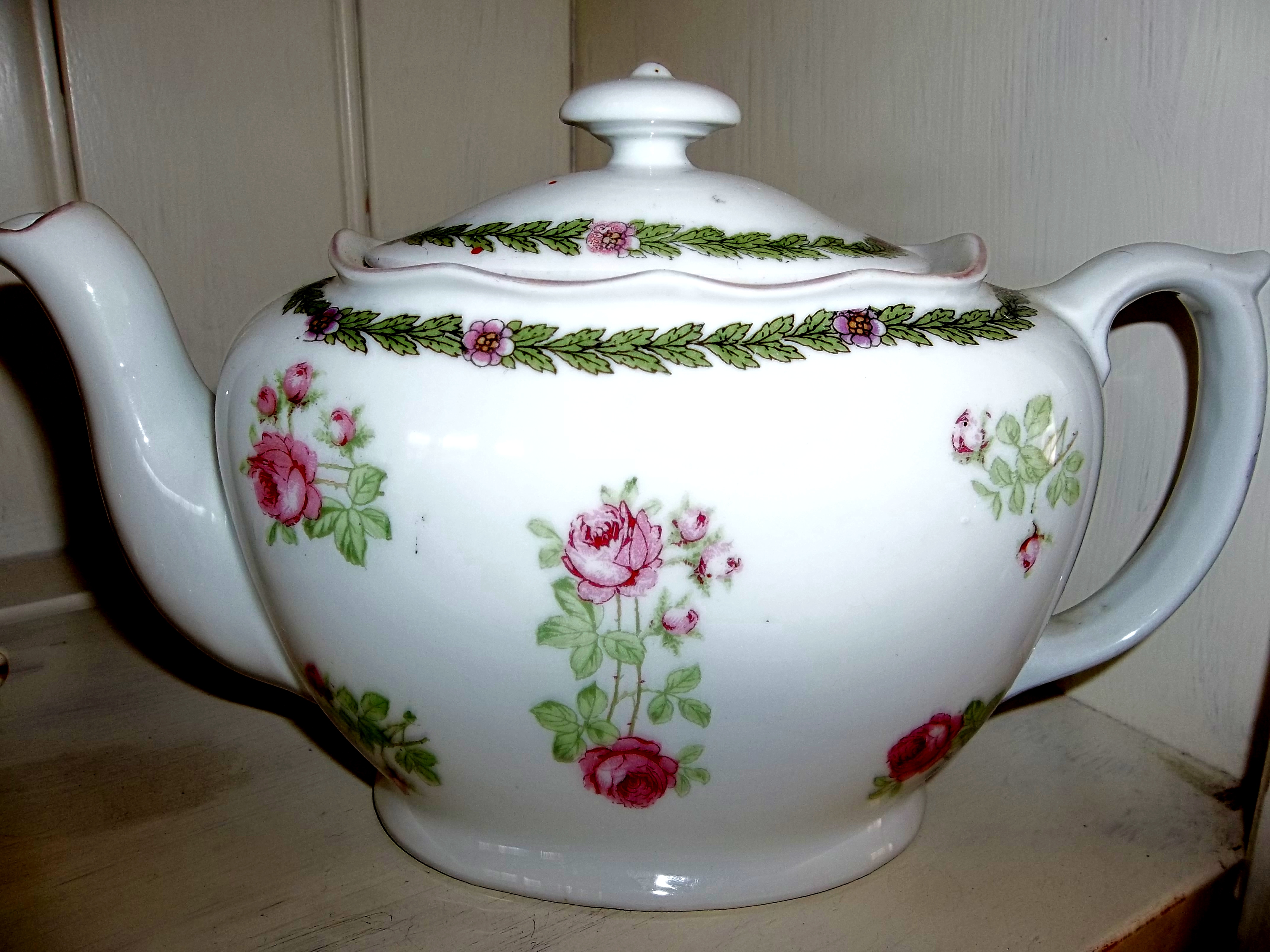
0000621 “Thank God for tea! What would the world do without tea! How did it exist? I am glad I was not born before tea.”  I couldn’t agree more with Sidney Smith, an Anglican clergyman, who died in over a hundred and fifty years ago. And as far as I’m concerned it can’t be any old tea. And certainly not a tea-bag, a monstrous invention that I suspect is just tissue paper filled with tea-dust left in the bottom of the tea chest after my proper tea leaves have been packaged.

And for me the only tea worth drinking is Twining’s Lapsang Souchong. It comes from Fujian Province in China. According to the packet: “the delicious smoky flavour is produced by lying the leaves on bamboo trays, and allowing the smoke from pinewood to permeate through them”. Ah, so … other tea now tastes quite crude to me after years of drinking nothing but this brew.

Though the Twining family may be surprised to hear this, I always feel quite connected to them, as I had a great friend who was a Twining, and my former in-laws had lived in a rose- coloured, brick Georgian house built by Elizabeth Twining down by the River Thames. I spent a lot of time there in that beautiful house, very conscious of Elizabeth. The firm of Twinings has been selling tea for three hundred years from premises in The Strand in London, so when the latest head of the Twining family came out to NZ to talk tea, naturally I heeded his instructions on how to make it.

Always happy to take the least trouble, I was delighted to hear from him (on the radio) that we don’t need to heat the tea-pot –  swishing boiling water around the pot before putting the tea-leaves in. Previously it had been an essential part of the ritual of making a pot of tea. But my tea leaves now go into a cold tea-pot. I missed the rest of his talk so I don’t know whether he addressed the thorny problem of milk. To have or not to have – that is the question. Purists don’t. I’m not a purist. I’m a conservative who has had milk in my tea for more than seventy years.

There‘s a further twist to the milk problem – known as MIF. Legend has it (which is not always reliable) that the Royal family refer to people as MIF’s. But I don’t believe this snobbish canard. MIF means exactly that – milk in first. And this is what the late Nancy Mitford used to funningly call non-U.  (U meant upper class, and non-U the opposite!) Milk in first means you’re probably the sort of person who’d lift the port decanter and push it across the table instead of sliding it along clockwise around the table – horrors – or would say: ‘pleased to meet you,’ instead of:’ how do you do!’ – shudders!  Incredibly, when I grew up these snobbish rituals defined the man – or woman.

So for most of my life, I had put the tea in first. But the worm turned about fifteen years ago, when I discovered that the tea tastes much nicer when you do MIF ! This puts me firmly on the wrong side of the tracks – but the bonus is delicious tea.

If I’m offered a cup of tea that I know will not meet my impossible standards of taste and strength – other people’s tea is always too strong for me – I add sugar, and then it becomes something else. Tea out of a mug is not the same as tea out of a bone china flowered cup and saucer. I dread the day when I’m plonked in an old people’s home, and will have no lapsang souchong and no bone china tea-cup.

Life without tea is unthinkable. There was no bombing so bad in the Blitz, that you weren’t offered a cup of tea after it; no shortage of water in the Western desert so tight, that there wasn’t always enough for a pot of tea brewed by the tanks; no misery so deep that a cup of tea doesn’t at least give the sufferer a second’s respite; no cold so deep that a cup of hot tea doesn’t warm the innards;  no thirst so terrible in the tropics, that a cup of tea doesn’t quench it, and no morning in the office so boring that a cup of tea doesn’t briefly break the monotony .

I often jokingly use the poet Cowper’s delicious phrase: ‘the cup that cheers but doth not inebriate!’ My grandmother always had a trolley laid for such a cup – on a lace tea-cloth with two tea-cups and saucers, sugar pot and tea-spoons, and the milk jug covered with a crocheted lace doily weighted with coloured beads. (Milk that wasn’t mucked about with didn’t go sour like it does today!)

In her book ‘Urban Shaman’, American writer CE Murphy writes a delicious description of having a cup of tea: “In Ireland, you go to someone’s house, and she asks you if you want a cup of tea. You say no, thank you, you’re really just fine. She asks if you’re sure. You say of course you’re sure, really, you don’t need a thing. Except they pronounce it ting. You don’t need a ting. Well, she says then, I was going to get myself some anyway, so it would be no trouble. Ah, you say, well, if you were going to get yourself some, I wouldn’t mind a spot of tea, at that, so long as it’s no trouble and I can give you a hand in the kitchen. Then you go through the whole thing all over again until you both end up in the kitchen drinking tea and chatting.

“In America, someone asks you if you want a cup of tea, you say no, and then you don’t get any damned tea. I liked the Irish way better.”

She must have forgotten that the American way with tea is simply to toss it into Boston Harbour!

Food for Threadbare Gourmets

This is the perfect cake to have with a cup of tea – if you’re not planning on cucumber sandwiches! It’s the classic French cake with equal quantities of everything. So it’s four eggs, and the same weight of butter, sugar and flour. You can halve the amounts for a smaller cake. Soften the butter, and beat it with the sugar – until it’s almost white and fluffy. Add the eggs whole, one at a time and beat. If it starts to look grainy, add a spoonful of sieved flour. When all the eggs are in, fold in the flour a spoonful at a time, using a metal spoon.

Add enough milk to make a soft smooth mixture which drops off the spoon. Stir in the grated rind of half a lemon. Gently push into a buttered cake tin, the base lined with greaseproof paper, and bake in a moderate oven around 180 degrees. Bake for fifty minutes … if it’s still soft and hissing, cook for another ten minutes.

Leave the cake in the tin for a few minutes, and then tip onto a rack to cool. I make a butter icing for this, soft butter, icing sugar and lemon juice and the other half of the grated lemon rind, all beaten together.
Food for Thought

Development cannot fly in the face of happiness; development should promote human happiness, love and human relati0ns between parents and children and friends. Life is the most important  treasure we have and when we fight, we must fight for human happiness.” Jose Mujica, President of Uruguay at the Rio Conference


.

66 Comments

Filed under cookery/recipes, food, great days, happiness, humour, life/style, philosophy, The Sound of Water, Thoughts on writing and life, Uncategorized

Food, fear and films


100_0087Village life takes ingenuity in a tight spot, and stamina – plenty of it!  These are the times that test men’s souls! Well, we haven’t actually had any chicken stealing like Mr Woodhouse in ‘Emma’, but life has been pretty hairy in our neck of the woods in the last few days.

Where do I start? We are a quiet law-abiding community, we look out for our neighbours, share our garden goodies, swap cuttings and seeds, and admire each other’s grandchildren. Our greatest excitement is the weekly testing of the fire alarm by the volunteer firemen.  But the other night the peace of the four hundred law-abiding souls was rudely shattered. A dog began barking as dusk fell, and continued without end for the rest of the night. I woke every hour of the night, and heard all the other dogs joining the chorus. I overslept and arose bleary – eyed, and then had to rush to attend a veteran’s memorial service in the graveyard.

I came away somewhat disgruntled that the officiating clergywoman should in-appropriately refer to the Somme as a romantic name. The Battle of the Somme was the day that the British Army lost 20 per cent of its men – 60,000 killed or wounded on one day in France, my step- grandfather being one of the badly wounded. No! Not romantic. Naturally I aired my disgruntlement back at home, and felt all the better for it! So I was quite gruntled when the phone went later that afternoon and a friend rang to see how my husband was; and since his wife was overseas, I invited him for supper that night – three hours later in fact..

Putting down the phone, my mind raced through the possibilities. We were going to have cauliflower cheese, but could I give this to a man accustomed to gourmet cooking from his talented wife? I thought of various alternatives, but I was always missing one vital ingredient. Cauliflower cheese it would have to be! We were already having Brussels sprouts and carrots with it, and toasted almonds sprinkled over the cauliflower, so I added some chopped and baked golden kumara – crisp and crunchy on the outside – soft and sweet inside. Washed down with pinot gris.

With some pumpkin soup from lunch, thinned with a little cream and jazzed up with a sprinkling of coriander, served in little gold rimmed coffee cups before we sat down, it seemed a reasonable meal, topped off with  hot chocolate sauce poured over locally made coffee ice-cream. No-one wanted coffee after that, but smoky lapsang souchong tea went down well.

Later that night, I heard the dog again. I thought: I cannot face another night worrying about it. So I jumped in the car and scouted round the neighbourhood in the dark. In the next street, I found a frantic pit- bull terrier on the loose – pacing back and forth and barking ferociously and fearfully outside a darkened house. We have no hedges or fences, just grass flowing out onto the pavement. So there he was, and I was available to him…

I went next door, where I could see a light on, knowing the people there, and hoping the resourceful man of the house had a solution. But they were visitors, who’d borrowed the house, and were dreading another night of torment. So it was up to me! The husband told me the dog had been alone for two days, was dangerous and and had frightened two children, so I revved off back home to deprive my husband of six pork sausages sitting in the fridge for him to enjoy the next day.

Back at the house, Daphne, a friend living across the road from the deserted house, was talking to the other neighbours. When I got out of the car, she hurried across, sounding so relieved to see me that she made me feel as if I was the US Cavalry. She warned me to be careful. The poor dog had now retreated to the back of the house, so while I strewed sausages around the front lawn, she went to get some water to fill his empty bowl.

Home, and a glorious peace settled back across the cottages and gardens, the only sounds the restless sea surging onto the rocks and an owl calling. So I rang the lovely Daphne, and she told me the renters had come back not long after. I tried not to regret the sausages, and hoped the dog had managed to eat them all before his somewhat callous-seeming owners returned. (There are dark rumours that they are on drugs and are up to no good!) But a good night’s sleep was apparently had by us all, both the (slightly) wicked and the (mostly) virtuous .

After all this mayhem I took myself off the cinema in the next village in the morning, as I feared the film might go off before I’d seen it -‘Performance’ – about a quartet, set in a snowy and romantic-looking  New York. When one member of the quartet has a crisis, all the others go to pieces, with all their repressed emotions and frustrations about their lives welling up. The famous quartet is in danger of dis-integrating, until they finally put their art before their distress, and play the glorious Beethoven Violin Quartet No 14 Opus 131, music which reverberates through the whole film.

A simple story, and I was glad I hadn’t read the dreary reviews of it before I saw it, as they were all uniformly patronising. So, ignorant of the fact that apparently the film had so many fatal flaws, I loved every minute, and came out walking on air, feeling joyful that art had triumphed over all!

This was thirty six hours in the life of our village for me – mundane and busy – no mystery or profound or significant events… just the daily round and common task. A spiritual teacher once said to me that our spiritual destiny is to be in the right place at the right time. So I have to accept that however mundane, this is my destiny these days – right place – right time… food for friends, fearful dogs, and flawed, enjoyable films.


Food for Threadbare Gourmets

Kumara is the New Zealand equivalent of sweet potatoes, and I love the golden ones best. I cut them to the size of a walnut, this time – normally I’d have them bigger. They were then parboiled, and when the water had been drained off, the kumara was slammed around the saucepan and flour sprinkled over them. So with a rough surface covered in flour, hot oil spooned over them and quickly baked in a hot oven, they were crisp and tasty – the crunchiness was just the texture we needed with the soft cauliflower and brussels sprouts.

Food for Thought

I don’t know where this comes from:

Weak people revenge, strong people forgive, intelligent people ignore.


47 Comments

Filed under animals/pets, battle of somme, british soldiers, cookery/recipes, great days, humour, life/style, spiritual, The Sound of Water, Thoughts on writing and life, Uncategorized, village life, world war one

The fun of fashion

100_0175

What to wear has occupied many happy  hours and years of my thinking life. So though some research has claimed that little girls and boys are conditioned to be male and female… pink versus blue…  I’m not convinced!

I don’t think any little boy could have felt the bliss that I did at three when I finally got to wear a sun-suit that had been too big for me. I remember the day I was allowed to wear it, I shall never forget the pattern of navy, pink, yellow and blue tiny flowers all over it. It was linen, it had tiny buttons down the front, and was the most beautiful thing I’d ever worn. I remember the glory of running to catch up the big girls next door, skipping through long fine grass that grew beneath the pine trees, and the shafts of sun-light beaming down between the rough trunks. And above all, the rapture of knowing that I was wearing such a wonderful thing.

Not quite the same rapture over my white petticoats trimmed with broderie anglaise, and the smocked pink dress and the blue dress, made of ninon – a fine muslin type fabric with soft little bobbles sprinkled all over it – but I still enjoyed them. A year older, and winter, I revelled in the Fair Isle berets and matching gloves my mother bought me and my sister.

I stood and watched with some disapproval as she preened herself in the two new coats she had just bought, one a black fluffy material with gold buttons, the other a smooth jade green wool with green and gold buttons. She had said she couldn’t resist them. I remember precociously thinking that there would be no more clothes coupons left for us.  I was five, and in war-time we had an allowance of coupons for the year, which once used, meant no new clothes until the following year.

School uniform was a treat then too, with beautiful quality velour hats with big brims and a wide ribbon round it for winter, and a Panama hat the same shape with another big ribbon round it for summer.

When my Victorian grandmother came to care for us after my mother had gone, she dressed me according to her firmly held notions. I went to school one day in an anguish of embarrassment, wearing soft leather full- length gaiters right up my legs with hundreds of tiny leather buttons. We needed a button hook to do them all up.  But I couldn’t get them off for PT (Physical Training), so she abandoned those, thank goodness. She spent hours at her treadle sewing machine making me pink satin, lace- trimmed dresses and the like, and sent me off to church in a new brown tweed coat which was agony every time I sat down. It turned out she had sewed up the scissors into the deep hem.

Worst of all were the bright purple fluffy mittens she got hold of – warm – but hideous. It lacerated my fashion- conscious soul every time I put them on. At my best friend’s seventh birthday party I left them behind at her house, hoping that that would be the end of them. But further humiliation ensued when my grandmother made me go back to get them, and so then every-one knew that these frightful objects were mine.

Bundled off to my new parents at nine and a half, they threw away all the clothes my grandmother had lovingly made me, and took us shopping in London, where we were equipped with little tweed velvet- collared coats and matching berets, pretty dresses, and best of all, check shirts and shorts, just like the girls wore in Enid Blyton’s books. Fine feathers indeed.

But they had to last… that was the last time we enjoyed such largesse. When I grew out of them, there were no replacements, and I had to manage on various hand-me-downs, and odd birthday presents. So when I started earning, the best thing about it was never again having to wear clothes that embarassed me. But though I wanted fine feathers, I had also learned the lesson we all did on reading ‘Little Women.’

The scene in which Meg, also humiliated by her worn clothes, allows her frivolous friends to turn her into a fashion plate for a party, and overhears some older women commenting, what a pity that that pretty modest girl had spoiled her appearance with frills and flounces, and crimped curls, had struck deep. Meg feels overcome with shame for not being true to herself.  So I wanted fine feathers, but not fashion overkill!

Oh, the lovely cut of winter clothes, the fabrics, the wool and tweed, the gabardine and mohair, the lambs-wool and cashmere, the knits and jersey, velvet and corduroy; the colours, rich plum reds and pine greens, the russet tones, and mustards, the navy blues and chocolate browns – breathes there a woman with soul so dead – to paraphrase Sir Walter Scott – whose heart doesn’t leap when confronted with these riches?

And for summer, we had linens and cottons and seersuckers and silk, the muslins and tulle, taffetas and brocades for evening. We’d never heard of denim then, and nylon was something for parachutes and stockings. Fashion for a teenager earning money at last, meant a circular felt skirt, a wide elastic waspie to nip in our waists, over a frilly starched cotton slip and worn with  a Marilyn Monroe sweater and flat pumps. In this get-up, we twirled and swooped, dancing to rock and roll, and skiffle, though we could still waltz and do Scottish dances at formal balls, in long romantic evening dresses accessorised with long white gloves. And then there was the mini!

But times have changed of course. I’ve just read a survey which claims that women’s waists now are seven inches bigger than they were in nineteen-fifty. The average woman’s waist then, they claimed, was twenty- seven- inches, and it’s now thirty-four. I think they’ve got it wrong – my waist was twenty-five then, and I envied the possessors of twenty-four inch waists. The research also says that women are square and waistless now, and that the old hour-glass figure has gone. I had noticed how waists are disappearing, and have wondered how anyone could wear a waspie any more, while circular skirts would not do much for expanded hips these days.

So it seems to me that women are not so much the slaves of fashion, as that fashion is the slave of women’s diet. And now that spartan war-time food, not just in England and Europe but probably in other parts of the world too, is no longer on the menu,  fast food and tampered- with food, and Too much of everything, seem to have re-shaped the female figure. And fashion in the shape of towering platforms and spiked heels seems to have hobbled women quite as successfully as bound feet in China.

So give me beautiful clothes, but not haute couture, fine feathers but not high fashion… and I will probably still be planning what to wear when I’m on my death-bed – maybe I should write a book about clothes – what to wear from the cradle to the grave. And I haven’t even mentioned hats!

Food for Threadbare Gourmets

That apple cake! It was scrumptious, but so crumbly that we needed a fork to eat it with. So maybe a bit less apple and a bit more flour would hold it together. And whipped cream lifts it to another level!

Tonight, roast lamb, which rarely crosses this threshold, but it’s a special occasion. So along with all the usual trimmings, I’m making onions in white sauce. Peel and chop several onions, and boil with salt and pepper until cooked. In another saucepan melt two ounces of butter, and add enough flour to make a stiff roux. I pour in about a cup of milk, and then a cup of the onion- flavoured water, and stir briskly. Put it back on the heat and bring to the boil, stirring all the time until thick. Add nutmeg to taste, salt and pepper and the onion. You might need more milk, though I like the sauce quite thick. I usually add a dollop of cream…

Food for Thought

Beauty is a choir of singers, a chorus of dreamers, a concert of aspirations, an orchestra of goals, a symphony of ambition and a ballet of productions.

Glenda Green  Born 1945. Artist and author of ‘Love without end. Jesus Speaks’

56 Comments

Filed under cookery/recipes, fashion, food, great days, happiness, life/style, The Sound of Water, Thoughts on writing and life, Uncategorized

The mystery of other lives

 
100_0207

Not a picture of hear no evil, see no evil and speak no evil, but a picture of the three fat wood pigeons sitting on the power line outside our house yesterday.

They used to be plentiful, but between the Maoris and the settlers they nearly became extinct. They’re now protected, and their numbers are increasing. The Maoris call them kereru, we call them wood pigeons. They are precious to us.

This morning, waiting for the kettle to boil while I made a cup of tea to take back to bed, I stood at the bench looking out of the kitchen window, and watched one of these pigeons in the guava tree. As he swallowed the guavas whole, they travelled down his throat and then the lump disappeared into his white curving bosom.

I was fascinated to see how this big heavy unwieldy bird kept his balance on the thin frail branches. He moved from fruit to fruit, gobbling them up, without ever looking or checking to see where his feet/ claws were going to find a secure foothold. The feet moved with an intelligence of their own. Once, the twig bent so much, the bird keeled over, and his wings flapped open to hold him, as his feet found a better foothold. Enough being enough, he whirred heavily out of the little tree shortly after, and lumbered off. The tangy red guava berries are small and sour this year, with no rain to swell them, so I’m leaving them all for the birds.

I took the tea-tray back to bed, and lay back on the pillows looking out of the window on the other side of the house. The loquat tree, just beyond the window, which is covered in blossom, was rustling and shuddering. A turquoise and black tui was enjoying the blossom, seeking the honey, long beak pushing aggressively into the flowers, and plunging from one bough to another, with the same sure-footedness as the wood pigeon.

As I watched this bird, with his bright white bobble of feathers jiggling at his throat, which caused the early settlers to call him the parson – bird, I felt I was watching something familiar, and then I remembered. As the tui sucked the honey, his tail waggled back and forth in an ecstasy of concentration, just like the tails of lambs when they are suckling their mothers in the fields.

During the nightas I turned over in my sleep, I heard a morepork, the New Zealand owl calling, very close; later, the huffing of a possum in the loquat tree, which sounds like the hissing of a python and what I feared were rats rustling in the roof above. I hoped the hedgehog I found yesterday was on the move in the garden drinking, eating and making merry by the ivy. I seemed to be inhabiting a corner of the universe where other creatures were getting on with their lives oblivious of homo sapiens.

When I drove through the little hamlet at the edge of the sea on my way to shop the other day, I slowed down when I saw a couple of ducks crossing the road. I stopped a good fifty yards away from them, so they wouldn’t feel hassled, and was tickled to find them being followed by at least another twenty waddling, feathered bodies. When I slowly drove past the drive where they had all disappeared, I saw there was a feijoa tree hanging over the fence, and the ground was covered in the fallen green fruit.

The ducks were feasting… how did they know the fruit was there, that this drive was the only way to get at it, and that this is the time of year for fallen fruits? Their intelligence is of a different order to ours, and it works for them. It being the beginning of the duck shooting season in a few more weeks, they will soon all congregate on ponds they know are safe from hunters, in city parks like the duck pond in the Auckland Domain….

And on the way home I dodged a quail family scuttling along the side of the road with half a dozen speckled brown babies. In our last house, I once looked out of the window and saw a veritable army of quails advancing down the drive… eleven to be precise, four adults and seven tiny powder puffs on wheels. They all scattered over the lawn, while the four adults stood one at each corner, with their backs to their babies, guarding them.. When the babies had finished, the adults marshalled them, and moved off, with one adult bringing up the rear, and keeping the stragglers in order. An exquisite example of responsibility, co-operation and parental love.

Henry Beston wrote in ‘The Outermost House’:  ‘We patronise them for their incompleteness, for their tragic fate in having taken form so far below ourselves. And therein we err, and greatly err. For the animal shall not be measured by man. In a world older and more complete than ours they move finished and complete, gifted with extension of the senses we have lost or never attained, living by voices we shall never hear. They are not brethren; they are not underlings: they are other nations, caught with ourselves in the net of life and time, fellow prisoners of the splendour and travail of the earth.’

And philosopher Ken Wilbur writes that: ‘Every single thing you perceive is the radiance of Spirit itself, so much so that Spirit is not seen apart from that thing: the robin sings, and just that is it, nothing else…’

And so as I catch in a glass the bumble bee which has just blundered into the house, and is buzzing angrily at the window, I release it outside, sending it on its way with a blessing, knowing that we are all fellow travellers and all connected by Spirit.

 Food for thought

This prayer of St Francis is dedicated to America with love – and to the world – since we are all one…

Lord, make me an instrument of your peace.

Where there is hatred, let me sow love;

where there is injury, pardon;
where there is doubt, faith;
where there is despair, hope;
where there is darkness, light;
and where there is sadness, joy.

O Divine Master, grant that I may not so much seek
to be consoled as to console;
to be understood as to understand;
to be loved as to love.
For it is in giving that we receive;
it is in pardoning that we are pardoned;
and it is in dying that we are born to eternal life.

St Francis is the patron saint of animals. He lived from  ADe l,ived fromH1181 to AD1226

52 Comments

Filed under animals/pets, birds, cookery/recipes, great days, life/style, philosophy, The Sound of Water, Thoughts on writing and life, Uncategorized, wild life

Cricketers, bridge-players and great white hunters

100_0183

These I have loved, to quote Rupert Brooke. I think I’m a serial monogamist – but didn’t dare put that in the title and invite a torrent of prurient spam into the file! Neither did I dare put ‘men’ in the title – that would have meant more Viagra ads.

I started young and can date the first love of my life back to age nine. Stuck in a London flat with two new parents, waiting to move north, bored with playing in the park and endless games of ludo, these two strange adults took us to the cinema one afternoon. ‘The Scarlet Pimpernel’ no less. My heart did a tumble – Leslie Howard alias Sir Percy Blakeney, standing, quizzing glass raised in one hand, one long leg in pantaloons and buckled shoe resting on a chair, lace cravat tumbling from his neck, and laughingly baiting his pursuers with his little ditty: “ They seek him here, they seek him there, those Frenchies seek him everywhere. Is he in heaven or is he in hell, that damned elusive Pimpernel?” Oh, his gaiety, his nonchalance, his recklessness…

My heart was his. I sought out Baroness Orxy’s Scarlet Pimpernel books and they sustained me for some years, until the glowing image dissolved when I found ‘Jane Eyre’. Mr Rochester!  He truly enslaved me. I read the book over and over, memorising every scene in which my (rather doubtful) hero figured. I found him terrifying and mesmerising. I used to terrify my dormitory at school too, sitting on the end of the bed in the dark, reciting the latest instalment of Charlotte Bronte’s homage to plain women and masterful men.

Mr Rochester’s black beauty faded on board ship to Malaya, when I discovered that Cupid really could throw darts. I was fourteen the night we boarded at Southampton, and my father suggested that he and I take a stroll around the decks to watch the bustle of embarkation. As we passed an open window where a posse of young naval officers were making merry, one of them glanced out of the window. A pair of deep blue eyes looked straight into mine, and for the rest of the five week voyage I thought of nothing else. I craned to see the possessor of these magnetic blue eyes whenever we were all in the dining room, and pined between meals.

I rejoiced when we were delayed in the Suez Canal for a few extra days after a crashed oil tanker blocked our passage. I glowed when I found him playing tennis at Mount Lavinia in Columbo while we had afternoon tea. I never spoke to him. I cried for days when we landed in Singapore and he sailed on to Hong Kong, immaculate and oblivious in his white tropical uniform. I think my parents must have gone mad with irritation, never knowing when I was going to dissolve into what they probably thought were hormonal tears. My secret was locked in my non-existent bosom. I never even knew his name.

Then along came ‘Gone with the Wind. My father, knowing nothing of my amorous past, assumed I would come home crazy about Clark Gable, and decided to put a spoke in Mr Gables ‘s wheels before I left, by telling me to watch how his ears waggled when he spoke ( they did!) This malicious dart fell harmlessly by the way. There was my new/old love, Ashley Wilkes, with his brooding blue eyes, his noble brow, his elegance and his honour! I watched ‘Gone With The Wind eleven times before I was over Leslie Howard. My father was disgusted that I would love such a wet!

But time has revealed that not only was he a talented stage actor, playwright and producer, but also a patriotic man who left comfortable Hollywood to return to war-time England, and who died when the Luftwaffe shot down his plane on a flight outside the war zone. He was reputed to have been on an intelligence mission. He also had a reputation for womanising (who doesn’t?). He himself said he: “didn’t chase women… but couldn’t always be bothered to run away”.

By the time I’d worked through the eleven viewings of ‘Gone With The Wind’ in various parts of the world, some years had passed, and I then became pre-occupied with flesh and blood. But come re-marriage, contentment and a deeper appreciation of the beauty of men, I became a serial lover again.

My first new love was the noted Pakistani cricketer, Sarfraz Nawaz, who discovered ‘reverse swing’, and taught it to Imran Khan and other Pakistani cricketing greats. But I loved Sarfraz before he achieved greatness ( you could almost say I discovered him!) and having seen him by chance on TV while my new husband was watching a test match, I demanded to be taken to the cricket to see him live.

This was the early to mid-seventies when great – or rather infamous events were a-foot in Washington, and a tall gentleman with a twinkle in his eye shot to fame, as they say. Archibald Cox. Some may remember him. I loved him for his rumpled suits, fine intelligence and un-assailable integrity. My exasperated husband triumphantly waved a wire photo he’d found in the office, hoping to break his spell. But I thought Archibald Cox lolling in his  chair with his long legs propped on his desk, and the leather soles of his shoes facing the camera – sporting two large holes – was irresistible.

If I had loathed Nixon before, my hatred knew no bounds when he famously sacked my man, and I never saw him again. So that left me with Andrew Young, (another groan from husband) Ambassador to the UN. I looked at a recent photo of this interesting man, and it just didn’t do justice to his youthful fire and fierce good looks. But even he couldn’t compete with that spectacular entrance of Omar Sharif emerging from the desert on his camel, jingling and shimmering and enigmatic in ‘Lawrence of Arabia’.

When he re-appeared as Dr Zhivago that was it! My husband was as usual, chagrined, and assured me that all this gorgeous man ever did was to play bridge… he was brilliant apparently  and wrote books and newspaper columns about a subject that is a closed book to me.

This was disappointing, so for a few years I transferred my affections to Robert Redford as the handsome, eccentric and very decent great white hunter Denis Finch Hatton in ‘Out of Africa’… he had a lot in common with Sir Percy Blakeney and Ashley Wilkes.

But like all my other loves, Robert Redford is aging, and is not the glorious young man he once was. So in my twilight years, my loves have been fewer, and indeed, I thought my love life was over, until we went on a cruise a few years ago. Reader – to quote Charlotte Bronte – I, like every the woman on our dining table, fell hopelessly in love with our handsome young Indian waiter.

All the husbands ground their teeth, knowing they couldn’t compete with this charming clever and exquisite young man. He dispensed sour green apples to a woman he’d noticed hovering on the edge of sea- sickness, cherished an autistic teenage girl, attended to each of us as though we were each the only woman in his life, and in my eyes, at least, achieved perfection when I discovered that he was deeply spiritual. He was a devout Hindu, a vegetarian and a man who saw all religions as having the same value. In other words – a good man.

Well, he sailed away of course, and I now face the unpalatable truth that men my own age are not figures of romance. But I don’t want to become a cougar … a term I’m told which describes older women who pursue younger men. So I will just have to fall back on the sweet memories of my youth… though you never know… they say the party isn’t over till the fat lady sings…  I mean the slightly over-weight lady… oh – that could be me!

Food for Threadbare Gourmets

The most useful thing I learned when I was in the army was how to keep peeled potatoes fresh. Sitting in the cook house at night as a recruit peeling hundred of potatoes for all the hundreds of women the next day, I had to put a knob of clean coal in the water to keep the potatoes fresh and the water clear. The tragedy of my life is that I haven’t seen coal for years, so can’t use this pearl of wisdom myself…

Food for Thought

While we wonder what will happen next in North Korea, I found this, written nearly two hundred years ago, and it seems that nothing has changed since then.  “What experience and history teach us is this – that nations and governments have never learned anything from history, or acted upon any lessons they might have drawn from it.

Georg Wilhelm Friedrich Hegel. 1779 – 1831 Influential German philosopher.

37 Comments

Filed under cookery/recipes, films, food, great days, life/style, love, The Sound of Water, Thoughts on writing and life, Uncategorized

Seize the day!

0000674

Today was not one of those days, but One of Those Days.  Yesterday, as I watched the tiny, greenery- yallery birds we call silver- eyes in the trees, hunting for insects and the like, I thought how I hadn’t seen the cock pheasant for months. He must have found another home, I thought.

When I awoke this morning I jumped out of bed and looked out of the open window to the sea as usual. There, right below my window, was the pheasant, in the garden bed with the bromeliads. He slowly pecked and ambled his way down through the vegetable beds to the petanque court, and then sauntereded off down the path into the wild patch. A moment earlier or later, and I would have missed him. Do I believe in coincidences, or did the pheasant pick up my wave-length?

It was one of those glorious late summer days. The colours bright, the air sparkling.  In the morning I rendezvoused with two old friends at an art gallery in the next village, to see an exhibition in a barn in the orchard. The gnarled branches of the old fruit trees were blanketed in fluffy celadon-green lichen, and hung with knobbly green quinces and pink and yellow apples. The barn was full of pottery, paintings, sculpture and furniture.

Robin knew one of the painters, who told us a dealer had wanted to see her work, so the painter had suggested that the dealer come to the exhibition. The artist led the dealer into the barn, and before she could show off her vividly coloured abstract flower paintings, the poor painter told us with some chagrin, that the dealer had instead pounced on a set of black and brown geometrical abstracts, and said she’d buy the lot. These black and brown works of art were composed of cow dung, clay and other mixtures, and smelt richly of a farm yard!

After a cup of coffee by the river, and a whip round the gallery there, we drove on to Tawharanui National Park, and the “Exhibition in a Woolshed”. Never has the sea looked so blue, the islands so green and purple, and the sands so white. The rolling hills were burnt gold in the flaming sun, and the gum trees which lined the last stretches of the dusty, winding gravel road gave us grateful dappled shade.

At the National Park we enjoyed the pungent smell of a real woolshed, and savoured the integrity of the wooden slats and fences, smoothed and polished by the hands of generations of sheep shearers – hands – no doubt, impregnated with oil from the fleeces. Another collection of absorbing paintings, pottery and sculpture, and then a walk around the sculpture park edging the turquoise sea.

The day flowed from one treat to another. Late in the afternoon we arrived at another cafe for lunch, exhausted with art and walking in the midday sun. We sat outside in the shade of the trees, where we could see the waterfall. We go back through twenty nine years of gruelling growth courses, endless lunches, regular birthday parties, shared experiences and watching our children grow up, marry, have their children, break-up, divorce and struggle on, in sickness and in health…

Two of the paintings in the woolshed were accompanied by poems by Fernando Pessoa. They were numbered and called “The Keeper of the Sheep”…. my favourite lines from number 11 were:                                                                                                                                                      “The world wasn’t made for us to think about it…                                                                                                                                                                          But to look at it and to be in agreement”.

And then, number XXX1X:                                                                                                                                                                                                                        “… the only hidden meanings of things                                                                                                                                                                                                   Is that they have no hidden meaning.                                                                                                                                                                                                        … things are really what they seem to be                                                                                                                                                                                          And there’s nothing to understand.”

Words which were a wonderful antidote to artistic pretension and cow dung! As we left the woolshed, outside in the sheep pen there was a battered old farm noticeboard which read:

‘Cows: bulls, steers, heifers, calves.’

Sheep:  rams, wethers, ewes, hoggets lambs.’                                                                                                                                                                                 The names were as evocative as a poem, a hymn to a rural past that few people now remember or experience.

Sheep seem to be in my consciousness at the moment. Last night, I’d been reading an artist’s account of her decision to find a lamb to photograph while she was painting Jesus, so she’d get it right. She went to a local market, but saw only a sorry collection of scraggly mixed breeds – no lambs. She was about to turn away when a sparkling white ewe emerged from the flock and approached her. She was pregnant.

The artist decided to buy her, and the dealer told her the sheep’s breed was a ‘mouflon’. On the way home, she was suddenly struck by the fear that the sheep might be some sort of new hybrid which had not existed when Jesus had been on earth, since she had never seen a sheep like her, in spite of growing up on a ranch.

After establishing the sheep in her new home, the artist set off for the library, where she found that the mouflon was the oldest domesticated breed of sheep in Europe, and had  been herded in the Middle East two thousand years ago. Since they were living in the US, it was an amazing synchronicity to find the exact type of sheep she needed, especially since she hadn’t known that she did need it!

The perfection of the interlocking factors in this story reflect a little of how I feel today. It’s as though I know in my heart, and not just in my mind, that all is well, and that if we let go trying to make the right thing happen, the perfect thing happens. And it may not be what we planned or thought we wanted. This means a sense of peace, a calm, and a certainty. There is no need to keep striving, because when we surrender, life falls into place anyway.

And I’m learning to let go the distinction between the earthly and the spiritual. There is no distinction. Everything is sacred. So the laughter of today has the same value as this morning’s early meditation. As I hummed the pop song:  “Take my heart to higher ground’, a la Streisand, I felt it was as sacred as a Bach cantata. Feeling that every moment has a hidden significance, means the days are lived at a particular level of commitment

Making the most of each day, and knowing that the sum of these days add up to life well lived, is its own reward, and so in the words of that old Jewish saying, we can go on our way stringing pearls for heaven. And maybe try for heaven on earth… and carpe diem.

Food for Threadbare Gourmets

Browsing through Sally’s latest blog at mybeautifulthings@wordpress.com , I saw her picture of lunch at Falmouth – salmon fishcakes, spinach, poached egg and Hollandaise sauce. My taste buds sizzled, and I thought this is what we’re going to have for supper. I actually had some salmon, plenty of Agria potatoes – best for mashing, and all the trimmings – fresh eggs, spinach in the deep freeze, and a recipe for a quick hollandaise sauce.

Here’s my recipe for the quick hollandaise sauce. Blend the juice and zest of two lemons, four egg yolks and two teasps of mild mustard.  Melt the butter, and keeping the motor running, pour the butter into the eggs in a slow stream. Process until just thickened and no more. Season to taste, and keep at room temperature until using it. This makes two cups. Extravagant and delicious!

I used fresh smoked salmon and dill in the fish cakes and rolled them in flour before frying them in a mix of butter and oil. I think if I was feeling threadbare, a tin of red salmon, or even pink salmon jazzed up with plenty of herbs would work.

Food for Thought

I am done with great things and big plans, great institutions and big success. I am for those tiny, invisible loving human forces that work from individual to individual, creeping through the crannies of the world like so many rootlets…

William James 1842 -1910   Sometimes called the father of American psychology, and also best known for his book ‘The Varieties of Religious Experience.’

55 Comments

Filed under animals/pets, birds, cookery/recipes, culture, great days, happiness, life/style, philosophy, poetry, spiritual, The Sound of Water, Thoughts on writing and life, Uncategorized

Carrying On With The Army Again (part 4)

100_0179

This is the continuing story of ‘my brilliant career’ in the army! I had returned from my regime of prayer and fasting, otherwise known as a Religious Leadership course, none the wiser, but many times lighter from the in-edible food provided along with regular religious services by the Army Chaplain’s Department..

Back at my all women unit I prepared for my next adventure, and another opportunity to meet the young men we yearned to fall in love with, but never got within coo-ee of. Going on a  course was the only opportunity of meeting the opposite sex, so this time I’d sent my name in for a fire fighting course.

The instructions told me to bring a boiler suit. This did not bode well for a non-athletic person, but I accordingly went to the quarter-master, a grim north countrywoman who’d served all through World War Two, and didn’t approve of frivolous young things like me. Accordingly she issued me with a khaki boiler suit with its outrageous measurements listed on a label stitched to my bottom. It was so huge I had to wear a belt round the middle of my newly skinny frame to keep it up, and was, as I assumed the quartermaster had intended, a perfect antidote to any masculine interest!

Arriving at the squalid house where a harpy ripped off the army by giving us abominable food and beds, I walked into the ante room, where a group of attractive -looking young men stopped talking and sat in frozen silence, while I wondered what on earth to say or do. Luckily an old boy friend arrived and took me out to dinner (my last decent food for a fortnight), and told me that while he waited for me to go and change, one of these young men addressed the room, and declaimed: “What was that!”

The next day we all gathered at the Maidstone Fire Station. We began with a long introductory lecture, the gist of which I found hard to follow, as the Chief Fire Officer repeatedly emphasized that there would be no blue jokes and sexual innuendo. Every time these remarks were re-iterated, the various young men stole sideways looks at me, and I sat there completely mystified. But after a few days of lectures, when the practical work began, light dawned. From now on, as we reeled hoses, and ran up and down directing icy water, and manhandled female couplings, man holes, male-female connections and a number of other technical terms, I realised what these kindly firemen had tried to spare me!

Every day when we staggered back to our digs on freezing foggy December afternoons, I for one, was absolutely shattered with reeling and running and sliding down greasy poles and even climbing out of a tower on what seemed to be a piece of white cotton, and being lowered to the ground. (where my knees gave way from the aftermath of terror, and I fell on them).

I made sure I was first into the bathroom to warm up with a hot bath, and it was only on the last day, I discovered that the extreme chivalry of my fellow sufferers had caused them to hide from me the fact that that was the only hot bath in the cistern. There was no more hot water until the next morning when I had my early morning bath! On the last day too, the lovely men at the Fire Brigade staged a ceremony at which they gave me their badge mounted on a piece of leather for me to wear as a medal, and said I could come back and join their brigade any time I wanted.

Back to my nunnery at the depot, I thankfully forgot about fire fighting, and never gave it another thought. Two years later, when I had unexpectedly been made a captain at the early age of twenty two, I was posted with this rank to another all-women unit – the training centre! Did they have something against me at the War Office?

When I was taking over the job from a much older and rather sporty woman who drove the latest model expensive sports car – a cream TR4 –  she pointed out that I would also be taking over as fire officer from her as well.  “Did you do that awful course at Maidstone?” she asked in her clipped tones.  I nodded, feeling slightly intimidated by this very assured person. “Some bloody Amazon had done it just before me,” she continued, “and I was expected to run around and climb out of towers and generally behave as though I was on an outward bound course.”

Good heavens, I thought to myself. That must have been me. Didn’t I have to do all those hefty horrendous fire- fighting exercises? No wonder the Maidstone Fire Brigade had taken me to their hearts, given me their badge and offered me a job! My fire fighting duties here at Liphook were not too onerous, and consisted of regularly inspecting the seven rather dim General Duties soldiers, allotted to us to do any heavy work. When lined up for inspection they looked rather like the seven dwarfs. Our fire-fighting equipment consisted of rows of three red – painted galvanised steel fire-buckets filled with sand lined up outside each hut, along with a stirrup pump. Naturally we made sure that the ancient stirrup pumps were in good working order!

The camp was surrounded by bracken covered heath which often caught fire, and I would hear the Liphook volunteer fire fighters sounding their siren. One night I turned over hearing the siren again, and was just sleepily thinking that it sounded much nearer than usual, when my bedroom door flew open, and there stood my stout colonel, fearsome in riding breeches and a duffle coat flung on over her pyjamas. “That’s Our fire alarm,” she barked!

To be continued ! Three previous instalments of this account of my brilliant army career are in the archives under: ‘A Soldiers Life is Terrible Hard’ and: ‘Carrying on with the Army.’


Food for Threadbare Gourmets


I’ve spent the Easter break knocking up dinners, lunches and morning teas for relays of family and friends who’ve come every day of the holidays. At the beginning of the holiday I baked a fruit cake which would last for the whole holiday, moist and too filling to gobble up.

It’s simplicity itself. The basic recipe is one pound of mixed fruit, half a pound of butter and a bit less of sugar, three eggs, half a pound of flour, pinch of salt and vanilla. You simmer the fruit in a little water until soft, then add sugar, butter, essence and salt, and when cool add the beaten eggs and the flour. Bake in a medium to slow oven for an hour or until cooked.

I’ve never made the basic recipe. I add extra fruit, things like chopped dates, finely chopped figs and sometimes prunes, a spoonful of fig and ginger jam or apricot, I use brown sugar, treacle or golden syrup instead of some of the sugar, and sometimes add spices and nutmeg, or orange and lemon juice…ginger marmalade…  sometimes ground almonds, or oatmeal or whole meal flour – anything that I think will be delicious! It never tastes the same, but it’s always moist and more-ish. I dredge the top with sugar, so it has a nice crisp sweet top. Simple!


Food for Thought

Let all the strains of joy mingle in my last song – the joy that makes the earth flow over in the riotous excess of the grass, the joy that sets the twin brothers, life and death, dancing over the wide world, the joy that sweeps in with the tempest, shaking and waking all life with laughter, the joy that sits still with its tears on the open lotus of pain, and the joy that throws everything it has upon the dust, and knows not a word.

Rabindranath Tagore, the very sound of whose name is poetry, is one of my favourite poets. He was a Bengali, and lived from 1861 to 1941


43 Comments

Filed under army, british soldiers, cookery/recipes, great days, humour, life/style, love, poetry, The Sound of Water, Thoughts on writing and life, Uncategorized

The Tragic and Hilarious Life of a Blogger !


100_0299Laughter and tears are not very far apart was the subject of an essay I once had to write at school. This is somewhat how I feel as I go once more into Spam, to clean out yet another of the daily two or three hundred messages which continue to accumulate ever since I wrote a blog with the headline ‘Ladies and Gentlemen: The Queen’. Sometimes I laugh. Sometimes I feel like crying with boredom as I work my way through hundreds of ‘delete permanently’!

When I first discovered over seven hundred in there, I was puzzled – why this sudden influx? Worse – they were all about Viagra, penis enlargement, electronic cigarettes and teenage sex, but overwhelmingly the first two. I looked to see what stories could have triggered this avalanche of information overload, and each one was hooked to the ‘Ladies and Gentleman…’ story.

Since there were no ads about gay sex, I assumed that it wasn’t the word ‘queen’ in the title which had provoked all the cyber-babble, so it had to be the words ‘ladies and gentlemen’ which  activated dormant computers all over the world and continue to do so.

What a sad reflection of where our language and our thoughts have gone… the original meaning of lady being a derivation of loaf-kneader – a definition I love; and where has Chaucer’s ‘verray parfit gentil knight gone?’ The goodness and nobility which was implied by the word gentleman seem to have dissolved along with evolution of a gentleman into someone only interested in his penis, in company with dissolute ‘ladies’ who will cavort alongside these enlarged penises.

The refinement implied by the words ‘ladies and gentlemen’, now seems a very old fashioned concept. If I had written: ‘Women and Men: the Queen’, would it have jerked into action all these persistent purveyors of Viagra, or is it only ladies and gentlemen who are interested in sex?

So thanks to spam, my view of life on earth has been expanded, and I now have an insight into a somewhat raunchy world which I didn’t even know existed, in which I was offered photos of surgery as well as enlargement pills which claim to do the same thing as the knife. I’ve pondered this problem of my bulging spam box, and have decided that the best way to stop the deluge, is to go back to the blog, and change the head-line to: “The Queen”. So if you get a post from me, so entitled, just delete it unread… it’ll be my attempt to restore some sort of normality to the spam box. If there was a competition for the most spam – I’d win easily.

That’s the low of blogging – whether it’s hilarious or tragic is hard to say… the high is The Conversation and connection. At the end of my tenth month of blogging, I’ve decided that that’s the indispensable ingredient of blogging. As time goes by, each blogger seems to attract like minds, so that we are lots of little shoals of fish swimming and connecting in the great internet ocean.

We know that there are some whales around with thousands and even millions of followers, but for the most part we are happy to swim around our own little back water, enjoying the company of all the other multi-coloured little fish around us. Sometimes one of the little fish becomes a big fish over-night when they receive the accolade of being Word-Pressed. Then there are lots of excited eddies around the favoured one, and then life goes back to normal and the ripples fade away.

As the months have gone by some treasured friends have disappeared, and one usually gets a sense of the unspoken why … ill health, family problems, finding blogging too onerous, feeling disappointed at not attracting a readership… there have been blogs that I’ve conscientiously liked and commented on, seeing that the writer may be feeling a bit lonely, but one person cannot make a blog popular… so I’ve seen some of these blogs quietly disappear, and I’ve felt sad.

At the same time, wonderful, new, brightly coloured bloggers swim into sight, and suddenly the pool feels livelier for their presence. And the fish we’ve been swimming with for a while… we come to know them. They may not say they’re going through divorce or grave illness or financial ruin – and sometimes they do – but they share their grief and broken-heartedness, and somehow we are richer for being in contact with each other as life swirls and swoops and takes a dive or hits a high. Sometimes they swim off and disappear while they rest or heal, but when they return, they get a great welcome. Cyber friendships make a golden spider’s web of light and connection around the globe.

When I see those amazing pictures of the planet from space, with all the lights on around the landmasses, I now also see that invisible web of golden threads linking hearts and minds across the world – the bloggers of the world – united by friendship, fun and common interests.

The common interest of most bloggers seems to be the well being of our world. Most bloggers care a lot about the planet. They are aware that unless we do something fast, our children and our grandchildren will not inherit the easy unthinking lives of abundance of water, food, forests, fish and all the other things we take for granted.

Thanks to another blogger Ana-Ela at www.spiritualanalog.com  I watched the wonderful video below. In it Edgar Mitchell says: “The root of the environmental and social crises facing humanity is the misperception that we are separate – from each other, the planet, and the cosmos as a whole”. And this is one of the blessings of blogging… it is showing us that we are not separate, but rather, how connected we all are. And that’s the real high.

http://www.planetarycollective.com/overview/


Food for Threadbare Gourmets

I love leftovers. We had some turkey left over from our little dinner with friends, so the next day I did what some would call fricassee of turkey. (I learned the other day that fricassee of chicken was Abraham Lincoln’s favourite dish) I put on some long grain rice to cook, and in another saucepan some wild rice, so that the black grassy spikes would make the white rice look and taste more interesting. (It takes longer to cook than ordinary rice, so needs to be cooked separately)

I made a white sauce, and popped the chopped up turkey into it, plus the remains of the mushroom garlic and cream sauce, and the dregs of the gravy from the night before. Then while the rice was finishing, I fried some chopped onion and celery, added some frozen peas to melt, and when the rice was drained, forked in the fried mixture. It was truly tasty with the turkey on top, and some fresh green beans given to us by another neighbour.


Food for Thought

The Two Bridges

I came to the void that encircles heaven, and found two bridges there.

And while I worried over which to attempt, a voice leapt the dark:

One is for open minds and one for open hearts. Either will get you across.

From Journeys on the Razor-edged Path by Simons Roof


67 Comments

Filed under bloggers, cookery/recipes, humour, life/style, philosophy, spiritual, The Sound of Water, Thoughts on writing and life, Uncategorized