Category Archives: life/style

Poignant symbolism

100_0812

‘Mummy doesn’t like carnations,’  the nine year old told him coldly, her information holding a world of meaning as she correctly assessed that the man at the front door was a suitor.

She was right, and though he persevered on that occasion, he never gave me carnations again. It’s a shame about carnations, but at the time I could only see the sad, scentless etoliated versions wrapped in cheap cellophane and sold on garage fore-courts. They symbolised the  capitalism and commercialism that exploits and corrupts even beauty.

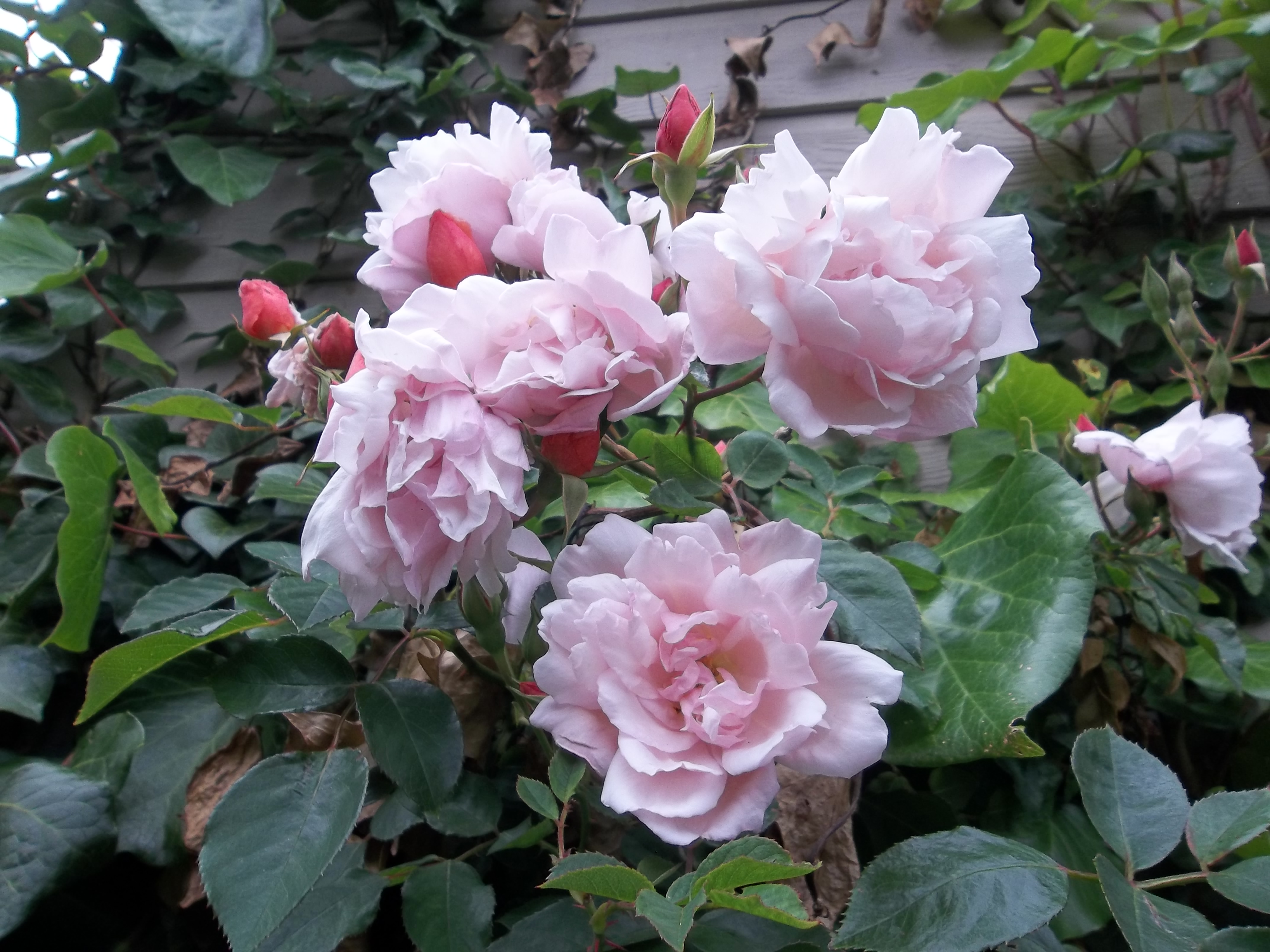
The real thing has a big, heavy deliciously clove- scented head, with a tangle of frilly petals, and was originally used by the Romans for wreaths and garlands, known in Latin as corona. When these flowers first came to England with the legionaries nearly 2000 years ago, their name was coronation, until the word evolved into carnation.

I was just as dismissive about daffodils, when I was presented with a bouquet – or rather some bouquets – which I rather regret now. In my salad days when I was a twenty two year old in the army, and stationed outside a beautiful village in Shakespeare country, I was the only girl in an all male officers’ mess. I had my own little cottage where I lived with the mongrel I’d rescued and dignified by calling him Rupert.

Late one night there was a loud knocking, so I dragged myself from deep sleep, hurried on my pink dressing gown, and stumbled to the door.  Grouped there were all the young officers who had gone to watch a rugby match at Twickenham. It had taken them many hours to get back here, judging by the time – two o’ clock in the morning – and one of the things which had delayed them, apart from merrymaking at every pub on the way back, was that they had also stopped at every roundabout, it seemed, between my cottage and London.

Each roundabout they had stripped of its spring flowers, and here at my door was the result of their labours. Each young man was wearing a proud grin and holding a big bunch of golden daffodils in the moonlight. Sadly, I was not amused, deeply disapproved, and was more intent on getting them to go away, and stopping Rupert from barking and waking senior officers slumbering nearby, than in being grateful for their generosity at the expense of every town council between here and London!

So I did know how my three year old grand- daughter felt when I gave her a disappointing bunch of flowers. I’d chosen a big blowsy thank you bouquet  for her mother, and had as much pleasure in choosing the flowers as my daughter- in –law had in receiving them. My grand-daughter was also ravished by them, so I decided to walk back to the shop through the bitter Melbourne winter’s day and get her the little bunch of flowers I’d refrained from getting on the first visit.

I brought home a posy of exquisite purple violets, the perfect symbol, I thought, for my exquisite flower-like little grand-daughter. She took one look at the dainty flowers and burst into indignant tears, and then threw an uninhibited tantrum in which she expressed her un-utterable disappointment at not having a big grown-up bunch of flowers like her mother’s. Mortified, I could see her point.

Two years later a small posy of white rosebuds with one word ‘Mummy’ on Princess Diana’s coffin reduced half a world to tears.

The symbolism of flowers is far more profound that the sentimental Victorian descriptions of the language of flowers. The flaming red poppy, whose name is now synonymous with the word Flanders, is a poignant reminder still, of every young man who died in the terrible war that my grandmother called The Great War.

And in the next terrible war  flowers softened another battlefield. I remember my father telling me how the hills of Tunisia were smothered in glorious spring flowers as his tank regiment fought their way to join up with Montgomery’s army.

Bruce Chatwin painted an unforgettable image of flowers in that same war, in his book ‘The Songlines’. On the first page he wrote of a Cossack from a village near Rostov on Don, who was seized by the Germans to be carted off for slave labour to Germany. One night, somewhere in the Ukraine, he jumped from the cattle-truck shunting him and other captives away from their homelands and fell into a field of sunflowers.

Soldiers in grey uniforms hunted him up and down the long lines of yellow sunflowers, but somehow he managed to elude them. I can still see in my mind those rows of strong, towering green stalks and leaves,  great, yellow tangled- petalled heads benignly sheltering the fugitive crouched beneath.

I can never forget the endless fields of shimmering purple lupins alive with dancing blue butterflies, stretching along- side thousands of burnt -out tanks near Belsen concentration camp in Germany just after the war.  And I could never bear the pink rose bay willowherb, which grew on every English bomb site… the only plant that seemed to thrive in those derelict tragic places. They came to symbolise for me as a small girl, all the horror and sadness and destruction of the war I didn’t understand.

But perhaps the most powerful flower image of all, is that glorious girl on an American campus in the sixties, walking up to a row of armed, helmeted men, and tremblingly pushing a flower into the barrel of a gun pointed at her, her hand shaking slightly as she dared the outrageous.  A girl and a flower speaking the in-effable language of peace.

Food for threadbare gourmets

Sometimes home-made mayonnaise can seem a bit heavy, but I use a quick and easy French recipe to lighten it up, learned from my French neighbour. After making the mayonnaise, beat the white of an egg until stiff, and then gently beat it into the freshly made mayonnaise. It gives it a lovely creamy texture, and is particularly good with fish like freshly poached salmon. Another variation is to use a clove of garlic when making the mayonnaise and then add finely chopped avocado with the egg- white. This is a good accompaniment to the chicken mousse from the last post.

Food for thought

That is at bottom the only courage that is demanded of us: to have courage for the most strange, the most singular and the most inexplicable that we may encounter. That mankind has in this sense been cowardly has done life endless harm; the experiences that are called ‘visions’, the whole so-called “spirit-world,” death, all those things that are so closely akin to us, have by daily parrying been so crowded out of life that the senses with which we could grasp them are atrophied. To say nothing of God.         Rainer Maria Rilke 1875 – 1926  Austrian mystical poet

45 Comments

Filed under army, cookery/recipes, family, flowers, gardens, great days, history, humour, life/style, philosophy, princess diana, spiritual, The Sound of Water, Thoughts on writing and life, Uncategorized, world war one, world war two

Blogging – antidote to writers’ heartbreak

100_0221

“Writers don’t go to hell”, said Anthony Howard, an English writer, “they have such hell on earth with their publishers, that when they die, they go straight to heaven.”

As a mere journalist at the time who didn’t dare call myself a writer, I shuddered at what abysses of despair that remark revealed, and  thanked my lucky stars that my fate would never be to agonise over a publisher.

Times change, and I’ve discovered what he meant… the anguish of  clumsy editors who think they understand the English language better than you do, seems to be the fate of too many writers. I remember my husband writing his umpteenth book, and on receiving the proofs, finding his manuscript had been improved by a feminist editor who’d replaced words like ‘ mankind’ with ‘personkind’, and’ brotherhood’ with ‘personhood.’

I, on the other hand, was once gifted with an editor who had just started at the publishing house, and bright- eyed and bushy-tailed, wanted to prove her worth to her new employers. After she’d completely re-written my first chapter, I suggested she might as well write the rest of the book, and they could dispense with me. They found another editor!

When asked to edit a book or an article, I use the lightest of pencils, knowing well the lacerated feelings of an author whose copy has been ‘improved’, the rhythm of sentences destroyed, words replaced, or others inserted.  And I am living proof that editors often don’t have any understanding of the book they’re working on.

I was once asked to edit a gold- plated leather- bound copy of The World Book of Rugby. My husband swears he actually saw my jaw drop when an emissary from the publisher called in and asked me to take the job on, as their previous editor had just crashed out (probably with boredom).

Conscious of the angst of all writers whose precious words are deemed  unsuitable by an insensitive know-all who has probably never written a book, I  only really checked the spellings of names and teams, grammar and punctuation – not a strong point with sports writers – or me either -and tried to master rugby terms like loosies, flankers, dropped goals and the like – which are different in the two hemispheres..

My finest hour was when I was groaning over the teams for South Africa and Australia at an important test match, and the computer that is our mind clicked into place. There were two players, Jason Small and James Little, and when I looked at the teams, something told me their names had been transposed. They were both playing in the same positions but on the wrong sides. Looking up the records I was right – a huge blunder but an easy mistake.

And that’s what proof-readers and editors are for, to my mind. They are not there to re-write the copy. How people like Dylan Thomas and James Joyce got their eccentric words, constructions and sentences past the eyes of people who think they can write better prose than the writer submitting his precious baby to them I don’t know. So there are obviously some wonderful publishers too… but it’s getting to them that’s the challenge…

So often writers wrestle with language (especially the English language), puzzle over plot and construction, assemble their research and marshal their facts, and then day after day, or night after night, write and re-write and eliminate and polish and check and then re-write and re-think, and finally offer up the fruit of this silent, dedicated labour and joy to someone who doesn’t seem to give a damn for their exquisite prose and potential masterpiece!

And then there are the reviewers and critics. When a craftsman makes a beautiful chest, people don’t look at it and say: ‘did you think of using the grain a different way?’… or: ‘ were you conscious that that leg isn’t quite straight?’  They don’t say to a painter: ‘did you really feel that composition was quite satisfying? … ‘had you really thought through that colour palette?’ or: ‘I just feel that brush-stroke there is a bit clumsy’.

A composer can write his song or his symphony without someone suggesting it would sound better in B minor instead of C minor, or that that crescendo seemed a little over the top in the context of the slow movement.  But it seems as though writing is fair game for everyone who thinks they’ve got a degree in English – or not.

The only other artists who have to endure the pain of their sensitive souls being bruised like ours, are actors and singers. And my heart bleeds for them when pundits pull their performance apart and mention that the soprano cracked on a high D, or the bass is over the hill and past his best.

And this is where blogging is saving the souls of frustrated writers. We can write and experiment and develop our style and stretch our talents without anyone cutting us down to size. Other bloggers are supportive, understanding, and discriminating, but not judgemental.

So writers who blog may now begin to savour what heaven is – writing because you have no choice but to write – and writing knowing that the fear of those precious words being mangled and misunderstood, improved or deleted, is no longer our fate. Blogging allows us to climb out of the pits of despair, rejection and criticism into the sunshine of writing for the joy of it. The gods are not crazy after all.


Food for threadbare gourmets

Chicken mousse is a lovely summer dish and it doesn’t need gelatine, which I never use. Just melt two oz of butter in a basin over a pan of boiling water. Add 3oz of breadcrumbs, half a pint of cream, salt and a good punch of nutmeg. Stir for about five minutes until it thickens. Add three eggs and three table spoons of dry sherry, beat them together and then stir in eight oz of chopped chicken. Pour the mixture into a buttered soufflé dish or similar, cover with foil and bake in a moderate oven until firm – about half an hour. When cool, serve with a creamy mayonnaise with a chopped avocado in it. Delicious.


Food for thought

… Man’s real home is not a house, but the Road and… life itself is a journey to be walked on foot…              Bruce Chatwin  1940- 1989.  From his Book ‘What am I doing here”.

Life is a bridge. Cross over it, but build no house upon it.        Indian proverb

64 Comments

Filed under books, cookery/recipes, great days, life/style, literature, philosophy, The Sound of Water, Thoughts on writing and life, Uncategorized, writing

The eternal search – for the perfect coffee

100_0834

I lost my wallet the other day. Going to pay for the dry cleaning, I found my big red Guy Laroche wallet given to me by my generous daughter had disappeared. Panic. The last place I’d had it was at the garden centre a mile away. And since I’d paid for the plants, the wallet must still be sitting in the trolley. More panic.

I ran through the things that mattered in my mind… credit cards … but ‘they’ wouldn’t know my pin number. Pain to have to cancel… forget them for now. Money? Who cared. But oh, my photographs of the grandchildren and moments caught in time that I wanted to remember… they were irreplaceable… and the two little love letters with terrible spelling and seven year old scrawls from them … one which I had found written in the diary they always used to keep when they came to stay with me… on this occasion they had decided that they would stay permanently and be home-schooled by me:

‘Five time a week I have fun. It can be so wonderful. I will like to say that I am writing this because it came from my hart and I kodn’t get it out of my hed….I hope that we can stay heer for homeschool it will be so fun and it will asol be fun because I love my granny so much it can be fun every day but I love staying heer and I like feeding the eels’… how could I replace a letter like that? My heart curled over at the thought of such a loss…

What else?  Oh … my collection of coffee cards. Each one stamped for every coffee I’d had, and nearly ready for a free coffee. The restaurant down by the river, the cafe in the garden where they make pottery, the lovely place where they also make hand-made chocolates, my stopping off place in town…

Zipping up my stiff upper lip I hurried back to the garden centre, and there was the red wallet, waiting for me at the office. (gardeners are good  people!) “It was my coffee cards I was worried about,” I explained when I picked it up, and everyone laughed because they knew how I felt.

I have travelled the length and breadth of one country, which shall remain nameless for fear of hurting millions of people’s feelings, looking for a decent cup of coffee. I finally found one in a far-flung cathedral crypt cafe.  I will drive for miles for the sake of that elusive perfect cup.

I know as soon as it’s put in front of me if it’s going to be a good one. The cream will be thick and won’t just dwindle into a thin froth when stirred. It will be smooth and not too creamy and not too strong. The most memorable coffee I’ve ever had was in an Italian restaurant in Melbourne.

Creating this ambrosia obviously came naturally to the maker… and in that search for the perfect cup, I’ve discovered that the maker actually matters. Yes, I know the machine has to be properly cleaned so the coffee doesn’t taste bitter, and the milk the right temperature, but there’s more to it than that. And the deciding factor in the quality of a cup of coffee for me, seems to be the person.

Everyone makes the coffee the same way on the same sort of machines I’m assured, but it doesn’t work out like that. Every barista is different and so is their coffee. A grumpy barista does not produce a good cup of coffee. A good cup of coffee is hand-crafted and a work of love, so I know if it’s going to be delicious by the quality of the barista’s smile. A nice person makes great coffee! They even do lovely patterns in the froth, like a Christmas tree at Christmas time, or a flower or smiley face at other times!

And what despair and thwarted desire when I arrive at a favourite coffee place to find a new member of staff, or the nice coffee person has taken off overseas, and we have to start all over again, with a learner driver as it were!  Or the tantalising times when the best coffee maker is busy cutting cake or sorting spoons, and not at her post, and I have to make do with a cup which I know won’t be as good as hers.  C’est la vie, but coffee is so much more than beans, milk and water!

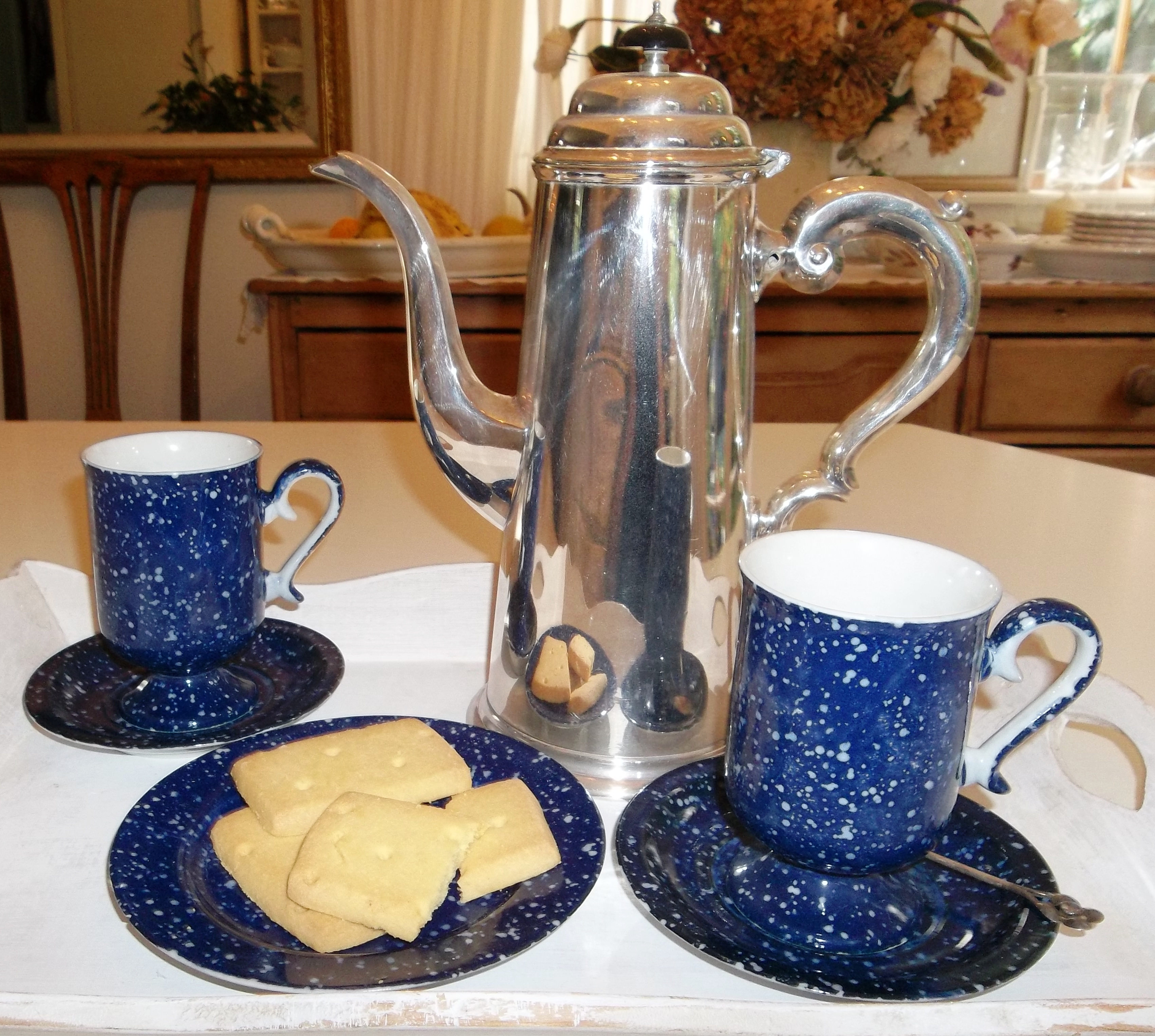
And when the perfect coffee arrives, what sybaritic pleasure – the delicate sinking of the spoon into the froth, and a gentle stirring. Sometimes a fragrant teaspoon of coffee crystals for the sheer pleasure of stirring and dissolving them in the glorious liquid. And then a sip, and a contented settling into satisfaction as I slowly savour one of civilisation’s minor works of art.

Sadly the second cup never reaches the same level of pleasure as the first. And I’ve even read that scientific research has proved this to be true. No wonder it matters that that first cup is as good as it can get!


Food for Threadbare Gourmets

One of my favourite coffee places serves gingerbread with their coffee. I love it. To make it myself, I use two eggs, a cup of sugar, a cup of milk and a cup of golden syrup (the cup rinsed out with oil before measuring the syrup). Beat them together. Melt 225g butter. Mix two cups SR flour, two teasp or more of ground ginger, a teasp each of mixed spice and of cinnamon, and a teasp of baking soda into the egg mixture and then stir in the melted butter.

Pour into a loaf tin with the base lined with baking paper. Bake at 180 degrees for an hour. If you’re using a fan-bake oven test after 45 minutes. Let it cool in the tin for 30 minutes before turning out. You can ice it, but I like it cut into slices and spread with a little butter.

Food for Thought

“The artist’s task is to save the soul of mankind; and anything less is a dithering while Rome burns. If artists cannot find the way, then the way cannot be found.”
Terence McKenna  (1946 –  2000) was an American philosopher, ethnobotanist, lecturer, writer and author of several books.. He was also the creator of a mathematical theory of time based on patterns found in the I Ching which he termed novelty theory.[1]


65 Comments

Filed under cookery/recipes, culture, great days, happiness, humour, life/style, love, philosophy, The Sound of Water, Thoughts on writing and life

A rose is a rose is a hose !

100_0532

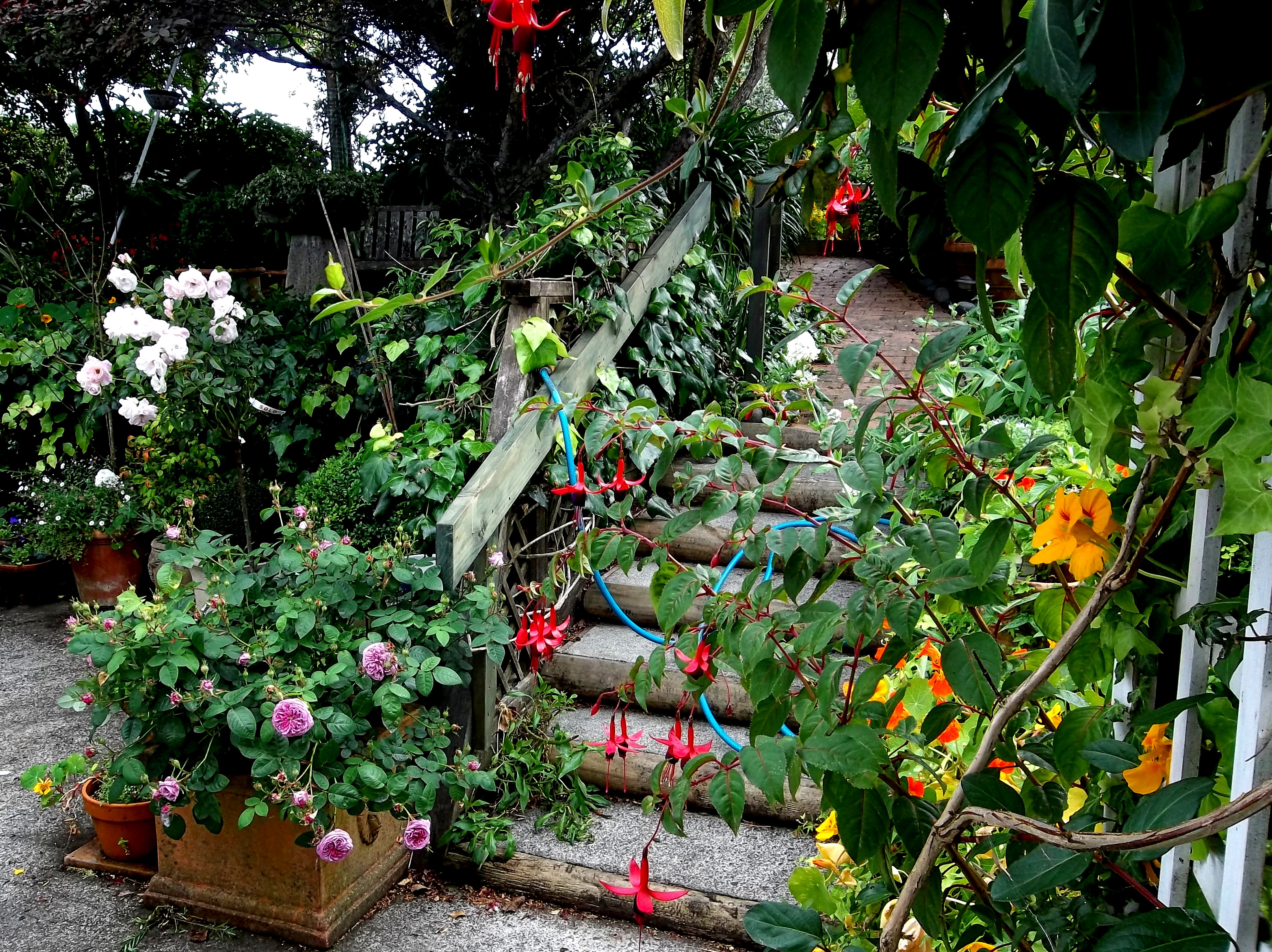
This was supposed to be a picture of a rose. When I developed it, it turned out to be a picture of a hose. I was shocked. How could I have been so one-eyed, and not seen what was shouting at me in a loud turquoise voice? I only see what I want to see, and eliminate even the obvious, it seems.

So when I went for my walk in the summer evening, I reminded myself to actually look, and not to assume or to expect. I wanted to see what was there, not what I thought was there. Down near the harbour where I usually turn around I always end up by a bougainvillaea sprawling through the trees, and just out its reach, a queen of the night holding her own. Braving bougainvillaea prickles, I can just reach the greenery-yallery sprigs of tiny flowerheads.

Two nights ago I broke one off and carried it back with me, sniffing the glorious fragrance, and ending up sitting on the warm marble bench in the cemetery at the other end of the peninsula, still smelling the sweet blossoms. I did what I’d never thought of doing before, and took it in and put it in a glass in the bed-room. The scent filled the whole room, and whenever I turned over in my sleep, the scent was drifting past.

The next day the tiny pale green flowers closed up, and the sprig sat nondescriptly on the window- sill all day, before bursting into glorious scent in the evening again. So now I plan to keep a permanent supply of these modest blossoms that don’t look big enough to be able to scent a whole room… The scent lasts for three nights I’ve discovered.

Walking back tonight with a fresh sprig of blossom, I passed a big shrub on the road where it dips and there’s a muddy spring.  Before now I’ve smelt its fragrance, but not given it a passing glance. Its reputation as a deadly poison and hallucinogen had somehow got in the way of me actually seeing this innocent plant. Tonight I looked at it, and ended up gently holding one incredibly beautiful flower-head after another, each one slightly different, gazing at their two layers of frilly white petals, and seeing deep inside the long white tube, white stamens pushing their way up to the light. The pendulous buds are so yellow it’s a surprise that the flowers are so white

The slender pale green calyx was smooth and soft and somehow tender to touch and to hold, and ended where the green- veined white trumpet – shaped flower began. Its ugly official name is brugmansia, but its folk name is angels trumpets. Angels trumpets spread their scent so far that long before I get there I can smell them.

Enchanted now with the idea of white scented flowers, I noticed the exquisite waxy looking candle-shaped buds of the king magnolia further down the road, the dark shiny leaves supporting each smooth creamy bud like a candlestick. Only one flower had opened, but it was enough. The scent of just one flower wafted past me.

I walked down the long drive to some friends’ house, knowing they were not there, but that they wouldn’t mind me visiting the frangipani plant flourishing by their veranda. The scent of frangipani takes me back to Singapore when it was still an eastern city and I was a girl, where all the alleys were hung with long bamboo poles suspended from every window on each floor, drying thin cotton tropical clothes in the brilliant un-ending sunshine.

We were staying in a hotel just around the corner from the famous Raffles Hotel, and the entrance was flanked with rows of frangipani trees.  Their fragrance followed us into the hotel courtyard and drifted in through the big open bedroom windows where we slept with no air conditioners, but beneath draped mosquito nets.

And when the velvet tropical night had fallen promptly at six thirty, every night in the darkness I would look down from the bedroom and see small groups of people squatting on the pavement in a circle. They would have tiny flickering lights and little spirit stoves in their midst to cook their dinner, delicious smells rising tantalisingly through the frangipanis, and I would hear their soft chatter and their laughter.

There were no blossoms on the frangipani growing here in New Zealand… wrong time of year perhaps. Back home, there was one white gardenia open.  I savoured the perfume before bringing it inside and putting it in a shallow bowl, floating on the water. So though no angels trumpets, I have queen of the night, gardenia and creamy honeysuckle from the porch scenting the house – even the names are poetry.

I don’t know whether I did what I intended when I began my walk, or whether I saw what was really there, but just by looking – truly looking at the beautiful angels trumpets – unnoticed before –  the walk turned into something else – a successful quest for white scented flowers. And like all successful quests, that was good enough.

And I wonder if this is how life is… we set off in one direction and find that imperceptibly we’ve drifted down other unsuspected paths; and looking back, we see that it was the perfect journey, and our travelling had a purpose, and was not random at all.


Food for Threadbare Gourmets

Friends for dinner before they left after the summer holiday to go back to the city. On a summer evening cold food seemed appropriate. So we had chicken with curry mayonnaise on rice salad. The cooked chicken chopped and mixed into a bowl of good bought mayonnaise, with about a big tablesp of golden syrup and desert sopn of curry powder to taste… I taste until I like it. Stir through enough cream to make it a soft consistency to stick to the chicken.

Cold basmati rice is jollied up with a vinaigrette dressing with salt, plenty of freshly ground black pepper, mustard, and sugar. Add to the rice generous helpings both of peas and sultanas soaked in boiling water, lots of crunchy chopped almonds lightly toasted in a frying pan, and lots of chopped parsley. Nice with a salad and chilled pinot gris .

In deference to our French connections we now have the cheese course before the pudding! This was some of our plums cooked to Nigella’s lovely recipe in red wine, one star anise, two cloves, teasp of cinnamon and a bay leaf, plus honey to taste. We had them with a mix of plain yogurt, whipped cream and runny honey stirred gently together, and a little shortbread biscuit.


Food for thought

That mighty power that sways the tides and works the million miracles of spring is ranged forever on the side of love.

The writer: known only to God .  Seen on an embroidered sampler hanging over a bedroom fireplace in an English cottage


73 Comments

Filed under cookery/recipes, flowers, food, gardens, great days, happiness, life/style, love, perfume, spiritual, Thoughts on writing and life, Uncategorized

Nuns and their habits

100_0807

I can’t help feeling that nuns are getting a bad press at the moment after seeing the film Philomena, and like everyone else in the cinema, running out of tissues. I thought back to the nuns at my convent… mostly French or Belgian, a couple of English and a few Polish ones. Some were old, some were beautiful, some were wise and some were silly – at least to a bigoted ten year old.

My father didn’t know about my past in which I’d  read all my grandmothers anti-Popish books, which included Westward Ho, and Foxe’s Martyrs, a catalogue of the three hundred people Mary Tudor burned for being Protestant. So sending me to a convent for a good education seemed a good idea to him.

I didn’t discuss it with him, for on our first day with our new parents, I’d been told I had to do exactly as I was told – always – so there didn’t seem to be any room for discussion. So a prejudiced Protestant got to observe the strange Catholic goings-on at her new school!

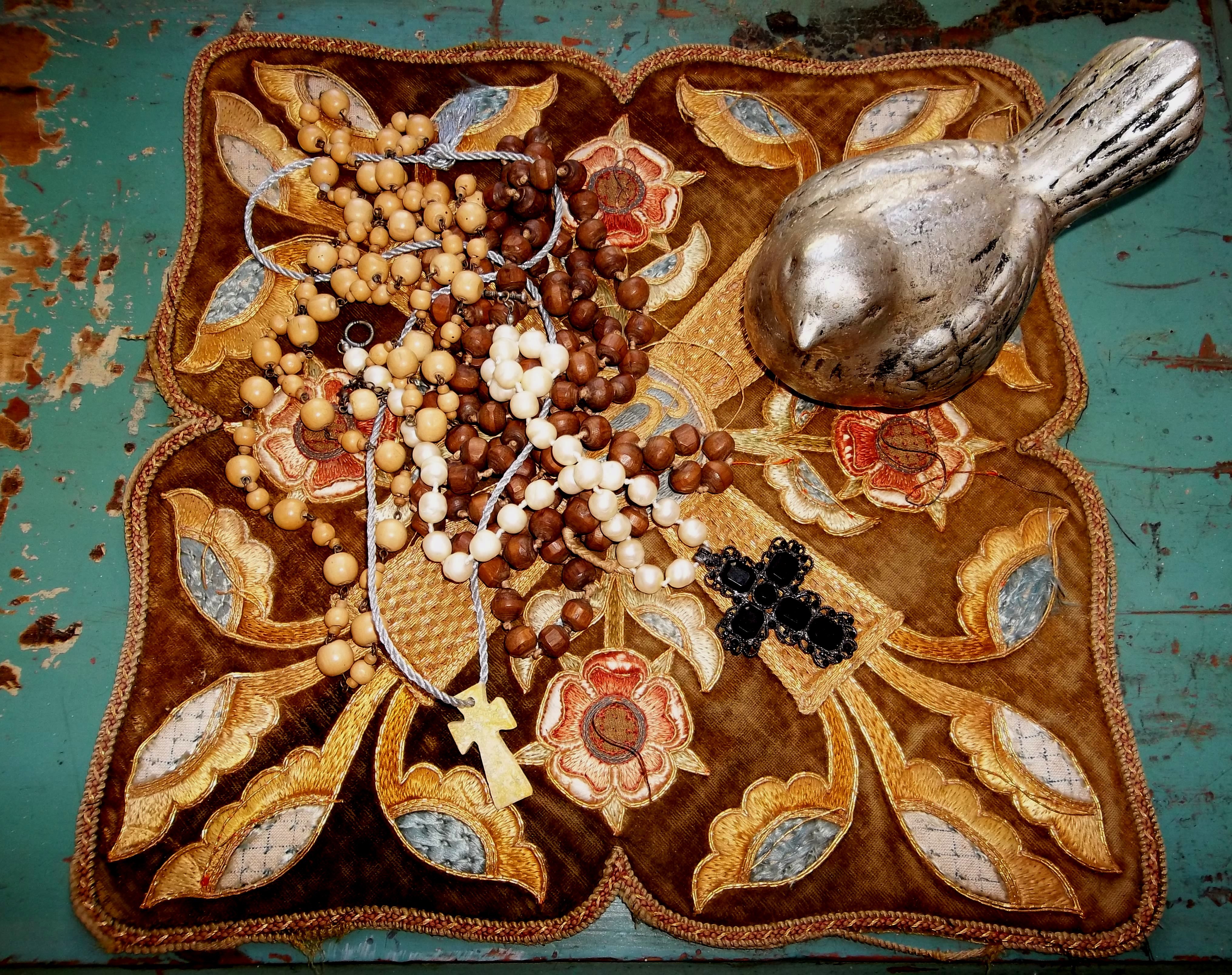
The nuns all looked wonderful in their no-expense spared rich plum-red gabardine habits, with wide swinging pleated skirts and wide sleeves. They wore a long snowy  white veil over the wimple which framed their faces and had a splendid thick knotted red cord round their waists to which they attached their rosaries.

We had a roller skating rink where we skated most days, and obsessed about how many ball-bearings our skates had. At night when I boarded for a while, and when everyone was supposed to be in bed and asleep, we could look down from the gabled windows, and see the nuns swirling round the rink on our borrowed roller skates,red  habits swinging, veils flying. An unforgettable sight.

The order had been formed by three aristocratic Belgian ladies, and we heard their history interminably when we sat in silence in the refectory at lunch, while tall, serious, severely beautiful Mother John stood at the carved lectern and read it to us during retreats. Retreats and the numerous saints Feast Days were a wonderful way of not doing schoolwork, which my parents disapproved of, since they were paying school fees.

During retreat, for several days we never spoke (which I loved even then), and did nothing but pray, draw holy pictures, tally what good deeds we’d managed to perform each day, using a flower as a symbol (I used a violet), process around the school grounds singing hymns, and if we were Catholic, celebrate mass with a portly priest imported for the job. I couldn’t bear him and the way all the nuns fawned over and spoiled the only man who ever came into their orbit! Apart from no speaking and mass, Feast Days were the same round of prayers and processing.

Mother Michael was our housemistress, a tall bony woman, English, and almost the only nun there who had no charm. She wore thick horn-rimmed spectacles, and I noticed uncharitably that in the chapel at prayers every day after lunch, she twiddled her Bride of Christ gold wedding ring and didn’t seem particularly devout.

I rather enjoyed this lunch-time prayer ritual, it also cut into time for lessons, as we walked in a long crocodile along the corridors on miles of polished linoed floors, passing numerous statues of saints frequently adorned with rosaries or necklaces. I thought most of the statues were ‘soppy’, a word we used then, and actually I think they probably were – mass-produced, sentimental, pastel- coloured and idealised images. I glared at them all like a latter-day Cromwell.

Chapel however, with its scent of incense was a pleasure, and a respite from effort and intrigue. Yes, the convent was a hotbed of intrigue and occasionally swept by gusts of vague hysteria – what convent girls would probably call ‘scharmerei’ – with favourites, crushes and gossip part of the mix.

I was Mother Michael’s favourite for more than a term. It was, in a good Catholic phrase – purgatory – because I was imprisoned every day in the airy second floor cloakroom in the Georgian house which was the home of the junior girls. It was a pleasant sunny room, but it might just as well have been a dungeon because I was chained, as it were, to a chair, and every lunch break Mother Michael undid my long dark brown plaits and spent the rest of the lunch hour break brushing my hair.

Friends came and went, washing their hands and changing their indoor shoes, but I was pinned to my penitential chair with my hair loose. Just before the bell Mother Michael would re-plait it, dragging it round my face like a Victorian orphan, and every day when I got home my stepmother would ask what was going on, and when I told her, say it had to stop. I would have loved it to stop, but I didn’t know how to make it stop.

It went on until Mother Michael found another pair of promising plaits, not as long as mine, but long enough. The new favourite was rather smug to me, but I knew what she was in for, and watched with some pleasure as Barbara found herself nailed to the chair, and like me,  unable to join in the games of skipping and hopscotch, playing five stones and weaving cats cradles going on outside. Mother Michael had seriously interfered with my social life, and I felt no pity for her next victim.

The other nuns were civilised and kind, unbigoted and happy. Unlike the only teacher who wasn’t a nun, and who constantly tried to outdo them in piety and holiness. She was the maths teacher, so it was inevitable that our relationship would founder.

In fact it never recovered from the day when I finally rebelled and tried to speak my mind. As an Irishwoman, her constant theme was the ‘puir’ persecuted Catholics and all the dreadful things Protestants had done to them, including  executing Guy Fawkes and his co-conspirators – we never celebrated Guy Fawkes day at the convent – and ‘puir ‘ St Thomas More, beheaded by Henry VIII.

Baulking at having to pray for the souls of my Protestant parents because they weren’t Catholic – after we’d interrupted long division yet again to recite the Angelus – my stroppy ten-year old self started to tell her about the Inquisition, and Borgia Popes etc.  But I got no further than the Inquisition. “Oh what a pack of Protestant lies!“ she shrieked dramatically, clapping her hands over her ears.

Not only was my relationship soured with Miss Cummins, but it never recovered from the disapproval of all the other Catholics in the room either… I paid the price for this rebellion, and was always left until last to be picked for rounders teams and  netball. I left the convent after a year without regret, and yet looking back I’ve had more fun from my memories of that unique environment than from some of my more conventional schools.

The beautiful High Victorian Gothic building, which housed the foreign nuns so far from their homes in Europe, and generations of schoolgirls, has now been turned into smart flats, surrounded by the glorious trees and grounds where we played so happily, watched by little red squirrels perched in the black branches of bare trees silhouetted against the snow.

I wonder if the skating rink is still there. I think no-one since would have enjoyed it as much as those gentle souls swirling silently around in the dusk, plum coloured habits swaying, veils flying and rosaries swinging. I do hope they bypassed purgatory and skipped straight into heaven.


Food for threadbare gourmets

Going cold turkey day after day post Christmas is not my idea of enjoying food. So after the second day I chop it into small pieces and freeze it. Yesterday we were ready to eat more turkey, so I defrosted it, stirred small pieces into a thick white sauce with plenty of nutmeg, some parsley and plenty of chopped mushrooms fried in butter. Served over savoury rice, it was good. Into the hot basmati rice I stir a chopped fried onion, plus a handful of peas, a handful of sultanas soaked in boiling water to plump them out, and plenty of toasted slivered almonds, salt and pepper plus more parsley. It beats the boredom of cold turkey.

Food for thought

The angels keep their ancient places;

Turn but a stone, and start a wing!

‘Tis ye, ‘tis your estranged faces,

That miss the many splendoured thing

Francis Thompson 1859-1907, great English poet, mystic, vagrant who lived on the streets for most of his drug-addicted life.


49 Comments

Filed under cookery/recipes, happiness, humour, life/style, spiritual, Thoughts on writing and life, Uncategorized

The necessity of beauty

100_0764

Pamela was my lodger. She was living in the third bedroom in my flat for the same reasons that Mr Micawber pronounced the immortal words:”Annual income twenty pounds, annual expenditure nineteen pounds nineteen and six, result happiness. Annual income twenty pounds, annual expenditure twenty pounds nought and six, result misery.”

I’d tried to fill the gap between my meagre salary (women were paid far less than men in the Hongkong I lived in ) and my expenditure, by doing TV quiz shows,  radio programmes, using the children as photographic models and even doing PR for the Anglican church until I could stand being hypocritical no longer. So Pamela was my next attempt at solvency. While she lived with me my life was filled with her dramas, love affairs, crises and disasters.

She arrived with one fiancée, dressed demurely in twinset and pearls, tweed skirt and silk head –scarf. Soon she found a more exciting prospect, and changed her style  to newly fashionable jeans, her hair swung up into dashing styles and lots of makeup. The new fiancée lent her his new VW while he went back to England to sort out his divorce, and hereby hangs the tale. Pamela rolled the car her first night in possession of it, and I was awakened in the middle of the night by a Chinese policeman who couldn’t speak English.

I pieced together that Pamela had had an accident, and was in a Chinese hospital since she had no insurance to cover her for a European one.  The next morning the children, four and five years old, and I, packed up a few things for Pamela and made an expedition to the enormous  building which housed some thousands of sick and penniless Chinese.

We found our way through a maze of corridors to Pamela’s ward, and by the time I reached her bed I was deeply shocked. The ward held eighty women. They were all dressed in faded brown cotton shifts including Pamela. The noise was horrendous. Cantonese is the noisiest language on earth. To hear our amah chatting to another outside the kitchen was deafening. To hear seventy- nine women chatting in a confined space was probably higher than the safe decibel level.

Pamela was bruised and shocked but not injured. After doing our duty, and promising to return that afternoon with more things she wanted, the children and I went home, leaving her with a little bunch of camellias I’d picked. Only six blossoms because that was all that were flowering.

When we returned in the afternoon, something had changed. There was a hush in the ward and a sense of peace, and all eyes were on the gwailo (long- nose) and her children. Being watched was something one accepted as part of life then, but this felt different. And the hush was a sort of reverence. Pamela whispered to me what had happened after I left.

When we walked out of the ward, the women came crowding round her to see the flowers and smell the fragrance. They were ecstatic at this exquisite beauty in their harsh unfriendly environment. Deprived as the women were, of all colour and texture and smell and beauty, the flowers brought something like heaven into their lives.

They didn’t speak English, and Pamela didn’t speak Cantonese, but with the aid of the ward sister’s few words of English, they worked out a roster for the flowers. Each woman would have one camellia by her bed-side in a glass for three hours in every twenty-four. Pamela had one all the time, and the sixth flower which had fallen off its stem, the ward sisters had in their office, floating in a saucer.

Back at the office the next day I rang the dean of the cathedral and several hotels and they agreed to send their flowers to the hospital whenever they changed them. I wonder if they still do.

The great Catholic thinker Monsignor Hildebrand wrote that: ‘the poor need not only bread. The poor also need beauty’. But it’s not just the poor. We all need beauty.

It’s strange to me that Abraham Maslow in his hierarchy of needs didn’t include beauty. Sometimes beauty is the the only thing that keeps us going. As Resistance fighter Odette Churchill was being locked back in her cell after a bout of torture by the Gestapo, she snatched up the skeleton of a leaf being blown in the door with her. The beauty of that leaf sustained her and gave her hope and courage and a belief in goodness that carried her through her  dreadful ordeal.

Quaker writer, Caroline Graveson wrote that: ‘ there is a daily  round for beauty as well as for goodness, a world of flowers and books and cinemas and clothes and manners as well as mountains and masterpieces.’ She talked of beauty: ‘not only in the natural beauty of the earth and sky, but in all fitness of language and rhythm, whether it describe a heavenly vision or a street fight, a Hamlet or a Falstaff, a philosophy or a joke: in all fitness of line and colour and shade, whether seen in the Sistine Madonna or a child’s knitted frock…’

The sad thing is that those deprived Chinese women in that joyless hospital ward, came from a culture, which before the blight of industrialisation and the tyranny of plastic, was incapable of producing anything that wasn’t beautiful – from their baskets to their bowls, to their porcelain and their poetry.  And there was something very beautiful about buying a kati of vegetables in the markets and watching them being skilfully wrapped in a beautifully folded sheet of re-cycled Chinese newspaper, or a large leaf, and tied with a knotted reed.

Perhaps their own sage should have the last word, Confucius said that everything is beautiful, to those who can see it….

Food for Threadbare Gourmets

Salady food feels right in the Antipodean Christmas season.This is one of my favourites. Boil new potatoes for the number of people you have, plus hardboiled eggs. Chop them and mix them with sliced artichoke hearts fresh from the delicatessen or from a jar. Gently toss in a good vinaigrette  dressing, and sprinkle with capers if desired. Delicious on its own with crusty rolls, or with cold chicken or cold salmon.

68 Comments

Filed under colonial life, cookery/recipes, culture, flowers, food, great days, life/style, The Sound of Water, Thoughts on writing and life, Uncategorized

Midsummer Christmas, dawn to dusk


100_0758100_0650100_0760100_0624100_0772100_0584100_0767100_0730It would be good to find some quiet inlet where the waters were still enough for reflection. where one might sense the joy of the moment, rather than plan breathlessly for a few dozen mingled treats in the future…
Kathleen Norris

50 Comments

Filed under environment, flowers, food, great days, happiness, life/style, philosophy, Thoughts on writing and life, Uncategorized, village life

The feminine face of God

100_0666

In the last hundred materialistic years I was fascinated to discover that there are 386 recorded instances of Mary appearing to people all over the world from Belgium to Japan, Venezuela  to Burundi and Rwanda. I had always supposed that the visions of Our Lady of Fatima, and at Medjugorje in Yugoslavia were unique one-off events. They are not.

Our Lady of Zeitoun appeared regularly over a church at Zeitoun, a suburb of Cairo for several years between 1968 to 1971, where she blessed the people. Photos of the figure of light with a halo, hovering above the Coptic church of St Demiano appeared in all the Cairo newspapers. Hundreds of thousands flocked to see her, Christians, Jews, and Muslims, even the President Nasser. And there have been more reports of her appearing in Cairo just recently.

But mostly Mary seems to appear privately to women, and children. The most famous, of course, in the 20th century was Our Lady of Fatima, who appeared on the same day for six months in 1916 to three Portuguese children, aged ten, nine and eight, while they were tending goats. After the third month of their visions, when crowds began to follow them the local mayor arrested the children, as he thought the events were so disruptive.

He put them in jail among other prisoners, and threatened to boil the children in oil ( charming! ) if they didn’t tell him the secrets Mary had imparted to them. ( the secrets seem to have been coloured by the children’s perceptions of hell and Catholic teachings) They refused, though the eldest offered to ask Mary if she could tell him. The other prisoners testified that the children consoled them and recited the rosary with them.  Back home, the youngest brother and sister told their parents that Mary had told them they would die soon and meet her in heaven, but their cousin Lucia, the eldest, would live long.

They did die, within a couple of years, of Spanish flu, and Lucia continued to have visions until she died as a very old lady in a convent. The six children who saw Mary at Medjugorje in 1981 have also continued to see her for over thirty years, on the same day of the month. This was her latest message to Mirjana Soldo on 25 November this year:

 “Dear children! Today I call all of you to prayer. Open the doors of your heart profoundly to prayer, little children, to prayer with the heart; and then the Most High will be able to act upon your freedom and conversion will begin. Your faith will become firm so that you will be able to say with all your heart: ‘My God, my all.’ You will comprehend, little children, that here on earth everything is passing. Thank you for having responded to my call.”

The internet being what it is, there are films of Mirjana Soldo receiving her visions, not just in Yugoslavia, but in Austria, Italy and elsewhere. Like the children of Fatima, these children – now adults – were also considered to be ‘disruptive influences’ by the civil authorities

Many phenomena were reported at Medjugorje during the appearances of the Queen of Peace as she is known, such as the sun spinning, dancing in the sky, turning colours, or being surrounded by objects such as hearts or crosses. Onlookers have reported that they have been able to look at the sun during those times without any damage to their eyes; these events are all similar to phenomena seen during the visions at Fatima in 1916. There too, newspaper reports described the sun dancing and spinning in the sky and changing colours. Reputable witnesses saw the solar phenomena forty miles away, while others, including believers, saw nothing.

 Among Mary’s many names are Queen of Heaven, Star of the Sea, The Blessed Virgin. In other places and other times the feminine principle or Divine Mother has been known by many other names… She’s been called Ameratsu and Cannon in Japan,  Kuan Yin in China, Tara in Tibet,  Shakti in India,  Akua’ba in Africa,  Isis in Egypt,  Ishtar and Astarte in the Middle East, Hera and Juno in Greece and Rome,  Freya in Scandinavia,  Spider Woman and Ixchel the Weaver in North America. 

The Divine Mother has a long history in the planet’s consciousness. Archaeology suggests that from approximately 40,000 BC to approximately 5,000 BC the Goddess was worshipped above all, and nearly all the figurines found from this period seem to be female goddesses.

There are other accounts of the feminine principle appearing when called upon. John Blofeld, mystic, scholar, and expert on Asian religions tells the story of a friend in China during the Second World War. He was half Chinese, and had been brought up a Christian. In danger, hungry, lost on a mountain in terrible weather, wondering if he’d survive the night, he called on his patron saint,  St Bernadette, “begging that sweet child to appear and lead me to a place of safety”

And then he saw her standing on a flat rock, her blue robe hardly moving in the fierce wind. She was smiling and around her was a nimbus of light. He felt something unfamiliar in her appearance, and then he realised she was a Chinese Bernadette. ‘Her high-swept hair, the jewelled ornaments clasped about her throat, the white silk trousers peeping through a blue robe slit to the thigh, were those of a noble Chinese maiden many centuries ago.’

She spoke to him in Mandarin and surprised him with her childish voice, much younger than Bernadette. “ Come, Elder Brother”, and she led him to a shallow cave, where he lay down and fell deeply asleep in the bitter cold and on hard rocks, unconscious of any discomfort. For more than a year he thought it was Bernadette who’d rescued him, until he saw by chance a portrait of Kuan Yin with her two attendants. In Ling Nu, the youngest, he recognised the lady who had saved his life. After deep thought, he decided that Kuan Yin had too much delicacy to appear to someone calling on a foreign goddess, so she sent Lung Nu who could be taken for a child saint.

Often in her appearances to children, the lady doesn’t give her name. …” beautiful lady, beautiful lady”, the three small Italian children murmured on their knees at Tre Fontane in April 1947.   St Bernadette, the fourteen year-old un-educated daughter of a miller, only ever referred to her as ‘ That’, or ‘the small young lady” . The children at Medjugorje called her ‘Lady.’

She seems to favour quiet spots far from towns and villages, by streams and grottos and woods, and her visitations come unbidden. The Catholic church is never very happy about Mary’s appearances – or you could say is suspicious – since it considers the last word to have been spoken on the faith after the death of the last apostle. So they don’t want her interfering! Reports of visions of the Lady are rarely greeted with any enthusiasm by church authorities and they have very strict criteria about who they believe.

Out of the 386 visions/ appearances/ apparitions – depending on who is describing the visitations – only eight have been officially approved by the Catholic church. I wonder how many private and unrecorded visions – not just of Mary, but of other figures of spiritual significance – there are among people who have never spoken of them. I’ve heard of several.

Graham Green, the novelist, writing of her, said: ‘There is a common feature in all her appearances, the appeal for prayer and yet more prayer. Her message is as simple as that, and it may seem unimportant unless we have some realisation of the terrible force of prayer, the mysterious untapped power able to move mountains’.


Food for threadbare gourmets

Soup is the answer when I can think of nothing else, and this quick warming tomato soup is a favourite. Gently fry an onion, five cloves of garlic, a small piece of chopped ginger, and a good pinch of coriander in a saucepan until soft. Add a teasp of smoked paprika, two tins of  chopped tomatoes in puree and one tin of whole tomatoes. While it simmers, leave a small bunch of herbs like thyme and marjoram tied together in the mix.

Simmer for ten minutes, remove the herbs and blend until smooth. Re-heat, season with salt, freshly ground black pepper, and stir in some cream… this amount serves six. Sprinkle chopped parsley on top, and freshly cooked croutons made from sour dough bread and fried in olive oil are good too.


Food for thought

 My daughter sent me this prose poem… it’s by that talented poet Anon. We’ve had seventeen dogs – three at a time, mostly rescued…

It came to me that every time I lose a dog they take a piece of my heart with them, and every new dog who comes into my life gifts me with a piece of their heart. If I live long enough all the components of my heart will be dog, and I will become as generous and loving as they are.


49 Comments

Filed under animals/pets, consciousness, cookery/recipes, food, great days, history, life/style, philosophy, spiritual, The Sound of Water, Thoughts on writing and life, Uncategorized

Days of wine and roses

100_0503

It’s been the one of those glorious days when ‘cherubim and seraphim are casting down their golden crowns around the glassy sea.’  Silence… a small white yacht gliding over the still shining water, scarcely leaving a wake, using the engine because there’s no wind for the sails… the islands we never normally see, floating on the horizon, palest purple against a lavender blue sky… an enchanted stillness, the only sound the cooing of the doves in the trees.

When I awoke this morning the sky was just turning pink, so early though it was, I jumped out of bed, dressed, and headed out to watch the rising sun across the sea. The dawn chorus was just beginning, so I turned around and walked by houses with curtains drawn and solitary gardens, thrush and blackbird seeming to pass me on from one song to the next.

Theirs was the longest and sweetest serenade, while the soft incessant cheeping of the sparrows filled the spaces, and the slow crescendo of the doves cooing began. As I retraced my footsteps back along a grassy track, I saw with pleasure that mine were the only footprints in the dewy grass. I never met another soul as I meandered around the sleeping village.

Back home I crossed into the cemetery and disturbed a couple of speckled hens who scurried  fussily back into their own garden next door, clucking agitatedly. I walked across to the end of the peninsula to get my daily fix looking out to sea through the grey gnarled branches of the ancient pohutakawas.

Later, I sat on the veranda feasting my eyes on the glittering water, with breakfast of toast and a boiled egg from the errant chickens. When I had visited their owner Kate the day before, she had given me a handful of newly laid eggs, and the one I ate now was so beautiful I could hardly bear to break the shell. It came from her oldest hen, she said, a black Arakan, a breed which presumably comes from Arakan in Burma, and this little black hen lays eggs of the same pale blue as the sky today.

During the morning I went to the next village to buy a birthday card for a man. No flowers then, and since most men’s cards are covered with the inevitable cars or golf clubs, I did some lateral thinking and came away with a card with a message: “ If you resolve to give up drinking, smoking and loving, you don’t actually live longer: it just seems longer.” My son-in-law will be delighted with this encouragement to enjoy these permitted pleasures.

Stopping off at the garden cafe down a long avenue of poplars, the vivacious young Indonesian proprietor greeted me as usual with: ‘Ah Miss Valerie, are you ready for your coffee today?” Since she always jumps the queue for me, and makes piping hot coffee I can forgive her the spinsterly ‘Miss’. I sat in an ivy- covered alcove framed with late wisteria blossom and white jasmine, their scents wafting over the smell of coffee.

Before getting home, I called in on Friend, to collect various things from yesterday’s rollicking party for 45 oldies who came from far and wide. Others were there too to collect their vases, or napkins or fish slices. “The sun’s over the yard arm”, announced the man of the house, which though it was only lunch-time, gave us the excuse to finish off the champagne from the previous day.

Then, we had sat on the terrace in the sun, looking out over the turquoise sea, the lawn fringed with white iceberg roses in full bloom, and red roses lining the long white table cloths.

We’d enjoyed a four course lunch, starting with a terrine followed by freshly baked ham, salmon and asparagus, the cheese course – big rounds of fresh Brie, fresh strawberries and blueberry tarts – each course accompanied by different wines and champagne –French of course! And finally the birthday cake, a pyramid of moist chocolate brownies and truffles. In other words a feast! And all made by friends.

At the end of the afternoon someone brought out a guitar. We sang ‘Blowing in the wind,’ ‘Michael row the boat,’ ‘Kumbiya, ‘He‘s got the whole world in his hands’… all the old favourites. I sang my heart out, and had to restrain myself from dancing.

But as a somewhat acid -tongued acquaintance observed to me, all the men were glued to their seats – and they all look alike, she said. “They all have white hair, and are wearing the same sort of blue and white checked shirts, most of them have walking sticks and a lot of them have paunches!” The women on the other hand, were younger, sprightlier, beautifully dressed and immaculately groomed.

That evening several of the guests came to dinner, though we couldn’t eat much. We sat on the veranda in the dusk, by the loquat tree covered in golden fruit, with a fat green and white wood pigeon rustling around swallowing them whole. We had wine and laughter and fun, discussed everything irreverently, and enjoyed the party all over again.

Days of wine and roses and golden laughter  …when I returned flushed with champagne from Friend today, I found another generous neighbour had called while I was out, and left a bag full of freshly picked broad beans hanging on the door handle.

They were so delicious that for supper, I simply ate a dish of the tender little green jewels glistening with hot butter, though the old chap had steak with his. And I’ve just returned from the field above the harbour where the two little white goats live. They feasted on the broad bean pods, and seemed to feel the way I do about them.

‘Gather ye rosebuds while ye may’, wrote the poet, ‘Old time is still a-flying’, and I’m dedicated to this advice…. my rosebuds may be different to other people’s ideas of rosebuds, but I’m picking them as fast as I may.

So I sit here on the veranda writing, watching the evening sky turn pink and lilac and pale turquoise over the still, silver water, the scent of sweet peas, a gift from a friend’s garden drifting through the house, and savour my blessings. I began with the words of a hymn, so I’ll end with some. These shining days are filled with rosebuds – moments of pleasure and goodness – friends and fun and flowers, chickens and birdsong and beans, ‘all things bright and beautiful, all creatures great and small’.


Food for threadbare gourmets

The strawberry season means Eton Mess for me! The first time I tasted it was just outside Eton, at a place called Datchett, at a rather grand dinner to entertain some visiting Argentinian polo players who’d been playing on Smith’s Lawn at Windsor. My best friend and I knew we were only there simply because they needed some girls to balance out the chaps. But we gave the food a lot of attention too.

The version I ate then was a variation, because the crushed strawberries and broken meringue were pressed into a big dish of ice-cream, and then re-frozen. Whipped cream was piled on  when it was served, on a huge carving dish. I like doing it this way too, using freshly made local artisan ice-cream. Really, the amounts are up to you… you can’t go wrong. As an added touch I sometimes whizz up a punnet of the fresh strawberries with some sugar, and hand that round in a sauce bowl, to drench the already sumptuous mixture in it! Food for the gods….


Food for Thought

He had picked it up, he said, on a beach; it was a piece of sea-washed wood in the shape of a human head. It was made of hard wood, shaped by the waters of the sea, cleansed by many seasons. He had brought it home and put it on the mantelpiece; he looked at it from time to time and admired what he had done.

One day he put some flowers round it and then it happened every day; he felt uncomfortable if there were not fresh flowers every day and gradually that piece of shaped wood became very important to his life. He would allow no one to touch it except himself; they might desecrate it; he washed his hands before he touched it. It had become holy, sacred, and he alone was the high priest of it; he represented it; it told him of things he could never know by himself. His life was filled with it and he was, he said, unspeakably happy.

From Krishnamurti’s Journal


59 Comments

Filed under birds, environment, flowers, great days, happiness, life/style, philosophy, spiritual, The Sound of Water, Thoughts on writing and life, Uncategorized, village life

Talking about silence

100_0542

A friend went for a happy break away with distant family, and returned home to find the bliss of silence awaiting her. She shared it with her readers, the deep need for solitude and silence, and how simply being with her plants, communing with her creatures, savouring the long views, the huge skies, and never speaking a word, she felt restored and at ease with herself.

Her readers, a band of like minds, responded that silence and solitude were necessities in their lives too. We discovered that we were not strange, we were not eccentric recluses, but that we were all strangely normal !

I thought about this, and realised that this group of women who had responded had probably reached that point in life when we want to experience our Hestia natures. Hestia was the Greek Goddess of the hearth and in her wonderful book, ‘The Goddesses in Everywoman’, Jean Bolen explores Hestia’s nature, and describes the Hestia archetype as being centred on home and family. She suggests that if Hestia wrote a book about her inner process she would call it Zen and the Art of Housekeeping.

Attention to the household, which includes the plants and animals in our care, is almost a spiritual process for a Hestia person. Women with this archetype find a sense of inner harmony as they cherish their surroundings and they know that this  nurturing of their corner of the planet, is a form of mindfulness. Jean Bolen called this time in which the Hestia archetype is totally absorbed in her  activities: ‘kairos’ time, a lovely Greek word describing that sense of being outside time, and feeling completely fulfilled. It’s also time-Less, we emerge from the ‘Zone’ as some call it, to find that time has flown while we were unconscious of the very word.

It feels like a creative activity, which it is, when we are so immersed in our tasks that time is meaningless. This is psychologically  nourishing, and we feel deeply satisfied and energised, powerful and peaceful when we come out of the ‘Zone’; like a writer feels  on completing a piece, a poet when her poem has emerged, or an artist after an inspired day at the easel.

Hestia women need and seek solitude, and as children they often felt out of kilter with their families, finding refuge in books and withdrawing emotionally. As adults, they need ‘A Room of Their Own’. The late Ardis Whitman, free-lance writer quoted  in ‘The Feminine Face of God’, said that: “…when we are surrounded by people, some of the passion and insight natural to us leaks away through the sieve of small talk. At your most daring moments you believe that what is going on is the ultimate human work – the shaping of a soul. The power of life comes from within: go there. Pray, meditate. Reach for those luminous places in yourself”

The obstacle to taking this time for self is women’s guilt. Too often they feel guilty at making time for themselves, fear they are being selfish, and so give away their vital self-nourishment by trying to please others. With maturity and the confidence of age, they can reclaim the time and space they need, knowing the truth of Rabbi Hillel’s ancient imperative: ‘ If not me –who? If not now – when?’

I have a friend whose stepmother is part Native- American. She was brought up by her Native -American grand-parents, and she told me:  “there was no idle chatter in our house. It was silent. My grandparents believed silence was sacred and should not be broken unless we had something of worth to say” …  Whenever I feel the need for silence at home, I say to my husband (politically incorrectly – sorry chaps!):  Red Indians! He gets the message.

Living in an intimate relationship with one person is so demanding when they no longer go to the office every day, in order to regain the silence and solitude that I need, we have a silent Tuesday, when no words are spoken. The house fills with something more than silence, a full, flowery, beautiful essence, which is only present in that magic space. Sometimes we have a Tuesday on a Thursday or a Sunday… whenever we feel we need it.

It isn’t just women who need solitude… I suspect there are many men too, who need the refreshment of peace and quiet… Thoreau famously wrote that he found it “wholesome to be alone the greater part of the time… I love to be alone”, while one of the early Desert Fathers, Abbas Isias said : ‘Love to be silent rather than to speak. For silence heaps up treasure, while speaking always scatters.’

We’re not talking of the harsh, ascetic, masculine discipline of a Trappist silence, but  respite from continual communication. This respite is more like immersing the self in a deep well of nourishment, from which we emerge refreshed and invigorated. In his book ‘A Time to Keep Silence’, famous travel writer Patrick Leigh Fermor described his stay at a Benedictine monastery in France. The Benedictine order with its gracious silences and routines was a revelation to him, and he went through three stages – depression and despair for a few days, then days of deep exhausted sleep, from which he emerged feeling purified, energised, joyful and peaceful.  When he remarked one day to the Abbott what a blessed relief it was to refrain from talking all day long, the Abbott replied, ‘Yes, in the outside world, speech is gravely abused.”  And even sixty years ago, C.S. Lewis said: “We live… in a world starved for solitude, silence, and privacy.”

I haven’t mentioned the word introverted, as I feel that Jung has no place in this discussion since he felt that spirituality was a masculine quality. Yet the thoughtful, mindful qualities that both men and women develop when they seek silence, which he would define as introversion, does lead to a greater awareness of the spiritual side of life. This inward turning of focus is a path that both men and women are taking more and more in these turbulent times, and if anything women are more likely to take it than men.

I’ve always loved Hestia, the home-loving, feminine personality who is her own woman. Not all women have this side to their personality, but when we deeply focus on our inner life, or give ourselves time to calmly enjoy our household chores – sorting a cupboard or baking a loaf, we are getting in touch with that aspect of ourselves. We all have other archetypes in our natures, from Aphrodite to Athene, Demeter to Hera, the goddesses of love and careers, motherhood and marriage, but as we grow older and wiser it seems that Hestia is more present in our consciousness.

When I was a child we used to buy Vesta matches in red and yellow oblong boxes. I didn’t know then that Vesta was the Roman name for Hestia, the goddess of the hearth, believed to be present in the living flame. Her sacred fire was supposed to provide light, warmth, and heat for food, and her presence to inspire peace,  meaning, and sanctuary for family. These things seem very precious in our tempestuous times…  they are what can sustain us, and make our homes a serene and happy refuge – and not just for ourselves – but for those we love.

Celi’s post ‘The lack of chatter in the box’ at her beautiful blog  http://www.thekitchensgarden.com    inspired this post.

Food for Threadbare Gourmets

The French call them ‘bonne-bouche’, and I needed a little something to start an impromptu supper with friends. To make it fun, I collected together the big pink and maroon shells I’d collected from the beach, lined them with slices of cucumber, arranged on the cucumber four fat prawns lightly sauted in garlicky butter, and dabbed freshly made aoli over them. Sprinkled with finely chopped parsley, they were a hit, eaten with fingers, but served with a paper napkin that matched the rest of the table.

Food for Thought

To everything there is a season and a time to every purpose under heaven… a time to keep silence and a time to speak. Ecclesiastes: chapter 3, verses 1 and 7

73 Comments

Filed under consciousness, cookery/recipes, environment, family, food, great days, happiness, life/style, philosophy, spiritual, The Sound of Water, Thoughts on writing and life, Uncategorized