Category Archives: The Sound of Water

Helicopters, hallucinations and hospital

.It only took two seconds. But since the consequences of those two seconds have dominated my life for the last six months, and promise to do so for some months yet, I feel faintly justified in sharing them.

Stepping blithely onto the back of the sofa to put a book back on the highest shelf, I lost my balance and fell backwards. Lying on the floor in a strange position, I knew without even looking that I had broken my leg and announced this to my love as he came to help me. Luckily the sofa is seven feet long, so he was able to get me onto it so I could lie there in unbelievable agony.

Even in that short time when I looked at my knee it was about ten inches across. I foolishly thought this was just swelling.

Abandoning the idea of driving to our nearest hospital an hour and a half away along a winding, precipitous road above the sea, we rang 111 instead. In half an hour the blessed ambulance arrived, with two angels who pumped me full of morphine, got me onto a special stretcher which didn’t entail lifting me, and decided I had to go by helicopter to the big area hospital.

After the interminable drive down the long winding gravel road during which time they stopped regularly to allow me to be sick, we reached the air strip and the waiting helicopter.

The last words I heard before I even had time to say goodbye to Himself, were: “I’m giving you ketamine for the pain. Some people get hallucinations.” I did.

Suddenly I was hurtling through outer space – tumbling into a vortex between intricate patterns of gold and black, and being sucked into the centre into the black hole. It seemed to go on endlessly. Eventually I said if I’m dying, I’m ready to die, but this didn’t stop the tumbling through space, the diving into the black hole again and again, and the patterns closing in around me. Then suddenly, I was back in the real world, unable to move a limb, totally paralysed, with the blazing sun beating down on my face through the glass about a foot away.

Unable to move or attract attention, I somehow survived this ordeal by sunburn, and arriving on terra firma was immediately surrounded by helpful, efficient people and wheeled away into a white tunnel which is what seems to pass for an X-ray these days apparently.

Then up to the operating theatre, and more blissful unconsciousness while they put on a plaster from thigh to toes, which had to last until the specialist could operate five days later. They told me the top bone was jammed down on the bottom bone, shattering it – a very nasty injury they assured me… not sure what happened to the knee in between, and I never got to ask…

Wheeled into a ward, addled with drugs and shock, I got used to the other drug-crazed, injured people around me! There were six of us and they included a secret smoker in one corner, and a young Maori woman who wore dark glasses all the time so she didn’t have to speak to any of us. The one time she was roused into vehement speech was on my behalf on the third day.

I had drawn what I called the Short Straw, a nurse who was looking after me that day who was so stout, it was a real effort I felt, to keep on her feet all those hours, and deaf too, so I wasn’t sure whether she was a bit dim or whether she just hadn’t heard me. Her ministrations were slow and reluctant, and when I told her I felt sick and she ignored me, I wasn’t sure whether she didn’t think it was worth taking any notice of me, or whether she just hadn’t heard. Seconds later, I called urgently for a receptacle and then filled three large ones with blood. “I wonder what caused that?” she kept saying in a helpless, puzzled way.

Apparently enraged, the Maori girl sat up in bed, took off her dark glasses, and using the odd four letter word, said words to the effect: “what do you expect when you fill her full of F… tramadol. Of course it’s tramadol doing it, you dimwit.” I trust the Short Straw only heard some of this.

The doctors decided it was the infamous drug tramadol too, combined with the rest of my cocktail, so I was downgraded to morphine and daily injections, instead of taking anti-coagulants. The result of this was that I had damaged my stomach, but didn’t know what to eat, so ate nothing but yogurt or mashed potato for some time, since otherwise I felt so ill that the pain of my leg paled into insignificance.

The operation duly took place and I wore a heavy black lycra and metal brace from thigh to foot for the next two months, unable to set foot to the ground. The operation also left me with a numb foot and shin, which I still have, accompanied by nerve pain which means I still enjoy/consume a full cocktail of painkilling drugs, and which makes it hard to walk.

The months were passed in a little cottage hospital where thirty-five of us were all coping with long-term injuries. In our little ward with four of us, we sympathised with each other, listened to each other’s life stories, gossiped about our favourite nurses, and moaned about the rigours of trips by ambulance back to base hospital to see the specialists at regular intervals.

I was humbled by the dedication and commitment of the staff, none of whom ever dawdled but who were on the run all day,   scurrying down long corridors of an old style building, walking between ten and twelve miles a day.

I set myself to be a low maintenance patient, but many of the patients needed help even in getting out of bed, (depending on the injury this was an art in itself), into a shower, dressing or eating, and no nurse ever be-grudged the time they spent with anyone. Two patients died unexpectedly while I was there, and red-eyed nurses showed me how much they cared.

The doctor who visited several times a week knew everyone’s names, joshed us all, and usually ended his visits in the big sitting room, where he sat at the piano and played old favourites for anyone who wanted to listen. One of my favourite nurses was a delicious and beautiful Indian who brought her children and nephews to do Indian dancing for us… exquisite…others brought their dogs, and one jumped straight up on my bed, and cuddled into me – bliss…

Most people were old, and alone at home so they couldn’t manage, and were sheltered safely here until they were ready to cope. I was a rarity with my leg stuck out in front of me in a wheel chair. But what I learned as I observed the others was that I was one of the only lucky ones there.

Though I was older than many, I was almost the only man or woman there with my own teeth, who didn’t have a hearing aid, who didn’t have dementia in some form, and who was strong and active, healthy and able to do yoga and all the other things that kept me young(ish) and flexible. In other words, I had been lucky enough to afford to go to the dentist, to be educated about a healthy diet and life-style, could afford them both, and had enjoyed a life fairly unencumbered and unstressed by money worries.

These frail people brought home to me as never before how life expectancy and/or the enjoyment of good health depends on income, which dictates education, health care, mental health, housing, and everything else we need for a good life.

I listened to the life stories of my companions in pain, and heard how one woman brought up her six children when her husband died when her youngest was five, working at sewing factory uniforms at home from dawn to dusk to make a living and look after the children, and helping in the local shop when she had any spare hours; the lady in the bed across from me who had had two children and adopted two more, shared the trials of coping with deeply disturbed children and then their adult problems; the beautiful, feisty woman in the next bed was going home to look after an alcoholic and bloody-minded, middle-aged son she’d brought up alone, and the severely mentally handicapped sister she also cared for.

And then there were the incidental friendships. A visiting son who had raised thousands of dollars to rescue, doctor and re-home over six thousand feral cats. When he ran out of money and still had thirty-six cats to re-home, he sold his house and he and his wife moved into the country into a smaller house with land where rescued dogs, ducks, ponies, goats, pigeons and every other needy creature came to live with him and be loved. All the cats came and were named and loved until they died. This lovely man worked at night driving a bull-dozer to make enough money, and he also did a lovely tango across the ward to amuse his mother! It was my enthusiastic applause which connected us !

A young woman came with her dog to visit an old neighbour, and she told me she and her sister and her mother, rescue and re-home more dogs than the local animal charity, who often turn to them for help. They used up every penny they earned caring for desperate creatures.

Listening to these stories, and the life-stories of my fellow patients, I felt humble and so grateful for the life I had been able to lead. Even having the time to write and to blog, and to own a computer is something only the fortunate can do.

Breaking my leg, and now hobbling around with my stick, waiting for everything to heal has been a blessing. It has opened my eyes to how so many good, kind women live their whole lives coping with inescapable burdens. That son reminded me of how much hidden goodness there is in the community, and I was shown how much beauty,  compassion and dedication so many women pour into their lives and their careers in the hospitals where they work. I was reminded that women are wonderful.

And I left this wonderful place with a full complement of much needed pain-killers, a walking frame, crutches,  stool for the bathroom and a high stool to sit on in the kitchen. I was offered care at home, plus someone to clean, and free physio for as long as I needed it. I will never grumble about paying taxes again! I give thanks for being fortunate enough to live in a western society where care and compassion for those who need it, is a way of life.

Food for threadbare gourmets

This is the first year of my adult life that I haven’t made my own Christmas mince pies – for obvious reasons (see above !!!). But I found some decent bought ones, prized off their lids and spooned oodles more good mince- meat into them, replacing the lids, and heating them up as required. Before serving I sprinkle them with caster sugar … this IS Christmas isn’t it??

I also like to serve them with a dollop of brandy butter – why keep anything so delicious just for Christmas pudding? I make it by ear as it were, using two ounces of softened butter – preferably unsalted, but not necessarily… and adding icing sugar and brandy… I go on beating with a fork, or a beater, and adding butter and icing sugar and brandy until it tastes the way I want it, and is the right soft consistency. I also add a few drops of vanilla. Once tasted, no mince pie is complete without it… though cream is also good…      A  Merry Christmas… to threadbare gourmets and to all those who are neither gourmets nor threadbare !

Food for thought

Lord, forgive us that we feast while others starve.           Grace before a banquet, said by John Fisher, Bishop of Rochester in the reign of Henry VIII.         Just as appropriate now as then…

50 Comments

Filed under animals/pets, bloggers, cookery/recipes, great days, happiness, human potential, life and death, life/style, The Sound of Water, Thoughts on writing and life, uncategorised, Uncategorized

War and Peace

100_0730

I stumbled on a quote from Winston Churchill at the beginning of the chapter of a book I was reading. He was talking to the boys of Harrow, his old school, just after the Battle of Britain… the leader of the free world with his back against the wall, found time to talk to schoolboys in the middle of a World War when his capital city was being pounded in the Blitz…

He said: “Do not let us speak of darker days, let us rather speak of sterner days. These are not dark days; these are the greatest days our country has ever lived.” (I can just hear him growling through his speech impediment and his false teeth)
Those words made me think of those sterner days, and what stern days we have all lived through since the end of the long peace from Waterloo to the First World War.
My ancestors lived peaceful lives between the downfall of one warlord – Napoleon in 1815, and the attack of another warlord – the Kaiser in 1914.

But things changed for them then, as for everyone, and my family would be a microcosm of that change. My grandfather fought at Gallipoli of tragic memories, my great- uncle was one of eight hundred men who ‘went down, “as my grandmother would say – in the Vanguard, when it exploded and sank in 1917.

My step-grandfather was one of the 60,000 men killed or wounded on the first day of the Battle of the Somme in June 1916, when he was shot as he stepped out in the first line after the whistle blew to advance in the early morning sunshine. Unlike that heart-stopping last scene in ‘Blackadder goes forth’, they didn’t run, but stepped out to a measured pace, and were mown down by machine guns raking along the long lines of men moving across the grass as they walked into the ‘jaws of death’….

These were peaceful men, called up from their homes and villages to fight for their country and for peace – they thought – unlike the highly trained aggressive army of martial men which faced them. They had actually thought that the Battle of the Somme would end the carnage.

The next generation faced the sterner days of another warlord, Hitler. My father escaped from France a fortnight after Dunkirk, and then spent the rest of the war as a famed Desert Rat, escaping from the siege of Tobruk, fighting across North Africa and then up through Italy. After the war he was stationed at Belsen, the concentration camp where I joined him to live with him for the first time since he had left when I was ten months old.

His brother served with the Long Range Desert Group which fought behind the German lines in North Africa waging guerrilla war. Captured, and ending up in prisoner of war camp in Italy, he escaped and hid and starved in the mountains, until rejoining the Allied Armies as they fought their way up Italy. My only other uncle manned anti –invasion posts around England before becoming part of the liberation forces in Europe. He listened in horror as they drove away to the sound of gun-shots after handing over Russian PoW’s back to the Soviets, who shot them all, there and then. My former father- in- law, a padre, landed on the beaches of Normandy and was so badly wounded that he lived with the after- effects for the rest of his life.

My first memory was of watching the Battle of Britain – not that I knew it was – I just saw white crosses diving across the sky and puffs of white. I was looking for dogs, since I heard the adults saying there’s another dog-fight. That summer has remained in the memory of those who lived through it – even me at two – as being one of unforgettable beauty. Historian Sir Arthur Bryant wrote of England then: “The light that beat down on her meadows, shining with emerald loveliness, was scarcely of this world… the streets of her cities, soon to be torn and shattered, were bathed in a calm serene sunshine…”

Later, I cowered in bed hearing the dreadful wail of the air- raid sirens, trailed downstairs in my night clothes to crouch in the air-raid shelter, listened for the planes overheard, saw with terror the flames in the red sky, and the next morning gathered up shrapnel in the garden and once, stood on the edge of a huge bomb crater, marvelling. And finally traversed bombed- out Germany on the train to Belsen.

I spent much of the rest of my childhood living in army camps around the world, hearing the sound of reveille across the fields where the soldiers lived in barracks, and drifting off to sleep to the haunting strains of the Last Post.

Inevitably I joined the army, as did both my brothers, who saw service in Aden, Borneo, Germany, Cyprus, Northern Ireland and Gibraltar… and as my first child was born, my army husband was posted at twenty four hours notice to a sudden outbreak of warfare in Cyprus. I came out of the labour ward to find a telegram: “Gone to Cyprus”. So my daughter felt the effects of war as soon as she came into this world and didn’t meet her father until she was six months old. Later her father served in Hong Kong and Germany and Northern Ireland.

My grandchildren are the fifth generation and the first not to feel the effects of war. They‘re aware of violence – who could not be after the world-wide shock at the attacks on the World Trade Centre. But like other children of the West, they seem to see their future and their challenges differently. Unlike the children of Afghanistan, Syria, Iraq, my fortunate grandchildren have known only peace, and tucked away in the farthest corner of the globe, they have optimism. They do not see these days as stern ones, though the children in war-torn Middle East must do. They do not see the anxieties that older people agonise over, pollution, dwindling food supplies, over-population, melting ice-caps, ravaged oceans…

They see instead the solutions. One grandson, having gained a degree in philosophy, transferred his search for truth to science, and from first deciding to tackle world hunger by experimenting with growing food from the spores of mushrooms ( I’m sure I’ve hopelessly oversimplified that ) he’s now embarked on a project to discover new forms of anti-biotics, and combat disease.

The other youngsters all have a serene belief that science, and creative understanding will solve the problems that loom so large for older generations. They’re not worried! I find that’s magic. Is this because they live in this peaceful place in the Antipodes, or do all young people have this calm belief in the future?

A friend told us that she had always loudly proclaimed at home that it is selfish and self-indulgent to have a child and bring another soul into this troubled world. She told us with great joy, that her fifteen year old grandson said he didn’t agree. “Life is a gift” this wonderful boy told her. Hearing that wisdom was a gift to us oldies.

Hearing that made me feel too, we can all rest easy. Young people know where they’re going, and know what they can do. Though we hear of mayhem and misery every day, if we oldies step back from it, avoid reading the stuff that make us sad (young people don’t seem to read newspapers! ), we can remember to be as positive and imaginative as that young generation.

And maybe too, to bowdlerise Churchill’s words – these are the greatest days our world has ever lived, when consciousness takes the leap into other dimensions of unity and peace. Christopher Fry wrote that: “Affairs are now soul size,” and that we are ready to:” take the longest stride of soul men ever took.”

This is what we can feel in the hearts of this generation that does not want war and dissension –  the domain of the grey tired thinking of politicians of old. Young people want peace and hope and they deserve it as they face the new challenges that baffle older people. “Young people”, as a friend once wrote in Latin, in a card to me, “are the hope and salvation of the world”. And they need all our loving support and belief in them, as they take that long stride of soul into a future we oldies cannot even imagine.

Food for threadbare gourmets
I had some dainty ham sandwiches left over from a little gathering. Rather than waste them I had them for supper. I whipped up an egg with salt and pepper and a soupcon of milk, and poured it onto a plate. I dipped the sandwiches in on both sides, and the egg mixture glued them together. Fried in a little butter, they were delicious. And no waste!

Food for thought
Close your eyes and you will see the truth,
Be still and you will move forward on the tide of the spirit,
Be gentle and you will need no strength,
Be patient and you will achieve all things,
Be humble and you will remain entire.
Taoist meditation

20 Comments

Filed under army, battle of somme, consciousness, cookery/recipes, family, great days, history, human potential, life and death, life/style, military history, peace, spiritual, The Sound of Water, Thoughts on writing and life, uncategorised, world war one, world war two

Snakes alive !

100_0513

Mrs Tiggywinkle, her rounded figure enveloped in her apron, sweet face framed by a ruff of prickles and a frilly white bonnet, quizzical grey eyes gazing kindly out on the world, catching up with her ironing and piles of laundry is one of those childhood images that remain with most children who have encountered her.
Thanks to the genius of Beatrix Potter this little creature who has snuffled around the planet for thirty million years or so, is one of the most beloved of small animals. Fluffy little red Squirrel Nutkin isn’t far behind in the beloved stakes either, another creature with a pedigree going back fifty to thirty million years. Their images, once impregnated in the memory in early childhood ensured their imperishable hold on the imagination and affection of anyone who encountered them.

But there’s another even older species, a hundred million years old, which enjoys none of this fondness and protection. Instead, in the western world, it is reviled and seen as an object of evil. Thanks to the Old Testament – a late Bronze Age work of literature as some see it, or the words of God according to others – and the legend of Adam and Eve and the Temptation, snakes have had a bad time through the ages… through no fault of their own. The sin of the original apocryphal snake has been visited upon them for millennia.

Even as a child I felt sorry for the snake… that he got the blame, as well as Eve, for wanting to know… since I always wanted to know I couldn’t see what the problem was…

Many who’ve never touched a snake assume that it’s slimy… but it isn’t…its skin is dry and supple, and when it loses its skin this has become a metaphor for spiritual transformation for those who can accept the snake as an innocent creature who only bites when attacked, and for the most part lies curled up in beautiful sinuous folds and curves. Different species have exquisite markings and colours which is not surprising since they are a part of the glorious beauty of creation, and it’s not logical to exclude them on the strength of the ancient and apocryphal story.

Other cultures untouched by Judaic snake prejudices have seen the snake as a healing symbol both in ancient Egypt and in Greece, where it was used as a symbol of healing, twined around the staff of Aesculapius, the god of medicine. Even the unprejudiced talk about our reptilian brain -the earliest part of our evolutionary growth – describes a rather unlovable set of qualities –  and the very word reptilian evokes thoughts of coldness, calculation, and lack of emotion…

My dearest friend had a garter snake as a pet as a child. It lived in a terrarium, with stones and branches to give the snake a feeling of home from home. The lid was perforated with holes. My friend hadn’t realised that the snake was pregnant and it quickly gave birth to lots of small four inch long baby snakes. The mother snake then did the most extraordinary thing.

She coiled herself around the branch, so that the top of her body and head reached the roof, making a bridge across the gap from the branch to the roof. Her babies then slithered up the branch and then up their mother’s body out into freedom and fresh air.

There was nothing reptilian about this amazing behaviour, it was pure unconditional mother love, combined with incredible intelligence and imagination. She knew that freedom for her children lay beyond the roof of her prison, and she worked out the way for them all to escape. They all disappeared before my friend had time to prevent their exodus from the snake pit or catch any.

I used to think that eels were a branch of snake species, but they are actually fish. When my grandsons were seven and eight, a river ran past the bottom of our garden, and one day they announced they wanted to go fishing. I found some bamboo poles, and string, and we tied some scraps of bacon on the end of the string, and off they went.

They came back shortly after, bursting with excitement … a couple of eels had come and eaten the bacon. So they wanted more of course. We tied a chicken carcase to the string, thinking it would last them forever. But to their delight, not one, not two, but thirteen eels appeared from beneath stones and rocks and the over- hanging river bank.

Every time the children went down to the river with their fish food supplies (my bacon bill soared during their stay) the eels appeared as if from no-where. They were all sizes from eighteen inches to more than four feet. How did they know… how did the message pass downstream or upstream that the goodies were on offer again.

Eels are still one of nature’s unsolved mysteries… after fourteen or more years, depending on whether they are male or female, the full- grown New Zealand eels return to their breeding grounds, there to spawn and die. No-one knows where these breeding grounds are, though they think it may be near New Caledonia. Having spawned, the eels die, and their progeny, armed with their inherited memory or instinct, set off on the long journey back to where their parents came from. They begin life as larvae, then grow into tiny glass eels, which finally mature into elvers – young eels. These young eels are capable of making their way up waterfalls to reach their ancestral homes. And there they stay until they hear the call to go back to their spawning ground and pass on new life.

My grandsons were so entranced by our eels, that when I found an extraordinary story about a German eel, I made one of those grandmotherly illustrated letters telling them the tale. A German father caught an eel, and brought it home alive, intending to kill it and serve it up as fresh eel. But his children raised such a clamour, that he put off the evil day and popped it in the bath over-night. And there it stayed, for 25 years until someone dobbed them in with the local animal protection society.  He was called Elie.

When anyone wanted a bath, they simply put a bucket in the water and Elie would swim into it and lie coiled up until he was lowered back into the bath and could swim out again. By the time he was discovered, the children had long gone, but there can be no doubt that he must have felt loved, by that peculiar osmosis that other creatures have and we can only guess at.( You’d have to love him to live with an eel in your bath for twenty five years !) I never heard the end of the story – whether he had been separated from the people he knew and loved, and sent off to swim in strange cold waters or not….

The most unbelievable and beautiful story about an eel and love is contained in this one minute video below:
http://www.wimp.com/befriendeel/#comments

If this isn’t love, then as Shakespeare wrote:
If this be error and upon me proved,
I never writ, nor no man ever loved.

Food for threadbare gourmets
One of my closest friends and neighbours is a Frenchwoman, and we spend long satisfying hours talking about food. We both love making soups out of nothing, having kept in the fridge all the stock our vegetables were boiled in.

I made such a soup last night. I had a big dollop of cauliflower cheese left over, not enough for another meal, so I thought it would be a good start for one of these soups… I gently fried in butter some chopped onions, a stick of chopped celery, the heads of the green leaves from two leeks, a grated carrot and a couple of garlic cloves.

When they were soft, I added the cauliflower cheese, the stock, a chicken bouillon cube, salt and pepper, and gently brought it to the boil. When it was soft I whizzed it with the whizz stick, but still left plenty of texture. With some good bread I made croutons in olive oil and with a sprinkling of parmesan, and a dash of cream it was a light satisfying supper.
Food for thought
Your best is going to change from moment to moment; it will be different when you are healthy as opposed to sick. Under any circumstance simply do your best, and you will avoid self-judgement, self-abuse and regret.      Miguel Ruiz

17 Comments

Filed under animals/pets, cookery/recipes, great days, humour, kindness intelligence, life and death, love, shakespeare, The Sound of Water, Thoughts on writing and life, uncategorised, wild life

Following your bliss

100_0510

Follow your bliss, urged the great Joseph Campbell – this used to sound like heaven. Just doing everything you wanted!

Later – just slightly wiser- I supposed this heaven was probably self-actualization – which always sounded like one step below enlightenment, both impossible goals for the likes of me. But then I discovered that self-actualisation was not quite the Everest I had thought.

It was the need to be good, to be fully alive and to find meaning in life – according to Abraham Maslow, one of the grandfathers of personal growth. And yet according to him, all other needs like food, love etc had to be fulfilled before achieving the nirvana of being a free person – another ringing phrase of personal growth.

Research suggests that when people live lives which are different from their true nature and capabilities, they are less likely to be happy than those whose goals and lives match. So pursuing the elusive goal of this self-realisation means we feel more creative and happier, more ‘fully alive’, and ‘find meaning in life’.

And yet it seems to me that happiness isn’t the whole story, and fulfilling our needs isn’t either. Great souls like Nelson Mandela and Victor Frankl have been called self-actualising, and yet their needs can hardly be said to have been met in prison or concentration camp. But their capacity for living, love and forgiveness, wisdom and insight seem more saintly and more profound than the stories of many saints.

They both, like other so- called self-actualisers, had accepted who they were and where they were, and made the best of it, in giant, heroic terms. But self- actualising isn’t just for the heroic and the saintly, I discover, but can be for all of us. Maslow described the fulfilment of following such a path and as I understand it, his description of life as a fully- realised person would be something like this:
We would experience life like a child, with full absorption and concentration and joy and we’d try new things instead of sticking to safe paths; we’d listen to our feelings and inner voice instead being victim to habit and the voice of tradition, authority or the majority.

We’d dare to be ourselves – authentic, in Maslow’s word- and avoid pretence (‘game playing’). And we’d have the courage be unpopular if we didn’t agree with the views of the majority.

We’d take responsibility and work hard; and try to identify our ego defences and be brave enough to give them up, meaning to be honest with ourselves. This also means being vulnerable, which I don’t think Maslow mentions, but this to me, means having the courage to be tender and open hearted and to develop the capacity to feel deeply.

Apart from knowing that we are following our spiritual destiny in becoming the whole person we can be, the rewards seem to be a deeper enjoyment and engagement in life, a profound appreciation of the goodness of life, and therefore less stress and anxiety, and a genuine trust, in Mother Julian’s words, that all will be well.

It sounds like something we could all do, though when we have commitments to children, those duties have to be honoured first … otherwise becoming self – realised can seem more like self-centredness! Hindus recognise this stage of life as ‘householder’, before seeking their own ‘liberation’.

Those making this pilgrimage towards wholeness and authenticity often find that the path to freedom is not an easy one. That road less travelled may be pitted with puddles and pain-filled treks. And the person who’s throwing off the shackles of duty and listening to their inner voice may often be misunderstood or misinterpreted.

The stars that kept me on track as I have tried to walk this way were actually words from the sages and poets – and I have clung to them. From Ibsen’s belief in our ‘sacred duty’ to ourselves, to T.S. Eliot’s dictum that it is not our business what other people think of us, the words of literature – the logbook of the human race as one writer put it – pointed the way.

Trying to become a free person, letting go old self-defeating patterns of doubt and distrust, old fears – those critical inner voices that don’t serve us – means changing many things in our lives and in ourselves … and it’s not always obvious where this is taking us. Werner Erhard once said confusion led to a higher state of consciousness, a belief I have clung to, hoping it to be true!

These transitions take trust and courage and a belief in the goodness of Life. And I am learning that we have to listen to the voice of life and not be tempted by the easy way out – and never settle for less. To reach the end of our days and to realise that we had settled for less, for the sake of pleasing others or making life easier for ourselves, would be the ultimate betrayal of the gift of life.

Loyal, loving friends support us – where would we be without our friends? But in those dark moments which we all have to endure alone when we try to walk this path, the words of Oriah Mountain Dreamer can sustain us.

She wrote: “I want to know if you can disappoint another to be true to yourself. If you can bear the accusation of betrayal and not betray your own soul. If you can be faithless and therefore trustworthy.” (Warning : this hurts !) One friend said to me: “I feel stripped”, as she picked her painful way along the path. And it’s only by staying fully conscious and hanging on to all our reserves of courage that we can reach the end of this road victoriously.

When we strike out, off the beaten track, it can push the buttons of others, living safe conventional lives, sticking to conservative values, and maybe not wanting to tread any but the known way – and maybe feeling uncomfortable when confronted with uncertainty or risk.

But to be free is to stride fearlessly into and through a cloud of unknowing – as the beautiful, extraordinary and self – actualised Helen Keller amazingly said: ‘If life is not an adventure then it is nothing at all’. So like so many others, I have had to step out of my constricted and uncomfortable comfort zone in order to be free. And just as Eliot said it’s not our business what others think of us, so he might also have said that we cannot expect to be understood either.

The words of another poet, Montrose, encourage travellers to find the courage to take what seem like huge steps into the unknown with his words:
He either fears his fate too much,
Or his deserts are small,
That puts it not unto the touch
To win or lose it all…

And so though while we are in process, we may think we have lost all to win all – or maybe in the words of the Spanish proverb – have taken what we wanted and paid for it – freedom is worth the price. It’s freedom from self-limiting beliefs and doubts and from compromising with our own truth and inner knowing. It’s daring to open our hearts, do the unthinkable, find new ways of being, connect with the beating heart of the world and know that when we take these terrible risks, somehow the universe supports us.

So yes, such a life is an adventure, and also laughter and love and truth and beauty, friends and fun. And now I think this is what Joseph Campbell may have meant when he said follow your bliss.

Food for threadbare gourmets

I’ve sometimes thought I could/should write a cookery book called a million ways with chicken – an exaggeration perhaps – but not far off!
I love chicken recipes, and this one I acquired over forty years ago from Clement Freud (yes, Sigmund’s grandson) when he was in his heyday.
It’s a cold mousse, and you need eight ounces of cooked, chopped chicken, two ounces of butter, three eggs, three ounces of fresh white breadcrumbs, three table spoons of dry sherry, quarter of a pint of single cream, salt and nutmeg.
Melt the butter in a large basin over a pan of boiling water. Pour in the cream and breadcrumbs, salt and a good pinch of nutmeg and stir for about five minutes until the mixture thickens. Beat the eggs and sherry together, and add to the basin, followed by the chopped chicken.
Pour this mixture into a buttered soufflé dish, cover with foil and bake in a moderate oven until firm – about half an hour. Let it cool before serving. Freud recommends serving it with a slightly garlicky mayonnaise with mashed avocado added, and for a really creamy texture stirring in a stiffly beaten egg-white.
It’s all rather delicate and delicious.


Food for thought

“Nobody can give you the meaning of your life.
It is your life, the meaning has also to be yours.
Nobody except you can come upon it.
It is your life and it is only accessible to you.
Only in living will the mystery be revealed to you.”
-Rajneesh

35 Comments

Filed under consciousness, cookery/recipes, culture, happiness, human potential, literature, love, philosophy, self knowledge, spiritual, The Sound of Water, Thoughts on writing and life, uncategorised

The world – our village

100_0841 - CopyWhenever we hear the sound of a helicopter circling overhead, we know that someone is in trouble in our little village. The helicopter lands on the school playing field, and the one in need is whisked away to hospital.

Last year it rescued an elderly resident who’d slipped down a cliff, the year before, a village teenager with broken legs and arms after coming off his new motor cycle.

This time it was a profound tragedy when a young mother was suddenly rushed to hospital with a killer illness that struck out of the blue, and who only lived for another two hours. Everyone wants to surround the family and the small children with love and care and food and anything that would assuage the grief that can never be assuaged.

That’s how a village works. When I had a car accident many years ago, the family were swamped with food and help both while I was in hospital and afterwards. My daughter- in- law has the beautiful knack of creating a village wherever she lives or works, whether it’s a block of flats and her work place in London, or her suburban street and her children’s school here in New Zealand.

I’ve often wondered how she does it… I think it’s a mixture of care, interest in everyone around her, a willingness to become involved with their lives, and a sense of responsibility to the world and to her neighbours, however you define neighbour. And tolerance.

I think of other villages where those were the things that not only defined the village but made them unique, and two spring to mind immediately.
At a time when France allowed over 80,000 Jewish men, women and children to be deported to concentration camps, the community of Le Chambon- sur- Lignon in France hid some thousands throughout the war. This tiny community of only several thousand themselves, took Jewish children and families into their homes, and though most were poor, and hard put to feed themselves, they fed and protected their charges throughout the years of Nazi occupation.

No-one was ever turned away. The Germans knew this was happening and several times tried to intimidate the villagers and their leader, Pastor Andre Trocme, arriving with buses to take the Jews away. Whenever the Germans came, the villagers hid their refugees in the forest, and when the Germans had left the villagers would go into the forest, and sing a song. The Jews would then emerge from their hiding place and go back to their homes in the village.

Later one of the villagers said: “We didn’t protect the Jews because it was moral or heroic, but because it was the human thing to do”.

One other village in Occupied Europe also did this human thing. In the tiny village of Nieuwlande in the Netherlands, every one of the one hundred and seventeen villagers took a Jewish person or family into their home and kept them safe throughout the Nazi occupation. The pastor’s son, Arnold Douwe was the moving force behind this act of compassion and unbelievable courage.

The people in both villages showed incredible moral and heroic fortitude, not just for a day or a week or a year, but for years, never knowing how long their ordeal would last. Philosophers may argue about whether altruism exists, but as far as this naive human being is concerned, this was altruism of the highest order.

These apparently ordinary people put themselves and their families in mortal danger, and coped with daily drudgery too – would you want the inconvenience of sharing your home with strangers indefinitely? They did this for no reward except for knowing they had done their best for other human beings, and in doing so were themselves truly human.

Such generosity and compassion in a community can still happen. We all saw on the news the loving welcome the people of Germany offered to the tragic human beings who arrived on their doorstep in the last few days, after their months of unfathomable misery and un-imaginable hardship.

The heart-rending picture of one small boy lying dead on a sunny beach has reached the hearts of most people in the world, and shown us once again that we really are a village. The actions of western governments and power plays of western nations have destroyed these decent, ordinary people’s lives and countries, their towns and their villages. So now perhaps it’s time for the world to remember that it is a global village, and to show with action the loving compassion of village life in societies all over the world.

Maybe every village in the western world could pledge to share their peace and plenty with a refugee family…

And maybe, like Cecil the Lion, whose cruel and untimely death raised the consciousness of the world about the value and nobility of animals, these terrible scenes of refugees struggling to find safety and peace for their children, will raise the consciousness of the world too. These lines of exhausted refugees, and frail boats filled with desperate families, sinking in the sea, are reminding us of our common humanity.

They are reminding us of all that we have in common – love for our families, a love of peace, a longing for freedom, enough food, and education for our children – blurring the lines of division, whether race, religion, nationality or gender.
These strange times could be a turning point in the history of the world if we could use this crisis as an opportunity to bury our differences, and work for a common cause… which is peace on earth and goodwill to all men, women and children.


Food for threadbare gourmets

One of my favourite dishes is risotto, and I have lots of variations. This one is a very subtle version, using leeks instead of onions. Rinse and chop two medium leeks very finely and gently cook them in butter. Don’t let them brown, as they will turn bitter. When soft stir in a cup of risotto rice, I use arborio, and then a glass of white wine or Noilly Prat.
Let it boil up until the alcohol has evaporated, and then add the hot chicken stock in the usual way. When cooked, stir in a knob of butter and four tablespoons of grated parmesan.
Meanwhile grill six rashers of streaky bacon or pancetta if you have it, cut it into small pieces, and when the rice is cooked, stir them into the mix, and serve with more parmesan.


Food for thought

Be kind whenever possible. It is always possible. Dalai Lama


54 Comments

Filed under consciousness, cookery/recipes, family, food, history, human potential, life and death, love, peace, philosophy, spiritual, The Sound of Water, Thoughts on writing and life, uncategorised, village life

Behind every great….

100_0087‘Behind every great man stands a great woman’, one of my dearest friends declared, a propos Winston Churchill and the love of his life, his wife Clementine, and of Franklin Roosevelt and Eleanor. We were lunching at the latest fashionable eatery for ladies who lunch, and I rather lowered the tone by quipping that behind every great man is a woman with nothing to wear!

As I sort through years of accumulation in this house, ready to take my next steps forward, I thought of this conversation, and thought of a much ignored and rather valiant woman who stood behind a great man. Her influence over a hundred years later is behind the room I sit in.

I looked around at this white room, white walls and cream curtains, white French furniture and if not white, then painted white and distressed by me, the guts of the rooms being created by the richness of books, and the colour of china. Only three pieces of furniture are the exception to the reigning white – the pine dresser in the dining area, and the antique round Dutch rosewood table laden with piles of books, and a battered old French bench painted in soft grey and cream.

After years of blue rooms, red rooms and yellow rooms this pale restful room is how I want to live these days. Syrie Maugham, Somerset Maugham’s ex-wife, is usually credited with inventing all-white rooms in the thirties. She bleached and pickled and painted furniture and floors, had carpets specially woven in white, and white on white became all the rage.

But the first white rooms in interior decorative history were Mrs Oscar Wilde’s drawing room and dining room in Tite Street, Chelsea.

The poet W. B Yeats described: ” a white drawing room… with white panels, and a dining room all white, chairs, walls, mantel-pieces, carpets…” The Wildes were leaders of fashion, and the much under-rated Constance Wilde edited the Rational Dress Society’s Gazette, often detailing accidents which had befallen women owing to the restrictions or impracticality of their dress.

Her white dining room may have been impractical, but she was an unusual Victorian parent who allowed her two sons to romp and play in its pristine whiteness – and they also scandalised some – as their unconventional mother allowed them to do this naked.

Though not as talented as the wickedly brilliant Oscar, (arriving in America and being asked what he had to declare, he replied, ‘Nothing but my genius!’) she more than held her own, collaborating with him in many of his projects, writing books for children, as well as writing in, and editing her magazine, while creating the artistic and aesthetic environment which had such an influence on their circle and their times.

Constance was also interested in the spiritual life, and became involved with the famous metaphysical and mystical society The Order of The Golden Dawn, where amongst others, well known personalities like WB Yeats, Maud Gonne, famous mystic Evelyn Underhill and even wicked Aleister Crowley before his fall, used to meet.

After the difficult birth of their second son the Wilde’s sexual relationship dwindled, and it was then that Oscar became involved with the love life (what his lover famously described as ‘the love that dare not speak its name ‘) that ended his career and the happiness of them all.

It’s only recently that it’s been understood that the mysterious and crippling illness which blighted Constance’s life, and probably their marriage in the five years before Oscar’s downfall, was the onset of multiple scelerosis. It was a condition which had only been recognised a few years before, and which Constance’s doctors were obviously not aware of.

This too, must have made a huge difference to the quality of the Wilde’s marriage, though they both obviously loved each other. Constance continued to support Oscar’s achievements after his disgrace and was the first to praise the poignant ‘Ballad of Reading Gaol’. But his inability to keep at a distance the beautiful but destructive and heartless “Bosie” Douglas, the other half in the scandal, finally drove husband and wife apart.

Constance took her two boys to Italy to escape the scandal, and died there a couple of years later from the dangerous quack treatment she sought for her increasingly debilitating illness.

There’s been much sympathy and rightly so, for Oscar Wilde and his trials and tragedy, but Constance is often the forgotten one in this tribulation which affected them all. Not only does a fine woman stand behind most great men, but behind every disgraced man stands a humiliated and heartbroken wife…

Since I learned her story many years ago, Constance Wilde has always had a place in my heart… I can never resist women who make the best of things, however bad the things … and as Eleanor Roosevelt so memorably said: “A woman is like a tea bag – you never know how strong she is until she gets in hot water.”

Food for threadbare gourmets
After my grandsons had been for lunch and I had made gallons – as it were – of chocolate sauce, I wondered what to do with all the sauce left over. Luckily I had a friend for supper a few days later, and decided to put the chocolate sauce to good use.

I gently stewed some peeled and cored pears in hot water with maple syrup, ginger wine, a few cloves, star anise and a bay leaf added. When soft I left them to steep in this juice, and later, boiled it away until it was thick and syrupy.

Served with whipped cream, re-heated chocolate sauce, and a little shortbread biscuit, it was wickedly delicious to one who has renounced sugar!

Food for thought

There is that which has always been there,
Which has never left your side,
Which has always been present,
Whatever the feeling, the circumstance.
When you turn your attention to trusting that,
You surrender to yourself.
Anon

31 Comments

Filed under cookery/recipes, culture, fashion, history, life/style, literature, love, The Sound of Water, Thoughts on writing and life, uncategorised, womens issues, writing

Pit-stop for blogging

100_0809

The vicissitudes of the life, the overwhelming winter, the pressures of people – friendly or otherwise, have caused me to go into overload, to take my eye off the ball, or in this case, my focus off the blog. Like the notice in the door of our village shop occasionally, this is a coded one reading ‘ back in five mins’, or ’gone for lunch,’ or ‘bak sun’.

But since this blog is like an opportunity shop, with a ragbag of ideas and opinions strewn around ( probably second-hand), I invite any readers who stray into the op-shop to feel free to rifle through the shelves of old or pre-loved blogs if they have nothing better to do …

In Auckland in the late sixties, early seventies there was a Love Shop. One of my first assignments on arriving here in NZ, was to cover the closing down of the Love Shop. Queues of people lined the pavement outside to take for free, or in exchange for a metaphorical song, the odds and ends cluttering the shelves.  Similarly, if anyone strays into this little op-shop, they too are welcome to the pre-loved blogs lining the shelves of the archives…

Among my favourites were: ‘Precious Objects’, ‘Places in the Heart’ and ‘Storms of Delight’… though a real delight is when sometimes people write and tell me they’ve re-read an old blog.

So I will leave any stray readers/ shoppers who pop in, to roam through shelves of blogs from the past if they wish, while I hang up my notice – Bak (quite) Sun.


Food for thought

..” It is in our idleness, in our dreams, that the submerged truth sometimes comes to the top”…    Virginia Woolf

13 Comments

Filed under bloggers, humour, life/style, love, The Sound of Water, Thoughts on writing and life, Uncategorized, village life

My drug of choice

0000621
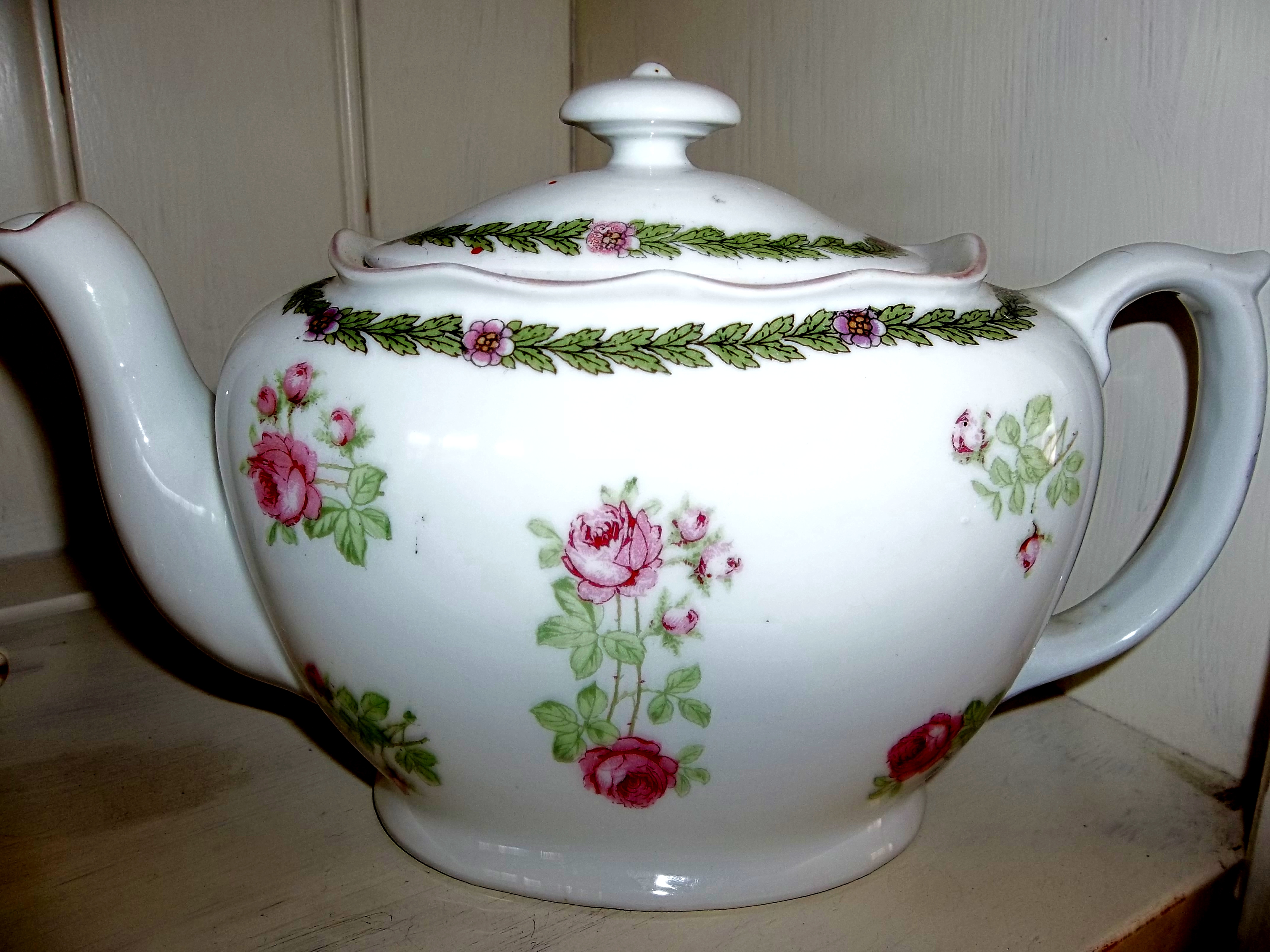
“I thought I’d make a cup of tea”, were the last murmured words of the mother of Janet Frame, NZ writer, as she died in her husband’s arms in the kitchen. They could well be mine… tea for me marks waking up and going to bed, a break mid-morning and that indispensable cup in the afternoon, the cup that cheers when a friend calls, or the one that sustains after a shock or a long day’s retail therapy.

I felt the would-be murderess Mrs McWilliams who shot her enemy Mrs Dick in the Tudor Tea Rooms in Christchurch NZ was a kindred spirit. When she was disarmed after her pot- shot she retorted: “Oh, give me a cup of tea, that’s what I came here for.”
When told that her victim was not dead or even much hurt the redoubtable Mrs McWilliams replied, “Oh isn’t she, what a pity.” (She got seven years jail for her failed attempt to eliminate her enemy)

We can sheet back this country’s addiction to tea to our discoverer Captain Cook, who concocted the first brews from leaves of the manuka tree, which he called, and many still do, the tea tree. He experimented with it in 1769, brewing the leaves in the hope of preventing scurvy, and wrote in his journal ( men write journals – women are downgraded to writing diaries): “The leaves were used by many of us as tea which has a very agreeable bitter scent and flavour when they are recent…. when the infusion was made strong it proved emetic to some in the same manner as green tea.”

In some ways, tea was the answer to coffee… men had gathered to gossip in coffee houses in London and elsewhere, for several centuries, while women had nowhere acceptable to congregate. The first tea-rooms opened in Glasgow in the 1870’s and tea-rooms quickly became as important to women as coffee houses to men in previous centuries.

Afternoon tea at home also became an institution… it was a relaxed time when women took off their corsets before changing into finery for dinner, and wore soft floating tea gowns. The great French food philosopher Brillat-Savarin called afternoon tea: “an extraordinary meal … in that, being offered to persons that have already dined well, it supposes neither appetite nor thirst, and has no object but distraction, no basis but delicate enjoyment…”

I’ll say – and not just for tea but for chocolate cake and shortbread, meringues and cucumber sandwiches. I used to think tea was an occasion just for ladies to enjoy… I couldn’t imagine inviting a man to tea… but then I remembered the delicate courtships conducted over silver tea- pots by the fireside in Edwardian times, and realised what pleasures we have forfeited in our nine to five world. I also wondered if this was the raison d’etre for those loose floating tea gowns… easier for making love?

Portly philanderer, Edward the Seventh used to visit his lady loves for afternoon tea, arriving in an elegant black carriage with his coat of arms on the door. Inside, his inamoratas awaited him. They could be the ravishing Lily Langtry, the Jersey Lily, as famous for her beauty which adorned postcards, as Kim Kardashian is today; or others, like Winston Churchill’s gorgeous mother Jennie, or even Camilla Parker Bowles’, (aka Prince Charles’ second wife) great-grandmother, Mrs Alice Keppel. She was Edward’s mistress for twelve years and was invited to his death-bed by his generous wife, Queen Alexandra.

Afternoon tea for me has never been graced by the presence of king, prince, or even lover… my most un-forgettable afternoon tea was at a Catholic convent in Ipoh, Malaya. The Chinese nuns in this little convent had been accredited to examine children taking GCE, the Cambridge University secondary schools exam, in oral French. So accordingly, I and nine classmates, embarked on the day- long journey in stifling armoured vehicles (to protect us from lurking Chinese bandits) and then by train, from the Cameron Highlands down to Ipoh.

Arriving in the early evening after travelling all day, we went to sleep in a dormitory with other Chinese teenagers who all, to our amazement, managed to get undressed and shower without showing an inch of flesh. This proved quite a challenge to us less inhibited girls trying to do in Rome as the Romans did. The next day we hung around until afternoon in the steamy convent grounds, and then I was first in alphabetical order for the exam.

I was shown into a little room, where a bowing, smiling, gentle little Chinese nun in heavy black horn-rimmed spectacles and starched veil awaited me. It would have been bad enough trying to understand a Chinese person’s French, spoken by someone who had never been to France or met a French person, but worse was to come. She made a cup of tea and offered me a cake, baked especially for us all, she explained in broken English.

So there we were, an Asian nun, performing, not the tea ceremony of her culture, but an adulterated version of a western ritual, and speaking a foreign language to a person who couldn’t make out a word she was saying, and who knew that shortly an even greater ordeal awaited, in which two people who already couldn’t understand each other, were about to embark on a conversation in a language foreign to them both.

But it was the preliminary that almost silenced me. I bit into the cake, and discovered with horror that the nuns knew no more about baking English cakes than they did about speaking French. They had obviously used sawdust held together, not with butter and eggs, but with some sort of inedible glue. With the first bite drying out my mouth and clogging my throat, I realised that now I had to struggle through the whole of this un-eatable culinary disaster, as well as bluff my way through the exam. Each bite nearly choked me, and I still had to look as though it was delicious.

Somehow I got to end of this terrible experience, and there seemed to be an unspoken agreement that if I ate the cake, she would find my school girl French understandable and acceptable to her Chinese ears. I left with us both bowing and smiling, with great good humour, and walked into my classmate waiting to go in. She raised her eye-brows questioningly, and I smiled maliciously, which she optimistically took for re-assurance… later our profane school- girlish post mortems and accusations would have curled the ears of these innocent kindly nuns.

Other teas, with silver teapots, even a white-capped maid, tiers of scrumptious cakes, and lace napkins have never blotted out the memory of this ordeal. And now, a law unto myself, I break all the rules of the English ritual afternoon tea, which is a very different thing to tea ceremonies in parts of the world where tea drinking originated. My most daring break with convention is to put the milk in first, considered so vulgar by generations of tea drinking aficionados.

And having discovered that tea tastes much nicer when the milk goes in first, I have now also discovered that science supports my taste buds. According to research carried out by the Royal Society of Chemistry in 2003,”… if milk is poured into hot tea, individual drops separate from the bulk of the milk and come into contact with the high temperatures of the tea for enough time for significant denaturation or degradation of the milk to occur.” There you go, as they say in this country…

I have n’t space to touch on one of the most thrilling aspects of drinking tea, which used to be illegal in this country, and provoked fiery debate by male Members of Parliament; and now since 1981, it’s become illegal again ( MEN !!!). I refer to the innocent pastime of reading the tea leaves… but that is too vast and esoteric a subject for this little blog to tackle!


Food for threadbare gourmets

Cucumber sandwiches are de rigueur for the ritual English afternoon tea, and very dull they can be too. These I served for a friend’s birthday party, and we gobbled them up… with relish….
Apart from white bread sliced as thinly as possible – even supermarket sliced does the job… you need peeled and thinly sliced cucumber, eight ounces of softened cream cheese, quarter of a cup of mayonnaise, a good sprinkling of onion powder, garlic powder and a pinch of lemon pepper if you have it.
Mix everything except the bread and cucumber, spread the mix on the bread, and arrange the cucumber on top. Cover with another slice of bread also spread with the mixture. Press down firmly, and cut into dainty bite-sized sandwiches. Irresistible.

Food for thought

By experts in poverty I do not mean sociologists, but poor men.
GK Chesterton

35 Comments

Filed under addictions, colonial life, cookery/recipes, culture, great days, humour, life/style, love, The Sound of Water, Thoughts on writing and life, uncategorised

Saying yes to beauty

100_0559
Sitting on the sofa, sipping my afternoon cup of tea, I craned to watch a sooty blackbird. It was pecking with its orange beak at the apple nailed to the fence outside the window. Beyond the fence is a wild gully, where I’ve encouraged blue and white agapanthus and arum lilies, pink impatiens and orange nasturtiums to spread. I planted flax for the tuis to feed on their flowers, and encouraged thickets of swan plants or milkweed as they’re also known, to feed the monarch butterflies.

Dominating the gully is an oak tree, grown from an acorn by my grandsons and I. It’s flourished and become a large tree in the years we’ve been here, and I love it for all that it symbolizes about those happy years of my grand-children’s childhood.

As I watched the blackbird, two smoky black tuis arrived, the iridescent sheen of their dark turquoise tail feathers gleaming in the clear winter sun. They hovered to swoop on another apple further up the fence, the little curl of white feathers on the front of their neck quivering – the early settlers here called them the parson birds because of the likeness to the white neck frill and black clothes of a missionary.

Then I noticed movement the other side of the gully. It was a cock pheasant, flaunting his long, gorgeous tail and his bright blue and red and russet colouring stalking through the long grass. I was ridiculously thrilled… I haven’t seen him for several years… is it the same cock pheasant I’ve gloated over before, or one of his descendants? How long do they live?

Lonely Roman soldiers shivering in the icy Northern wastes, guarding Hadrian’s Wall back in around 200 AD brought pheasants from Georgia, near- Asia, to England as pets. They came from a place called Phasis, hence their name pheasants. When the Romans left after four centuries, pheasants were well established all over the British Isles and shooting them became a favourite pastime of the rich and heartless. They have spread all over the world in the centuries since the Romans. But here at least in this hidden gully, this one is safe from being hunted and shot.

And as I watched, a little flock of half a dozen tiny, green silver-eyes descended on the apple halves. They’re smaller than a baby sparrow, with soft grey breasts, and rosy pink markings either side. Their velvety green feathered wings make them look like little balls of soft green moss, and they have bright eyes ringed in white.
The ancestors of these tiny birds which flit rather than fly, did actually fly the thousand miles across the Tasman Sea from Australia to get to this Land of the Long White Cloud, back in 1856… why, I wonder, did a whole species set off across a huge waste of ocean, clinging exhaustedly to the masts of any ships they encountered, and finally making it ashore to these islands.

After the attentions of all these sharp little beaks, the two apple halves are simply a rosy translucent bowl, the core a skeleton in the middle. I watched the scene without feeling any guilt at spending so much time just gazing out of the window. Savouring the beauty and the wonder of the world seems more important these days than any apparently more productive activity.

Whenever I gaze fondly at my oak tree, I think of savage and sensitive Xerxes, King of Kings, back in the fourth century BC, halting his great armies as they rolled across the empty Asiatic plains, so that he could revel in the sight of a single sycamore tree. He stayed there for several days in a state of ecstasy, while his puzzled warriors camped around the dusty desert, and he even commanded a goldsmith to strike a gold medallion to commemorate the moment and the tree.(goldsmiths were obviously essential to the well being of conquering heroes in ancient times!)

John Constable, the English landscape painter was another who loved trees. His friend and biographer described him admiring: ‘a fine tree with an ecstasy of delight like that with which he would catch up a beautiful child in his arms’. He particularly loved elms, the great trees which were such a distinctive feature of the English countryside for millenniums, and which all died of Dutch elm disease back in the seventies after a shipment of rock elm logs brought the elm bark beetle from the US.

In times past, elms were planted as sentinels to mark the old ways, the drovers ‘ roads, so that they could be followed in mist… the elms were way-finders, map-markers, so majestically tall that they towered above the bands of English mist… Elms are still trying to survive in hedgerows, but as soon as they grow beyond twelve feet, they become infected… perhaps in times to come they will recover and enhance the landscape again with their once well-loved silhouettes.

Here in New Zealand we are trying to discover why the great kauri trees – some a thousand years old or more – are mysteriously dying. At least with the elms they knew why… in New Zealand we are still puzzling over the slow death of the fabled kauris, whose trunks can grow to a diameter of forty feet or more.

These were my thoughts as I sipped my tea, and watched the beauty of the birds clustered around the red-skinned apples on the fence. And then I remembered an unforgettable vignette in Robert Byron’s book ‘The Road to Oxiana’. He wrote:
‘There was no furniture in the room. In the middle of the floor stood a tall brass lamp, casting a cold white blaze over the red carpets and bare white walls. It stood between two pewter bowls, one filled with branches of pink fruit blossom, the other with a posy of big yellow jonquils wrapped round a bunch of violets.’ By the jonquils sat the Governor… by the blossom sat his young son, whose oval face, black eyes and curving lashes were the ideal beauty of the Persian miniaturist. They had nothing to occupy them, neither book nor pen, nor food. Father and son were lost in the sight and smell of spring.’

Beauty on beauty on beauty, the scene, the meaning and the telling. It reminded me that no time is ever wasted when we are enjoying beauty. Caroline Graveson, a Quaker, wrote: ‘there is a daily round for beauty, as for goodness, a world of flowers and books and cinemas and clothes and manners as well as mountains and masterpieces’.

Yes, beauty is as necessary to the well-being of the spirit as bread is to the body.
Yet beauty doesn’t make us good or better people … even Hitler and Goering collected glorious art … it’s just that beauty is necessary to us all, and beauty just is. A world without beauty would be dead, so nourishing it and revelling in it is life… so – yes to beauty and to life.

Food for threadbare gourmets

I’m continuing my love affair with the crock pot, and made a very satisfying French onion soup the other day. Just tip plenty of finely chopped onions – a pound to two pounds – into the pot with two tablespoons of unsalted butter and two of olive oil, lots of freshly ground black pepper, and salt.
Leave it in the crock pot on low for twelve hours, or over-night which is what I did.

By then the onions will have caramelised into a thick jammy mixture, so I then added 2 tablespoons of balsamic vinegar, lots of stock – depending how much you want to make, and a nice slurp of brandy… about three tablespoons.

Leave it on low for six hours to eight hours or more… the flavour intensifies the longer you leave it.
Then if you wish, you can do the toasted slice of sour dough thing with cheese on top and grilled, to place in the bowls of piping hot soup… I just served it with hot rolls and grated cheese on top.

Food for thought
A loving person lives in a loving world. A hostile person lives in a hostile world. Everyone you meet is your mirror. Ken Keyes

30 Comments

Filed under birds, consciousness, cookery/recipes, culture, great days, happiness, history, life/style, philosophy, spiritual, The Sound of Water, Thoughts on writing and life, uncategorised

When is right wrong?

100_0955

It’s always been quite easy to be a pacifist in New Zealand for the last fifty years. Vietnam seemed indefensible to many, and our nuclear free policy made it feasible to take the moral high ground and declare that war is wrong.

I was forced to think about this on reading of the First World War project at Paddington Station in London, where a magnificent and moving statue of an unknown warrior stands. In full battle kit and helmet, he is reading a letter. As part of the commemorations marking the start of World War One, writers have been invited to write a letter to him, and Stephen Fry, wit, comedian and actor was amongst the first to write his, and it caused a sensation.

He wrote it as from a pacifist brother. Though he got historic details wrong – a pacifist would not be sitting at home then, he’d either be in prison or working on a farm, his letter moved many people. I’ve always been firmly behind conscientious objectors – (I like the moral high ground!) but this letter made me think hard about what was the right thing to do then, and how the right thing could very easily seem to be the wrong thing.

I thought about the horrific killings at schools and other places in the last few years, where deranged gun-owners shot numbers of their fellows, and if they didn’t end up shooting themselves, were shot, in order to stop them killing any more innocent victims. These incidents made me think when is it wrong to kill another human being, if there is no other way to stop them killing others. As pacifists do we stand and watch while others are killed, or do we intervene in whatever way we can, to protect the innocent?

This was actually the dilemma in the World Wars. Revisionist historians have said that there was no need for Britain to go to war in 1914. But Britain had informally agreed to support France if she was attacked in order to keep the balance of peace and power in Europe. More importantly, she had signed a pact in 1839 with four other countries of Europe, including Germany, to protect Belgium and allow this war-torn corner of Europe to enjoy being a neutral country, safe for the first time in history from being fought over. It was known as the cock-pit of Europe. It took the British Foreign Secretary, Lord Palmerston, nine years of diplomacy and negotiations to get the five signatories to agree to preserve Belgium, and they included France, Russia and England, and also Germany and Austria.

But Belgium was doomed as soon as the Prussian General Schlieffen began planning a war for German supremacy, because his plans for invading France, took in Belgium first. By then, under Bismarck’s influence, the German nation had become a military one. Invading Belgium didn’t bother them, though it did the honest German ambassador in London, Prince Lichnowsky, whose anguished telegrams begging the Kaiser not to invade, I have read.

In Belgium the Germans did what they did at Lidice in Hungary and Oradour in France in the Second World War, when they blamed the Nazis for these unspeakable atrocities. No Nazis around in the first war, but they still burned villages, hanged one man in ten and sometimes one man in two, and shot women, children and babies, the youngest three weeks old – at Dinant – as reprisals against any Belgians who had attempted to resist. Before the war was four weeks old, towns and villages had been sacked and burned, their people shot, and Louvain, and its ancient library reduced to cinders. So the choice for many Englishmen was clear – stand by and watch as a pacifist, or try to stop what seemed like a barbarian host?

The British soldiers who went to war then, were part of the history of England which had always tried to stop one power dominating and enslaving all of Europe, from Louis the Fourteenth of France to Napoleon. To go to war seemed to many who joined up then, to be a heroic attempt to save civilisation, and even more so in the Second World War, when Hitler was enslaving the civilised world.

The tragedy of resisting a violent and merciless enemy is that too often all the combatants find themselves using the same methods as the aggressor… war. But can we stand by and hang onto our principles of not killing, when all those we love will be destroyed, and not just those we love – our society, our country, and our whole civilisation. This was the choice which thinking people faced in both world wars.

When World War One was declared, England’s army was smaller than Serbia’s – the tiny country where the match had been lit at Sarajevo. So England’s armies were citizen armies, in both wars, made up of peace-loving men called up to defend their country. There’s a lot of research to show that many soldiers when they fired their rifles at the advancing enemy, didn’t actually shoot at the enemy, but aimed to miss, and that even more didn’t shoot at all. They too faced choices on the battle field which are impossible for us to imagine, when like me, we are living in a safe, peace-loving democracy.

So though I believe in peace, and have always supposed I was a pacifist, and attended Quaker meeting, where everyone was a declared pacifist, do I still believe it is possible to be one when the chips are down? I don’t know any more … Aggression turns easy choices upside down, when right – not killing – seems wrong, and wrong – fighting – seems right.

The wonderful story of the American colonel in Iraq, surrounded by an angry mob intent on violence, calling his armed troop to a halt, ordering them to kneel and point their guns to the sky, immediately defused the threat of violence on that occasion. So how do we defuse the violence of would- be psychopathic conquerors who believe that might is right? Maybe only people power can do that – and that can happen – as it did at the Berlin Wall.

Maybe it just needs enough of us to say: “They shall not pass…”
Food for threadbare gourmets

Something to eat with a glass of wine is one of our specialities in this village – among my friends anyway. It’s so easy to share a glass of wine and a nibble on a Friday night, without all the hassle of a dinner party. The latest craze is kumara skins – kumara are the Maori sweet potato that Kiwis pine for when they leave this country, but even ordinary potatoes are good this way.

Boil scrubbed orange and golden kumara until soft, and then cut them into thin wedges, leaving about a cm of flesh. Heat hot oil until it’s just smoking. Dust the kumara with seasoned flour and fry until golden. Drain and sprinkle with sea salt. Eat the skins with sour cream sauce – half a cup of sour cream mixed with a tbsp on mustard, fresh herbs and lemon juice.

Food for thought

There is something that can be found in one place. It is a great treasure, which may be called the fulfilment of existence. The place where this treasure can be found is the place on which one stands.

Martin Buber 1878- 1965  Jewish philosopher


48 Comments

Filed under army, british soldiers, cookery/recipes, history, life and death, military history, peace, philosophy, spiritual, The Sound of Water, Thoughts on writing and life, Uncategorized, world war one, world war two