Category Archives: uncategorised

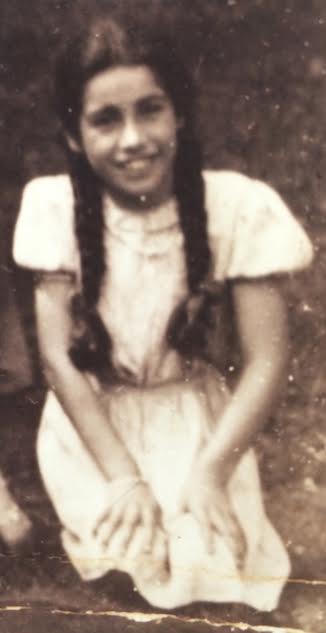
A beautiful woman

Image result for affluent tree lined london streets

A life –  This is the thirteenth instalment of an autobiographical series before I revert to my normal blogs

My step grandparents accepted me for better or worse, but not as a grandchild, so I called one Uncle Bill, which wasn’t his real name, the other Nana. She was a tall, slim, elegant woman with a cloud of white hair piled up on her head. When she went out, she wore little, high-crowned, fashionable forties hats with a black veil tipped over her fine brown eyes.

She wore expensive and beautifully- cut black or grey suits in wool or gaberdine, with slim straight skirts, and flimsy, white blouses, in silk, finest lawn or crepe, which buttoned to the neck or tied in a bow. She always wore high heeled, black suede shoes by the Swiss makers Bally, the style called Toby, and she never wore anything else, summer or winter.

She lived happily alone in her flat in a wide quiet street lined with large Victorian houses, in an affluent leafy suburb, which was as unchanging then as she was. I loved her walnut sideboard with elegant mirror hanging over it, and the Imari bowl on a stand on the piano which rang when your finger tapped it. On the mantelpiece she had a pair of fine bronze statues, a pair of large art nouveau urns with tulips on them, and over it, another large mirror.

We sat in deep grey and black velvet sofas and chairs round the fire. She always sat in the same chair, or rather, perched in it, at an angle, with her elegant long legs crossed, and her back unbending. Even when alone, she sat in this way reading The Telegraph, living out her vision of herself as a beautiful lady.

On the refectory dining table in the window, set with high backed comfortable chairs, she always had a vase of beech leaves, verdant green in spring, somewhat darker and leathery in summer, and in autumn, sprays of brown leaves. She bought them from the same florist, year after year. On a trolley by the kitchen door a set of cups and saucers, sugar bowl and milk jug with a net cover weighted with beads over it, sat ready for a cup of tea to be made. She herself lived on tea and toast fingers. She said they helped her keep her figure, and they certainly did, until old age, when her system collapsed with shingles.

She had no friends, except perhaps, the two nuns who called once a year, collecting clothes for the poor. These callers she welcomed in, and laid her finest china and crispest napkins, and plied them with afternoon tea. They must have known that this visit was one of their most valuable acts of charity, for they never failed to make time for this occasion.

She told me once, that when she was a young wife, she saw a tramp outside, so she invited him in, and laid a tray with her best china and linen, and gave him a slap-up meal in grand style. She loved style, and she was obsessed with privacy. She could open up to the strangers at her gate, but to no-one else.

There were pictures of herself and her separated husband in the spare bedroom, where I slept when I stayed. She was a beautiful young woman with wide, large eyes, a mass of dark hair, and a whimsical smile playing round a firm, well-shaped mouth and strong chin. Her husband was in his World War 1 officer’s uniform, a fine-featured, handsome, young man quite unlike the rather gross, heavy-jowled old man I knew.

The only remnant of his former beauty was his fine, well-shaped nose. Neither of their children had inherited these good looks, but neither had they inherited their parent’s personalities either. The son was as courteous and good-humoured as his father was irascible and unpredictable, and the daughter was as gay and energetic as her mother was withdrawn and languid.

I lived with her for six months when I attended the Regent Street Polytechnic after I returned from Malaya. She gave me her favourite book to read, ‘Testament of Youth’ by Vera Brittain. In the mid- fifties Vera Brittain hadn’t become fashionable again, but I read it, and was ravaged by it, in spite of having to overcome my resistance to her pompousness and priggishness at the beginning.

I understood my step-grandmother much better after reading this. She told me she had watched her fiancee march gallantly off to war in 1914, bands playing, banners waving, flowers flying through the air. The tiny remnant which survived returned to the little north country town, to be met by a shattered community. She never really recovered from the loss of her fiancee, but settled for second best, rather than be left on the shelf.

So they both suffered, but her vanity supported her through the long, lonely years of her life. She told me about the doctor who told his sister he had seen the girl he was going to marry, and his chagrin when he saw her pushing her baby’s pram, the clothes she had worn then, and on other occasions, and which outfits won her flowery compliments.

She described the floating thirties chiffon dress she wore to the garden party at Shrewsbury School when she met the Prince of Wales, the complimentary things that sales girls said to her out shopping, or having tea at Fullers, telling her that she and her daughter were the nicest mother and daughter who came regularly… and she told me about the second war, the war which came to civilians, when they hid under the stairs night after night as the planes came over, and stepping over the fire hoses in Leicester Square, going to see ” Gone With The Wind” after a heavy night’s bombing.

She told me these things, not because she was close to me, but because I was interested, and I was someone to talk to. I don’t think she ever felt any affection for me, but she was never unkind to me. Our relationship was one of unchanging good manners and consideration. I was polite and grateful, she was kind and courteous.

As the years went by, the drawers in the walnut sideboard stuck, the handles became loose, and a hinge fell off the cupboard door. The art nouveau vases on the mantelpiece developed a jigsaw of tiny cracks, while the velvet chairs sagged, and the springs went, but she went on perching upright in the corner on the springs, nibbling her toast fingers and sipping her tea. Until one day, it all caught up with her. She was very ill and never recovered.

Now she began to disintegrate. She needed constant nursing, so they found a good nursing home. The respite only lasted a month or so, and then she was expelled. This pattern continued for the rest of her life. No nursing home could handle her. So she came home. Now, after a life of food deprivation she had become a foodaholic and was forever raiding the kitchen wherever she was.

After starving herself all her life, now she couldn’t stop eating. She became a hugely fat old lady. Everything in the kitchen at home was locked up, but she would even stand on a stool dangerously balanced on a chair, to reach cold mashed potato hidden at the top of a high Victorian cupboard.

The last time I saw her was on my wedding day. Wearing her fluffy pink dressing gown, she called me into her bedroom where she had permanently sequestered herself, and produced, from heaven knows where, a box with a beautiful little coffee set in it. It was finest white porcelain, with a deep blue and gold border, cups, saucers, sugar bowl, jug and coffee pot, unchipped and perfect. She told me it had been given to her on her wedding day. I never used it, but I carried it around the world for years.

A few years later in Hongkong, I had a brief letter from my stepmother – the only one she ever wrote to me. It consisted of two sentences, one which said she hoped life was still treating me royally – had it ever really treated me so, I wondered? And the next sentence told me her mother had died.


Food for threadbare gourmets

We had gone to a barbecue supper with some neighbours, but since it turned out that they rarely ate red meat like us, there was a lot of barbecued steak left over after we’d eaten. Rather than condemn themselves to eat it, they pressed it on us, so nothing daunted, my love suggested they come the next night to eat it with us! What to do with cooked steak? I found a recipe which sounded just the job- beef stroganoff.

I made it as simple as possible – whizzed the chopped onion in the micro wave, gently cooked lots of sliced mushrooms with garlic, added a good glug of red wine and let it boil-up, then stirred in a heaped table spoon of flour. I’d made stock by boiling all the mushroom stalks, and I now stirred this into the mushroom mix, added the onion, stirred them altogether, and added a dash of Dijon mustard and a stock cube.

When we were ready to serve, I stirred in the steak, chopped into thin bite-size pieces, plus half a cup of cream –( I should have used sour cream for a stroganoff, but in deference to a toddler, I went for something less sharp), plenty of black pepper, and served it with rice and salad, and sliced courgettes cooked in olive oil and garlic. It was as good as re-cooked steak could get!!!

Food for thought

“I have one major rule: Everybody is right. More specifically, everybody — including me — has some important pieces of truth, and all of those pieces need to be honoured, cherished, and included in a more gracious, spacious, and compassionate embrace.”
― Ken Wilber – philosopher, writer, teacher

24 Comments

Filed under consciousness, cookery/recipes, environment, family, fashion, life/style, The Sound of Water, Thoughts on writing and life, uncategorised, Uncategorized, world war one, world war two

Glorious London

Image result for perronneau a girl with a kitten

A life –  This is the eleventh instalment of an autobiographical series before I revert to my normal blogs

When I was eleven I went to spend several weeks of the summer holidays with my step-grandmother. I travelled down from Yorkshire on the Flying Scotsman, ate my egg sandwiches for lunch, taking them out of their grease-proof paper wrapping and brown paper bag, and felt thirsty with no drink.

I sat and worried the whole journey about how I was going to get my suitcase down from the luggage rack when we arrived at King’s Cross. There, the thundering, hissing steam engines and the noise of all the milling crowds of people were overwhelming, and then it was out into the heat and traffic. London seemed like hell at first, but I grew to love it.

I loved waking in the morning and seeing the shafts of sunlight stabbing through the heavy, floor -length, apple- green velvet curtains. Outside, veiling the view of the street, was the thick screen of plane trees, pollarded every year, but now in high summer, green and leafy. I listened to the clop of the horse’s hooves as the milk man jingled down the road at 6.30 in the morning, and felt a great sense of well- being.

As long as I was polite and well-mannered and helped with the chores, no-one ever got cross here, and it was so easy to be good. My stepmother’s parents were in this sense, perfect grandparents – uncritical.

Every morning at about eleven, my step-grandfather arrived to take me for an expedition. They were glorious. London in 1949 was a still a blackened, blitzed city… black from the coal fires of the industrial revolution, blitzed from the bombs of the Luftwaffe… so among the blackened sooty edifices of the city, there were still deep bomb craters filled with rubble and pink rose bay willow growing on these derelict monuments to World War Two – Wren’s precious, now ruined churches,  elegant, destroyed townhouses, fashionable shops, and humble homes…

Uncle Bill walked me all over this London, telling me the names of the streets, and the history of all the places, and the names and stories of the heroes and soldiers, statesmen and artists commemorated in all the statues. We strode down Constitution Hill, past the Palace, No I, London, also known as Apsley House – the Iron Duke’s London home- through the parks, Admiralty Arch, Whitehall, where King Charles I was executed, Westminster, along the Embankment, into the City.

Other days he took me to the Abbey, the Tower, Kew Gardens, Hampton Court, and on the river bus to Greenwich, or the other way to Kew. He opened my eyes to the layers of history and beauty of this ancient city, centuries of life and death, trade and plague, culture and violence  …we walked up streets with fascinating medieval names like Threadneedle Street, home of the Bank of England, where a detachment of Guards, he told me, have marched to guard it nearly every day since the Gordon Riots in 1780; we discovered the corner of Cock Lane, once known as Pie Corner, where the Great Fire of London ended, having started in Pudding Lane… we marvelled at St Paul’s, which Sir Christopher Wren had  built to replace the old Gothic Cathedral destroyed by the Great Fire…

We meandered through Georgian London with its elegant Nash facades and lingered outside Rules famous restaurant opened by Thomas Rule in 1798, round the corner from Covent Garden, and favourite meeting place for artistic life from Dickens and Thackeray, to Laurence Olivier and Clark Gable;  Edwardian London we  acknowledged at Admiralty Arch, built by Edward the Seventh to honour his mother, Queen Victoria… Victorian London, and the statue of the Queen outside Buckingham Palace… Elizabethan London, where Good Queen Bess had ridden as a girl beneath the ancient oaks in Greenwich Park, and where Charles II’s wonderful Hospital for Seamen, Wren’s glorious masterpiece, still stands as a monument to public charity and architectural beauty. When we saw it, it had become the Naval College where we admired the famous Painted Hall and I gazed with ghoulish interest at the brown blood- stains on the cotton vest worn by Nelson when he died on the decks of the Victory.

Norman London meant Westminster Hall, William the Conqueror’s masterpiece, with its unique 240 feet hammer – beam ceiling, as well as his menacing Tower of London, where I listened to the story of the death of the Little Princes in the White Tower several hundred years later, as told by a Beefeater guide, and recalled the cruel executions of sad seventeen -year- old Lady Jane Grey, and tragic Anne Boleyn before her, as well as Sir Walter Raleigh.

To the Abbey, all the poets in their corner, and the tomb of the Unknown Warrior, memorial to the dead of what my other grandmother called The Great War…and where it is said the ghost of John Bradshaw who signed Charles 1’s death warrant, is sometimes seen – then across the way, to magnificent Boadicea in her chariot by the river, Queen of the Iceni before the Romans settled the city as Londinium… many believe that she’s buried at Kings Cross under Platform 10!   I had learned about this legendary woman from my history teacher when I was eight, and she fascinated me…

Writer Anna Quindlen wrote: ‘London… is divided into chapters, the chapters into scenes, the scenes into sentences; it opens to you like a series of rooms, door, passage, door. Mayfair to Piccadilly to Soho to the Strand.’ And that was how it felt. At Trafalgar Square I was moved by beautiful Nurse Edith Cavell’s memorial from the First World War,  while in Piccadilly, Uncle Bill told me of stepping over fire hoses from the previous night’s bombing in World War Two, then in Downing Street he pointed out the window from which Chamberlain had waved to the crowds after bringing back ‘peace in our time’ from Munich.

And the best days of all, were when he took me to the National Gallery and the Tate. I had already read, re-read and read again, umpteen times, a book belonging to my parents called ‘The Outline of Art’ by Sir William Orpen. It was probably printed during the war because the only colour illustration was a picture of his own, a particularly hideous painting of a butcher’s shop in all its bloody detail. For the rest, every glorious picture was in black and white, so I imagined what the colours were. It was a dreadful disappointment when I first saw Rossetti’s ‘The Beloved’ in colour, and discovered the Beloved was wearing emerald green, instead of the madonna blue I had visualised her in.

And so it was too with Christina Rossetti in ‘The Annunciation’. The pictures and the painters I learned to love in this black and grey world, have remained my favourites ever since, which is a chastening thought that having formed my taste at eleven it has never developed since.

But I still love the dignity and gentleness of Fra Angelica, and the sheer beauty of Fra Filippo Lippi and Botticelli. I still dislike Mona Lisa and love Beatrice d’Este. Da Vinci’s ‘Virgin on The Rocks ‘ still takes my breathe away, and his angels and cartoons ravished me then and now. I loved, and still love, Holbein and Van Eyck, and the wonderful line and delicacy of Durer. Vermeer and Pieter de Hooch still feed some pool of serenity deep inside me. Rembrandt, alas, didn’t re-produce well in black and white, but I took Orpen’s word for him, and he was right.

And, oh, the glory of Gainsborough, from Mr and Mrs Robert Andrews sitting beneath the tree in their ripe cornfield, to the society beauties and ravishing children he painted later. Constable didn’t show up very well in black and white either, so I came to love him later.

The Pre-Raphaelites are all the rage now, but I loved them back in ’49, especially Rossetti, Burne-Jones, and Lord Leighton, and also Picasso in his blue period. And Hoppner and Romney. Sir Joshua Reynolds ‘Samuel’, I loved because my grandmother had told me his story… “Speak, Lord, for thy servant heareth”… Samuel Palmer didn’t seem to be in ‘The Outline of Art’ – perhaps he didn’t reproduce well in black and white either. But I fell in love with him on our return from Malaya.

At the first opportunity I had hot-footed it down to the Tate, passing through the Turners, which never appealed to me (p’raps the black and white had killed him for me!) and found in a corner by the door, an exquisite little painting of people coming from church, and a golden moon shining down on them. Samuel Palmer. That picture, and he, caught my heart, and I still have the postcard I bought then, in its battered little gold  frame, and I still love his golden cornfields and fat sheep and the mystical light of his other paintings

So I was ripe for my first visit to the National Gallery. At the end of a long exciting afternoon, Uncle Bill asked which picture had been my favourite. I panicked. I was still mortified from the mockery of the reading I had done before I met my parents – and I didn’t know him well enough, or trust him enough not to laugh at me for being religious. So I lied, and said Perroneau’s ‘Girl with a Kitten’, and van Gogh’s ‘ Chair ‘. And so I was punished for my lie, because he bought me copies of them both, instead of my favourite picture, da Vinci’s sublime ‘Virgin on the Rocks’.

The picture is, of course, Perroneau’s  ‘A girl with a kitten’

To be continued… The Edwardians

Food for threadbare gourmets

Courgettes/zucchini are one of my favourite vegetables, sliced in long thin ribbons or sliced across in penny shaped pieces, and cooked I olive oil and garlic, they are delectable…  grated and stirred into a risotto, with lemon zest added, they’re delicious; courgette and feta fritters and courgette slice, using either chopped bacon or a tin of salmon, make a lovely lunch, and I use them in ratatouille, instead of aubergines – which are anathema to me  (though  I do buy them just to enjoy their purple beauty in a bowl of fruit and vegetables).This courgette loaf is a fragrant way to enjoy courgettes with a cup of coffee in the morning, or with a cup of tea in the afternoon.

In a bowl, beat three medium sized courgettes, 150 gm of sugar, one egg andn125ml of light olive oil. In a separate bowl, sift together 200 gm of SR flour, half a teasp of salt, quarter teasp of baking soda, a teasp of cinnamon and two teasp lemon zest. Stir the flour mixture into the courgette mixture just until blended. Pour the batter into a greased loaf tin and bake for forty- five minutes, at 160C or gas mark 3. When cool I like a layer of lemon icing spread over it.

Food for thought

We manufacture everything ( in our manufacturing cities) except men; we blanch cotton, and strengthen steel, and refine sugar, and shape pottery; but to brighten, to strengthen, to refine, or to form a single living spirit, never enters into our estimate of advantages.

John Ruskin. Victorian write, art critic, philosopher

32 Comments

Filed under beauty, cookery/recipes, culture, history, life/style, Thoughts on writing and life, uncategorised, Uncategorized

My army life

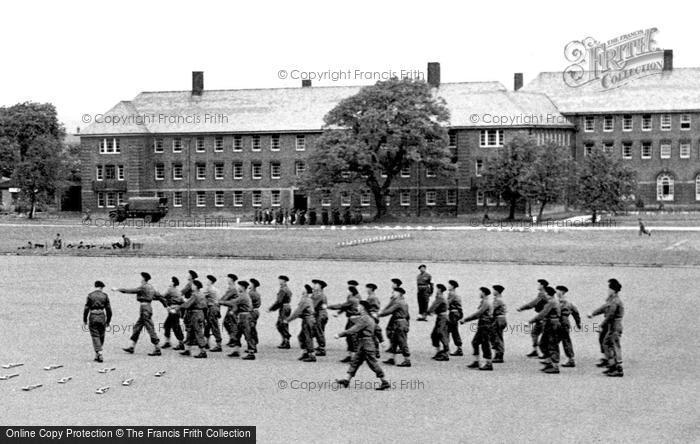
Image result for Catterick camp circa 1950

A life –  This is the tenth instalment of an autobiographical series before I revert to my normal blogs

I had left the convent and started the state high school at the same time that an army quarter became available at Catterick Camp, where my father’s cavalry regiment was stationed. Not only was it a place where thousands of young men trained and soldiered, it was also home to generations of children like myself, who grew up with the names of old battles in our ears. Catterick was divided into smaller camps, each one like a small town, and each with its own name, Cambrai, Kemmel, Somme, Ypres. My father’s regiment occupied Menin Lines. The roads were named after Generals. We lived in Haig Road, next door to French Road, and then Rawlinson Road. Long before I knew anything about the First World War, I knew all the names and places.

We children also knew the regiments our fathers belonged to, and took as much pride in them as though we were serving in them ourselves, indulging in the same military snobberies that our parents did. Those of us with fathers in cavalry regiments felt infinitely superior to the rest. We acknowledged girls with fathers in infantry regiments, but felt only pity for children with parents in corps, so that Caroline, who lived in the largest house in the street because her father was a brigadier, was somewhat patronised by we children, because her father was ‘only’ in the Royal Signals.

As I walked home from school, and passed each army quarter I would amuse myself by chanting under my breath the names of the historic regiments that each inhabitant belonged to… 17/21st Lancers, Royal Signals, 15/19th Hussars, Royal Army Service Corps, 12th Lancers, Fifth Inniskilling Dragoon Guards, (Captain Oates of the Antarctic’s regiment), and the 14/20th Kings Hussars.

My father had given me all Wellington’s Peninsula campaigns to read, including Captain Titus Oates’ favourite reading in the Antarctic -Napier’s History of the Peninsula Wars – so I was well up on the history of many of these old regiments. Conan Doyle’s tales about Sir Nigel and the White Company in medieval France, combined with Joan Grant’s books on Egypt and re-incarnation, The Three Musketeers’, The Scarlet Pimpernel’, ‘I Claudius’ and lots of John Buchan were also part of my eclectic reading list.

Rare excursions to the cinema were so exciting. I was allowed to see ‘Hamlet’, ‘Henry V, and ‘Oliver Twist’, and it was considered that ‘Scott of the Antarctic’ was also suitably educational. The moment when they killed the ponies – rather sanitised, in hindsight – is preserved in amber in my memory. Forget the men, it was the ponies I cried for.

Like everyone else, my father had his own batman, who, like everyone else’s batman, did lots of domestic chores like cleaning the silver, fetching coal, chopping wood, and even vacuuming, when he’d finished polishing brass buttons and chain mail, leather Sam Browne, shoes, long, leather Wellington boots and silver spurs.

Maloney was a tall gawky Irishman, with buck teeth and a drinking problem. I knew this because when he arrived at eight in the morning, I would smell it on his breath when I sneaked out to the scullery where he was polishing shoes, to ask him the time. The bus went at eight twenty- five, and there was just time to walk the mile from the bus-stop the other end to get to school for nine o’clock.

My parents had trouble getting up every morning, and though I was expected to cook breakfast for them at the weekends, my stepmother became angry if I started to cook the breakfast during the week, as this implied criticism of her. From seven- thirty every day of my life I hovered in the kitchen in an agony of suspense, as the minutes ticked by, getting to the point where I would miss the bus. As long as she arrived in the kitchen by ten past eight there was just time to gobble the food, grab my coat and satchel and run.

I prepared as much of the breakfast as I could, to make it a lightning cooking operation when my stepmother appeared, but too often I bolted down the bacon, egg, tomato, and fried bread so I felt sick as I ran to the main road for the bus. I begged just to have toast for breakfast, but my stepmother was adamant that we should all have a “good breakfast”.

I don’t know how much good it would have done, eaten at that level of tension. At the other end at school, there was disgrace, and punishment for being late, as if children had any control over their comings and goings. There were also the embarrassing interviews with the headmistress over why I wasn’t wearing school uniform… I walked around in a blue tweed skirt when everyone else was kitted out by their proud parents in the navy school uniform. When I finally got mine it had to last for the next three years through five inches of growth and  two more schools, both with brown uniforms, not navy blue, and I darned the seat until the repairs were breaking away from the worn, shiny fabric.

This was a humiliating experience for a suppressed fashionista who overheard sotto voce remarks from clever classmates about genteel poverty, and whose siblings at private schools were immaculately equipped. I only had thin white cotton socks even in winter, and my feet were so frozen in the north country cold that I was in real pain while they thawed out at school. The excruciating chilblains which covered my legs and fingers were partly from this I suppose, and partly from magnesium deficiency, probably the result of the level of tension I lived at.

Maloney, the batman, was terrified of my parents too, and he would silently show me his watch as the minutes ticked by. Whenever he went home to Ireland on leave, he couldn’t face coming back, and would go absent without leave until the Military Police found him in some Irish pub, and returned him, and he would then serve his time in “the glasshouse”, as my parents called it, though I never knew why.

And then, he would re- appear one morning, looking sheepish. I always missed him, as well as his watch, when he went on leave. During the holidays, there was a different sort of tension, both in the morning and after lunch before my father went back to his office. Every officer carried a swagger stick in those days, and my father was always mislaying his. If I was around I was expected to look for it, and find it. The dreaded cry would go up: “I’ve lost my stick”, and I’d fly into frenzied action, not always successfully.

The children who lived around us fell into two, very distinctive groups just after the war, those who were afraid of their parents and those who weren’t. The lucky ones had fathers who had bonded with them again when the war was over – these fathers had usually been in non-combatant corps. Others had fathers like mine who had fought  bloody battles for six years, and who now spent just as many years recovering from the war, went on having nightmares regularly, drank heavily to deaden the pain, and often treated their children like the soldiers in their command. They’d be treated for post- traumatic stress disorder in these more enlightened days.

Many of us had post-war brothers and sisters who had displaced us. I recognised, even then, the faint air of anxiety in the mothers of several of my friends who were torn between alcoholic husbands- sometimes violent- their first pre-war child, and the new baby.

Like me, the older child would be shunted out to Sunday School, and sent to do the weekly shopping. Like me, the older child would have chores in the house to do, while the other group were out playing. We tended to play with the children in our own group. It was hard to explain to children who had tolerant or reasonable parents why we couldn’t do such and such, or why we were so terrified if we were late home, or tore a dress, or lost a hair ribbon.

In those days, I never came by elastic bands to hold the ribbons on my plaits. I don’t even know if they were available, or whether my stepmother had decided they were an unnecessary extravagance when we were hard-up. Whatever the reason, my hair ribbons were always slipping off my plaits, and I spent hours re-tracing my foot-steps, looking for a crushed bow on the pavement.  The children with parents like ours understood instantly when we went into panic over some trivial incident or couldn’t invite them home.

We all wordlessly envied the other group, whose individuals we sometimes described as being “spoiled”. Children like William, for example, whose mother doted on him, and Priscilla and Jane whose parents never minded if they brought us home, Caroline, an only child whose mother encouraged her to invite me to tea and to play. I was allowed to have her back for tea once, and it was so stiff with us all trying to behave like a relaxed, happy family that I never tried again.

Melanie and her brother had horsy, hunting parents, and whereas Melanie didn’t mind riding, her seven-year old brother Conrad was permanently in disgrace because he was terrified, and often vomited before his riding lesson. This didn’t save him. Their mother spent most of her time hunting and judging hunter trials. Their father became an MFH (Master of the Fox Hounds) when he retired from the regiment. I saw Melanie’s wedding photo in Tatler at fashionable St Margaret’s, Westminster, years later. Her eyes were now ice-cold blue like her mother’s, her face a frozen mask.

Moira was such a wreck at eight years old, that my stepmother recognised it, and told me to be kind to her because she had a hard time. She never defined what the hard time was, though I knew. The awful thing about it was that none of us children could stand Moira because she personified how we felt at our very worst. And she was like it all the time. Her mother was tall and elegant, with a beaky nose and long red painted nails, and was like a vulture pecking incessantly at the truly wretched child. Today we’d call it emotional abuse, and it’s still the easiest form of sadism to inflict on a child without being discovered.

I myself seemed to spend a lot of time in disgrace, which meant being banished up to my bedroom, until given permission to come down. This sometimes meant all day, and missed meals. It was often freezing in winter. I identified deeply with David Copperfield sitting up in his room, terrified of Mr and Miss Murdstone downstairs. Sometimes I wasn’t told when it was okay to come out of banishment and if I came out too soon, I wasn’t penitent and if I came out too late, I was sulking.

My misdemeanours were trivial, like the problem with my hair. Every Saturday, after it was washed, I had to towel it dry. This meant I was left with a headful of tangles looking like Medusa. The bakelite combs of those days were brittle and broke easily, and time and again, a tooth would snap. And time and again I was in disgrace for this.

Another time I was confronted with an old French exercise book my stepmother had found while I was at school. On the last blank page, having no other drawing paper, I had spent a happy Saturday afternoon drawing an oak tree in the field next door. She insisted I must have done it during a French lesson, and when I asked her why she didn’t believe me, she said if I had done it legitimately, I couldn’t have resisted boastfully showing it to them. At this I knew I was beaten. When I cried for hours in my room, I would try to console myself by promising myself that one day I would write about it.

It was now that I became a ward of court. If it was a bad time for me, in hindsight I realise it was also bad for my parents. With their money draining away on court cases, in which my father had obstinately refused to concede that I should see the mother I never mentioned (of course not, I thought she was a taboo subject, and that no-one knew where she was), he took refuge from that and everything else, in heavy drinking.

This was an easy thing to do in good company in a rich cavalry regiment after the war. But this left my stepmother short of companionship as well as money in the snobbish society of the regiment.  I was at the end of this chain of despair. I knew my stepmother was depressed when she came down to breakfast wearing powder, but no lipstick. She was particularly depressed when she wore a brown and fawn checked, swagger jacket which didn’t suit her, and no lipstick. The tip of her nose used to turn pink when she was angry. I carefully watched for all these signs.

Christmas parties were a feature of childhood social life in this group. I used to feel sick when I woke in the morning, and knew the day of the party had arrived. We would arrive and be taken upstairs to divest ourselves of our coats. I had long since grown out of my lovely blue coat with velvet collar, and was down to a navy gaberdine school mac. Each little girl would surreptitiously size up each newcomer as she stripped off and revealed her party finery. The fashion was for velvet dresses, and ballet shoes while all I had was a summer dress, and indoor shoes, a deprivation hard to forget even as we played party games and danced to the gramophone.

One of the best games was called Kim’s Game. A tray laden with small objects would be laid in front of us, and then after a few minutes, taken away, and we had to remember everything, and write a list. I nearly always won this game. We played charades too, and the game ‘Murder in the Dark’, and, best of all. Sir Roger de Coverley, danced just before the party ended, with the nannies and other parents come to collect their children, clapping from the side.

Then, out into the dark and the cold, to walk home alone, the ordeal over until the next one…back home to wake to the faint sounds of reveille drifting across the sports fields from the regimental barracks, and hearing the haunting strains of the last post as I waited for sleep at night.

To be continued – next – The pleasures of London

 Food for threadbare gourmets

 After sampling a Dutch neighbour’s gingerbread, I felt I had to rise to the occasion when she came to tea with me. I used a favourite and easy friand recipe. In a bowl place one and a half cups of ground almonds, and the same of sifted icing sugar, half a cup of flour, and combine.   Add six lightly beaten egg whites, stir together, then stir in 100 gms of unsalted melted butter and a tablespoon of grated lemon zest.

Spoon into a greased muffin tin and bake for 20 to 25 minutes in the oven at160c. The friands should be springy to touch, and moist in the centre. Dust with icing sugar and devour!!! This amount makes twelve.

Food for thought

 Someone I loved once gave me a box full of darkness.

It took me years to understand that this too was a gift…

from The Uses of Sorrow by Mary Oliver

27 Comments

Filed under army, books, british soldiers, cookery/recipes, family, military history, Thoughts on writing and life, uncategorised, Uncategorized

Nuns, nice habits and strange foibles

Valerie10.jpg

A life –  This is the ninth instalment of an autobiographical series before I revert to my normal blogs

I never had any trouble remembering the date of my baby brother’s birth, because when we arrived back in England from Belsen, we were sent to school at a convent in Yorkshire. It was with the sisters of the Assumption of the Virgin Mary, a Belgian teaching order. My brother’s birthday was the Feast of Our Lady of Lourdes, one of many feast days when we were sent home, presumably so the nuns could pay due reverence to the day, unhampered by their fee- paying pupils, and causing my parents to grumble that they spent all this money in order for us to stay home.

Sometimes, as at Corpus Christi, we were required to attend in order to parade and go to Mass, and draw holy pictures. This was a time of severe mortification for me, because not being Catholic, our parents refused to buy us white dresses and veils to wear on feast days.

On the other hand, thanks to the books I had read with my grandmother, I was bigotedly anti-Catholic, and had no qualms about being different. The nuns themselves were mostly gentle and sophisticated women, many of them French or Belgian, others English. My form teacher, who was also the maths teacher, was the most avidly religious person at the convent and not a nun at all. Rather, she was an Irish Catholic, and, as I discovered later in New Zealand, she embraced a very different brand of Catholicism. ‘

Not to put too fine a point on it, she rammed religion and her devotion down our throats, exhorting us amongst other things, to bring old clothes to her to dispense to the needy. As she gathered them in from everyone except me, she would regularly intone, ” Ah, gurrells, it’s boi moi gude deeds to the puir that I hope to go to heaven.” She would interrupt long division to make us all stand up and say The Angelus, and we would then pray for the parents of all the unfortunate girls who had one Protestant parent. Since both my parents were Protestant, this was a prayer I obstinately refused to join in, as I had no regrets about their situation.

One day, her propaganda about “puir St Thomas Moore”, wicked Protestants and suffering Catholics enraged me so much, that having  just finished one of my father’s books, a history of the Borgia family, I had enough ammunition, I felt, with the Inquisition and the scandal of the Avignon Popes, to take her on. I never got beyond the Borgia Pope and a quick mention of the Inquisition, before she clapped her hands over her ears, and drowned me out by shouting: “What a pack of Protestant lies.” No-one liked me very much after that, and I would always be left to last when they were picking teams for netball and rounders.

One person who did like me, perhaps a little too much, was Mother Michael, a rather coarse -looking Englishwoman compared with the refined foreign nuns. She was not a teacher so much as our house- mother, and she was obsessed with long hair. My long, almost black, thick plaits were meat and drink to her. Every lunch hour I was dragged off to the big, sunny cloakroom-cum ante-room, and had my plaits ceremoniously undone, and brushed out.

The brushing went on all through play-time, and I never got to play with anyone. As the time for the bell drew near, she’d plait the blessed things up again, refusing to let me do them. She dragged the hair round my face quite differently to the way I scraped my hair back myself, and I’d get home every day, looking quite unlike the school girl who had set out in the morning.

Every day my stepmother would ask what was going on, and when I told her about the brushing and the plaiting, she’d say “It’s got to stop”. But I didn’t know how to stop it, so it went on until Mother Michael fell in love with another girl with long plaits.

The nuns wore elegant, plum- red gaberdine habits, with a long swinging pleated skirt, and a thick, beautiful cord with long tassels round their waist. Their rosaries also hung from this fat cord, and they had long, soft white wool veils which swung in the wind when they borrowed our roller skates and took a turn round the rink in the evenings when everyone was inside, doing their homework. The garden beside the skating rink plunged down towards Our Lady’s grotto, and then to the River Tees.

I would gaze out of the classroom window in our annexe called The Hermitage, in winter, and see the black, lacy boughs of the empty trees, the black running water of the river, white snow, and sometimes a flame- coloured squirrel silhouetted in the trees against the pale winter sky. The main convent building was grim, grey, Victorian Gothic, with long, shiny, lino-floored corridors where feet and voices echoed. It smelt of incense and wax candles, lino polish, and nearer the kitchens, carbolic soda and grease. In alcoves at regular intervals along the echoing corridors, painted statues of saints draped with rosaries presided. I glared at them like a latter-day Oliver Cromwell as our crocodile straggled to chapel for prayers every day after lunch.

I always enjoyed Retreat, three or four days of silence when we spent most of our time drawing and painting holy pictures, instead of wrestling with fractions, and going to chapel for mass, as well as the regular after- lunch prayers, and then Benediction. I hated the priest who came to the convent for the occasion, and whom all the nuns fluttered around and flattered and fawned upon. To the cynical ten-year-old looking coldly on, he looked like a very boring, not very bright man, who relished in an unspiritual fashion, the entirely undeserved attention he received.

I was happy to go to chapel as often as we did during Retreat, as I had figured out that God was everywhere so it didn’t matter where you were beating his ear. I had no idea why we were doing all this, but then, a lot of things puzzled me… so I loved the reverent silence of the whole day, including the silent meals with severe, beautiful Mother John standing at her lectern, reading from the lives of saints. During these meals we ate Assumption Tart, known to us all as Sumpies.

The story of the three fashionable Belgian Victorian women who decided to found the Order was read aloud as we ate the tart. None of them knew how to cook, clean, or sew, and so in the first week, the lady nun assigned to cooking duties threw together some ingredients in a panic and produced the hard, yellow crust of almost inedible pastry on which jam was smeared and which we still ate. We all welcomed Sumpies on the menu, as at least the jam was sweet, the only ingredient which had any taste. The convent food was still obviously flung together by nuns who could not cook.

During Retreat, our class was visited by both Reverend Mother, and Mother Superior, causing an outbreak of curtsying and crossing ourselves. Since no-one ever explained anything to children in those days, I couldn’t work out why a young Reverend Mother seemed more important than a Mother Superior. Reverend Mother was Polish, about twenty-eight, very young to have reached such rank, and had an indefinable air of holiness about her. She also had an amazing complexion, pale skin and brilliant red cheeks. She received total devotion from everyone, and she fascinated me. Sometimes she wasn’t well enough to come to our weekly audience with her, so Mother Adelaide, Mother Superior, came instead.

My father adored Mother Adelaide. She was just the sort of woman he loved, witty and wise, French, sophisticated, clever and rather beautiful. Long after, when I heard that Reverend Mother had died the following year of TB, I realised that Mother Adelaide had left her duties as superior of the order, to come over from Belgium to keep things going with as little disturbance to everyone, including the beloved young nun.

After a while, it was decided that my sister would do better at school on her own. So I agreed to ” sit the scholarship” in order to go to the local grammar school. My stepmother was then summoned for an interview with the county education authorities. She told me that they informed her that my maths was so abysmal there was no way I could qualify for higher education. But my English and general knowledge were so far ahead of my age, that there was no way they could not give me a scholarship. Nothing much has changed since then, my maths are still abysmal.

To be continued

Food for threadbare gourmets

I had some wonderful coloured -peppers, red, yellow and orange, and instead of cooking them in my usual way, I tried a Jamie Oliver recipe – with adaptations! I chopped the three peppers and added them to a chopped onion, plenty of garlic and olive oil to sweat them until cooked. When soft I added a good glug of balsamic vinegar and boiled it all together, and then salt and pepper to taste.

This is where Jamie Oliver comes in. He recommended tossing in a generous handful of parmesan cheese and some table spoons of mascapone or cream cheese.  Stir it all together until everything is melted and amalgamated. He served it with pasta and I served it with steak and mushrooms, and it was delicious.. It may have been better with pasta but I won’t be using the cream cheese again.

Food for thought

If you truly get in touch with a piece of carrot, you get in touch with the soil, the rain, the sunshine. You get in touch with Mother Earth and eating in such a way, you feel in touch with true life, your roots, and that is meditation. If we chew every morsel of our food in that way we become grateful and when you are grateful, you are happy.
Thich Nhat Hanh. Vietnamese Buddhist teacher


19 Comments

Filed under consciousness, cookery/recipes, great days, happiness, humour, life/style, Thoughts on writing and life, uncategorised, Uncategorized

Ducal splendour and daily deprivation

On my tenth birthday -wearing my pearlsInline image 1

A life – This is the eighth instalment of an autobiographical series before I revert to my normal blogs)

There was a legend that there were no birds in Belsen, that they had fled this dreadful place. That I don’t remember, but I do remember the strange energy, a sense of shifting sands, and unknown menace. The Germans seemed hostile (understandably), and refugees from East Germany trudging past were distant, pre-occupied with despair.

And as well as the British Army, there were also posse’s of Yugoslav soldiers in navy-blue greatcoats, armed with rifles, who constantly patrolled the place, guarding it, though I never discovered what they were guarding it from or why they were there. They had a reputation for being dangerous and unpredictable, and every now and then, one would shoot himself or a comrade.

And our succession of German maids left constantly, Helena after stealing tea, Elsa taking nylon stockings, Hilde our meagre meat ration, and finally Hannah who left to get married;  Kuntz, the big taciturn batman, suddenly disappeared in a rush of joy, when he had word that his wife who he had thought was dead, had surfaced in Berlin.

Behind our house was a pine forest, rich in bilberries, where the local Germans would come in autumn to pick this source of food in a starving land, and beyond that, a mile down the road, was the DP’s camp. Displaced Persons were the survivors of Belsen, still waiting for passports or permission to make their way back home across the bomb- blasted continent to find their scattered families.

One fine summer’s day they torched the pine forest, and our homes were in danger until the fire was checked. The DP’s had set the forest on fire as a desperate gesture to show their frustration and get some action from post -war authorities. I don’t think it made the slightest difference to their plight.

The Allied authorities were dealing with twenty million people trying to get back to homes and families after the war. Many had no homes, families or countries to go to. The problem grew under our eyes, as refugees, another two million in the next four years, fled from Eastern Europe and the Soviets. They came straggling down Hoppenstadt Strasse carrying bulging bundles wrapped in blankets on the end of sticks hoisted over their shoulders like pictures of Dick Whittington.

Unlike him they were not seeking streets paved with gold, but something more precious – freedom. Sometimes they were found sleeping or sheltering in our empty garages, or taking desperately needed clothes from the washing line, and were hurried on or arrested by the implacable Military Police.

The currency was changed from the cardboard money we knew, to the new currency, the Deutschemark. This triggered the months of tension, which even we children were conscious of, when Russia began the process of harassing and then blocking all traffic in and out of Berlin, by road or river. This finally culminated in the historic Berlin Airlift to save the citizens of West Berlin.

Stalin‘s intention was to starve and freeze the Berliners into submission and oust the Allies. He failed, thanks to the extraordinary air-lift when planes flew in and out of Berlin every four minutes bringing in food and fuel for over two million Berliners, and World War Three was averted.

The conquerors shared the hardships of ravaged Europe. Our meagre rations were delivered once a fortnight in a cardboard box. I remember my stepmother looking at a small pile of cucumbers, our vegetables for the next two weeks, and asking in despair what we could do with cucumbers for a fortnight. We only ever had revolting, evaporated, tinned milk to drink for there was no organised milk supply and no pasteurised herds.

Every night for two hours from six till eight the electricity was switched off to save power, and we sat in the darkness playing games like twenty questions to while away the pitch- black hours. There were no candles. Our puppy seized the darkness as an opportunity to chew the rubbers/erasers my father used for the crossword.

The Daily Telegraph crossword was one of the most popular diversions in the regiment, and I achieved minor fame and popularity in the officers mess then. Whoever wrote the crosswords had a penchant for using ‘Alice in Wonderland’ and ‘The Wind in the Willows’ for clues, and a phone call would come from the mess for me. This would then put my parents on to the clue if they hadn’t already. In retrospect, I think there must have been a daily sweepstake for first past the post, judging by the competition to get the thing finished.

The officers mess was the Duke of Hanover’s palace, a little way out of Belsen, and splendid it was. (What had he made of the concentration camp on his doorstep?) We went there occasionally for drinks before lunch on Sundays, and for the children’s Christmas Party, when we played musical chairs in the ballroom under the shining chandeliers, slipping and sliding on the marble floor while little gilt chairs were subtracted from the circle. Then, when the party ended, like nearly every other party of my childhood, we danced Sir Roger de Coverley, with all the parents standing round clapping in time to the music.

Some weekends, we drove out to the Duke’s hunting lodge in the middle of a pine forest, where deer darted out onto the road, and wild boar lurked. This gemutlich little pile was now the officers club, run by a friendly middle-aged German couple. Had they always been the stewards of this place, I wondered later? Did they transfer their loyalties to their new employers in the interim, and hold the place in trust until the Duke regained his ancestral homes – if indeed he did?

Anyway, their speciality were delicious, lavishly sugared doughnuts, stuffed with butter icing. The glory of these doughnuts in a life of total gastronomic deprivation and war-time rations was utterly memorable (Did the Duke enjoy them too, before and after us?) My parents managed to get some of these dough-nuts for my tenth birthday.

It was the first birthday I had ever spent with my father, who went off to war when I was ten -months- old and my mother was pregnant with my sister. The previous year when I was nine, we were still in Yorkshire while he was battling his way to Belsen. He seemed more excited than I. The night before, when I went into the garden to say good-night to them, sitting in wicker chairs with their gin and tonics, I was allowed to stay up beyond seven o’clock, so my father could give me my birthday presents.

He was too excited to wait until morning. He gave me a string of pearls and a black fountain pen with a gold clip and nib. When the next birthday came, it was different, for he and my stepmother had a baby son, and my sister and I were rather a chore by then.

My stepmother had learned German and French at school, and rather fancied herself as a linguist. So she seized this opportunity to try to turn us into cosmopolitans too. Thanks to the puppy we’d become friendly with the local German vet from Bergen village five miles away. His twenty year old  daughter Suzanne became our German teacher, and she came every Sunday afternoon to teach us nouns and verbs and the endless der, die, and das, to be sorted through and applied to each noun.

She left us with piles of homework to do, and extraordinary medieval -looking text books with print that looked like something straight off Caxton’s press. The print was extra black, and the S’s and F’s and W’s and V’s expressly designed to trick baffled and ignorant nine and ten- year- olds.

She also told us how lucky we were, because her younger sister Hildegarde and brother Carljurgen had no paper and pencil at school, just broken, leftover stubs, and had to write in the margins of printed books when they wrote answers and essays. I didn’t always feel lucky. Her father, Herr Muller, called regularly, whether our various dogs needed his attentions or not. He regarded my parents as friends – or at any rate, their gin bottle.

In return for the generous helpings of gin he sipped – unobtainable in civilian Germany – he would bring my stepmother a specimen of the many extraordinary varieties of exotic orchids which he grew. I thought they were awful, not like flowers at all, but fantastically petalled and bearded and contorted in strange fluorescent pinks and acid greens and sharp yellows. He would arrive bearing this gift, and bend over my stepmother’s hand, clicking his heels together and bowing, in a strange old- fashioned Prussian ritual.

After some months of laborious social intercourse – his English becoming more broken with the quantity of gin consumed – we were invited to his house in Bergen to meet his wife. We had tea on exquisite Meissen china, but because they could get sugar at the time, but no flour, we had no cakes or biscuits, but dipped sour apples from the garden into the sugar, as a substitute for cake. The grownups managed with a cup of tea.

The vet’s wife was a fair-haired, washed-out, melancholy woman. When I exclaimed enthusiastically over the beautiful porcelain, she told me that they’d hidden it with all their other treasures in a hole under the cellar, so the invaders wouldn’t loot them. Even as a child I thought this was rather tactless. Invaders? Was she talking about us?

She also reminisced about the awfulness of the war to my parents, she and her daughter Suzanne, our teacher, describing the anguish of seeing their poor, wounded soldiers in blood- stained bandages in passing trains. Back home I heard my stepmother snort indignantly: “If they saw those trains, how come they didn’t know about the others!”

Since I didn’t understand what she was talking about it stuck in my mind, but some years later, I realised she was referring to the trains of the condemned heading for Belsen. In her book “The Children’s House of Belsen,” Hetty Verolme describes the platform at Celle lined with thirty SS men and Alsation dogs straining at the leash as her train pulled in from Holland. They then, eleven hundred young and old, sick and exhausted, hungry and thirsty, straggled the fifteen  miles or so to Belsen on foot and apparently unobserved by the local population, who denied all knowledge of the camp when the British authorities discovered it and questioned them.

But the friendship limped on. One summer’s day, Hildegarde and Carljurgen, the one with long fair plaits, and wearing a dirndl skirt and long, white, lace socks, the other, just as fair haired and blue-eyed, wearing leather lederhosen, long, white lace socks and black boots, took me driving in their farm cart, rumbling and swaying down narrow farm tracks between fields of blazing blue and purple lupins shimmering with tiny butterflies in the sunshine. Carljurgen let me hold the reins. He avoided that other field, where there were miles and miles of burnt -out German tanks my parents had shown us one dank winter’s day.

My father said I was learning to ride like a Prussian officer. The army stables were run by an aristocratic Prussian officer- not, of course, using his military rank now – but known merely as Herr Freiser. He took great pains with me, never guessing that I was terrified of the huge jumps he put me over. Fear runs along the reins, I would remember from reading Black Beauty, and hope I was bluffing the huge, far -too- big military horse I rode regularly. A big brushwood jump was one thing, but the fence on the wall was too much, and I came off every time, never knowing what had happened until it was all over.

Herr Freiser’s blonde, classically beautiful Prussian wife regarded me with loathing, as though I was a pet cockroach her husband was training. But I decided she hated all English, and was probably still a Nazi lady. They lived in the groom’s quarters by the stables, and were lucky to have a job and a home in their ruined country, though she obviously didn’t think so.

Their gilded furniture, rescued no doubt from their Prussian schloss, was piled right up to the ceiling in one room, while they lived in the other. Herr Freiser seemed as frightened of her as I was. She would stalk through the stable yard in her immaculate jodhpurs, her glare like a blue flame from her icy blue eyes.

To be continued –  back to England

Food for threadbare gourmets

Having eaten a lot of curry in hot climates like tropical Malaya and humid Hongkong, it seems quite normal to me to eat it in our hot humid summer days at the moment. Curry Tiffin on Sunday in the Officers Mess was a hallowed ritual, and I used to love the choice of beef, lamb or chicken curry, gently simmering in large casseroles on the long polished table. These days, since I shattered my leg, and am less interested in standing for hours over a hot stove, I’m always looking for short cuts and now use some quick ingredients I’ve shunned in the past.

So I used both ready-made chopped garlic from a jar and also ginger for this old recipe, and it worked like a treat. I mostly do vegetarian curries these days… chop an onion and a couple of tomatoes, and in a blender whizz them to a paste with two cups of water, a dessert spoonful of prepared garlic, half a dessert spoon of ginger, several dessert spoons of tomato paste, a dessert spoon of curry powder, a good sprinkling of turmeric and half a teaspoon of stevia powder, or brown sugar.

Tip half this mixture into a pan with half a cup of cream, and let it boil and reduce while five or six chopped mushrooms are gently frying in butter or olive oil.

Combine the two when the curry mixture has thickened, and add some ginger marmalade to soften the sharpness if necessary. Hard boil an egg and chop it over the curry. This amount serves one greedy person, and I ate it with chopped steamed cauliflower instead of rice. (I try to avoid rice since I read that it contains two to three times the amount of carbohydrate than bread. I would also eat this mix with lentils)

The other half of the curry sauce I freeze for another time, when I would curry cauliflower and peas instead of mushrooms, or even some chicken.

Food for thought

Nobody is superior, nobody is inferior, but nobody is equal either. People are simply unique, incomparable. You are you, I am I.                                                                         Bhagwan Shree Rajneesh  Indian guru

Some facts about post-war Bergen-Belsen for those who may be interested…

Adults didn’t tell us much back then… so I’ve done a lot of research to try to understand what was going on around me then. First of all, I discovered, Belsen became the holding place for DP’s from many other camps, who were unable to return to their homes behind the Iron Curtain. The facilities were the best, since they were accommodated in a Panzer training depot next door to the camp, and we all know that Hitler’s military got the best!

But many DP’s were not only depressed and traumatised but hostile to all authority after their experiences, and not all refugees were upright, honest pillars of the community – there was riff-raff as well. They were very difficult for the British to deal with – who were also tired and traumatised after six years of war, and their own social problems like returning to families who hadn’t seen them for six years.

The Jewish leader in the camp, Josef Rosensaft, a charismatic Belsen survivor, would only communicate with the frustrated British in Yiddish, even though he was a perfectly fluent English- speaker. He agitated for everyone to go to Palestine, as it then was, instead of trying to find other countries. (The Americans were still only taking in tiny numbers of refugees or displaced persons) And the British were constrained by the Mandate, (a responsibility given them after World War 1) and were not allowed to let unlimited refugees into Palestine.

The Arabs – rightly as it turns out -were concerned about their place in their own country. After the Balfour declaration, a quota of Jews had trickled in, but this didn’t bother them, when it was two thousand a year. Come Hitler, numbers jumped to 60,000 the first year and continued to rise, until the Arabs were fearful they would be outnumbered (they were right to be fearful). The British were caught in the middle of this.

Also, Europe was in chaos at the time, and the British Zone had very little farming land, so food was a real problem for the British authorities, both in England and in their zone of Germany. Labour Prime Minister Attlee considered at one stage reducing the ration for the English to 1700 calories a day, they were so up against it, with paying off the huge loans to the Americans for Lend lease – which they finally paid with all the interest in 2006.

This was also the time of the changing of the currency and the Berlin Airlift. At the same time the Black Market was a nightmare for the authorities, and it was discovered that Belsen was the biggest hub of the Black Market. British Lieutenant General Sir Frederick Morgan, chief of “displaced persons” operations for UNRRA, recorded in his memoir that :‘under Zionist auspices there had been organized at Belsen a vast illegitimate trading organization with worldwide ramifications and dealing in a wide range of goods, principally precious metals and stones. A money market dealt with a wide range of currencies.’

The British wanted to go in and search the place, and stamp it out. But Josef Rosensaft held them off for nine months, stalling over the idea of German police or British soldiers trespassing on their hallowed refuge after all they’d been through with the Nazis. By the time the British got into the camp, the evidence had been hidden or destroyed. All these events built up real hostility and dislike, which is why, I suppose, so many people, unable to distinguish between the ‘goodies and the baddies’, became unsympathetic to the D.P.s.

Ninety-six young English medical students volunteered to help the doctors and nurses coping with the disaster they had found in 1945. In the two months following, 14,000 more people died, too far gone from disease and starvation to save. Many could literally no longer stomach food, and many solutions were tried. Apart from the trials of Kramer, his infamous women guards/tormentors, and a dozen or so other guards from Auschwitz as well as Belsen, by the British, no-one else was ever held to account by the Germans for the deaths of more than 50,000 people.

29 Comments

Filed under army, birds, british soldiers, cookery/recipes, history, life and death, life/style, military history, The Sound of Water, Thoughts on writing and life, uncategorised, Uncategorized, world war two

Footprints of the Nazis

Image result for hanover in world war two
Post-war Hanover

A life – This is the seventh instalment of an autobiographical series before I revert to my normal blogs)

Postwar Europe was a unforgettable monument to Hitler’s destructive genius. The train which was supposed to take us to Hanover got lost in the chaos that still existed in Europe in 1947. We took a wrong loop of the track and traversed areas of Northern Germany, reaching Hamburg before turning back.

We arrived at Hanover eight hours late, having rattled uncertainly through endless suburbs of ruined cities, nothing but mountains of broken bricks, and half houses still standing, looking like the half of a doll’s house where you can re-arrange the furniture. In these grotesque rooms, pictures were askew on walls, and cupboard doors hung open, chairs still sat round marooned dining tables and empty fireplaces waited to be lit by ghosts.

I was awed into silence by these gross and hellish scenes. But at nine, I couldn’t even begin to guess the human tragedies, the broken lives, the blasted families, and never realised that maimed and starving people were actually trying to live in these apocalyptic holes and hills of smashed bricks and rubble. At the station where we stopped to disgorge some of the people crushed into the crammed carriages, thin white – faced children banged on the windows begging for food, and scrabbled at the side of the tracks looking for odd lumps of coal.

We were seated in the restaurant car, eating the first white bread that we had ever seen, quite unlike our war- time rations, but the thrill of this exciting new food was dulled by the pale dust- smeared faces outside the window.

Finally, Hanover at midnight. The station was the usual bedlam, the engine hissing and roaring, people calling and shouting and waving, and the lighting so poor that it took longer than usual for everyone to sort themselves out and find each other. When everyone had trickled off and the train had pulled away again, my stepmother and sister and I were still waiting on the platform.

My father was nowhere in sight. What felt like a very long time later, loaded down with our luggage, we found our way to the Ahtee-o, which I later learned meant RTO, or Railway Transport Office. We didn’t seem to be particularly welcome at that time of the night, but something had to be done with us.

The telephone lines through to Belsen to contact my father were simply the military ones, and though Belsen was only about twenty miles away, it seemed to be a very difficult operation to find him. Every conversation was filled with a hail of military terms and abbreviations which flew back and forth like a secret code. Through bleary, sleep-filled eyes I watched the impatient RTO sergeant trying to raise a distant Orderly Officer, who had to get through to the Officers Mess to find my sleeping and delinquent father.

Halfway through, my sister wanted to use the loo. This caused consternation. The nearest ladies was miles away in another part of the station. But we three females set off. The next shock was ready to rise up and hit us. I had assumed that all the people I had seen at the station were in the process of going or coming – to catch a train or leave one. Now we discovered that they had all settled down for the night again, thousands and thousands of people sleeping on every available bit of floor- draped up and down stairs, propped up against walls where there was no room to stretch out.

We had to step over all these sleeping bodies, avoid their belongings and move half a dozen people out of the public lavatory in order to use it. The ragged, hungry refugees did not seem very happy to be woken by three well- dressed English females in the middle of the night. It certainly wasn’t a comfort stop for us. My stepmother seemed to be as anxious and insecure as I felt. And then there was the long drag back to what seemed now, like the comfort and familiarity of the RTO.

Finally, at three o clock, unable to raise my father, it was decided that we should be taken to spend the rest of the night in a transit camp – another unfamiliar military term. Once again, we braved the sleeping, homeless hordes, and emerged at the front door of the station to climb into a waiting jeep. As we walked down the steps, I looked out towards the city, and there through the black ruined outline of a broken church window, the moon shone in a clear pale sky.

We were awakened next morning by the embarrassed arrival of my father, who had given up waiting for the train to arrive the previous afternoon, since no-one knew what had happened to it. I knew my stepmother felt that he had let us down, and I thought so too. He took us to our new home where my sister and I had to feel out a whole lot of new rules. Not only was my new parents’ honeymoon over, but so was ours.

When we had lived in Yorkshire my stepmother had worn very fashionable clothes, to my old- fashioned eyes, which I knew my grandmother would have thought were ” very fast”. But my stepmother would wear these wonderful clothes to breakfast, and when she heard a favourite tune on the wireless, she would jump up and waltz round the room with my father, humming and laughing and even kissing him. My sister and I hardly knew where to look during this extraordinary adult behaviour, but now, that was all over. No more smart grey trousers, no more incredibly high -heeled, navy suede court shoes, which I hoped she would leave to me in her will. Just the same boring old skirts and flowered tops day after day. No-one told us that these were maternity clothes.

On the 11 February, 1948 our stepmother was not at the breakfast table. While the maid served breakfast, our father told us she had gone into hospital in the night. When we asked why, he said he didn’t know. At school we felt both scared and important. At play-time everyone discussed it, with guesses as to what the matter might be. They ranged from appendicitis to her death bed.

Finally, someone said: ” She was getting a bit fat. D ‘you think she’s going to have a baby?” “She wasn’t getting fat”, I replied indignantly. “And anyway, they’d have told us if they were going to have a baby.” Back home for lunch, our father was sitting at the dining table waiting for us. He was smiling broadly. “You’ve got a baby brother,” he said.

By then, we knew the right way to behave, so we both exclaimed with excitement. But underneath I felt a little pain in my chest. I never examined it, but I knew that it was because they hadn’t wanted to share it with us. After that we seemed to be two groups in the family. My sister and I who were there because there was nowhere else to be, and my father, stepmother, and the baby, who I adored. Them and us. We had bread and jam at afternoon tea. “They” had biscuits or cake.

And now life took on a darker tone… We slept on one side of the house, my parents at the other end. Every night they would march into the bedroom to say good night. If we had been good, it was okay, and it was usually okay for me as I was chronically law-abiding.

But my sister was always in ‘trouble’, and every night after the post mortem she was spanked. Then the two tall adults who seemed to tower over us, marched out again, leaving my sister to cry herself to sleep. To my eternal shame I didn’t cross across to her bed to comfort her, but lay wretchedly curled up in my own bed trying not to hear her sobs.

After my best friend was murdered by her father, who shot the whole family one night, I was moved to a small bedroom near my parents. I was the first person at the scene, I had knocked repeatedly on the door to collect Mary for our early morning riding lessons, but there was no answer. By the time I got to school later, the door had been broken down and the heart-rending scene discovered.

I suppose my parents thought I might need some support, but I never talked to them about it, as I was worried that Mary and her brother had gone to hell, and used to send myself to sleep praying that they had gone to heaven instead. Since my parents didn’t believe in God there was no point in talking to them about it. It’s only now as I write that I realise how it must have been for my eight -year- old sister left alone to cope on her own at the other side of the house when I was moved.

We lived in the only residential street in the concentration camp, known as Hoppenstadt Strasse with notices each end in German and English – Langsam fahren kinder – Drive slowly children.

The houses we lived in had been the homes of the German prison guards during the war. Now, one side of the street was reserved for officers’ families, and we each had one floor of the houses, which meant that we had two flats which had been roughly connected to make a roomy home. Our home, I learned many years later from my stepmother, had had the distinction of having housed Josef Kramer, the notorious commandant of the camp, known as the Beast of Belsen. It never felt like a happy home.

To be continued

 Food for threadbare gourmets

 Having a long car journey to and fro from a very sad funeral, leaving at 5am, I couldn’t face eating bready sandwiches for breakfast -on- the -run during the dash to be there by 10am, so the day before, I made something from my recipe book, called Jenny’s zucchini slice, to eat instead.

Grate three good sized zucchini/courgettes. In a large bowl, beat five eggs, and add three chopped slices of bacon, a cup of grated cheese, a cup of self- raising flour, half a cup of oil, and an onion (did my usual, and pre-cooked it in the micro wave), the grated zucchini, salt and pepper. Stir everything together and spread in a shallow, greased baking tin. The mix should be about an inch and a half deep. Bake in a moderate oven for roughly three quarters of an hour, or until a knife slides out clean. It’s delicious hot or cold, eaten with salad for a meal, or cut into slices to eat on a journey like ours.

 Food for thought

 “I can choose either to be a victim of the world or an adventurer in search of treasure. It’s all a question of how I view my life.”            Paul Coelho


46 Comments

Filed under army, british soldiers, cookery/recipes, family, fashion, life and death, spiritual, Thoughts on writing and life, uncategorised, Uncategorized, world war two

Flowers, beauty, architecture and antiquity

Image result for image of The Old Parsonage Hurworth Co durham
The Old Parsonage
A life –  Part  six

After a few weeks in London we packed up again and travelled north. I remember the cooing of wood pigeons and the enchantment of high summer in unspoiled country on the borders of Durham and Yorkshire, where my parents had found a house belonging to a friend of the family. It was in a village by the River Tees, described in the guide books as a ‘late medieval house, with studded front door with affixed carved oak female head, under ogee-shaped lintel (door said to have come from a demolished Saxon chapel).

‘The date on the lintel above the door is c1450, the reign of Henry VI. The house had been through many hands since then, had been extended in the 17th century, altered in the 18th and equipped with modern comforts in the 20th. Fashionable pantiles from the Low Countries were used to re-roof the house in the 17th century. Today it’s been altered again, and one wing converted into another dwelling.’

It was set in a high walled garden at the end of the village, and we spent most of our time in the sitting room, a wood panelled room with huge Tudor fireplace and inglenook. If I stood on the head of the tiger on the striped tiger-skin rug, I could just reach the chamfered 17th century beams as a nine- year- old. The casement windows looked onto the garden, and beyond the garden walls, hills and woods stretched to the sky-line.

We children were rarely allowed into the drawing room, and then, only if we knocked on the door beforehand. Mostly we stood at the door with whatever it was we wanted to say, but were allowed to sit there when guests came or when we had our lessons. I hankered to spend time in that room, a Georgian addition with French windows into the garden. It was simply furnished with soft flowered chintz, but it had a different atmosphere to the rest of the house – a refined, gentle energy compared with the robust Tudor architecture elsewhere.

I loved the slightly faded thirties linen prints on the loose covers on the sofas and chairs, and the black and white tiled hall with its antique chests and barometer. I developed a love of interior decoration and from then on felt uncomfortable in rooms that were ugly or tasteless, and was hungry for beauty when it was absent.

My new stepmother, who was lonely, and needed someone to talk to, unconsciously educated me too, looking through the pages of Vogue with me, and discussing the famous and controversial New Look by Dior. She wore clothes that I could appreciate, well-cut grey flannel trousers with a red jacket, elegant suits, nifty little hats with a bit of veil, perched at an angle, incredibly high navy suede court shoes, and severe beautifully cut evening dresses.

Everything was new and interesting, the stones in her jewellery, discussing menus, the intriguing friends who dropped in on their return from overseas, learning to distinguish crystal from glass, china from pottery. We didn’t always see eye-to eye. I was deeply upset when the revolving Victorian summer house with stained glass windows, a pointed pitched roof, and a circular table like a wheel which turned the house in the direction of the sun, was demolished, and the circle of soil now exposed, planted with grass. It seemed barbaric to smash this thing of beauty. My stepmother condemned it as Victorian. Anything Victorian was despised by both my parents.

This rambling house was a splendid place to curl up in and bury myself in a book. They were in short supply here. The owner had put hers away, and ours were all packed up. My stepmother gave me her textbooks on ancient history, so I learned about Pericles and Alexander, Carthage and Hannibal, there was Tanglewood Tales’, a book on Greek legends by Nathanial Hawthorne, and ‘ Black Beauty’, that animal classic which has influenced me more than any other for the rest of my life, I suspect.

Whatever the curse of the motor car, I am glad horses are no longer ill-used, neglected and exploited every day on the streets and in the country-side. “Little Women’, also among my stepmother’s books, had the same potent moral influence on me, as on so many other girls before and after. Interesting that the Quaker background of Anna Sewell, and the Transcendentalism of Louisa M. Alcott should have influenced so many generations of children.

I grazed through Palgrave’s ‘Golden Treasury’, which our stepmother used for our lessons. She was not strong on child psychology, but we learned a lot of poetry from the Golden Treasury, including: “Breathes there the man with soul so dead,” from Walter Scott, and Elizabeth Barrett Browning’s ” What was he doing, the great God Pan, down in the reeds by the river?” I can still declaim them both in the overblown elocution class style required of us. Longfellow’s Hiawatha was another favourite of my stepmother, and we learned to recite long passages of this too.

My sister got very ratty if she didn’t do the same things as me, so she tried to learn them as well. But she never mastered the esoteric spelling my stepmother required of a nine- year- old and an eight- year -old. The words included phlegm and haemorrhage, diaphragm, delphinium and rhododendron. By now, my father had long since departed for his next army posting and we were alone with our new stepmother, who was struggling with early pregnancy as well as the malaria she’d picked up in Egypt, though we were unaware of either. Sixty years later, she confided over an affectionate dinner together that:” You never played me up – you could have, but you never did.”

We didn’t go to the village school, and never knew anyone from the village except the gardener, Mr Appleby. He took a fancy to me and taught me the names of his flowers in the garden. He certainly behaved as though they were his. His deep red, rich pink, and white peonies were his greatest joy, and had a beauty all their own, as I picked them for my stepmother’s crystal vases. They were as lovely as roses, dripping with dew on their bright green leaves, and droplets nestled in the big flower heads layered with petals like an old-fashioned rose.

Since we had our lessons in the afternoon, it was my job in the morning to re-fill and refresh all the flower vases in every room in the house. This was perfect. It got me away from the parents who I was very nervous with – never sure of what was required of me and possible disgrace – and I could spend as much time in the garden as I wanted. Mr Appleby let me pick the best pink and red peonies, there were fat, pink, peppermint-scented pinks, sweet- scented roses, multi-coloured wallflowers and  purple penstemons, fragrant white stocks, spiky blue delphiniums and stocky lupins. Snow- in- summer and blue campanula sprawled in crevices on the terrace by the house.

He started bringing me treats from his own garden, huge, juicy, golden Williams pears, the fattest, hairiest, rosiest gooseberries I’d ever seen, juicy purple plums with golden flesh. My sister was furious that he never brought her any treats. Then he offered to take me for walks around the surrounding country-side.

The first walks were magic. Mr Appleby was probably in his sixties, a wiry little man with red apple cheeks and black stubble, who wore a grubby shirt with no collar and shabby black jackets and worn trousers that would be described as ‘rusty’. He had lived here all his life and knew every path and stream and hill and dale for miles around. He showed me mice nests slung between corn stalks, rubbed the ears off barley for me to taste, showed me the flowers that grew in bean fields and corn fields, where bird’s nests were, and where fish jumped in the pools which gathered between great slabs of flat rock in the river.

He explained who owned this field and that great house, he took me by shallow streams he called becks, and up steep cliffs he called scars. The walks extended from five miles at the beginning, to over eight miles one afternoon, up hills and along narrow paths, when I was so tired I thought I’d never take another step. I was always exhausted at the end of these marathons.

And then one day he said something I didn’t believe I’d heard. So he said it louder. ” Give us a kiss, then.” How could I be ungrateful after all the things he’d done to give me pleasure. I dabbed a quick peck on his horrid unshaven cheek. He did the same on the next walk. I avoided him in the garden as much as I could. I felt so sick the following week when he came for the Tuesday afternoon expedition that I hid in the top of the pear tree.

My stepmother called and called, until my sister revealed my hiding place, and I was sent on my way with admonitions not to be so rude. I dragged behind him for most of the way for the rest of those walks, but there was always a point when at some place he asked for the unwilling kiss. Once, I tried to tell my stepmother about it, but she stared at me disbelievingly, which effectively closed the conversation, and now I look back sadly, and see an achingly lonely and love-starved old man.

I loved that country-side.  I remember walking by myself to the next village on an errand for my stepmother, dawdling past the long, grey stone wall of an estate, with dark, shiny rhododendron bushes reaching over the top, and hearing the cooing of wood pigeons. There was a clear blue sky, the empty, cobbled village street, no sounds of traffic, nothing but bird song, sunshine, the church clock chiming, shady trees and the perfect happiness of being on my own with nothing to do but walk in this perfect place.

A Shell guidebook in the 70’s described our village as consisting of one street 3/4 mile long. ” One side of the road is a wide green behind which extremely attractive 18th and early 19th century houses face equally good houses behind a narrow green on the other side of the road. The village is sited on a ridge immediately above the bank of the Tees, and the river and rich farmland beyond can be glimpsed between the trees and houses. It is remarkably unspoilt… New houses are discreetly sited, so that they do not detract from the atmosphere of a more gracious age than our own. It is a village of many greens, sundials, river views, trees, and attractive door-casings, and its centre has changed very little since Jane Austen’s day.”

In 1947, it had changed even less, and there were no new houses, rather, it resembled the very village scenes observed by Emma… “her eyes fell only on the butcher with his tray, a tidy old woman travelling homewards from the shop with her full basket, two curs quarrelling over a dirty bone, and a string of dawdling children round the baker’s little bow-window eyeing the gingerbread…”

The only difference between 1815, when Jane Austen wrote these words at the end of one European war, and 1947 at the end of another European war, was the lack of horses and ginger bread. Food rationing was still as stringent as ever, with Europe on the verge of starvation, while lack of petrol meant no cars spoiled the peace of this north country village.

And all this was about to change as we sailed from Harwich to the Hook of Holland on our journey to join my father at Belsen, the notorious concentration camp in the heart of hungry, war-ravaged Germany.

To be continued

 Food for threadbare gourmets

 My tomato plants are flourishing, so I have a glorious glut of tomatoes. This was my solution the other day. Fry the chopped tomatoes gently in olive oil… the skins come off easily as they cook. When soft, pour in lots of cream, and as it boils to thicken, stir in a small lump of Dijon mustard, salt and pepper, and let them all meld together.

Two- minute noodles were a quick answer to some padding for the tomatoes which were poured over them. With fresh parmesan grated over the tomatoes it was a fragrant, delicious light lunch. A small glass of red or white wine is a great enhancement!

Food for Thought

 The people who are compelled to write down what they feel are the ones who feel it hardest… Briana Wiest

I discovered this quote and much more on a beautiful wordpress blog at: Deborah J. Brasket Living on the Edge of the Wild

29 Comments

Filed under beauty, books, cookery/recipes, culture, environment, family, flowers, gardens, poetry, Thoughts on writing and life, uncategorised, Uncategorized

Was I a snowflake?

Image result for radipole weymouth dorset
A life – part four


When we occasionally walked past what was known as the elementary school in those days, I used to shudder. The grim Victorian building, the concrete playground and iron railings, the noise and roughness of it horrified me. I was so grateful, even as a small child, that I went to my sheltered little school.

Unlike most prep schools one reads about in that period my private school was neither cruel, sadistic or frightening – perhaps because it was owned by a woman and all our teachers were women, except for the wonderful history teacher.

Miss MacFarlane-Watts, owner and head mistress, was a tall commanding woman with thick, grey hair cut almost as short as a man’s. She wore white shirts with a tie, heavy pleated skirts, tweed jackets, thick stockings and flat lace- up shoes. Without ever having heard the word lesbian or even a discussion about genders, I knew she was different… and we all accepted her as such. School was a large Edwardian house set in tree- ringed grounds and lawns, not far from where we lived.

As a fashionista even at that age, I rather enjoyed our school uniform… white blouses and navy blue pleated tunics with a braid belt for the girls, and grey shorts and jumpers for the boys. Our hats were my real pride and joy, a big brimmed, deep crowned navy- blue, thick, velour hat for winter with a striped ribbon with the school colours, and a wide-brimmed Panama hat for summer – they were so big that we little girls must have looked like mushrooms beneath them, and it was amazing that items of such quality were still available at this point in the war. We kept these expensive hats from flying off in a wind with a piece of elastic which went under our chins. Even our gabardine macintoshes were the finest quality.

Clothes had always figured largely in my life even as a toddler, when I remember the broiderie anglais edging my white petticoat, and relished my delicate little smocked ninon dresses, one in pink, the other in blue… does anyone even know what ninon is today … a fine net covered in tiny balls of fluff is my recollection.

My grandmother inevitably had somewhat old- fashioned ideas about clothes, one of which was to kit us out in liberty bodices… a sort of cotton layer worn on top of a vest and under a jumper, with buttons round the waist to hook a skirt on. They weren’t too bad, but I shrivelled with embarrassment when she sent me to school in antique leather gaiters to keep warm. They stretched the length of my leg, and the tiny buttons running that whole length had to be prized open with a button hook to get them off… this experiment was abandoned when I couldn’t cope with getting them off for physical education!

The day we arrived at this school, the infant mistress – who seemed  enormous to me – swung my tiny blonde  sister up in the air, looked into  her big blue eyes fringed with impossibly long black lashes, and said  “Oh, what a little Topsy!”  She didn’t take to me… children always know… and a few days later, she said to my bewildered little sister: “If your sister put her head in a bucket of water, you would too, wouldn’t you?” To which my sister baldly replied “Yes”.

It was a kind environment. A few years later, when I was eight and one of the big girls, my brother started school. He was so frightened by the experience that he was sent up to my classroom, and was allowed to sit by my side at my desk for days until he was ready to cope on his own.

Lessons were archaic. We learned to write copperplate, often using badly crossed nibs to write rows of letters over and over again until we got the right angle and shape of each letter. On handwriting days, the ink monitor – (never me – I was such an introvert that no-one even knew if I could cope with such responsibility, and I was happy to be overlooked) brought the tray of inkwells in, and they were passed along the rows of desks… then the pens… inevitably there would be spills – usually by a hapless boy.

Each day began with chanting boring times tables, while we sat with our arms folded, and I sometimes think the ritual may have been a calming meditative exercise too, for we never had any rowdiness or fuss to disturb the quiet orderliness of the classroom.

Art lessons nearly broke my heart. I was so excited when it was announced that we were now old enough to begin art lessons. But it was a huge let-down. We had to learn to draw a straight line, making short feathery strokes with our pencils. After a couple of lessons when we had mastered this arcane skill, we graduated to drawing a rectangular box and tackling perspective. With this accomplishment behind us we were now ready to be introduced to colour ! Hurray! We were instructed to bring a laurel leaf with red berry attached to the stalk to school the next day. Alas, our laurel hedge had no berries, so no lovely red for me, just boring green and yellow spotted leaves.

No computers then, so we competed with pencil cases, and collections of hard-to- come- by coloured pencils. We marked our pencils by slicing off a sliver of wood to make a flat surface at the top and then inked our name on it. Indelible pencils were much sought after… you licked the lead, and this made the writing indelible… as for rubbers (erasers if you’re American) – if you lost one, or broke it in half by using it too strenuously, war-time replacements were scarce… whispers criss-crossed the classroom – “can I borrow your rubber”, “can you lend me your red pencil?”

At Christmas we were all dragooned into the Nativity play. I had no idea what it was we were doing… which was not unusual… I spent so much time dreaming that I often missed important information. On this occasion, we all trooped down to the hall nearby, and I found I was an angel along with the other small girls. I was given a triangle to ching on at various not very obvious intervals to me.

The boys seemed to have all the best parts as wise men, wicked kings, shepherds – and of course, Joseph. They also had all the best musical instruments – tambourines, and trumpets, drums and the rest- this was the moment I realised somewhat bitterly that boys/ men had advantages that we girls did not seem to have. And while we stood around in our angel nightgowns in the freezing hall, the teachers seemed to endlessly move rows of chairs around. It was all a complete enigma to me then.

The next year we passed on the nativity play as we’d lost the use of the hall to the American soldiers who used it as their dining hall. They seemed noisy and enormous – wore fur-trimmed jackets – air crew I learned later – and since our back garden abutted onto the back of this hall, showered us with chewing gum, wrapped cubes of sugar – much prized – and sometimes bars of chocolate.

My grandmother gave us three pence pocket money every week, and with this I bought a bar of chocolate every Friday from Mr Duscherer, the German grocer just up the road on the corner. Everyone knew he was German, but I never once heard a word of disparagement about him. He was a big kindly man and I used to watch with pleasure as he prized a wire through a big round of cheese when you ordered a quarter of a pound or whatever the ration was then.

He had a huge machine that cut bacon the way you wanted it – smoky, thick or thin, streaky or back… he would weigh half a pound of biscuits out from big Peak and Frean biscuit tins into brown paper bags – did biscuits not get soggy then, I’ve often wondered, as I try to break into thick layers of cellophane to get into a biscuit packet these days. He sold stamps, posted parcels – usually wrapped in scarce and re-used brown paper, tied with re-used string and sealed with red sealing wax- no ubiquitous cellotape then, and he also stocked Sunny Stories, Enid Blyton’s weekly magazine for children with the long running serial The Faraway Tree in it.

Life seemed simple and safe and satisfying, especially after my grandmother bought me a little blue bicycle, and I no longer needed to make sure that all my dolls were safely tucked up in their cot and had been kissed good night, a ritual which I needed to do when my mother was still with us, and I now recognise as psychological transference.

And with the end of the war it was all about to change dramatically.

To be continued.

 Food for threadbare gourmets

Today, I had one duck leg left over after a little feast yesterday, using a tin my son had given me, so I made a duck risotto. It was delicious. Did the usual, onions, cooked half a dozen finely chopped mushrooms, fried the rice in butter, threw in a glass of good white wine to evaporate, and then added hot stock and a good pinch of dried thyme. When it was nearly cooked, added a generous dollop of cream, some green peas, and the duck meat which shredded beautifully. And then, with duck and orange in mind, added the grated rind of an orange and the orange juice.

When ready, I covered it for ten minutes to sit and mature, then stirred in a big knob of butter and some parmesan. Served with more parmesan, green salad and glass of chilled Riesling, it was rather good.

Food for thought

It is never too late to be what you might have been.      George Eliot, great Victorian woman novelist


26 Comments

Filed under cookery/recipes, culture, family, great days, happiness, The Sound of Water, Thoughts on writing and life, uncategorised, Uncategorized, village life

The passing of an era

Image result for victorian interiors

A life – part three

My grandmother was my favourite person. Whereas I had always felt responsible for my baby brother and younger sister, when she came to look after us when my mother left, I felt I could hand over the burden.

When she moved in to pick up the reins, she brought all her Victorian past with her. Up went the heavy, red velvet curtains in the bay window in the front room where my sister and I had watched the big girls playing on their roller skates across the road, peering through the brown sticky paper, taped across the windows in diamond shapes, to stop the glass shattering in a bombing raid.

I loved the texture and the colour and richness of the velvet. I loved the shiny brass rods with the rings that clanked when the curtains were pulled, and the big brass knobs at each end. I loved the aspidistra in its brass pot standing on its tall, spindly, three -legged table. On the other hand, I hated the Staffordshire figures which were her great pride. I thought them ugly and clumsy – and still do, for that matter, though I did like her Meissen angels.

Upstairs in the bedrooms, our little utility divans were replaced with deep feather mattresses into which we sank in blissful security. The dark mahogany and rosewood wardrobes and dressing tables filled my senses with deep satisfaction. The sheen, the grain, and their generous size were comforting and solid in a world which in my experience had been bleak and insecure, able to be blown away by a bomb in the red sky of night.

I remember the pleasure of sitting at the oak dining table as I dreamily chewed my bread and jam, and gazing at her knick-knacks on the oak sideboard the other side of the room – deep, blue Wedgwood biscuit barrel for chocolate biscuits, silver- bound oak biscuit barrel for plain Vienna biscuits, and the silver stag standing at bay on a writing tray which held all her letters and bills. Brass candle sticks stood each side of the biscuit barrels. The tall, wooden, barley-sugar twisted ones on the kitchen mantelpiece over the coal range now stand on my dining table.

She boiled the kettle for afternoon tea in winter on a little cast-iron stand which hooked onto the side of the grate in the dining room fire. And there was the bliss of making toast over that fire with a long brass toasting fork. It tended to taste of flames and soot, but was warm and crisp and a great treat. The thick red and blue patterned turkey rug in front of that fire was my favourite place. Kneeling with my elbows on the rug I would bury myself in a book while I was supposed to be watching the butter soften by the fireside.

Deep in my book and oblivious to butter, duty or anything else, I would be discovered crouched by the saucer of swimming, melted, precious, rationed butter. But if I was reading I was excused. No-one ever got into trouble for reading in her house. Until the day she died she was encouraging her great-grandchildren to read, as she had always encouraged me.

Not that I needed it. I longed passionately to be able to read grownup books. My mother had already taught me to read when I finally started school at five and a half, having stayed home to keep my sister company until she was old enough to start school with me. I was forever bored as the class limped along the wall friezes which said things like ‘A for apple, ‘B’ for bat’. The teacher didn’t know I could read, and it never occurred to me to tell her. I was so shy I rarely spoke at all. I read every textbook as soon as they gave it to us, a habit I took into secondary school, so I already knew all the answers in class.

Books for children were scarce, presumably because few were printed during the war. So, when my grandmother arrived with her box loads of books, it seemed like treasure. The children’s books were my father’s First World War and Edwardian boys’ books, the plots mostly centred on some pious crisis of conscience, but which I read nonetheless. I was particularly fond of my grandmother’s bound volumes of Victorian ladies’ journals, rows of red leather binding and gold tooling, with pictures as well as stories inside.

They tended to be about Evangelical but highborn young men who possessed crisp, fair curls, and wore boaters and striped blazers, and often went punting, and they also featured swooning young women, often orphaned, but in truth, of noble blood!! I learned a lot about mourning from these tomes, and the fact that ladies wore lots of black crepe – whatever that was – and black jet jewellery for such occasions. Not that I had the faintest idea what mourning was, except that it made people cry.

My grandmother also pressed on me her books from her  Victorian childhood. ‘Froggie’s Little Brother’ was the most memorably painful, about a family living and dying in various stages of starvation and violence in the East End of London (my brother and I laughed years later that we were probably the last two people in the world to read this grim novel). There were The Wide Wide World’, ‘The Lamplighter’ and ‘Behind the Scenes’, all tales about orphans. I wept buckets over them. When I had surfaced from these agonies, there was’ A Crown of Thorns’, a suitable tale for a seven -year -old about Dutch Protestants being buried alive by the Spanish Inquisition during the time of Elizabeth 1.

I baulked at ‘Pilgrim’s Progress’. My grandmother’s big volume with the original illustrations, with Christian stuck in the Slough of Despond, and the depravities of Vanity Fair and all the rest, depressed me more than any of her other books which included ‘Foxe’s Book of Martyrs’…

Editions of Mallory and tales of Arthur, Merlin and Morgan Ie Fay in Arts and Crafts bindings, and Pre-Raphaelite illustrations with art nouveau drawings educated my eye as well as my mind. I laboriously read Defoe’s ‘Robinson Crusoe’ in one of the original editions – which my grandmother collected – another large leather-bound tome with engravings protected by tissue paper, like ‘Pilgrim’s Progress ‘and Foxe’s ‘Martyrs.’ I still remember the terrible shock when Crusoe and I found Man Friday’s footsteps on the beach!

And I read Swift’s account of ‘Gulliver’s Travels’, and later found the children’s watered-down version pallid and boring. My favourite book then is still one of my favourites, ‘John Halifax, Gentleman’. When I re- read it as an adult, I recognised many of the ethical imperatives in the novel as having influenced my thinking ever since, while ‘Uncle Tom’s Cabin’ introduced me to the concept of slavery and abolition.

Later when I unguardedly revealed to my recently returned father and his new wife  that I enjoyed ‘Little Lord Fauntleroy,’ and they laughed themselves silly over its Victorian sentiment, I feared the rest of my reading was also material for mockery, and buried its existence in the back of my mind. And since my new parents did not want to be bored with tales of our past, I never discussed these books, and much else, so was never able to put them in context.

Even the green and gold Tate and Lyle golden syrup tin which sat on the table at breakfast to use instead of rationed sugar, was worth reading and squinting at as I spooned the treacle over my porridge…’ out of the strength cometh forth sweetness’ it proclaimed. My grandmother was very pleased with me for taking her injunctions about reading so literally, and boasted to her friends about it. So whenever I was due for a present they dug into their shelves for a book suitable for a seven- year- old bookworm, with the result that I had more copies of Aesop’s fables than any other child in history, I would imagine.

She introduced me to gardening. She gave us a small plot of our own, and we went to the news-agent where they sold seeds as well as sweets, newspapers and bread, and chose the seeds we wanted to grow. I loved the name Love-in-a-mist, and since they were also blue, my favourite colour, I took several packets. Every day for the next three weeks I rushed outside in the morning to peer at my little plot of earth until the glorious dawn when I detected a faint green haze – the first sign of the green mist through which the blue flowers were going to emerge.

Like many gardeners, my grandmother couldn’t resist breaking off twigs and cuttings wherever she was, if the opportunity presented itself with dignity. But once her scruples were nearly undone by a hidden fern we passed regularly when we all walked down to the beach with my brother in his push chair. Every time my grandmother passed this wire fence with the little fern nestling there, unloved, and unseen by the people whose garden it was, she fantasised about bringing a trowel one day, and leaning over to dig it up. Finally, she couldn’t trust herself any more, and to my great relief removed herself from temptation, by going the long way round.

She was deeply religious and never missed a Sunday at the Salvation Army, which she had joined in its early days when she was a girl at the turn of the century. She told me tales of marching through the squalor of the East End being pelted with tomatoes, and trying to give the ‘War Cry ‘ to drunks outside pubs. Because the rest of the family disapproved of her ties to the Salvation Army, she sent us to a church Sunday School near us, and made sure we were as regular as she was. Consequently, I became immersed in religion. She and I were never ones to skim over a thing lightly, so I read more Bibles and Bible stories than most children of my generation.

She was obviously a highly intelligent woman who had been frustrated for most of her life – clever, feisty, quick-tempered and even in her eighties – a rebel. She could add a column of figures faster than anyone else, and her memory was phenomenal. I inherited the memory, somewhat watered down, but not the ability with figures. While her elder sister Lizzie, who was famous for being bossy, trained as a nurse, became matron of a hospital in Leeds, and shockingly for those times, lived happily with a married man, Mabel, my grandmother, married young, and unhappily. With her religious beliefs, it was a great shame to her that she was divorced.

Her memories of her late Victorian childhood fascinated me and stretched my imagination. Most important of all her stories was not her grandfather captaining the first paddle steamer up the Thames and receiving the Freedom of London when he stepped ashore, but her description of the night Woolwich Arsenal blew up.

She and her sister Jessica were in their bedroom and the windows blew out, the dressing table mirror was shattered, and the sky was red and filled with flames.’We threw ourselves down on the floor and prayed’, she said ‘We thought the end of the world had come’.

Not having the faintest idea what Woolwich Arsenal was, I was instead riveted by the phrase ‘the end of the world’. The possibility had never occurred to me, and it teased my mind with the same horror as the Victorian bogeyman she threatened to call on, who apparently had a similar facility for descending chimneys as Father Christmas.

She taught me to knit and sew and do French knitting, and embroider dozens of stitches I’d forgotten till leafing through an old Mrs Beaton cook book recently – daisy stitch, herringbone stitch, blanket stitch, chain stitch, back stitch, buttonhole stitch, cross stitch. She told me the names of flowers and saints and cousins I’d never seen, the stories of dead great uncles, of people who lived in our street – like the woman detective who went to meet the SS Montrose when it docked – to arrest the famous murderer, Dr Crippen and his mistress Ethel le Neve, who was disguised as a boy. She gave me a wealth of information and taught me prayers and proverbs and family history. Her love for me and mine for her was one of the rocks at the base of my life.

I never really knew my grandfather, her husband, and met him only a few times. He had loved another woman for seven years before my grandmother finally gave in, and they settled for divorce. The other woman’s husband was so incensed that he threw acid in her face, disfiguring her for life. My one memory of her as a four- year- old was a gentle woman with a pink blob for a face, which I had to kiss. My grandfather loved her till the day she died, some years before he did.

And since he had willed their house to her, thinking she would outlast him by years, she unwittingly made him homeless when a distant nephew inherited the house from her and turned the old man out.

To be continued.

Food for threadbare gourmets

It’s too hot to cook a meal at midday, so we’re having salady wraps instead. He has wholemeal and I have spinach, and I spread them with either mayonnaise or Caesar salad dressing. Torn crunchy iceberg lettuce leaves are spread over this, and then chopped ham, grated cheese and green peppers for him are arranged, and the whole thing rolled up and held in place with tooth-picks. I have hard- boiled egg moistened with a little vinaigrette dressing, and then chopped tomato, and grated carrot along with the lettuce and tooth-picks… filling and refreshing on a hot day. We’ll have chicken tomorrow, pastrami for him and an assortment of vegetables including cucumber, avocadoes and thinly sliced red onion…

Food for thought

When we re-examine what we really want, we realize that everything that happens in our lives – every misfortune, every slight, every loss, and also every joy, every surprise, every happy accident – is a teacher, and life is a giant classroom.   Arianna Huffington


42 Comments

Filed under books, cookery/recipes, culture, environment, family, gardens, great days, happiness, history, Thoughts on writing and life, uncategorised, Uncategorized

Bombs and a baby

 Valerie6.jpg
 A Life – Part two

We are familie-e-e-e-ee

I was staying with my grandmother when I was three. She must have had her hands full, looking after me, nursing her sister Jessie who was dying from kidney disease in the big bedroom, and coping with her maverick younger son, who was staying with her before embarking for the Western desert, to join the maverick Long Range Desert Group – a match made in heaven!

My uncle, who was unmarried, childless, and in his early twenties, spoiled me the way everyone did since I was the eldest of only two grandchildren. So now he said he would take me with him when he went to say his last goodbyes to the other side of the family. It would be an opportunity for me to meet my great-grandmother for the first time too.

We crossed London by double decker bus, and arrived at a house filled, it seemed to me, with lots of old people in dreary black and dark clothes. I was made to kiss all these tall elderly people towering over me (they were probably not more than forty!) and then we sat down to tea round a big oval table laden with cake-stands on the lace table-cloth.

The grownups got on with their conversation, and my great-grandmother, a fearsome little lady, grey and wizened, but sharp as a button, leaned down from the head of the table with a plate of small cakes, and offered me one. I reached out to take one, then drew back, realising they had currants in them. “No thank you,” I said politely.

“Why don’t you want one?” My ancient relative asked sharply.

“I don’t like currants,” I replied.

“You’ll have one,” she snapped, “I made them myself.”

So I took one obediently, and sat quietly picking out the currants so I could eat the cake parts, while the conversation flowed around me.

Suddenly a stick landed hard on my knuckles, and I cried out in pain. My great-grandmother was leaning down the tea table and had hit me with her walking stick. I pushed back my chair, slid off it, and fled into the kitchen where I buried my head in some-one’s lap (a maid?) who was sitting there, and cried my heart out. Before long, my uncle came in and I was hustled out of the house in disgrace.

When we caught the bus, with my uncle still be-rating me for my naughtiness, I was so upset, I jumped off the open double decker, and rolled into the road. I wasn’t hurt, but everyone on the bus seemed to be very angry with my poor uncle for upsetting a little girl so much that she did something so drastic to get away from him!

Back at my grandmother’s, the poor young man related the whole sorry saga to my disbelieving grandparent. “But she’s always so good”, she kept repeating as he tried to get her to understand how unfortunate the afternoon had been. My grandmother just cuddled me, and he was miffed.

Later she came to stay with us in Dorset, and I repaid her kindness by flinging myself into her lap to give her a hug, and knocking her spectacles off her nose, and smashing them. It was difficult to get anything repaired with everyone concentrated on the war effort, but she returned a few months later, and stepped down from the train smiling, wearing her repaired specs. I leapt rapturously into her arms, and knocked them off again. They lay shattered on the station paving. And she forgave me again.

When I stayed with her in London, while my brother was born back in Dorset, she taught me proverbs and rhymes and skipping games. I learned to skip down in the disused cobbled stable-yard, happily singing and chanting these traditional rhymes to myself. But I hurried inside from the garden in the dusk, fearful that Germans might be hiding behind the laurel bushes.

They might get me if I strayed too far from the big Edwardian house in which she had a flat, and I never lingered near the head- stones and graves for dead dogs, because there were so many places where the Germans might be hiding. When she visited her friends and took me with her, I overheard their conversations about where the bombs had been falling and realised that the world was a very dangerous place.

I was just four when my father came to stay before returning to North Africa after being commissioned. But then he and my mother had a row, and he packed his suitcase and strode out of the door. My mother stood weeping in the doorway, watching him go, and then she sent me after him. I ran down the lane, and he stopped, put down his suitcase, kissed me, and came home. But then it happened all over again, and this time when my mother stood in the doorway weeping, and sent me after him, he was angry, and sent me back crying.

I stood in the door with my mother and watched him go back to the war, and my heart was like a stone. I cried because he hadn’t loved me enough to come back, and I cried because I had failed my mother. There were other memories. The songs my mother sang me. She loved singing. She sang ‘Cherry ripe’, and ‘ Where the bee sucks, there suck I, and ‘One fine day’, from Madame Butterfly as lullabies…

Nine months after my father had disappeared back to the war, my baby brother was born, and we moved to a red brick villa on the outskirts of Weymouth. She used to sing the words of a pop-song then: ” You are my sunshine, my only sunshine, you make me happy when skies are grey…” It was many years before I heard those songs again, and nearly fifty years before I could bear to hear ‘you are my sunshine.’ My mother disappeared a little over a year after we moved to Weymouth. The skies had often seemed grey before she left.

After the baby was born she seemed to have lost interest in us. She had always been somewhat erratic even to a small watching child, but now she would read a book at meal-times so we couldn’t talk to her. She was often out, and we would be so hungry with no food in the house, and I felt so despairing, that I used to look for comfort at a picture in a hymnbook my grandmother had given me. It was a painting of Jesus floating on a cloud, and underneath were the words from a hymn: ‘There’s a friend for little children above the bright blue sky’.

I learned to mash Farley’s rusks with milk to feed the baby, and can remember when we had been away for the weekend with our mother, rushing in to rescue the abandoned baby in his cot, change his nappy, and make scrambled egg for the starving child. When I stood on a chair at the ironing board to iron our school uniform for the expensive private school we attended, she laughed, and said, “you’re my little slave, aren’t you – but don’t tell anyone I said that”.

The worst times were at night. If I woke I would creep along to her bedroom and very quietly open the door to see if she was there. If she was, she smacked me hard, but I didn’t mind, because she was home. If she was out, when the air raid siren screamed, I had to get my younger sister and the baby downstairs and into the air raid shelter. One night as we lay on a mattress in the shelter, my nose began to bleed heavily. I couldn’t stop it, and finally must have slipped into unconsciousness, because the next thing I knew, I was wrapped in a blanket, with my mother holding me and fire blazing in the hearth.

The worst night of all was when I lay awake for hours frozen with fear, hearing planes flying over endlessly, and certain that this was Hitler come to get us. It was only recently that I realised that this was the night of D-Day, when people all over the South of England were standing outside in their night clothes watching this great armada flying to the invasion. It was round about this time that my mother disappeared, and my grandmother left her home and friends to come and care for us – a six- year- old, a five-year- old and a traumatised fourteen- month-old baby. The next few years were the good ones.

To be continued

Food for threadbare gourmets

Having read a blog about not wasting food I felt challenged… I don’t think I do, but to be on the safe side, I used up left-overs today. I had a good serving of cooked rice, so decided to make kedgeree. Did my normal thing now of cooking the onion in the microwave before adding it to the frying pan, sprinkled a heaped teaspoon of curry powder, half a teasp each of cumin, coriander and turmeric, plenty of garlic and let them cook with the onion for a few minutes.

Having soaked half a cup of frozen peas and sultanas in boiling water, I added them to the mix to absorb the curry flavours, and then stirred in the cold cooked long grain rice. I had no smoked salmon left after making blinis endlessly for all the celebrations we’ve been attending, so opened a tin of shrimps, and stirred them in. Tasting it, I added some more curry powder, and salt. I didn’t have any fresh parsley to chop, but with a chopped hard- boiled egg each, it was a good lunch.

Food for thought

Intuition, not intellect, is the ‘open sesame’ of yourself. Albert Einstein


36 Comments

Filed under cookery/recipes, family, history, life and death, The Sound of Water, Thoughts on writing and life, uncategorised, Uncategorized, world war two