Tag Archives: spiritual

Domestic dramas and our daily bread

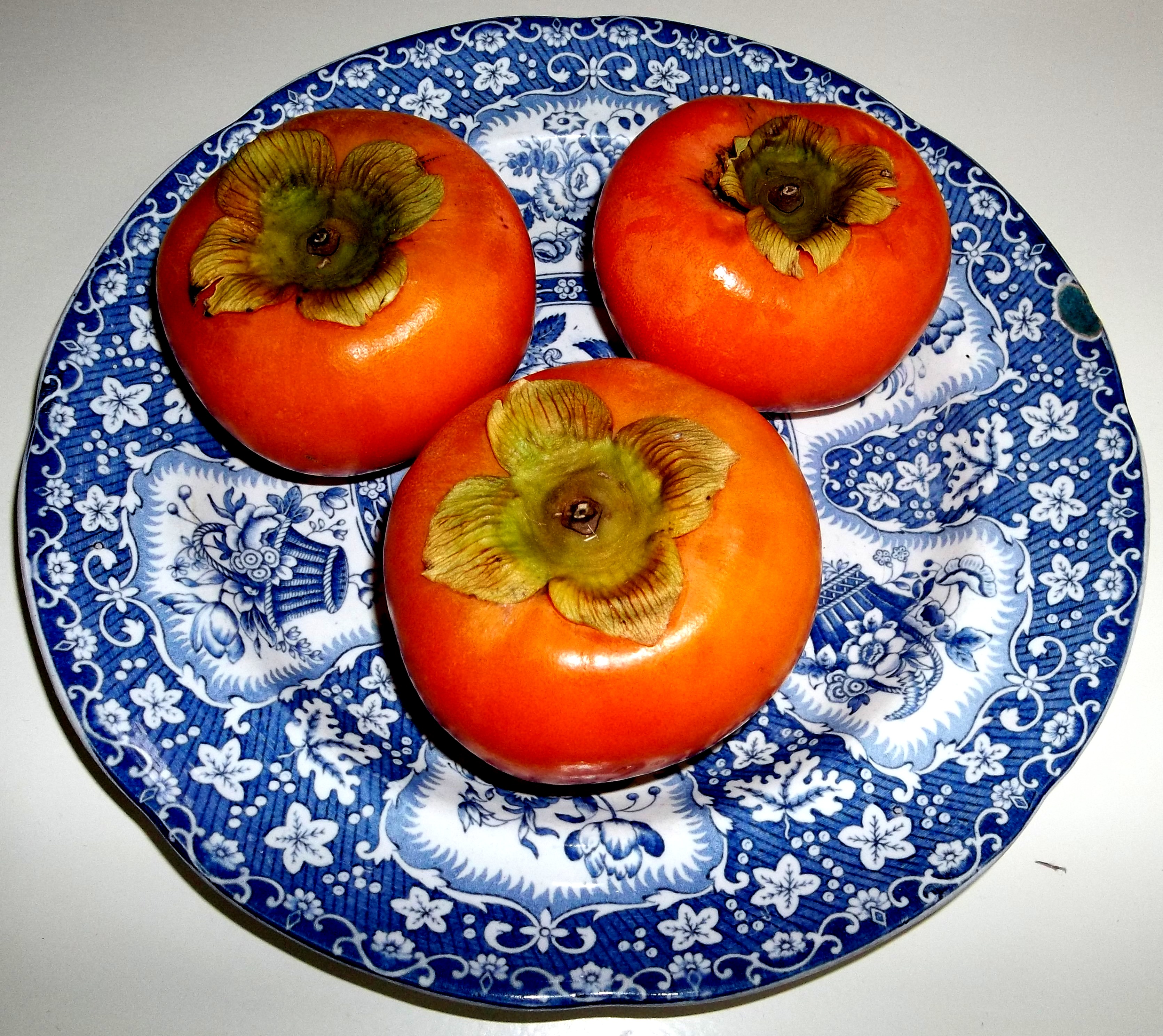
100_0392Life’s rich pageant is sometimes not quite what I expect. The last week or so was one of those times.  I’ll start with the good times… coffee with Friend at a garden cafe. At the entrance the glade of persimmon trees was a flaming circle, though the trees have shed half their leaves. Those that are left hanging are tawny orange, and round ripe red fruit hang from every branch, decorating every twig like an elegant Christmas tree. The whole grove was a blaze of glowing colour and sound, birds perched in every tree, singing, whistling and feasting.

There were tuis whose bright turquoise plumage glistened richly against the red of the fruit, acid green silver eyes flitting from branch to twig, and a host of sparrows, a few thrushes and blackbirds. The green grass sprouting after all the rain was littered with the empty flame- red carcasses of persimmons expertly cleaned out by tiny beaks. It was a busy and happy scene.

The next day began at seven am with me pulling back the curtains of the French windows from where I can glimpse the road. I saw a flash of white, and then another … just too big to be a dog. Oh no, I thought, Anna and Mike’s new baby goats. No time to ring someone to catch them they were going so fast. It was down to me! Luckily I had my slippers on (fluffy), and I prayed that it was too early for any friendly village pervs to be going about their business, as I dashed out in my pyjamas. (Age is irrelevant … the mere word pyjamas electrifies some elderly gents!)

Rushing up to the top of the garden, and down the road, I clapped my hands and called them – they are known as the little darlings. Easy-peasy, they came running, relieved to find a person who would look after them. Slowly I edged and skipped sideways in the fluffy slippers, and led them back down the cul de sac to where their field lay. Robert, the in-house, elderly billy-goat gave them heaps when I pushed them back into the field. They have little white pointed faces, sensitive and exquisite. Saanen goats originally came from Switzerland – these two from the SPCA shelter – neutered, and male, so unwanted since they can’t produce milk! The official description of these goats is rather charming – they are described as large, kind, and friendly. These ones are little, sweet and friendly.

I thought I’d give them a handful of goat treats, and had to crawl into the back of their hut up on the side of the hill-side to get their bowl out. Before I could say knife, all three goats were in and around me, as I scrabbled for the bowl on my hands and knees and was jostled by three determined bodies, and twelve dainty legs. I finally retrieved my dignity and the bowl, and fobbed them off with the goodies.

Back home and off to the big smoke with Friend for a farewell lunch with the various sprightly and foot-loose octogenarians who were about to leave for energetic tours around Germany, Italy or Alaska, we two returning to our frail husbands who cannot be left. “We were lucky to find a tour that would let over – eighties join,” said one… “We have to carry our own luggage around Italy,” chirped another.

The next morning, overcome by tooth-ache, the dentist squeezed me in, and an hour later and some thousands of dollars lighter, I was the bemused possessor of half a bridge, until the whole one had been made to measure. Things went from ache to worse in that department, and I was back again, if not writhing in pain, certainly not a happy camper, a few days later. And there’s more today!

Later, as I backed out of the garage in the rain to return a book to a neighbour, I heard a horrendous bang, and slammed on the brakes. Shaken I climbed out of the car to survey the damage. A wicked squalling wind had just blown off the sea, caught the very high tilt door, designed to let boats in, and slammed it down on the back of the moving car. The electric door was hanging dangerously off the runners at an angle, and badly dented, while the back of the car was chewed up, red glass from the lights scattered everywhere. I backed it out while I could still get it out of the garage.

So now we need a new door, and a new back on the car. Insurance, yes, but by the time the excess is paid on both, it’s a sizeable chunk of money just for a second in the wind. Later, as I searched my soul for the reason for this kick in the back-side, I got the message. Just regretful now that I must have been so dense, and that it took something so dramatic to learn a life’s lesson!

And all the while there’s blogs to read, and birds to feed. The tuis and wax-eyes, and blackbirds love the apples and persimmons I nail onto the fence-line, so I can watch them from the sitting room window. And now I’m looking for a Perspex or glass bowl to hold frozen peas and frozen sweet corn. This is food for wood pigeons. Both the loquat fruit and the guava harvest having failed after the drought this year, the pigeons are hungry and likely to starve through the winter. A bird rescue centre advises us to put the food in a glass bowl so the pigeons can see them, and wedge the said bowl in a pururi tree… in my case, it’ll be the guava tree which they already know, and which I can reach easily.

“Bit expensive, isn’t it?” murmured my other half un-easily.

“That’s the price we have to pay for preserving our wild life,” I returned briskly and pompously. But it did the trick, and silenced the poor chap.

So this is life these days… in ‘The Pursuit of LoveNancy Mitford once described this humdrum of ordinary existence as the wholemeal bread of life… and so it is… but even so, I sometimes long, like Kubla Khan, to feed on honeydew and drink the milk of paradise.

So as I went to put another log on the fire last night, I was thinking to myself that yet again, I hadn’t done much with my day, when I remembered Michel de Montaigne’s wonderful words. He was a lovely man and a writer and philosopher in sixteenth century France, who has often cheered me up and given me confidence, since most of his writing is about himself and his thoughts… like mine!  In his essays he used anecdotes and personal ruminations which his contemporaries thought was self-indulgent, and detrimental to proper style. But he said: ‘I am myself the matter of my book’, and his popularity has lasted, while his critics have disappeared.

His words which came into my mind were: “Alas, I have done nothing this day! What! Have you not lived? It is not only the fundamental but the noblest of your occupations”.  Thank you Michel de Montaigne – that gives me a whole new appreciation of my wholemeal bread! Persimmons and pigeons, goats and garage, the daily bread of life, they all have a place in the hidden scheme of things… and my part is to love them and live with them, and value them, and to remember that this is a noble occupation.

Food for Threadbare Gourmets

Wet, cold wintry weather demands hot, satisfying stodge, so to ring the changes I decided we’d have onion tart. First step is the shortcrust pastry shell, in this case I’m afraid, ready-made, not my normal style, but needs must…. While it’s baking blind in the oven for ten minutes, I peeled and gently sautéed eight big onions – plenty- in four ounces of butter. Don’t let them brown, but gently cook until they’re a soft yellow mass. Beat an egg with two tablesp of white wine, stir in quarter of a pint of cream, salt and black pepper and a good pinch or grind of nutmeg. Stir into the onions, and cook very gently until it begins to thicken, then pour into the pastry case. Return to a moderately hot oven for about thirty minutes, until the top is lightly browned. You can also add two ounces of dry grated cheese like Gruyere.

Food for Thought

Kindness in another’s trouble, courage in one’s own … motto of Princess Diana 1961- 1997.

She also practised and advocated: ‘random acts of kindness.’


48 Comments

Filed under animals/pets, birds, cookery/recipes, great days, happiness, life/style, philosophy, spiritual, The Sound of Water, Thoughts on writing and life, Uncategorized

Peace and the heart of blogging

100_0395Part of this has been re-blogged.  Life’s rich pageant, as a comedian used to say, has run me over this week, so I’ve returned to the thoughts in this blog.

I had read a novel by a distinguished prizewinning writer, polished it off in a few hours, turned over and went to sleep. And in the morning I awoke thinking how depressing it was… not one man or woman who was inspirational, kind, or good – everyone ambivalent and self-absorbed. Then I remembered one peripheral historical character, whose real life contribution to the care of the wounded in World War One is one of the more fascinating true stories of that time. He was a man of integrity, compassion and genuine goodness. And as I thought about him, I felt my whole body relaxing, and a smile on my face. I thought to myself how much I love reading about goodness.

I thought about Mildred Norman, the Peace Pilgrim, that amazing woman who for twenty-eight years walked the length and breadth of the States seven times. She carried nothing but a few items in the pockets of her jerkin which was emblazoned with the words: Peace Pilgrim. From 1953 until her death in 1981, she walked to remind people of peace.

She walked through the Korean War, all through the Vietnam War, and on through all the other conflicts, until the day she died. She had no means of sustenance, she ate when she was given food, and slept wherever she was, and usually people recognised her goodness and gave her a bed…” walking until given shelter, fasting until given food”. When she reached 25,000 miles in 1964, she gave up counting.

Wherever she went she talked of peace, saying: “We who work for peace must not falter. We must continue to pray for peace and to act for peace in whatever way we can, we must continue to speak for peace and to live the way of peace; to inspire others, we must continue to think of peace and to know that peace is possible.”

Ironically she was killed in a car crash while being taken to speak to a meeting. But her disciples carry on her message. She was seventy -one, a gentle, silver- haired blue-eyed woman with a tanned complexion.

Then there was Don Ritchie, ‘The Angel of the Gap’. I can’t read about this beautiful man without tears blurring my eyes. He retired as a salesman, and bought a house with a marvellous view of the ocean just outside Sydney, which also overlooked a famous suicide spot. He spent the rest of his life looking out of the window at that famous view. Not to enjoy the view, but – “for a far greater purpose,” as one obituary put it – to rescue those who came to end their lives.

As soon as he saw someone lingering there, he walked across to them smiling, with his hands out, palms up (what a beautiful, instinctive gesture of peace and non-violence). “Is there something I can do to help you?” he asked.  He talked to them until they were ready to pick up their shoes and their wallet and their note, and to come back to his house where his wife had a cup of tea waiting for them.

Sometimes he risked his life struggling with those who were determined to jump. The official count of the lives he saved is a hundred and sixty – four, but those who knew him believe the figure to be nearer five hundred. Bottles of champagne and cards arrived for him for years after from those whose lives he’d saved.

He used to say: “never under-estimate the power of a kind word and a smile”. He died last year at eighty-six, proof that no-one needs special training to serve their world, that love makes a difference, that great goodness is to be found in ‘ordinary’ people ( if indeed they are ordinary) as well as in spiritual mentors…

This goodness is what I’ve found in so many blogs I read. Some I never miss… not witty or intellectual or spiritual, but filled with a sweetness and a simple goodness that lights up my day… they make me think of that haunting little Shaker hymn ‘Simple Gifts’… because their goodness is a gift, and it’s a simple uncomplicated sort of goodness, spontaneous and undemanding. Reading these gentle blogs about ordinary events and everyday lives filled with weather and animals and growing things is like smelling a flower.

In the last few months I’ve come to a deeper appreciation of the world of blogging. I’ve come to see that for many people it is their life-line. There are those who are sick, but never reveal it, who use blogging as their way of meeting and communicating with others. There are those coping with family illness, death and other domestic challenges, who receive kindness and understanding and a listening ear from the blogging world, and who in their turn open our eyes to the depths of life, and teach us truths about the human condition. As they share their ordeal, their pain and questionings, we bloggers also gain from the perceptions and understandings and resolutions they reach. And there are some who use blogging as a comfort and a support as they search for a job, or a purpose, or tackle a new challenge.

And blogging is an education. As it links us all from around the globe, we learn about the lives and countries of other bloggers. More importantly we share their feelings and gain greater understanding of our global village. And in the year or so that I’ve been blogging, my general knowledge has expanded as I’ve read scientific blogs, climate blogs, artistic blogs, literary blogs, mystical blogs…

But the kindness of bloggers is the heart of it all. That’s why I think blogging has a part to play in raising the consciousness of the world. Even the self-imposed conventions of conduct that we observe, never criticise, judge or write anything hurtful … to be supportive and respectful, are habits that can make the world a kinder place. Kindness stimulates the flow of peace and goodwill which is what will in the end, transform the world into a village, where we know and care about each other, and where, in Thich Nhat Hahn’s words: ‘peace is every step.’ The heart of bloggers is becoming a part of the beating pulse of the world… Namaste, my friends.

Food for Threadbare Gourmets

Felled by a gruesome couple of visits to the dentist, I needed something to eat that didn’t need chewing. So I de-frosted 500gm of minced chicken and sauted some chopped onion and some celery in a little oil and some butter. When they were soft, I added a cup of grated carrot, some chopped garlic cloves, chopped thyme and a couple of bay-leaves, a squeeze of Worcestershire sauce (you can leave this out). Add the chicken to the pan to quickly brown, and then tip it all into a casserole with some chicken stock to cook slowly in the oven – less than 150 degrees.

This, eaten with creamed potatoes, and pureed peas was just what was needed, and also passed muster with the other hungry threadbare gourmet in the house. And there was enough for another meal.

Food for Thought

Life has a bright side and a dark side, for the world of relativity is composed of light and shadows.

If you permit your thoughts to dwell on evil, you yourself will become ugly.

Look only for the good in everything, that you absorb the quality of Beauty.

Paramahansa Yogananda 1893 – 1952  Indian guru and author of ‘Autobiography of a Yogi’


62 Comments

Filed under bloggers, cookery/recipes, great days, life and death, love, peace, philosophy, spiritual, The Sound of Water, Thoughts on writing and life, Uncategorized

War and Peace

100_0389

One night in early June, sixty nine years ago, I lay awake in bed and heard the thunder of hundreds of aeroplanes flying over my home, hour after hour, all through the night. I was six years old, and I lay there frozen with terror, thinking that Hitler was coming to get us.

My mother was not home as usual, so it was my job to get my younger sister and the baby downstairs and into the air-raid shelter when I heard the warning siren. On this occasion, there was no air raid siren, which totally baffled me, and I lay there petrified.

Reading Anthony Beevor’s study of D-day recently, I learned from it that that night was June 5, when a great armada flew across the channel ahead of the landings at dawn. Beevor described people all over the southern England in their night clothes, standing out on the warm June night gazing up at the sky, and watching with astonishment this stupendous aerial army, wave after wave, hour after hour, flying overhead. They knew that the long-awaited invasion was beginning.

Only as an adult did I realise what an anxious, nerve-wracking day that was for the whole country. Europe had never been invaded across the Channel and the men who were attempting it were facing a fortress bristling with weapons, skilled warriors and impregnable fortifications. Western civilisation was hanging in the balance, and with it the lives of unknown millions in Europe. As the army mustered in the ships and then stood in the landing craft, some smoked, some prayed, and if they were American, some chewed gum, then an unknown invention in England. Some read the Bible and some officers recited Shakespeare’s words on St Crispian’s day:

He that outlives this day, and comes safe home,
Will stand a tip-toe when this day is nam’d,
And rouse him at the name of Crispian. …
He that shall live this day, and see old age,
Will yearly on the vigil feast his neighbours…

We few, we happy few, we band of brothers;
For he to-day that sheds his blood with me
Shall be my brother; be he ne’er so vile,
This day shall gentle his condition;
And gentlemen in England now-a-bed
Shall think themselves accurs’d they were not here,
And hold their manhoods cheap whiles any speaks
That fought with us upon Saint Crispin‘s day.

Many of these young men had never been in combat before, while the battle- weary British troops who’d been fighting for the previous five years, were now somewhat reluctant heroes. My father told me much later, that he felt his courage had ran out in Italy.

They had breakfast while they sailed into the dawn, the Americans enjoying steak, pork, chicken and ice-cream, the hard-up British, corned beef sandwiches and a tot of rum. On one ship the sailors made sure the Canadian Scottish regiment had two hard boiled eggs and a cheese sandwich to take with them… and thus fortified they all went into battle.

Back in England, every-one was on tenterhooks, knowing what a huge gamble it was. Churchill was in agony, knowing what failure meant, in terms of the dead and their families, with his experience of the carnage of World War One. He was also worried about the French civilians. 15,000 had been killed, 19,000 wounded in the bombings before the Invasion. Roosevelt had rejected his pleas to concentrate on the Luftwaffe. (One wonders if Roosevelt would have been so gung-ho about that number of American women and children dying in their homes. I also wonder if there are memorials to these dead, as well as to the soldiers who died.)

If everyone else was on tenterhooks, I wasn’t. No-one told a small girl what was going on back then. One just snatched at clues, and tried to piece things together. One of my earliest memories was of the Battle of Britain. I remember standing with my mother and a couple of other women, as they gazed up into the cloudless blue sky in the Dorset country-side , saying: “There’s another dog-fight”.  I craned to see these dogs fighting in the sky, but all I could see were silver crosses diving across the blue space with white lines trailing behind them.

I was two then, I couldn’t talk, but I could understand what adults were saying. Later, I remember people promising that in Peace-time we would have sweets, and toys, and clothes. I thought Peace-time must be like Christmas, only better. At Christmas we had an orange at the bottom of our sock, a once a year treat.

I used to peer out of the window looking over the quiet street where we lived, watching the big girls I admired, roller-skating past. I was six and they were twelve. They didn’t know I existed as I peered through the small diamond shapes on the window which was criss-crossed with wide, sticky brown tape to stop the glass shattering if a bomb fell.  This was at Weymouth, and the American soldiers who fought at Omaha left from Weymouth Bay.

As long as I could remember, the beach had been covered in thousands of khaki camouflaged vehicles, surrounded by barbed wire. There was just a tiny corner of the beach where we could use the golden sands. And in the sea were lines of cruel metal spikes sticking out of the waves to stop the Germans coming. I thought all beaches were covered in barbed wire and protected by rows of big black spikes.

And then one day they were all gone – troops, vehicles, barbed wire and spikes. No-one told me why. I was an adult before I managed to piece the story together. Today, every child knows about war. It comes into their homes every night on the TV screens. They must feel that war is normal. But my war was different. It was a monstrous aberration which we all longed to end, everyone hanging out for peace. When it came, nothing much changed for us, rationing went on into the fifties, hardship was part of our daily lives. But at least we thought we had won the peace.

Food for Threadbare Gourmets

A friend gave me this recipe, which she had gleaned from another friend. It’s supposed to be for four lamb shanks, but I used it for four chicken breasts. Brown them, and gently cook a large onion until soft. Put the chicken and onion in a casserole with four chopped spring onions, six tablesp of peanut butter, four slices of  fresh ginger, three cinnamon sticks, three star anise, 80 grams of dark brown sugar or palm sugar, three tablesp of dark soya sauce, three tablesp of Hoisien sauce, and three tablesp of rice wine. ( I didn’t have any rice wine, so used a medium/sweet sherry instead).

I poured three cups of boiling chicken stock over it all, and put it in the oven at 80 degrees for twelve hours. It is melting when it’s ready. I served it with the kumara puree and parsnip and carrot puree.

Food for Thought

There really seems to be only one hope for man: not to change the world and others, but in some degree to change and improve himself. The salvation of the world rests secretly upon those who manage to do so.

Herman Hesse  1877- 1962  German poet and novelist, winner of Nobel Prize for Literature in 1946


81 Comments

Filed under army, british soldiers, cookery/recipes, great days, history, life and death, military history, peace, spiritual, The Sound of Water, Thoughts on writing and life, Uncategorized, world war two

My Wizard of Oz

100_0347He was a wizard, and he flew from Australia – always known as Oz in Down-under. So of course I called him the Wizard of Oz, even though he was basically an inspired and eccentric architect, and an inscrutable, irascible, metaphysical teacher who couldn’t stand fools. This meant it was tricky asking a question. I had the feeling that if you needed to ask the question, then you weren’t worthy to receive the answer!

His devotees were doctors, including a very illustrious one, teachers, estate agents, salesmen, housewives, seekers. I studied with him for several years at the end of the eighties, ostensibly learning about herbs and nutritional medicine. The herbs were an old idea, the nutritional stuff quite new, much of it channelled. He had studied with other New Age luminaries like Stuart Wilde and Denise Linn in London.

We learned lots of other things besides herbs and supplements – at the time they seemed avant garde, and a bit out of left field, but we now read reports on just what he told us back then – that pouring boiling water on coffee draws the oil out, which is a no-no… so never make coffee with boiling water he told us. So we didn’t. Never drink instant coffee either he said, drawing our attention to the smell of dry cleaning fluid emanating from it. Eat butter, not chemicals was another nugget of wisdom!

He told us that teenagers have their best sleep between seven and eleven a.m. and that they need it. Twenty five years later, one secondary school here doesn’t start lessons until after ten in deference to what is now known about teenagers’ sleep needs. I think of him every morning when I test, using a method like muscle testing, to see what nutrients I need … sometimes I need more calcium, sometimes more amino acids, or niacin… or whatever. This way I almost never have a cold, flu or other health problems. My husband has always called me a New Age Nutter, but the proof is in the pudding.

During the years I worked with the Wizard, we were required to have a thirty minute afternoon nap, he said it was good for the system and kept us young. I still do. Starting off with Reiki, before I know it, I’m deeply asleep, and wake exactly on time.  Our spiritual destiny is to be in the right place at the right time, he mentioned almost as an aside. And since wherever we are, is right place, right time, this was immensely comforting – and practical.

One of the disciplines that he suggested when we were working with him, has now become a way of life for me. The world you live in is not a violent world, he said, so why pollute it by connecting with the fear and violence in other people’s worlds?

Watching fear-based programmes or reading about disasters simply feeds your mind with negativity and unnecessary fear, he said. So I stopped watching the TV news. I had never read the crime pages – why read about people who’ve had dreadful lives making their lives and the lives of others worse, or waste time reading about crooks and crims – I used to say. It felt like voyeurism or schadenfreud. And by avoiding stories that were violent or negative in newspapers or magazines, and having never watched violent thrillers, horror movies or any fear-based plays, films, or TV programmes, my world became very peaceful indeed.

I used to joke that I only watched the weather, there was plenty of action and excitement there – floods and hurricanes, snowstorms and thunder-storms, earthquakes and tornadoes, tsunamis, droughts and forest fires – but without the drug of violence or voyeuristic sex. Now, I don’t even bother to watch the weather, finding it far more interesting to take what comes. If I want to know the weather to plan what to wear for a day away from home, there are plenty of people to ask, from my husband to the shopkeeper in the village. Nearly everyone seems to listen to the news and weather, except me. Some people seem almost addicted to news programmes, as though listening and watching make them feel that they are involved in life and all that’s going on.

But I find that this actually gets in the way of me having my own life and trying to be mindful.  I don’t need to hear about other people’s dramas and traumas, or disasters and scandals to make me feel I’m alive. Sometimes something so horrendous happens that of course I hear about it, and want to send my compassion, but no-one needs my curiosity.

Now though, with all the reading that I do with blogs, another insidious fear has crept up on me. I’ve been aware for the last forty years (who hasn’t) that we don’t treat our planet with the respect and understanding that will keep us and the planet in good health. But in the last year of reading informative and expert evaluations of the various threats to our world – Arctic melting, drilling for oil, fracking, carbon dioxide levels, destruction of forests, GM infiltration, death of bees, polluted oceans, dying species of fish, birds and animals – the list goes on – I’ve become so well informed that I realise I’ve begun to get sucked into anxiety and negativity.

For we rarely hear about the numberless organisations, groups and individuals who in their own way are making a positive difference to their communities, and therefore our world. Sadly, the good news doesn’t sell news or newspapers. And yet there is good news all around us. So now I feel I have to take the Wizard of Oz’s discipline a bit further.  Stop reading all the doom and gloom about climate change, desertification, rhinoceros poachers, Monsanto and the rest, and instead actively seek out the good news.

When I went into my local town yesterday, in each shop I visited I met gentle good people, living gentle good lives. Knowing them as I do, I know they put a hundred per cent into their vocations and work. And then there’s the girl at Tai Chi, who with her husband buys up Christmas trees every year. They take their cars and a trailer each, and go off separately to other towns selling the trees and then give the money to charity.

There’s the fun, wonderful woman working with refugees and indigenous communities, and who started her local branch of the hilarious Red Hat Society; the teachers in the local school who use The Virtues Programme in their schools; the organic farm which teaches sustainability, where people come from all over the world to work there and learn. The local council now takes their advice.

There’s the business man who mentors fatherless boys, and the amazing woman who finds homes for unwanted animals and who secretly rescues battered wives, taking them to hide in her home until they sort out their lives. And Greenpeace have just e-mailed to say that New Zealand will soon become the third market in the world in which all major canned tuna brands have committed to use only tuna that is caught by more sustainable fishing methods.

This is the sort of news I want to know about. This is the sort of information that comforts the soul and inspires hope for the world. And most encouraging of all, is to know children and young people who are growing up fully conscious of all the ills of power and hypocrisy, greed and moral equivocation, and who are evolving their own code of such integrity that the world will be safe in their hands in the future. Our children and grandchildren are up with the play, they are wise and knowing. So no worries then, as they say in this neck of the woods. ‘All is well, and all shall be well, and all manner of things shall be well’…. as long as I monitor my fear and violence intake !

Food for Threadbare Gourmets

Mushrooms were on ‘special’ at the grocer, so I bought a lavish tray of them, and brought them back home to use some for a quick lunch. I used sour dough bread toasted and buttered, and sliced plenty of mushrooms in butter and finely chopped garlic. When they were lightly cooked, I stirred in parsley and enough cream to bubble up and thicken. Poured straight onto the waiting toast, they were filling and delicious. I’ve also used sherry instead of cream in the past, and that’s good too. Shitaake mushrooms are delicious this way too, and any of the big tasty mushrooms are scrumptious – unfortunately they make me ill – so it’s button mushrooms or Shitaake for me.

Food for Thought

This is a postscript to a blog called ‘Voices from the Void’, which I wrote back in February about the ‘Voice ‘ which so many people hear when they are in a dangerous or difficult place. Reading a biography of Queen Victoria last night, I came across this quote from her after the early death of her beloved husband Albert, when she was still a young woman. Writing to her unhappy daughter, the Empress of Germany she said: ”I too wanted once to put an end to my life here, but a Voice told me… no, “Still Endure”.

This made an indelible impression on the Queen, who used “Still Endure” as a motto for the rest of her life.


74 Comments

Filed under cookery/recipes, environment, great days, happiness, life/style, peace, philosophy, pollution, spiritual, sustainability, The Sound of Water, Thoughts on writing and life, Uncategorized

The longest journey

100_0404I’m sitting by the wood fire with the rain falling steadily outside onto the green garden. It’s fragrant with the scent of all the cyclamens I bought this year to put in pots. I hadn’t realised what a beautiful perfume they had. I picked some roses before the rain drenched them, Monteverdi’s exquisite lilting Vespers – trumpets and choirs –  is playing, and I had for lunch a delicious helping of the grocer’s bargain Gorgonzola Dolce with fresh sour dough bread.

And coffee. My coffee tastes entirely different now that I’ve learnt to put the milk in first, thanks to the coffee drinking bloggers who commented on the blog I’d written about tea, and how Milk in First – so frowned upon by the pukka – is actually more delicious than milk poured in after the tea. So I’m now drinking coffee milk in first.

I’ve been watching a blackbird pecking at a red apple nailed to the fence outside the window. The sparrows love their grain in the swinging blue and white bowl suspended from a tree near the bird-bath. As I watched them, I was amazed to see a host of different birds in the garden, so unusual in this country.

There was a wood pigeon sitting in the guava tree in its approved partridge in a pear tree fashion, three pink-breasted grey doves pecking on the grass, a couple of tuis frisking in the bottle brush tree, sparrows in the feeding bowl, fan tails flitting around between plum tree and bird bath, a couple of lime-green and grey wax- eyes flickering among the leaves, and to my astonishment, a gold finch pecking around the green copper with pink cyclamen – the pink and the gold, and the verdigris of the copper a delight.

The tiny wax-eyes or silver -eyes, which are half the size of a sparrow – would top the list of NZ birds I love. Victorian Walter Buller, the earliest NZ authority on birds, called them silver-eyes. They ‘re supposed to have arrived in New Zealand in June 1856. Buller wrote: ‘…in the early part of June of that year, I first heard of its occurrence at Waikanae, a native settlement on the west coast, about forty miles from Wellington. The native mailman brought in word that a new bird had been seen, and that it was a visitor from another land.

‘A week later he brought intelligence that large flocks had appeared, and that the “tau-hou” (stranger) swarmed in the brushwood near the coast; reporting further that they seemed weary after their journey, and that the natives caught many of them alive’. Buller tells us that they were then seen in numbers in Wellington, and greatly welcomed as they ate the aphis known as American Blight which was ruining the settlers’ apple trees. The little silver-eye has flourished here ever since its epic thousand-mile journey across the Tasman.

Why did they come, flocks of them, not just a few blown by the wind? What a great heart in a tiny frame, and what impelled each one to embark on this huge migration across an ocean? Flocks of them sometimes clung exhausted to the masts of ships in mid-ocean. How did they know that a land, New Zealand, was awaiting them at the other side of the trackless sea? And how sad, that at the end of the endless journey, tiny wings beating against the winds, they were so exhausted, that many were caught by hand by Maoris and ended their lives precipitately in the Promised Land.

Whenever I see the tiny green creatures flitting in and out of the birdbath, sipping the honey in the bottle-brush tree, and nibbling the apples I put out in winter, I remember their great journey and noble hearts. Was their quest a search for a better life, like so many of the settlers, who in those same years also sailed across oceans for six months to reach here, surviving perils which included drowning, sickness and starvation?

This quest of men and birds took not just courage but a leap of imagination, and I wonder if these are the times now when we must all also take another leap of imagination and courage to save the dear earth that we know – to take, in Christopher Fry’s words, “the longest stride of soul men ever took”.  Eckhart Tolle has warned that all the structures that we’ve always known will start to crumble, and we are now seeing trusted institutions, organisations, freedom, democracy, justice, free speech, free press, the environment – all under threat.

So this must be the time to take that long stride of soul – to create new ways of living on this planet, salvaging the best, and joining together to share peace and goodwill, as well as food and resources.  The Dalai Lama has said that meditating is not enough – we need to act – and Thich Nhat Hanh has warned us that we can’t go on the way we are doing.

He says otherwise: “there is no doubt that our civilisation will be destroyed. This will require enlightenment, awakening. The Buddha attained individual awakening. Now we need a collective enlightenment to stop this course of destruction.”  So enlightenment, it seems, is a journey which we can’t delay, and however difficult this may seem, and whatever it means to different people – as Lao Tzu so famously said nearly fifteen hundred years ago – a journey of a thousand leagues begins with the first step.


Food for Threadbare Gourmets 

As a threadbare gourmet, I pride myself on getting at least eight meals out of a chicken, so I put the legs into the deep freeze to take out when I wanted them. After de-frosting and taking the skin off, I added them to a pan in which I’d sauted garlic and chopped mushrooms in butter and cream. I also crumbled a chicken cube in a little boiling water and added it to the mix to boil up and thicken. Then I stirred in half a teasp of Dijon mustard, some nutmeg, salt and freshly ground black pepper. Sometimes I serve this on pasta, this time I served it with buttery, creamy mashed potatoes, peas, and carrots.

Food for Thought

Life is an endless struggle full of frustration and challenges, but eventually you find a hair stylist you like!


66 Comments

Filed under birds, cookery/recipes, environment, great days, life/style, peace, philosophy, spiritual, sustainability, The Sound of Water, Thoughts on writing and life, Uncategorized

Testing, testing, testing !

100_0214When Dr Christian Barnard, world-famous surgeon who invented the first heart transplant, decided to sue me for libel I was both intimidated and exhilarated.

It wasn’t an easy time for us at that point… after eight years of campaigning by my husband for the release of a man wrongly convicted of a double murder, now that  he was pardoned, we were embroiled in a Royal Commission and another battle with the police. In the previous eight years we had had our phones tapped, had our letters intercepted, and I awoke one night to find a plain clothes policeman in a grey suit and a stocking over his face at the foot of our bed, rummaging for stuff in my husband’s suit jacket.

Until then I had never locked the front door – so the children could always find their way in! My husband also had a price on his head, a lucrative contract put out by a worldwide drug ring he had been exposing in his newspaper for the last year. They too had penetrated our home when we were away on holiday, and switched off every appliance in the house, leaving a rotting deep freeze amongst other things, as a message to show us that they knew where we lived – even in remote country.

I had told my husband my car had a funny rattle, and when he checked he found that all the nuts on the front wheels had been loosened, so as to cause an accident. The children were frightened to answer the phone.  Luckily, the drug barons fell out and ended up murdering each other until the survivors were caught and convicted in England.

During this time I’d resigned from my job as women’s editor through ill health, but had continued to write my weekly column in the newspaper and in a magazine read by over half the (tiny) population. (I only mention this because it was significant)

It was an article about vivisection which had activated Christian Barnard. Among other horrors, I’d quoted his boast about making a two-headed dog to show the Russians he was as clever as them, and the heart-rending shrieks of the baboon when Barnard took his mate to use his heart for an operation. This article resurrected the moribund anti -vivisection society here and my husband and I became president and vice president until it was on its feet again.

The medical establishment were furious, because I’d also called into question every student having their own personal rat to kill by smashing it on the lab desk, and then dissect. A meeting was called at the university where the medical council discussed: “what to do about me”, as someone told me later. They felt that with my wide readership I had too much influence. How to shut me up?  They decided to alert Christian Barnard, with the result that he sent writs to my newspaper, Safe (Save Animals From Experimentation), and me.

When I got over the shock of opening this bullying letter demanding a large sum of money (which I didn’t have), or the ordeal of a court case, I was thrilled. Now we could bring vivisection out into the open. Maybe it would become an international scandal, since it involved the world famous surgeon. But to my chagrin, my newspaper paid up and apologised without even discussing it with me, and Safe – by then in other hands – paid up too – all the money going to the Heart Foundation – for more testing on animals, I supposed.

So that left me. I said to the family I’d rather go to prison than pay up if we lost the case. Two big tears oozed from my son’s eyes, as he contemplated his friends at school knowing his mother was in jail….  My solicitor wrote to Barnard’s men and did an unusual thing. He told them what our defence would be – listing Barnard’s boasts as they came straight from a TV interview and his autobiography. We never heard another word. So the vivisection issue just died.

This all happened thirty years ago, and it still goes on all over the world. I refuse to give to cancer appeals as I know that in this country anyway, their research includes testing on animals. I only buy certain brands of make-up – the ones which proclaim that they haven’t been tested on animals. The problem with vivisection is that no so-called scientist is going to talk himself out of a job, so they go on finding fresh ways of researching on animals, and fresh horrible ideas about how to test, and so it never ends.

We know that chimps have roughly ninety eight per cent of the same DNA as us, and we know that animals have a level of intelligence that ranges between that of a two year old and an eight year old – quite apart from their own special intelligences that we know nothing of.

Darwin himself said that animals have all the same emotions as people – they know joy and fear, depression and boredom, pain and happiness. We would never treat a two year old child the way we do animals, we would never think of torturing an eight year old in the name of science. But we have no compunction about doing this to animals.

Peter Singer, the great philosopher and animal rights campaigner who wrote the influential book:  ‘Animal Liberation’, refers to this treatment of animals as ‘speciesism’, like sexism and racism. He, like many of us, hopes that by the next generation this sort of discrimination will be as un-acceptable as those other forms of intolerance. Even today, so many people, especially the young, find this discrimination abhorrent. People for Ethical Treatment of Animals – Peta – is doing a great job of raising people’s awareness about the way we treat other creatures..

But there are, of course, a million other ways that man has devised to kill, maim, exploit, work to death and torture most varieties of creatures on this planet, including cutting off the fins of sharks, thus crippling them, and then dropping them back in the sea to drown; destroying the habitats of hundreds of species so they die out anyway, and perpetrating factory farming to name a few.

If we care, we can ‘put our money where our mouth is’ as they say in this country, and find ways of not using anything which is the result of animal testing. There is plenty of research these days to show that there are other effective ways of testing drugs rather than on animals, which is not fail-safe anyway. Thalidomide famously was tested on rabbits and found to be safe for them. But that didn’t make it safe for humans.

A year or so after my brush with Dr Barnard, a South African newspaper quoted him as saying he had given up vivisection. Asked why, he said he had heard the grief in the cries of a baboon for his mate who he had taken for an operation. There are some limits beyond which no civilised human being can go, he said.

Food for Threadbare Gourmets

This sauce served with vegetables is one of my favourite meals. I thinly slice a selection of vegetables – pumpkin, kumara/sweet potato, red and yellow peppers,  mushrooms, carrots, and either fry them in an electric fry pan, or bake them with olive oil drizzled over them. Meanwhile in a blender I put two cups of good pea-nut butter, a cup of olive oil, two whole lemons, four cloves of garlic , two teasp fish oil, a dessertsp or more of dried thyme, and a tablsp or more of brown sugar, plenty of freshly ground black pepper, and salt.

Whizz everything together, and add more thyme and sugar or salt to taste. If it’s too thick, add some water. I pile the vegetables onto a serving dish, and hand round the sauce. It keeps for a few days in the fridge. It’s delicious with crusty rolls and wine for lunch with the (metaphorical) girls, or for supper for the two of us.

Food for Thought

All of the larger- than-life questions about our presence here on earth and what gifts we have to offer are spiritual questions. To seek answers to these questions is to seek a sacred path.

Lauren Artress, Episcopal priest, counsellor, writer and founder of the Labyrinth spiritual movement. Walking the labyrinth in Chartres Cathedral has led to the building and walking of labyrinths all over the world.

62 Comments

Filed under animals/pets, cookery/recipes, food, great days, philosophy, spiritual, The Sound of Water, Thoughts on writing and life, Uncategorized

The drug we can’t live without

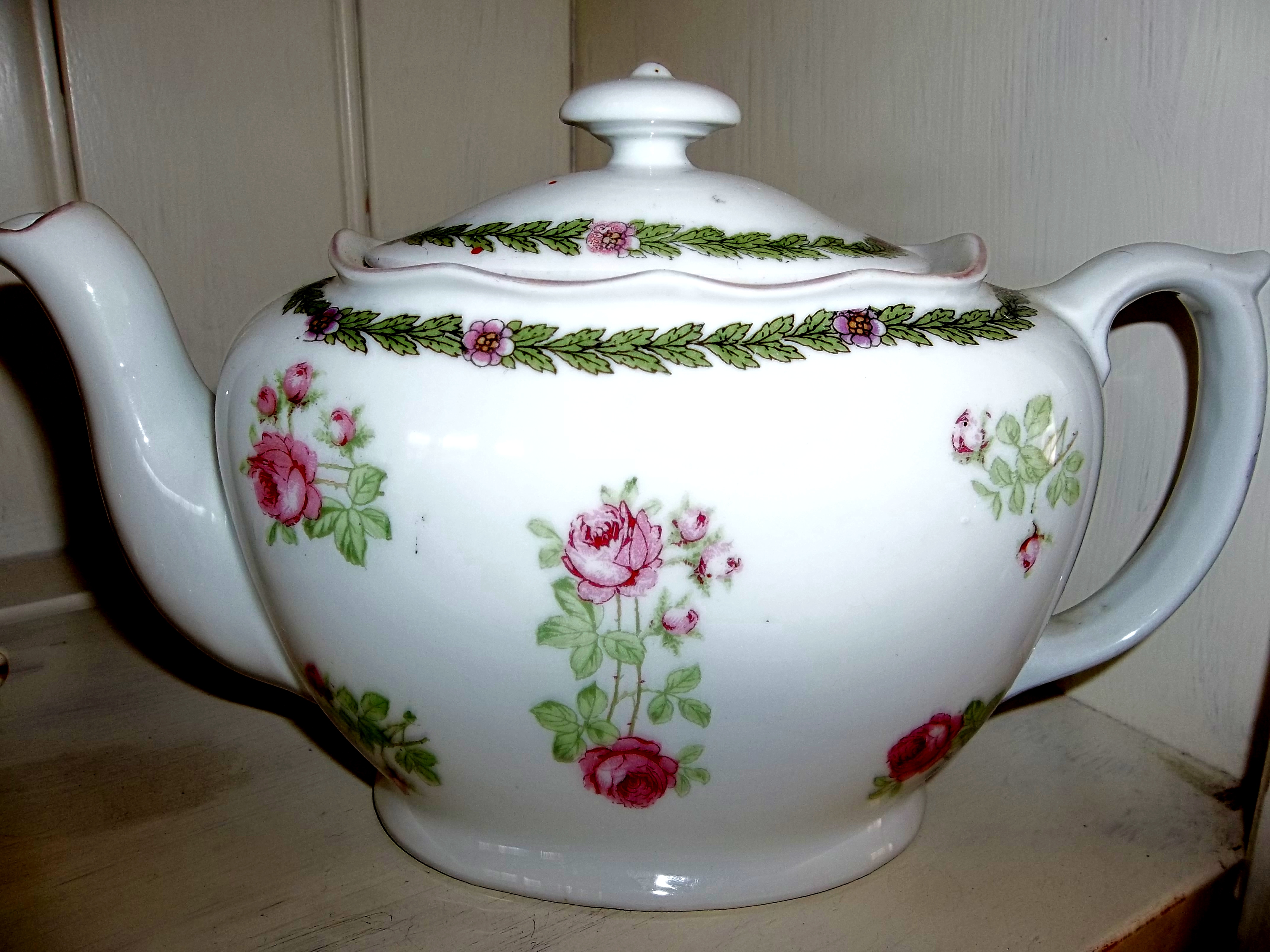
0000621 “Thank God for tea! What would the world do without tea! How did it exist? I am glad I was not born before tea.”  I couldn’t agree more with Sidney Smith, an Anglican clergyman, who died in over a hundred and fifty years ago. And as far as I’m concerned it can’t be any old tea. And certainly not a tea-bag, a monstrous invention that I suspect is just tissue paper filled with tea-dust left in the bottom of the tea chest after my proper tea leaves have been packaged.

And for me the only tea worth drinking is Twining’s Lapsang Souchong. It comes from Fujian Province in China. According to the packet: “the delicious smoky flavour is produced by lying the leaves on bamboo trays, and allowing the smoke from pinewood to permeate through them”. Ah, so … other tea now tastes quite crude to me after years of drinking nothing but this brew.

Though the Twining family may be surprised to hear this, I always feel quite connected to them, as I had a great friend who was a Twining, and my former in-laws had lived in a rose- coloured, brick Georgian house built by Elizabeth Twining down by the River Thames. I spent a lot of time there in that beautiful house, very conscious of Elizabeth. The firm of Twinings has been selling tea for three hundred years from premises in The Strand in London, so when the latest head of the Twining family came out to NZ to talk tea, naturally I heeded his instructions on how to make it.

Always happy to take the least trouble, I was delighted to hear from him (on the radio) that we don’t need to heat the tea-pot –  swishing boiling water around the pot before putting the tea-leaves in. Previously it had been an essential part of the ritual of making a pot of tea. But my tea leaves now go into a cold tea-pot. I missed the rest of his talk so I don’t know whether he addressed the thorny problem of milk. To have or not to have – that is the question. Purists don’t. I’m not a purist. I’m a conservative who has had milk in my tea for more than seventy years.

There‘s a further twist to the milk problem – known as MIF. Legend has it (which is not always reliable) that the Royal family refer to people as MIF’s. But I don’t believe this snobbish canard. MIF means exactly that – milk in first. And this is what the late Nancy Mitford used to funningly call non-U.  (U meant upper class, and non-U the opposite!) Milk in first means you’re probably the sort of person who’d lift the port decanter and push it across the table instead of sliding it along clockwise around the table – horrors – or would say: ‘pleased to meet you,’ instead of:’ how do you do!’ – shudders!  Incredibly, when I grew up these snobbish rituals defined the man – or woman.

So for most of my life, I had put the tea in first. But the worm turned about fifteen years ago, when I discovered that the tea tastes much nicer when you do MIF ! This puts me firmly on the wrong side of the tracks – but the bonus is delicious tea.

If I’m offered a cup of tea that I know will not meet my impossible standards of taste and strength – other people’s tea is always too strong for me – I add sugar, and then it becomes something else. Tea out of a mug is not the same as tea out of a bone china flowered cup and saucer. I dread the day when I’m plonked in an old people’s home, and will have no lapsang souchong and no bone china tea-cup.

Life without tea is unthinkable. There was no bombing so bad in the Blitz, that you weren’t offered a cup of tea after it; no shortage of water in the Western desert so tight, that there wasn’t always enough for a pot of tea brewed by the tanks; no misery so deep that a cup of tea doesn’t at least give the sufferer a second’s respite; no cold so deep that a cup of hot tea doesn’t warm the innards;  no thirst so terrible in the tropics, that a cup of tea doesn’t quench it, and no morning in the office so boring that a cup of tea doesn’t briefly break the monotony .

I often jokingly use the poet Cowper’s delicious phrase: ‘the cup that cheers but doth not inebriate!’ My grandmother always had a trolley laid for such a cup – on a lace tea-cloth with two tea-cups and saucers, sugar pot and tea-spoons, and the milk jug covered with a crocheted lace doily weighted with coloured beads. (Milk that wasn’t mucked about with didn’t go sour like it does today!)

In her book ‘Urban Shaman’, American writer CE Murphy writes a delicious description of having a cup of tea: “In Ireland, you go to someone’s house, and she asks you if you want a cup of tea. You say no, thank you, you’re really just fine. She asks if you’re sure. You say of course you’re sure, really, you don’t need a thing. Except they pronounce it ting. You don’t need a ting. Well, she says then, I was going to get myself some anyway, so it would be no trouble. Ah, you say, well, if you were going to get yourself some, I wouldn’t mind a spot of tea, at that, so long as it’s no trouble and I can give you a hand in the kitchen. Then you go through the whole thing all over again until you both end up in the kitchen drinking tea and chatting.

“In America, someone asks you if you want a cup of tea, you say no, and then you don’t get any damned tea. I liked the Irish way better.”

She must have forgotten that the American way with tea is simply to toss it into Boston Harbour!

Food for Threadbare Gourmets

This is the perfect cake to have with a cup of tea – if you’re not planning on cucumber sandwiches! It’s the classic French cake with equal quantities of everything. So it’s four eggs, and the same weight of butter, sugar and flour. You can halve the amounts for a smaller cake. Soften the butter, and beat it with the sugar – until it’s almost white and fluffy. Add the eggs whole, one at a time and beat. If it starts to look grainy, add a spoonful of sieved flour. When all the eggs are in, fold in the flour a spoonful at a time, using a metal spoon.

Add enough milk to make a soft smooth mixture which drops off the spoon. Stir in the grated rind of half a lemon. Gently push into a buttered cake tin, the base lined with greaseproof paper, and bake in a moderate oven around 180 degrees. Bake for fifty minutes … if it’s still soft and hissing, cook for another ten minutes.

Leave the cake in the tin for a few minutes, and then tip onto a rack to cool. I make a butter icing for this, soft butter, icing sugar and lemon juice and the other half of the grated lemon rind, all beaten together.
Food for Thought

Development cannot fly in the face of happiness; development should promote human happiness, love and human relati0ns between parents and children and friends. Life is the most important  treasure we have and when we fight, we must fight for human happiness.” Jose Mujica, President of Uruguay at the Rio Conference


.

66 Comments

Filed under cookery/recipes, food, great days, happiness, humour, life/style, philosophy, The Sound of Water, Thoughts on writing and life, Uncategorized

Food, fear and films


100_0087Village life takes ingenuity in a tight spot, and stamina – plenty of it!  These are the times that test men’s souls! Well, we haven’t actually had any chicken stealing like Mr Woodhouse in ‘Emma’, but life has been pretty hairy in our neck of the woods in the last few days.

Where do I start? We are a quiet law-abiding community, we look out for our neighbours, share our garden goodies, swap cuttings and seeds, and admire each other’s grandchildren. Our greatest excitement is the weekly testing of the fire alarm by the volunteer firemen.  But the other night the peace of the four hundred law-abiding souls was rudely shattered. A dog began barking as dusk fell, and continued without end for the rest of the night. I woke every hour of the night, and heard all the other dogs joining the chorus. I overslept and arose bleary – eyed, and then had to rush to attend a veteran’s memorial service in the graveyard.

I came away somewhat disgruntled that the officiating clergywoman should in-appropriately refer to the Somme as a romantic name. The Battle of the Somme was the day that the British Army lost 20 per cent of its men – 60,000 killed or wounded on one day in France, my step- grandfather being one of the badly wounded. No! Not romantic. Naturally I aired my disgruntlement back at home, and felt all the better for it! So I was quite gruntled when the phone went later that afternoon and a friend rang to see how my husband was; and since his wife was overseas, I invited him for supper that night – three hours later in fact..

Putting down the phone, my mind raced through the possibilities. We were going to have cauliflower cheese, but could I give this to a man accustomed to gourmet cooking from his talented wife? I thought of various alternatives, but I was always missing one vital ingredient. Cauliflower cheese it would have to be! We were already having Brussels sprouts and carrots with it, and toasted almonds sprinkled over the cauliflower, so I added some chopped and baked golden kumara – crisp and crunchy on the outside – soft and sweet inside. Washed down with pinot gris.

With some pumpkin soup from lunch, thinned with a little cream and jazzed up with a sprinkling of coriander, served in little gold rimmed coffee cups before we sat down, it seemed a reasonable meal, topped off with  hot chocolate sauce poured over locally made coffee ice-cream. No-one wanted coffee after that, but smoky lapsang souchong tea went down well.

Later that night, I heard the dog again. I thought: I cannot face another night worrying about it. So I jumped in the car and scouted round the neighbourhood in the dark. In the next street, I found a frantic pit- bull terrier on the loose – pacing back and forth and barking ferociously and fearfully outside a darkened house. We have no hedges or fences, just grass flowing out onto the pavement. So there he was, and I was available to him…

I went next door, where I could see a light on, knowing the people there, and hoping the resourceful man of the house had a solution. But they were visitors, who’d borrowed the house, and were dreading another night of torment. So it was up to me! The husband told me the dog had been alone for two days, was dangerous and and had frightened two children, so I revved off back home to deprive my husband of six pork sausages sitting in the fridge for him to enjoy the next day.

Back at the house, Daphne, a friend living across the road from the deserted house, was talking to the other neighbours. When I got out of the car, she hurried across, sounding so relieved to see me that she made me feel as if I was the US Cavalry. She warned me to be careful. The poor dog had now retreated to the back of the house, so while I strewed sausages around the front lawn, she went to get some water to fill his empty bowl.

Home, and a glorious peace settled back across the cottages and gardens, the only sounds the restless sea surging onto the rocks and an owl calling. So I rang the lovely Daphne, and she told me the renters had come back not long after. I tried not to regret the sausages, and hoped the dog had managed to eat them all before his somewhat callous-seeming owners returned. (There are dark rumours that they are on drugs and are up to no good!) But a good night’s sleep was apparently had by us all, both the (slightly) wicked and the (mostly) virtuous .

After all this mayhem I took myself off the cinema in the next village in the morning, as I feared the film might go off before I’d seen it -‘Performance’ – about a quartet, set in a snowy and romantic-looking  New York. When one member of the quartet has a crisis, all the others go to pieces, with all their repressed emotions and frustrations about their lives welling up. The famous quartet is in danger of dis-integrating, until they finally put their art before their distress, and play the glorious Beethoven Violin Quartet No 14 Opus 131, music which reverberates through the whole film.

A simple story, and I was glad I hadn’t read the dreary reviews of it before I saw it, as they were all uniformly patronising. So, ignorant of the fact that apparently the film had so many fatal flaws, I loved every minute, and came out walking on air, feeling joyful that art had triumphed over all!

This was thirty six hours in the life of our village for me – mundane and busy – no mystery or profound or significant events… just the daily round and common task. A spiritual teacher once said to me that our spiritual destiny is to be in the right place at the right time. So I have to accept that however mundane, this is my destiny these days – right place – right time… food for friends, fearful dogs, and flawed, enjoyable films.


Food for Threadbare Gourmets

Kumara is the New Zealand equivalent of sweet potatoes, and I love the golden ones best. I cut them to the size of a walnut, this time – normally I’d have them bigger. They were then parboiled, and when the water had been drained off, the kumara was slammed around the saucepan and flour sprinkled over them. So with a rough surface covered in flour, hot oil spooned over them and quickly baked in a hot oven, they were crisp and tasty – the crunchiness was just the texture we needed with the soft cauliflower and brussels sprouts.

Food for Thought

I don’t know where this comes from:

Weak people revenge, strong people forgive, intelligent people ignore.


47 Comments

Filed under animals/pets, battle of somme, british soldiers, cookery/recipes, great days, humour, life/style, spiritual, The Sound of Water, Thoughts on writing and life, Uncategorized, village life, world war one

Many lives or just one?

100_0106

“To live is by universal consent to travel a rough road. And how can a rough road that leads nowhere be worth travelling? “

A well known philosopher, MacNeille Dixon, asked this question in a series of lectures at Glasgow University in 1938. Good question as they say.  He was discussing the concept of re-incarnation. Another writer, Gina Cerminara, has suggested that: ‘Perhaps we have reached a stage of our history where this knowledge (re-incarnation) is necessary to us – otherwise it would not be appearing in so many places.’

The word re-incarnation often provokes the same sniggers that a belief in angels does, but it was an accepted part of Christian belief until the sixth century. Since then the records show that although people have assumed it was banned, according to the Catholic Encyclopaedia, it actually wasn’t. It’s a common belief in many other cultures, though it’s earned itself a bad name for the mistaken interpretation that we come back as animals or insects if we lived a questionable life. In all the cultures around the world re-incarnation is seen as an opportunity to continue the life of the soul and perfect the things that were left undone in other lives.

In most of Asia, and in cultures as far apart as Mexico and Egypt this belief has always been a constant. In Christian history, the Gnostics, the Cathars, the Templars, the Bogomils, the Albigensians  were all believers in other lives, and they were all wiped out by the Christian church.

Today, it’s not a dangerous belief in the west, but “a very private belief” according to a survey in the UK which showed that twenty five per cent of people believe in re-incarnation irrespective of their church or creed. It’s the same figure in America.  Many orthodox Christians tend to regard it with the same suspicion as clairvoyance. And because it’s been considered a rather eccentric belief – to put it mildly – there are also many misunderstandings about it. The word karma for instance, is often used in a mistaken sense that when bad things happen to us – it’s karma – sort of payback time. But karma is really the unfinished business from other lives, which we choose in this life to complete.

Henry Ford said: ‘The discovery of Re-incarnation put my mind at ease’ … and he wanted others to know what peace of mind it brought. He also said: ‘Genius is experience. Some seem to think it is a gift or a talent, but it is the fruit of long experience in many lives… ‘ When one thinks of Mozart writing music at five, and all the other artistic geniuses and child prodigies who understand branches of mathematics and can speak many languages from their earliest years, this sounds like a logical explanation.

Many famous writers, scientists, philosophers and others believe in re-incarnation. Gustav Mahler the great composer  said: ‘We all return; it is this certainty which gives meaning to life, and it does not make the slightest difference whether  or not in a later incarnation we remember the former life’…

There’s been a lot of research into what is sometimes called life before life in the last forty years, and there are other methods of returning to previous lives than by hypnosis. Joan Grant who wrote books about her former lives in Egypt in great detail, which could not be faulted by Egyptologists, later used her gift for divining other lives to heal fears, phobias and other psychological traumas in partnership with her psychologist husband. This is how it’s used today, for healing, not for curiosity.

Sometimes people spontaneously return to a time in the past where they faced the same challenge but had failed to understand or respond to it. They see the pattern in this life and are able to work through to a better outcome this time round. And there are many documented examples of children giving the details of their previous life, and the facts being checked and found to be exactly as the child has said- even the family history and family members which they’ve described.

Some people feel that time as a straight line is a human concept which may not bear much relation to reality, and that we may be living parallel lives in a parallel continuum. Joan Grant used to say that her lives were like beads on a string, and the string was the eternal part of her which never died. There are instances of people going forward to lives in the future, as well as lives in the past, and also of lives overlapping, so that a woman dying in a German concentration camp was also living as a five year old child in England.

Whenever we seem to recognise a place or a person, we instinctively know that this is not the first time. When we find certain skills easy or are drawn to different books or periods in history we can be fairly sure that we have known those times before. The Greek philosopher Plotinus said that ‘the spiritual life cannot be described to those who are not living it’. The same applies to re-incarnation. Some people know in their bones that they’ve lived before, while others cannot even imagine the possibility.

The point of re-incarnation is not to go on plodding along making the same muddles and mistakes, but to rise to a higher level of consciousness with each fresh opportunity for growth on earth. This makes nonsense of the cruel beliefs in hell or  heaven – a human concept which projects onto the Creator human notions of judgement and punishment. It means that instead, we know that we are part of the long history of the planet in which civilisations rise and fall, in times far beyond our knowledge or recall, in both the past and in the future. And we have been there, and will be again.

 Food for Threadbare Gourmets

Organic minced chicken was on special at the village delicatessen, so minced chicken it was. I’d been wanting to try a recipe with it. Take one cup of grated or torn up good bread, ciabatta or sour dough, and soak it in quarter of a cup of milk. Chop three cloves of garlic and two tablesp of parsley. Mix them with 500g of chicken and the bread and milk. Add half a cup of freshly grated parmesan. Season and mix well. Form into walnut sized balls and roll in flour. Cook in hot oil in batches.

Put aside and gently sauté two large leeks, the white parts only, with a dozen sage leaves, until the leeks are soft. Add half a cup of wine and when it’s bubbled up, add the stock and the chicken balls. Simmer for twenty minutes, and then add salt and pepper, a cup and a half of frozen peas, the grated rind of a lemon, and lots of cream. One night we ate it with mashed potatoes, another night with rice.   

Food for Thought

They will come back, come back again, as long as the red Earth rolls.

He never wasted a leaf or a tree. Do you think he would squander souls?

Rudyard Kipling 1865 – 1936  Writer and poet, first Englishman to win the Nobel Prize for Literature, and the youngest person ever to do so at 42.


.


51 Comments

Filed under cookery/recipes, great days, life and death, philosophy, spiritual, The Sound of Water, Thoughts on writing and life, Uncategorized

The mystery of other lives

 
100_0207

Not a picture of hear no evil, see no evil and speak no evil, but a picture of the three fat wood pigeons sitting on the power line outside our house yesterday.

They used to be plentiful, but between the Maoris and the settlers they nearly became extinct. They’re now protected, and their numbers are increasing. The Maoris call them kereru, we call them wood pigeons. They are precious to us.

This morning, waiting for the kettle to boil while I made a cup of tea to take back to bed, I stood at the bench looking out of the kitchen window, and watched one of these pigeons in the guava tree. As he swallowed the guavas whole, they travelled down his throat and then the lump disappeared into his white curving bosom.

I was fascinated to see how this big heavy unwieldy bird kept his balance on the thin frail branches. He moved from fruit to fruit, gobbling them up, without ever looking or checking to see where his feet/ claws were going to find a secure foothold. The feet moved with an intelligence of their own. Once, the twig bent so much, the bird keeled over, and his wings flapped open to hold him, as his feet found a better foothold. Enough being enough, he whirred heavily out of the little tree shortly after, and lumbered off. The tangy red guava berries are small and sour this year, with no rain to swell them, so I’m leaving them all for the birds.

I took the tea-tray back to bed, and lay back on the pillows looking out of the window on the other side of the house. The loquat tree, just beyond the window, which is covered in blossom, was rustling and shuddering. A turquoise and black tui was enjoying the blossom, seeking the honey, long beak pushing aggressively into the flowers, and plunging from one bough to another, with the same sure-footedness as the wood pigeon.

As I watched this bird, with his bright white bobble of feathers jiggling at his throat, which caused the early settlers to call him the parson – bird, I felt I was watching something familiar, and then I remembered. As the tui sucked the honey, his tail waggled back and forth in an ecstasy of concentration, just like the tails of lambs when they are suckling their mothers in the fields.

During the nightas I turned over in my sleep, I heard a morepork, the New Zealand owl calling, very close; later, the huffing of a possum in the loquat tree, which sounds like the hissing of a python and what I feared were rats rustling in the roof above. I hoped the hedgehog I found yesterday was on the move in the garden drinking, eating and making merry by the ivy. I seemed to be inhabiting a corner of the universe where other creatures were getting on with their lives oblivious of homo sapiens.

When I drove through the little hamlet at the edge of the sea on my way to shop the other day, I slowed down when I saw a couple of ducks crossing the road. I stopped a good fifty yards away from them, so they wouldn’t feel hassled, and was tickled to find them being followed by at least another twenty waddling, feathered bodies. When I slowly drove past the drive where they had all disappeared, I saw there was a feijoa tree hanging over the fence, and the ground was covered in the fallen green fruit.

The ducks were feasting… how did they know the fruit was there, that this drive was the only way to get at it, and that this is the time of year for fallen fruits? Their intelligence is of a different order to ours, and it works for them. It being the beginning of the duck shooting season in a few more weeks, they will soon all congregate on ponds they know are safe from hunters, in city parks like the duck pond in the Auckland Domain….

And on the way home I dodged a quail family scuttling along the side of the road with half a dozen speckled brown babies. In our last house, I once looked out of the window and saw a veritable army of quails advancing down the drive… eleven to be precise, four adults and seven tiny powder puffs on wheels. They all scattered over the lawn, while the four adults stood one at each corner, with their backs to their babies, guarding them.. When the babies had finished, the adults marshalled them, and moved off, with one adult bringing up the rear, and keeping the stragglers in order. An exquisite example of responsibility, co-operation and parental love.

Henry Beston wrote in ‘The Outermost House’:  ‘We patronise them for their incompleteness, for their tragic fate in having taken form so far below ourselves. And therein we err, and greatly err. For the animal shall not be measured by man. In a world older and more complete than ours they move finished and complete, gifted with extension of the senses we have lost or never attained, living by voices we shall never hear. They are not brethren; they are not underlings: they are other nations, caught with ourselves in the net of life and time, fellow prisoners of the splendour and travail of the earth.’

And philosopher Ken Wilbur writes that: ‘Every single thing you perceive is the radiance of Spirit itself, so much so that Spirit is not seen apart from that thing: the robin sings, and just that is it, nothing else…’

And so as I catch in a glass the bumble bee which has just blundered into the house, and is buzzing angrily at the window, I release it outside, sending it on its way with a blessing, knowing that we are all fellow travellers and all connected by Spirit.

 Food for thought

This prayer of St Francis is dedicated to America with love – and to the world – since we are all one…

Lord, make me an instrument of your peace.

Where there is hatred, let me sow love;

where there is injury, pardon;
where there is doubt, faith;
where there is despair, hope;
where there is darkness, light;
and where there is sadness, joy.

O Divine Master, grant that I may not so much seek
to be consoled as to console;
to be understood as to understand;
to be loved as to love.
For it is in giving that we receive;
it is in pardoning that we are pardoned;
and it is in dying that we are born to eternal life.

St Francis is the patron saint of animals. He lived from  ADe l,ived fromH1181 to AD1226

52 Comments

Filed under animals/pets, birds, cookery/recipes, great days, life/style, philosophy, The Sound of Water, Thoughts on writing and life, Uncategorized, wild life