Category Archives: cookery/recipes

The real Dalai Lama


100_0314That Christmas, when they were seven and eight, I had sent the children to the other side of the world to see their father and grand-parents. Instead of cancelling their daily treat of chocolate milk, I gave it to the children who lived around the corner with their single mother and cat called Mehitabel.

I lived in a big old white verandahed house next door to a park, and sometimes when I looked out of the window I would see them trailing dispiritedly past in single file, mother in front, and three small scruffy children aged seven downwards, straggling behind her, followed closely by the cat.

One warm summer night, the eldest, my son’s friend, with the unfortunate name of Ezekiel, came rushing into my flat, and said: “Mum says ring for the ambulance!” I did, and a few minutes later he was back, saying: “Mum says cancel the ambulance. The police might come too. She wants you to come. “

As we ran I tried to find out what had happened. His father was a drug addict, who had recently, according to my horrified son, “stomped” his mother in law when he was high. As we hurried towards the house, I worried that I might get stomped too. When I got there, Melanie was waiting. At the door-step I had to step over the cat Mehitabel who’d been speyed that day and was mewling in pain, while at the same time her kittens were clamouring for milk. Not a good start. My heart sank. The smells and the squalor turned my stomach.

Melanie whispered to me in terror that the ex-husband had taken an overdose, and because he was on a methadone recovery programme was furious when he realised she’d ordered an ambulance, as it could get him into trouble with the police and wreck his programme.“He’s just coming to now,” she agonised, “and I don’t know what to do.”Neither did I.

I could hear heavy dragging footsteps moving across the uncarpeted wooden floor overhead. All the family cowered, and I stood in the hall facing the stairway with them behind me, as a tall heavy man lurched round the bend in the wooden stairs. To my astonishment, as though I was at an English garden party, I smiled, stepped towards him, stuck out my hand to shake his, and heard myself say: “How d’you do, we haven’t met, I’m Valerie …”

His blank blue eyes focussed, he took my hand, returned the greetings, and a sigh seemed to emanate from the three small children and his wife holding their breath. We discussed the cats, let a few other polite nothings pass between us, and with everything seeming to be quiet and normal, I left.  And shortly after, he did. In the years that have passed I’ve often thought about this unconscious knee-jerk conditioning which was so banal and mundane that it lowered the temperature immediately. Would I do it differently now that I’m older and more conscious?

Ten years later when I was doing hard labour on a consciousness – raising  course in Australia – with nearly a hundred others – one of the charges laid against me by the course leader was that I was gracious! He said it stopped me being real, and was a defence mechanism that didn’t serve me. I didn’t get it then, and neither did some others who came up to me afterwards, and told me they liked me the way I was. But as time went by, I did get to see what he meant about avoidance and being real, and also to understand at a deep level, the truth of these well-known, lovely lines from Margery Williams’ classic, ‘The Velveteen Rabbit.’

“Real isn’t how you are made,’ said the Skin Horse. ‘It’s a thing that happens to you ….
‘Does it hurt?’ asked the Rabbit.
‘Sometimes,’ said the Skin Horse, for he was always truthful. ‘When you are Real you don’t mind being hurt.’
‘Does it happen all at once, like being wound up,’ he asked, ‘or bit by bit?’

‘It doesn’t happen all at once,’ said the Skin Horse. ‘You become. It takes a long time. That’s why it doesn’t happen often to people who break easily, or have sharp edges, or who have to be carefully kept. Generally, by the time you are Real, most of your hair has been loved off, and your eyes drop out and you get loose in the joints and very shabby. But these things don’t matter at all, because once you are Real you can’t be ugly, except to people who don’t understand.”

Being real to me, is about having the courage to be honest, never hiding who we are, never being ashamed of anything we are, accepting who we are  – and most important of all – being vulnerable. When we’re vulnerable we don’t fear being hurt, but know that great gifts can come out of risking ourselves. And somehow when we are real and therefore honest about our feelings, others can respond at that level of vulnerability and truth.

Being vulnerable is about having an open heart, and being available to both spontaneous joy and un-regretted sorrow. There’s a freedom when we start being real, we dare to be adventurous in spirit, and calm and confident in adversity. We don’t have regrets, because we know that there are no wrong paths. “Paths are made by walking,” as the Spanish poet Antonio Machado wrote.

One of the most real stories I’ve heard is about the Dalai Lama, who has never been anything but authentic, honest, wise, and now – I realise – vulnerable, spontaneous and real! A friend had spent the weekend with him (and a thousand others), studying Tibetan scriptures. The Dalai Lama read them aloud in Tibetan, and then someone else translated them into English, and he discussed them.

At the end of the second day, when they had reached the end of the programme, he held up the book, and said to his hearers something like: if you found this useful or enlightening, then you can read it every day.

“If not,” he twinkled, with his wide wise smile, “Fuck it,” and threw the book over his shoulder! There was a moment of disbelieving silence, and then everyone roared with delighted laughter.

Food for Threadbare Gourmets

I’ve been battling with the damage the dentist inadvertently did to two good teeth some weeks ago, and am now about to have two root canals, so I’m eating ‘soft’ food. Yesterday I remembered a dish we used to call: ‘convent eggs.’ It’s comfort food – creamy mashed potatoes, and hard- boiled eggs covered with cheese sauce – simple, cheap and easy. When mashing the potatoes I pour cream or milk into the pan with drained potatoes, and as soon as it bubbles I take it off the heat, and mash with lots of butter, salt and pepper. At the end I quickly beat the potatoes with a wooden spoon to make them fluffy. Put the potatoes on a warmed plate, cut the hard -boiled eggs in half and press into the potatoes, then pour the cheese sauce over. That’s the quickest way. But the same layers placed in an ovenproof dish, and grilled until brown adds a dimension of crunch and taste.

Food for Thought

Absurdity is a very powerful tool for waking up. A good situation comedy is a wonderful Buddhist teaching, because it’s a parody of suffering. The cause of suffering is attachment to outcome, attachment to income, attachment to the world being a certain way.

Steve Bhaerman – Swami Beyondanandal – the Cosmic Comic

81 Comments

Filed under addictions, cookery/recipes, great days, human potential, life/style, philosophy, spiritual, The Sound of Water, Thoughts on writing and life, Uncategorized

Places in the Heart

100_0223The printed word has a lot to answer for and has changed the course of many lives.

On this occasion when it changed mine, I was cursorily scanning the personal columns of the Daily Telegraph looking for somewhere to live. My husband was away with his regiment on manoeuvres or practise camp, and I was filling in the trying gap between the baby’s ten o’clock and two o’clock feed.

We had to find somewhere to live for a year, and this night I found a few lines offering a country house in the right area for nearly the right price – for a year. The next day I rang. The owner was delighted – he was off to Greenwich Naval College and wanted someone to keep his house warm. “Chudor, ya’ know,” he told me, listing the bedrooms… We arranged a time that weekend to inspect the place, and when my husband returned the next day he went off on what he called a recce. He came back looking rather panic-stricken. “It’s bigger than Hampton Court,” he said, “and looks like it too, all red brick.”  Undaunted, I persevered, rather fancying the idea of a stately home. We’d never be able to heat it, he argued, and then I saw the light – with an eighteen month old and a four month old, that mattered.

So I returned to the personal columns, and struck gold a week later. “This one sounds OK”, I said,” right area, right rent, and only five bedrooms” (my ideas had expanded considerably since my brush with Layer Marney Towers the previous week). I rang the owner – same story – wanted someone to live in it for a year, this time while he wound up his boat building business in East Anglia. “You’ll love it,” he said, “there’s the garden bedroom, the oak bedroom, the red bedroom, the four poster bedroom, and the end bedroom…” My husband panicked again.

But a few days later we set off on a light June evening driving through quiet Essex lanes, with honeysuckle and dog roses winding in among the high hazel, hawthorn and elderberry hedges. We found Newney Hall dreaming between fields and hedgerows, a small lake – which in the twilight was almost black, and edged with a tangle of lilacs and shrubs – lying between it and the road. The house, Tudor red brick, and Essex pantiles on the upper floor with casement windows, stretched beyond the lake, reaching into a circular lawn with a cedar in the middle. Beyond that, a walled orchard.

As we walked down the gravel drive I could hear the sounds of music coming from the house. A knock on the door revealed a rather vague looking woman with a viola tucked under one arm, and the bow held in her other, as though she could hardly bear to stop between bars to open the door. “George!” she called imperiously, and the seigneur hurried to welcome us. Within minutes the deal was done, and we moved in a week or so later.

The house had been built in the time of Edward the Sixth, Henry the Eighth’s son, and all the land around had been gifted to Wadham College, Oxford in the same reign, so nothing in the landscape had changed for over four hundred years. The fields and trees, lanes and barns were untouched by time, and since there was no sound of traffic, no jet planes practising, and only occasionally the sound of a distant tractor, the whole place lay wrapped in an almost primeval peace. There was no other house in sight.

Wood pigeons cooed incessantly somewhere in the trees, cocooning us in their summer sounds, the donkey in the next field brayed occasionally, the cows mooed as they shambled past to the milking shed at the farm beyond the house. The old red-tiled barns, grain sheds on staddle stones, and stables were laid out around a square, where the cows sheltered in winter. I walked across to the cow- shed every day with a baby on my hip, my eighteen month old trotting beside me, and carrying a big cream- ware jug to collect my fresh milk. We also went there to pick up new-laid eggs from the farmer.

The house was built from huge beams, and filled in between them with a mixture of mud and straw. They were plastered over, and the walls were about three feet thick, with deep window ledges where I put books and vases of flowers. Two old aunts had been living in the house before expiring and gifting it to George. In the mid-sixties they were over ninety, and the house was unchanged since the days when they had been born back in the 1870’s. So was the dust. When I moved an antique chest of drawers to dust behind it, a thrush disintegrated into fine powder.

I spring cleaned from top to bottom, washed curtains, scrubbed floors, polished Sheraton  tables and dusted Chippendale chairs. It was like living in a time warp. No heating, a gas stove so old I’d never seen one like it, and neither had the serviceman when he came. If it’s working, best leave it, he said, shaking his head. I had a big kitchen with a big square scrubbed table in the middle, red and white checked tile floor which needed scrubbing every week, and a real larder with marble slab. My only gadgets a pop-up toaster and a wooden spoon!

At weekends a stream of friends came through, a childhood friend getting used to having MS, school friends with their babies and husbands, army friends with theirs, a friend of my husband, shell- shocked after being court- martialled – a Polish/ French student who had nowhere to go, a girl who was pregnant and needed somewhere to stay – she moved on, didn’t like my food, I think – cousins, godparents, in-laws, family… and then back to primeval peace during the week.

Once I dumped his steak and kidney pudding and vegetables on my husband’s head. Mistake. Apart from reprisals, lots of cleaning up to do. And later, I lay in the long sweet smelling grass in the orchard, where I’d seen the red fox glide through, and cried my eyes out under the late evening summer sky. At twenty six I thought no-one would ever love me again.

Not long after, we left that beautiful house to go to Hongkong, where the hectic life and chaos of those times obliterated the memories of that year in the country. But for years I have dreamt of it. In my dreams it’s bigger, and there are many more rooms. The furniture is more elegant and the rooms more beautiful. There is one room which is filled with such treasures that I only go into it sometimes… it feels sacred. I have no idea why I dream so often of this house I lived in for a short year so long ago. I don’t know what it symbolizes. I’ve lived in other houses and places just as magical…  no doubt a psychologist would mine some profound Jungian theory from these dreams, delving into the unconscious and maybe coming up with an archetype!

Daphne du Maurier was obsessed with Menabilly the house she immortalised as Manderley in ‘Rebecca’,  and wrote about her dreams of it, while another writer, Elizabeth Bowen, clung to the memories of her ancestral home in Ireland, Bowen House. Evelyn Waugh immortalised Lygon Hall in his book ‘Brideshead Revisited’.  Like du Maurier writing about Manderley, Waugh’s writing about Brideshead breathes love, nostalgia and an ache, a longing to return.

It isn’t just writers who long for these enchanted places from the past. It’s as though the romance of their lost beauty, surrounded by dreaming country-side, grows tendrils into the heart which can never be untangled. …  and this is not just the experience of a few. For some, it’s the house by the sea, for others, the log – hut in the wood… a longing perhaps for memories of happiness and holidays past, innocent times of laughter and love, for the sweet days of years gone by. It rarely seems to be a house in town that arouses these emotions … mostly these lost demesnes are part of an idyllic landscape. As the years go by, these landscapes become almost mythical places of perfection…

And once we’ve left, we can only return in our dreams. Though we have left something of ourselves behind in these special places, it is a different self, a younger self seeing the world as it was then. To return in the physical is to invite dis-illusion or disappointment. Things change, new owners improve on the simplicity that we treasured, the light is harsher, the house smaller, the garden neglected or smartened, trees and shrubs overgrown or cut down, the lake stagnant, and nothing is the same. So memories and dreams are the best we can have. And they are precious, and time cannot warp them or fade them. These are our private, personal paradises – our places in the heart.


Food for Threadbare Gourmets

Friend popped in for a girl’s drink. I still had some delectable rose from lunch together a couple of days before, so she came to help me finish it. Too late to get to the shops, I found I had nothing to nibble… no thin brown bread for smoked salmon and lemon juice, so blinis  were fished out of the deep freeze, but then I had no cream cheese.

So I improvised by hard boiling a couple of eggs, slicing them thinly, and placing a slice on each buttered blini. Next layer was mayonnaise on the eggs, and lastly the salmon with a sprinkling of parsley. I cut the salmon in two pieces for each blini, so it was easy to bite them without wrecking the whole edifice!  They went down a treat, and we had a happy hour laughing at ourselves and the world, before returning to the inescapable task of feeding our always hungry husbands.


Food for Thought

“’One pure act of acceptance is worth more than a hundred thousand exercises of one’s will,’ since it is a state of interior silence and quietude from which at the right time, the right action emerges without any volition.”

From ‘Taoism – The Way of the Mystic’  by Jean C Cooper 1905 – 1999  Born in China to missionaries, she grew up learning about Confucianism, Taoism and Buddhism from her amahs. After studying philosophy at St Andrews, Edinbrugh, and lecturing in comparative religions, she lived with her husband in a remote Cumberland home (the lake district) where she had to generate her own electricity from a stream.


70 Comments

Filed under birds, cookery/recipes, family, great days, happiness, life/style, love, spiritual, The Sound of Water, Thoughts on writing and life, Uncategorized, village life

Their many-splendoured thing

0001138To get to the truth of this love story was a journey through two thousand years of male chauvinism and prejudice.

I’ve discovered that the story of Caesar and Cleopatra’s love has been distorted for centuries, belittled, and encrusted with calumnies of Cleopatra. Even Caesar’s twentieth century biographers seem to have had their judgement warped and their vision dulled by some unconscious hostility towards one of the great charmers of history – the last Queen of Egypt.

 I think I could have fallen in love with Caesar. He was a strikingly good looking man with sensitive features and piercing eyes according to contemporary sources; a brilliant orator -second only to Cicero – who kept his legions loyal both with his oratory and his generosity to them, getting land for them to settle on, and doubling their pay. He was a prodigious horseman with enormous stamina and a reputation for travelling a hundred miles a day in a light carriage in those days on those roads, while writing letters and reports to Rome – sounds like Napoleon…

 Caesar’s Gallic Wars may have been the torment of generations of school-children (‘ Gaul was divided into three parts,’ etc) but they are esteemed for their historic record, and admired for their taut elegant Latin prose style. He was intelligent, and tackled Rome’s chronic debt problems and began to find a solution for the huge under-class of unemployed people in Rome. And he was one of the greatest generals in history.

 When he met Cleopatra, she’d been queen since she was fourteen, but had just been deposed by her younger brother and his power brokers. Young Ptolomy’s men had seized Pompey, Caesar’s enemy, when he had fled to Egypt, and according to some accounts, beheaded him then and there in front of his wife and children. When Caesar arrived in Alexandria two days later to deal with Pompey, Ptolomy presented him with his enemy’s head, thinking to gain his favour. But Caesar was disgusted and so antagonised the Egyptians.

 Twenty-one year old Cleopatra had decided that she would get Caesar on her side to win back her crown. Barred from Alexandria by her brother, she sailed up to Caesar’s palace at dusk. A servant named Appollodorus, the Sicilian, carried her in a carpet past Ptolomy’s guards, and in this exotic way she met the great Roman general. What courage! What audacity!Who wouldn’t fall for such a high-spirited and ravishing young creature? Fifty-two year old Caesar was enchanted.

 And Cleopatra?  No contest! We all know why, thanks to Henry Kissinger’s helpful advice to his aide  – “ you’d have no way of knowing, Pederson, but power is the greatest aphrodisiac,”  – and so it was with Caesar. Cleopatra stayed there in the palace with him, and when a few months later, his legions arrived from Italy, he defeated the Egyptians at a battle on the Nile, where Ptolomy was drowned.

 Caesar was a descendant of the mythical Aneas, who had fled the sack of Troy, popped in on Dido in Africa, and then left her, thereby bequeathing to us another of opera’s greatest songs,  ‘Dido’s Lament’, and finally ended up in Italy. The fabulously rich and beautiful Cleopatra was a descendant of one of Alexander the Great’s generals, who was Satrap governing Egypt when Alexander died. He proclaimed himself  Pharoah, and the Ptolomies reigned in Egypt for nearly three hundred years.

 They had continued to speak Greek throughout this time, though clever Cleopatra had actually taken the trouble to learn Egyptian. So it would have been no problem to converse with Caesar, since Greek would have been their common language, spoken by all educated people in those days.

 After Caesar had defeated her brother, he re-instated Cleopatra on the throne, and before rushing off to mop up the rest of Pompey’s supporters in Spain (he certainly got around) he spent several months cruising on the Nile with his beloved. They were accompanied by 400 craft, and the picture of them in my mind, reclining on cushioned couches under draped awnings, soft voices, perfumes, music and beauty all around them, makes me think of the words:

They live in such delight,

       Such pleasure and such play,

               As that to them a thousand years

                              Doth seem as yesterday.

 Then, while Caesar went rushing about his empire putting down riots and rebellions from the fall-out of his quarrel with Pompey – he spared his enemies, which meant trouble for him later – Cleopatra gave birth to his only son, called Caesarion. For the next two years, their love must have been sustained by relays of couriers delivering papyruses. It’s very hard to work out the chronology of their love affair as different commentators and historians dropped facts or fudged them; and they prefered to write that ‘Caesar aligned himself with her’, as though it was just political policy, rather than admit that he loved her.

 One of them says that when Caesar went back to Alexandria, he was putting down a remnant of Pompey’s force – really?  A handful of leaderless dissidents, hanging out in Egypt for two years, while the legions he had left behind to protect Cleopatra ignored them? Of course he had gone to see Cleopatra. This time she followed him to Rome with their baby and her young brother, technically her co-monarch. Taking him with her, meant that other factions couldn’t cause trouble back home on his behalf.

 Caesar installed his mistress in one of his villas. It caused a scandal of course. He was already married to Calpurnia, but clearly adored Cleopatra in spite of her detractors insinuating that she was not important to him. He had a gold statue of her made and placed in the temple of his ancestors. Cicero hated her, as did many others, who feared her influence over Caesar. But in spite of every historian’s attempts to write Cleopatra out of Caesar’s story, this one action shows the depths of his commitment to the fascinating Queen.

 As proof of this lack of commitment to her they say that he failed to make their son his heir. But why would he nominate a three- year- old illegitimate half- foreigner to run Rome, when he’d already named his adult great- nephew Octavian, who became Emperor Augustus? Historians also say that she “claimed” that Caesarion was Caesar’s – how insulting – at one stroke this implies she was promiscuous, and the child’s father unknown.

 A twentieth century biographer makes no mention of Cleopatra when he describes Caesar’s innovation of creating public libraries like the one attached to the Great Library of Alexandria. He also tells how Caesar used an Egyptian astronomer to re-organise the calendar, and institute the Julian Calendar, which was used throughout the western world for over fifteen hundred years. Gradually countries changed over to the slightly more accurate Gregorian calendar in the seventeenth century, but to do so caused riots in many countries. Russia didn’t change over until the Revolution in1918, and Berber Arabs and the monks of Mt Athos still use Caesar’s calendar.

 Despite the Egyptian astronomer, historians pretend this too had nothing to do with Cleopatra. The one thing they’re happy to sheet back to her, was that Caesar grew more dictatorial, which they claimed was due to her Ptolomy influence – not to the circumstances in Rome and his increasing age? At the end of two years, Caesar was assassinated, by enemies claiming that he was aiming for too much power. He died on the steps of the Senate on the Ides of March, 44BC.

Cleopatra fled back to Egypt. None of these heartless male historians ever credit her with a broken heart, but how could she not have been broken-hearted?  She and her lover had been together for four years. If Caesar had lived, where would the story have ended? Roman writers denigrated her and de-valued her place in Caesar’s heart, but admitted that her great beauty and her wit, charm and ‘sweetness in the tones of her voice,’ according to Plutarch, were legendary. “Brilliant to look upon and to listen to,” wrote another. Shakespeare had the famous last words: ‘Age shall not wither her, not custom stale her infinite variety’…

And when four years later, Mark Antony summoned her to meet him at Tarsus to answer for her loyalty to Caesar – at nearly thirty, and at the height of her radiant beauty – she famously pulled out all the stops for him; her life and her throne depended on it. Yet ten years on, the rather unreliable and vain-glorious Mark Anthony failed her, and she committed suicide rather than be dragged in chains through Rome as part of the Triumph of Mark Anthony’s enemy – Caesar’s great-nephew, Octavian.  Honesta mors turpi vita potior – an honourable death is better than a dishonourable  life – Roman historian Tacitus

 P. S. Seventeen- year old Caesarion was killed by Octavian – ‘too many Caesar’s’ –  thus proving, despite the sneers,  that he was Caesar’s son. Cleopatra’s twins and a son by Mark Anthony, were brought up by Octavia, Mark Anthony’s divorced wife – an act of generosity and goodness in the circumstances.

PPS   The poem comes from an old hymn called ‘Jerusalem, my happy home’. It was written circa 1580 by an anonymous Catholic priest and based on the writings of St Augustine in 400AD.


Food for Threadbare Gourmets

 Shopping for vegetables this morning, I saw some fresh cos lettuce. I don’t really like salads in winter, but promised myself a nice Caesar salad. It was only when I reached home, I realised the hilarious workings of my unconscious!

Anyway, we had one – this is my down home version: a few rashers of organic bacon chopped and fried. Some crisp croutons fried to golden brown. I either poach the eggs or boil them very lightly. I don’t use anchovies, as my husband doesn’t like them and the original recipe used some drops of Worcestershire sauce, which is what gives the faint anchovy flavour. Toss it all together, except for the egg and sprinkle with a good vinaigrette dressing which has some crushed garlic in it. Then add grated parmesan, which amalgamates with the dressing, and then with the egg yolk when the egg is added and broken. Delicious – even in winter!

 Food for Thought

Something going on here – after using the words below in a conversation with a friend the other day, I decided to put them on the end of this rather long blog – nice and short Food for Thought!  When I Googled to check who had written these words, I was astonished to find that they date from the same times as Julius Caesar!

If I am not for myself, then who will be for me? …. And if not now, when?”

Rabbi Hillel – Great Jewish teacher who lived at the same time as Julius Caesar and later, King Herod, dying in 10 AD.

The modern version is “If not me –who? If not now – when? “


48 Comments

Filed under cookery/recipes, culture, great days, history, life/style, love, philosophy, The Sound of Water, Thoughts on writing and life, Uncategorized

Storms of Delight

100_0377I awoke to the roaring of a savage sea hurling itself onto the rocks below. The window is always open so that I can hear the sea.

Looking out, it was a grey wolf sea, with a steel-grey haze obliterating the islands that hover on the horizon. White capped rollers raced in across cruel grey and glacier- green water, and when the waves hit the rocks spilled over in sheets of white foam blowing high in the air. Low tide is almost more spectacular than high tide, because the water hits the rocks instead of flowing over most of them.

 Later, I put on a hood and jacket and walked out into the storm. The wind was thrashing the trees and making much the same sound as the roaring sea. First I walked to the garden of some friends overlooking the little harbour. It’s usually like a shining green jewel set deep in high rock and forested walls. It was calm, the only sign of the storm being the muddy-looking water.

 These friends own the goats and are away overseas for some weeks, so I pocketed the lemons lying under the tree. It was only a little tree, but had been so nurtured and well fed, that where one lemon would normally hang, between five and ten weighted down each fragile branch. The scent of the blossom still growing swirled round the tree before flying in the wind.

 As I walked down their long drive, between two rows of palm trees, three little speckled red hens came running out of a nearby garden, and solemnly picked their way behind me in single file. I felt like turning round to stroke them, but they weren’t keen on this. The way they followed me reminded me of Konrad Lorenz’s imprinted geese, and I hoped these little hens weren’t busy imprinting themselves on me. They gave up in the end, and returned home to where their supper was awaiting them in the hands of a pretty girl in a cream poncho.

 Strolling back in the flying rain I walked down the cul de sac to say hello to the three goats, and give them a little leafy, twiggy treat. Robert, the grumpy old billy- goat, would keep dropping his mouthful in order to snatch the little darlings’ twigs from their mouths. So I had to do a dodgy dance to try to fend him off while the babies managed an uninterrupted munch for a few minutes.

 As I turned round to come home, I heard a piteous whine. It was Zeb, the black and white pointer who lives opposite the goats, and sometimes escapes to come and see me. She had her head to the fence, hoping I’d come and say hello to her too. Of course I did, and while I was doing so, Kate, her owner, came out and asked if I’d like some new-laid eggs. Would I? So when Zeb and I had finished our tete- a- tete, I returned home the delighted carrier of six fresh eggs.

 I laid them carefully with the glowing yellow lemons on the garden seat at the top of the steps, and continued my wander in the storm. We live on a tiny peninsula sticking out into the sea, our house facing one way, and on the other side of the little neck of land, the old village graveyard faces out to sea in the other direction. Beneath spreading trees, it holds the graves of the earliest settlers in this place, and the latest inhabitants.

 I walked on the wet grass between the graves, heading for the end of the cemetery where it ends in a deep crevasse where the sea throws itself against this neck of land. Here I look down on a flat rock fifty feet below. The seas crash over it in rough weather, or lap against the sides on calm days, revealing tempting still green depths and white rock below the waterline, where I’d love to swim if I could get down there. Today it was almost invisible beneath thick sheets of green water swirling over it and spumes of foam flying through the air.

As I stood looking down here, as I so often do, I realised that every time I come here, I think of Pincher Martin, and William Golding’s description of hell. Pincher Martin scrabbling desperately to escape the raging seas, and clinging onto the slippery rock and slipping back down again into the tormenting cauldron of murderous waves… over and over again … not a pleasant remembrance, and one I try to banish, but it always comes back … just as I never see the spire of Salisbury Cathedral, in the flesh or in pictures, without thinking of Golding’s ‘The Spire’ and his painful story of spiritual disintegration. Thank goodness I’ve avoided reading ‘The Lord of the Flies’, as I know I would be tormented by that too.

Today, the wind crashing through the old pohutakawa trees – which were probably growing here when my hero, Captain James Cook sailed past in 1769 – was bringing down lots of small twigs and gnarly broken branches. When they’re dry they’re wonderful to start the fire with, and the peasant in me can’t resist gathering bundles. This was a successful foray and I returned home with a big armful of wet branches and twigs to dry out in the garage. Pohutakawa trees grow to the size of a good oak tree, and have dark green, hard, crunchy leaves all the year round. They’re sometimes called the New Zealand Christmas tree because at Christmas they’re smothered in flaming red blossom, and here, where the whole coast is ringed with them, they are a unique sight.

 And so back home to a blazing log fire, with the haunting and tender sounds of Handel’s opera Julius Caesar still ringing through my head. I went to see it for the second time in three days yesterday, five hours of it, and would see it again – and again, if it was available. Today I Googled Caesar and Cleopatra, since I only knew of Anthony and Cleopatra. And yes, Handel hadn’t messed around with history, Caesar and Cleopatra had had a love affair, she had borne his only son, and she stayed with him in Rome until his assassination.

 So well before her alliance with Mark Anthony, she had loved Caesar, and he her.Knowing this made the exquisite songs of their love affair in opera seem even more poignant.Cleopatra inveigled her way into Caesar’s presence rolled up in a carpet, and in the opera sang a song of enchantment for him. I read somewhere that Cleopatra’s glorious song to Caesar:  “v’adoro pupille” (I adore you, eyes,) is the most seductive love song ever written. I can believe it. In Natalie Dessay’s version she didn’t seduce, she poured out her heart. It was beautiful.

 And this life seems so beautiful too, with all its gifts and grace notes, allusive thoughts and memories, the stormy seas and wild winds, the hens and the goats, the centuries of music and aeons of love, the lemons, the eggs and the firewood!


Food for Threadbare Gourmets

 The pantry was bare. So I made a treat I haven’t made for years – cheese aigrettes. All I needed were things like eggs, flour, and grated Parmesan which I always have in the deep freeze. So into a saucepan went two oz butter and half a pint of water. When boiling I added 4 oz flour and stirred hard until the whole mixture was coming away from the sides of the saucepan, leaving it clean.

 Off the heat I mixed in 3oz Parmesan and two egg yolks, beating them in separately. Add salt and pepper, and then fold in the stiffly whisked egg whites.That’s the easy part. When the mixture is cold, drop small rough pieces, about a teasp size or bigger, into hot fat. Don’t fry too quickly or the outside will brown before it’s cooked inside. But if the fat is too cold, the aigrettes will become greasy. It takes about four minutes for  each batch to cook.

Fish them out with a slotted spoon onto some kitchen paper to drain, and serve with grated parmesan sprinkled over, and a dash of cayenne pepper. With salad, they’re crunchy, filling and delicious.

 Food for Thought

 Life, for all its agonies of despair and loss and guilt, is exciting and beautiful, amusing and artful and endearing, full of liking, and of love, at times a poem and a high adventure, at times noble and at times very gay; and whatever (if anything) is to come after it, we shall not have this life again.

From Towers of Trebizond by Rose Macaulay English novelist 1881 – 1958


81 Comments

Filed under books, cookery/recipes, culture, environment, great days, happiness, life/style, literature, love, spiritual, The Sound of Water, Thoughts on writing and life, Uncategorized, village life

Serendipity and the Private Life of Rabbits

100_0379I don’t know what made me ask. Serendipity. A visiting friend had said his wife hadn’t come with him to see us because they had guests from overseas – a palaeontologist and partner.

Out popped the words, “Not Ronald Lockley’s son?”  I’d once been told that his son was a palaeontologist. It was, and he came, and we were a mutual admiration group for his father. Synchronistically I had just been re-reading his father’s autobiographical book ‘Orielton’. Mostly because I wanted to refresh my mind about rabbits!

Ronald Lockley was the brilliant naturalist who did the research on rabbits which was the basis for Richard Adams’ famous book: ‘Watership Down’. Richard Adams made millions out of this book which has never been out of print, while Ronald wrote over sixty five books to keep the wolf from his door!

But in ‘Orielton’ he tells not only how he organised his amazing research into the life and domestic habits of wild rabbits, but how he also gained an insight into rabbit psychology, when he adopted an injured baby rabbit. His son – the one who came to talk – helped to keep it alive overnight and then That Rabbit, or TR as she was called, became part of the household.

The household lived in a remote and rambling beautiful Georgian manor surrounded by parkland of lakes, woodland, farms and gardens in Wales. A succession of other famous naturalists, Spanish domestics and would-be students and helpers passed through it, and the family and its animals lived a rich and lively life. Ronald’s interests and observation ranged over the private life of the large spiders inhabiting his home, to the badgers, birds, bats, rabbits, hares, and stoats, otters, ants and bees ranging the estate. This house which had rung with laughter, music, wit and brilliance from the likes of Ronald and Julian Huxley and Ludwig Koch, he finally handed over to the Field Studies Council, before leaving England.

Ronald was already well known among naturalists before he published his four year study of “The Private Life of the Rabbit”, having lived on, and written about the uninhabited island of Stokkum, off the Welsh Coast. Here  from 1928, he pioneered studies of migratory birds, established the first British bird observatory in 1933, and carried out extensive pioneering research on breeding Manx Shearwaters, Atlantic Puffins and European Storm-petrels – wonderful names… In the thirties he had made an Oscar winning film on gannets with Julian Huxley, but here at Orielton it was rabbits that took up most of his attention.

That Rabbit – TR – slept in the cat basket by the fireside, and when she was awake was “excessively playful” according to Ronald. She invented a version of hide and seek which she played on the stairs with anyone who would join in, and would chew through the string of s cotton reel Ronald used to roll around for her, seize the reel in her mouth and rush off dodging through the furniture as though playing rugby, enticing Ronald to chase her. If he was busy, she’d chew through his slippers, wreck his socks, and if all else failed, leap onto his type writer and push her face into his to get his attention.

After an unfortunate incident with a stoat, Ronald devised a system of In and Out doors which closed behind TR so the stoat couldn’t chase her inside. She learned immediately how to work this system, just as she had instantly worked out how to organise her toiletry, and never messed inside.

For afternoon tea in the garden with the rest of the family, she enjoyed weak tea with milk and a little sugar … and as time went by, Ronald realised that if he had not had this relationship with TR, he would never, as he said, have understood the soul of a rabbit. Even as an adult, TR sought out his company and showed a deep attachment to him.

The end of the story came when on one of their walks together, TR encountered a young buck rabbit… and then again. She left home and set up house with one of her own kind. But this was not the end of the story.

One night when everyone was sitting round the fire they heard the In-door, and TR came hopping through. She went straight to the cat basket, and grabbed in her teeth the dolls blanket which she used to cuddle up in, and then made a dash for the Out- door.

She had remembered as she prepared her burrow for her first litter of babies, that soft warm rug by the fire-side that she had always used!

Ronald had given me ‘Orielton’, with several others of his books, and I was such an ungrateful insensitive person in my younger days that I’d never got round to reading them. Natural history just didn’t do it for me then, and I was too wrapped up in my teenagers and complicated life generally.

I used to meet him when I was delivering my weekly column to the newspaper, and Ronald was delivering his naturalist column. (no e-mail copy then!) He had come to this country to live, because he felt that the UK was not committed to looking after the environment. We loved each other, and yet when I left Auckland to live in the country, we lost touch. It makes me sad now, Ronald was never really appreciated in this country – no-one really knew or recognised  his work back then in the seventies and eighties.

But as usual he made his mark on the place. He was involved in setting up the bird sanctuary at Miranda where every year, hundreds of thousands of godwits gather to begin their stupendous flight to the other side of the world – Siberia – to breed. He also created a little protected reserve around the house on the cliff where he lived, overlooking the sea on the edge of Auckland. I still have the book he gave me about his life in that: “House Above The Sea”, as it was called.

If fame means having an obituary in the New York Times, an entry in Wikipaedia and in various biographical tomes, Ronald does have fame. But I actually feel that the words from Ecclesiasticus describe him best: “and some there be which have no memorial…. these were merciful men, whose righteousness has not been forgotten.”

Richard Adams, who made a fortune out of Ronald’s research – which he acknowledged – said of Ronald that he was a “sensitive and clear-sighted lover of this beautiful earth.” The gentle humorous man I knew was also a lover of all beauty. He died in 2000 at ninety-six, and as I wrote this, these words came into my mind: “Swim with the dolphins deep in the sea, Soar in the sky with the birds and be free…”


Food for Threadbare Gourmets

I needed a cake in a hurry the other day, and it was serendipitous too, because there was enough left for coffee when my expected visitors arrived the next day to talk of Ronald Lockley.

For this easy lemon cake you need 225 g each of soft butter, caster sugar and SR flour, four eggs and a lemon. Just beat the butter, sugar, eggs and grated lemon rind. When creamy, add the flour and beat gently. When blended pour into a medium sized greased and floured loaf tin and bake for fifty minutes at 160 deg C. I make a glaze of the juice of the lemon, a tablesp of caster sugar, and a teasp of butter. Melt and stir together and brush over the loaf when cooked.


Food for Thought

In a Bath Teashop

“Let us not speak, for the love we bear one another –

Let us hold hands and look.”

She, such a very ordinary little woman;

He, such a thumping crook;

But both, for a moment, little lower than the angels

In the teashop’s ingle-nook.

John Betjeman  1906 -1984  Much loved and much read Poet Laureate, and eccentric. As an under-graduate he took his teddy-bear Archibald Ormsby-Gore to Oxford with him, which was immortalised in the book: ‘ Brideshead Revisited’  by Evelyn Waugh.


64 Comments

Filed under animals/pets, birds, books, cookery/recipes, environment, great days, life/style, poetry, Thoughts on writing and life, Uncategorized, wild life

Nineteen Eighty-Four has caught up with us in NZ


100_0352

This blog is written by my husband, Pat Booth, a NZ journalist. It’s his weekly column, and I think it’s important for several reasons.

He writes:  “It’s a pattern that an author would die for. Actually, he’s dead already. But interest in his book is at its highest level in decades. Latest figures: Sales up 6884 per cent in 24 hours.

An unlikely sales team is working on the project world-wide – the CIA, presumably MI6, some secret group called Prism, China’s deceptively tame-sounding Ministry of State Security,  the Five Eyes partnership and NZ’s GCSB.  New Zealand’s promotion team is headed by the Prime Minister, John Key.

The book? A brief  resume (with credits to Wikipedia): “Nineteen Eighty-Four”  by George Orwell, published in 1949, is set in a world of perpetual war, omnipresent government surveillance, and public mind control, dictated by a political system euphemistically named English Socialism (Ingsoc) under the control of a privileged Inner Party elite that persecutes all individualism and independent thinking as thought crimes.

“Their tyranny is headed by Big Brother, the quasi-divine Party leader who enjoys an intense cult of personality, but who may not even exist. Big Brother and the Party justify their rule in the name of a supposed greater good.  “The protagonist of the novel, Winston Smith, (Aha!) is a member of the Outer Party who works for the Ministry of Truth (Minitrue), which is responsible for propaganda and historical revisionism.

“His job is to re-write past newspaper articles so that the historical record always supports the current party line. Smith is a diligent and skilled worker, but he secretly hates the Party and dreams of rebellion against Big Brother.” Of course, any spy epic must include sex.

But Orwell would never have produced  anything quite as cute as whistle-blower Edward Snowden’s girl friend, Lindsay Mills, who labels herself in her blog  as “specialising in pole dancing, partner acrobatics and aerial dancing”. She knows her “Man of Mystery as “E” … As I type this on  my tear-streaked keyboard I’m reflecting on all the faces that have graced my path …” etc etc

All this is good for a giggle –  if only it didn’t reflect so clearly the sort of world we live in. Today’s facts are as worrying  as anything in Orwell’s fiction. Digital science has outdated him.

Modern scandals represent so much of modern life – the ability in our society to dig into phone and e-mail records to identify who we call and when, phones that take and send photos, so called security systems on streets and in buildings intended as a protection from crime which can be tapped as to who was where and when, charting  movements by vetting data in those same mobile phones.

Here is a guide to aspects of the spying world you may never have believed  existed. The GCSB: The NZ Prime Minister, Mr Key chairs the committee which in early July will hear submissions on the “Government Communications Security Bureau and Related Legislation Amendment Bill” (to those in the know, “the Spy Bill.”) It allows the GCSB to spy on New Zealanders in set circumstances. GCSB’s web site boasts that it “employs the cream of New Zealand’s talent… many recognised as leaders in their field of expertise.”

PRISM: What’s most troubling about the U.S. PRISM isn’t that it collects data. It’s the type of data it collects. According to the Washington Post it collects: “…audio and video chats, photographs, e-mails, documents, and connection logs… [Skype] can be monitored for audio when one end of the call is a conventional telephone, and for any combination of audio, video, chat, and file transfers when Skype users connect by computer alone. Google’s offerings include Gmail, voice and video chat, Google Drive files, photo libraries, and live surveillance.”

PRISM’s masthead has familiar massive white inflatable globes on its masthead – like those  in that secret US base at Waihope in NZ’s South Island that no one will talk about!

Insisting that broad national security requests seeking users’ personal information were unconstitutional, Yahoo went to US court fighting a PRISM demand  that they  join the spying programme and hand over data. They lost. A secret US court operating under the Foreign Intelligence Surveillance Act (FISA) sided with the National Security Agency and forced Yahoo’s hand. Most recent figures show that Facebook got up to 10,000 requests for data from NSA in the last six months of 2012, involving  between 18,000 and 19,000  Facebook users on a broad range of surveillance topics, from missing children to terrorism.

Microsoft had between 6000 and 7000 orders, affecting between 31,000 and 32,000 accounts, but downplayed how much they had revealed. Did you get all that? Similar “depth of access” applies to Facebook, Microsoft, and the rest. Just to be clear: This covers practically anything you or I have ever done online, up to and including Google searches as you type them.

Five Eyes:  This “intelligence community” grew out of close UK-US intelligence cooperation in World War 11. Early in the Cold War, “faced by growing Soviet conventional and nuclear threats, American and British intelligence cooperation grew.”  Out of that came a Top Secret sphere of sigint  (secure integrated global network) cooperation whose existence was denied by participating governments  – including ours – for many years. Its website includes an up-beat statement from Canadian Brigadier General James Cox:

 “Cyberspace is now an accepted domain of warfare and Five Eyes sigint agencies are the principal ‘warfighters’, engaged in a simmering campaign of cyber defence against persistent transnational cyber threats… “…to provide governments with foreign sigint in support of national decision-making. In doing so, Five Eyes partners – the US, Britain, Canada, Australia and  New Zealand  – rely on each other to share the collection and analysis burden.

“Today, technological and computational advances create innumerable opportunities for the interception of diplomatic, military, scientific and commercial communications, as well as the extrapolation of radar, spacecraft and weapons systems. While it cannot always reveal what an opponent is thinking, sigint can tell you what he is saying and doing, Most critically, sigint can provide warning of imminent enemy activity at various levels.”

The general also says rather unconvincingly: “Five Eyes partners apparently do not target each other, nor does any partner seek to evade their national laws by requesting or accepting such activity. There is, however, no formal way of ensuring such eavesdropping does not take place. Each partner is trusted to adhere to this ‘gentleman’s agreement’ between allies.”

“Apparently” is not good enough. A spokeswoman for the Prime Minister says: “It is the Prime Minister’s view that New Zealand’s relationships with its partners are of overwhelming benefit to New Zealand’s national security.  I’m not convinced.  Are you?  It’s worse than “1984”. It’s real.”

End of my husband’s thoughts on spying, and Canadian spy chief’s gobbledegook. Noam Chomsky has suggested that younger people may not be as outraged by this invasion of privacy as older people, since they’re already used to the open slather of Facebook and Twitter. But if so, I think they haven’t, in the words of the old joke : “realised the gravity of the situation”…

On the other hand, while a sinister interpretation can be put on these spying measures, in another way it shows us how we are all interconnected – that no-one is not, these days, part of the global village. The US and its allies have unwittingly united us all in their network of operations, and in so doing  may well unite us all too, in our resistance to being swallowed up in the phantom fears of fighting terrorism and in the brain-washing of the so-called fight for freedom.

This determination to monitor the citizens of the world may back-fire and show us all that seeing every-one as a potential enemy, terrorist or undesirable person is not the answer to peace. Peace is a state of mind, not a war on anything.

Food for Threadbare Gourmets

All the family came for lunch yesterday to celebrate my birthday. Too many to sit round the dining room table, so I had to devise a menu to eat on our laps. It was a cold meal, so I made some hot mulled wine to warm everyone up on a freezing day before we began on the champagne and the rest.

It was quick and easy, using one bottle of good red wine ( I used some local Sangiovese), quarter of a cup of brandy, a peeled and sliced orange, eight cloves, three cinnamon sticks, two teasp ground ginger, and at least a third of a cup of honey… you can use more or less, depending on your taste.

Gently stir /mull for about twenty five minutes without boiling. I served it in coffee cups. This amount is enough for four to six people, but serving it in little coffee cups stretched it out to more than that.

Food for Thought

From the centre which we call the race of men

Let the Plan of Love and Light work out

And may it seal the door where evil dwells.

Let Light and Love and Power restore the Plan on Earth

The last verse of The Great Invocation, channelled by Alice Bailey 1880 -1949  writer  on philosophy and occult themes


55 Comments

Filed under books, cookery/recipes, great days, peace, philosophy, politics, The Sound of Water, Thoughts on writing and life, Uncategorized

Domestic dramas and our daily bread

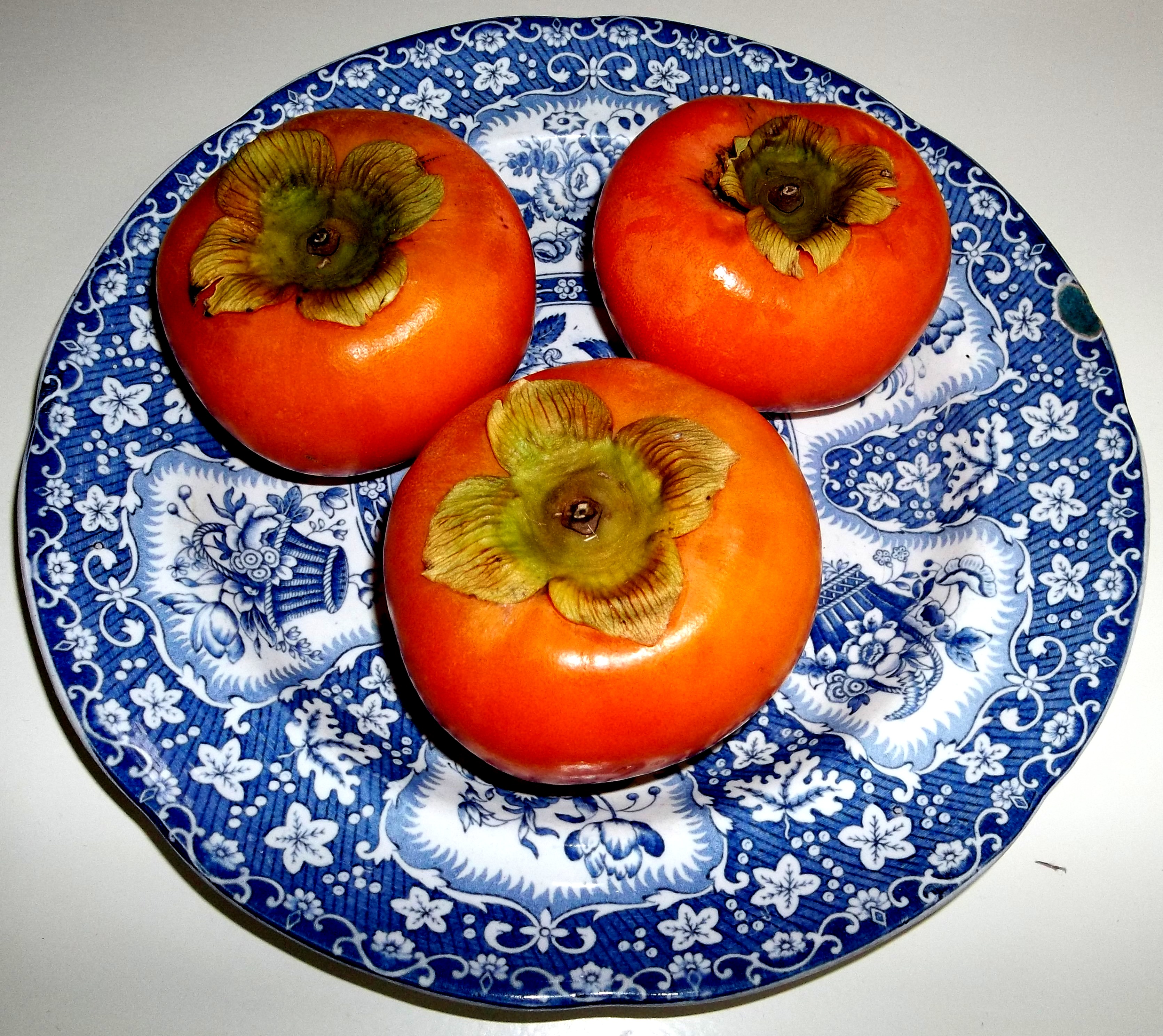
100_0392Life’s rich pageant is sometimes not quite what I expect. The last week or so was one of those times.  I’ll start with the good times… coffee with Friend at a garden cafe. At the entrance the glade of persimmon trees was a flaming circle, though the trees have shed half their leaves. Those that are left hanging are tawny orange, and round ripe red fruit hang from every branch, decorating every twig like an elegant Christmas tree. The whole grove was a blaze of glowing colour and sound, birds perched in every tree, singing, whistling and feasting.

There were tuis whose bright turquoise plumage glistened richly against the red of the fruit, acid green silver eyes flitting from branch to twig, and a host of sparrows, a few thrushes and blackbirds. The green grass sprouting after all the rain was littered with the empty flame- red carcasses of persimmons expertly cleaned out by tiny beaks. It was a busy and happy scene.

The next day began at seven am with me pulling back the curtains of the French windows from where I can glimpse the road. I saw a flash of white, and then another … just too big to be a dog. Oh no, I thought, Anna and Mike’s new baby goats. No time to ring someone to catch them they were going so fast. It was down to me! Luckily I had my slippers on (fluffy), and I prayed that it was too early for any friendly village pervs to be going about their business, as I dashed out in my pyjamas. (Age is irrelevant … the mere word pyjamas electrifies some elderly gents!)

Rushing up to the top of the garden, and down the road, I clapped my hands and called them – they are known as the little darlings. Easy-peasy, they came running, relieved to find a person who would look after them. Slowly I edged and skipped sideways in the fluffy slippers, and led them back down the cul de sac to where their field lay. Robert, the in-house, elderly billy-goat gave them heaps when I pushed them back into the field. They have little white pointed faces, sensitive and exquisite. Saanen goats originally came from Switzerland – these two from the SPCA shelter – neutered, and male, so unwanted since they can’t produce milk! The official description of these goats is rather charming – they are described as large, kind, and friendly. These ones are little, sweet and friendly.

I thought I’d give them a handful of goat treats, and had to crawl into the back of their hut up on the side of the hill-side to get their bowl out. Before I could say knife, all three goats were in and around me, as I scrabbled for the bowl on my hands and knees and was jostled by three determined bodies, and twelve dainty legs. I finally retrieved my dignity and the bowl, and fobbed them off with the goodies.

Back home and off to the big smoke with Friend for a farewell lunch with the various sprightly and foot-loose octogenarians who were about to leave for energetic tours around Germany, Italy or Alaska, we two returning to our frail husbands who cannot be left. “We were lucky to find a tour that would let over – eighties join,” said one… “We have to carry our own luggage around Italy,” chirped another.

The next morning, overcome by tooth-ache, the dentist squeezed me in, and an hour later and some thousands of dollars lighter, I was the bemused possessor of half a bridge, until the whole one had been made to measure. Things went from ache to worse in that department, and I was back again, if not writhing in pain, certainly not a happy camper, a few days later. And there’s more today!

Later, as I backed out of the garage in the rain to return a book to a neighbour, I heard a horrendous bang, and slammed on the brakes. Shaken I climbed out of the car to survey the damage. A wicked squalling wind had just blown off the sea, caught the very high tilt door, designed to let boats in, and slammed it down on the back of the moving car. The electric door was hanging dangerously off the runners at an angle, and badly dented, while the back of the car was chewed up, red glass from the lights scattered everywhere. I backed it out while I could still get it out of the garage.

So now we need a new door, and a new back on the car. Insurance, yes, but by the time the excess is paid on both, it’s a sizeable chunk of money just for a second in the wind. Later, as I searched my soul for the reason for this kick in the back-side, I got the message. Just regretful now that I must have been so dense, and that it took something so dramatic to learn a life’s lesson!

And all the while there’s blogs to read, and birds to feed. The tuis and wax-eyes, and blackbirds love the apples and persimmons I nail onto the fence-line, so I can watch them from the sitting room window. And now I’m looking for a Perspex or glass bowl to hold frozen peas and frozen sweet corn. This is food for wood pigeons. Both the loquat fruit and the guava harvest having failed after the drought this year, the pigeons are hungry and likely to starve through the winter. A bird rescue centre advises us to put the food in a glass bowl so the pigeons can see them, and wedge the said bowl in a pururi tree… in my case, it’ll be the guava tree which they already know, and which I can reach easily.

“Bit expensive, isn’t it?” murmured my other half un-easily.

“That’s the price we have to pay for preserving our wild life,” I returned briskly and pompously. But it did the trick, and silenced the poor chap.

So this is life these days… in ‘The Pursuit of LoveNancy Mitford once described this humdrum of ordinary existence as the wholemeal bread of life… and so it is… but even so, I sometimes long, like Kubla Khan, to feed on honeydew and drink the milk of paradise.

So as I went to put another log on the fire last night, I was thinking to myself that yet again, I hadn’t done much with my day, when I remembered Michel de Montaigne’s wonderful words. He was a lovely man and a writer and philosopher in sixteenth century France, who has often cheered me up and given me confidence, since most of his writing is about himself and his thoughts… like mine!  In his essays he used anecdotes and personal ruminations which his contemporaries thought was self-indulgent, and detrimental to proper style. But he said: ‘I am myself the matter of my book’, and his popularity has lasted, while his critics have disappeared.

His words which came into my mind were: “Alas, I have done nothing this day! What! Have you not lived? It is not only the fundamental but the noblest of your occupations”.  Thank you Michel de Montaigne – that gives me a whole new appreciation of my wholemeal bread! Persimmons and pigeons, goats and garage, the daily bread of life, they all have a place in the hidden scheme of things… and my part is to love them and live with them, and value them, and to remember that this is a noble occupation.

Food for Threadbare Gourmets

Wet, cold wintry weather demands hot, satisfying stodge, so to ring the changes I decided we’d have onion tart. First step is the shortcrust pastry shell, in this case I’m afraid, ready-made, not my normal style, but needs must…. While it’s baking blind in the oven for ten minutes, I peeled and gently sautéed eight big onions – plenty- in four ounces of butter. Don’t let them brown, but gently cook until they’re a soft yellow mass. Beat an egg with two tablesp of white wine, stir in quarter of a pint of cream, salt and black pepper and a good pinch or grind of nutmeg. Stir into the onions, and cook very gently until it begins to thicken, then pour into the pastry case. Return to a moderately hot oven for about thirty minutes, until the top is lightly browned. You can also add two ounces of dry grated cheese like Gruyere.

Food for Thought

Kindness in another’s trouble, courage in one’s own … motto of Princess Diana 1961- 1997.

She also practised and advocated: ‘random acts of kindness.’


48 Comments

Filed under animals/pets, birds, cookery/recipes, great days, happiness, life/style, philosophy, spiritual, The Sound of Water, Thoughts on writing and life, Uncategorized

Peace and the heart of blogging

100_0395Part of this has been re-blogged.  Life’s rich pageant, as a comedian used to say, has run me over this week, so I’ve returned to the thoughts in this blog.

I had read a novel by a distinguished prizewinning writer, polished it off in a few hours, turned over and went to sleep. And in the morning I awoke thinking how depressing it was… not one man or woman who was inspirational, kind, or good – everyone ambivalent and self-absorbed. Then I remembered one peripheral historical character, whose real life contribution to the care of the wounded in World War One is one of the more fascinating true stories of that time. He was a man of integrity, compassion and genuine goodness. And as I thought about him, I felt my whole body relaxing, and a smile on my face. I thought to myself how much I love reading about goodness.

I thought about Mildred Norman, the Peace Pilgrim, that amazing woman who for twenty-eight years walked the length and breadth of the States seven times. She carried nothing but a few items in the pockets of her jerkin which was emblazoned with the words: Peace Pilgrim. From 1953 until her death in 1981, she walked to remind people of peace.

She walked through the Korean War, all through the Vietnam War, and on through all the other conflicts, until the day she died. She had no means of sustenance, she ate when she was given food, and slept wherever she was, and usually people recognised her goodness and gave her a bed…” walking until given shelter, fasting until given food”. When she reached 25,000 miles in 1964, she gave up counting.

Wherever she went she talked of peace, saying: “We who work for peace must not falter. We must continue to pray for peace and to act for peace in whatever way we can, we must continue to speak for peace and to live the way of peace; to inspire others, we must continue to think of peace and to know that peace is possible.”

Ironically she was killed in a car crash while being taken to speak to a meeting. But her disciples carry on her message. She was seventy -one, a gentle, silver- haired blue-eyed woman with a tanned complexion.

Then there was Don Ritchie, ‘The Angel of the Gap’. I can’t read about this beautiful man without tears blurring my eyes. He retired as a salesman, and bought a house with a marvellous view of the ocean just outside Sydney, which also overlooked a famous suicide spot. He spent the rest of his life looking out of the window at that famous view. Not to enjoy the view, but – “for a far greater purpose,” as one obituary put it – to rescue those who came to end their lives.

As soon as he saw someone lingering there, he walked across to them smiling, with his hands out, palms up (what a beautiful, instinctive gesture of peace and non-violence). “Is there something I can do to help you?” he asked.  He talked to them until they were ready to pick up their shoes and their wallet and their note, and to come back to his house where his wife had a cup of tea waiting for them.

Sometimes he risked his life struggling with those who were determined to jump. The official count of the lives he saved is a hundred and sixty – four, but those who knew him believe the figure to be nearer five hundred. Bottles of champagne and cards arrived for him for years after from those whose lives he’d saved.

He used to say: “never under-estimate the power of a kind word and a smile”. He died last year at eighty-six, proof that no-one needs special training to serve their world, that love makes a difference, that great goodness is to be found in ‘ordinary’ people ( if indeed they are ordinary) as well as in spiritual mentors…

This goodness is what I’ve found in so many blogs I read. Some I never miss… not witty or intellectual or spiritual, but filled with a sweetness and a simple goodness that lights up my day… they make me think of that haunting little Shaker hymn ‘Simple Gifts’… because their goodness is a gift, and it’s a simple uncomplicated sort of goodness, spontaneous and undemanding. Reading these gentle blogs about ordinary events and everyday lives filled with weather and animals and growing things is like smelling a flower.

In the last few months I’ve come to a deeper appreciation of the world of blogging. I’ve come to see that for many people it is their life-line. There are those who are sick, but never reveal it, who use blogging as their way of meeting and communicating with others. There are those coping with family illness, death and other domestic challenges, who receive kindness and understanding and a listening ear from the blogging world, and who in their turn open our eyes to the depths of life, and teach us truths about the human condition. As they share their ordeal, their pain and questionings, we bloggers also gain from the perceptions and understandings and resolutions they reach. And there are some who use blogging as a comfort and a support as they search for a job, or a purpose, or tackle a new challenge.

And blogging is an education. As it links us all from around the globe, we learn about the lives and countries of other bloggers. More importantly we share their feelings and gain greater understanding of our global village. And in the year or so that I’ve been blogging, my general knowledge has expanded as I’ve read scientific blogs, climate blogs, artistic blogs, literary blogs, mystical blogs…

But the kindness of bloggers is the heart of it all. That’s why I think blogging has a part to play in raising the consciousness of the world. Even the self-imposed conventions of conduct that we observe, never criticise, judge or write anything hurtful … to be supportive and respectful, are habits that can make the world a kinder place. Kindness stimulates the flow of peace and goodwill which is what will in the end, transform the world into a village, where we know and care about each other, and where, in Thich Nhat Hahn’s words: ‘peace is every step.’ The heart of bloggers is becoming a part of the beating pulse of the world… Namaste, my friends.

Food for Threadbare Gourmets

Felled by a gruesome couple of visits to the dentist, I needed something to eat that didn’t need chewing. So I de-frosted 500gm of minced chicken and sauted some chopped onion and some celery in a little oil and some butter. When they were soft, I added a cup of grated carrot, some chopped garlic cloves, chopped thyme and a couple of bay-leaves, a squeeze of Worcestershire sauce (you can leave this out). Add the chicken to the pan to quickly brown, and then tip it all into a casserole with some chicken stock to cook slowly in the oven – less than 150 degrees.

This, eaten with creamed potatoes, and pureed peas was just what was needed, and also passed muster with the other hungry threadbare gourmet in the house. And there was enough for another meal.

Food for Thought

Life has a bright side and a dark side, for the world of relativity is composed of light and shadows.

If you permit your thoughts to dwell on evil, you yourself will become ugly.

Look only for the good in everything, that you absorb the quality of Beauty.

Paramahansa Yogananda 1893 – 1952  Indian guru and author of ‘Autobiography of a Yogi’


62 Comments

Filed under bloggers, cookery/recipes, great days, life and death, love, peace, philosophy, spiritual, The Sound of Water, Thoughts on writing and life, Uncategorized

War and Peace

100_0389

One night in early June, sixty nine years ago, I lay awake in bed and heard the thunder of hundreds of aeroplanes flying over my home, hour after hour, all through the night. I was six years old, and I lay there frozen with terror, thinking that Hitler was coming to get us.

My mother was not home as usual, so it was my job to get my younger sister and the baby downstairs and into the air-raid shelter when I heard the warning siren. On this occasion, there was no air raid siren, which totally baffled me, and I lay there petrified.

Reading Anthony Beevor’s study of D-day recently, I learned from it that that night was June 5, when a great armada flew across the channel ahead of the landings at dawn. Beevor described people all over the southern England in their night clothes, standing out on the warm June night gazing up at the sky, and watching with astonishment this stupendous aerial army, wave after wave, hour after hour, flying overhead. They knew that the long-awaited invasion was beginning.

Only as an adult did I realise what an anxious, nerve-wracking day that was for the whole country. Europe had never been invaded across the Channel and the men who were attempting it were facing a fortress bristling with weapons, skilled warriors and impregnable fortifications. Western civilisation was hanging in the balance, and with it the lives of unknown millions in Europe. As the army mustered in the ships and then stood in the landing craft, some smoked, some prayed, and if they were American, some chewed gum, then an unknown invention in England. Some read the Bible and some officers recited Shakespeare’s words on St Crispian’s day:

He that outlives this day, and comes safe home,
Will stand a tip-toe when this day is nam’d,
And rouse him at the name of Crispian. …
He that shall live this day, and see old age,
Will yearly on the vigil feast his neighbours…

We few, we happy few, we band of brothers;
For he to-day that sheds his blood with me
Shall be my brother; be he ne’er so vile,
This day shall gentle his condition;
And gentlemen in England now-a-bed
Shall think themselves accurs’d they were not here,
And hold their manhoods cheap whiles any speaks
That fought with us upon Saint Crispin‘s day.

Many of these young men had never been in combat before, while the battle- weary British troops who’d been fighting for the previous five years, were now somewhat reluctant heroes. My father told me much later, that he felt his courage had ran out in Italy.

They had breakfast while they sailed into the dawn, the Americans enjoying steak, pork, chicken and ice-cream, the hard-up British, corned beef sandwiches and a tot of rum. On one ship the sailors made sure the Canadian Scottish regiment had two hard boiled eggs and a cheese sandwich to take with them… and thus fortified they all went into battle.

Back in England, every-one was on tenterhooks, knowing what a huge gamble it was. Churchill was in agony, knowing what failure meant, in terms of the dead and their families, with his experience of the carnage of World War One. He was also worried about the French civilians. 15,000 had been killed, 19,000 wounded in the bombings before the Invasion. Roosevelt had rejected his pleas to concentrate on the Luftwaffe. (One wonders if Roosevelt would have been so gung-ho about that number of American women and children dying in their homes. I also wonder if there are memorials to these dead, as well as to the soldiers who died.)

If everyone else was on tenterhooks, I wasn’t. No-one told a small girl what was going on back then. One just snatched at clues, and tried to piece things together. One of my earliest memories was of the Battle of Britain. I remember standing with my mother and a couple of other women, as they gazed up into the cloudless blue sky in the Dorset country-side , saying: “There’s another dog-fight”.  I craned to see these dogs fighting in the sky, but all I could see were silver crosses diving across the blue space with white lines trailing behind them.

I was two then, I couldn’t talk, but I could understand what adults were saying. Later, I remember people promising that in Peace-time we would have sweets, and toys, and clothes. I thought Peace-time must be like Christmas, only better. At Christmas we had an orange at the bottom of our sock, a once a year treat.

I used to peer out of the window looking over the quiet street where we lived, watching the big girls I admired, roller-skating past. I was six and they were twelve. They didn’t know I existed as I peered through the small diamond shapes on the window which was criss-crossed with wide, sticky brown tape to stop the glass shattering if a bomb fell.  This was at Weymouth, and the American soldiers who fought at Omaha left from Weymouth Bay.

As long as I could remember, the beach had been covered in thousands of khaki camouflaged vehicles, surrounded by barbed wire. There was just a tiny corner of the beach where we could use the golden sands. And in the sea were lines of cruel metal spikes sticking out of the waves to stop the Germans coming. I thought all beaches were covered in barbed wire and protected by rows of big black spikes.

And then one day they were all gone – troops, vehicles, barbed wire and spikes. No-one told me why. I was an adult before I managed to piece the story together. Today, every child knows about war. It comes into their homes every night on the TV screens. They must feel that war is normal. But my war was different. It was a monstrous aberration which we all longed to end, everyone hanging out for peace. When it came, nothing much changed for us, rationing went on into the fifties, hardship was part of our daily lives. But at least we thought we had won the peace.

Food for Threadbare Gourmets

A friend gave me this recipe, which she had gleaned from another friend. It’s supposed to be for four lamb shanks, but I used it for four chicken breasts. Brown them, and gently cook a large onion until soft. Put the chicken and onion in a casserole with four chopped spring onions, six tablesp of peanut butter, four slices of  fresh ginger, three cinnamon sticks, three star anise, 80 grams of dark brown sugar or palm sugar, three tablesp of dark soya sauce, three tablesp of Hoisien sauce, and three tablesp of rice wine. ( I didn’t have any rice wine, so used a medium/sweet sherry instead).

I poured three cups of boiling chicken stock over it all, and put it in the oven at 80 degrees for twelve hours. It is melting when it’s ready. I served it with the kumara puree and parsnip and carrot puree.

Food for Thought

There really seems to be only one hope for man: not to change the world and others, but in some degree to change and improve himself. The salvation of the world rests secretly upon those who manage to do so.

Herman Hesse  1877- 1962  German poet and novelist, winner of Nobel Prize for Literature in 1946


81 Comments

Filed under army, british soldiers, cookery/recipes, great days, history, life and death, military history, peace, spiritual, The Sound of Water, Thoughts on writing and life, Uncategorized, world war two

Precious objects

100_0412I knew what it was as soon as I saw it.  It was unmistakable. The one and only. Its price far above rubies.  And I knew it was irreplaceable. We were standing in Friend’s kitchen making a pot of tea, and my eyes fell on this strange looking knife, with a black bone handle and a short pointed blade that looked as though it had been buried for aeons.

“Is that your special knife? “ I asked. Her soft, be-ringed hand covered it protectively as it lay on the bench.  “Yes”, she replied, her voice throbbing with all the weight of the years of devotion. “I’ve had it since it came out of the house when my first mother- in- law died over fifty years ago. I hide it from Jim so he can’t use it or lose it. I don’t know how old it is, I think the blade may have broken in half, which is why it’s so short. But I use it for everything.”

“You don’t have to explain,” I laughed, “I recognised it straight away. My father had a knife like that.”

He and my stepmother married just after the war when there was nothing to buy in the shops, and couples starting on their married life subsisted on the gifts of family and friends. This knife came from my stepmother’s father. He didn’t value it obviously. But nothing would have wrested it from my father’s hands, the talented cook in the family.

It was just your ordinary bone handled, long bladed knife. Not an actual carving knife, but the sort that was used for carving fowl in the days when people had a different utensil for everything. This meant that the blade was quite slim. But it was known as The Carving Knife.

For all the years of their married life, my father and stepmother used it for everything – peeling vegetables, carving the Sunday joint, cutting the Christmas cake, filleting a sole – they had no truck with dinky little vegetable peelers and fancy little kitchen knives. This was their treasure, versatile and indispensable. As the years went by the blade became more and more curved and thin from sharpening and from constant use, but it never buckled under the pressure.

If it went missing the whole house was in uproar and panic. Frantic searches ensued until the precious object had been found, and peace returned to the kitchen and peace of mind to the drawing room. We children were dispatched to all corners and cupboards in the kitchen- always feeling rather hopeless. I can still see my handsome, moustachioed father bent over the dustbin outside on a dark winter’s night, unwrapping the bundles of rubbish wrapped up in newspaper the way we did back then. He found it too, that time. It was not only well used, but well travelled, accompanying us to and from army quarters, from country to country and into retirement.

Now that they are both dead, and I was far away each time, first in Hong Kong, and then here in New Zealand, I’ve often wondered what became of their most precious possession, whether anyone else remembered and treasured it, or was this cherished hard-working, faithful kitchen help-meet just jettisoned?

My husband will only use the same mug for all his drinks. It’s a blue willow pattern mug, which the children bought for me for Christmas 1974, and has lasted until now. It actually has one chip, but it doesn’t put him off. He will also only use two stainless steel spoons from the kitchen drawer for his breakfast muesli, out of all the spoons in the house. He likes their shape. They are amongst the oldest, ugliest and cheapest in the house. They came out of the top of a large packet of Tide in 1965. Tide was a washing powder we used in the sixties. The spoons were part of a set of knives and forks as well, which were buried in the soap powder in each box – which of course, I used in copious quantities for all those nappies.

And my son, when he was four and five, on being asked what he wanted to eat would always reply: “Toast with melted butter and the crusts cut off and my drink in a rose cup”. Like me he is still addicted to using beautiful things – but not, maybe, as addicted as me…

In her funny and charming little book ‘The Holy Man’, Susan Trott has a chapter called “Fussiness”. The Holy Man noticed that one of his disciples, Henri, always sat in the same place for meals, and always used the same blue plate, and he also noticed that the sleeves of Henri’s robe were always folded back in exactly the same way with three folds.

So the next day the Holy Man sat in Henri’s place. When Henri asked him about this he just pulled down the sleeves of Henri’s robe. The next morning as Henri entered the kitchen, the Holy Man dropped the blue plate, and then swept up the shattered pieces. Later, Henri nabbed the Holy Man – who was called Joe, actually, and said: ‘Okay, you think I’m being fussy,’ but Henri still couldn’t see the problem. In their discussion, Joe pointed out that attachment means suffering, and he also suggested that these attachments meant that Henri was trying to control his environment, which leads to rigidity of thinking.

I often think about this chapter, being an extremely fussy person myself, and try to train myself to let go without suffering when I chip a plate or break a favourite mug. I try to see it as an opportunity to find something new,  just as pretty – which I’m not sure is what Buddha or the Holy Man had in mind!

And as for the kitchen knives – yes, I have one too. No it is not a fetish, but a right hand man.  Over a life-time several of these precious objects have broken or disappeared, but I feel my present general duties, all purpose kitchen knife will last the distance. I found it in the garage when we moved here, seven years ago. It’s the most comfortable of all my knives to hold. The curve of the blade is perfect for everything I want to do, it gets sharper than any of the others, and if it goes missing, there‘s hell to pay. But my better half is oblivious to all this, and uses it as if it were any old knife. So I end up like my father, searching frantically in rubbish bags, over-loaded dishwasher and kitchen drawers for my indispensable partner in the kitchen. Yes, I am shamelessly attached !

Food for Threadbare Gourmets

With a slow-cooked casserole the other day, I decided to skip the mashed potatoes which it cried out for, and do pureed kumara/sweet potato instead. Peeled, and boiled until soft, I tipped them into my new toy, the stick whizzer. First I put a big knob of butter and a good dollop of cream, then the kumara, salt and black pepper and nutmeg to taste. A quick whizz, and there was this melting,  delectable orange puree.

Inspired by this, I decided not to mash the carrots and parsnip together, but to puree them too. This meant cooking the carrots for longer than the soft parsnip. But whizzed again with the butter and cream, they were heavenly too. They soaked up the beautiful sauce of the casserole which had been cooked in spices and pea – nut butter for twelve hours at fifty degrees.  Recipe next time!

Food for Thought

In the morning the ignorant man considers what he will do, while the intelligent man considers what Allah will do with him.

Ibn Ata’illah-Sakandari  Sufi saint, born in Alexandria circa 1240, died in Cairo 1309, where his tomb can still be visited.

37 Comments

Filed under cookery/recipes, family, food, great days, humour, life/style, philosophy, The Sound of Water, Thoughts on writing and life, Uncategorized