Category Archives: food

The drug we can’t live without

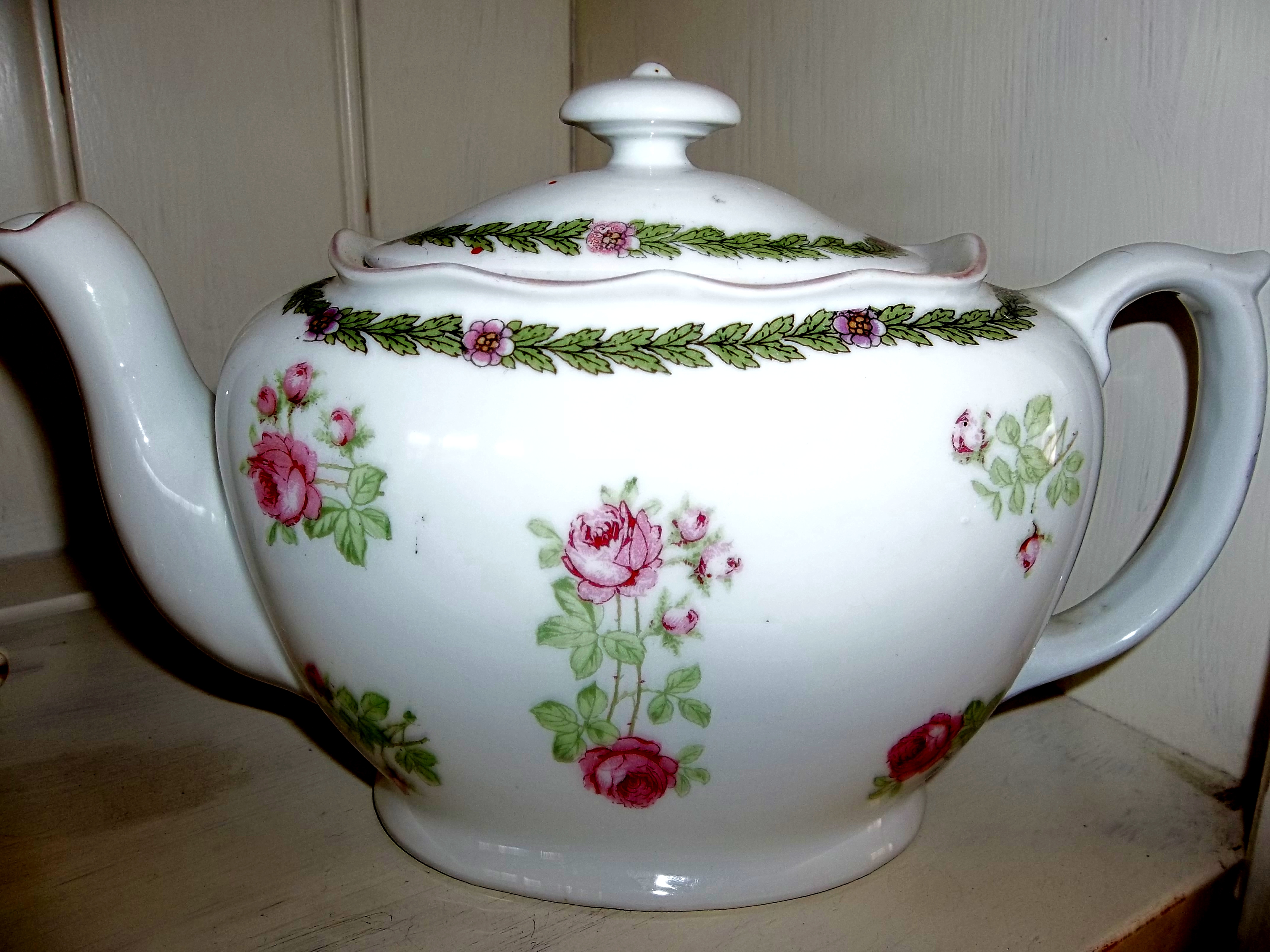
0000621 “Thank God for tea! What would the world do without tea! How did it exist? I am glad I was not born before tea.”  I couldn’t agree more with Sidney Smith, an Anglican clergyman, who died in over a hundred and fifty years ago. And as far as I’m concerned it can’t be any old tea. And certainly not a tea-bag, a monstrous invention that I suspect is just tissue paper filled with tea-dust left in the bottom of the tea chest after my proper tea leaves have been packaged.

And for me the only tea worth drinking is Twining’s Lapsang Souchong. It comes from Fujian Province in China. According to the packet: “the delicious smoky flavour is produced by lying the leaves on bamboo trays, and allowing the smoke from pinewood to permeate through them”. Ah, so … other tea now tastes quite crude to me after years of drinking nothing but this brew.

Though the Twining family may be surprised to hear this, I always feel quite connected to them, as I had a great friend who was a Twining, and my former in-laws had lived in a rose- coloured, brick Georgian house built by Elizabeth Twining down by the River Thames. I spent a lot of time there in that beautiful house, very conscious of Elizabeth. The firm of Twinings has been selling tea for three hundred years from premises in The Strand in London, so when the latest head of the Twining family came out to NZ to talk tea, naturally I heeded his instructions on how to make it.

Always happy to take the least trouble, I was delighted to hear from him (on the radio) that we don’t need to heat the tea-pot –  swishing boiling water around the pot before putting the tea-leaves in. Previously it had been an essential part of the ritual of making a pot of tea. But my tea leaves now go into a cold tea-pot. I missed the rest of his talk so I don’t know whether he addressed the thorny problem of milk. To have or not to have – that is the question. Purists don’t. I’m not a purist. I’m a conservative who has had milk in my tea for more than seventy years.

There‘s a further twist to the milk problem – known as MIF. Legend has it (which is not always reliable) that the Royal family refer to people as MIF’s. But I don’t believe this snobbish canard. MIF means exactly that – milk in first. And this is what the late Nancy Mitford used to funningly call non-U.  (U meant upper class, and non-U the opposite!) Milk in first means you’re probably the sort of person who’d lift the port decanter and push it across the table instead of sliding it along clockwise around the table – horrors – or would say: ‘pleased to meet you,’ instead of:’ how do you do!’ – shudders!  Incredibly, when I grew up these snobbish rituals defined the man – or woman.

So for most of my life, I had put the tea in first. But the worm turned about fifteen years ago, when I discovered that the tea tastes much nicer when you do MIF ! This puts me firmly on the wrong side of the tracks – but the bonus is delicious tea.

If I’m offered a cup of tea that I know will not meet my impossible standards of taste and strength – other people’s tea is always too strong for me – I add sugar, and then it becomes something else. Tea out of a mug is not the same as tea out of a bone china flowered cup and saucer. I dread the day when I’m plonked in an old people’s home, and will have no lapsang souchong and no bone china tea-cup.

Life without tea is unthinkable. There was no bombing so bad in the Blitz, that you weren’t offered a cup of tea after it; no shortage of water in the Western desert so tight, that there wasn’t always enough for a pot of tea brewed by the tanks; no misery so deep that a cup of tea doesn’t at least give the sufferer a second’s respite; no cold so deep that a cup of hot tea doesn’t warm the innards;  no thirst so terrible in the tropics, that a cup of tea doesn’t quench it, and no morning in the office so boring that a cup of tea doesn’t briefly break the monotony .

I often jokingly use the poet Cowper’s delicious phrase: ‘the cup that cheers but doth not inebriate!’ My grandmother always had a trolley laid for such a cup – on a lace tea-cloth with two tea-cups and saucers, sugar pot and tea-spoons, and the milk jug covered with a crocheted lace doily weighted with coloured beads. (Milk that wasn’t mucked about with didn’t go sour like it does today!)

In her book ‘Urban Shaman’, American writer CE Murphy writes a delicious description of having a cup of tea: “In Ireland, you go to someone’s house, and she asks you if you want a cup of tea. You say no, thank you, you’re really just fine. She asks if you’re sure. You say of course you’re sure, really, you don’t need a thing. Except they pronounce it ting. You don’t need a ting. Well, she says then, I was going to get myself some anyway, so it would be no trouble. Ah, you say, well, if you were going to get yourself some, I wouldn’t mind a spot of tea, at that, so long as it’s no trouble and I can give you a hand in the kitchen. Then you go through the whole thing all over again until you both end up in the kitchen drinking tea and chatting.

“In America, someone asks you if you want a cup of tea, you say no, and then you don’t get any damned tea. I liked the Irish way better.”

She must have forgotten that the American way with tea is simply to toss it into Boston Harbour!

Food for Threadbare Gourmets

This is the perfect cake to have with a cup of tea – if you’re not planning on cucumber sandwiches! It’s the classic French cake with equal quantities of everything. So it’s four eggs, and the same weight of butter, sugar and flour. You can halve the amounts for a smaller cake. Soften the butter, and beat it with the sugar – until it’s almost white and fluffy. Add the eggs whole, one at a time and beat. If it starts to look grainy, add a spoonful of sieved flour. When all the eggs are in, fold in the flour a spoonful at a time, using a metal spoon.

Add enough milk to make a soft smooth mixture which drops off the spoon. Stir in the grated rind of half a lemon. Gently push into a buttered cake tin, the base lined with greaseproof paper, and bake in a moderate oven around 180 degrees. Bake for fifty minutes … if it’s still soft and hissing, cook for another ten minutes.

Leave the cake in the tin for a few minutes, and then tip onto a rack to cool. I make a butter icing for this, soft butter, icing sugar and lemon juice and the other half of the grated lemon rind, all beaten together.
Food for Thought

Development cannot fly in the face of happiness; development should promote human happiness, love and human relati0ns between parents and children and friends. Life is the most important  treasure we have and when we fight, we must fight for human happiness.” Jose Mujica, President of Uruguay at the Rio Conference


.

66 Comments

Filed under cookery/recipes, food, great days, happiness, humour, life/style, philosophy, The Sound of Water, Thoughts on writing and life, Uncategorized

The fun of fashion

100_0175

What to wear has occupied many happy  hours and years of my thinking life. So though some research has claimed that little girls and boys are conditioned to be male and female… pink versus blue…  I’m not convinced!

I don’t think any little boy could have felt the bliss that I did at three when I finally got to wear a sun-suit that had been too big for me. I remember the day I was allowed to wear it, I shall never forget the pattern of navy, pink, yellow and blue tiny flowers all over it. It was linen, it had tiny buttons down the front, and was the most beautiful thing I’d ever worn. I remember the glory of running to catch up the big girls next door, skipping through long fine grass that grew beneath the pine trees, and the shafts of sun-light beaming down between the rough trunks. And above all, the rapture of knowing that I was wearing such a wonderful thing.

Not quite the same rapture over my white petticoats trimmed with broderie anglaise, and the smocked pink dress and the blue dress, made of ninon – a fine muslin type fabric with soft little bobbles sprinkled all over it – but I still enjoyed them. A year older, and winter, I revelled in the Fair Isle berets and matching gloves my mother bought me and my sister.

I stood and watched with some disapproval as she preened herself in the two new coats she had just bought, one a black fluffy material with gold buttons, the other a smooth jade green wool with green and gold buttons. She had said she couldn’t resist them. I remember precociously thinking that there would be no more clothes coupons left for us.  I was five, and in war-time we had an allowance of coupons for the year, which once used, meant no new clothes until the following year.

School uniform was a treat then too, with beautiful quality velour hats with big brims and a wide ribbon round it for winter, and a Panama hat the same shape with another big ribbon round it for summer.

When my Victorian grandmother came to care for us after my mother had gone, she dressed me according to her firmly held notions. I went to school one day in an anguish of embarrassment, wearing soft leather full- length gaiters right up my legs with hundreds of tiny leather buttons. We needed a button hook to do them all up.  But I couldn’t get them off for PT (Physical Training), so she abandoned those, thank goodness. She spent hours at her treadle sewing machine making me pink satin, lace- trimmed dresses and the like, and sent me off to church in a new brown tweed coat which was agony every time I sat down. It turned out she had sewed up the scissors into the deep hem.

Worst of all were the bright purple fluffy mittens she got hold of – warm – but hideous. It lacerated my fashion- conscious soul every time I put them on. At my best friend’s seventh birthday party I left them behind at her house, hoping that that would be the end of them. But further humiliation ensued when my grandmother made me go back to get them, and so then every-one knew that these frightful objects were mine.

Bundled off to my new parents at nine and a half, they threw away all the clothes my grandmother had lovingly made me, and took us shopping in London, where we were equipped with little tweed velvet- collared coats and matching berets, pretty dresses, and best of all, check shirts and shorts, just like the girls wore in Enid Blyton’s books. Fine feathers indeed.

But they had to last… that was the last time we enjoyed such largesse. When I grew out of them, there were no replacements, and I had to manage on various hand-me-downs, and odd birthday presents. So when I started earning, the best thing about it was never again having to wear clothes that embarassed me. But though I wanted fine feathers, I had also learned the lesson we all did on reading ‘Little Women.’

The scene in which Meg, also humiliated by her worn clothes, allows her frivolous friends to turn her into a fashion plate for a party, and overhears some older women commenting, what a pity that that pretty modest girl had spoiled her appearance with frills and flounces, and crimped curls, had struck deep. Meg feels overcome with shame for not being true to herself.  So I wanted fine feathers, but not fashion overkill!

Oh, the lovely cut of winter clothes, the fabrics, the wool and tweed, the gabardine and mohair, the lambs-wool and cashmere, the knits and jersey, velvet and corduroy; the colours, rich plum reds and pine greens, the russet tones, and mustards, the navy blues and chocolate browns – breathes there a woman with soul so dead – to paraphrase Sir Walter Scott – whose heart doesn’t leap when confronted with these riches?

And for summer, we had linens and cottons and seersuckers and silk, the muslins and tulle, taffetas and brocades for evening. We’d never heard of denim then, and nylon was something for parachutes and stockings. Fashion for a teenager earning money at last, meant a circular felt skirt, a wide elastic waspie to nip in our waists, over a frilly starched cotton slip and worn with  a Marilyn Monroe sweater and flat pumps. In this get-up, we twirled and swooped, dancing to rock and roll, and skiffle, though we could still waltz and do Scottish dances at formal balls, in long romantic evening dresses accessorised with long white gloves. And then there was the mini!

But times have changed of course. I’ve just read a survey which claims that women’s waists now are seven inches bigger than they were in nineteen-fifty. The average woman’s waist then, they claimed, was twenty- seven- inches, and it’s now thirty-four. I think they’ve got it wrong – my waist was twenty-five then, and I envied the possessors of twenty-four inch waists. The research also says that women are square and waistless now, and that the old hour-glass figure has gone. I had noticed how waists are disappearing, and have wondered how anyone could wear a waspie any more, while circular skirts would not do much for expanded hips these days.

So it seems to me that women are not so much the slaves of fashion, as that fashion is the slave of women’s diet. And now that spartan war-time food, not just in England and Europe but probably in other parts of the world too, is no longer on the menu,  fast food and tampered- with food, and Too much of everything, seem to have re-shaped the female figure. And fashion in the shape of towering platforms and spiked heels seems to have hobbled women quite as successfully as bound feet in China.

So give me beautiful clothes, but not haute couture, fine feathers but not high fashion… and I will probably still be planning what to wear when I’m on my death-bed – maybe I should write a book about clothes – what to wear from the cradle to the grave. And I haven’t even mentioned hats!

Food for Threadbare Gourmets

That apple cake! It was scrumptious, but so crumbly that we needed a fork to eat it with. So maybe a bit less apple and a bit more flour would hold it together. And whipped cream lifts it to another level!

Tonight, roast lamb, which rarely crosses this threshold, but it’s a special occasion. So along with all the usual trimmings, I’m making onions in white sauce. Peel and chop several onions, and boil with salt and pepper until cooked. In another saucepan melt two ounces of butter, and add enough flour to make a stiff roux. I pour in about a cup of milk, and then a cup of the onion- flavoured water, and stir briskly. Put it back on the heat and bring to the boil, stirring all the time until thick. Add nutmeg to taste, salt and pepper and the onion. You might need more milk, though I like the sauce quite thick. I usually add a dollop of cream…

Food for Thought

Beauty is a choir of singers, a chorus of dreamers, a concert of aspirations, an orchestra of goals, a symphony of ambition and a ballet of productions.

Glenda Green  Born 1945. Artist and author of ‘Love without end. Jesus Speaks’

56 Comments

Filed under cookery/recipes, fashion, food, great days, happiness, life/style, The Sound of Water, Thoughts on writing and life, Uncategorized

Cricketers, bridge-players and great white hunters

100_0183

These I have loved, to quote Rupert Brooke. I think I’m a serial monogamist – but didn’t dare put that in the title and invite a torrent of prurient spam into the file! Neither did I dare put ‘men’ in the title – that would have meant more Viagra ads.

I started young and can date the first love of my life back to age nine. Stuck in a London flat with two new parents, waiting to move north, bored with playing in the park and endless games of ludo, these two strange adults took us to the cinema one afternoon. ‘The Scarlet Pimpernel’ no less. My heart did a tumble – Leslie Howard alias Sir Percy Blakeney, standing, quizzing glass raised in one hand, one long leg in pantaloons and buckled shoe resting on a chair, lace cravat tumbling from his neck, and laughingly baiting his pursuers with his little ditty: “ They seek him here, they seek him there, those Frenchies seek him everywhere. Is he in heaven or is he in hell, that damned elusive Pimpernel?” Oh, his gaiety, his nonchalance, his recklessness…

My heart was his. I sought out Baroness Orxy’s Scarlet Pimpernel books and they sustained me for some years, until the glowing image dissolved when I found ‘Jane Eyre’. Mr Rochester!  He truly enslaved me. I read the book over and over, memorising every scene in which my (rather doubtful) hero figured. I found him terrifying and mesmerising. I used to terrify my dormitory at school too, sitting on the end of the bed in the dark, reciting the latest instalment of Charlotte Bronte’s homage to plain women and masterful men.

Mr Rochester’s black beauty faded on board ship to Malaya, when I discovered that Cupid really could throw darts. I was fourteen the night we boarded at Southampton, and my father suggested that he and I take a stroll around the decks to watch the bustle of embarkation. As we passed an open window where a posse of young naval officers were making merry, one of them glanced out of the window. A pair of deep blue eyes looked straight into mine, and for the rest of the five week voyage I thought of nothing else. I craned to see the possessor of these magnetic blue eyes whenever we were all in the dining room, and pined between meals.

I rejoiced when we were delayed in the Suez Canal for a few extra days after a crashed oil tanker blocked our passage. I glowed when I found him playing tennis at Mount Lavinia in Columbo while we had afternoon tea. I never spoke to him. I cried for days when we landed in Singapore and he sailed on to Hong Kong, immaculate and oblivious in his white tropical uniform. I think my parents must have gone mad with irritation, never knowing when I was going to dissolve into what they probably thought were hormonal tears. My secret was locked in my non-existent bosom. I never even knew his name.

Then along came ‘Gone with the Wind. My father, knowing nothing of my amorous past, assumed I would come home crazy about Clark Gable, and decided to put a spoke in Mr Gables ‘s wheels before I left, by telling me to watch how his ears waggled when he spoke ( they did!) This malicious dart fell harmlessly by the way. There was my new/old love, Ashley Wilkes, with his brooding blue eyes, his noble brow, his elegance and his honour! I watched ‘Gone With The Wind eleven times before I was over Leslie Howard. My father was disgusted that I would love such a wet!

But time has revealed that not only was he a talented stage actor, playwright and producer, but also a patriotic man who left comfortable Hollywood to return to war-time England, and who died when the Luftwaffe shot down his plane on a flight outside the war zone. He was reputed to have been on an intelligence mission. He also had a reputation for womanising (who doesn’t?). He himself said he: “didn’t chase women… but couldn’t always be bothered to run away”.

By the time I’d worked through the eleven viewings of ‘Gone With The Wind’ in various parts of the world, some years had passed, and I then became pre-occupied with flesh and blood. But come re-marriage, contentment and a deeper appreciation of the beauty of men, I became a serial lover again.

My first new love was the noted Pakistani cricketer, Sarfraz Nawaz, who discovered ‘reverse swing’, and taught it to Imran Khan and other Pakistani cricketing greats. But I loved Sarfraz before he achieved greatness ( you could almost say I discovered him!) and having seen him by chance on TV while my new husband was watching a test match, I demanded to be taken to the cricket to see him live.

This was the early to mid-seventies when great – or rather infamous events were a-foot in Washington, and a tall gentleman with a twinkle in his eye shot to fame, as they say. Archibald Cox. Some may remember him. I loved him for his rumpled suits, fine intelligence and un-assailable integrity. My exasperated husband triumphantly waved a wire photo he’d found in the office, hoping to break his spell. But I thought Archibald Cox lolling in his  chair with his long legs propped on his desk, and the leather soles of his shoes facing the camera – sporting two large holes – was irresistible.

If I had loathed Nixon before, my hatred knew no bounds when he famously sacked my man, and I never saw him again. So that left me with Andrew Young, (another groan from husband) Ambassador to the UN. I looked at a recent photo of this interesting man, and it just didn’t do justice to his youthful fire and fierce good looks. But even he couldn’t compete with that spectacular entrance of Omar Sharif emerging from the desert on his camel, jingling and shimmering and enigmatic in ‘Lawrence of Arabia’.

When he re-appeared as Dr Zhivago that was it! My husband was as usual, chagrined, and assured me that all this gorgeous man ever did was to play bridge… he was brilliant apparently  and wrote books and newspaper columns about a subject that is a closed book to me.

This was disappointing, so for a few years I transferred my affections to Robert Redford as the handsome, eccentric and very decent great white hunter Denis Finch Hatton in ‘Out of Africa’… he had a lot in common with Sir Percy Blakeney and Ashley Wilkes.

But like all my other loves, Robert Redford is aging, and is not the glorious young man he once was. So in my twilight years, my loves have been fewer, and indeed, I thought my love life was over, until we went on a cruise a few years ago. Reader – to quote Charlotte Bronte – I, like every the woman on our dining table, fell hopelessly in love with our handsome young Indian waiter.

All the husbands ground their teeth, knowing they couldn’t compete with this charming clever and exquisite young man. He dispensed sour green apples to a woman he’d noticed hovering on the edge of sea- sickness, cherished an autistic teenage girl, attended to each of us as though we were each the only woman in his life, and in my eyes, at least, achieved perfection when I discovered that he was deeply spiritual. He was a devout Hindu, a vegetarian and a man who saw all religions as having the same value. In other words – a good man.

Well, he sailed away of course, and I now face the unpalatable truth that men my own age are not figures of romance. But I don’t want to become a cougar … a term I’m told which describes older women who pursue younger men. So I will just have to fall back on the sweet memories of my youth… though you never know… they say the party isn’t over till the fat lady sings…  I mean the slightly over-weight lady… oh – that could be me!

Food for Threadbare Gourmets

The most useful thing I learned when I was in the army was how to keep peeled potatoes fresh. Sitting in the cook house at night as a recruit peeling hundred of potatoes for all the hundreds of women the next day, I had to put a knob of clean coal in the water to keep the potatoes fresh and the water clear. The tragedy of my life is that I haven’t seen coal for years, so can’t use this pearl of wisdom myself…

Food for Thought

While we wonder what will happen next in North Korea, I found this, written nearly two hundred years ago, and it seems that nothing has changed since then.  “What experience and history teach us is this – that nations and governments have never learned anything from history, or acted upon any lessons they might have drawn from it.

Georg Wilhelm Friedrich Hegel. 1779 – 1831 Influential German philosopher.

37 Comments

Filed under cookery/recipes, films, food, great days, life/style, love, The Sound of Water, Thoughts on writing and life, Uncategorized

Bullied by the birds

100_0117

It’s two months since I wrote a blog about the drought called Summer days and thirsty hedgehogs, and since that time we have had no rain.

The country is split between those who live in towns- and so many NZ towns and cities are on the coast – and those who live in the country. The townies, as country dwellers call them, are loving every moment of the long hot summer, revelling in long days at the beach, splashing in swimming pools, lolling around in their gardens, and sitting outside at cafes and restaurants enjoying leisurely meals in the soft twilit evenings.

Families take off at weekends with their tents and boats and kayaks for old fashioned summer camping days by the sea, in the certain knowledge that there will be no rain. At the same time country folk are measuring how many inches of water are left in their water-tanks, or joining the two or three week long queues to have water delivered. I see trees and hedges dying, and my heart aches.

Farmers are selling their stock since they can’t afford to feed them, for there is no growth in the dry brown paddocks: drying off their milking herds, and worrying about hay for the winter. Gardeners like me, are carting buckets of water from their baths to moisten around trees, watering roses and hydrangeas and salvias all struggling to stay alive in the baking heat, and trying to coax dahlias and Japanese anenomes, usually the splendour of the garden at this time of year, to open their stunted blossoms.

I fill the bowls of water around the garden regularly throughout the day, and anyone foolish enough to knock on my door with census papers, Jehovah’s Witness leaflets, or to fix the faulty electric plug for me, all get their ears bashed to put out water for birds and thirsty creatures. I’ve rung the local rag, and got my daughter to Twitter, and hope the SPCA will remember my message about ringing radio stations to remind their listeners.

But one person cannot defeat climate change! This is our third drought in four years, and in the worst one four years ago, we lost so many birds and creatures. The native pigeon population was decimated, as young birds had no water, and people talked of seeing pigeons drop from the sky, dead from de-hydration. The kiwis who dig their long sharp beaks into the ground for bugs and worms starved because the ground was so hard they couldn’t break into it, and when they did, the worms and other food had retreated deep down to damper layers of soil.

This year, another native bird, the kokako, is not breeding at all – for fascinating reasons – the females can see that there are none of the berries on the rimu trees which they normally eat, and are therefore refusing to mate, knowing there’s no sustenance for their offspring. And hedgehogs are dying of thirst.

I’m thinking I’m going to have to start feeding the birds again. I used to feed the handful of sparrows and a chaffinch couple who lived around here – under a tree a little way from the house, and where I could see from the sitting room window.I also fed the dozen or so mynahs, a little way down from the tree so they wouldn’t frighten off the smaller birds. Moist wholemeal bread for the mynahs, wheat and birdseed, and when I ran out, porridge flakes for the others. They loved it all. They told their friends. Within a couple of weeks I had at least a hundred sparrows, four or five doves, some itinerant blackbirds,  chaffinches and an occasional thrush.

They had also worked out from whence this largesse came . They waited in the plum tree outside the kitchen window and watched me until I came out with their breakfast. And for a couple of hours they sat and barracked me from the plum tree and the garage roof in the afternoon, until I sallied forth with afternoon tea – theirs.

A great whoosh of wings accompanied me to the tree. Then I had to make sure that the neighbour’s ancient lonely dog was not hovering in hope of a dog biscuit. If she was, I had to return with the bird food, and dig out a biscuit and walk her down the road with it, away from the bird food which she would have gobbled up. Dog distracted, back to the birds.

If I was out, they would be waiting for me at the bottom of the road. They recognised my white car, and swooped from telegraph pole to telegraph pole all the way down the road with the car. They’d then hover round the garage yelling “she’s back, she’s back” till I came out. If I went for a walk, they’d fly down the road with me, and wait on the corner.

Finally the worm turned. There were so many birds I couldn’t keep up with them, and was buying a large sack of wheat from the farmers shop each week, as well as extra bread for the big greedy mynahs – money I could ill-afford. The garden was becoming white with droppings, and I was back to the chaos of when I’d had a bird table. The sparrows could probably have made a pot of tea themselves, they’d watched me so intently through the kitchen window for so long.

A short holiday in Melbourne solved the problem. They gave up waiting. I felt guilty but relieved. They didn’t need the food out here in the country. It was just my hobby which had got out of hand. But now, with a hearty respect for the intelligence of bird brains, I think I’m going to have to soften my heart and help them out in this emergency.

That heart sinks at the thought of being bullied by them all again. I’ve done a lot of inner work over the years about letting go of being victim, and preserving myself from being bullied any more, but I’m not sure I can handle being bullied by the birds. It may be a step too far for my fragile self esteem, and feeding the birds may be my last big challenge!


Food for Threadbare Gourmets

We had some lovely summer pears from a neighbour which cried out to be transformed into pear and almond tart. I used the wonderful recipe for pastry which doesn’t involve rubbing the flour into the butter. Instead I melt and cool the butter and just stir it into the other ingredients. The resulting dough doesn’t need rolling, but is just pressed gently into a shallow greased tart dish. It doesn’t need pricking or weighting. Just pre-cook for ten minutes in a moderate oven. You then add the frangipane and the sliced pears and cook for three quarters of an hour or more until the frangipane is just firm.

The pastry takes 125 gm butter, melted and cooled, a generous 100 gms of sugar, pinch of salt, half a teasp each of almond essence, and vanilla essence, two generous tablesp of ground almonds and 180 gms of flour. I love frangipane, and will give the recipe in the next post. It’s the perfect base for pears, plums, apricots, peaches, and I love the sound of the word… it sounds…fragrant!


Food for Thought

An old pond  –  a frog tumbles in  –  the splash of water

One of the most famous haiku  by the most famous haiku master, Matsuo Basha  1644 -1694 He spent much of his life wandering through Japan, like the medieval troubadours and minnesingers of Europe, three hundred years earlier.


65 Comments

Filed under birds, cookery/recipes, environment, food, great days, humour, life/style, poetry, The Sound of Water, Thoughts on writing and life, Uncategorized, village life, wild life

Is less really more – or less?

100_0223

To keep or not to keep – that is the question. I look around my tiny kitchen and think I should de-clutter, simplify, get rid of all the surplus stuff overflowing on shelves and in cupboards. No good asking the question, do I need it – of course I don’t … next question – do I want it? That’s the trouble, I think I do…

So do I need the cream Italian stuff we eat off every day? It’s also perfect for summer meals to be served on the veranda when we have guests, the bowls are perfect for pasta and winter stews, and I love them. So do I need or want the white French provincial china, which looks so elegant when I want to serve a dressy meal to guests, and looks wonderful on a white lace table cloth? … Yes, I do, and the big carving plates which make mounds of summer vegetables or heaps of roasted winter vegetables look utterly delicious.

I particularly love the deep white pudding bowls – perfect for my comfort food  -cornflakes,  or for porridge, on a white tray with all white cup and saucer, milk jug, and coffee pot. And sometimes I yearn to treat myself to eating off the antique French flowered plates… some I bought myself as a Christmas present, and that same Christmas my daughter thought to herself: “she’d like these,” and gave me matching ones which completed the set.

Or I want to serve pumpkin soup in the big shallow blue and white Victorian soup plates with a wide brim, so much more enticing than pouring the hot orange soup into something small and plain. My husband loves to have his lunch on a big square green modern French plate, and on those days I eat mine on a pale turquoise and amber coloured pasta plate I bought in Melbourne.

I don’t need those earthenware dishes, I think to myself, but cauliflower cheese looks lovely in the big one, and then the vegetables look perfect served in the smaller dishes, all found in junk shops and markets for the proverbial song. Each one is imprinted with a memory of the person who gave it to me or the place I found it. And I do need the little white dishes for chocolate mousses for the grand-children.

Then there’s the glasses – big green glass goblets for water with the cream plates, generous French country wine glasses for smart occasions, fragile cranberry pink champagne glasses for special events, the old crystal glasses which are so old fashioned nowadays, but look so charming on the aforesaid lace cloth with silver and the oval white china dinner plates. I could pare down the whole collection and we could use one set of this or that… I don’t need them all, but I enjoy them all.

I could split up the beautiful antique tea service with pink Chinese pattern – ten cups and saucers with all the bowls and jugs that go with them. I could sell six and keep four for myself… but it seems like vandalism to split up something that’s been intact and unchipped for over two hundred years … and what about my old jugs … some of them cracked, but all loved.

In the end, it’s the enjoyment which wins…. no trouble getting rid of gadgets – there are few, and the only ones I really use are the hand held beater, and the new stick beater. I find that the  crock pot makes all meals taste the same, I don’t need the blender now I have the stick, and the really expensive juicer I hardly use since I discovered that drinking so much vegetable and fruit juice was making my arthritis worse from all the sugar in the fruit and veg. The coffee grinder which I also used for grinding nuts, can go… the ancient hand – held cheese grinder can do the same job for nuts, and I was never much of a one for grinding my own coffee beans, though coffee afficionados may wince at hearing this.

Wooden spoons stay! As does the old-fashioned boy – scout tin-opener. I’ve never mastered the efficient modern variations. The same old saucepans for thirty or more years need no sorting … I know exactly what I can cook in each different size, and would be thrown into confusion if I had to start with something new, or cope with fewer. Ancient saucepans and baking tins stay.

And as I look at this inventory of my kitchen I can see that it’s the looks that count! Few nods to super duper efficient kitchen gadgets and inventions… a pop-up toaster and a wooden spoon were the only gadgets I had until I was nearly fifty, until the day I discovered a blender… which is obsolete now anyway with my new simple stick blender.

But all of this is dodging the point… that in a world where we are trying to come to terms with less is more, as the scale of the waste and destruction of the planet becomes more apparent, to harbour so much stuff seems counter-productive. Consumerism is what is driving the rush to planetary ruin, chopping down more forests for furniture and newspapers, using all our resources for more clothes, more sheets, more gadgets, more cars, more of everything, even when we don’t need it.

So far my one step towards the goal of less is more, is to announce to the family that I’m not buying any more stuff at Christmas and birthdays… what they will get is things of mine they like, books of mine that they’d enjoy, or pots, jars and bottles of food made by moi – or a cake – also home-made. Or I will grow them a plant. Not only does this save me money, but it also means one less consumer buying useless stuff to give to people who already have more than they need, and whose houses are also filled with stuff.

And yet in the meant-time I’m still indulging my whims using different plates and dishes and cups. I think to myself of William Penn, a swashbuckling young cavalier when he became a Quaker. The one thing he couldn’t let go from his former courtly life, was the sword which  he wore every day, like all his contemporaries.

He discussed this problem with George Fox, founder of Quakerism, who being a true mystic was also profoundly common sense, and understood that deprivation is bad psychology. George Fox gave William Penn this wise counsel: “I advise thee to wear it as long as though canst.” Not long after this they met again, when William had no sword. George said to him, “William, where is thy sword?”  “Oh!” he said, “I have taken your advice; I wore it as long as I could.”

So I placate myself with the thought of these two men, and think that I’ll take George Fox’s sensible advice. When I am ready I will be able to part with these things that I love, at the perfect time and in perfect peace. Until then, I will savour the enjoyment of them, comforting myself with that Hebrew saying that when we arrive at the other side, we will be called to account for all the permitted pleasures that we failed to enjoy…

Food for Threadbare Gourmets

In the last post I gave a recipe for rice salad. We eat it with cold chicken in a lightly curried mayonnaise dressing. Allow enough chicken for each person. I steam a chicken for this, or if there’s only a few of us, poach a couple of chicken breasts in water with an onion, carrot, bay leaf and garlic clove. If I’m really up against it I might use a cooked organic chicken from the supermarket. Cut the chicken into bite-size pieces. In a deep bowl put two generous table sp of good bought mayonnaise for each person. Add a few tablsp of cream, a good tablsp of golden syrup, a tablesp of curry powder and mix together. Taste and adjust – more curry powder, more golden syrup, more mayonnaise, until it’s to your liking. Mix in the chicken. I put this in the centre of a large carving platter and surround it with the rice salad.

For the vinaigrette for the rice, (this is vital to the taste) mix one third wine vinegar to two thirds olive oil, stir in a good teasp of Dijon mustard,  sugar to taste (I use about a desert sp) a very generous grinding of black pepper, and then some salt. Mix this through the rice just before serving, and eat with a green salad. It makes a lovely summer lunch with friends.

Food for Thought

Give us the honesty to examine our own acts and thoughts as scrupulously and severely as those of other people.

Pierre Ceresole  1879 – 1945    Quaker, and son of a former Swiss president. An engineer, who in 1920, dedicated himself to working for peace, and who founded The International Voluntary Service, working wherever there was need. He was imprisoned many times for refusing military service, and for entering Germany several times with messages of peace.

48 Comments

Filed under cookery/recipes, environment, food, life/style, philosophy, spiritual, sustainability, Thoughts on writing and life, Uncategorized

The Magic of Sychronicity

There’s something truly fascinating about synchronicity.

On my coffee table is an exquisite grey stone. It’s rather bigger than the size of a palm. It’s been polished so that it feels like silk to touch, and through the middle are three bands of some translucent substance so that light shines through these bands. It’s by a famous New Zealand sculptor and is called the Light-stone. People can’t resist picking it up, and holding it.

It was a gift from a friend who seemed to have every material need  met- her husband featured on the country’s rich list, and when it came to Christmas I never had any idea what to give her. I managed mostly, but this particular year I was stumped. Then one afternoon I was browsing through a book store and I came on a book by Annie Dillard, who I’d never heard of until then. The title was so intriguing that I explored the book, and decided to buy two copies, one for me and one for my friend.

When we met and swapped presents, I unwrapped her precious stone, and she unwrapped my book which was called ‘Teaching a Stone to Talk’.

There was something so perfect and complete about this moment. It was a glorious unexplainable coming together of thoughts and feelings and objects… these sorts of moments given an extra dimension of mystery and magic to the material world. What other glorious happenings can take place in a world where the unexpected and inexplicable solves problems with such leaps of imagination?

When a patient was telling Carl Jung about a dream with a scarab beetle in it, there was a bang against the window, and a green-blue scarab looking beetle hit the glass. Jung called this sort of incident ‘synchronicity’. If he hadn’t given it that label, would we recognise it as that, or would we be reduced to the lesser word, coincidence?

So at a lunch party yesterday we were talking about Wikipedia… I mentioned I’d tried to get an entry corrected which wrongly condemned a doctor based on the controversial findings of a very biased newspaper report. My attempt to correct the entry failed – I was told Wikipedia would only accept my facts if I was a relative or legally appointed representative.

But today, a sceptical guest who had queried what I had said, sent an e-mail… which told me that at the very time we had been talking about it, the doctor had been exonerated by the Court of Appeals in the UK.

The unexpectedness of this news and the timing, was so exquisite that I felt quite awed. And these inexplicable events happen more and more often, not just to me, but to everyone.

Back in the eighties, Peter Russell wrote a book called ‘The Awakening Earth’, and he had this to say about synchronicity: “ What we regard as curious chains of coincidence may likewise be the manifestation at the level of the individual of a higher organising principle at the collective level – the as yet rudimentary social super-organism.

“As humanity becomes more integrated, functioning more and more as a healthy high energy system, we might expect to see a steady increase in the number of supportive coincidences. A growing experience of synchronicity throughout the population could, therefore, be the first major indication of the emergence of a global level of organisation”…

Which means to me, that as more and more of us become aware and integrated – another of Jung’s terms, meaning ‘whole’ – our more open hearts, and lack of fear and aggression will create a world where the highest good of everyone starts to emerge.

Whenever another synchronicity makes itself known, I feel a sense of awe as well as joy… it seems to mean that life is flowing, and all is well. This morning I found I had a client coming for an appointment later today, when it wasn’t going to work for me. I rang to ask if she could postpone it, and she said she’d already left a message on my answer-phone to say she couldn’t come this afternoon!

One of the gifts of synchronicity is the timing. It always seems to work for all the people involved. Peter Russell also called synchronicities benevolent co-incidences. The word benevolent seems to sum them up perfectly, they always work for the good of every-one. No-one is disadvantaged, everyone is better off for a synchronistic event.

And this is the magic and the miracle of it. Some days I say to myself, I would like a really exciting synchronicity today… just as a little reminder of how wonderful life can be… and sure enough, the magic spills into the day in a totally unexpected way.

So may you and me both, enjoy a continuing stream of that magic and benevolence in our lives, knowing that it’s a gift that makes the world go round more happily!


Food for Threadbare Gourmet

First – a correction from an apologetic threadbare gourmet. I left out an important ingredient in the salad Nicoise in my last blog. I should have added some hard-boiled eggs to the list… and I should also have said that I rarely use anchovies in it, as I find the pickled walnuts and olives give it enough tang.

Today’s recipe is the result of a Christmas present. A friend gave me a stick beater and a recipe to go with it. The easiest fresh mayonnaise I’ve ever made. In the beaker that comes with the beater, break one whole egg – both yolk and white – plus salt, pepper, a good slurp of white wine vinegar or lemon juice and a good teasp of mixed mustard. Pour in some grape oil or other gentle tasting oil but not olive oil, to just under half the height of the beaker, and then press the button! Whizz, whizz, and mayonnaise is ready!

It’s important not to use olive oil in this mixture, as the process spoils the taste of the olive oil – alright to use olive oil in the old-fashioned way with a wooden spoon, but modern whizzing spoils the taste. When my friend demonstrated this method to me she used an aromatic sherry balsamic vinegar, but I would use something less distinctive. The more oil you put in the beaker, the thicker the mayonnaise, so if you want a thinner one, use less oil.

Food for Thought

A loving person lives in a loving world.

A hostile person lives in a hostile world.

Everyone you meet is your mirror.

Ken Keyes,  1921 – 1995  Inspirational writer on personal growth


35 Comments

Filed under cookery/recipes, culture, food, great days, happiness, life/style, love, philosophy, spiritual, The Sound of Water, Thoughts on writing and life, Uncategorized

Return to the Joy of Blogging

Bloggers return – some of the balls I was juggling have now rolled down-hill metaphorically, others I’m still tossing in the air, and catching.

In spite of the wonderful messages received when I bowed out, I had begun to sink into a little pit of my own making in which it seemed arrogant to expect other bloggers to read my writings… in fact, I suddenly lost confidence in myself.

But as time has passed, to my amazement, people are still reading my blog, and clicking on likes and follows, and some blogger friends have sent messages of support and comfort, so I’ve taken the plunge again, and am returning to the joy of blogging.

I’ve comfortable now with the fact that this will only ever be a little boutique blog, as it were, and I will never again (I think) become hooked on the ups and downs of stats! So back to the joy of writing for its own sake and the fellowship of bloggers … who I’ve continued to read.

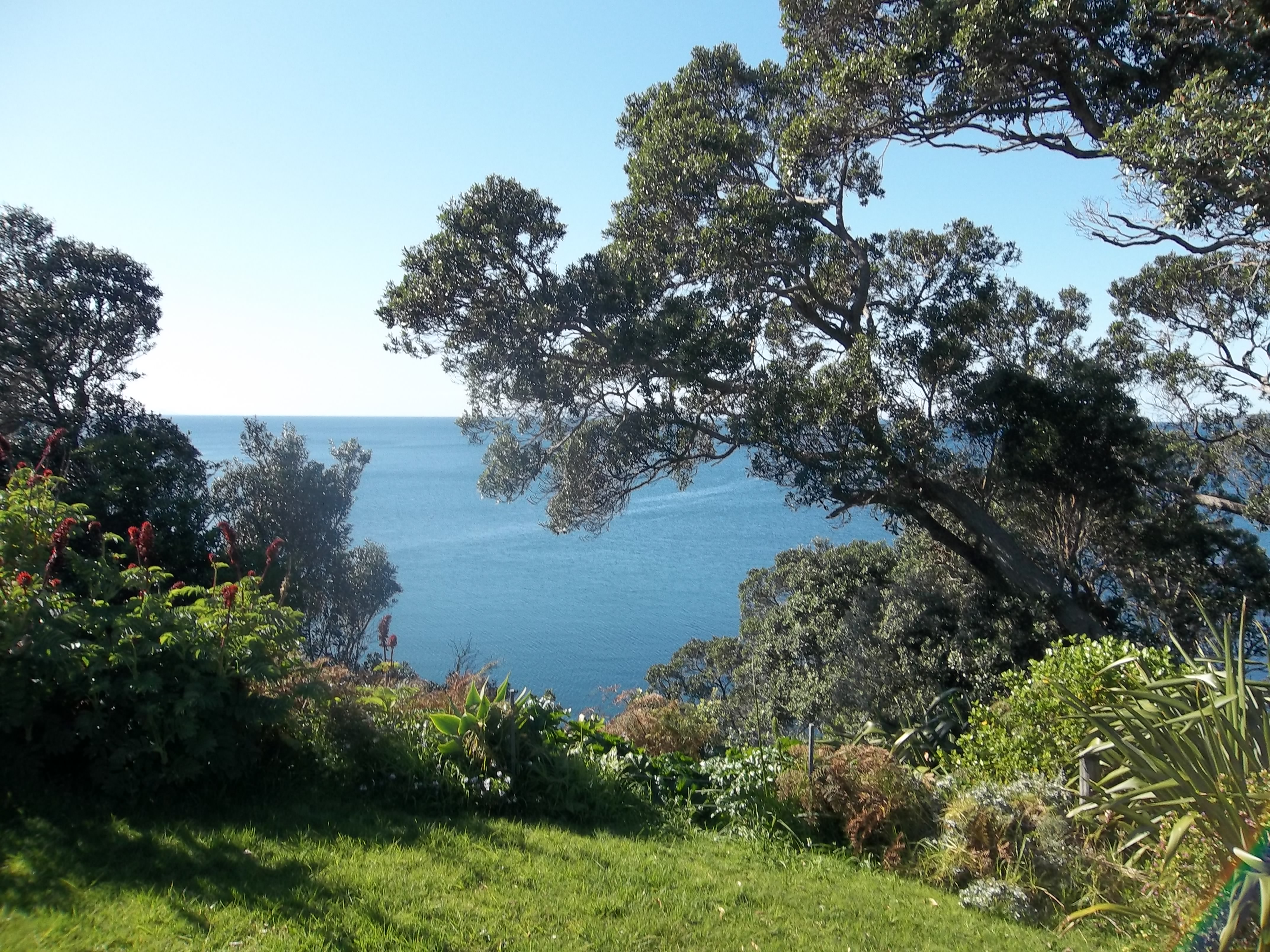
I’m sitting at my desk which is just by the French doors onto the veranda. When I look up, I see the turquoise sea framed by the red blossoms of the pohutakawa tree at this time of the year, and watch the fishing boats chug out to sea. The veranda itself is fringed with the fresh green leaves of white wisteria which grows around the outside. In spring the long white racemes perfume the veranda, and now, the scent of a datura at the bottom of the wilderness part of the garden, reaches my desk.

This long room stretches the width of the house, so that when I go to the other side of the house, and open the French doors at that end, the ravishing smell of the queen of the night pervades the front garden. Especially when it rains.

As I write, a shining cuckoo is singing its piercingly sweet song, and a thrush, now relieved of the cares of parenthood, and forsaking the empty nest in the honeysuckle by the garage door, is warbling joyfully somewhere near the oak tree. And the sound of water is the background to their song as waves break on the rocks below.

It’s that peaceful lull after all the hustle and business leading up to Christmas. The tail end of a cyclone has passed through, leaving us with drenched gardens – but clear bright skies and sparkling blue sea. The orcas I had seen came back and a pod of six, including two babies, took over the next bay, chasing a swimming dog, and going “ viral” as they say, all over the internet.

In the lead-up to Christmas, everyone gets their lawns mowed, the wide grass verges by the road trimmed, and their gardens manicured. Then the tents and canopies start going up, and families arrive from all over the country, and camp on front lawns for Christmas.

Christmas – time in this country is hedgerows festooned with billowing banks of climbing pink roses which I think must be Dorothy Perkins. They grow wherever settlers farmed over a hundred years ago, and have scrambled along dusty lanes and country roads ever since.

Christmas here is also blue and white agapanthus which too, have spread along road sides, and gracefully adorn banks and garden entrances, even though this spectacular flower is now condemned as a noxious weed! They bloom at the same time as the pink roses and the red and orange flax flowers, from which the turquoise and black tuis suck nectar with their long beaks.

The red blossom of the pohutukawa tree, the New Zealand Christmas tree, and flaming orange cannas spreading alongside the blue agapanthus, are also part of the brightness and exuberance that is part of an Antipodean Christmas. No spare leafless trees, pale skies and frosty hillsides here. Instead it’s the peak of summer before the flowers wilt and the hills go brown in the blazing sunshine which always seems to arrive with Christmas.

On Christmas Eve, I drove through pouring rain to our nearest big village in search of a half bottle of rum, to make a coffee and rum sauce for the walnut- coffee meringue gateau. Through the wind-screen wipers I saw a dead bird on the road ahead. I picked out the speckled wing feathers and coral- red head of the bird, and recognised a banded rail. These are rare flightless native birds which live on an island sanctuary out to sea.

I had found a baby corpse on the road some years ago, and put it in the deep freeze, before contacting the Department of Conservation. They were rapt, came rushing out and dashed off with the pathetic little frozen body to put it on their map. They knew the birds had reached a spot on the mainland quite a way from here, but had no idea they might have spread to the mangrove swamps where I had found it.

The bird which I now wrapped in several plastic bags (thank you, maligned plastic bags!) was full grown, and heartbreakingly beautiful with its long pointed beak for digging into mud for food, delicate markings and elegant little legs and clawed feet. It spent Christmas Day and Boxing Day in the deep freeze, amongst frozen bread rolls and my husband’s emergency steak pies, and today I rang the department. Out they came again, and even remembered the last one I had delivered into their hands. Very satisfying to know that a rare breed seems to be multiplying nearby.

And now the New Year looms… I was rather sorry we survived the end of the world. I’d been looking forward to annihilation in a split second, and no more wars, no more cruelty to animals, children, women, men, or the planet! I had thought it would be great to have a fresh start somewhere down the track, and do it right next time – peace on earth – goodwill to all life, animal, vegetable and mineral, and all people whatever their colour, race, religion or sexual orientation.

It would also have been great in that distant future to acknowledge that there is only One Creator, whatever we choose to call him/her or it, Dieu, Yahweh, Allah, Lord Vishnu, Great Spirit, Gott, Divine Source, and therefore no need for religious wars, hostility, judgement or condemnation….  but it seems that we have to clean up our own act now, before we can have that peaceful future!

Maybe one way to start would be to take fourteen year old Minnie Haskin’s advice. George the Sixth, the Queen’s father, used these words to hearten the nation in his Christmas broadcast in 1940, when the islands of Britain stood alone against the terrifying brutality of Nazism.

“And I said to the man who stood at the gate of the year: “Give me a light that I may tread safely into the unknown.”
And he replied:
“Go out into the darkness and put your hand into the Hand of God. That shall be to you better than a light and safer than a known way.”

Food for Threadbare Gourmets

Our plum tree is bowed under the weight of a lavish harvest of dark purple plums which are only so-so for eating raw, but delicious when cooked. Every-one who receives a basket of these fruits also gets the recipe I use – borrowed from Nigella Lawson.

To a kilo of plums – more or less, use 300 ml of red wine – more rather than less! Nigella says stone them – I don’t bother, the stones come out quite easily when cooked.

Put the plums in an oven proof dish. In a saucepan boil the wine with two bay leaves, half a teasp of ground cinnamon, two cloves, one star anise, and 200g of honey. Pour over the plums, seal with foil or a lid, and bake for an hour or longer at 160 degrees, until they’re tender. You can keep them in the fridge for three days, and you can freeze them.

Serve with crème fraiche, ice-cream, or custard. I also think they’d be good with rice pudding on a cold day.

The aromatic scent while they are cooking is so delectable that I’d love to catch it in a bottle and spray it regularly around the kitchen.

Food for Thought

A man cannot be comfortable without his own approval.

Mark Twain   1835 – 1910  Great American writer, humorist, publisher of Ulysses Grant’s memoirs, friend of Helen Keller. Abolitionist and anti- segregationist, anti- vivisectionist, anti- imperialist, pro women’s rights.

Born when Halley’s Comet was closest to the earth, and died the day after its return seventy five years later..

He also said; ‘Be careful about reading health books. You may die of a misprint.’

94 Comments

Filed under birds, bloggers, cookery/recipes, environment, food, great days, life/style, peace, philosophy, spiritual, The Sound of Water, Thoughts on writing and life, Uncategorized, village life

A Soldier’s Life is Terrible Hard -Part 11

By popular demand, another instalment of a soldier’s life!!

After my somewhat chequered career as a recruit I set off for officer cadet school with the rest of my intake – all eleven of us who had surfaced from the forty other applicants.

I learned later that it was no coincidence that the Colonel happened to come past the transport as we left, looking keenly at me! Oblivious to the impact I had had on various unfortunates at the depot, I discovered that officer cadet school was just like going back to boarding school, only better – I got paid!. As the youngest, and just out of school, I probably found it easier than the rest who had enjoyed their freedom. But to me, regular study periods, meals in the dining room, putting on uniform every day, was just more of the same.

Cadet school was set in a camp left behind by the Canadians after D –Day. Our nearest neighbours were the TB patients in the next door sanatorium. No potential there for hobnobbing with the opposite sex. The camp was surrounded by silver birch woods, which stretched for miles to the nearest village, and on still June nights I would wake to hear nightingales singing in the moonlight.

The only difference to boarding school was the hours spent on the huge parade square being drilled by a tiny sergeant major, less than five feet tall, whose mighty voice echoed not just around the parade square but on and beyond to the main Portsmouth road. As the eleven of us wheeled and drilled, and right formed, and fell into line, came to a halt, and about turned, a line of lorry drivers would pull up on the side of the road to watch us for their amusement, while they ate their sandwiches.

Thus it felt all the more humiliating, when dreaming about the un-read pages of the timid love letter stuffed hastily into my battledress top to read in our break, that I missed a step, failed to hear the word of command and carried on marching in the opposite direction when the rest had about turned. Love letters – or what passed for them – were a fairly scarce commodity at cadet school, as we might as well have been in a nunnery, we saw so few men or even boys.

The highlights of each term were the invitations to the house of an elderly couple who invited batches of Sandhurst cadets and us girls to hear talks on Moral Re-Armament. Their house just missed being stately, their servants were helpful, their food was heavenly, the worthy talks were utterly boring to frivolous young women, but the chaps might be interesting, we hoped. They never were, but hope always sprang eternal.

Apart from the daily morning parades, and the hours spent perfecting our drill and learning to shout commands that one day would be directed at our platoons as we took them on parade, we spent a great deal of time in lectures on arcane subjects like pay scales, army regulations, map-reading and leadership.

No rifle drill for us, but instead lectures from a series of university lecturers on constitutional history, current affairs, scientific trends and something called Clear Thinking, which involved logic, and fallacies and syllogisms – all considered necessary for a well-educated officer back in 1957!

Constitutional history was taught by the scion of a famous German intellectual family who’d escaped Hitler before the war, but the name of this gentleman was so long that generations of philistine and irreverent cadets just called him ‘Footy’, which he pretended not to know. He also pretended not to know that we never listened to a word he told us about constitutional history and the balance of power between the Commons and the House of Lords, but sat instead endlessly practising our signatures, or planning what to wear on our next trip to London.

Scientific Trends was taught by another mid-European lecturer, only unlike Footy who’d grown up in England, this very gentle man had a very thick accent and a deadly monotone. He showed films to illustrate the scientific trends, and as his lectures were conducted in the cadet sitting room, where there was a film screen, we just curled up in an arm chair in the dark with a bar of chocolate, and usually dozed off.

The rest of the syllabus was devoted to giving us an understanding of life, and the background many of our future charges came from, so we visited a Lyons Swiss roll factory to see what life on a conveyor belt was like, attended a Petty Sessions where we saw sad souls parade before the magistrates, and I felt like a voyeur, and worst of all, went to the Old Bailey. The day we were there we watched a murderer condemned to death, after a crime passionel. His voice after sentence had been passed was like the rustling of dry leaves.

The most challenging part of officer training was the two days I spent in the cook house, discovering how hard life really was. My worst crime was to leave the potatoes so long in the potato peeling machine that they came out the size of marshmallows. The kindly cooks who actually had to deal with this catastrophe, covered up for me, and my copybook was not as blotted as it might have been.

A handful of lectures on strategy and army organisation at Sandhurst were memorable for the lunch breaks when we mingled with the Sandhurst cadets. My most lasting memory is going for a punt on the lake, and it sinking, and my partner in this exploit – John Blashford-Snell, who has since become a famous explorer who did the first descent of the Blue Nile, explored the whole Congo River, and the Amazon, shooting many rapids unscathed – had to wade ignominiously back to shore, towing me sitting on the end of the leaky vessel.

The one thing I did master while at cadet school were the steps to the Charleston, then back in fashion. I perfected the knock knees, pigeon toes and tight sideways kick by holding onto the back of my chair in the lecture room as we waited for the next lecturer to arrive. I practised my dancing until I was foot perfect, and by the time we Passed- Out was acknowledged as top of the class by my peers in this  useful social accomplishment.

At the end of this gruelling training, interspersed with dances, parties and uniformed guest nights – when we practised the solemn ritual of Passing the Port – you Never lift the decanter from the table and only slide it in the coaster from right to left so it goes around in a circle, using Only the right hand – five of us emerged as second lieutenants. And now reality hit us.

Second lieutenants, we discovered, were despised by all, except new recruits. Everyone knew we hadn’t the faintest idea of what we had to do, from the regimental sergeant major down to the newest corporal. We were saluted, and called ma’am, but we knew that behind this ritual was the thinly concealed contempt of ‘old hands’.  Wet behind the ears, my father would have called us.

Many of the old hands had been through the war, like my motherly platoon sergeant who told me they knew D-Day must be in the offing, when they had to give up all the sheets from their beds, so that the huge new detachments of American soldiers  arriving nearby could have the sheets on their beds! And in the end, it was my platoon sergeant and the company sergeant major who taught me what I needed to know. Which seemed to be mostly to do what they told me!

Their commands varied from: “Here’s the pay books to sign, ma’am”, to: “Time to inspect the recruits, ma’am”, to: “Time to have your tea ma’am”. My requests varied from: “What shall I do now, Sergeant Major?” to: “D’you know where Private Smith is ?  She hasn’t made the tea yet.” A soldier’s life is terrible hard…

And as I re-assured my second, and non-military husband who feared that I was the Commanding Officer of our new establishment, he didn’t have to worry – the CO Thinks he runs the place – but it’s the regimental sergeant major who always does. He was very satisfied to be the regimental sergeant major.

Food for Threadbare Gourmets

‘Sumer is a-cumen in’ slowly, while the asparagus is a-cumen in quite fast. I love it as a meal in itself. Melted butter of course, is the classic accompaniment to it, but I also love this delicate and delicious Japanese style sauce.

You need one teasp of dried mustard, one teasp of hot water, one egg yolk, one tblesp of dark soy sauce, a teasp of finely chopped fresh ginger (you could use dried) and a quarter of a teasp of salt. Mix the mustard and hot water to a thick paste, then add the rest of the ingredients and stir well. Arrange the blanched asparagus on a platter and pour the sauce over. Serve within three hours. I like it lukewarm.

Food for Thought

There is so much in the world for us all if we only have eyes to see it, and the heart to love it, and the hand to gather it to ourselves.

Lucy Maud Montgomery 1874 – 1942   Canadian writer whose evergreen Anne of Green Gables series of books have enchanted generations of children since they were first published in 1908`

40 Comments

Filed under army, british soldiers, cookery/recipes, food, great days, humour, life/style, The Sound of Water, Thoughts on writing and life, Uncategorized

Abortion is Hundreds of Shades of Grey

Abortion is not a cut and dried, black and white issue, which is how it seems to be being debated in the US. It’s hundreds of shades of grey. It’s about more than religion and women’s rights. It’s about a baby’s right to happiness.

When does an unwanted child become a happy child? Does a woman already worn out with childbearing, want another baby when she already has a houseful, courtesy of a husband? Does a thirteen year old, raped and pregnant, really want that child? Does she know how to be a mother? Does she or her family want a child who is bearing half the genes of the rapist?

Does a solo mother who made a mistake, and trying to make ends meet, really want to carry another child and bring it up, when she can’t afford the ones she already has? Does the college student, pregnant after an encounter in which the boy has disappeared in panic, really want a child who is going to blight her chances in college, and who she can’t afford?

Unwanted babies rarely become happy children. In Sweden where they’ve had a liberal policy for years, they carried out a study on the children whose mothers were refused abortion. They started the study with the children who had actually survived to their fifth birthday! The findings were heart-breaking. Most of these children did badly at school, had a range of emotional and physical problems, found it hard to make friends, and when it came to military service, most of them were rejected because they weren’t physically fit enough.

Which tells us about the lot of unwanted children. Worse still, the latest research has shown that if a mother is depressed in pregnancy – and carrying an unwanted child would surely make you depressed – it damages the development of the baby’s emotional centres of the brain, which in follow-up  studies showed that these babies were depressed for most of their lives, and prone to depressive illnesses.

Brain research has also shown us that when a baby is loved, and his or her mother spends time cuddling, talking, singing, playing, making eye contact – feel-good hormones feed into the connections of the brain in which emotional development takes place. When a baby is deprived of these’ hormones of loving connection’, as they’re called, and left to cry, feeling unloved and alone, then cortisone builds up in the brain, damaging the emotional centres. Child psychologists are now sheeting back most childhood problems like AHD, depression, anti –social behaviour, anxiety, panic attacks, to the first months of the child’s life when she was deprived of the emotional food for the brain that makes a happy child.

Obviously not all unwanted children end up as delinquent, but there are many more child suicides than we hear of – of children as young as eight or ten – there are many unhappy depressed children who grow into unhappy miserable adults, who make unhappy miserable parents, and there are also children who overcome the handicaps of their parenting and past, and grow into decent kind, even enlightened adults who have much to give the world.

It’s easy to recognise an unwanted child. They often have bad posture, they often look anxiously sideways, as though ready for the harsh word or even blow. They are always gauging the atmosphere – are the adults ok, or is it a bad day? They find it hard to look you in the eye, because they have no trust.  They have lots of accidents, sometimes caused by the adults, sometimes because accident-prone children have emotional problems… and this is just a short list of how to recognise unhappy children..

So before trying to make hard and fast rules which control women’s sexuality, perhaps we should be looking with real insight and compassion into the needs of children.

If the people – usually men- who advocate that all women should bear all babies, are they also offering support, both emotional, material, and financial to help women to bring up these unwanted babies? But how do you make a woman want a baby, if she doesn’t want the child of her rapist? I can’t imagine what it must be like to carry a child you don’t want, it was tough enough being pregnant with children I did want.

And of course a mother carrying an unwanted child is going to feel hostile and resentful, unless the miracle of bonding occurs at birth. But as any farmer will tell you, that vital connection, which ensures the life of his lambs or calves, can easily be broken.

The magic hormones that flow through the body of a woman during pregnancy and afterwards, that ensure the safe and happy birth of a baby, don’t operate automatically in all circumstances – women’s emotions are also part of the equation – they are not  child bearing machines any more than an animal is.

So to impose on all women, regardless of their age or circumstances or beliefs, a one size fits all rule is not only an infringement of women’s rights and their ability to conduct their own life, but also complete insensitivity to the needs of a baby, and complete ignorance about the miracle of birth, life and the growth of the human spirit .

If the no- abortion rule is applied to women, I feel that a compulsory sterilisation or vasectomy programme should also apply to any man who begets an unwanted child. This would probably solve the problem satisfactorily. Women would know that they were not being unfairly discriminated against if men were also subject to the same draconian principles being  promised to women, and men would know that they had to be responsible for their actions too.

If this meant a shortage of children with so many men unable to have children, then the unwanted children could be adopted into homes where a child was really, truly, wanted. Imagine a world where all children were happy – now that’s a vision to aim for – both in the US and all over the world.


Food for Threadbare Gourmets

I was desperate for some chocolate the other day, and only had dark chocolate in the house which doesn’t do it for me. So I decided to make a chocolate cake. By the time it was cooked and iced several hours later, the craving had left me, but we were also left with a lovely chocolate almond cake!

I melted four ounces of butter with four ounces of black chocolate and left it to cool. In a large bowl whisk four eggs with six ounces of castor sugar until thick and white – it does take a bit of time. When they’re ready, fold in the chocolate mixture in several batches, alternating with six ounces of ground almonds. Add a teasp of vanilla, and pour into a greased tin lined with greaseproof paper.

Bake for about three-quarters of an hour at 200 degrees or just under. The cake should be slightly undercooked, and should be left to cool and shrink a little in the pan.

When it’s ready to turn out, let it cool completely before icing it. I use three ounces of butter to about eight ounce of icing sugar, and a few teasp of water or freshly squeezed orange juice, and whisk them altogether, adding a bit more liquid if I need it. It’s an incredibly rich cake, and though it’s delicious the first day, I think it improves with keeping -if you can!

Food for Thought

It is harder for us today to feel near to God among the streets and houses of the city than it is for country folk. For them the harvested fields bathed in the autumn mists speak of God and his goodness far more vividly than any human lips.

Albert Schwietzer  1875 – 1965   Humanitarian, medical missionary,  Doctor of Theology, Doctor of Music, Nobel prize-winner and philosopher.


73 Comments

Filed under babies, cookery/recipes, family, food, great days, happiness, life and death, love, philosophy, politics, spiritual, The Sound of Water, Thoughts on writing and life, Uncategorized

Snails Have Feelings Too!

Not exactly breakfast at Tiffany’s but breakfast at the river cafe. And not exactly breakfast either – I preferred a freshly baked friand and two cups of coffee – my way.

I sat in the spring sunshine and watched the ducks, bottoms up, having their breakfast. The sparrows hopped so close that I could see the tiny inky black dots like a bib in front of the male birds’ necks. As I walked up the steps to the grocer, the scent of the miniature lemon bushes flanking the water-slide bisecting the flight of steps wafted past. The cherry trees were in that delicate stage of fading blossom with a faint green haze of leaf buds emerging. Altogether, so enjoyable that I decided to take my time going home.

Turning down a country road with a few houses at scattered intervals, I slowly drove down peering up long drives trying to see the houses at the end. One long and infinite drive was lined with poplars, the translucent apricot- coloured spring leaves just uncurling, shiny and shimmering with the sun striking through them, and their bunches of pale green catkins wriggling in the breeze.. On one side of the road was a meadow snowy with daisies, and a little further down, was another one sparkling with gold buttercups.

They wouldn’t gladden a modern farmer’s heart, but they did mine. Cows no longer browse on all the herbs and grasses that their system needs, they just get cultivated grass of one variety which feeds them: but this doesn’t give them the balance of minerals and herbs they instinctively seek out when left in organic fields with all these nutrients available to them.

I only know this from a farming friend whose cows needed copper injections, but when someone left the gate open, they rushed out and began browsing in the mixed grasses along the roadside. When their health improved immediately, he was converted there and then to organic farming. I also heard a radio programme last week in which an organic farmer said his vet’s bills dropped from over two thousand dollars a month, to a hundred and eighty a month when he switched over to organic.

Further down the road some horses were grazing contentedly in the sun, one beautiful palamino stretched out on his side soaking up the warmth. I hastily drew up at this curve in the road, for a big clump of deep blue Norfolk Island forget-me-nots had self-seeded and were sprawling along the verge. I snapped off two sprays which had gone to seed and put them carefully on the front seat so I could see if any seeds fell off.

Heading back I detoured to a tiny wharf on the edge of the estuary. The first settlers who came here in 1850 had landed their goods from Auckland here, and by 1880 this little wharf had been built. All the traffic into this region came up from Auckland and was decanted ashore here. A few years later, an enterprising local man built a shop out over the water next to the wharf, so that fresh goods could be taken straight off the boats, and this tiny space between cliff and sea became the hub of the area.

Now, only the restored wharf remains, and I stood there in the sunny silence watching the tide flow up the river, clear and blue. There were some huge shells down on the mud, so I climbed down the steep steps to gather a handful, magenta and maroon and plum colours merging into sherry and then cream. Big curved shells, and flat fluted ones, with not a chip or a mark on them.

As I stepped towards them, my black patent shoes sank deep into the mud, and I had a moment’s panic. But then thought, well you can always wash patent leather. I gathered a handful of shells, and then wiping the soles of my shoes in the grass, stopped in another bay with a tiny boat building industry, before driving home.

I put the forget-me-not stalks in a flower bed to dry and seed, but when I put the shells to dry in the sun, I found I’d inadvertently brought a muddy looking snail shell home too. I could see there was a live sea-snail inside, so put it carefully out of the sun to take back. It was only about an inch wide.

I was going to take it to the harbour, but then thought that was a bit unfair. If I’d been abducted accidentally by giants or aliens, I’d want to be dropped back home, so I did the same for the snail or crab.

Many people think it fanciful to attribute human feelings to other species, but since they can show fear and joy and all the other human emotions, why not credit them with other responses too? Some Christian authorities describe it as anthropomorphism, and use the term patronisingly and derogatively – okay for St Francis, but not for the rest of us!

But since we know that even a snail’s brain contains between 5,000 and 100,000 giant neurons, and they know when they’re being carted to market in a basket, and have lifted the lid in a concerted effort, broken out and escaped in recorded instances, can we really assume that any creature has no feelings or intelligence?

Elisabeth Tova Bailey wrote an exquisite book called ‘The Sound of a Wild Snail Eating’, a story about her companionship with a snail that came into her sickroom in a potted cyclamen. Snails, she discovered, lay eggs in different places, and visit them all regularly until their babies are hatched. So snails are maternal. The secret life of snails we can only guess at!

After reading her book I’ve been unable to put out snail bait in the garden. I either grow plants they don’t like, do companion planting, or in the case of petunias, put out some lettuce leaves by them at night, and they obligingly eat the lettuce leaves instead of the petunias. I know of a couple who go out late at night and gently gather up all the snails in their garden and taken them to a wild place where they can do no harm to a garden.

We don’t know what place snails occupy in the great chain of creation, but what we Are learning is that every creature seems to have a purpose. We are learning that now GM plants are bred with pesticides in them that kill off pests, good insects are also dying, and bumble bees who ingest pesticides, lose their sense of direction. In Africa where pesticides are widely used, not only are they polluting the lakes and rivers causing fish to die, and fishermen to lose their livelihoods, but the animals and birds that feed on creatures that have absorbed pesticides are also dying.

So it seems to me that every little snail and spider and insect may just matter more than we realise. That to tinker with the ecological chain, is as destructive to our planet as drilling for oil in the seas, burning down forests, clubbing baby seals to death, and all the other hostile acts that we perpetrate on our world. So I was happy to return my little captive to its home in this world – which is also our home – and the only one we will ever have.


Food for Threadbare Gourmets

There was plenty of risotto left over from the day before, so before putting it into the fridge that night I had fashioned it into patties. The next day they had set so firmly I didn’t bother to roll them in flour, but just put them straight into some hot olive oil and butter, and fried both sides. The crispy outside, and soft tasty inside were delicious, and sprinkled with parmesan, I almost felt the leftovers were better than the original dish.

Food for Thought

Man is so made that he can carry the weight of twenty four hours – no more. Directly he weighs down with the years behind and the days ahead, his back breaks. I have promised to help you with … today only; the past I have taken from you …

From God Calling written by Two Listeners in the thirties. You can Google it and find the messages for each day. The language is slightly dated after 70 years, but the messages are still timely.

52 Comments

Filed under animals/pets, cookery/recipes, environment, environment, food, great days, life/style, philosophy, spiritual, sustainability, The Sound of Water, Thoughts on writing and life, Uncategorized, wild life