Category Archives: life/style

Sacred space

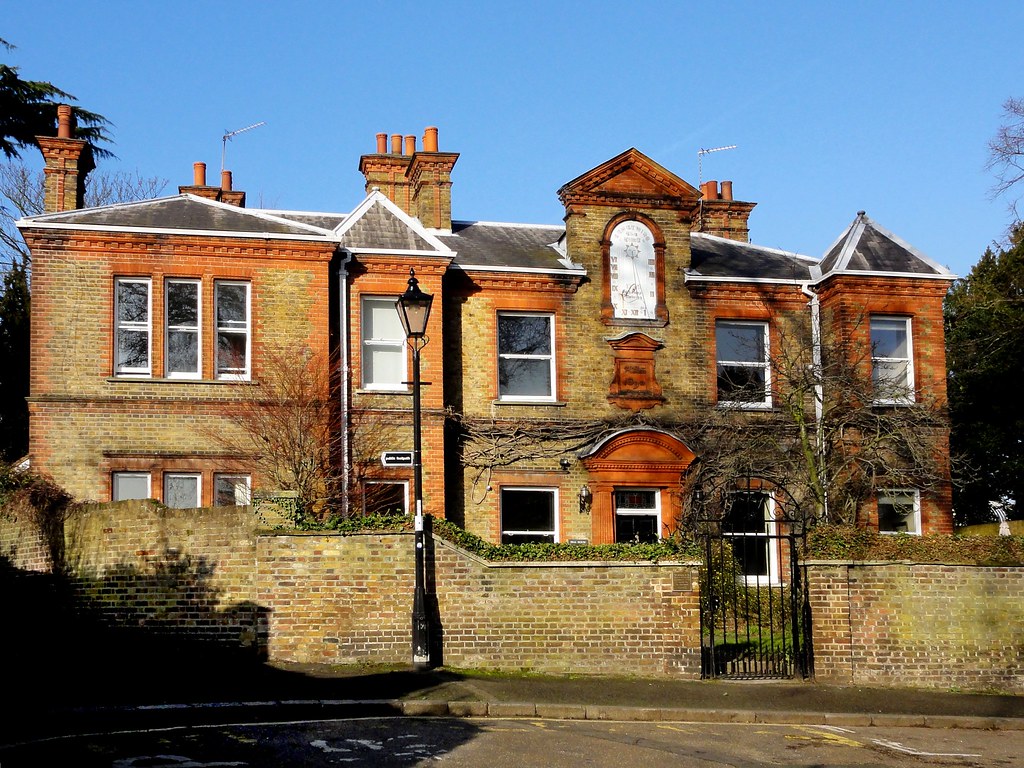
Image result for dial house twickenham londonRambling house down by the River Thames where my in-laws lived and I spent much time.

A life – another instalment of my autobiography before I revert to my normal blogs

I loved the ordinariness of the countryside. It wasn’t spectacular country, but it contained all the elements of the things which are now becoming rarer. There were thick hedgerows, and wild flowers and long grass in the orchard where the fox sometimes slipped through, on his way to the field where the donkey grazed: little copses, with their bare, spare branches etched against the pale winter sky, or billowing with green foliage against a blue sky in summer: woodpigeons cooed, cuckoos called, thrushes sang, and the smells of cut grass and manure, of wet leaves and sweet lilacs scented the clean air.

There was no hum of traffic from a distant motorway and few  sounds apart from the occasional drone from a tractor, the creaking braying of the donkey, and contented cows mooing on their way to  milking.

There were other things which showed me the dark side of modem farming. Henry the farmer, who gently patted his thirty prize cows on their rumps as they slowly filed past to the milking shed, where they stood and gave up their warm, creamy milk to the strains of Viennese waltzes, showed me with pride, his solitary calves. Each one was alone and imprisoned in iron cradles where they stood unable to move, turn or lie down, trapped in compartments in pitch-dark sheds, preparing to become white veal. I’ve never eaten veal since.

The house had no mod cons – everything was as it had been since the Victorian aunt’s childhoods. We had never been able to afford a washing machine for the babies’ nappies, so the lack of one was no drawback for me. So, while each baby luxuriated in smocked viyella nighties from the White House in Bond Street and was aired daily in the expensive pram bought by doting paternal grandparents, their nappies were washed the old-fashioned way. In a boiler.

This was filled with a hose from the kitchen tap. I then switched on the heater in the boiler and let the water boil, bubbling and swirling the soap-sudded nappies. They always had the same smell, those boiled soap suds. At the end of the boiling operation which filled the kitchen with steam, I wheeled the pulsating monster to the kitchen sink, and gingerly prised the lid off. Then, with a pair of wooden tongs in theory, but in practise with a wooden spoon, I poked around the scalding nappies until one became hooked on the spoon. With a quick swing it was transferred from boiler to sink, and then the endless rinsing process began.

Nappy by nappy was hooked and swung from boiler to sink, steam misting up the windows, and billowing out through the kitchen door to the rest of the house. My fingers became so swollen that I couldn’t wear my rings any more. Some days I was only one dry nappy ahead of the babies. Now Newney Hall didn’t even have a boiler, but at least Napisan, (hurray,) had arrived on the market, and banished my boiling days forever, however un-hygienic the nappies may have been.

The amenities of the house began and ended with the calor gas stove, while the bathroom and loo were directly above the kitchen, presumably to economise on plumbing. Since the staircase was the other end of the house, this meant walking or running the whole length of the house twice to get upstairs to the bathroom, but at twenty- seven years old the inconveniences didn’t seem to matter.

Living so far away from the shops didn’t matter either. The village grocer delivered our food for the week on Friday afternoons. The butcher called in his van three times a week, as did the baker. The greengrocer called twice a week, and the milkman called every day to supply not just milk to use up the baby coupons, but also yogurt and butter.

My husband left first thing in the morning for the London train, taking the old Morris Traveller with him to the station. I found expensive purchases hidden in the back of that car – a hat from Lock’s, the oldest hat makers in the world, who’d been in business since 1676 – Nelson was wearing one of their tricornes at Trafalgar). There was a shirt from Gieves  (Nelson was wearing a suit made by the original Mr Gieves at Trafalgar too). I worried my extravagant husband was getting into debt again while I couldn’t afford a new lipstick). When we’d waved him away, toddler peeping over the stable door of the kitchen, the baby perched on my hip, we returned to the kitchen table to finish our breakfast.

After hastily scrubbing the high chair before the spat- out cereal set like concrete, polishing the chrome on the pram so my mother- in- law would not silently notice spots or rust marks, I handwashed cobweb-like shawls and lacy matinee jackets in cold water so that my mother-in-law could not suggest I’d turned them yellow by washing them in hot water.

And then more vacuuming, (why did I think it all had to be done every day? – ready for inspection, ma’am – my mother-in-law lived miles away ) sweeping, dusting, regular stoking of the fire, the acres of red and white tiled kitchen floor to be washed free of mud, all kept me busy till the baby woke and lunch loomed, and then the sieving and straining and mashing began, before more face-washing and bib-tying and strapping baby into his high chair and hoisting the toddler onto a cushion on a kitchen chair.

The slow routine of spooning and cooing to the baby and answering the toddler’s continuous eighteen- month- old chatter ended, with more face-washing and changes of nappies, before putting both children down for an afternoon sleep. This was the one hour in the day to myself. I ate my lunch standing at the draining board – cheese and biscuits – reading the newspapers –  Guardian and Telegraph from front to back – I’ve never been better informed. I didn’t dare read a book as I would have forgotten the time and my duties.

I was so tired I didn’t dare sit down either, or I would never have got up again. I hadn’t had an unbroken night’s sleep since the first child was born, and now, with the baby’s night feeds and the other’s broken nights ever since her father had returned from Cyprus, I was so ground down that I couldn’t imagine what it felt like to be normal. Staying for Christmas with the in -laws, my mother- in- law told her son, who told me – how plain I had become. She was right!

The newspapers only lasted till the first child woke, and then their faithful slave would bound up the stairs or rush outside to the pram, checking the nappies, and freshening up their faces before we got dressed for our walk.

Living in a northern climate one becomes accustomed to the hours spent preparing to go outside into the cold or the rain. It must have taken twenty minutes or more to swathe each child in coats, hoods and zip-up jackets, ease tiny, bunched feet into warm boots, and wriggle fat, plasticine-like fingers into gloves or mittens. Then the strapping into the pram, buckling the harness, propping baby up on the pillows, tucking in the rugs to keep out the draughts, and finally, flinging on my sheepskin and gloves, wandering out at snail’s pace or toddler-pace, to gasp fresh air in lanes where the pram would go.

We never met another soul, looking across the frosty, bare, ploughed fields. We were five miles from the village and buried in primeval privacy. Back home, we watched the cows go past for milking, which was the signal for our tea-time. This meal, composed of much the same ingredients as lunch, but including any cakes I might have found time to make during my lunch break, began around four- thirty. This I know, because I switched on the radio when we started, to catch the five ‘o clock news, and so as not to disturb the children’s concentration by leaping up to switch on during their meal.

So I became a captive listener to ‘Mrs Dales’ Diary’, as I waited for the news to come on, and spooned food and baby talk into thrush-like, open mouths around the fireside. I listened with stilled breath to the Congo disasters, the Rhodesian Declaration of Independence, the bombing in Vietnam, the mistakes and injustices of authority all over the world, it seemed, yet these were almost incidental. The pressing reason for listening to the news was for the sheer pleasure of hearing another adult voice, to break the boredom and monotony of the endlessly repeated trivial tasks.

In summer, at twenty- past five every day, we watched the goose spoon water with her beak over her two goslings at the duck pond, before climbing the stairs for our baby bath-time and bed- time. It was always early – because they were ready for it, I said, and needed their sleep. So by six o’clock every night silence reigned. Perhaps they did need it – they certainly never argued and fell asleep straight away – but the real reason was that I needed it. People used to comment on how beautifully behaved they were – because they were always attended to – instantly!

Before the words ‘suburban neurosis’ had been coined, I’d have been ashamed to admit the boredom to anyone, but a wave of relief swept over me, unacknowledged every night, as I walked downstairs and poured a drink into a civilised, crystal sherry glass, for my one leisurely tot before beginning the cookhouse stint for my husband’s  dinner.

My marriage was breaking down already though my husband refused to go for counselling with marriage guidance. But before we left for Hong Kong, I had made a life for myself and found a circle of friends, Margery, the farmer’s wife who wrote poetry and read her poems aloud with a group called Poetry in Pubs. My nearest neighbour, was the Hon Jean, who had children the same age, which was the only thing we had in common, but she seemed to need me. Lady Selina, who divided her time equally between her painting, the stables and her children, and was both a Quaker, and a sort of enfant terrible was stimulating, while sweet Jennifer, whose children always fought with mine, shared a passion with me for interior decoration and gardening.

Eventually we left that enchanted house to go to Hong Kong, where the hectic life and chaos of those times almost obliterated the memories of that year in the country. But for years I have dreamt of that beloved house. In my dreams it’s bigger, and there are many more rooms. The furniture is more elegant and the rooms more beautiful.

There’s one room which is filled with such treasures that I only go into it sometimes… it feels sacred. I have no idea why I dream so often of this house I lived in for a short year so long ago. I don’t know what it symbolizes. I’ve lived in other houses and places just as magical…  no doubt a psychologist would mine some profound Jungian theory from these dreams, delving into the unconscious and maybe coming up with an archetype!

We spent the last few weeks in England with the in-laws at their rambling red brick Georgian house down by the river Thames. Built by Thomas Twining of the tea family in 1722, a big sun dial told the hours on the front of the house above the front door. Inside it was decorated with glorious colours and filled with treasures and exquisite antiques and china collected by my deaf, difficult, demanding mother- in- law, whose creativity and taste taught me so much.

The night we left, as we sat in a big car lent by friends of the in-laws to accommodate all our luggage, we four and the in-laws who were seeing us off on our plane, I looked up at the old house, illuminated by the street lights and wondered when I would see it again. No presentiment warned me it would be twelve years before I saw that sun dial again, after what had seemed like a life-time of heart-break, adventure, life in a far country, second marriage and extraordinary experiences.

To be continued


Food for threadbare gourmets

 A friend who has her mahjong foursome to stay here in the forest for a weekend once a year, usually brings them to my place for afternoon tea and we have a great girls natter. They always love my scones and want the recipe. This is it, so quick and easy: eight to ten ounces of SR flour, pinch salt and two to two and a half ounces of butter – I simply grate it cold from the fridge. Mix this altogether with an egg beaten in a cup of milk until it all comes together. Use more milk if you need, to make a soft dough.

I don’t bother to roll it or use a pastry cutter. Just gently knead it into a square, about an inch thick, cut it into small squares, and place with a space between them on a greased baking tin. Some say leave it in the fridge to cool… sometimes I do – if I don’t have time – que sera sera. Bake in hottish oven for fifteen minutes or until risen and done. Serve hot with butter, strawberry jam and whipped cream if you have it. If there are any left over (not often) I fry them with bacon and fried egg… nice…

Food for thought

You can never get a cup of tea large enough or a book long enough to satisfy me… CS Lewis – a man after my own heart.


37 Comments

Filed under army, babies, beauty, cookery/recipes, environment, family, life/style, The Sound of Water, Thoughts on writing and life, uncategorised, Uncategorized, village life

Living in Splendour


Image result for layer marney towers
Layer Marney Towers – photo by Rachael Pereira photography

A life – another instalment of my autobiography before I revert to my normal blogs

Within two months I was pregnant again, and within four months we had moved house again. I was just as under the weather with this baby too, and also had a baby to care for. My husband was often away on army manoeuvres and what were called practise camps, so there wasn’t much support around.

The one difference this time was that I knew another young army wife with two young children who was as lonely and stressed as I was. Neither of us could drive, but we both had a telephone. We spent hours on it, never saying anything of much import, but just whiling away the time talking to another adult. We had very little in common, and when I moved house again some months later, I never heard from her again. But we’d each served a purpose in each other’s lives at that moment in time.

This time around too I also had the absorbing interest of watching my daughter growing. I’d discovered a fascination with child development after reading a sociological magazine called New Society for several years. Now I was watching child development in action.  I knew from my reading that from eighteen months to three years, when the brain is at its most active, children are like sponges, soaking up words, information and new skills and that between the ages of eighteen months and three, the toddler’s brain is twice as active as the adult brain.

As I watched my daughter, I could see that the range of skills babies acquire -physical, mental and emotional – was awe-inspiring. And I was watching a baby of ten months thinking and deducting. One Friday afternoon as I sat on the sofa feeling ill, hearing the helpful local grocer deliver our box of groceries for the week and leave it in the kitchen, my ten- month old daughter skated into the kitchen on her bottom, her normal mode of getting about. I let her. Some-time later she came through to the sitting room and tugged my hand, making it clear she wanted me to go into the kitchen.

When I did, I was awed. She had unpacked the box, putting the butter, cheese, bacon and yogurt by the fridge door which she couldn’t open. Neither could she open the cupboard door under the sink but the things like wash-up liquid, harpic, vim etc were neatly lined up by the cupboard door.

The jams, tins of baked beans etc, were neatly lined up on the lowest shelf in the larder where they were stored. Everything was in its place. Unbeknown to me she had watched me and learned where everything went, even stuff like baked beans and cleaning materials that she had no truck with. She’s continued to organise me ever since…

Her brother’s birth some months later and a fortnight early was so painful that I passed out, having no pain threshold at all, and my last thought being; “this is worse than anything I thought possible.” When I regained consciousness, I found a whole host of seemingly worried people gathered around my bed. I left hospital the next day so that my daughter wouldn’t notice that I’d gone and revelled in being thin again, and fitting into a tight pale blue dress bought by mail for three pounds from Kings Road, Chelsea, fashion capital of the world for my generation!

Shortly after the birth of his son, my restless husband decided to apply to learn Mandarin-Chinese and take off for Hongkong. This entailed spending a year at the School of Oriental and African Studies in London, before attending Hongkong University for several years. So we had to find somewhere to live within reach of the capital.

One night I was cursorily scanning the personal columns of the Daily Telegraph looking for somewhere to live. My husband was away with his regiment on manoeuvres, and I was filling in the trying gap between the baby’s ten o’clock and two o’clock feed.

I found a few lines offering a country house in the right area for nearly the right price – for a year. The next day I rang. The owner was delighted – he was off to Greenwich Naval College and wanted someone to keep his house warm. “Chudor, ya’ know,” he told me, listing the bedrooms… he said he’d pay the gardener.

We arranged a time that weekend to inspect the place, and when my husband returned the next day he went off on what he called a recce. He came back looking rather panic-stricken. “It’s bigger than Hampton Court,” he said, “and looks like it too, all red brick.”

Reference books describe the place – Layer Marney Towers as a Tudor palace, composed of buildings, gardens and parkland, dating from 1520. The handsome red brick gate house is the tallest in England.

Undaunted, I persevered, rather fancying the idea of living in a stately home. We’d never be able to heat it, my husband argued, and then I saw the light – with an eighteen- month- old and a four- month- old, that mattered.

So I returned to the personal columns, and struck gold a week later. “This one sounds OK”, I said,” right area, right rent, and only five bedrooms” (my ideas had expanded considerably since my brush with Layer Marney Towers the previous week). I rang the owner – same story – wanted someone to live in it for a year, this time while he wound up his boat building business in East Anglia. “You’ll love it,” he said, and reeled off the amenities: “there’s the garden bedroom, the oak bedroom, the red bedroom, the four- poster bedroom, and the end bedroom…” My husband panicked again.

But a few days later we set off on a light June evening driving through quiet Essex lanes, with honeysuckle and dog roses winding in among the high hazel, hawthorn and elderberry hedges. We found Newney Hall (also a listed historic building) dreaming between fields and hedgerows, a small lake – which in the twilight was almost black and edged with a tangle of lilacs and shrubs – lying between it and the road. The house, Tudor red brick, and Essex pantiles on the upper floor with casement windows, stretched beyond the lake, reaching into a circular lawn with a cedar in the middle. Beyond that, a walled orchard.

As we walked down the gravel drive I could hear the sounds of music coming from the house. A knock on the door revealed a rather vague looking woman with a viola tucked under one arm, and the bow held in her other hand, as though she could hardly bear to stop between bars to open the door. “George!” she called imperiously, and the seigneur hurried to welcome us. Within minutes the deal was done, and we moved in a week or so later.

The house had been built in the time of Edward the Sixth, Henry the Eighth’s son, and all the land around had been gifted to Wadham College, Oxford in the same reign, so nothing in the landscape had changed for over four hundred years. The fields and trees, lanes and barns were untouched by time, and since there was no sound of traffic, no jet planes practising, and only occasionally the sound of a distant tractor, the whole place lay wrapped in an almost primeval peace. There was no other house in sight.

Wood pigeons cooed incessantly somewhere in the trees, cocooning us in their summer sounds, the donkey in the next field brayed occasionally, the cows mooed as they shambled past to the milking shed at the farm beyond the house. The old black painted, red-roofed tiled barns, grain sheds on staddle stones, and stables were laid out around a square, where the cows sheltered in winter. I walked across to the cow- shed every day, my eighteen month old trotting along beside me, baby on my hip, and carrying a big cream- ware jug in which to to collect my fresh milk. We also went there to pick up new-laid eggs from the farmer.

The house was built from huge beams and filled in between them with a mixture of mud and straw. They were plastered over, and the walls were about three feet thick, with deep window ledges where I put books and vases of flowers. Two old aunts had been living in the house before expiring and gifting it to George. In the mid-sixties they were over ninety, and the house was unchanged since the days when they had been born back in the 1870’s. So was the dust. When I moved an antique chest of drawers to dust behind it, a thrush disintegrated into fine powder.

I scrubbed and polished, opened windows, put flowers in jugs in the deep window sills, polished brass, and made the tables shine, re-arranged the country Hepplewhite chairs, and the drop-leaf Sheraton table, cleared thick cobwebs from behind the family portraits and arranged our still -new wedding presents, clocks and silver, antique oriental rugs and a few good prints and pictures, all my books, and the baby’s equipment and paraphernalia.

I spring cleaned from top to bottom, washed curtains, scrubbed floors,  and polished and dusted the elegant Chippendale chairs. It was like living in a time warp. No heating, a gas stove so old I’d never seen one like it, and neither had the serviceman when he came. If it’s working, best leave it, he said, shaking his head. I had a big kitchen with a big square scrubbed table in the middle, red and white checked tiled floor which needed scrubbing on my hands and knees every week, and a real larder with marble slab. The only gadgets – my wedding present pop-up toaster and a wooden spoon!

At weekends, we filled the house with friends and others. School friends from Malaya, friends from my laughing, irresponsible army days, all of us weighted down with two and sometimes a half, children. Anne coming to stay while her husband laboured through Staff College, forgot the address, so simply peered at windows of large houses till she saw toys in them, she said.

Others came in distress, a girl friend known since childhood days at Catterick, diagnosed with MS, a fellow officer of my husband’s who’d been court- martialled, and who had nowhere to go; then there was the Polish-French, Quaker student at London University who’d never been invited to an English home in his previous three years, and who told my husband I worked too hard – which puzzled me exceedingly – didn’t everyone who had children?

There was the person behind an SOS in the personal columns of the Telegraph – pregnant and needing a home. She stayed for six long weeks, lolling around the house in pink, fluffy, bed-room slippers, never leaving me in privacy with my new-found neighbourly friends, and not enjoying my food. She’d left a previous haven because she didn’t like the vegetarian food. She left us after six weeks for another address, presumably hoping the food there would be better. She’d arranged to give the baby to a woman who wanted one!

And there was my teenage cousin who introduced me to the Beatles – not in person! She had a genius IQ and had been sent to an expensive boarding school to make the most of it. But she hated her school, and at this juncture, her mother too, so she came to us for regular holidays with tangled hair and skimpy skirts. There were parents and in -laws, brothers and their girl- friends, Helen, my former colonel, now a god-mother… and then back to primeval peace during the week

All this entertaining meant lots of food and cooking. Now we were at last the grateful recipients of marriage allowance, I was able to move on from mince and baked beans and tins of stewed steak and indulge in good food and pander to my sweet tooth with chocolate souffles, choux pastries, croquembouche, mousses and more.

My husband meanwhile had made plenty of new friends in his new working environment, including a pretty blonde girl called Angela. Although I liked her when he brought her home, we had several fierce rows because he went to parties with her, leaving me at home with the babies. I tried everything to make home seem attractive, cooking delicious dinners for him, having a drink waiting for him when he got home…

One night during one an angry argument about Angela, I dumped his steak and kidney pudding and vegetables on my husband’s head in despair. Mistake. He was a tall powerful man who never understood that when he hit my head with the full force of his hand, I wasn’t doing a Hollywood as he called it, when I sank to the ground too nauseous and dizzy to stay upright. On this night, apart from painful physical reprisals, I’d given myself lots of cleaning up to do.

And later, I lay in the long sweet -smelling grass in the orchard, where I’d seen the red fox glide through, and cried my eyes out under the late evening summer sky. At twenty- seven I thought no-one would ever love me.

To be continued

 Food for threadbare gourmets

 I’ve always made the same recipe for chocolate mousse, using an egg per six squares of dark chocolate, but this three ingredient recipe from NZ cookery writer, Annabel Langbein, is a delicious quick alternative. She uses 200g dark chocolate and recommends chocolate with as high a chocolate content as possible – I use 72% .

Break the chocolate into squares and melt very slowly and gently with a cup of cream and a cup of white marshmallows. (250 ml of cream, and 100gm of marshmallows.)

When smooth and melted remove from heat and allow to cool to room temperature.

Beat remaining cream to soft peaks and fold through chocolate mixture. Pour into glasses or bowls and refrigerate for at least 6 hours or overnight before serving.

Most recipes recommend putting the ingredients in a bowl and placing over boiling water to melt. I’ve never bothered. I just put everything into a saucepan and gently melt. The trick is to do it slowly so the mixture doesn’t go grainy but becomes smooth. And if it does become grainy, this doesn’t affect the taste, so you can soldier on regardless! And I always add a few drops of vanilla to the mix.

Food for thought

 We are all broken. That’s how the light gets in.

Ernest Hemingway, American writer and hell-raiser

Having huge issues with internet, so apologies for no response to the beautiful comments before this page clicks out on me. Back soon !!

35 Comments

Filed under army, babies, cookery/recipes, life/style, uncategorised, Uncategorized

Tropical learning curves

15

A life – another instalment of my autobiography before I revert to my normal blogs

We sometimes played hockey on the padang at Tanah Rata, the nearby township where I quickly learned to play on the wing after my first attempt at playing centre. As we bullied with our hockey sticks in the slight dip where water had collected, my legs became covered with small red leeches. Trying to prise these horrifying bloodsuckers off was a practical demonstration of the phrase ‘he stuck to him like a leech.’

I also played fast and furious tennis with three teachers (one who had been a Junior Wimbledon champion) who needed a fourth on Saturday afternoons, and as head girl started the school magazine; I made a wonderfully arrogant and stupid Lady Catherine de Burgh in the school play of Pride and Prejudice, arranged the flowers for church every week, and ignored various nice boys (in retrospect) who tried to get my interest.

My best friend and I also enjoyed infuriating two young but frumpy teachers who we knew thought we were bumptious and too big for our boots. Apart from this friendship with my best friend which has lasted our life-times, the greatest gift I took away from this school was the ability to write clearly.

The man who tried to teach me to write was a very patrician academic, who wrote book reviews for The Times and was also an army officer. He was our charismatic headmaster – tall, elegant, witty and charming. He didn’t normally teach but he decided to coach me himself for the newly introduced A levels.

I quickly discovered that I was a sloppy thinker, with very little idea of how to write. This uncomfortable realisation hit me after my first essay, when I referred to ‘the naked truth’. Robin (I learned to call him this later) made me look up the meaning of the word ‘naked’ in the dictionary, and it was a lesson I never needed to learn again – to make sure I actually knew the meaning of a word before I used it and forget about clichés!

He taught me to write short simple sentences, to use short Anglo -Saxon words, and never pompous, pretentious Latin words. He’d say chuck instead of throw and tried to teach me not just to write good direct prose, but to think for myself too, and once when I had written an obsequious essay on Anthony and Cleopatra, he teasingly wrote at the bottom: “Beware too slavish an adulation of the Bard!”

The best training he gave me was to write a précis nearly every day, of a piece of weighty Elizabethan or Restoration prose, reducing each piece to a third of its length. It was a rigorous exercise, which trained me to express meaning in the most efficient and simplest way. It taught me to understand the meaning of words so I could translate them into a simpler briefer version and sharpened up my whole writing style. And that was it – the nuts and bolts of writing.

When I hear or read of people’s experiences with gifted teachers today, I marvel at the creative opportunities they have; but on the other hand, these simple rules he gave me have been a useful scaffolding on which to build a writing life. Yes, I missed out on the metaphors and similes, and creative flights of fancy. I just had simple guide-lines for communicating clearly, with no tiresome tics of speech or writing, no frills or clichés, no worn-out phrases, un-necessary words, purple passages or exhibitionist long words.

I learned to write truthfully, and to avoid sentimentality – I think! And this for me, is still the challenge of writing, over half a century later; truth means finding the exact word with no compromises, which means knowing how I truly feel.

Every holidays, I seemed to go back to a different house or hotel. One Easter, my parents met me at the station, and I was whisked back to the rest house at Port Dickson, situated right on the beach. We spent a week here, with the usual routine of lazy morning, tea and bananas served after siesta, shower and change for dinner, dinner, post -prandial stroll along the empty moonlit sands, before moving to Malacca and a government bungalow on a cliff edge outside the town.

It was a big, two-story house with magnificent views. At night, looking out over the sea, and up into the clear night sky, my father pointed out to me the North Star and the Southern Cross in the same starry sky as we stood almost on the equator.

Malacca by daylight had the charm which was missing from every other Malayan town. The Malayan kampongs in jungle clearings were attractive, traditional communities constructed from indigenous materials, wood and coconut leaves, and composed of small groups of dwelling places on stilts. By contrast, the towns were simply concrete shells with shops in the bottom usually owned by Chinese merchants, and crude dwellings over the shop.

Garish signs and raucous music from the radio were also elements of these depressing environments. To enter these un-attractive townships, or rather, small tropical slums, one ran the gauntlet of terrible smells from rubber factories, and then from durian, a fruit whose smell is legendary. Brave people said it tasted delicious, but few were brave enough to battle past the smell.

Malacca had an architectural European past, both Portuguese and Dutch. The Portuguese buildings, dating from 1511, included the old fortress, parts of which were still standing when we explored in 1954, over four hundred years later. Eventually Protestant Dutch traders arrived in 1641.

The Dutch built much of the old town that remained when I saw it, a little corner of the Netherlands transplanted to the tropics. Fifteen years later, when I stayed in Macau, occupied by the Portuguese in 1557, it too had the same charming atmosphere of an alien architecture dreaming far from home.

But whereas Macau was Portuguese and Mediterranean, and the architecture had a certain suitability for the climate, the little Dutch red-tiled buildings were derived from a northern style designed to keep the warmth in. It was strangely incongruous in the humid sunshine of the old sea-port, by then silted up, trade gone and only Malayan fishing boats crowding the moorings.

The British got here in 1795, and in spite of the modern tendency to sneer at all colonial activities, the policy of the British then was to preserve the sultanates, the Muslim faith and the Malay way of life, and those aspects of Malayan life still dominate the modern country of Malaysia today.  We visited the Malacca museum and listened to a music box playing Mozart which Dutch exiles would have heard nearly two hundred years before, admired the Dutch-built church, now Anglican, the old Dutch government offices, and explored intriguing little shops for jewellery and non-existent treasures.

In the afternoons while every-one else slept, I read dog-eared orange and cream -covered Penguin books left behind by previous visitors, including the unforgettable Ambrose Bierce and, in cheap editions, Helen Waddell and Mary Webb, Robert Graves and Stefan Zweig. Or I’d play Beethoven’s Ninth Symphony on 78’s, piling them up on the long central column, so that they plonked down one after the other.

Or I’d walk along the golden, empty sands below and swim, till one day I foolishly swam half a mile out to a fish trap, not realising that it was sited there precisely to catch the current. I slowly became aware that no matter how much I swam, I was getting no nearer the fish trap, but a very long way out to sea.

Trying not to panic, I remembered that to get out of a current you have to swim with it, and across it. It took me over an hour to get back to shore, miles away from the rest-house, pursued, I was quite sure, by sharks. Jack London’s horrible book ‘ The Sea-Wolf’ had already made an indelible impression on me. That afternoon, it haunted me, with every splash of my tired feet probably being the snap of a shark’s jaws. Once back at the rest-house, I kept this escapade to myself.

The next holiday was spent in an army quarter in Mentekab, a garrison built in the middle of a clearing in the jungle, it seemed. Now, I felt I had finally emerged as an adult. I was sixteen, and one of the subalterns in the regiment asked my father if he could take me out. I didn’t know him at all, apart from a dance the previous week, but I jumped at this opportunity for my first grownup date.

The day arrived, and so did he. My stepmother had provided us with a picnic basket. He drove to Temerloh, where we embarked in a long Malayan rowing boat, and he rowed us down the wide, muddy brown river edged with endless palm trees down to the water’s edge. Mile after mile was the same.

Two complete strangers faced each other in the boat, with nothing to even remark on as the miles slipped past. I sat, apparently entranced, as he described in a self- conscious monotone, stories about Japanese opera which he had seen while on leave in Tokyo. Now I’ve seen some myself, I’m even more amazed that he should have bothered to watch. The women’s magazines I had read said that men liked girls who listened to them, and who hung on their words.

They also said men liked a touch of white at the neck, and the daisy- fresh look of white gloves. No hope of that in this dripping heat, alas. I sweltered in a tight, waist- cinching, fashionable, elastic waspie, and a frou of frilly white petticoat I’d made myself – all the rage in northern climates, but as unsuitable for the tropics as the Victorian crinolines and Edwardian bustles of previous memsahibs and missies in this sticky climate.

The young man suddenly spied a small patch of what passed for grass in this part of the world and rowed across to it. By the time we had tied up, spread the prickly wool tartan rug, undone the flask and poured the hot tea which brought out fresh beads of sweat on brow and upper lip, the inhabitants of the nearest kampong had materialised and stood around us in a circle, giggling and chattering in Malay.

They must have thought we were deaf, or that they couldn’t be heard in a foreign language, for they called out to friends who hadn’t yet arrived, and generally carried on as though we were the afternoon’s entertainment. As we were. They were obviously deeply interested in European courting rituals, observing every bite of our picnic, and commenting loudly to each other on our every movement.

Finally, I opened the raffia box in which my stepmother had tastefully packed an iced chocolate cake and started back horrified as a horde of ants tumbled out with it.

At this, we abandoned the whole expedition and followed by waves of what felt like derisive laughter from the indigenous peoples, made our way painfully back up the river. At the other end, my father was waiting mischievously with his speciality, dinner of spaghetti Bolognaise made with the longest spaghetti he could find – extremely difficult to eat with dignity, his subtle plan to embarrass the poor young man and sabotage an occasion which was already an anti-climax to put it kindly.

To be continued

 Food for threadbare gourmets

I love Caesar salad, but don’t like bought Caesar dressings. This dressing is worth the little extra effort for a delicious salad.

Place the following ingredients in a stick blender: one egg yolk, one tbsp Dijon mustard, two to three cloves crushed garlic, one small chopped shallot, four or five chopped anchovies fillets, and the juice of one lime. I use a lemon if I haven’t got a lime. Gradually add 75ml oil –  extra virgin olive oil and canola oil mixed, and continue to blend. When thick stir in a few handfuls of finely grated  Parmesan.

If you have time, make the dressing ahead and let it sit for a while so the flavours meld together.

 Food for thought

 “When a relationship stops working, it usually means that someone has grown.
Someone is now ready to receive more and have more than the relationship offers.
Someone is ready to be loved, honoured, and treated the way they really want to be treated. Could that someone be you?”

~ Iyanla Vanzant


29 Comments

Filed under army, colonial life, cookery/recipes, family, history, life/style, literature, Thoughts on writing and life, travel, Uncategorized, writing

Sailing to the fabled East

EMPIRE TROOPER leaving harbour

A life – another instalment of my autobiography before I revert to my normal blogs

Southampton 1953. The first night on board ship (shown above) my father took me for a walk around the deck while my stepmother settled my brother and our luggage into our cabin. It was the first time we had gone for a walk together since that memorable and devastating day in London when we first joined him and my stepmother. He had mellowed in the six years since then. There was a joyous bustle and excitement everywhere we walked in these last few hours before we sailed.

Since I was fourteen I was allowed to eat with the adults, which meant attending the formal dinner every night. Though this was a troopship, the elaborate routines and rituals of an ocean-going luxury liner were still maintained. It had been a German ship during the thirties and when captured during the war, had been transformed into the military ship in which we were now travelling, though still with its sweeping curved staircases and ornate dining room, and a waiter who still processed around the corridors banging a soft gong to announce each meal. So every evening, we ate a full Edwardian dinner, course after course, in full evening dress.

My father had deliberately packed his uniforms, which were now buried in the ship’s hold, so he couldn’t dress up in full regimentals. This had earned him a very black mark from the captain, to which he was impervious. All around us, other officers sweltered and swaggered in mess kit, short jackets laden with gold braid, jingling spurs and tight overalls – as their long tight trousers fitting over Wellington boots were called – while my father relaxed in bow tie and dinner jacket.

With my stepmother wearing her long black silk evening dress he apologised to the others at the dining table for looking so funereal, and as he made his witty remarks, I watched the two poised and elegant young naval officers on our table fall under the spell of his debonair charm, like all his young regimental subalterns. These two young men were exquisitely mannered, especially the blonde blue-eyed one with an indefinable air of distinction, who, my father told me, came from a distinguished aristocratic family.

As the voyage progressed, and we sat with the same diners at every meal and got to know each other, both these young naval officers told me what a wonderful man my father was. By then, I was old enough to see something of what they meant. He was handsome and distinguished in his own right, witty and wicked, with a mischievous sense of humour, gay and rather gentle, and exuded integrity and intelligence. Above all, he shared a zest for life, a joy in people, and a laughing disdain for authority.

This was partly why we were on our way to Malaya, where he was going to help form the Federation Regiment. His career as a gunnery expert was soaring when he had complained to the Army Council about the lack of proper treatment for accidentally injured soldiers during a huge army exercise. Whistleblowers always suffer for their intransigence, so this had meant the end of his career. He left the cavalry and became an infantryman, an unusual career move!

He had had a long hard war, and didn’t get away from France until two weeks after Dunkirk.  His tank regiment had been ordered to support the French on the line of the Somme, but the French never turned up to be supported, and his outnumbered, outgunned regiment was in considerable peril from the swiftly advancing German army. They managed to retreat to Cherbourg, where they destroyed all their tanks and equipment, and were packed onto a cargo ship for the dangerous cross channel journey through the night.

Two thousand men were crammed on to the deck, hungry, exhausted and relieved. He said he never forgot the women of Plymouth in the WVS, waiting for them on the docks at dawn with hot tea. He was then sent to Africa, to serve in his tank regiment in the Eighth Army, and then the First Army. He was one of the famous Desert Rats. The names of his battles echoed through my childhood: Tobruk, Sidi Bahrani and Sidi Rezegh, Bardia and Benghazi, Salerno and Cassino…

I knew where he was, because he sent little cream cards with Pharaohs on them, sitting sideways with their arms bent, with long, black hair and black, almond shaped eyes. He also sent little wicker baskets of almond nuts, perhaps when he was in Tunisia. And later, when he was in Italy, he wrote letters and drew pictures of himself drinking wine at the top of steep hills. But then, after my mother disappeared, his letters stopped coming. As though the heart had gone out of him.

So I sat at table now, in the big dining room, and watched as he charmed our dining companions, who included a childless couple, he, very conscious of his grand regiment; she, still living on her memories of being ‘presented’ at court before the war, when, she told me, as a debutante she wore her long white dress with a train and two white feathers in her hair, to make her curtsey to the King and Queen at the evening courts.

I wore a smart new summer dress my stepmother had bought for these occasions, but since the rest of my wardrobe was in tatters, and my only shoes were a pair of gym shoes, she lent me a pair of flat red Russell and Bromley shoes to complete my outfit.

With a life-time of war-time rations behind me, I couldn’t believe my eyes as course after course of delicious food was served, not just at dinner, but at lunch and breakfast, and even afternoon tea. Few adults slumbering in their cabins, bothered with afternoon tea, but to me it was unmissable, with cake stands laden with mille-feuilles, meringues, slices of Battenberg cake, Florentines, petit fours and other delicacies I’d never even seen before. (The waiter named each exotic cake for me)

After the first week or so of this high life, I was approached by a group of young army lieutenants. They had asked my father first if they could include me in a play they were writing. I discovered that they called me Angelina, and I now enjoyed a court of charming young men who spoiled me and made me the heroine of a play they wrote and produced for the entertainment of the other passengers, so I enjoyed a brief moment of glory.

But I was immune to their considerable attractions, as the night my father had walked me round the deck, I had fallen hopelessly and secretly in love with an unknown naval officer with blue eyes, standing with a group of friends having a drink in the bar. I saw him through the open window as we passed. I never knew his name or anything about him, and craned to see him in the dining room, and hoped to see him in the lounge, and never passed him on the deck.

At Port Said we visited the places my parents knew for old times sake, so I never saw him there. At Aden he was nowhere to be seen, and at Columbo, as we sat and had tea at Mt Lavinia, the famed hotel by the sea, I saw he was playing tennis, and my heart turned over. When we disembarked at Singapore, and he sailed on to Hongkong, I cried for days. I must have driven my parents mad, and no doubt they put it down to hormones, since they didn’t know why I was such an emotional wreck!

Sailing into Singapore in the flaming red dawn was a little like approaching Venice from the sea, and this old port was just as fascinating back then before the skyscrapers arose, and the old streets and dwellings had been razed. It was still a maze of narrow alleys, where long bamboo poles festooned with drying clothes protruded from windows high above pedestrians and trishaws, and below them, shops crammed with intriguing foods, clothes and rugs, jewellery and carvings lined the thronged pavements.

We stayed in a hotel just around the corner from the fabled Raffles Hotel. Our hotel was built around a courtyard where tall palms grew and fragrant frangipani scented the air. In the warm, dark tropical night, I looked down from our bedroom windows to where knots of people squatted around the flames of tiny stoves on the pavement and cooked their evening meal… the scents of their spicy food, and the sound of their voices drifted up through the night, and they became a part of the palimpsest of this strange and enchanting Eastern city.

It was still recovering from the years of deprivation, persecution, and near starvation under the brutal occupation by the Japanese during the war, but then I only saw the beauty and fascination of another culture.

For a few weeks we explored the city, visited old friends in the army quarters and every day took a taxi to the beautiful Botanic Gardens in the cooler late afternoon where we fed the monkeys pea-nuts. Then we took the long train journey the length of Malaya, trundling endlessly through palms and past muddy rivers until we reached Penang, another romantic island, approached by ferry this time. We arrived in this beautiful place to another great hotel, the Runnymede, a rambling white stucco building on the edge of the sea, originally built by that splendid Georgian Englishman, Sir Stamford Raffles, as a home for his first wife and family in 1805.

He’s remembered as the founder of Singapore, but he also abolished slavery wherever he was posted, established law and order and free trade, religious freedoms and free schools. He spoke Malay and wrote a history of Java and was one of the founders of the London Zoo, and London Zoological society. Typically, he was frowned on by the English government, which refused him a pension, and fined him twenty- two thousand pounds when he retired because his land reforms meant he hadn’t made enough profit from the territories he administered! It was a risky business and didn’t pay to be a just and creative colonial official!

The Runnymede Hotel had been extended enormously since Raffles’ time and had evolved into one of the legendary hotels of the East, like Raffles Hotel in Singapore, and the Peninsula in Hongkong. Life for the wives in Malaya before independence – or ‘Merdeka’- as it was known, had a thirties flavour. Very little had changed since before the war in this tiny enclosed world. We spent eighteen months living in this luxury hotel on the edge of the sea which had been commandeered by the army to house officer families.

So while the husbands were scattered all over the Malayan peninsula, banging off at Chinese bandits or Communist freedom fighters – depending on your point of view – in steaming, leech-infested swamp and jungle, their wives and children lived lives of bored luxury in Penang. I, of course was one of these fortunate children, and since now my step-mother’s friends had amahs to look after their children my child- amusing duties were redundant.

I was at an awkward age -fourteen and a half – too young to really be included, but useful when they were short of one for canasta. Too young to learn bridge, or to be invited to join them and their friends for a pimms or gin and tonic before dinner, but too old to eat with the children. So I watched them and tried to understand the shifting friendships and social hierarchies.

To be continued

 Food for threadbare gourmets

 We’re having roast chicken on Easter Sunday, so I decided to make  bread sauce, which I haven’t bothered with for years. It’s supposed to be served with turkey or partridge, but I think it’s just as good with chicken. Stick eight cloves in a peeled onion,and put it in a small saucepan with 500mls of milk, two bay leaves and two springs of thyme. Slowly bring to the boil, and then leave to infuse for at least thirty minutes.

Strain the milk, discard the herbs and the onion. Stir into the milk a 100gms of fresh white breadcrumbs (I use sour dough) and slowly bring to the boil stirring all the time to make a thick smooth sauce. I make this the day before. On the day I will add 100 ml of cream, salt, pepper and nutmeg to taste. It can be thinned with more cream or left nice and thick which is how I like it.

Food for thought

 According to my parents, I was supposed to have been a nice, churchgoing Swiss housewife. Instead I ended up an opinionated psychiatrist, author and lecturer in the American Southwest, who communicates with spirits from a world that I believe is far more loving and glorious than our own.

Elizabeth Kubler Ross. Pioneer in near death studies


32 Comments

Filed under army, british soldiers, colonial life, cookery/recipes, family, history, life/style, The Sound of Water, Thoughts on writing and life, Uncategorized, world war two

Kingdom by the sea

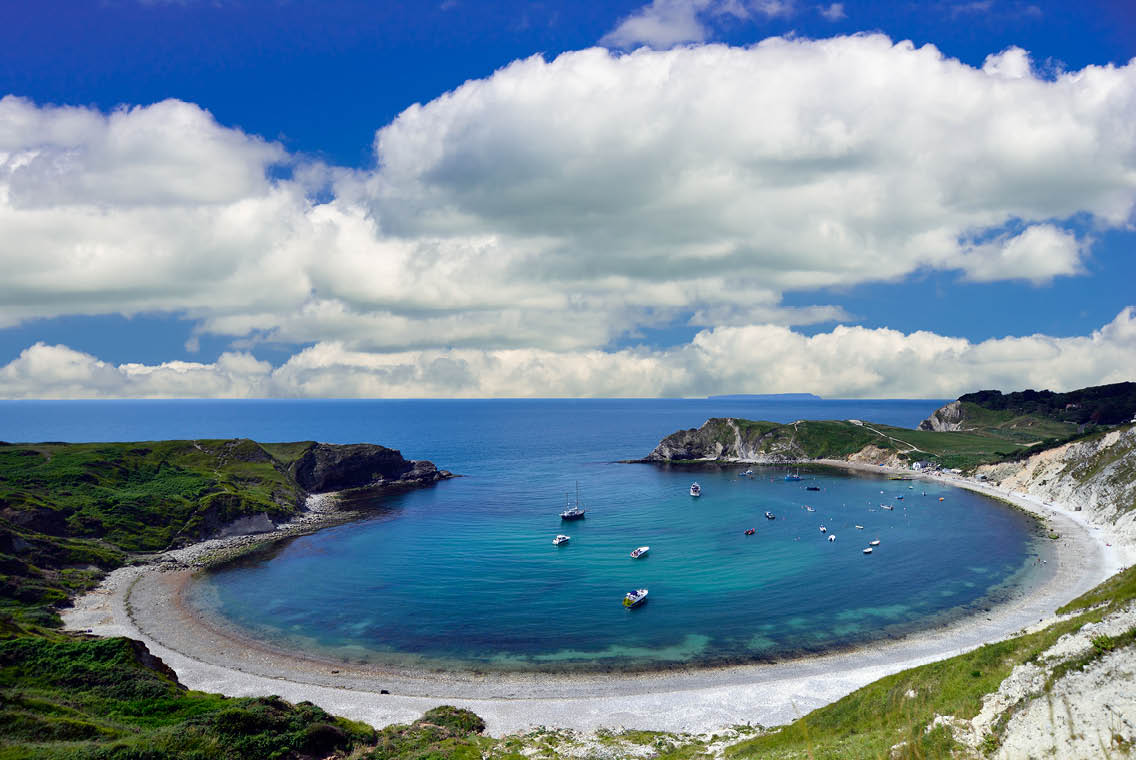
Image result for lulworth cove
A life – this is another instalment of an autobiographical series before I revert to my normal blogs.

Three years, three schools. During the next three years I went to three different schools, as my father went from one army posting to another.  Richmond High School was unusual. It had been built just before the war started, and was a no- expense-spared, state of the art modern building with even the chairs and tables designed ergonomically and in harmony with each-other and the architecture.

Unlike the historic boy’s grammar school nestled down in the town opposite the medieval parish church, the girls’ school was built high above the River Swale on the edge of the town looking across rolling farmland.

Designed by Denis Clarke Hall, a modernist architect, whose father was one of the founders of the National Society for the Prevention of Cruelty to Children – NCPCC – it broke new ground for school design. Building was completed in 1940, the windows arriving miraculously from Switzerland, and the school furniture was designed by the great Finnish designer Alvar Aalto.

From the entrance hall the staff rooms, and library led off to the right, the assembly hall to the left, and straight ahead stretched a long, blue- tiled light-filled corridor for about a hundred yards. On the right, three short blue-tiled corridors or stalks as they were known, branched off from the main corridor at intervals, and at the end, divided into two classrooms. The classrooms were large, high-ceilinged airy rooms with windows stretching along two sides, from desk height to ceiling, and equipped with full- length Venetian blinds – very modern in 1950.

In the cloakroom, we each had our own hooks for hats and coats, and beneath them fitted benches equipped with shoe boxes for our indoor shoes. Similarly, in the gym cloakroom and showers, we had our own hooks for shorts and gym vest, towel and shoe racks. It was a perfect example of architecture actually working for the purpose it was designed, with no fish-hooks in it. It also educated my eye, so I was already in tune with the lines of Scandinavian architecture and furniture design which became the rage during the fifties and sixties.

From here I went to Aldershot Grammar, an old fashioned red brick building, over-used and over-crowded, and I missed the beauty of Yorkshire, the charm of old Richmond, the great achingly-empty spaces of the moors, the thick leafy trees in the dale, and rushing water of the River Swale, ruined abbeys, medieval churches and the Norman castle. Then, moving from the built-up Aldershot garrison town and rather grim grammar school, I started yet again at Swanage Grammar, another red brick building, this time on the edge of a sea-side town.

It had a joyous atmosphere, partly due to the constant creativity nurtured within its walls. The annual arts festival was the focus of our lives for a large chunk of the year, during which we wrote and painted and rehearsed, and the classrooms rang with choirs practising, soloists practising their instruments and voices singing and declaiming poetry and speeches…

The festival was so devised that everyone could find some talents to develop and was required to enter four events… I won the short story competition, and the declamation prize, making my mark with Shakespeare’s ‘This royal throne of kings’.

Today, these three schools no longer exist. The first was merged with the medieval boy’s grammar school and local secondary modern schools, the second seems to have disappeared so thoroughly it’s not even in records, and the third stands empty, merged with other area schools. I find it sad.

Each school I went to belonged to a different examining board, the Oxford, Cambridge and London, so I had to start afresh with a different syllabus at each one, and this was where my reading stood me in good stead, though it didn’t help with my disjointed maths career. My navy school uniform which had lasted me since the first school, just made it to the day I left to go to Malaya, darned and skimpy and about to collapse! In the two schools with brown uniform I had stood out like a sore thumb.

After my London holiday, my next was in France, an adventure I wrote about in my blog called My Tour de France. The last summer holiday before leaving England was at Lulworth Cove. We lived there for a year, and to get to school at Swanage  I had to catch a bus at 7am, change to catch a train at Wareham, arriving in Swanage to catch another bus up to school. The return journey saw me wearily arrive home at six o’ clock.

It was a hard year. I cooked my own breakfast- one egg, one rasher of bacon and a piece of bread-  at six thirty, fed and let out the twelve chickens and two geese we had invested in to feed the whole family at Christmas, and left the sleeping household undisturbed as I went to catch the bus. A finicky eater, I couldn’t stomach the dreadful school lunches, but since my stepmother was sure that I had had a good midday meal, and was also sure that I had eaten it, tea back home was just some toast, followed by cornflakes before I went to bed after finishing my homework. I was always hungry.

I used my penny for the bus up to school and back to the train, to buy a dough-nut for the return train journey like every- one else, until my step-mother discovered this. Always hard-up, she decided that if I could walk and run the last mile to school and back, I didn’t need the penny each way, so I sat in the train and watched everyone else eat their snack, pretending my stomach was not rumbling with hunger.

As soon as I got home, there were the chickens and the geese to round up and feed, and shut up for the night in their respective huts. Homework and then bed at eight completed the day. But a bookworm can’t stop reading so I would read whatever book was obsessing me, kneeling by the bedroom door to use the crack of light from the hall, until my parents went to bed.

This was the year I discovered Thomas Hardy, beginning with Tess of the D’Urbervilles. This was Hardy country, we all read him, and talked about him, and echoes of his words haunted every corner of this beautiful place once known as Summerlands.

The Dorset country-side was enchanting, old grey stone cottages, and historic unchanging villages, nestled in the folds of the valleys on the Isle of Purbeck, where hedges were bent against the prevailing wind from the Channel, fat lowland sheep grazed, and ancient churches dreamed through all the days. History and folk lore and old memories brought each place alive for me.

Every morning on the bus, we drove past the grey stone Elizabethan manor house where Tess spent the first night of her honeymoon with Angel Clare… round the corner in Wool was the ruined abbey where Angel carried her when he was sleep walking…  While Norman Corfe Castle, where the Roundheads in 1645 had twice besieged and finally overcome Lady Mary Bankes and her Royalist garrison by a betrayal from inside – and which was then ruined on Cromwell’s orders – was a historical landmark on our journey.

Perhaps the most poignant moment of history was a moment in our present. At eight o clock on the 28th January 1953, just as the train pulled out of Wareham Station, we looked at the time, and silence fell on the carriage of eight girls of different ages. We sat there in a long tense vigil, and it was a long time before anyone broke the silence, as we all lived and died the last few moments of nineteen- year -old Derek Bentley’s short life as he was hanged in London.

It seemed utterly unbearable that a life should be taken in such a brutal way, that a life should just be obliterated while we sat with bated breath in our little train travelling towards school for another day of life and laughter and learning. (Sixteen- year- old Christopher Craig, who actually shot and killed the policeman in the case, served ten years and on release became a plumber.)

That summer of my fourteenth birthday, my stepmother’s nephew came to spend the long holidays with us. She adored him, and gave him wonderful memories of idyllic weeks with picnics and expeditions every day. This was idyllic for me too, since I was the one taking him for the picnics and long walks and jaunts to the different beaches and bays.

With our satchels filled with egg sandwiches and sometimes ginger pop, we would set off, our favourite place being a remote bay down a steep cliff, called Man o’ War Bay. We walked up the hill past a fascinating Lutyens house, through fields, down crumbling steps to reach the pebbly beach and blue water, clear as crystal, and played and swam until time to come home.

Back home, my stepmother who never made cakes, had a magnificent high tea waiting for us with scrambled eggs or baked beans on toast followed by warm, freshly baked, utterly delicious date cake. The whole holiday felt like something out of Enid Blyton, ‘Four Go Away on Holiday’ sort of thing, without a care in the world.

Most weekends for the rest of the year, I explored remote bays and paths that few walkers could ever use, for I roamed across the shooting ranges of the Gunnery School where my father was second in command. So I was able to reach forbidden and forbidding Arish Mell Gap, and to explore the desolately lovely village of Tyneham – commandeered by the army in 1943 to practise firing on the land surrounding it. In the early fifties, the two hundred villagers had only been gone for ten years, so their homes hadn’t suffered too much damage from gunnery shells or the decay of desertion. Back then it was a particularly beautiful English village, haunted by its past and untouched by the present, where time had stood still.

From there I’d scramble up to the 2,500 -year- old Iron Age fort, where later, the Romans had eventually wrestled it from the local Durotriges tribe and then maintained their own watch, and I’d look down on Worbarrow Bay, also out of bounds. In the other direction, I went for solitary swims right round at the furthest edge of the curve of the circle of Lulworth Cove, the legendary beauty spot on the Jurassic Coast. Once I swam in mist so dense I couldn’t see further than a few yards, just deep green water surrounding me and feeling long slippery strands of sea-weed waving between my legs…

When it rained, I would kneel on the sheep skin rug on the floor in my bedroom and lose myself in my latest library book. Though none of my school friends lived nearby, I was never lonely, as I had a rich interior life – books, art, music, the history of ballet, ancient Egypt, history, poetry – all these interests meant I was never bored, but always dreaming, always in the midst of some absorbing passion. So I was overcome by grief at the end of The Mill on the Floss, mesmerised by autocratic Mr Rochester in Jane Eyre, irritated by Emma, loathed Becky Sharp,  hated Jack London’s Sea Wolf, loved Prince Andrei and Natasha, mystified by Virginia Wolff’s allusive writing and learned by heart ‘Annabel Lee’, in her kingdom by the sea.

I spent a lot of time painting. My father would bring me long strips of cardboard from the packings of the shells they fired every day on the ranges. These strips were about eighteen inches wide and three feet long, and on them I depicted in the vivid poster paints always given to me for Christmas – nursey rhyme characters like Wee Willie Winkie, Little Boy Blue, Miss Moffat and all the others. These pictures adorned not just my brother’s bedroom, but the toddler’s bedrooms of many of my stepmother’s friends.

Years later one mother told me she still had these pictures. I was known as ‘good with children’, so often these same friends would borrow me to amuse their toddlers in those days before play groups and kindergartens. One mother even borrowed me for a fortnight to look after her toddler while she was recovering from the birth of her second child.

While we lived here by the sea, with the help of the army padre I was confirmed in Salisbury Cathedral, and shortly after, the King suddenly died on 6th February 1952. We still, in those days, stood when he had given his speech after Christmas dinner and the National Anthem was played. The radio – no TV for us then – only played chamber music, as it was called – for a week, the newspapers were framed in black, and we all felt we were part of a huge national event.

The new Queen was young and beautiful… and now after the passage of time, and the longest reign in English history, it will seem perhaps even more apocalyptic when her spoiled elderly heir inherits that ‘royal throne of kings’.

The following year sweets came ‘off ration’ in the week before we sailed for Malaya. For the first time in my life sweet shops were full of sweets/candy instead of running out of stocks in the first few hours, and it was possible to buy as much chocolate we wanted, without waiting in a long queue and having to count out a measure of measly sweet coupons!

To be continued

Food for threadbare gourmets

 I’ve always loved date cake since that year by the sea… and this recipe brings back those days. Soak 250 gms of dates in a cup and a half of boiling water and a teasp of bicarbonate of soda for about 30 minutes until the dates are soft. Beat 125 gms of softened butter, three quarters or more of a cup of brown sugar, and a teasp of vanilla. When pale and creamy add two eggs one at a time, and then stir in the date mixture and two cups of SR flour.

Pour into a greased tin, the bottom lined with greaseproof paper (I use a loaf tin) and a bake in an oven at 180 degrees C for about forty minutes, or until a blade comes out clean. I often sprinkle the top with extra white sugar, just because if I’m going to indulge in sugar, it might as well be really sweet!

Food for thought

 Don’t take anything personally. Nothing others do is because of you. What others say and do is a projection of their own reality, their own dream. When you are immune to the opinions and actions of others, you won’t be the victim of needless suffering.

The Second Agreement from The Four Agreements by Miguel Ruiz


26 Comments

Filed under books, cookery/recipes, family, history, life/style, literature, Thoughts on writing and life, uncategorised, Uncategorized, world war two

Over the top

Image result for images battle of somme

A life – this is another instalment of an autobiographical series before I revert to my normal blogs.

My step-grandfather had been a very successful business man, and a member of the Liberal Council, who in the 1945 general election, just failed to get elected to Parliament as a Liberal. “I nearly had them,” he would regretfully say to me, about the tough Geordies who he wooed in his homeland of Northumberland.

Shortly after the election, while on a lecture tour in the US, the stock market crashed, and he lost all his money. The small amount he managed to salvage when he returned, he invested in South African gold which gave him an opportunity to carry on an enjoyable, long-running and acrimonious correspondence on the immorality of apartheid with his agent in South Africa.

He had suffered from shell shock for many years after the Great War of 1914-18, and from the results of his dreadful injuries. He and his wife were both bitter about it, she because of what she said she had to put up with, he because he felt he got no sympathy or support. As a young officer in the Northumberland regiment which was the first to go over the top and step out towards the German lines on the morning of the Somme battle, he was an irresistible target in his breeches and officer’s Sam Browne belt and holster, and was shot in the face. There were 60,000 casualties on that first day of battle, and he was one of them. Sixty per cent of officers died that day, a much higher number than their men.

Recovered, a year later in the muddy martyrdom that was  Passchendaele, he was buried for two days in a bomb crater, and when dug out, grabbed a helmet filled with liquid, gulping it down to quench his thirst. It was filled with a noxious mix of battlefield poisons which damaged his insides, and he suffered the effects of this for the rest of his life.

He was famous in the family for being bloody-minded, and his injuries may have had something to do with this. One story about him was how after an argument at lunch with a few cronies, over the meaning of Magna Carta, he stormed off to the British Museum to check on the wording. On arrival, after finding his way through the labyrinths of the Museum, he discovered it was not on display. He wrote a biting letter to the Director, who replied saying the matter had been rectified.

Uncle Bill once again made a sortie to the Museum, and finding Magna Carta on a lectern, wrote another critical letter to the Director. The next time, when he visited to check on the situation, matters were only slightly improved. There was a translation now available at the side of the famous document, but Uncle Bill was still not satisfied. On his last visit, everything was finally arranged to his satisfaction, with the lectern lowered, a translation out, and a chair provided on which to sit and read the manuscript. In these days of tight security, it’s probably back in a safe.

In his retirement he went to every rugby match of note at Twickenham, and attended every cricket test at Lords or the Oval. Afterwards, often accompanied by his son and grandsons, he would call in on his wife for a generous high tea of toasted, buttered tea-cakes and rich fruit-cake, and everyone would be regaled with the stupidities and missed opportunities of the occasion, rugby or cricket.

He would also have taken the number of any bus which had been speeding, was late, had crashed the lights or had a conductor who was not up to speed. The family suspected that the local police station probably had a file especially for his complaints.

But it was still politics which would cause his ire to rise more quickly than any other subject. As a Liberal he was often at odds with the rest of the family who were Conservative to a man, so there were plenty of bones to pick over. I could never follow a word of these heated debates.

They also caused his wife to say after he had left: “now you know what he’s like… ” as if anyone was in any doubt. He and my father tolerated each other – my father once told me he was shallow, while Uncle Bill wrote to me when my father died saying he was his own worst enemy. This hurt me, whatever the truth of it.

When I was a late teenager and in my early twenties we still rendezvoused in London several times a year… we’d go to the Tate or the National Gallery, and then he’d take me for lunch to the famous Simpson’s- in -the- Strand where we feasted. Huge haunches of roast beef and Yorkshire pudding or roast lamb were wheeled up to the table on silver domed trolleys and carved for us in the dining room which was unchanged since 1828. This was followed by delectable treacle pudding…

(P.G.Wodehouse loved Simpson’s too. A hundred years ago he wrote:’ Here, if he wishes, the Briton may … stupefy himself with food. The God of Fatted Plenty has the place under his protection. Its keynote is solid comfort. It is a pleasant, soothing, hearty place – a restful temple of food. No strident orchestra forces the diner to bolt beef in ragtime… There he sits, alone with his food, while white-robed priests, wheeling their smoking trucks, move to and fro, ever ready with fresh supplies.’)

Another favourite foodie place we visited was Charbonnel et Walker in Bond Street, chocolate shop extraordinaire since 1875, and favourite rendezvous for our family of chocoholics. In those days the truffles were numbered, and my memory is that my step-grandmother had a passion for number thirty-eight. I too loved number thirty-eight, and was mightily put out when my Christmas present was crystallised pineapple lumps instead of the truffles. We were in good company you could say, as other chocoholics who devoured these goodies included not just the Royal Family, but Noel Coward, Lauren Bacall, Sir John Gielgud and Princess Diana to name a few.

Every Christmas Uncle Bill gave the family a large, wooden box of Fortnum and Mason crystallised fruits laid out in rows on lacy paper doilies. Nothing since has tasted as delicious as those goodies. The exception to the crystallised fruits was when we lived in Malaya, when he instructed Harrods to send ten pounds of hand-made chocolates especially packed for the tropics in a very large tin, and lined with tin foil to protect them from ants, cockroaches and heat. Those were the days …

The best gift he ever gave us was for Christmas just before we went to Malaya. As well as both her parents, my stepmother had invited her brother and his wife, and her two nephews who she loved almost as much as her only son. Uncle Bill arrived first, full of enthusiasm and bringing with him two new inventions.

The first was a Black and Decker hedge cutter and he couldn’t wait to use it on our miles of privet hedge surrounding the front garden, the back garden, the vegetable garden and the grass tennis court. Alas, before long the air was blue with curses and smoke… he had chopped through the long electric cord dangling from a socket inside the kitchen window and that was the end of the hedge cutting project.

The other item he brought with him changed my life. It was a box of detergent called Tide which had just come on the market in England. It was the first heavy-duty synthetic detergent and had been invented in America, where it had been available since 1946.

Since it was my job to do the washing- up, and there were eleven of us for every meal that Christmas, this was a gift beyond price. I had always been squeamish. But now, instead of fishing around in revolting greasy water with a feeble mop-head on a stick, here was a magic white powder which dissolved the horrid mess and washed away all the nauseating aftermath of gravy, grub and grease! Hallelujah! Joy to the world, life had really changed for the exceedingly better.

And it was to change even more when we packed up our lives again six weeks later, and embarked on the adventure of Malaya during the Emergency – called the Emergency so that rubber planters could claim on insurance for their losses to the communist bandits, whereas insurers are absolved from paying out in a war!

More to come, as we used to write at the bottom of each page in the old days of print newspapers

Food for threadbare gourmets

Apples are back! it’s that time of year when the shops and way-wide stalls are loaded with freshly harvested apples-my favourite fruit. I love apple cakes and apple puddings, and this one is a goodie.

Peel a pound of Bramleys or Grannie Smiths apples and cook in a saucepan with 3 ounces of brown sugar and approximately 2 tablespoons of water. Simmer gently until soft, and then arrange this mix in the bottom of a greased baking dish.

In a mixing bowl, cream four ounces of soft butter and four ounces of caster sugar until pale and fluffy and then beat in two large eggs a little at a time. When all the egg is in, carefully and lightly fold in four ounces of ground almonds. Spread this mixture over the apples, and even out the surface with the back of a tablespoon.  Then bake on a middling shelf in the oven for exactly 1 hour.

This delicious pudding is good eaten warm or cold –  with cream. Once cooled, it will keep in the fridge for 3 or 4 days


Food for Thought

An oldie, but a goodie –An old Cherokee is teaching his grandson about life. “A fight is going on inside me,” he said to the boy.

“It is a terrible fight and it is between two wolves. One is evil – he is anger, envy, sorrow, regret, greed, arrogance, self-pity, guilt, resentment, inferiority, lies, false pride, superiority, and ego.” He continued, “The other is good – he is joy, peace, love, hope, serenity, humility, kindness, benevolence, empathy, generosity, truth, compassion, and faith. The same fight is going on inside you – and inside every other person, too.”

The grandson thought about it for a minute and then asked his grandfather, “Which wolf will win?”

The old Cherokee simply replied, “The one you feed.”

26 Comments

Filed under army, battle of somme, cookery/recipes, culture, family, history, life/style, Thoughts on writing and life, uncategorised, Uncategorized, world war one

A beautiful woman

Image result for affluent tree lined london streets

A life –  This is the thirteenth instalment of an autobiographical series before I revert to my normal blogs

My step grandparents accepted me for better or worse, but not as a grandchild, so I called one Uncle Bill, which wasn’t his real name, the other Nana. She was a tall, slim, elegant woman with a cloud of white hair piled up on her head. When she went out, she wore little, high-crowned, fashionable forties hats with a black veil tipped over her fine brown eyes.

She wore expensive and beautifully- cut black or grey suits in wool or gaberdine, with slim straight skirts, and flimsy, white blouses, in silk, finest lawn or crepe, which buttoned to the neck or tied in a bow. She always wore high heeled, black suede shoes by the Swiss makers Bally, the style called Toby, and she never wore anything else, summer or winter.

She lived happily alone in her flat in a wide quiet street lined with large Victorian houses, in an affluent leafy suburb, which was as unchanging then as she was. I loved her walnut sideboard with elegant mirror hanging over it, and the Imari bowl on a stand on the piano which rang when your finger tapped it. On the mantelpiece she had a pair of fine bronze statues, a pair of large art nouveau urns with tulips on them, and over it, another large mirror.

We sat in deep grey and black velvet sofas and chairs round the fire. She always sat in the same chair, or rather, perched in it, at an angle, with her elegant long legs crossed, and her back unbending. Even when alone, she sat in this way reading The Telegraph, living out her vision of herself as a beautiful lady.

On the refectory dining table in the window, set with high backed comfortable chairs, she always had a vase of beech leaves, verdant green in spring, somewhat darker and leathery in summer, and in autumn, sprays of brown leaves. She bought them from the same florist, year after year. On a trolley by the kitchen door a set of cups and saucers, sugar bowl and milk jug with a net cover weighted with beads over it, sat ready for a cup of tea to be made. She herself lived on tea and toast fingers. She said they helped her keep her figure, and they certainly did, until old age, when her system collapsed with shingles.

She had no friends, except perhaps, the two nuns who called once a year, collecting clothes for the poor. These callers she welcomed in, and laid her finest china and crispest napkins, and plied them with afternoon tea. They must have known that this visit was one of their most valuable acts of charity, for they never failed to make time for this occasion.

She told me once, that when she was a young wife, she saw a tramp outside, so she invited him in, and laid a tray with her best china and linen, and gave him a slap-up meal in grand style. She loved style, and she was obsessed with privacy. She could open up to the strangers at her gate, but to no-one else.

There were pictures of herself and her separated husband in the spare bedroom, where I slept when I stayed. She was a beautiful young woman with wide, large eyes, a mass of dark hair, and a whimsical smile playing round a firm, well-shaped mouth and strong chin. Her husband was in his World War 1 officer’s uniform, a fine-featured, handsome, young man quite unlike the rather gross, heavy-jowled old man I knew.

The only remnant of his former beauty was his fine, well-shaped nose. Neither of their children had inherited these good looks, but neither had they inherited their parent’s personalities either. The son was as courteous and good-humoured as his father was irascible and unpredictable, and the daughter was as gay and energetic as her mother was withdrawn and languid.

I lived with her for six months when I attended the Regent Street Polytechnic after I returned from Malaya. She gave me her favourite book to read, ‘Testament of Youth’ by Vera Brittain. In the mid- fifties Vera Brittain hadn’t become fashionable again, but I read it, and was ravaged by it, in spite of having to overcome my resistance to her pompousness and priggishness at the beginning.

I understood my step-grandmother much better after reading this. She told me she had watched her fiancee march gallantly off to war in 1914, bands playing, banners waving, flowers flying through the air. The tiny remnant which survived returned to the little north country town, to be met by a shattered community. She never really recovered from the loss of her fiancee, but settled for second best, rather than be left on the shelf.

So they both suffered, but her vanity supported her through the long, lonely years of her life. She told me about the doctor who told his sister he had seen the girl he was going to marry, and his chagrin when he saw her pushing her baby’s pram, the clothes she had worn then, and on other occasions, and which outfits won her flowery compliments.

She described the floating thirties chiffon dress she wore to the garden party at Shrewsbury School when she met the Prince of Wales, the complimentary things that sales girls said to her out shopping, or having tea at Fullers, telling her that she and her daughter were the nicest mother and daughter who came regularly… and she told me about the second war, the war which came to civilians, when they hid under the stairs night after night as the planes came over, and stepping over the fire hoses in Leicester Square, going to see ” Gone With The Wind” after a heavy night’s bombing.

She told me these things, not because she was close to me, but because I was interested, and I was someone to talk to. I don’t think she ever felt any affection for me, but she was never unkind to me. Our relationship was one of unchanging good manners and consideration. I was polite and grateful, she was kind and courteous.

As the years went by, the drawers in the walnut sideboard stuck, the handles became loose, and a hinge fell off the cupboard door. The art nouveau vases on the mantelpiece developed a jigsaw of tiny cracks, while the velvet chairs sagged, and the springs went, but she went on perching upright in the corner on the springs, nibbling her toast fingers and sipping her tea. Until one day, it all caught up with her. She was very ill and never recovered.

Now she began to disintegrate. She needed constant nursing, so they found a good nursing home. The respite only lasted a month or so, and then she was expelled. This pattern continued for the rest of her life. No nursing home could handle her. So she came home. Now, after a life of food deprivation she had become a foodaholic and was forever raiding the kitchen wherever she was.

After starving herself all her life, now she couldn’t stop eating. She became a hugely fat old lady. Everything in the kitchen at home was locked up, but she would even stand on a stool dangerously balanced on a chair, to reach cold mashed potato hidden at the top of a high Victorian cupboard.

The last time I saw her was on my wedding day. Wearing her fluffy pink dressing gown, she called me into her bedroom where she had permanently sequestered herself, and produced, from heaven knows where, a box with a beautiful little coffee set in it. It was finest white porcelain, with a deep blue and gold border, cups, saucers, sugar bowl, jug and coffee pot, unchipped and perfect. She told me it had been given to her on her wedding day. I never used it, but I carried it around the world for years.

A few years later in Hongkong, I had a brief letter from my stepmother – the only one she ever wrote to me. It consisted of two sentences, one which said she hoped life was still treating me royally – had it ever really treated me so, I wondered? And the next sentence told me her mother had died.


Food for threadbare gourmets

We had gone to a barbecue supper with some neighbours, but since it turned out that they rarely ate red meat like us, there was a lot of barbecued steak left over after we’d eaten. Rather than condemn themselves to eat it, they pressed it on us, so nothing daunted, my love suggested they come the next night to eat it with us! What to do with cooked steak? I found a recipe which sounded just the job- beef stroganoff.

I made it as simple as possible – whizzed the chopped onion in the micro wave, gently cooked lots of sliced mushrooms with garlic, added a good glug of red wine and let it boil-up, then stirred in a heaped table spoon of flour. I’d made stock by boiling all the mushroom stalks, and I now stirred this into the mushroom mix, added the onion, stirred them altogether, and added a dash of Dijon mustard and a stock cube.

When we were ready to serve, I stirred in the steak, chopped into thin bite-size pieces, plus half a cup of cream –( I should have used sour cream for a stroganoff, but in deference to a toddler, I went for something less sharp), plenty of black pepper, and served it with rice and salad, and sliced courgettes cooked in olive oil and garlic. It was as good as re-cooked steak could get!!!

Food for thought

“I have one major rule: Everybody is right. More specifically, everybody — including me — has some important pieces of truth, and all of those pieces need to be honoured, cherished, and included in a more gracious, spacious, and compassionate embrace.”
― Ken Wilber – philosopher, writer, teacher

24 Comments

Filed under consciousness, cookery/recipes, environment, family, fashion, life/style, The Sound of Water, Thoughts on writing and life, uncategorised, Uncategorized, world war one, world war two

Glorious London

Image result for perronneau a girl with a kitten

A life –  This is the eleventh instalment of an autobiographical series before I revert to my normal blogs

When I was eleven I went to spend several weeks of the summer holidays with my step-grandmother. I travelled down from Yorkshire on the Flying Scotsman, ate my egg sandwiches for lunch, taking them out of their grease-proof paper wrapping and brown paper bag, and felt thirsty with no drink.

I sat and worried the whole journey about how I was going to get my suitcase down from the luggage rack when we arrived at King’s Cross. There, the thundering, hissing steam engines and the noise of all the milling crowds of people were overwhelming, and then it was out into the heat and traffic. London seemed like hell at first, but I grew to love it.

I loved waking in the morning and seeing the shafts of sunlight stabbing through the heavy, floor -length, apple- green velvet curtains. Outside, veiling the view of the street, was the thick screen of plane trees, pollarded every year, but now in high summer, green and leafy. I listened to the clop of the horse’s hooves as the milk man jingled down the road at 6.30 in the morning, and felt a great sense of well- being.

As long as I was polite and well-mannered and helped with the chores, no-one ever got cross here, and it was so easy to be good. My stepmother’s parents were in this sense, perfect grandparents – uncritical.

Every morning at about eleven, my step-grandfather arrived to take me for an expedition. They were glorious. London in 1949 was a still a blackened, blitzed city… black from the coal fires of the industrial revolution, blitzed from the bombs of the Luftwaffe… so among the blackened sooty edifices of the city, there were still deep bomb craters filled with rubble and pink rose bay willow growing on these derelict monuments to World War Two – Wren’s precious, now ruined churches,  elegant, destroyed townhouses, fashionable shops, and humble homes…

Uncle Bill walked me all over this London, telling me the names of the streets, and the history of all the places, and the names and stories of the heroes and soldiers, statesmen and artists commemorated in all the statues. We strode down Constitution Hill, past the Palace, No I, London, also known as Apsley House – the Iron Duke’s London home- through the parks, Admiralty Arch, Whitehall, where King Charles I was executed, Westminster, along the Embankment, into the City.

Other days he took me to the Abbey, the Tower, Kew Gardens, Hampton Court, and on the river bus to Greenwich, or the other way to Kew. He opened my eyes to the layers of history and beauty of this ancient city, centuries of life and death, trade and plague, culture and violence  …we walked up streets with fascinating medieval names like Threadneedle Street, home of the Bank of England, where a detachment of Guards, he told me, have marched to guard it nearly every day since the Gordon Riots in 1780; we discovered the corner of Cock Lane, once known as Pie Corner, where the Great Fire of London ended, having started in Pudding Lane… we marvelled at St Paul’s, which Sir Christopher Wren had  built to replace the old Gothic Cathedral destroyed by the Great Fire…

We meandered through Georgian London with its elegant Nash facades and lingered outside Rules famous restaurant opened by Thomas Rule in 1798, round the corner from Covent Garden, and favourite meeting place for artistic life from Dickens and Thackeray, to Laurence Olivier and Clark Gable;  Edwardian London we  acknowledged at Admiralty Arch, built by Edward the Seventh to honour his mother, Queen Victoria… Victorian London, and the statue of the Queen outside Buckingham Palace… Elizabethan London, where Good Queen Bess had ridden as a girl beneath the ancient oaks in Greenwich Park, and where Charles II’s wonderful Hospital for Seamen, Wren’s glorious masterpiece, still stands as a monument to public charity and architectural beauty. When we saw it, it had become the Naval College where we admired the famous Painted Hall and I gazed with ghoulish interest at the brown blood- stains on the cotton vest worn by Nelson when he died on the decks of the Victory.

Norman London meant Westminster Hall, William the Conqueror’s masterpiece, with its unique 240 feet hammer – beam ceiling, as well as his menacing Tower of London, where I listened to the story of the death of the Little Princes in the White Tower several hundred years later, as told by a Beefeater guide, and recalled the cruel executions of sad seventeen -year- old Lady Jane Grey, and tragic Anne Boleyn before her, as well as Sir Walter Raleigh.

To the Abbey, all the poets in their corner, and the tomb of the Unknown Warrior, memorial to the dead of what my other grandmother called The Great War…and where it is said the ghost of John Bradshaw who signed Charles 1’s death warrant, is sometimes seen – then across the way, to magnificent Boadicea in her chariot by the river, Queen of the Iceni before the Romans settled the city as Londinium… many believe that she’s buried at Kings Cross under Platform 10!   I had learned about this legendary woman from my history teacher when I was eight, and she fascinated me…

Writer Anna Quindlen wrote: ‘London… is divided into chapters, the chapters into scenes, the scenes into sentences; it opens to you like a series of rooms, door, passage, door. Mayfair to Piccadilly to Soho to the Strand.’ And that was how it felt. At Trafalgar Square I was moved by beautiful Nurse Edith Cavell’s memorial from the First World War,  while in Piccadilly, Uncle Bill told me of stepping over fire hoses from the previous night’s bombing in World War Two, then in Downing Street he pointed out the window from which Chamberlain had waved to the crowds after bringing back ‘peace in our time’ from Munich.

And the best days of all, were when he took me to the National Gallery and the Tate. I had already read, re-read and read again, umpteen times, a book belonging to my parents called ‘The Outline of Art’ by Sir William Orpen. It was probably printed during the war because the only colour illustration was a picture of his own, a particularly hideous painting of a butcher’s shop in all its bloody detail. For the rest, every glorious picture was in black and white, so I imagined what the colours were. It was a dreadful disappointment when I first saw Rossetti’s ‘The Beloved’ in colour, and discovered the Beloved was wearing emerald green, instead of the madonna blue I had visualised her in.

And so it was too with Christina Rossetti in ‘The Annunciation’. The pictures and the painters I learned to love in this black and grey world, have remained my favourites ever since, which is a chastening thought that having formed my taste at eleven it has never developed since.

But I still love the dignity and gentleness of Fra Angelica, and the sheer beauty of Fra Filippo Lippi and Botticelli. I still dislike Mona Lisa and love Beatrice d’Este. Da Vinci’s ‘Virgin on The Rocks ‘ still takes my breathe away, and his angels and cartoons ravished me then and now. I loved, and still love, Holbein and Van Eyck, and the wonderful line and delicacy of Durer. Vermeer and Pieter de Hooch still feed some pool of serenity deep inside me. Rembrandt, alas, didn’t re-produce well in black and white, but I took Orpen’s word for him, and he was right.

And, oh, the glory of Gainsborough, from Mr and Mrs Robert Andrews sitting beneath the tree in their ripe cornfield, to the society beauties and ravishing children he painted later. Constable didn’t show up very well in black and white either, so I came to love him later.

The Pre-Raphaelites are all the rage now, but I loved them back in ’49, especially Rossetti, Burne-Jones, and Lord Leighton, and also Picasso in his blue period. And Hoppner and Romney. Sir Joshua Reynolds ‘Samuel’, I loved because my grandmother had told me his story… “Speak, Lord, for thy servant heareth”… Samuel Palmer didn’t seem to be in ‘The Outline of Art’ – perhaps he didn’t reproduce well in black and white either. But I fell in love with him on our return from Malaya.

At the first opportunity I had hot-footed it down to the Tate, passing through the Turners, which never appealed to me (p’raps the black and white had killed him for me!) and found in a corner by the door, an exquisite little painting of people coming from church, and a golden moon shining down on them. Samuel Palmer. That picture, and he, caught my heart, and I still have the postcard I bought then, in its battered little gold  frame, and I still love his golden cornfields and fat sheep and the mystical light of his other paintings

So I was ripe for my first visit to the National Gallery. At the end of a long exciting afternoon, Uncle Bill asked which picture had been my favourite. I panicked. I was still mortified from the mockery of the reading I had done before I met my parents – and I didn’t know him well enough, or trust him enough not to laugh at me for being religious. So I lied, and said Perroneau’s ‘Girl with a Kitten’, and van Gogh’s ‘ Chair ‘. And so I was punished for my lie, because he bought me copies of them both, instead of my favourite picture, da Vinci’s sublime ‘Virgin on the Rocks’.

The picture is, of course, Perroneau’s  ‘A girl with a kitten’

To be continued… The Edwardians

Food for threadbare gourmets

Courgettes/zucchini are one of my favourite vegetables, sliced in long thin ribbons or sliced across in penny shaped pieces, and cooked I olive oil and garlic, they are delectable…  grated and stirred into a risotto, with lemon zest added, they’re delicious; courgette and feta fritters and courgette slice, using either chopped bacon or a tin of salmon, make a lovely lunch, and I use them in ratatouille, instead of aubergines – which are anathema to me  (though  I do buy them just to enjoy their purple beauty in a bowl of fruit and vegetables).This courgette loaf is a fragrant way to enjoy courgettes with a cup of coffee in the morning, or with a cup of tea in the afternoon.

In a bowl, beat three medium sized courgettes, 150 gm of sugar, one egg andn125ml of light olive oil. In a separate bowl, sift together 200 gm of SR flour, half a teasp of salt, quarter teasp of baking soda, a teasp of cinnamon and two teasp lemon zest. Stir the flour mixture into the courgette mixture just until blended. Pour the batter into a greased loaf tin and bake for forty- five minutes, at 160C or gas mark 3. When cool I like a layer of lemon icing spread over it.

Food for thought

We manufacture everything ( in our manufacturing cities) except men; we blanch cotton, and strengthen steel, and refine sugar, and shape pottery; but to brighten, to strengthen, to refine, or to form a single living spirit, never enters into our estimate of advantages.

John Ruskin. Victorian write, art critic, philosopher

32 Comments

Filed under beauty, cookery/recipes, culture, history, life/style, Thoughts on writing and life, uncategorised, Uncategorized

Nuns, nice habits and strange foibles

Valerie10.jpg

A life –  This is the ninth instalment of an autobiographical series before I revert to my normal blogs

I never had any trouble remembering the date of my baby brother’s birth, because when we arrived back in England from Belsen, we were sent to school at a convent in Yorkshire. It was with the sisters of the Assumption of the Virgin Mary, a Belgian teaching order. My brother’s birthday was the Feast of Our Lady of Lourdes, one of many feast days when we were sent home, presumably so the nuns could pay due reverence to the day, unhampered by their fee- paying pupils, and causing my parents to grumble that they spent all this money in order for us to stay home.

Sometimes, as at Corpus Christi, we were required to attend in order to parade and go to Mass, and draw holy pictures. This was a time of severe mortification for me, because not being Catholic, our parents refused to buy us white dresses and veils to wear on feast days.

On the other hand, thanks to the books I had read with my grandmother, I was bigotedly anti-Catholic, and had no qualms about being different. The nuns themselves were mostly gentle and sophisticated women, many of them French or Belgian, others English. My form teacher, who was also the maths teacher, was the most avidly religious person at the convent and not a nun at all. Rather, she was an Irish Catholic, and, as I discovered later in New Zealand, she embraced a very different brand of Catholicism. ‘

Not to put too fine a point on it, she rammed religion and her devotion down our throats, exhorting us amongst other things, to bring old clothes to her to dispense to the needy. As she gathered them in from everyone except me, she would regularly intone, ” Ah, gurrells, it’s boi moi gude deeds to the puir that I hope to go to heaven.” She would interrupt long division to make us all stand up and say The Angelus, and we would then pray for the parents of all the unfortunate girls who had one Protestant parent. Since both my parents were Protestant, this was a prayer I obstinately refused to join in, as I had no regrets about their situation.

One day, her propaganda about “puir St Thomas Moore”, wicked Protestants and suffering Catholics enraged me so much, that having  just finished one of my father’s books, a history of the Borgia family, I had enough ammunition, I felt, with the Inquisition and the scandal of the Avignon Popes, to take her on. I never got beyond the Borgia Pope and a quick mention of the Inquisition, before she clapped her hands over her ears, and drowned me out by shouting: “What a pack of Protestant lies.” No-one liked me very much after that, and I would always be left to last when they were picking teams for netball and rounders.

One person who did like me, perhaps a little too much, was Mother Michael, a rather coarse -looking Englishwoman compared with the refined foreign nuns. She was not a teacher so much as our house- mother, and she was obsessed with long hair. My long, almost black, thick plaits were meat and drink to her. Every lunch hour I was dragged off to the big, sunny cloakroom-cum ante-room, and had my plaits ceremoniously undone, and brushed out.

The brushing went on all through play-time, and I never got to play with anyone. As the time for the bell drew near, she’d plait the blessed things up again, refusing to let me do them. She dragged the hair round my face quite differently to the way I scraped my hair back myself, and I’d get home every day, looking quite unlike the school girl who had set out in the morning.

Every day my stepmother would ask what was going on, and when I told her about the brushing and the plaiting, she’d say “It’s got to stop”. But I didn’t know how to stop it, so it went on until Mother Michael fell in love with another girl with long plaits.

The nuns wore elegant, plum- red gaberdine habits, with a long swinging pleated skirt, and a thick, beautiful cord with long tassels round their waist. Their rosaries also hung from this fat cord, and they had long, soft white wool veils which swung in the wind when they borrowed our roller skates and took a turn round the rink in the evenings when everyone was inside, doing their homework. The garden beside the skating rink plunged down towards Our Lady’s grotto, and then to the River Tees.

I would gaze out of the classroom window in our annexe called The Hermitage, in winter, and see the black, lacy boughs of the empty trees, the black running water of the river, white snow, and sometimes a flame- coloured squirrel silhouetted in the trees against the pale winter sky. The main convent building was grim, grey, Victorian Gothic, with long, shiny, lino-floored corridors where feet and voices echoed. It smelt of incense and wax candles, lino polish, and nearer the kitchens, carbolic soda and grease. In alcoves at regular intervals along the echoing corridors, painted statues of saints draped with rosaries presided. I glared at them like a latter-day Oliver Cromwell as our crocodile straggled to chapel for prayers every day after lunch.

I always enjoyed Retreat, three or four days of silence when we spent most of our time drawing and painting holy pictures, instead of wrestling with fractions, and going to chapel for mass, as well as the regular after- lunch prayers, and then Benediction. I hated the priest who came to the convent for the occasion, and whom all the nuns fluttered around and flattered and fawned upon. To the cynical ten-year-old looking coldly on, he looked like a very boring, not very bright man, who relished in an unspiritual fashion, the entirely undeserved attention he received.

I was happy to go to chapel as often as we did during Retreat, as I had figured out that God was everywhere so it didn’t matter where you were beating his ear. I had no idea why we were doing all this, but then, a lot of things puzzled me… so I loved the reverent silence of the whole day, including the silent meals with severe, beautiful Mother John standing at her lectern, reading from the lives of saints. During these meals we ate Assumption Tart, known to us all as Sumpies.

The story of the three fashionable Belgian Victorian women who decided to found the Order was read aloud as we ate the tart. None of them knew how to cook, clean, or sew, and so in the first week, the lady nun assigned to cooking duties threw together some ingredients in a panic and produced the hard, yellow crust of almost inedible pastry on which jam was smeared and which we still ate. We all welcomed Sumpies on the menu, as at least the jam was sweet, the only ingredient which had any taste. The convent food was still obviously flung together by nuns who could not cook.

During Retreat, our class was visited by both Reverend Mother, and Mother Superior, causing an outbreak of curtsying and crossing ourselves. Since no-one ever explained anything to children in those days, I couldn’t work out why a young Reverend Mother seemed more important than a Mother Superior. Reverend Mother was Polish, about twenty-eight, very young to have reached such rank, and had an indefinable air of holiness about her. She also had an amazing complexion, pale skin and brilliant red cheeks. She received total devotion from everyone, and she fascinated me. Sometimes she wasn’t well enough to come to our weekly audience with her, so Mother Adelaide, Mother Superior, came instead.

My father adored Mother Adelaide. She was just the sort of woman he loved, witty and wise, French, sophisticated, clever and rather beautiful. Long after, when I heard that Reverend Mother had died the following year of TB, I realised that Mother Adelaide had left her duties as superior of the order, to come over from Belgium to keep things going with as little disturbance to everyone, including the beloved young nun.

After a while, it was decided that my sister would do better at school on her own. So I agreed to ” sit the scholarship” in order to go to the local grammar school. My stepmother was then summoned for an interview with the county education authorities. She told me that they informed her that my maths was so abysmal there was no way I could qualify for higher education. But my English and general knowledge were so far ahead of my age, that there was no way they could not give me a scholarship. Nothing much has changed since then, my maths are still abysmal.

To be continued

Food for threadbare gourmets

I had some wonderful coloured -peppers, red, yellow and orange, and instead of cooking them in my usual way, I tried a Jamie Oliver recipe – with adaptations! I chopped the three peppers and added them to a chopped onion, plenty of garlic and olive oil to sweat them until cooked. When soft I added a good glug of balsamic vinegar and boiled it all together, and then salt and pepper to taste.

This is where Jamie Oliver comes in. He recommended tossing in a generous handful of parmesan cheese and some table spoons of mascapone or cream cheese.  Stir it all together until everything is melted and amalgamated. He served it with pasta and I served it with steak and mushrooms, and it was delicious.. It may have been better with pasta but I won’t be using the cream cheese again.

Food for thought

If you truly get in touch with a piece of carrot, you get in touch with the soil, the rain, the sunshine. You get in touch with Mother Earth and eating in such a way, you feel in touch with true life, your roots, and that is meditation. If we chew every morsel of our food in that way we become grateful and when you are grateful, you are happy.
Thich Nhat Hanh. Vietnamese Buddhist teacher


19 Comments

Filed under consciousness, cookery/recipes, great days, happiness, humour, life/style, Thoughts on writing and life, uncategorised, Uncategorized

Ducal splendour and daily deprivation

On my tenth birthday -wearing my pearlsInline image 1

A life – This is the eighth instalment of an autobiographical series before I revert to my normal blogs)

There was a legend that there were no birds in Belsen, that they had fled this dreadful place. That I don’t remember, but I do remember the strange energy, a sense of shifting sands, and unknown menace. The Germans seemed hostile (understandably), and refugees from East Germany trudging past were distant, pre-occupied with despair.

And as well as the British Army, there were also posse’s of Yugoslav soldiers in navy-blue greatcoats, armed with rifles, who constantly patrolled the place, guarding it, though I never discovered what they were guarding it from or why they were there. They had a reputation for being dangerous and unpredictable, and every now and then, one would shoot himself or a comrade.

And our succession of German maids left constantly, Helena after stealing tea, Elsa taking nylon stockings, Hilde our meagre meat ration, and finally Hannah who left to get married;  Kuntz, the big taciturn batman, suddenly disappeared in a rush of joy, when he had word that his wife who he had thought was dead, had surfaced in Berlin.

Behind our house was a pine forest, rich in bilberries, where the local Germans would come in autumn to pick this source of food in a starving land, and beyond that, a mile down the road, was the DP’s camp. Displaced Persons were the survivors of Belsen, still waiting for passports or permission to make their way back home across the bomb- blasted continent to find their scattered families.

One fine summer’s day they torched the pine forest, and our homes were in danger until the fire was checked. The DP’s had set the forest on fire as a desperate gesture to show their frustration and get some action from post -war authorities. I don’t think it made the slightest difference to their plight.

The Allied authorities were dealing with twenty million people trying to get back to homes and families after the war. Many had no homes, families or countries to go to. The problem grew under our eyes, as refugees, another two million in the next four years, fled from Eastern Europe and the Soviets. They came straggling down Hoppenstadt Strasse carrying bulging bundles wrapped in blankets on the end of sticks hoisted over their shoulders like pictures of Dick Whittington.

Unlike him they were not seeking streets paved with gold, but something more precious – freedom. Sometimes they were found sleeping or sheltering in our empty garages, or taking desperately needed clothes from the washing line, and were hurried on or arrested by the implacable Military Police.

The currency was changed from the cardboard money we knew, to the new currency, the Deutschemark. This triggered the months of tension, which even we children were conscious of, when Russia began the process of harassing and then blocking all traffic in and out of Berlin, by road or river. This finally culminated in the historic Berlin Airlift to save the citizens of West Berlin.

Stalin‘s intention was to starve and freeze the Berliners into submission and oust the Allies. He failed, thanks to the extraordinary air-lift when planes flew in and out of Berlin every four minutes bringing in food and fuel for over two million Berliners, and World War Three was averted.

The conquerors shared the hardships of ravaged Europe. Our meagre rations were delivered once a fortnight in a cardboard box. I remember my stepmother looking at a small pile of cucumbers, our vegetables for the next two weeks, and asking in despair what we could do with cucumbers for a fortnight. We only ever had revolting, evaporated, tinned milk to drink for there was no organised milk supply and no pasteurised herds.

Every night for two hours from six till eight the electricity was switched off to save power, and we sat in the darkness playing games like twenty questions to while away the pitch- black hours. There were no candles. Our puppy seized the darkness as an opportunity to chew the rubbers/erasers my father used for the crossword.

The Daily Telegraph crossword was one of the most popular diversions in the regiment, and I achieved minor fame and popularity in the officers mess then. Whoever wrote the crosswords had a penchant for using ‘Alice in Wonderland’ and ‘The Wind in the Willows’ for clues, and a phone call would come from the mess for me. This would then put my parents on to the clue if they hadn’t already. In retrospect, I think there must have been a daily sweepstake for first past the post, judging by the competition to get the thing finished.

The officers mess was the Duke of Hanover’s palace, a little way out of Belsen, and splendid it was. (What had he made of the concentration camp on his doorstep?) We went there occasionally for drinks before lunch on Sundays, and for the children’s Christmas Party, when we played musical chairs in the ballroom under the shining chandeliers, slipping and sliding on the marble floor while little gilt chairs were subtracted from the circle. Then, when the party ended, like nearly every other party of my childhood, we danced Sir Roger de Coverley, with all the parents standing round clapping in time to the music.

Some weekends, we drove out to the Duke’s hunting lodge in the middle of a pine forest, where deer darted out onto the road, and wild boar lurked. This gemutlich little pile was now the officers club, run by a friendly middle-aged German couple. Had they always been the stewards of this place, I wondered later? Did they transfer their loyalties to their new employers in the interim, and hold the place in trust until the Duke regained his ancestral homes – if indeed he did?

Anyway, their speciality were delicious, lavishly sugared doughnuts, stuffed with butter icing. The glory of these doughnuts in a life of total gastronomic deprivation and war-time rations was utterly memorable (Did the Duke enjoy them too, before and after us?) My parents managed to get some of these dough-nuts for my tenth birthday.

It was the first birthday I had ever spent with my father, who went off to war when I was ten -months- old and my mother was pregnant with my sister. The previous year when I was nine, we were still in Yorkshire while he was battling his way to Belsen. He seemed more excited than I. The night before, when I went into the garden to say good-night to them, sitting in wicker chairs with their gin and tonics, I was allowed to stay up beyond seven o’clock, so my father could give me my birthday presents.

He was too excited to wait until morning. He gave me a string of pearls and a black fountain pen with a gold clip and nib. When the next birthday came, it was different, for he and my stepmother had a baby son, and my sister and I were rather a chore by then.

My stepmother had learned German and French at school, and rather fancied herself as a linguist. So she seized this opportunity to try to turn us into cosmopolitans too. Thanks to the puppy we’d become friendly with the local German vet from Bergen village five miles away. His twenty year old  daughter Suzanne became our German teacher, and she came every Sunday afternoon to teach us nouns and verbs and the endless der, die, and das, to be sorted through and applied to each noun.

She left us with piles of homework to do, and extraordinary medieval -looking text books with print that looked like something straight off Caxton’s press. The print was extra black, and the S’s and F’s and W’s and V’s expressly designed to trick baffled and ignorant nine and ten- year- olds.

She also told us how lucky we were, because her younger sister Hildegarde and brother Carljurgen had no paper and pencil at school, just broken, leftover stubs, and had to write in the margins of printed books when they wrote answers and essays. I didn’t always feel lucky. Her father, Herr Muller, called regularly, whether our various dogs needed his attentions or not. He regarded my parents as friends – or at any rate, their gin bottle.

In return for the generous helpings of gin he sipped – unobtainable in civilian Germany – he would bring my stepmother a specimen of the many extraordinary varieties of exotic orchids which he grew. I thought they were awful, not like flowers at all, but fantastically petalled and bearded and contorted in strange fluorescent pinks and acid greens and sharp yellows. He would arrive bearing this gift, and bend over my stepmother’s hand, clicking his heels together and bowing, in a strange old- fashioned Prussian ritual.

After some months of laborious social intercourse – his English becoming more broken with the quantity of gin consumed – we were invited to his house in Bergen to meet his wife. We had tea on exquisite Meissen china, but because they could get sugar at the time, but no flour, we had no cakes or biscuits, but dipped sour apples from the garden into the sugar, as a substitute for cake. The grownups managed with a cup of tea.

The vet’s wife was a fair-haired, washed-out, melancholy woman. When I exclaimed enthusiastically over the beautiful porcelain, she told me that they’d hidden it with all their other treasures in a hole under the cellar, so the invaders wouldn’t loot them. Even as a child I thought this was rather tactless. Invaders? Was she talking about us?

She also reminisced about the awfulness of the war to my parents, she and her daughter Suzanne, our teacher, describing the anguish of seeing their poor, wounded soldiers in blood- stained bandages in passing trains. Back home I heard my stepmother snort indignantly: “If they saw those trains, how come they didn’t know about the others!”

Since I didn’t understand what she was talking about it stuck in my mind, but some years later, I realised she was referring to the trains of the condemned heading for Belsen. In her book “The Children’s House of Belsen,” Hetty Verolme describes the platform at Celle lined with thirty SS men and Alsation dogs straining at the leash as her train pulled in from Holland. They then, eleven hundred young and old, sick and exhausted, hungry and thirsty, straggled the fifteen  miles or so to Belsen on foot and apparently unobserved by the local population, who denied all knowledge of the camp when the British authorities discovered it and questioned them.

But the friendship limped on. One summer’s day, Hildegarde and Carljurgen, the one with long fair plaits, and wearing a dirndl skirt and long, white, lace socks, the other, just as fair haired and blue-eyed, wearing leather lederhosen, long, white lace socks and black boots, took me driving in their farm cart, rumbling and swaying down narrow farm tracks between fields of blazing blue and purple lupins shimmering with tiny butterflies in the sunshine. Carljurgen let me hold the reins. He avoided that other field, where there were miles and miles of burnt -out German tanks my parents had shown us one dank winter’s day.

My father said I was learning to ride like a Prussian officer. The army stables were run by an aristocratic Prussian officer- not, of course, using his military rank now – but known merely as Herr Freiser. He took great pains with me, never guessing that I was terrified of the huge jumps he put me over. Fear runs along the reins, I would remember from reading Black Beauty, and hope I was bluffing the huge, far -too- big military horse I rode regularly. A big brushwood jump was one thing, but the fence on the wall was too much, and I came off every time, never knowing what had happened until it was all over.

Herr Freiser’s blonde, classically beautiful Prussian wife regarded me with loathing, as though I was a pet cockroach her husband was training. But I decided she hated all English, and was probably still a Nazi lady. They lived in the groom’s quarters by the stables, and were lucky to have a job and a home in their ruined country, though she obviously didn’t think so.

Their gilded furniture, rescued no doubt from their Prussian schloss, was piled right up to the ceiling in one room, while they lived in the other. Herr Freiser seemed as frightened of her as I was. She would stalk through the stable yard in her immaculate jodhpurs, her glare like a blue flame from her icy blue eyes.

To be continued –  back to England

Food for threadbare gourmets

Having eaten a lot of curry in hot climates like tropical Malaya and humid Hongkong, it seems quite normal to me to eat it in our hot humid summer days at the moment. Curry Tiffin on Sunday in the Officers Mess was a hallowed ritual, and I used to love the choice of beef, lamb or chicken curry, gently simmering in large casseroles on the long polished table. These days, since I shattered my leg, and am less interested in standing for hours over a hot stove, I’m always looking for short cuts and now use some quick ingredients I’ve shunned in the past.

So I used both ready-made chopped garlic from a jar and also ginger for this old recipe, and it worked like a treat. I mostly do vegetarian curries these days… chop an onion and a couple of tomatoes, and in a blender whizz them to a paste with two cups of water, a dessert spoonful of prepared garlic, half a dessert spoon of ginger, several dessert spoons of tomato paste, a dessert spoon of curry powder, a good sprinkling of turmeric and half a teaspoon of stevia powder, or brown sugar.

Tip half this mixture into a pan with half a cup of cream, and let it boil and reduce while five or six chopped mushrooms are gently frying in butter or olive oil.

Combine the two when the curry mixture has thickened, and add some ginger marmalade to soften the sharpness if necessary. Hard boil an egg and chop it over the curry. This amount serves one greedy person, and I ate it with chopped steamed cauliflower instead of rice. (I try to avoid rice since I read that it contains two to three times the amount of carbohydrate than bread. I would also eat this mix with lentils)

The other half of the curry sauce I freeze for another time, when I would curry cauliflower and peas instead of mushrooms, or even some chicken.

Food for thought

Nobody is superior, nobody is inferior, but nobody is equal either. People are simply unique, incomparable. You are you, I am I.                                                                         Bhagwan Shree Rajneesh  Indian guru

Some facts about post-war Bergen-Belsen for those who may be interested…

Adults didn’t tell us much back then… so I’ve done a lot of research to try to understand what was going on around me then. First of all, I discovered, Belsen became the holding place for DP’s from many other camps, who were unable to return to their homes behind the Iron Curtain. The facilities were the best, since they were accommodated in a Panzer training depot next door to the camp, and we all know that Hitler’s military got the best!

But many DP’s were not only depressed and traumatised but hostile to all authority after their experiences, and not all refugees were upright, honest pillars of the community – there was riff-raff as well. They were very difficult for the British to deal with – who were also tired and traumatised after six years of war, and their own social problems like returning to families who hadn’t seen them for six years.

The Jewish leader in the camp, Josef Rosensaft, a charismatic Belsen survivor, would only communicate with the frustrated British in Yiddish, even though he was a perfectly fluent English- speaker. He agitated for everyone to go to Palestine, as it then was, instead of trying to find other countries. (The Americans were still only taking in tiny numbers of refugees or displaced persons) And the British were constrained by the Mandate, (a responsibility given them after World War 1) and were not allowed to let unlimited refugees into Palestine.

The Arabs – rightly as it turns out -were concerned about their place in their own country. After the Balfour declaration, a quota of Jews had trickled in, but this didn’t bother them, when it was two thousand a year. Come Hitler, numbers jumped to 60,000 the first year and continued to rise, until the Arabs were fearful they would be outnumbered (they were right to be fearful). The British were caught in the middle of this.

Also, Europe was in chaos at the time, and the British Zone had very little farming land, so food was a real problem for the British authorities, both in England and in their zone of Germany. Labour Prime Minister Attlee considered at one stage reducing the ration for the English to 1700 calories a day, they were so up against it, with paying off the huge loans to the Americans for Lend lease – which they finally paid with all the interest in 2006.

This was also the time of the changing of the currency and the Berlin Airlift. At the same time the Black Market was a nightmare for the authorities, and it was discovered that Belsen was the biggest hub of the Black Market. British Lieutenant General Sir Frederick Morgan, chief of “displaced persons” operations for UNRRA, recorded in his memoir that :‘under Zionist auspices there had been organized at Belsen a vast illegitimate trading organization with worldwide ramifications and dealing in a wide range of goods, principally precious metals and stones. A money market dealt with a wide range of currencies.’

The British wanted to go in and search the place, and stamp it out. But Josef Rosensaft held them off for nine months, stalling over the idea of German police or British soldiers trespassing on their hallowed refuge after all they’d been through with the Nazis. By the time the British got into the camp, the evidence had been hidden or destroyed. All these events built up real hostility and dislike, which is why, I suppose, so many people, unable to distinguish between the ‘goodies and the baddies’, became unsympathetic to the D.P.s.

Ninety-six young English medical students volunteered to help the doctors and nurses coping with the disaster they had found in 1945. In the two months following, 14,000 more people died, too far gone from disease and starvation to save. Many could literally no longer stomach food, and many solutions were tried. Apart from the trials of Kramer, his infamous women guards/tormentors, and a dozen or so other guards from Auschwitz as well as Belsen, by the British, no-one else was ever held to account by the Germans for the deaths of more than 50,000 people.

29 Comments

Filed under army, birds, british soldiers, cookery/recipes, history, life and death, life/style, military history, The Sound of Water, Thoughts on writing and life, uncategorised, Uncategorized, world war two