Category Archives: love

Could this experiment change the world?

100_0395

Andrea was a Dutch woman who had lived through the German occupation of Holland. Her brother hid in a wardrobe in her bedroom for the whole five years of the war to avoid being carted off as slave labour to Germany. When there were searches by Nazi soldiers she had to fend them off to save her brother.

When the war was over, after a stint as a glamorous air hostess with KLM, she emigrated to this country to put the miserable years of her adolescence and then a failed marriage behind her. Her degree in social science was a passport to nowhere in the early sixties in New Zealand. The only work she could find here was teaching; and the only teaching domestic science, which was called “manual”- which meant cookery and needlework.

Her resourcefulness raised these two domestic chores to an art form. The children didn’t actually learn the boring basics of scones, custard and rock buns like most other unlucky students back then. No, they learned to cook with garlic and herbs and spices, unheard of in the days when the only use for olive oil was for curing earache with a few drops on a dab of cotton wool, and garlic was a wild flower…

Her manual classroom became a mecca for school inspectors when Andrea transformed it with the glorious colours and designs the children created in sewing, and was a source of chagrin to the resident art teacher. Andrea taught both boys and girls, and I still have one of the vivid embroidered hangings they made.

To keep the whole class occupied while she taught them one by one to thread the sewing machine, she tossed a selection of brilliantly coloured wools on the floor, with some square pieces of hessian, and told them to make shapes with the colours and embroider them onto the squares. These wonderful squares still vibrate with colour and spontaneity. Andrea then sewed all the squares onto large sheets of hessian, and had these amazing techni-coloured wall-hangings draped across the drab manual classroom walls.

She taught the children how to thread a sewing machine by giving each step of the process a phrase about an animal – “Catch the fish, watch the bird……” Twenty years later, at the testing station for a warrant of fitness for her car, a tousled head popped up out of the inspection pit beneath the car, and said delightedly: “It’s Mrs Winter, isn’t it ? ” and then proceeded to recite his sewing lesson – “Catch the fish, watch the bird… !”.

These sewing classes were heaven on earth for one little Indian boy, who seemed to have been born as a master tailor. One day, he made a wonderful waistcoat, but there was only enough material for the edges to meet, and he and Andrea were puzzled as to how to fasten it. At the next lesson he told her he had had a dream and had solved the problem.

He then solemnly created frogging and bobbles to loop across and fasten it. When Andrea told this story in the staffroom, everyone was amazed. This child had long since been written off as so dumb that everyone else had given up on him. He sat in class, one of the silent, forgotten army of apparent no-hopers.

So, one by one, each teacher crept into the manual class to silently observe this child, and was blown away by his vivacity and calm confidence, and how all the other children deferred to the “master” of this skill. It changed his life.

I thought of Andrea and her little master tailor who moved from miserable anonymity to confident authority when I read the story of Japanese scientist Professor Masaru Emoto. He’s already famous for his discoveries about water and how it absorbs and reflects both good and negative energies. His latest experiment was with rice.

He put a handful of rice grains into three glass beakers and covered them with water. Placing them on a table, he visited them every day for a month. The first glass he thanked every day. The middle glass he ignored. The third glass he insulted every day.

At the end of the month the rice in the first glass was fermenting gently and emitting a sweet smell. The insulted rice had mouldy patches and didn’t look very good. The ignored rice in the middle glass had rotted and turned black.

What a metaphor for how we treat people, and how we can actually change the world by appreciating everyone. Could we turn around the brutality and pain that rages in places like the Middle East, in ghettoes all around the world, in zoos and in jails if we all stopped judging people and creatures in our minds, stopped writing them off, or ignoring them?

Andrea changed one little boy’s life by acknowledging and thereby encouraging him, and giving him self- respect, and this changed everyone else’s minds about him. What could we do for the sulky hurt person on welfare who feels judged, for the dunce at the bottom of the class who has no-one to encourage him and root for him, for the pining desolate animals in zoos far away from their natural habitat and their fellow creatures. What could we do to heal the ignored and insulted planet by acknowledging and thanking it every day?

If we all sent a different energy to thugs and terrorists of any creed or colour, suspending judgement, anger, condemnation or horror at their actions, could we change our world and help to spare their victims? If parents found new ways of talking to their children and encouraging them instead of criticising them; if they treated their children with the same respect and courtesy as their friends, so that children didn’t lapse into desperate negative attention seeking, could we have a world of happy loving children growing into loving adults?

Utopia has been a dream for centuries, but maybe this simple experiment, showing us that words can make a difference, that the right words can create miracles, and that the wrong words can destroy, could be the breakthrough. This simple experiment shows us that with our words and our feelings we can create the energy of life or death, of happiness or misery: that we can all be responsible for our own world, and we could each make a world in which only goodness and mercy exist and where only love prevails.

It’s like the prayer that Jesus taught – not something to publically parade and talk about, but something we can do privately for the world, and no-one need ever know… Could we change our world? I’m going to have a go… maybe you will too – in private…as I said to a friend – think ‘rice’.

The video on youtube is worth watching https://talesfromthelou.wordpress.com/2015/05/12/can-thoughts-affect-the-environment-masaru-emotos-rice-experiment-120/

Food for threadbare gourmets

Sticking with no sugar, and loving sweet things, I found this cake was delicious. Take two cups of chopped baking dates and gently boil them in half a cup of water… adding more water if they get too dry… they need to be moist and soft. Stir or mash to a mush.
Put them in a bowl and stir in half a cup of oil – I used light olive as I’m suspicious of some other manufactured oils ( the recipe said to use melted butter, but I wanted a dairy free zone too). Grate a courgette, a carrot and 200grams of sweet potato/orange kumara. Stir them all into the date mixture.
Then add four beaten eggs, grated zest of two lemons, three teaspoons of mixed spice, 200 grms of almond meal, a 100 grms of self rising flour, either gluten free or ordinaire, a teasp of baking powder and quarter of a teasp of salt.
Mix everything together with a slotted metal spoon and tip into a prepared greased and lined cake tin. Bake for an hour in 180 degree oven. If it starts to brown, cover the top with tin foil. Leave in the tin for ten minutes before turning out. (I used a loaf tin)
The recipe suggested icing of cream cheese, zest of 2 lemons, two tablsp of lemon juice and three or four tablesp of maple syrup.
Sounds delicious but I decided not to despoil the sugar free zone, contenting myself with a little sprinkling of sugar on top of the cake before it went in the oven just to make it shiny and sweet.
It’s good while still warm and keeps well wrapped in foil in the fridge for several days. I sometimes had a slice spread with butter too.


Food for Thought

“I’ve learned that people will forget what you said, people will forget what you did, but people will never forget how you made them feel.” – Maya Angelou

24 Comments

Filed under consciousness, cookery/recipes, environment, food, great days, happiness, Japan, life and death, love, peace, spiritual, Thoughts on writing and life

Dancing to the music of time

100_0440 - Copy
I climbed up the rusty fire escape smothered in trails of blue flowering morning glory and stepped onto the veranda of a very big two- storied, shabby white house built on the side of a volcano. The morning glory swung from trees, twisted up the fire escape, and swathed both house and garden in carpets of greenery and purple trumpet shaped flowers. With pillars, porticoes, verandas and banisters all festooned in drooping creeper, it looked like a romantic, deserted Southern mansion.

Once on the veranda I peered through the windows, and beckoned to my slightly reluctant partner in crime to join me. It was obviously the home of students or alternative life stylers on this floor, the only unusual thing about their chaotic living arrangements being the live rabbits who were hopping about the grubby carpets. Downstairs a motor bike gang who seemed to have wrecked the place, had their bikes parked inside the entrance hall.

Reader – to quote Charlotte Bronte – we bought the house. It took time to track down the owner and persuade him to sell, but we did. The room where the rabbits had bred was forever known as the rabbit room during our years in the house. The occupants moved out, but that was all. It was up to us to break down partitions, rip up revolting carpets, clean, scrub, paint and restore – including dozens of missing banisters – used no doubt for firewood. The bikies had left behind more than indescribable squalor but awful energy as well. But for the first time since its original owner the house had become a family home again, not a collection of shabby flats.

The house had been built in 1875 by a French architect for himself, described on the title as Jean le Bailly Hervei, gentleman. The first thing we did was to rip out a partition and remove a door and two huge cupboards. This revealed Jean’s conception of a huge central hall, twelve feet high, thirty feet long and ten feet wide, stretching down the centre of the house, and looking out over the harbour and then to distant hills beyond. When I stood at the huge French doors and watched the flaming sunsets or the black clouds scudding in from the hills so that I knew what the weather would be like in half an hour, I felt close to Jean le Bailly Hervei.

He designed this splendid roomy house with every French window and door opening towards the sun and these magnificent views, and each room led off from the airy hall on both the top and the bottom floors. The floor of the top hall I painted a rich pumpkin colour which picked up the shades of pumpkin and rose and purple and cream in a long Kelim rug which fitted the space. The bottom hall which matched the top, I painted white, including the floor, and blue and white curtains and matching table cloth over a round table obliterated traces of the former tenants and their bikes. My son painted his bedroom floor lime green to go with his colour scheme.

The children and the little frolicking dogs brought life and fun into the house, and music rang through all the spacious rooms – the children played the piano and their flute and clarinet – me – the stereo –  mostly Bach’s Brandenburg concertos, Beatles, Joan Baez and Cat Stevens.

One day while clearing the garden of morning glory, I found a three foot high, concrete garden gnome hidden under the greenery. We dragged him inside, and since we had friends staying and my birthday feast that night, I invited the gnome to dinner too. He presided in a chair at the head of the table and we had lots of laughter at his expense.

When we moved on, children gone, the psychiatrist who bought the house from us, an hour after it went on the market, asked me six months later at a party, what we had done to remove the brutal vibrations of drugs, alcohol, violence and fear which we had inherited. I was fascinated that a conventional medicine man should acknowledge that old energy, and that he had thought about it.

We brought colour and energy into the house, I said, along with all the books and precious things we’d loved and collected, including tapestry and patchwork cushions and crocheted bedspreads I’d made. We had bowls of pot-pourri and flowers, and often used candle- light. But the two things that must have made the real difference, I told him, were that we all meditated, and there was always music being played. I think more than anything, it was the meditation and the music, I said.

These memories came back to me today when I was reading that world-renowned neuro-scientist Oliver Sacks says that music affects the brain more than any other discipline. It is, he says, the only discipline that actually changes the physical appearance of the brain. We are designed for music, for ‘its complex sonic pattern woven in time, its logic, its momentum, and its unbreakable sequences’

In Australia in a school where they have a Music Excellence programme the students spend many hours playing rehearsing and having music lessons. At prize-givings, eighty percent of the top students receiving awards for academic excellence were also music students.

They mostly spend more than ten hours a week involved in their music and have almost no behaviour problems or any upsetting emotional or social issues even though they come from both rich and poor homes, single parent homes and every the other variation on backgrounds which could spell problems for children.

Do we know whether the music acts as a stress release, or whether it builds such emotional equilibrium and peace of mind that its practitioners can weather all sorts of stresses without problems? Maybe it doesn’t matter. What does matter to us is that we recognise the value of music, and allow ourselves to receive and enjoy its healing and strengthening properties. Some research has shown that people who learn a musical instrument are less likely to suffer from Alzheimer’s.

Music is supposed to teach basic skills such as concentration, counting, listening, and cooperation, help with understanding of language, improve memory, and help learning in all other areas. But actually, it doesn’t matter what the benefits are, it’s the sheer joy of music that enriches our lives. Perhaps it should be compulsory in schools, and be ranked along with writing and arithmetic as one of the necessities of life.

And what I find amazing is that music healed a house. Once it had dissolved the top layers of fear and anger and violence, it seemed to penetrate to other layers of energy and atmosphere… reaching through levels of sadness and regret and loss, until finally the sweetness of the music uncovered all the layers of time, and we reached the gentleness and joy of Jean the Bailly Hervei .

It was a voyage of discovery travelling back into the past and becoming aware of the lives of so many who had lived there before us. Music gathered together threads of sweet feelings from the past, and stitched them into the tapestry of life that we were adding our colours to. And it was the invisible vibrations of music which conducted us gently through those layers of time and feeling so we were able to hand on to the next owners the intangible beauty of a well-loved house. .

Food for threadbare gourmets

For these hot, dry, sunny days of Indian summer, sitting on the veranda, cicadas clattering, I like to make a spinach and salmon quiche which is good hot or cold. After lining a quiche dish or similar with thin short crust pastry – though I have used filo too, I simply pour the filling in and bake in a moderate oven for 40 minutes or until gently firm. For the filling I use 150 gm of chopped smoked salmon, a packet of frozen chopped spinach, defrosted and squeezed dry, 300 to 400mls of thick cream, three large eggs, salt and pepper. Mix everything together, adding the spinach and salmon last, and either a little grated nutmeg or a little parmesan cheese if you fancy, and pour into the partly cooked pastry case. Good with salad of course…

Food for thought

I think the sages are the growing tip of the secret impulse of evolution… I think they embody the very drive of the Kosmos towards greater depths and expanding consciousness. I think they are riding the edge of a light beam, racing towards a rendezvous with God.

From ‘ A Brief History of Everything’, by Ken Wilber, Influential American writer and philosopher.

47 Comments

Filed under animals/pets, cookery/recipes, culture, family, great days, happiness, life/style, love, philosophy, spiritual, The Sound of Water, Thoughts on writing and life

Heaven’s scent

100_0542

The first time I smelt it was at sea. One of my dearest friends had drowned there a few days before with her baby and two small children. Her husband’s ship, trading between New Zealand and the Islands, had caught fire in a heavy storm just off the coast not far from here, and they had had to take to the life-boats. Their mayday signal was never picked up, and the life-rafts, which are reputed to be safer near the coast, had broken away. So my friend and her children didn’t survive the mountainous waves.

Her heroic and tragic story before this happened, is too long to tell here, but her partner, a French sea captain, did survive. He came to stay with us for the next few days until the body of one child was washed ashore.

We all trekked up to Northland, and after the heart-wrenching funeral, Jean asked us to take all the flowers to a nearby bay. There, a police launch was waiting, and with a few close friends we loaded the flowers into the cabin – then thankfully shut the door on the overpowering scent of freesias, jasmine and other spring flowers, and took off for the bay where my beautiful friend had died.

When we reached the spot where she had slipped from his grasp, Jean stopped the launch, and then, in an old Breton custom, went to toss the flowers into the sea. As the launch stopped, the sun was shining, the blue sea was calm, and the line of golden sand on the shore, still guarded by a watching policeman, lay ahead. Only another mile from here, but a mile too far for my friend.  We sat silently and breathed in the heavenly fragrance wafting around us. Exquisite. Then the door to the cabin was opened and the scent of the flowers inside was entirely different.

When we talked about this to a friend, he told us about the writer Rosamund Lehman, whose daughter had died suddenly – of polio, I think – in Indonesia. A heavenly fragrance permeated the hall outside Rosamund’s flat. People didn’t believe it until they went to visit her, and then were overwhelmed by the perfume.

A few years later, we began to experience the same wafts of flowery perfume in our sitting room. I searched for the source, but it came from none of the flowers in the room. The scent cut through the smell of the coal fire, and every other momentary odour. In the end, we gave up, and just accepted, as a friend said, that we had angels there. After a week of this, one of our cavalier King Charles spaniels was diagnosed with an untreatable disease. We gave ourselves five agonising last days with him, and then took him to the vet for the last time.

When I got back home my nine year old daughter was waiting on the veranda, home with flu. She couldn’t wait to tell me. “The flowers came from that patch on the floor where Sheba used to lie to get cool,” she cried. (Sheba was an afghan who’d died the previous year) “She was warning us about Benedick.”

When we went inside, the fragrance had gone, but later, as I sat by the fire crocheting and wiping stray tears, I suddenly smelt a strong scent of lavender. Knowing well that I hadn’t got any, I still searched my knitting basket for a bottle of lavender. I called through to my daughter in bed – ‘have you spilt some lavender water?’

Then we realised that my son had picked a bunch of lavender and camellias to go with Benedick on his last journey… the scent was a last message from his little dog.

Since then we’ve heard of other instances of these heavenly perfumes. In her beautiful account of a year living in the Blue Mountains, Australian poet Kate Llewellyn, describes sitting next to two nuns on a train, and their gentle simple conversation with her. After they had left, she felt that she could smell violets… “the odour of sanctity,” she called it.

The Catholic Church calls it the ‘odor of sanctity’, but always associates it with the bodies of saints who have died. But these heavenly scents are like a gift sent from who knows where, and have nothing to do with sanctity. Rather, they are like gifts from a benevolent and loving source who for some reason allows these emanations of beauty to visit and to comfort. No-one has to be holy or to deserve them, they are simply a manifestation of another order of beauty and wholeness that we may be conscious of, but can never see or grasp.

They are the moments that we can hold onto in a world where man can create so much pain and misery. Beyond this world created by man is this other level of love. And how exquisite that it’s the fragrance of flowers that delivers this message of hope – that the world doesn’t have to be the way we make it – that there are other worlds of truth and beauty and peace that these fragrances remind us exist.

Rabindranath Tagore talked of the air filling with the perfume of promise… sometimes I wonder if that is what these flowery messages are – both a consolation and a promise.

Food for threadbare gourmets

With a family of gluten free addicts, I’m always looking for recipes without wheat. This is a lovely chocolatey treat. I melt 125 g of butter and 150 of dark cooking chocolate gently in a large saucepan. Stir in half a cup of sugar and a teasp of vanilla. Next, stir in three egg yolks and a cup of ground almonds. Beat the egg whites until peaks form and then beat in two tablsp of sugar.  Using a slotted spoon, gently fold the whites into the chocolate mixture. Line a 20 cm cake tin with a base of cooking paper, and bake at 180 degrees for 25 minutes. The cake will come out soft, and will sink and firm when cool. It’s very rich, so a sprinkling of icing sugar on top is all it needs.

Food for thought

In a rich moonlit garden, flowers open beneath the eyes of entire nations terrified to acknowledge the simplicity of the beauty of peace…

Aberjhani, American historian, novelist, poet and blogger

45 Comments

Filed under animals/pets, cookery/recipes, flowers, great days, life and death, love, peace, perfume, philosophy, poetry, spiritual, Thoughts on writing and life, Uncategorized

Our best friends

100_0816

100_0818 - Copy

This magnificent creature was making the most of the water in the dog’s bowl at my gate. He could have been Captain Scott’s dog Osman, the wonderful husky who saved so many dog’s lives when the team fell into a deep icy crevasse. Gallant Osman hung on at the brink, taking the whole weight of the dogs and the sleds until they were rescued. This hero survived Scott’s disastrous Antarctic expedition, and ended his days here in New Zealand.

If I’m reading history, it isn’t the dates and the battles that stick in my mind but the children and the animals, and I hate to read in the news that a head of state has donated two Russian wolf-hounds, or a splendid race horse on a state visit. The poor creatures are torn away from their homes and given to uninterested strangers speaking a foreign language.

To this day, I sorrow for Mary, Queen of Scots’ little Skye terrier who came with her to the block, hidden in her long skirts. When the Queen’s head had been severed, the faithful creature rushed out and stood howling between the body and the head. Nothing would entice the little dog away from the remains of the person she was devoted to. Finally, when the Queen’s body was removed the little dog was repeatedly washed by her grieving ladies to remove the blood and the smell, but she refused to eat, and died shortly after of a broken heart.

Marie Antoinette’s pet- dog who shared her solitary confinement, was left behind when the white-haired, dignified Queen was hustled out to the guillotine, and was adopted by the prison governor – we don’t know for how long that little dog pined.

And Joy, the Russian Tsarevich’s spaniel, was found in the deserted house in Ekaterinberg, eight days after the massacre of the Russian Royal family, when an army of White Russians took the city and a group of officers rushed to the Ipatiev house where the family had been imprisoned. The little dog was starving and wandering around looking for his master. History does not put my mind at rest as to the fate of this little dog. (It also seems to suggest that being the beloved of royalty is a dangerous destiny.)

But just as bad was the fate of Joseph Banks’ dogs. Banks was the naturalist who sailed with Captain Cook on his first great voyage in 1768. Besides cluttering up the tiny ship with four servants, Banks also brought his two pet greyhounds with him.

After two years voyaging, still at sea, the Endeavour called at Savu Island, and after a drunken night dining with the local Rajah who wanted an English sheep and an English dog, Cook gave him the last sheep on board, and Banks gave him one of his greyhounds. What the sensitive greyhound went through pining and parted from his life-time companion, and the men who he knew and loved, to be abandoned on a tropical island among people who had no idea of what a dog or a sheep was, doesn’t bear thinking of – not by me at any rate.

And at Matavai Bay, Tahiti, ten years later, the captain of another English ship, the Mercury, reported that an English pointer left behind by a previous ship: “singled them out, showing its joy by every action the poor animal was capable of.” Which tells us that the dog was capable of distinguishing between races, and was homesick, and was probably hoping to go back to its old familiar home across the sea when it recognised the sailors. I wish I knew that the sailors had taken it back home, but I fear they didn’t.

Then there was Mackenzie, from New Zealand’s South Canterbury, a cattle rustler. His dog was brought into Lyttleton court as a witness. She slipped her chain and ran over to the dock, scratching and whining, trying to get in and join her master. The red- bearded rustler, who’d refused to speak a word until then, began to weep. He begged to keep the dog and take any punishment the court meted out.

“I ‘ll make your roads, I’ll break your stones… only let me keep her.” They didn’t let him keep her of course, being men of stone themselves, and the little black dog was sold to a farmer who she refused to work for, only knowing commands in Gaelic. We don’t know the end of either her or her master.

But what we do know is that too often it’s only their owners who care about their dogs. Once the person who loved them is no longer there, a dog’s life is an uncertain one. Which is why I love the wonderful people – and many of them are bloggers – who rescue and adopt the dogs who have been left behind. And in my experience there is no dog as devoted as one who has been rescued. I used to have three at a time, and wherever I walked, from kitchen to garden, from bedroom to study, fourteen feet moved

The gratitude of a rescued dog never ends. They know that all their happiness is the gift of love from a stranger who becomes their beloved.Last year, when his mistress died, Lochi, a rescued German shepherd, a beautiful silvery creature, went to mass every day at the church of San Donaci in Italy as soon as he heard the bells ringing. He sat where his owner last lay in her coffin. He died two months after her of a broken heart. (wonderfully, so as not to disturb him, the local priest served mass down in the church instead of at the altar.)

If only people had hearts as big and loving as dogs we wouldn’t have places like Syria and Palestine, Ukraine and Afghanistan and all the other broken hearts in the world. There is a mantra : let only love prevail…


Food for threadbare gourmets

Still lotus-eating at the end of the long dry summer, I sat in a bower in my dearest friend’s green garden, enjoying a long talk and a simple lunch with her. Just a delicious glass of chilled rose, a slice of salmon on a bed of brown rice with goodies in it, and a salad of green leaves, translucent slices of ripe pear, and parmesan flakes mixed through with the vinaigrette, followed by coffee and a chocolate truffle… what more could one desire… love and lotus –eating !

The brown rice had been cooked and then marinated in soya sauce. Sun flowers seeds, sultanas soaked until plump, chopped apricots,  spring onions, and walnuts then mixed through. Delicious with the salmon, but just as good with warm lamb or chicken I suspect…


Food for thought

You might quiet the whole world for a second if you pray.       And if you love, if you really love,      our guns will wilt.

St John of the Cross, translated by Daniel Ladinsky


60 Comments

Filed under animals/pets, bloggers, cookery/recipes, food, great days, history, love, royalty, The Sound of Water, Thoughts on writing and life, Uncategorized

Pooh Bear has the answers

100_0273

I’ve only been on one teddy bear’s picnic. There were lots of teddy bears, crammed into a little dolls pram, my three year old grand- daughter and me.  We solemnly walked the pram to a tree in the park in Melbourne next to the house where they lived.

There, on a cold, slightly misty winter’s afternoon, we carefully propped a huddle of teddies of different sizes and varying shades from honey to dark brown, around the base of a tree. After careful discussion as to what teddy bears might eat, we had plumped for very small brown bread and honey sandwiches – we thought that arbiter of bear behaviour, Pooh Bear, would have approved, and that was all we needed to know really. We thought bears would probably only have wanted to drink water, so that was easily solved….

I was thrilled that she still remembers this occasion now she’s old enough to be at university. And she remembers too, jumping on our shadows the year before, and learning to sing ‘Kumbaya, my Lord’ when she was even smaller (in an English accent!). These memories may be more precious to me than to my grand-daughter, and most grand-parents will understand just how precious they are.

When I look back to my memories with my grandmother, I marvel at what I learned from her, much more, I suspect than today’s grand children learn from theirs. She taught me to knit and sew and do French knitting, and embroider dozens of stitches I’d forgotten till leafing through an old Mrs Beaton cook book recently – daisy stitch, herringbone stitch, blanket stitch, chain stitch, back stitch, buttonhole stitch, cross stitch. She told me the names of flowers and saints and cousins I’d never seen, the stories of dead great uncles in the war. She taught me prayers and proverbs and songs.

But somehow, once the days of reading aloud Pooh Bear and Dr Seuss and Dear Dinosaur had passed, all my grand-children were so engrossed in their play stations and favourite, regular afternoon TV programmes, that there was rarely a space for the sort of boredom or blank days we used to have in my childhood; those times when for lack of something better to do, we mastered a new skill and learned to knit, or read a book considered too hard or too boring before, and which was now discovered to be a treasure.

It was on those long empty days that I discovered the joys of rambling alone with the dog, or daring to cross the weir by the mill with friends, or digging around the Roman mines, hoping after two thousand years to find a Roman coin; it was when we picked primroses in the woods, and carried catkins and pussy willow home as spring announced itself … As we grew older we made egg sandwiches and took a bottle of ginger pop to picnic on empty beaches with names like Man o’ War Bay and Arish Mell Gap, coming home tired and sunburned.

But my grand-children have done it differently. Today they’re not free to roam alone as we were – instead, they went on exciting holidays, in the tropics or to fishing lodges, or learned to sail or ski. But then they’d come to stay with me, and do ordinary and yet totally absorbing things. Leaving their play stations, they’d feed the eels in the river at the bottom of the garden, spend days making boats out of flax leaves, and floating them down the waterfall, building dams, playing Pooh Sticks.

They could spend an afternoon totally absorbed in throwing stones down into another river, far below, and listening for the plop. Another morning in the city when I took all four of them to a secret spot above the harbour, where old oak trees spread, they spent a whole morning searching for acorns and throwing them down into the water. Not aimlessly, but aiming.

And not a question of little things please little minds, but being ‘in the zone’, alive and  present. Blowing bubbles from my veranda and seeing who could make the biggest one that drifted furthest and lasted longest; or the ritual playing of hunt the thimble with the same silver thimble every time, seemed to give them more fun and shrieks of laughter than watching their Japanese TV serials and videos or war games on the computer. And grandparents have time for long conversations about the size of universe and whether ice-cream is good for you, and what dogs are dreaming about – and about important things – like ethics – which even small children understand in terms of right and wrong, or better still, kind or unkind  …

Sometimes I think that this is one of the few gifts we can give our grand-children in this busy technological age when our grandchildren know more than their grandparents, and learn to teach us, instead of us teaching them. We can give them the time and the space to savour the little things. We can listen to them uncritically.  We can give them unconditional love, because we don’t have to make sure they eat up all their vegetables. And the utter bliss of it is that they give us the same unconditional love too. “I’ve got to, but I’ll still be your darling”, said one when I asked him not to grow up!

It’s that ubiquitous bear, Pooh, that ‘bear of very little brain’, who puts into words what I would say to my precious ones in the future. He says so memorably and so truly: “If ever there is tomorrow when we’re not together… there is something you must always remember. You are braver than you believe, stronger than you seem, and smarter than you think. But the most important thing is, even if we’re apart… I’ll always be with you.”


Food for threadbare gourmets

It’s that wonderful time of year for both birds and people – when the figs are ripe. A friend made the most delicious salad the other day using real lettuce – not mixtures of baby leaves – and tossed them with chopped- not sliced – cucumber, fresh peas, and thinly sliced figs, with a vinaigrette sauce. The sweetness of the figs with the crunchiness of the cucumber and the crispness of the lettuce was delicious with cold lamb and couscous.

Food for thought

…’It often takes great courage to follow intuition. It takes a Viking, who is unafraid to sail in unknown seas…. to live intuitively is to live fourth-dimensionally’…                                           Florence Scovel Shinn, 1871 – 1940   New Thought writer who influenced Louise Hay.

75 Comments

Filed under cookery/recipes, family, great days, happiness, love, spiritual, The Sound of Water, Thoughts on writing and life, Uncategorized

Souvenirs of life

100_0871


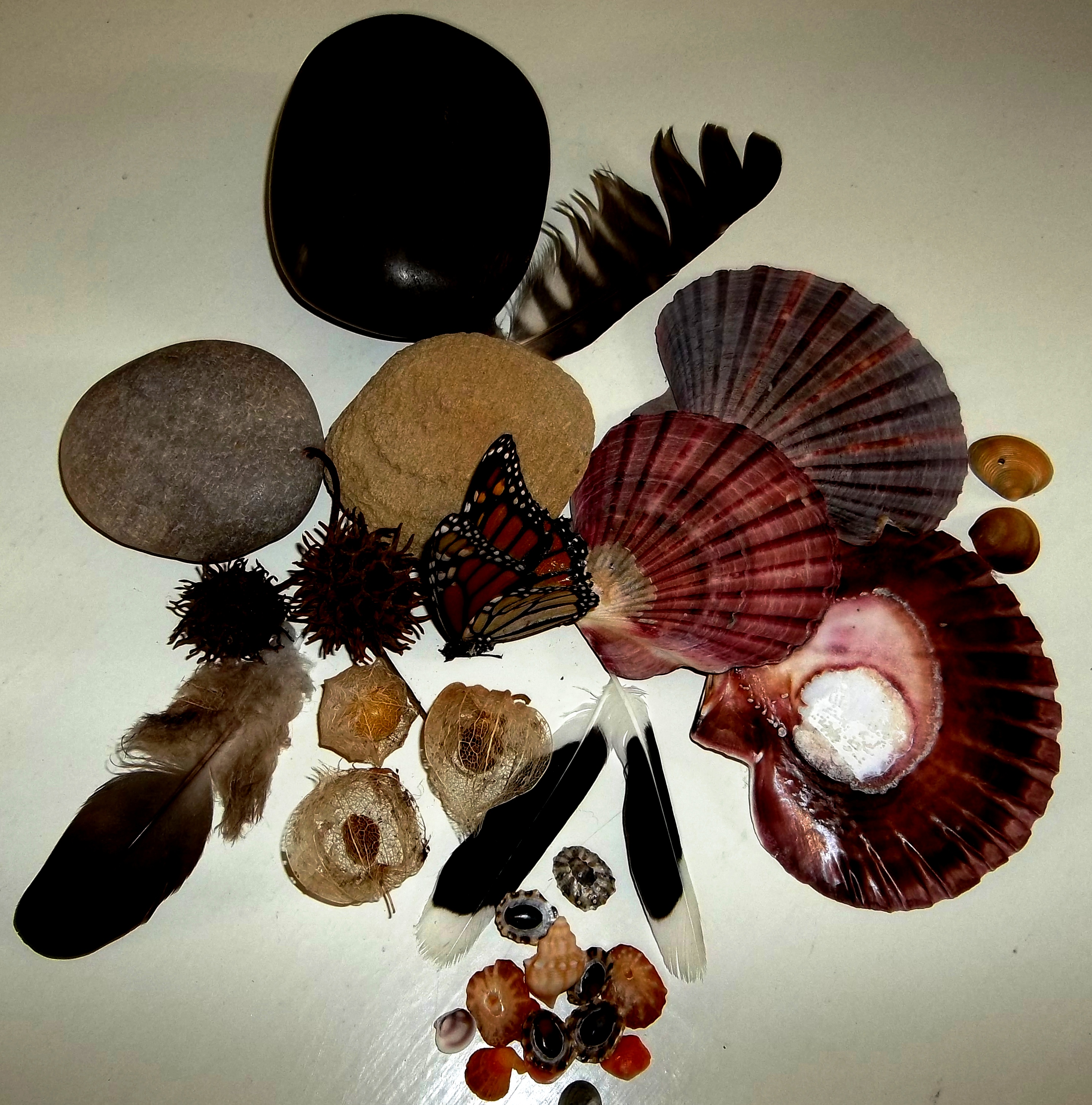
These stones and feathers and shells can tell the story of my life in the last few decades… shells collected with the children on a Northland beach, a black and white feather lying outside the door when I opened it on our first day in a new house –  greeting from a tui… the brown and cream morepork feather found on a long walk around the harbour with the thoughts and dreams of that afternoon threaded through its fronds.

An ancient stone from a river bed in the Blue Mountains of Australia was picked up after a day spent abseiling in abject terror, another from a cold pebbled beach in Devon, the chill of the Atlantic  breakers still embedded in it after all these years, while the polished brown stone came from an underground cave in the central North Island where glow-worms illuminated the roof, and a river flowed through.  These things are the stuff of my life… as they are of every life in which they are valued.

As I looked at them I thought of how other collections can also tell the story of a life. When I renewed my passport recently I found all my old ones, going back to when I was twelve and going to France on my own to learn French. In that passport photo two frightened brown eyes gazed out at the world. I had been so appalled at this picture that I promptly destroyed the evidence.

Which left the rest – a twenty one year old about to go on holiday to Spain, well- groomed hair, immaculate lipstick, and veiled blank eyes… the next, an exhausted mother of two toddlers about to go to Hong Kong, badly cut hair, eyes sad and resigned. And then, a picture of a thirty five year old woman, lots of dark hair piled up confidently, smiling eyes, relaxed smile. Life to be lived now, not endured. In the decades since, the hair has got shorter and then faded, and the last photo was so awful I hoped to be un-recognisable, but the story of a life is told in those passport photos.

Another can tell the story of their life in their jewellery, the coral necklace given at a christening, the charm bracelet for a little girl, pearls for a twenty-first, the engagement ring and the gold band…  a gift to mark the first child,  a clumsy pottery brooch made  at school and proudly presented to a beloved mother… the ring inherited from a grandmother, the eternity ring at a silver wedding…  such precious collections can mark out the steps of a life quite as well as a photograph album.

I wonder if there is even a market these days for photograph albums now all our photos are taken on phones and I-pads. I was never much  of a photographer, so that the photos of my honeymoon were on the same roll of film as the pictures of my first baby. But I did have a memory.

I remember one summer’s afternoon when the children were three and four as they tumbled around on the grass, one wearing a sun-suit in glorious colours of pink and orange and red, the other in matching shirt and orange shorts. As I looked at them, revelling in their laughter, their shining hair, and sparkling eyes, pearly teeth and glowing sun-tanned faces, I thought to myself, I’m going to remember this moment forever.

It was a turning point, because I found I did never forget that moment. So now, I know I can fasten those moments I want to remember with that little intention, and our minds are so obedient that they obey the instructions, and can call up the images whenever they are wanted. On the other hand, I wonder if the ease of communication, the instant photos, the selfies sent from Rome or Khatmandu which reach every member of the family all over the world the same day, make it easy to forget. We don’t have to remember, because it’s all there, on Facebook or in the picture file on the computer.

But for how long? Until the internet crashes? Or some other disaster hits the net? The computer is stolen? Few people will be able to pick up old albums in the future and leaf through them re-living their own lives, or discover the lives of their ancestors. And how will biographers fare in the future? In the past we’ve had portraits and miniatures in pre-photography days; then the wonderful stilted posed photos of the early days of photography, with the expert’s head hidden under a black cloth over a tripod while he captured forever the people and that moment in their time.

Then came the brownie box camera and all the other simple do- it- yourself cameras, and families recorded their events and special moments themselves. Biographies of the famous from the twenties until the sixties are full of revealing snaps, but what will there be for future  writers and historians wanting to illustrate their books about the powerful and famous? Not much, I suspect.

In the past, many anonymous photos turned out to be records of history – impromptu black and white snaps of Battle of Britain pilots ‘scrambling’, shots of families crouched in air –raid shelters from London to Leningrad, soldiers in Africa or Italy taking grainy pictures of each other to send back home… joyful hugs and kisses of victory – all these spontaneous pictures of humanity enduring both the ordeals and the pleasures of the twentieth century, captured in black and white film, are the stuff of history.

But I wonder what history is being preserved today in our somewhat ephemeral records? Will collections of jewellery or stones, in the end be the things to jog people’s memories in the future? Maybe the photos in passports and on driving licenses will the best concrete records we will have… time to get a decent picture taken for these official documents perhaps !


Food for threadbare gourmets

Summer salads don’t always mean lettuce for me… One of my favourites is grated cauliflower, mixed with chopped hard- boiled egg, some chopped Medjuel dates, toasted slivered almonds, and lots of chopped parsley. Then stir in enough good mayonnaise to the consistency you like. Chopped apple or banana is a variation, but actually anything can be added, and it still tastes good. But it can’t sit around, or it turns watery. I eat it on its own, but it’s also good with cold chicken.

Food for thought

And a poet said, Speak to us of Beauty. And he answered: Where shall you seek beauty, and how shall you find her unless she herself  be your way and your guide?  Beauty is not a need but an ecstasy. It is… a heart inflamed and a soul enchanted … a garden forever in bloom and a flock of angels in flight.

‘The Prophet’ by Kahlil Gibran, Lebanese poet, 1883 -1931. ‘The Prophet’ has never been out of print since it was published in 1923.

I

44 Comments

Filed under birds, cookery/recipes, family, food, great days, happiness, history, life/style, love, poetry, The Sound of Water, Thoughts on writing and life, Uncategorized

The eternal search – for the perfect coffee

100_0834

I lost my wallet the other day. Going to pay for the dry cleaning, I found my big red Guy Laroche wallet given to me by my generous daughter had disappeared. Panic. The last place I’d had it was at the garden centre a mile away. And since I’d paid for the plants, the wallet must still be sitting in the trolley. More panic.

I ran through the things that mattered in my mind… credit cards … but ‘they’ wouldn’t know my pin number. Pain to have to cancel… forget them for now. Money? Who cared. But oh, my photographs of the grandchildren and moments caught in time that I wanted to remember… they were irreplaceable… and the two little love letters with terrible spelling and seven year old scrawls from them … one which I had found written in the diary they always used to keep when they came to stay with me… on this occasion they had decided that they would stay permanently and be home-schooled by me:

‘Five time a week I have fun. It can be so wonderful. I will like to say that I am writing this because it came from my hart and I kodn’t get it out of my hed….I hope that we can stay heer for homeschool it will be so fun and it will asol be fun because I love my granny so much it can be fun every day but I love staying heer and I like feeding the eels’… how could I replace a letter like that? My heart curled over at the thought of such a loss…

What else?  Oh … my collection of coffee cards. Each one stamped for every coffee I’d had, and nearly ready for a free coffee. The restaurant down by the river, the cafe in the garden where they make pottery, the lovely place where they also make hand-made chocolates, my stopping off place in town…

Zipping up my stiff upper lip I hurried back to the garden centre, and there was the red wallet, waiting for me at the office. (gardeners are good  people!) “It was my coffee cards I was worried about,” I explained when I picked it up, and everyone laughed because they knew how I felt.

I have travelled the length and breadth of one country, which shall remain nameless for fear of hurting millions of people’s feelings, looking for a decent cup of coffee. I finally found one in a far-flung cathedral crypt cafe.  I will drive for miles for the sake of that elusive perfect cup.

I know as soon as it’s put in front of me if it’s going to be a good one. The cream will be thick and won’t just dwindle into a thin froth when stirred. It will be smooth and not too creamy and not too strong. The most memorable coffee I’ve ever had was in an Italian restaurant in Melbourne.

Creating this ambrosia obviously came naturally to the maker… and in that search for the perfect cup, I’ve discovered that the maker actually matters. Yes, I know the machine has to be properly cleaned so the coffee doesn’t taste bitter, and the milk the right temperature, but there’s more to it than that. And the deciding factor in the quality of a cup of coffee for me, seems to be the person.

Everyone makes the coffee the same way on the same sort of machines I’m assured, but it doesn’t work out like that. Every barista is different and so is their coffee. A grumpy barista does not produce a good cup of coffee. A good cup of coffee is hand-crafted and a work of love, so I know if it’s going to be delicious by the quality of the barista’s smile. A nice person makes great coffee! They even do lovely patterns in the froth, like a Christmas tree at Christmas time, or a flower or smiley face at other times!

And what despair and thwarted desire when I arrive at a favourite coffee place to find a new member of staff, or the nice coffee person has taken off overseas, and we have to start all over again, with a learner driver as it were!  Or the tantalising times when the best coffee maker is busy cutting cake or sorting spoons, and not at her post, and I have to make do with a cup which I know won’t be as good as hers.  C’est la vie, but coffee is so much more than beans, milk and water!

And when the perfect coffee arrives, what sybaritic pleasure – the delicate sinking of the spoon into the froth, and a gentle stirring. Sometimes a fragrant teaspoon of coffee crystals for the sheer pleasure of stirring and dissolving them in the glorious liquid. And then a sip, and a contented settling into satisfaction as I slowly savour one of civilisation’s minor works of art.

Sadly the second cup never reaches the same level of pleasure as the first. And I’ve even read that scientific research has proved this to be true. No wonder it matters that that first cup is as good as it can get!


Food for Threadbare Gourmets

One of my favourite coffee places serves gingerbread with their coffee. I love it. To make it myself, I use two eggs, a cup of sugar, a cup of milk and a cup of golden syrup (the cup rinsed out with oil before measuring the syrup). Beat them together. Melt 225g butter. Mix two cups SR flour, two teasp or more of ground ginger, a teasp each of mixed spice and of cinnamon, and a teasp of baking soda into the egg mixture and then stir in the melted butter.

Pour into a loaf tin with the base lined with baking paper. Bake at 180 degrees for an hour. If you’re using a fan-bake oven test after 45 minutes. Let it cool in the tin for 30 minutes before turning out. You can ice it, but I like it cut into slices and spread with a little butter.

Food for Thought

“The artist’s task is to save the soul of mankind; and anything less is a dithering while Rome burns. If artists cannot find the way, then the way cannot be found.”
Terence McKenna  (1946 –  2000) was an American philosopher, ethnobotanist, lecturer, writer and author of several books.. He was also the creator of a mathematical theory of time based on patterns found in the I Ching which he termed novelty theory.[1]


65 Comments

Filed under cookery/recipes, culture, great days, happiness, humour, life/style, love, philosophy, The Sound of Water, Thoughts on writing and life

A rose is a rose is a hose !

100_0532

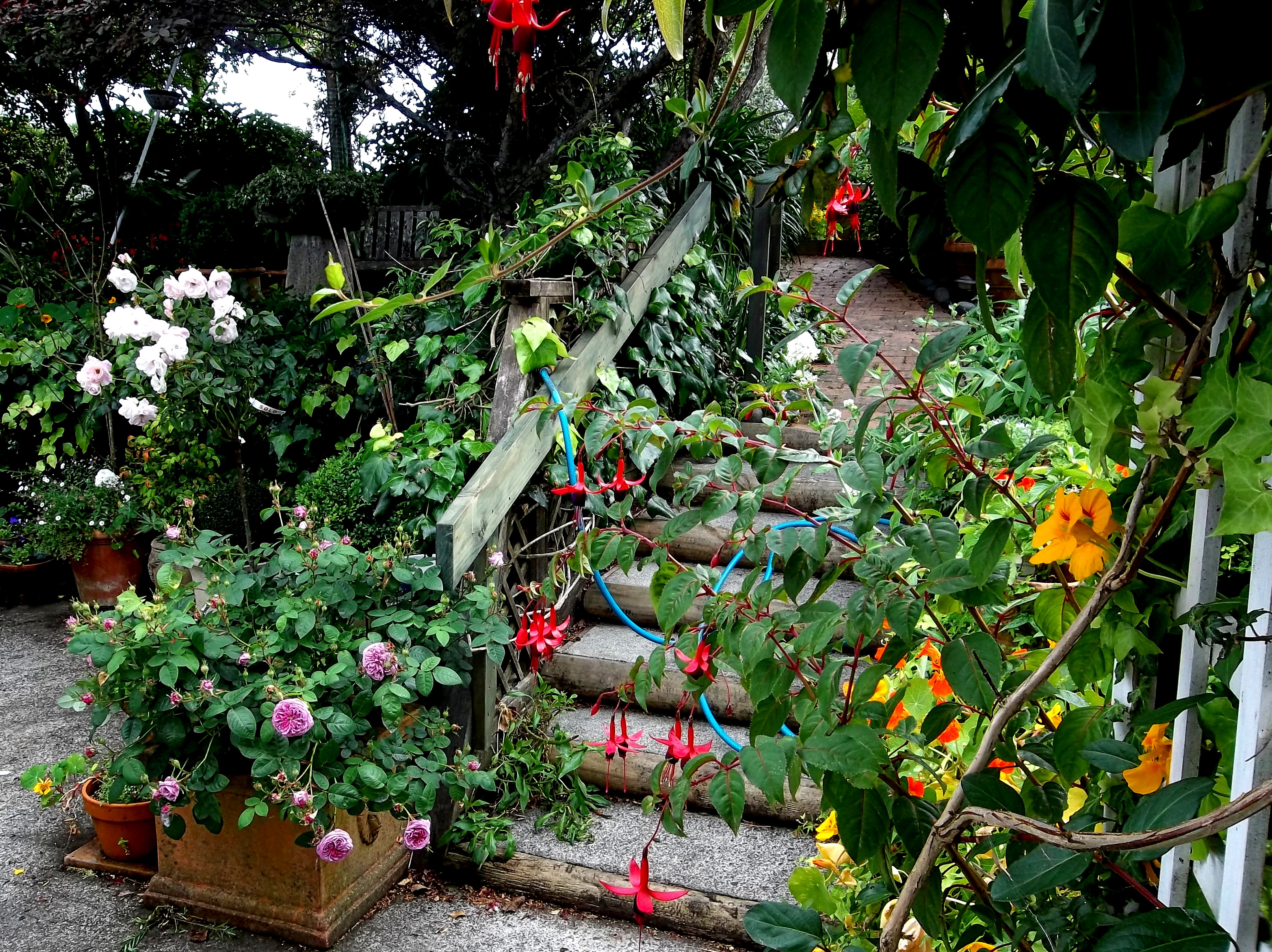
This was supposed to be a picture of a rose. When I developed it, it turned out to be a picture of a hose. I was shocked. How could I have been so one-eyed, and not seen what was shouting at me in a loud turquoise voice? I only see what I want to see, and eliminate even the obvious, it seems.

So when I went for my walk in the summer evening, I reminded myself to actually look, and not to assume or to expect. I wanted to see what was there, not what I thought was there. Down near the harbour where I usually turn around I always end up by a bougainvillaea sprawling through the trees, and just out its reach, a queen of the night holding her own. Braving bougainvillaea prickles, I can just reach the greenery-yallery sprigs of tiny flowerheads.

Two nights ago I broke one off and carried it back with me, sniffing the glorious fragrance, and ending up sitting on the warm marble bench in the cemetery at the other end of the peninsula, still smelling the sweet blossoms. I did what I’d never thought of doing before, and took it in and put it in a glass in the bed-room. The scent filled the whole room, and whenever I turned over in my sleep, the scent was drifting past.

The next day the tiny pale green flowers closed up, and the sprig sat nondescriptly on the window- sill all day, before bursting into glorious scent in the evening again. So now I plan to keep a permanent supply of these modest blossoms that don’t look big enough to be able to scent a whole room… The scent lasts for three nights I’ve discovered.

Walking back tonight with a fresh sprig of blossom, I passed a big shrub on the road where it dips and there’s a muddy spring.  Before now I’ve smelt its fragrance, but not given it a passing glance. Its reputation as a deadly poison and hallucinogen had somehow got in the way of me actually seeing this innocent plant. Tonight I looked at it, and ended up gently holding one incredibly beautiful flower-head after another, each one slightly different, gazing at their two layers of frilly white petals, and seeing deep inside the long white tube, white stamens pushing their way up to the light. The pendulous buds are so yellow it’s a surprise that the flowers are so white

The slender pale green calyx was smooth and soft and somehow tender to touch and to hold, and ended where the green- veined white trumpet – shaped flower began. Its ugly official name is brugmansia, but its folk name is angels trumpets. Angels trumpets spread their scent so far that long before I get there I can smell them.

Enchanted now with the idea of white scented flowers, I noticed the exquisite waxy looking candle-shaped buds of the king magnolia further down the road, the dark shiny leaves supporting each smooth creamy bud like a candlestick. Only one flower had opened, but it was enough. The scent of just one flower wafted past me.

I walked down the long drive to some friends’ house, knowing they were not there, but that they wouldn’t mind me visiting the frangipani plant flourishing by their veranda. The scent of frangipani takes me back to Singapore when it was still an eastern city and I was a girl, where all the alleys were hung with long bamboo poles suspended from every window on each floor, drying thin cotton tropical clothes in the brilliant un-ending sunshine.

We were staying in a hotel just around the corner from the famous Raffles Hotel, and the entrance was flanked with rows of frangipani trees.  Their fragrance followed us into the hotel courtyard and drifted in through the big open bedroom windows where we slept with no air conditioners, but beneath draped mosquito nets.

And when the velvet tropical night had fallen promptly at six thirty, every night in the darkness I would look down from the bedroom and see small groups of people squatting on the pavement in a circle. They would have tiny flickering lights and little spirit stoves in their midst to cook their dinner, delicious smells rising tantalisingly through the frangipanis, and I would hear their soft chatter and their laughter.

There were no blossoms on the frangipani growing here in New Zealand… wrong time of year perhaps. Back home, there was one white gardenia open.  I savoured the perfume before bringing it inside and putting it in a shallow bowl, floating on the water. So though no angels trumpets, I have queen of the night, gardenia and creamy honeysuckle from the porch scenting the house – even the names are poetry.

I don’t know whether I did what I intended when I began my walk, or whether I saw what was really there, but just by looking – truly looking at the beautiful angels trumpets – unnoticed before –  the walk turned into something else – a successful quest for white scented flowers. And like all successful quests, that was good enough.

And I wonder if this is how life is… we set off in one direction and find that imperceptibly we’ve drifted down other unsuspected paths; and looking back, we see that it was the perfect journey, and our travelling had a purpose, and was not random at all.


Food for Threadbare Gourmets

Friends for dinner before they left after the summer holiday to go back to the city. On a summer evening cold food seemed appropriate. So we had chicken with curry mayonnaise on rice salad. The cooked chicken chopped and mixed into a bowl of good bought mayonnaise, with about a big tablesp of golden syrup and desert sopn of curry powder to taste… I taste until I like it. Stir through enough cream to make it a soft consistency to stick to the chicken.

Cold basmati rice is jollied up with a vinaigrette dressing with salt, plenty of freshly ground black pepper, mustard, and sugar. Add to the rice generous helpings both of peas and sultanas soaked in boiling water, lots of crunchy chopped almonds lightly toasted in a frying pan, and lots of chopped parsley. Nice with a salad and chilled pinot gris .

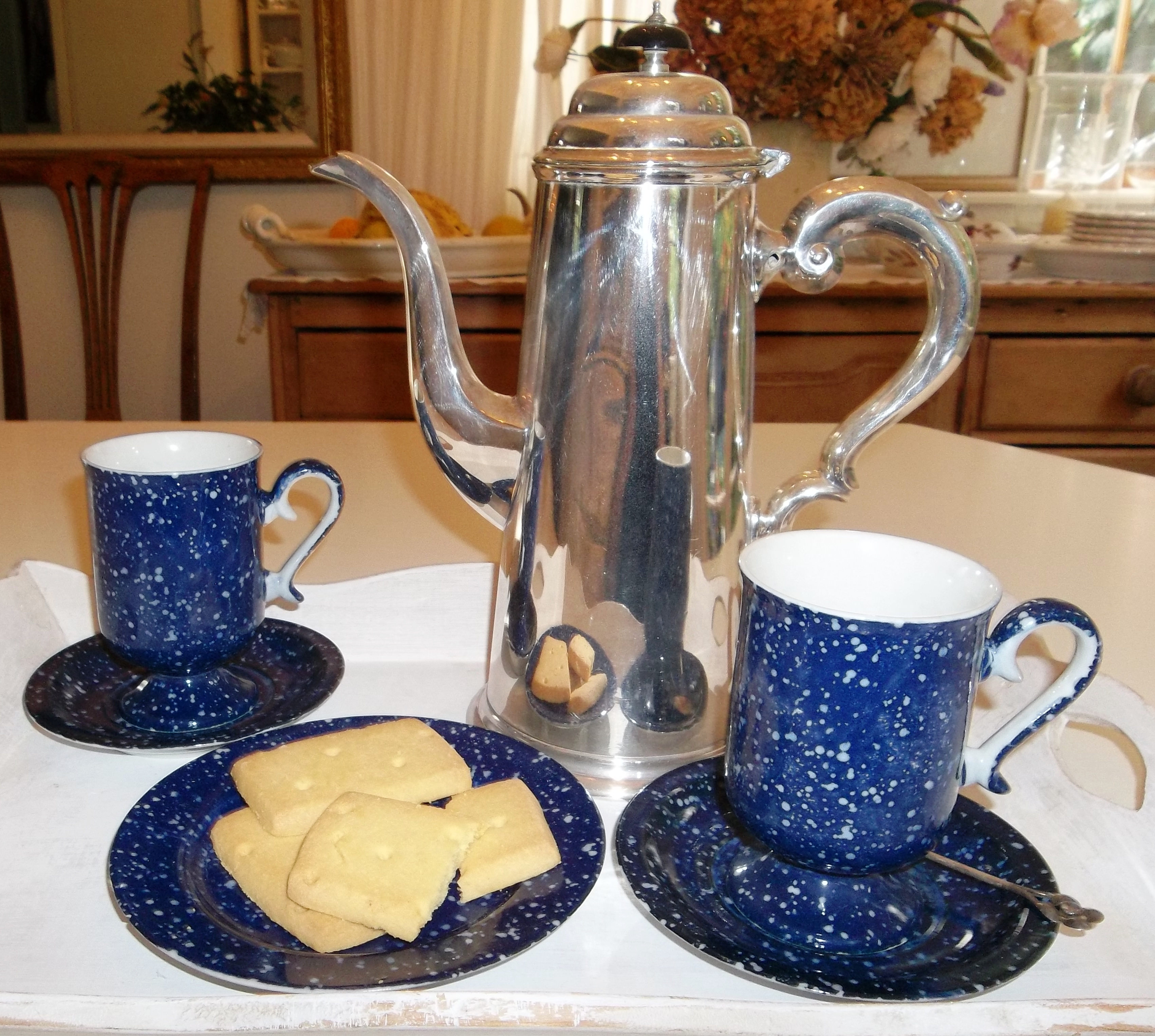
In deference to our French connections we now have the cheese course before the pudding! This was some of our plums cooked to Nigella’s lovely recipe in red wine, one star anise, two cloves, teasp of cinnamon and a bay leaf, plus honey to taste. We had them with a mix of plain yogurt, whipped cream and runny honey stirred gently together, and a little shortbread biscuit.


Food for thought

That mighty power that sways the tides and works the million miracles of spring is ranged forever on the side of love.

The writer: known only to God .  Seen on an embroidered sampler hanging over a bedroom fireplace in an English cottage


73 Comments

Filed under cookery/recipes, flowers, food, gardens, great days, happiness, life/style, love, perfume, spiritual, Thoughts on writing and life, Uncategorized

Summer song

100_0751

Walking around the cemetery on New Year’s Eve the sky was still and clear, no silver, almost transparent moon yet, rising above the sea looking like a silver sliver of dried honesty in the pale night sky. Instead there were gulls circling silently and intently overhead, weaving endlessly in and out, never touching or interrupting the arc of another bird.

After a while I chose one single gull, and watched its movements, following its wide circles and trajectories and swoops until finally it headed out to sea in the direction of Little Barrier Island, which hovers, misty indigo, on the horizon.

It felt like a holy silence, the tracery of the gulls’ flight woven like a network of silver filaments overhead, the cemetery a cathedral, silent, sacred and undisturbed. The Universe may have been un-aware that it was New Year’s Eve around Planet Earth, but surely that thought -form which meant we were all conscious of this moment in time, must have created that charged and sacred energy which I was feeling then.

Today it has rained. Things can start growing again, and I can stop watering – for a few days anyway. The countryside has the richness of high summer. The trees are billowing with green foliage, the fields have been cut for hay, and the grass in the meadows is so high that when the calves lie down, their heads just peep out of the tops of grass heads, plantains, buttercups and clover. I thought I saw a flight of big brown butterflies the other day, and it was the tips of their velvet ears reaching out of the pasture. The thrush in the garden sings continuously between pecking at the apple nailed to the top of the fence.

Tonight I was strolling round the cemetery, and the harbour below was the deep dark green of an Arthurian mere. It was as still as a mere too, and the boats at anchor were reflected with perfect clarity. Turning to face out to sea, the ocean was quite colourless with a deep band of blue on the horizon.

I’m constantly re-filling the dogs’ water bowl by the pavement. I hear them slurping away, as people walk past to the beach, thirsty Labradors and dobermans, bitzers and bichon frises, poodles and pointers… even a bulldog.

Earlier today, reading James Lees-Milne’s diaries, listening to the summer rain, I discovered his description of an English summer night in 1946: “the smell of new-mown hay and hedgerows, of eglantine and elder… how I love these long gentle Shakespearean summer evenings…”  Me too. The scent of the queen of the night comes drifting in from the open window at night here. It’s sweet and lovely… but I miss that indefineable atmosphere of those English summer nights.

Those nights throb with nostalgia and a richness. Somehow, it’s as though the layers and layers of lives lived in those parts, the echoes of history stretching back beyond memory and beyond record, the people in the millenniums before Christ, who trod out the ancient paths that still thread across hills and ridges and valleys and fords, can all still be sensed. The voices are silent, but their presence still lingers, as one century after another passes across the meadows and the woods.

The oak and the ash, the hazel and the hawthorn, the holly and the honeysuckle have been growing there since the last ice-age twelve thousand years ago. The smells, the sweet blossom, the new mown hay, the whiff of manure, the fresh rain, the damp leaves, have smelt the same in every age and every summer since. Standing in a quiet English lane on a soft summer night, you can feel those long centuries, and it is very touching.  I haven’t experienced a summer evening for a long time. I’ve always been back in autumn or in winter. But I must savour a June night once more!

Feeling homesick for the English country-side, I got “Far from the Madding Crowd” and “Tess of the D’Urbervilles off the top shelf of the book-case, and had an orgy of Hardy. Tess first, and the sweetness of Talbothays farm, then Bathsheba and her story… I read it differently this time, not so much for the drama of the story, but for the feeling of the country.

So I really took in for the first time, the delicious characters of the farm-folk, and the details of farming life, from the signs of an approaching storm, to the rituals processing through the year of lambing and dipping, and fattening and shearing, to the yearly sheep fair, the shearing supper and the harvest supper.

It was a way of life which had existed for over a thousand years when Laurie Lee in the enchanting ‘Cider with Rosie’, told the story of his childhood, and an archaic way of life  which then vanished forever, with the combine harvester, chemical farming, agri-business and of course the destruction of communities  by the carnage of the First World War.

I’m always struck in Hardy’s books, and in Jane Austen’s letters, by the isolation and “localness” of country life back then. So many people hardly ever left their village, unless they were gentry, and the next village was a foreign country. So when people fell in love in these tiny societies, and lost the object of their affections, through death, departure or rejection, there was often no-one else to love. People literally did grieve and die in different ways, from broken hearts.

Hardy’s description of the hopeless love by the dairy-maids at Talbothays farm for the un-attainable gentleman, Angel Clare, had the unmistakeable ring of truth.  I remembered from closed societies I lived in when I was young, whether in an English village, or a tiny colonial community far away from any other European habitation, how intense relationships were when there were no others. No-one could console themselves before the population explosion, and peripatetic habits of the twentieth century, that there were plenty of other pebbles on the beach. There weren’t.

Yet now, though I live in a tiny village with only four hundred souls, we are no longer prisoners of geography. Not only do people take off to holiday in Alaska and Italy, and their families return from Vancouver and Hanoi, but we all have the world of the internet at our fingertips, to use that well-worn, but accurate cliché in this instance.

It’s eighty- six years since Thomas Hardy died, and in those years our worlds and our lives and maybe our minds have expanded beyond imagining. The world is our village, and the internet is our community. There are pebbles past counting and wherever we direct our vision, we can find the glory of summer somewhere around the globe at the push of our buttons.


Food for threadbare gourmets

Apart from being full of healthy fats, potassium and Vitamin E, avocados are delicious.  I sometimes use them as a dressing over a salad. To one avocado you need  ground coriander – I use a quarter of a teasp, but less is more… the juice of a lime or a lemon, quarter of a teasp of ground cumin, a tblsp of apple cider vinegar, salt, and about half a cup of water. Whizz these ingredients until smooth and creamy, and use straight away.


Food for thought

To write or even speak English is not a science but an art. Whoever writes English is involved in a struggle that never lets up even for a sentence. He is struggling against vagueness, against obscurity, against the lure of the decorative adjective, against the encroachment of Latin and Greek, and, above all, against the worn-out phrases and dead metaphors with which the language is cluttered up.

George Orwell, English writer 1903 -1950.  Wikipedia records that : ‘His work is marked by lucid prose, awareness of social injustice, opposition to totalitarianism, and commitment to democratic socialism.’ Animal Farm and 1984 have continuing relevance.


61 Comments

Filed under birds, books, consciousness, cookery/recipes, culture, food, great days, history, jane austen, literature, love, The Sound of Water, Thoughts on writing and life, Uncategorized, village life

A peculiar Christmas feast and the 4th Wise Man

100_0742Polar explorer Captain Scott and his team celebrated Christmas on their way to the South Pole in 1911. As a foodie, I find their feast a little lacking in… je ne sais quoi …

After his historic Christmas dinner with Wilson and Oates, Bowers and Evans, Scott recorded in his diary what he grandly termed four courses: ” The first, pemmican, full whack, with slices of horse meat flavoured with onion and curry powder and thickened with biscuit; then an arrowroot, cocoa and biscuit hoosh sweetened; then a plum pudding; then cocoa with raisins, and finally a dessert of caramels and ginger.”

Pemmican was the classic polar food, preserved, dried meat and fat… not my idea of gourmet nosh, but Birdie Bowers, and Taff Evans both felt so filled with warmth and human kindness after this extraordinary collection of unpalatable rubbish, that they decided when they got back to England they would: “get hold of all the poor children we can and just stuff them full of nice things,” in bachelor Bowers’ words.

I just feel the polar feast could have been warmed up with a wee dram of whisky perhaps, or even a swig of medicinal brandy. But then, I feel the cold.

Bowers was responsible for this jolly Christmas celebration, having smuggled the food over and above the allowed weights for the journey. Once the recalcitrant and desperate Mongolian ponies – who had suffered so terribly on the sea journey to the Antarctic, and who had then struggled endlessly in appalling weather and conditions with food they couldn’t eat- had been killed, every man carried his own food and equipment on the heavy sleds.

Bowers had always sneaked his night-time biscuit to his pony. On the night before they were all killed, Wilson, St Francis’s man, gave his whole biscuit ration to the poor creatures, like the condemned man’s last meal. This was the only time I cried during the film: ‘Scott of the Antartic’ with John Mills.  I was twelve, and blow the men, it was the ponies I wept for.

Thankfully my Christmases have never been as cold as theirs, though it felt like it in the hall in which we rehearsed for the Nativity Play when I was five. I had no idea what a rehearsal was, or why we had been marched – or straggled would be a better word – to the hall just down the road. Neither did I really understand the story we were acting in. We seemed to stand around for hours in the unheated hall while teachers talked animatedly to each other, and shifted bodies and chairs around the stage.

I just knew that the white nightie thing I was wearing like all the other little girls, was freezing. To cap it all – like the other angels in their nighties – I had a boring triangle to keep chinging on. This was a watershed in my understanding of the world. I understood then for the first time, that boys had all the fun. Not only were they all dressed up as kings and shepherds, but they got to play drums and tambourines, trumpets and recorders.

I felt as aggrieved as I did when I first saw huge Persil ads, in which the dark haired woman had the grubby grey sheets, and a bright blonde had the sparkling Persil washed sheets. Apparently blondes were better than brunettes.

But that’s another story… a year later my grandmother took me to a midnight carol service. I was riveted. A boy sang the first verse to: ‘Once in Royal David’s City’ in an un-earthly soaring treble, and then read the lesson. At one point his clear voice rang out with the words “And Mary pondered these things in her heart”. My heart leapt. I had no idea what the beautiful words meant, but for many years I treasured them and pondered them in my heart too.

The next memorable nativity play was when my daughter was five, and she was playing Mary. I thought she was utterly precious as she gazed at the world with her big brown eyes, her little face framed by a blue head covering, her solemn gaze taking in far more than I ever did. I sat and watched her with tears running down my face and my heart nearly burst with love. And the same when my small son sang the solo so sweetly at his Christmas concert.

Much the same too at all my grandsons’ nativity plays, only not tears, laughter. My heart nearly burst with love then too, and lots of giggles, as the head mistress darted down from her pulpit to drag a little finger from some-one’s little nose, and then he simply used the other finger on the other hand and the other nostril as soon as she was safely back in the pulpit.

None of them were magnificently garbed magi, just lowly shepherds … but we all sang the sombre, beautiful carol, ‘We three kings of Orient are…’ My favourite wise man is the fourth one, and that old Christmas legend telling his story is one of the most beautiful Christmas stories, to my mind…

He had set out with the other three Magi, but on the way, they came upon a traveller who’d had an accident, and the fourth wise man stopped to help him. Seeing he would be a while, he told the other three to carry on with their journey, and he would catch them up. But he never did, for he kept meeting some creature or traveller who needed his help to get them to safety, and by the time he got to Bethlehem the kings had been and gone, and so had the Child he was seeking.

He spent many years following the trail which had always gone cold when he got there, to Egypt and Nazareth and elsewhere. He was constantly delayed by yet another needy person who asked for his help. The gifts he brought and the stock of gold he had carried with him for the journey, dwindled until he had hardly enough left to buy himself food.

And then he heard that Jesus was in Jerusalem. He hurried there, and arrived in time to stand and watch Jesus carry his cross through the streets. He had one final treasure that he was keeping to give to the One he had been seeking, a beautiful sapphire jewel. But just before Jesus passed, a Roman soldier began to assault a young woman. The fourth wise man intervened, and by now, old and frail, was unable to stop the soldier. Finally he offered him his last possession, the precious sapphire, his gift for the Messiah, and the soldier took it and left.

At that moment Jesus reached the fourth wise man, and he knelt and asked Jesus’ forgiveness for having nothing for him because he’d stopped so often on the way to help the hungry or lost or needy. And Jesus looked at him and said: ‘For as much as you have done it unto these, you have done it unto me.’

In other words… we are all one… so a happy Christmas-tide to us all, dear friends around the world of blogging.

Food for threadbare gourmets

When Christmas is here, our little purply-red plums are ripe, and though I gave this recipe last year, I think it’s worth repeating  The plums which are only so-so for eating raw, are delicious when cooked. Every-one who receives a basket of these fruits also gets the recipe I use – borrowed from Nigella Lawson.

To a kilo of plums – more or less, use 300 ml of red wine – more rather than less! Nigella says stone them – I don’t bother, the stones come out quite easily when cooked.

Put the plums in an oven proof dish. In a saucepan boil the wine with two bay leaves, half a teasp of ground cinnamon, two cloves, one star anise, and 200g of honey. Pour over the plums, seal with foil or a lid, and bake for an hour or longer at 160 degrees, until they’re tender. You can keep them in the fridge for three days, and you can freeze them.

Serve with crème fraiche, ice-cream, or custard. I also think they’d be good with rice pudding on a cold day. The aromatic scent while they are cooking is so delectable that I’d love to catch it in a bottle and spray it regularly around the kitchen.

Food for thought

“My idea of Christmas, whether old-fashioned or modern, is very simple: loving others. Come to think of it, why do we have to wait for Christmas to do that?”                                                                                                                                                                                                                                                                               Comedian  extraordinaire, Bob Hope  1903 – 2003 His grandson said that when asked on his deathbed where he wanted to be buried, he characteristically quipped: “ Surprise me .”

63 Comments

Filed under cookery/recipes, food, great days, history, love, philosophy, spiritual, The Sound of Water, Thoughts on writing and life, Uncategorized