Category Archives: philosophy

The drug we can’t live without

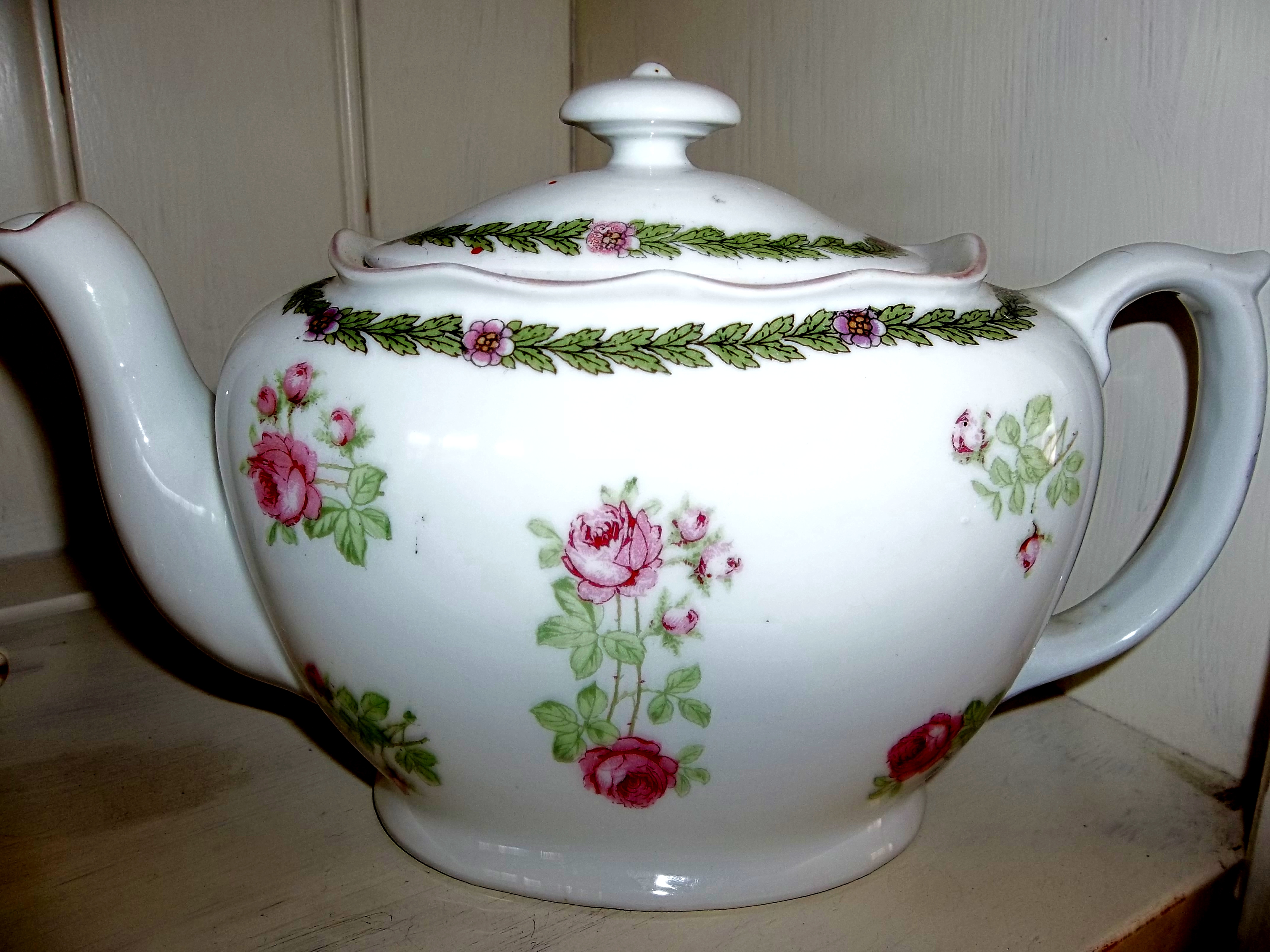
0000621 “Thank God for tea! What would the world do without tea! How did it exist? I am glad I was not born before tea.”  I couldn’t agree more with Sidney Smith, an Anglican clergyman, who died in over a hundred and fifty years ago. And as far as I’m concerned it can’t be any old tea. And certainly not a tea-bag, a monstrous invention that I suspect is just tissue paper filled with tea-dust left in the bottom of the tea chest after my proper tea leaves have been packaged.

And for me the only tea worth drinking is Twining’s Lapsang Souchong. It comes from Fujian Province in China. According to the packet: “the delicious smoky flavour is produced by lying the leaves on bamboo trays, and allowing the smoke from pinewood to permeate through them”. Ah, so … other tea now tastes quite crude to me after years of drinking nothing but this brew.

Though the Twining family may be surprised to hear this, I always feel quite connected to them, as I had a great friend who was a Twining, and my former in-laws had lived in a rose- coloured, brick Georgian house built by Elizabeth Twining down by the River Thames. I spent a lot of time there in that beautiful house, very conscious of Elizabeth. The firm of Twinings has been selling tea for three hundred years from premises in The Strand in London, so when the latest head of the Twining family came out to NZ to talk tea, naturally I heeded his instructions on how to make it.

Always happy to take the least trouble, I was delighted to hear from him (on the radio) that we don’t need to heat the tea-pot –  swishing boiling water around the pot before putting the tea-leaves in. Previously it had been an essential part of the ritual of making a pot of tea. But my tea leaves now go into a cold tea-pot. I missed the rest of his talk so I don’t know whether he addressed the thorny problem of milk. To have or not to have – that is the question. Purists don’t. I’m not a purist. I’m a conservative who has had milk in my tea for more than seventy years.

There‘s a further twist to the milk problem – known as MIF. Legend has it (which is not always reliable) that the Royal family refer to people as MIF’s. But I don’t believe this snobbish canard. MIF means exactly that – milk in first. And this is what the late Nancy Mitford used to funningly call non-U.  (U meant upper class, and non-U the opposite!) Milk in first means you’re probably the sort of person who’d lift the port decanter and push it across the table instead of sliding it along clockwise around the table – horrors – or would say: ‘pleased to meet you,’ instead of:’ how do you do!’ – shudders!  Incredibly, when I grew up these snobbish rituals defined the man – or woman.

So for most of my life, I had put the tea in first. But the worm turned about fifteen years ago, when I discovered that the tea tastes much nicer when you do MIF ! This puts me firmly on the wrong side of the tracks – but the bonus is delicious tea.

If I’m offered a cup of tea that I know will not meet my impossible standards of taste and strength – other people’s tea is always too strong for me – I add sugar, and then it becomes something else. Tea out of a mug is not the same as tea out of a bone china flowered cup and saucer. I dread the day when I’m plonked in an old people’s home, and will have no lapsang souchong and no bone china tea-cup.

Life without tea is unthinkable. There was no bombing so bad in the Blitz, that you weren’t offered a cup of tea after it; no shortage of water in the Western desert so tight, that there wasn’t always enough for a pot of tea brewed by the tanks; no misery so deep that a cup of tea doesn’t at least give the sufferer a second’s respite; no cold so deep that a cup of hot tea doesn’t warm the innards;  no thirst so terrible in the tropics, that a cup of tea doesn’t quench it, and no morning in the office so boring that a cup of tea doesn’t briefly break the monotony .

I often jokingly use the poet Cowper’s delicious phrase: ‘the cup that cheers but doth not inebriate!’ My grandmother always had a trolley laid for such a cup – on a lace tea-cloth with two tea-cups and saucers, sugar pot and tea-spoons, and the milk jug covered with a crocheted lace doily weighted with coloured beads. (Milk that wasn’t mucked about with didn’t go sour like it does today!)

In her book ‘Urban Shaman’, American writer CE Murphy writes a delicious description of having a cup of tea: “In Ireland, you go to someone’s house, and she asks you if you want a cup of tea. You say no, thank you, you’re really just fine. She asks if you’re sure. You say of course you’re sure, really, you don’t need a thing. Except they pronounce it ting. You don’t need a ting. Well, she says then, I was going to get myself some anyway, so it would be no trouble. Ah, you say, well, if you were going to get yourself some, I wouldn’t mind a spot of tea, at that, so long as it’s no trouble and I can give you a hand in the kitchen. Then you go through the whole thing all over again until you both end up in the kitchen drinking tea and chatting.

“In America, someone asks you if you want a cup of tea, you say no, and then you don’t get any damned tea. I liked the Irish way better.”

She must have forgotten that the American way with tea is simply to toss it into Boston Harbour!

Food for Threadbare Gourmets

This is the perfect cake to have with a cup of tea – if you’re not planning on cucumber sandwiches! It’s the classic French cake with equal quantities of everything. So it’s four eggs, and the same weight of butter, sugar and flour. You can halve the amounts for a smaller cake. Soften the butter, and beat it with the sugar – until it’s almost white and fluffy. Add the eggs whole, one at a time and beat. If it starts to look grainy, add a spoonful of sieved flour. When all the eggs are in, fold in the flour a spoonful at a time, using a metal spoon.

Add enough milk to make a soft smooth mixture which drops off the spoon. Stir in the grated rind of half a lemon. Gently push into a buttered cake tin, the base lined with greaseproof paper, and bake in a moderate oven around 180 degrees. Bake for fifty minutes … if it’s still soft and hissing, cook for another ten minutes.

Leave the cake in the tin for a few minutes, and then tip onto a rack to cool. I make a butter icing for this, soft butter, icing sugar and lemon juice and the other half of the grated lemon rind, all beaten together.
Food for Thought

Development cannot fly in the face of happiness; development should promote human happiness, love and human relati0ns between parents and children and friends. Life is the most important  treasure we have and when we fight, we must fight for human happiness.” Jose Mujica, President of Uruguay at the Rio Conference


.

66 Comments

Filed under cookery/recipes, food, great days, happiness, humour, life/style, philosophy, The Sound of Water, Thoughts on writing and life, Uncategorized

Many lives or just one?

100_0106

“To live is by universal consent to travel a rough road. And how can a rough road that leads nowhere be worth travelling? “

A well known philosopher, MacNeille Dixon, asked this question in a series of lectures at Glasgow University in 1938. Good question as they say.  He was discussing the concept of re-incarnation. Another writer, Gina Cerminara, has suggested that: ‘Perhaps we have reached a stage of our history where this knowledge (re-incarnation) is necessary to us – otherwise it would not be appearing in so many places.’

The word re-incarnation often provokes the same sniggers that a belief in angels does, but it was an accepted part of Christian belief until the sixth century. Since then the records show that although people have assumed it was banned, according to the Catholic Encyclopaedia, it actually wasn’t. It’s a common belief in many other cultures, though it’s earned itself a bad name for the mistaken interpretation that we come back as animals or insects if we lived a questionable life. In all the cultures around the world re-incarnation is seen as an opportunity to continue the life of the soul and perfect the things that were left undone in other lives.

In most of Asia, and in cultures as far apart as Mexico and Egypt this belief has always been a constant. In Christian history, the Gnostics, the Cathars, the Templars, the Bogomils, the Albigensians  were all believers in other lives, and they were all wiped out by the Christian church.

Today, it’s not a dangerous belief in the west, but “a very private belief” according to a survey in the UK which showed that twenty five per cent of people believe in re-incarnation irrespective of their church or creed. It’s the same figure in America.  Many orthodox Christians tend to regard it with the same suspicion as clairvoyance. And because it’s been considered a rather eccentric belief – to put it mildly – there are also many misunderstandings about it. The word karma for instance, is often used in a mistaken sense that when bad things happen to us – it’s karma – sort of payback time. But karma is really the unfinished business from other lives, which we choose in this life to complete.

Henry Ford said: ‘The discovery of Re-incarnation put my mind at ease’ … and he wanted others to know what peace of mind it brought. He also said: ‘Genius is experience. Some seem to think it is a gift or a talent, but it is the fruit of long experience in many lives… ‘ When one thinks of Mozart writing music at five, and all the other artistic geniuses and child prodigies who understand branches of mathematics and can speak many languages from their earliest years, this sounds like a logical explanation.

Many famous writers, scientists, philosophers and others believe in re-incarnation. Gustav Mahler the great composer  said: ‘We all return; it is this certainty which gives meaning to life, and it does not make the slightest difference whether  or not in a later incarnation we remember the former life’…

There’s been a lot of research into what is sometimes called life before life in the last forty years, and there are other methods of returning to previous lives than by hypnosis. Joan Grant who wrote books about her former lives in Egypt in great detail, which could not be faulted by Egyptologists, later used her gift for divining other lives to heal fears, phobias and other psychological traumas in partnership with her psychologist husband. This is how it’s used today, for healing, not for curiosity.

Sometimes people spontaneously return to a time in the past where they faced the same challenge but had failed to understand or respond to it. They see the pattern in this life and are able to work through to a better outcome this time round. And there are many documented examples of children giving the details of their previous life, and the facts being checked and found to be exactly as the child has said- even the family history and family members which they’ve described.

Some people feel that time as a straight line is a human concept which may not bear much relation to reality, and that we may be living parallel lives in a parallel continuum. Joan Grant used to say that her lives were like beads on a string, and the string was the eternal part of her which never died. There are instances of people going forward to lives in the future, as well as lives in the past, and also of lives overlapping, so that a woman dying in a German concentration camp was also living as a five year old child in England.

Whenever we seem to recognise a place or a person, we instinctively know that this is not the first time. When we find certain skills easy or are drawn to different books or periods in history we can be fairly sure that we have known those times before. The Greek philosopher Plotinus said that ‘the spiritual life cannot be described to those who are not living it’. The same applies to re-incarnation. Some people know in their bones that they’ve lived before, while others cannot even imagine the possibility.

The point of re-incarnation is not to go on plodding along making the same muddles and mistakes, but to rise to a higher level of consciousness with each fresh opportunity for growth on earth. This makes nonsense of the cruel beliefs in hell or  heaven – a human concept which projects onto the Creator human notions of judgement and punishment. It means that instead, we know that we are part of the long history of the planet in which civilisations rise and fall, in times far beyond our knowledge or recall, in both the past and in the future. And we have been there, and will be again.

 Food for Threadbare Gourmets

Organic minced chicken was on special at the village delicatessen, so minced chicken it was. I’d been wanting to try a recipe with it. Take one cup of grated or torn up good bread, ciabatta or sour dough, and soak it in quarter of a cup of milk. Chop three cloves of garlic and two tablesp of parsley. Mix them with 500g of chicken and the bread and milk. Add half a cup of freshly grated parmesan. Season and mix well. Form into walnut sized balls and roll in flour. Cook in hot oil in batches.

Put aside and gently sauté two large leeks, the white parts only, with a dozen sage leaves, until the leeks are soft. Add half a cup of wine and when it’s bubbled up, add the stock and the chicken balls. Simmer for twenty minutes, and then add salt and pepper, a cup and a half of frozen peas, the grated rind of a lemon, and lots of cream. One night we ate it with mashed potatoes, another night with rice.   

Food for Thought

They will come back, come back again, as long as the red Earth rolls.

He never wasted a leaf or a tree. Do you think he would squander souls?

Rudyard Kipling 1865 – 1936  Writer and poet, first Englishman to win the Nobel Prize for Literature, and the youngest person ever to do so at 42.


.


51 Comments

Filed under cookery/recipes, great days, life and death, philosophy, spiritual, The Sound of Water, Thoughts on writing and life, Uncategorized

Peace or Patriotism?

100_0332

Is patriotism enough? Nurse Edith Cavell first raised the question before she was shot by the Germans for treason  in 1916. She was an English nurse, matron of a Belgian hospital when the Germans invaded Belgium on their way to invade France. On the outbreak of war, her hospital was immediately designated a Red Cross hospital. For the next two years she not only carried on with the work of the hospital, but rescued and nursed back to health wounded British and French soldiers, who were then helped to return to their countries. She also nursed wounded German soldiers. She knew that she was in danger, but she said: “I can’t stop while there are lives to be saved.”

The Germans arrested her, and court martialled her for treason. Under German law she was sentenced to death. From this perspective, it seems strange that an English nurse working for a Belgian hospital in a country which the Germans had invaded, breaking their treaty of neutrality, and then ravaging the country, shooting whole villages, burning ancient cities, should have been expected to be loyal to these invaders! The Germans said that they had treated her fairly.

She raised the question on patriotism just before her execution, when she actually said that: “Patriotism is not enough”.

This phrase has been in my mind, as this country prepares for the most solemn day in its calendar – ANZAC day – a day of national mourning and unity which it shares with Australia. It commemorates the Battle of Gallipoli on Turkish soil. It was a disaster for the Allies, who lost 21,555 British soldiers, 10,000 French, 8,709 Australian and 2,721 NZ soldiers. Winston Churchill has always been blamed for it, but from the beginning of his idea, and the actual carrying out of it, something now called ‘mission drift “ occurred, in which the original idea got lost in  more ambitious schemes, but without the extra men and supplies needed for these  ambitions.

In the forty three years that I’ve lived in NZ, I’ve seen a revived connection with these ceremonies, as more people remember – though they may not understand – their history, and the heroism of their ancestors. At my age, I heard firsthand the memories of my great-uncle and grandfathers who were in the navy and the army in the First World War, so it doesn’t seem almost a hundred years ago to me.

And one of the things that always saddens me about these ceremonies and rituals in my adopted country, is that this day also becomes an opportunity for some to bash the British in their sermons and newspaper articles. So it tends to be forgotten that the British and the French lost great numbers of young men in this battle too… and that they always valued the great qualities of the NZ and Australian fighting men. This is what is called chauvinism… the dictionary defines it as:militant devotion to and glorification of one’s country; fanatical patriotism’.

And it happens all around the world, in some countries more than others. On the other hand, there are also many people around the world who have responded to Edith Cavell’s insight, and can see that patriotism is not enough. She also said:  “I must have no hatred or bitterness towards anyone.” She was not just a brave woman, but a deeply spiritual one, and had reached insights that many of us are still struggling towards.

Another one who did have those insights was the officer commanding the Turks at Gallipoli. Fourteen years after the Gallipoli campaign, some of the mothers of the soldiers who had died on the Turkish peninsula, wrote to the President of Turkey, Kemal Ataturk, asking for permission to visit the graves of their sons. Kemal Ataturk had been that commander at Gallipoli, and he sat down and wrote these words to the grieving mothers:

“Those heroes that shed their blood and lost their lives… are now lying in the soil of a friendly country. Therefore rest in peace. There is no difference between the Johnnies and Mehmets to us where they lie side by side here in this country of ours… You the mothers, who sent their sons to faraway countries wipe away your tears; your sons are now lying in our bosom and are in peace. After having lost their lives on this land they have become our sons as well.”

I can never read these beautiful words without the tears welling in my eyes….

Kemal Ataturk was the great visionary leader who transformed Turkey into an enlightened and free country back in the twenties and thirties. In two years, his drive and vision raised literacy from ten per cent to seventy per cent, and he gave women all the freedoms that men enjoyed. His early death from cirrhosis of the liver was a tragedy for Turkey and for the world.

His foreign policy was simple: ‘Peace at home. Peace in the world’. These are the words and thoughts that rise above mere patriotism, and to use those lovely old words from the Anglican prayer book are what could bring us: “peace in our time”.

Food for Threadbare Gourmets

The cemetery with the war memorial in our village lies on one side of the tiny peninsula where we live. It looks out to sea. The other side of the road, we look out to sea in the opposite direction. So since everyone gathers in the road outside our house before entering the cemetery, we always end up having friends in for coffee when the service is over.

The cake I’m doing for this occasion is an easy apple cake – I seem to have dozens of different apple cakes – and this one is quite a chewy one. Peel and slice five apples, mix with a cup of brown sugar and put to stand for 15 minutes. Mix together a cup of self raising flour, a teasp of ground cinnamon, half a cup of oil, a beaten egg, half a cup of chopped dates (I often leave this out) and three quarters of a cup of chopped walnuts. Stir in the apples and sugar. Tip into a greased and floured tin and gently press the mixture down.  Bake in a 160 degree oven for one and a half to two hours, and cool before turning out. I often sprinkle sugar over the top, and add a dash of vanilla to the mixture.

Sometimes I serve it with stiff whipped cream, and make it the day before, as it matures deliciously.

Food for Thought

Everyone has within him something precious that is in no-one else. But this precious something in a man is revealed to him only if he truly believes his strongest feeling, his central wish, that in him stirs his inmost being.

Martin Buber  1878 -1965 Austrian born Jewish philosopher

37 Comments

Filed under great days, history, military history, peace, philosophy, The Sound of Water, Thoughts on writing and life, Uncategorized, village life, world war one

The mystery of other lives

 
100_0207

Not a picture of hear no evil, see no evil and speak no evil, but a picture of the three fat wood pigeons sitting on the power line outside our house yesterday.

They used to be plentiful, but between the Maoris and the settlers they nearly became extinct. They’re now protected, and their numbers are increasing. The Maoris call them kereru, we call them wood pigeons. They are precious to us.

This morning, waiting for the kettle to boil while I made a cup of tea to take back to bed, I stood at the bench looking out of the kitchen window, and watched one of these pigeons in the guava tree. As he swallowed the guavas whole, they travelled down his throat and then the lump disappeared into his white curving bosom.

I was fascinated to see how this big heavy unwieldy bird kept his balance on the thin frail branches. He moved from fruit to fruit, gobbling them up, without ever looking or checking to see where his feet/ claws were going to find a secure foothold. The feet moved with an intelligence of their own. Once, the twig bent so much, the bird keeled over, and his wings flapped open to hold him, as his feet found a better foothold. Enough being enough, he whirred heavily out of the little tree shortly after, and lumbered off. The tangy red guava berries are small and sour this year, with no rain to swell them, so I’m leaving them all for the birds.

I took the tea-tray back to bed, and lay back on the pillows looking out of the window on the other side of the house. The loquat tree, just beyond the window, which is covered in blossom, was rustling and shuddering. A turquoise and black tui was enjoying the blossom, seeking the honey, long beak pushing aggressively into the flowers, and plunging from one bough to another, with the same sure-footedness as the wood pigeon.

As I watched this bird, with his bright white bobble of feathers jiggling at his throat, which caused the early settlers to call him the parson – bird, I felt I was watching something familiar, and then I remembered. As the tui sucked the honey, his tail waggled back and forth in an ecstasy of concentration, just like the tails of lambs when they are suckling their mothers in the fields.

During the nightas I turned over in my sleep, I heard a morepork, the New Zealand owl calling, very close; later, the huffing of a possum in the loquat tree, which sounds like the hissing of a python and what I feared were rats rustling in the roof above. I hoped the hedgehog I found yesterday was on the move in the garden drinking, eating and making merry by the ivy. I seemed to be inhabiting a corner of the universe where other creatures were getting on with their lives oblivious of homo sapiens.

When I drove through the little hamlet at the edge of the sea on my way to shop the other day, I slowed down when I saw a couple of ducks crossing the road. I stopped a good fifty yards away from them, so they wouldn’t feel hassled, and was tickled to find them being followed by at least another twenty waddling, feathered bodies. When I slowly drove past the drive where they had all disappeared, I saw there was a feijoa tree hanging over the fence, and the ground was covered in the fallen green fruit.

The ducks were feasting… how did they know the fruit was there, that this drive was the only way to get at it, and that this is the time of year for fallen fruits? Their intelligence is of a different order to ours, and it works for them. It being the beginning of the duck shooting season in a few more weeks, they will soon all congregate on ponds they know are safe from hunters, in city parks like the duck pond in the Auckland Domain….

And on the way home I dodged a quail family scuttling along the side of the road with half a dozen speckled brown babies. In our last house, I once looked out of the window and saw a veritable army of quails advancing down the drive… eleven to be precise, four adults and seven tiny powder puffs on wheels. They all scattered over the lawn, while the four adults stood one at each corner, with their backs to their babies, guarding them.. When the babies had finished, the adults marshalled them, and moved off, with one adult bringing up the rear, and keeping the stragglers in order. An exquisite example of responsibility, co-operation and parental love.

Henry Beston wrote in ‘The Outermost House’:  ‘We patronise them for their incompleteness, for their tragic fate in having taken form so far below ourselves. And therein we err, and greatly err. For the animal shall not be measured by man. In a world older and more complete than ours they move finished and complete, gifted with extension of the senses we have lost or never attained, living by voices we shall never hear. They are not brethren; they are not underlings: they are other nations, caught with ourselves in the net of life and time, fellow prisoners of the splendour and travail of the earth.’

And philosopher Ken Wilbur writes that: ‘Every single thing you perceive is the radiance of Spirit itself, so much so that Spirit is not seen apart from that thing: the robin sings, and just that is it, nothing else…’

And so as I catch in a glass the bumble bee which has just blundered into the house, and is buzzing angrily at the window, I release it outside, sending it on its way with a blessing, knowing that we are all fellow travellers and all connected by Spirit.

 Food for thought

This prayer of St Francis is dedicated to America with love – and to the world – since we are all one…

Lord, make me an instrument of your peace.

Where there is hatred, let me sow love;

where there is injury, pardon;
where there is doubt, faith;
where there is despair, hope;
where there is darkness, light;
and where there is sadness, joy.

O Divine Master, grant that I may not so much seek
to be consoled as to console;
to be understood as to understand;
to be loved as to love.
For it is in giving that we receive;
it is in pardoning that we are pardoned;
and it is in dying that we are born to eternal life.

St Francis is the patron saint of animals. He lived from  ADe l,ived fromH1181 to AD1226

52 Comments

Filed under animals/pets, birds, cookery/recipes, great days, life/style, philosophy, The Sound of Water, Thoughts on writing and life, Uncategorized, wild life

Seize the day!

0000674

Today was not one of those days, but One of Those Days.  Yesterday, as I watched the tiny, greenery- yallery birds we call silver- eyes in the trees, hunting for insects and the like, I thought how I hadn’t seen the cock pheasant for months. He must have found another home, I thought.

When I awoke this morning I jumped out of bed and looked out of the open window to the sea as usual. There, right below my window, was the pheasant, in the garden bed with the bromeliads. He slowly pecked and ambled his way down through the vegetable beds to the petanque court, and then sauntereded off down the path into the wild patch. A moment earlier or later, and I would have missed him. Do I believe in coincidences, or did the pheasant pick up my wave-length?

It was one of those glorious late summer days. The colours bright, the air sparkling.  In the morning I rendezvoused with two old friends at an art gallery in the next village, to see an exhibition in a barn in the orchard. The gnarled branches of the old fruit trees were blanketed in fluffy celadon-green lichen, and hung with knobbly green quinces and pink and yellow apples. The barn was full of pottery, paintings, sculpture and furniture.

Robin knew one of the painters, who told us a dealer had wanted to see her work, so the painter had suggested that the dealer come to the exhibition. The artist led the dealer into the barn, and before she could show off her vividly coloured abstract flower paintings, the poor painter told us with some chagrin, that the dealer had instead pounced on a set of black and brown geometrical abstracts, and said she’d buy the lot. These black and brown works of art were composed of cow dung, clay and other mixtures, and smelt richly of a farm yard!

After a cup of coffee by the river, and a whip round the gallery there, we drove on to Tawharanui National Park, and the “Exhibition in a Woolshed”. Never has the sea looked so blue, the islands so green and purple, and the sands so white. The rolling hills were burnt gold in the flaming sun, and the gum trees which lined the last stretches of the dusty, winding gravel road gave us grateful dappled shade.

At the National Park we enjoyed the pungent smell of a real woolshed, and savoured the integrity of the wooden slats and fences, smoothed and polished by the hands of generations of sheep shearers – hands – no doubt, impregnated with oil from the fleeces. Another collection of absorbing paintings, pottery and sculpture, and then a walk around the sculpture park edging the turquoise sea.

The day flowed from one treat to another. Late in the afternoon we arrived at another cafe for lunch, exhausted with art and walking in the midday sun. We sat outside in the shade of the trees, where we could see the waterfall. We go back through twenty nine years of gruelling growth courses, endless lunches, regular birthday parties, shared experiences and watching our children grow up, marry, have their children, break-up, divorce and struggle on, in sickness and in health…

Two of the paintings in the woolshed were accompanied by poems by Fernando Pessoa. They were numbered and called “The Keeper of the Sheep”…. my favourite lines from number 11 were:                                                                                                                                                      “The world wasn’t made for us to think about it…                                                                                                                                                                          But to look at it and to be in agreement”.

And then, number XXX1X:                                                                                                                                                                                                                        “… the only hidden meanings of things                                                                                                                                                                                                   Is that they have no hidden meaning.                                                                                                                                                                                                        … things are really what they seem to be                                                                                                                                                                                          And there’s nothing to understand.”

Words which were a wonderful antidote to artistic pretension and cow dung! As we left the woolshed, outside in the sheep pen there was a battered old farm noticeboard which read:

‘Cows: bulls, steers, heifers, calves.’

Sheep:  rams, wethers, ewes, hoggets lambs.’                                                                                                                                                                                 The names were as evocative as a poem, a hymn to a rural past that few people now remember or experience.

Sheep seem to be in my consciousness at the moment. Last night, I’d been reading an artist’s account of her decision to find a lamb to photograph while she was painting Jesus, so she’d get it right. She went to a local market, but saw only a sorry collection of scraggly mixed breeds – no lambs. She was about to turn away when a sparkling white ewe emerged from the flock and approached her. She was pregnant.

The artist decided to buy her, and the dealer told her the sheep’s breed was a ‘mouflon’. On the way home, she was suddenly struck by the fear that the sheep might be some sort of new hybrid which had not existed when Jesus had been on earth, since she had never seen a sheep like her, in spite of growing up on a ranch.

After establishing the sheep in her new home, the artist set off for the library, where she found that the mouflon was the oldest domesticated breed of sheep in Europe, and had  been herded in the Middle East two thousand years ago. Since they were living in the US, it was an amazing synchronicity to find the exact type of sheep she needed, especially since she hadn’t known that she did need it!

The perfection of the interlocking factors in this story reflect a little of how I feel today. It’s as though I know in my heart, and not just in my mind, that all is well, and that if we let go trying to make the right thing happen, the perfect thing happens. And it may not be what we planned or thought we wanted. This means a sense of peace, a calm, and a certainty. There is no need to keep striving, because when we surrender, life falls into place anyway.

And I’m learning to let go the distinction between the earthly and the spiritual. There is no distinction. Everything is sacred. So the laughter of today has the same value as this morning’s early meditation. As I hummed the pop song:  “Take my heart to higher ground’, a la Streisand, I felt it was as sacred as a Bach cantata. Feeling that every moment has a hidden significance, means the days are lived at a particular level of commitment

Making the most of each day, and knowing that the sum of these days add up to life well lived, is its own reward, and so in the words of that old Jewish saying, we can go on our way stringing pearls for heaven. And maybe try for heaven on earth… and carpe diem.

Food for Threadbare Gourmets

Browsing through Sally’s latest blog at mybeautifulthings@wordpress.com , I saw her picture of lunch at Falmouth – salmon fishcakes, spinach, poached egg and Hollandaise sauce. My taste buds sizzled, and I thought this is what we’re going to have for supper. I actually had some salmon, plenty of Agria potatoes – best for mashing, and all the trimmings – fresh eggs, spinach in the deep freeze, and a recipe for a quick hollandaise sauce.

Here’s my recipe for the quick hollandaise sauce. Blend the juice and zest of two lemons, four egg yolks and two teasps of mild mustard.  Melt the butter, and keeping the motor running, pour the butter into the eggs in a slow stream. Process until just thickened and no more. Season to taste, and keep at room temperature until using it. This makes two cups. Extravagant and delicious!

I used fresh smoked salmon and dill in the fish cakes and rolled them in flour before frying them in a mix of butter and oil. I think if I was feeling threadbare, a tin of red salmon, or even pink salmon jazzed up with plenty of herbs would work.

Food for Thought

I am done with great things and big plans, great institutions and big success. I am for those tiny, invisible loving human forces that work from individual to individual, creeping through the crannies of the world like so many rootlets…

William James 1842 -1910   Sometimes called the father of American psychology, and also best known for his book ‘The Varieties of Religious Experience.’

55 Comments

Filed under animals/pets, birds, cookery/recipes, culture, great days, happiness, life/style, philosophy, poetry, spiritual, The Sound of Water, Thoughts on writing and life, Uncategorized

The Tragic and Hilarious Life of a Blogger !


100_0299Laughter and tears are not very far apart was the subject of an essay I once had to write at school. This is somewhat how I feel as I go once more into Spam, to clean out yet another of the daily two or three hundred messages which continue to accumulate ever since I wrote a blog with the headline ‘Ladies and Gentlemen: The Queen’. Sometimes I laugh. Sometimes I feel like crying with boredom as I work my way through hundreds of ‘delete permanently’!

When I first discovered over seven hundred in there, I was puzzled – why this sudden influx? Worse – they were all about Viagra, penis enlargement, electronic cigarettes and teenage sex, but overwhelmingly the first two. I looked to see what stories could have triggered this avalanche of information overload, and each one was hooked to the ‘Ladies and Gentleman…’ story.

Since there were no ads about gay sex, I assumed that it wasn’t the word ‘queen’ in the title which had provoked all the cyber-babble, so it had to be the words ‘ladies and gentlemen’ which  activated dormant computers all over the world and continue to do so.

What a sad reflection of where our language and our thoughts have gone… the original meaning of lady being a derivation of loaf-kneader – a definition I love; and where has Chaucer’s ‘verray parfit gentil knight gone?’ The goodness and nobility which was implied by the word gentleman seem to have dissolved along with evolution of a gentleman into someone only interested in his penis, in company with dissolute ‘ladies’ who will cavort alongside these enlarged penises.

The refinement implied by the words ‘ladies and gentlemen’, now seems a very old fashioned concept. If I had written: ‘Women and Men: the Queen’, would it have jerked into action all these persistent purveyors of Viagra, or is it only ladies and gentlemen who are interested in sex?

So thanks to spam, my view of life on earth has been expanded, and I now have an insight into a somewhat raunchy world which I didn’t even know existed, in which I was offered photos of surgery as well as enlargement pills which claim to do the same thing as the knife. I’ve pondered this problem of my bulging spam box, and have decided that the best way to stop the deluge, is to go back to the blog, and change the head-line to: “The Queen”. So if you get a post from me, so entitled, just delete it unread… it’ll be my attempt to restore some sort of normality to the spam box. If there was a competition for the most spam – I’d win easily.

That’s the low of blogging – whether it’s hilarious or tragic is hard to say… the high is The Conversation and connection. At the end of my tenth month of blogging, I’ve decided that that’s the indispensable ingredient of blogging. As time goes by, each blogger seems to attract like minds, so that we are lots of little shoals of fish swimming and connecting in the great internet ocean.

We know that there are some whales around with thousands and even millions of followers, but for the most part we are happy to swim around our own little back water, enjoying the company of all the other multi-coloured little fish around us. Sometimes one of the little fish becomes a big fish over-night when they receive the accolade of being Word-Pressed. Then there are lots of excited eddies around the favoured one, and then life goes back to normal and the ripples fade away.

As the months have gone by some treasured friends have disappeared, and one usually gets a sense of the unspoken why … ill health, family problems, finding blogging too onerous, feeling disappointed at not attracting a readership… there have been blogs that I’ve conscientiously liked and commented on, seeing that the writer may be feeling a bit lonely, but one person cannot make a blog popular… so I’ve seen some of these blogs quietly disappear, and I’ve felt sad.

At the same time, wonderful, new, brightly coloured bloggers swim into sight, and suddenly the pool feels livelier for their presence. And the fish we’ve been swimming with for a while… we come to know them. They may not say they’re going through divorce or grave illness or financial ruin – and sometimes they do – but they share their grief and broken-heartedness, and somehow we are richer for being in contact with each other as life swirls and swoops and takes a dive or hits a high. Sometimes they swim off and disappear while they rest or heal, but when they return, they get a great welcome. Cyber friendships make a golden spider’s web of light and connection around the globe.

When I see those amazing pictures of the planet from space, with all the lights on around the landmasses, I now also see that invisible web of golden threads linking hearts and minds across the world – the bloggers of the world – united by friendship, fun and common interests.

The common interest of most bloggers seems to be the well being of our world. Most bloggers care a lot about the planet. They are aware that unless we do something fast, our children and our grandchildren will not inherit the easy unthinking lives of abundance of water, food, forests, fish and all the other things we take for granted.

Thanks to another blogger Ana-Ela at www.spiritualanalog.com  I watched the wonderful video below. In it Edgar Mitchell says: “The root of the environmental and social crises facing humanity is the misperception that we are separate – from each other, the planet, and the cosmos as a whole”. And this is one of the blessings of blogging… it is showing us that we are not separate, but rather, how connected we all are. And that’s the real high.

http://www.planetarycollective.com/overview/


Food for Threadbare Gourmets

I love leftovers. We had some turkey left over from our little dinner with friends, so the next day I did what some would call fricassee of turkey. (I learned the other day that fricassee of chicken was Abraham Lincoln’s favourite dish) I put on some long grain rice to cook, and in another saucepan some wild rice, so that the black grassy spikes would make the white rice look and taste more interesting. (It takes longer to cook than ordinary rice, so needs to be cooked separately)

I made a white sauce, and popped the chopped up turkey into it, plus the remains of the mushroom garlic and cream sauce, and the dregs of the gravy from the night before. Then while the rice was finishing, I fried some chopped onion and celery, added some frozen peas to melt, and when the rice was drained, forked in the fried mixture. It was truly tasty with the turkey on top, and some fresh green beans given to us by another neighbour.


Food for Thought

The Two Bridges

I came to the void that encircles heaven, and found two bridges there.

And while I worried over which to attempt, a voice leapt the dark:

One is for open minds and one for open hearts. Either will get you across.

From Journeys on the Razor-edged Path by Simons Roof


67 Comments

Filed under bloggers, cookery/recipes, humour, life/style, philosophy, spiritual, The Sound of Water, Thoughts on writing and life, Uncategorized

The good enough life


0000787

Back in the last century, a psychologist called Dr Winnicott coined the comforting phrase ‘A good – enough mother’ …. I looked back at yesterday, and thought, yes, I suppose it was a good enough day …

I woke to the sound of the sea smashing onto the rocks. Good, I thought. I love it when there’s a thundering sea running. Up early to take my husband for minor surgery, I went to the cliff edge to see the white foam breaking over the rocks, and looked out to the horizon. The sun was just rising, a flaming red band above the sea, fading to amber, and then to palest turquoise, the few clouds black in the pearly lightening sky. Still. Not a breath of wind in spite of the pounding waves.

I fed the birds and then drove into our nearest country town, and it was chill enough for rags of white mist to drape the hollows, and drift across the dips in the road. By the time we had reached the surgical centre, the sun was up and the burnt gold and brown fields were lying defenceless in the baking heat again. Animals lying heaped in scraps of precious shade …

Leaving the old chap to the anaesthetic and the knife, I searched for a cafe open at 7.30 to have some breakfast, and decided that Eggs Benedict would help to while away the two hours  until I fetched him. But by the time I’d picked up the invalid and driven back home with my wonky liver making its grumpy presence known, I realised that Eggs Benedict that early in the day was not a good idea.

Later the morning soared into joy with a long phone call from eldest grandson, completing a double degree in arts and science at Uni. By the time we’d debated GM experimentation and the environment, knocked off Schopenhauer and his will to live, breezed through Nietzsche, explored  his theory of the nature of pain, tried to define happiness a propos Nietzsche and his fulfilment of will,  covered the architecture of Paris, categorised various behaviours as schizoid, narcissistic etc,  explored Maslow’s concept of peak experiences, agreed on beauty, argued about the number of different species of birds, butterflies and animals, discussed his fitness regime and the nuances of rock climbing, I felt as though my brain had had its own peak experience and a mental workout as well.

I put down the phone smiling like a Cheshire cat. Nothing – not even a peak experience – beats talking to my grandchildren.  Lunch was a breeze, as a neighbour had dropped in some hot savoury scones and cheese turnovers, so I didn’t have to cook. I replenished the bird’s various feeding bowls with wheat, and then tooled back into town to the surgeon for the invalid’s dressing to be changed, and various instructions for his care. At the chemist, picking up the prescriptions to administer, I was greeted warmly by another customer, a youngish woman in a huge multi-coloured caftan to disguise her weight, and only one arm. As her joyful goodness enveloped me, I felt ashamed of my livery grumpiness.

So I’m now not only cook, bottle-washer, car-washer, gardener, log- carrier, accountant, chauffeur but also nurse. Not, my friends tell me, the sort of cheeky flirty sort that they were in their young days, “ All the men in my ward fell in love with me,” giggled one still beautiful seventy- year- old on the phone…

Stopping at the village shop for milk on the way home I found a parcel waiting for me. It was ‘Carolina Cavalier’, the biography of James Johnston Pettigrew, the other General who led Pickett’s Charge at Gettysburg. One of his descendants, a dear friend, had sent it, knowing my fascination for the Civil War.

Early to bed, too tired to start my new book – I just needed some mental knitting – so skipped happily through a Georgette Heyer. Before putting out the light, and opening the window wide so that the sound of the sea would fill the room and all the spaces of the night, I thought about that phrase, a good enough day… and remembered that old legend about the poor man who had a horse he treasured.

One day it disappeared, and all the villagers commiserated with him about his bad luck. But he brushed aside their sympathy saying it wasn’t good and it wasn’t bad. A few days later the horse re-appeared bringing with him a herd of wild horses. Everyone congratulated the old man on his good fortune, but he again brushed it off, saying it was neither good nor bad. His son began breaking in the horses, so that they could sell them, but one day he was thrown, and broke his leg.

More commiserating moans from the villagers, and once more the old man shrugged and refused to judge what had happened. While the son was laid up, the king levied a call on all young men to join the army to fight for their country. How lucky you are that your son can’t go, exclaimed the villagers. And the old man made no comment again. He never judged anything that happened, recognising that he actually never knew whether what happened was fortunate or unfortunate. Life just is.

So I looked back on another daily round filled with common tasks, which furnished all we ought to ask, in the words of the hymn, and there were unexpected gifts as well as the expected challenges. I don’t know what the hidden significance of any of it is… maybe one day I will. Maybe I will never know. Maybe I will know when I reach the other side. It was simply another good enough day. Neither good nor bad. The stuff of life.


Food for Threadbare Gourmets

I have people coming for dinner on Sunday. It started out as four of us, but visiting overseas mutual friends, means that we’re now eight. So I’ve decided to haul a small turkey out of the deep freeze. I’m also going to Benjamin Britten’s War Requiem in Auckland on Saturday night with my daughter, and a party afterwards, and know I won’t be as on the ball on Sunday as I’d like to be. So I cooked the pudding today and it will reheat perfectly. Because it’s a sort of Christmas turkey, I thought I’d do one Christmassy- type pudding, and one refresher – a lemon cream. The Christmassy option is apple crumble, the stewed apple mixed with Christmas mincemeat. It lifts apple crumble into another realm, especially with a little brandy added to the apple- mincemeat mixture, and the crumble a really rich one.

For the crumble – a big one – I used ten ounces of flour, and two of ground almonds, six ounces of butter and eight ounces of sugar, plus grated lemon rind. Mix the butter into the flour, add the rest of the ingredients, tip over the fruit in an ovenproof dish, and bake for forty minutes or so in a medium to hot oven. It will wait in the fridge, and re-heat on the day. I’ll serve it with crème fraiche.


Food for Thought

Life will give you whatever experience is most helpful for the evolution of your consciousness. How do you know this is the experience you need? Because this is the experience you are having at the moment.

Eckhart Tolle  born 1948  Influential teacher, philosopher, and best- selling author of spiritual books


55 Comments

Filed under birds, cookery/recipes, family, gettysburg, great days, happiness, life/style, philosophy, spiritual, The Sound of Water, Thoughts on writing and life, village life

The upsides and the downsides of being a woman

100_0101

Something made me re-read a book for girls which my Victorian grandmother had pressed on me when I was seven. It was about a girl who’d lost her mother, and whose military father was absent. It pressed a few buttons for me, though at seven I didn’t realise why. ‘The Wide Wide World’ by Miss Wetherell, was published in 1850, and became an instant best seller on both sides of the Atlantic. It’s a vivid picture of rural America in the 1840’s, and the forerunner of all those other girls books. Jo March reads it in ‘Little Women’.

Ostensibly the story of an orphan who becomes a fervent Christian and whose faith sustains her throughout constant miseries and trials, re-reading it I saw something else. It was a perfect picture of the powerlessness of women, and of how ingrained this powerlessness was.  Ellen, the heroine, never has any choices, and even when she finds happiness with the upright Christian, John Humphreys, she is totally subservient to him, and finds her greatest happiness in pleasing him. So powerlessness was held up to generations of girls as being a virtue.

This theme of powerlessness was on my mind, after reading a wonderful list in another blog, of a person’s rights, which included having the right to say no, to remove oneself from an abusive situation, not have to explain oneself etc. And as I thought about these rights, and how I’d painfully allowed myself to claim them over a long life of invalidating myself, I realised that the reason most people – but especially women – have to be reminded of these rights is because they do feel powerless, and this is too often the result of the way we bring up our children.

We don’t allow them to be angry and say no, or choose what foods they eat, or what subjects they will take at school… too often from the day they are born, children are treated like brown paper parcels, and rarely given information about where they’re going or what they’re going to be doing; often their needs are secondary to the needs of parents or other pressures, and in so many tiny ways we unwittingly make children feel powerless and without a voice. They learn to please their parents by giving away their power and conforming. I’m not talking about permissive parenting here, but about the courtesy we give to adults, but not to children

In the book, Ellen is often in floods of tears, which reminded me of my childhood, and it’s only well into life I realised that I was always in tears as a child because I so often felt powerless and therefore angry. Saying how we feel, expressing anger, was not allowed, and it’s a skill that many of us haven’t mastered or taught our children.

So the only other way people can express their anger and powerlessness, is to be destructive, and we see this constantly in the courts, on the roads, and in relationships. But it was comparatively safe for a child to cry, so many children from Ellen onwards, learned to divert their anger into tears. As a mature adult whenever I was angry, to my annoyance I would cry…  until I realised that this was the way I’d dealt with anger as a child. They were tears of powerlessness.

It was gentle Anne Bronte in ‘The Tenant of Wildfell Hall’, published two years before ‘The Wide Wide World’, who challenged this powerlessness of women in her book which was considered shocking when it was published, and instantly became a best seller! In the book, which is about a woman trapped and terrorised by a drunken and sadistic bully, the wife, driven to desperation, slams the bedroom door in his face and locks him out, before eventually escaping.

This one act of slamming the door in her husband’s face reverberated throughout Victorian society. She had violated her husband’s rights, and broken the law at the same time. Some have called this the first feminist novel. This heroine had defied the centuries old acceptance that a woman was a father’s property until she married, when she became her husband’s property.

When Mrs Caroline Norton, whose husband was also a drunken bully, famouslyleft her husband in 1836, she not only had no rights to her children and no rights to divorce him, but when she earned money to support herself it became her husband’s property. The Married Women’s Property Act in 1870, finally allowed women some independence in England. But women were still powerless in many other ways, as Mary Lincoln’s incarceration in a lunatic asylum for no reason other than eccentricity, unresolved grief, and falling out with her son over money, showed.

While slavery – owning a person, buying and selling them, breaking up their families and working them to death  – became illegal in the western world, it wasn’t for many more years that women achieved the vote and a measure of freedom. And still, in some places in the west women are struggling for equal pay and equal rights.

Religion has not been on the side of women – as President Jimmy Carter has said:  “The truth is that male religious leaders have had – and still have – an option to interpret holy teachings either to exalt or subjugate women. They have, for their own selfish ends, overwhelmingly chosen the latter.”

They have in fact chosen to play the power game. And it isn’t just Christianity which has made this choice. There’s hardly a religion in the world which doesn’t rate women as lesser beings. In Jerusalem these days, women are now segregated on buses, not allowed to pray at the Wailing Wall, and subject to increasing discrimination by extreme members of the Jewish faith. And we all know the fate of too many women in Muslim, Hindu and other religious societies.

Marve Seaton in her courageous blog about the abuse of women, continually draws attention to female circumcision, breast ironing, gang rape, acid attacks, stoning and “honour” killings, (a euphemism for male sadism, ego, and heartlessness) amongst other outrages inflicted on women. Most religions, including extreme Christian sects, still think that it’s okay, and a husband’s right to beat his wife.

The UN figures show that two thirds of illiterate people in the world are women, that women work harder and longer hours than men as well as being responsible for their households, and  that men own most of the land in the world, and most of the money.

Women in the west who feel powerless, who are struggling with low wages, male chauvinism and hostility from the far right of some Christian churches, have it easy compared with their sisters in the third world and elsewhere…  and women everywhere are often too emotionally connected to the needs of their children to find any way out of their dilemmas of poverty and powerlessness.

But when I look back at the position both of slaves and of women and children a hundred and fifty years ago in the west, I can see how far we’ve come. And now it’s the time for our sisters in the rest of the world to start to edge towards their freedom too, which for many of them means feeling safe. Anne Bronte’s book also preached universal salvation, and it must have seemed an unattainable vision when she wrote ‘The Tenant of Wildfell Hall’.

But western men did change their minds, and western women are well on their way now. So it IS possible that things can and will improve for our sisters in the rest of the world, that the climate of thought can change other men’s minds. Changing the way men think is the challenge for those women, and it’s our challenge to support them in doing it. We’ve come so far, that we can be optimistic that the time will come when we will all be free. Progress does happen. Change does happen. This is the blessing of modern times.

As Emily Dickinson said back then: “Hope” is the thing with feathers—
That perches in the soul—
And sings the tune without the words—
And never stops—at all—


Food for Threadbare Gourmets

Deep disappointment today! Desperate for something sweet, I decided to make myself a banana split. I knew I had some ice-cream in the deep freeze, because I’d seen the plastic container. Alas. It wasn’t labelled, and turned out to be soup. Undeterred, I dashed up to the village shop and bought a packet of vanilla ice-cream. By the time I was home I’d changed my mind, and instead of banana I made a quick hot chocolate sauce to pour over the ice-cream. It’s heaven, and used to be the children’s favourite pudding outside chocolate mousse.

It comes from Mrs Beeton, the famous Victorian cookery writer. All you need is one rounded dessertsp of cornflour, two of cocoa and three of sugar, half a pint of water, half an ounce of butter and some drops of vanilla. Mix the cornflour, cocoa and sugar together with a little of the water. Boil the rest of the water, and pour over the chocolate mix. Pour into a saucepan and boil for two minutes, add the butter and vanilla, and pour over the ice-cream. Delectable and cheap.


Food for Thought

Looking after oneself, one looks after others.
Looking after others, one looks after oneself.
How does one look after others by looking after oneself?
By practicing mindfulness, developing it, and making it grow.
How does one look after oneself by looking after others?
By patience, non-harming, loving-kindness, and caring.   Samyutta Nikaya 47.19  Verse from the Buddhist scripture


58 Comments

Filed under books, cookery/recipes, great days, history, life/style, literature, philosophy, slavery, spiritual, The Sound of Water, Thoughts on writing and life, Uncategorized, womens issues

Hollywood, Ruined Reputations and Truth

100_0273

In the New Zealand Parliament this week the leader of one of the parties put up a motion congratulating the New Zealand  Ambassador and his second secretary for “their courageous and commendable” role in offering refuge and “significant help”  in 1979, at their Tehran embassy during the US hostage crisis in Iran.

He termed the film ‘Argo’ a “grave misrepresentation” of the part the NZ diplomats had played, which had placed both themselves, and their country’s policies and trade at risk.

The motion was passed unanimously. Ben Affleck has admitted in a press conference that he had been unjust both to the British and to the New Zealanders, who’d both risked themselves and their countries by helping the US hostages. But he said it was a better story if he falsified the facts.

I can’t imagine how it must feel to be held up as a coward to the whole world, when you’ve actually acted generously and courageously. But such thoughtless arrogance  is nothing new. Hollywood has been falsifying history and making heroic war films about Americans using the exploits of British servicemen for years.

And this is why I prefer facts to fiction. The story I tell now is true, and is such a perfectly rounded story with a neat plot and unexpected ending that if it was fiction it would be said to be too neat, and therefore improbable.

It’s about my father who belonged to a distinguished cavalry regiment, and had fought in tanks throughout the war. After the war, playing a leading role in a huge military exercise, the last of its kind ever held in England, he was concerned about the lack of proper treatment of the real accidentally wounded, as opposed to the dummy wounded, and he became a whistleblower.

We all know that whistleblowers are not popular, and like many another whistleblower, he had ruined his career. So he left his regiment in which he now had no future, and volunteered to go to Malaya as an infantryman, to serve where communist Chinese guerrillas were terrorising the local populations and killing British rubber planters and the like. The conflict in Malaya was called an Emergency at the request of the planters, as otherwise the insurance companies wouldn’t cover them for losses, if it was a war!

The Chinese guerillas called themselves a Liberation Army, and received their orders from Moscow. Their leader was a Chinese called Chin Peng, who had trained in guerrilla warfare against the invading Japanese during the war. These guerrilla “freedom” fighters were ruthless and brutal in their methods of intimidation.

Vulnerable and frightened Malays and Chinese labourers living on the edges of the jungle were re-settled in safe New Villages, where they had better conditions and pay than ever before – and after British pressure, were allowed to buy land and have the vote – so they didn’t need to support the ‘bandits’ as everyone else called them. Measures were put in place to stop the bandits getting food from the terrified local populations, and since the bandits also extorted food from the Sakai’s  – the aborigines – in the jungle, the Sakai’s hated them too.

This meant that in the end the bandits could be starved out of their hideouts. A lot of thought went into winkling them out of the dense jungle, while not antagonising the local populations. Troops, who consisted of some British and Ghurka regiments, and some Malay regiments, tracked them down in the jungle. My father was in a Malay regiment, and small detachments were dropped into the jungle at the end of a rope by helicopter, to spend six weeks tracking, hoping to find bandit camps, disband them and send the demoralised and hungry bandits to rehabilitation camps. Inevitably there was shooting. But while the British authorities offered surrender, no Britons who were captured by the bandits ever survived. The military operation was called ‘Winning Hearts and Minds”….

We lived in a tiny military camp in the middle of the jungle in Pahang, central Malaya. I came home for school holidays with a large armoured car escort, in case of ambush. On this day, we had gone to the nearest village where the only grocery shop for hundreds of square miles was to be found. The shop was owned by a magnificent old Chinese trader, known as Mr Tek Seng, and when shopping there we all had to go into his back room and drink tea while our groceries were packed up.

As we left Tek Seng’s, my father, who we thought was still in the jungle, raced up to the entrance in an army jeep, and called out to my stepmother to get some oranges and hurry, hurry. When she returned with a box a few minutes later, he was half carrying an emaciated Chinese man in ragged clothes, and putting him into the back seat of our car. He sat the man down, and sat on the seat beside him, peeling an orange. He then gave the man segments to eat. When he’d finished one orange, my father indicated to the man to go on eating them, and help himself from the box. We then drove home with him.

Back at camp, the man was taken to the guardroom, and I heard later that as soon as he began eating the oranges, he began to recover. He was at death’s door with starvation and  scurvy when my father had found him in the jungle. (Early Renaissance explorers lost two thirds of their crews from scurvy, as did all the navies until the 18th century) But as soon as a person gets some vitamin C into them, they start to recover. And that was that with the bandit, I thought.

We returned to England after Merdeka – self government – was declared in Malaya in 1956, and got on with our lives. Chin Peng, meanwhile, the Communist leader, eventually retired to live in Beijing since there was nothing to fight for since Malaya achieved peaceful independence without him!

A few years later, my father retired too, and took a job in Whitehall, central London. Some seven years after the bandit had been captured and rescued from the jungle, a soldier from the Royal Signals Corps came to my father’s office, and asked to see him. It was the bandit.

He had emerged from rehabilitation camp a changed man, and had joined the British Army. He was now stationed with his unit in Gibraltar, and he came to London to seek out my father and to give him a watch. To thank him.

I love this story for its humanity and decency.


Food for Threadbare Gourmets

The threadbare gourmets in this house feasted rather well today. Friends had brought us some fresh fillets of fish which they had caught this morning. We ate them with buttered new potatoes bought from a stall on the road home, and local tomatoes also bought from a road-side stall. And afterwards we had fragrant ripe figs, from another friend’s garden. They were beautiful to look at, stained with dark purple and green on the outside, and inside, pale pink and translucent green.

I cooked the fish quickly in butter and with chopped dill. I also cooked the soft little tomatoes with them so the juices would flavour the cream. When both were not quite cooked, I tipped a tblsp of brandy in the pan and let it bubble up, then added salt and pepper and thick cream and let it bubble and thicken a bit more. We ate it immediately with the new potatoes and parsley, and some green beans.


Food for Thought

If you lose touch with nature you lose touch with humanity. If there’s no relationship with nature then you become a killer; then you kill baby seals, whales, dolphins, and man either for gain, for sport, for food, or for knowledge. Then nature is frightened of you, withdrawing its beauty. You may take long walks in the woods or camp in lovely places but you are a killer and so lose their friendship. You probably are not related to anything but to your wife or your husband…

Jiddhu Krishnamurti  1895 – 1986 Teacher, philosopher


40 Comments

Filed under army, british soldiers, colonial life, cookery/recipes, films, great days, history, life/style, military history, philosophy, The Sound of Water, Thoughts on writing and life, Uncategorized

Zen and the Art of House Maintenance

100_0218

I think house maintenance has a better ring to it than boring old housework… this way, instead of being a housewife I could even be called a house maintenance executive, or a house maintenance CEO.

But dressing it up in fancy names doesn’t get me away from the essential boringness of cleaning the bath, vacuuming the house, dusting picture frames and the rest. A recent survey in the UK reported that women spend a year and a half doing housework, men half that. This amounted to four and a half hours a week housework… pea-nuts… In my incarnation as a fifties- type housewife, I did at least two hours housework a day, not including the washing, ironing, cooking and baby care.

When I was first married in 1963, I did it all automatically, every day, and without thinking. Brought up by a dedicated exponent of house maintenance who when I was a child made me strip the bed to the mattress every day, and leave it to ‘air’ before being allowed to make it again, conditioned me to being a domestic automaton. It was a habit I found hard to break as an adult. But becoming a single mother and working full time put the brakes on vacuuming and dusting every day. And later the entry of duvets into our lives changed mine!

I once read that the late Jean Muir, an English fashion designer with a perfectionist ethic, had been taught to make her bed by the nuns at her school somewhere in the West Indies. She said it was then and there that she learned about perfectionism and attention to detail. I have this vision in my mind of a long, high-ceilinged, calm, white convent dormitory with a white robed nun, watching the creation of these little works of art – a perfectly made bed with a white counterpane – and making each child re-make their bed until it really was the best they could do.

I can imagine the atmosphere in a room like that, where everyone was putting their hundred per cent into what they were doing… when something like that happens in a room, it affects the atmosphere. When I did a series of personal growth courses for seven years, one of the things we had to learn to do on a gruelling two week residential course, was to ‘Zen’ our rooms. It was the same thing that the nuns were teaching the children.

We had to leave our room in the most perfect state of cleanliness and harmony possible. Few of us managed to achieve this state of indefinable perfection… and most of us were still mystified or defeated by the concept at the end of the course. But over the years it’s something I’ve come to understand and treasure, and it lifts mere housework or house maintenance into another sphere.

When I was a helper on another of these residential courses, and we were packing up to go after all the course participants had left, someone came in while we were having lunch, and said: “Have you seen Hut Number Ten’s woodshed? We all piled out, and one by one stood in the doorway, and experienced an indefinable sweetness… the wood was piled around the shed, and the shed was spotless… but no more spotless than anyone else’s wood shed. I decided that what made the difference was the love and commitment that had gone into stacking the wood and this left the woodshed in a perfect state of equilibrium. Nothing you could see or describe, but something you feel.

These days that’s how I feel about housework/ house maintenance. I want the place to feel ‘Zenned’, as we used to say. That’s difficult with my amount of clutter, but I know it has more to do with the way I feel about cleaning the house than what’s in it. Though there is also a sense of rightness about the things that are in the room… maybe a touch of William Morris’s dictum, “ have nothing in your house that is not beautiful or useful”.

Sometimes I move and do everything at half speed, which means that I have to stay totally present and conscious, and though I’m doing it slowly, somehow everything gets done in good time, and in far better shape than if I’d just done a quick tidy-up.

Sometimes I just do it with my whole heart, not cutting any corners, doing it as thoroughly as I can. And I find when I’m doing this, I don’t find it boring. Something about paying attention to the detail and doing it without resistance, changes the whole equation. If I do the vacuuming grudgingly, it’s a chore. But if I can make that leap of will and give up the resistance to it, it’s a different experience.

More than that, I find chaos or dusty rooms depressing. And sometimes I want my home to feel like sacred space. Needless to say I’m not consistent in my efforts. In fact sometimes I feel like Sisyphus forever pushing his stone uphill before it rolls down again… this is because though children, grandchildren, seventeen dogs and one cat can make a mess, none of them can compare with a husband.

Robert Pirsig in his  ‘Zen and the Art of Motorcycle Maintenance’ wrote that: “Peace of mind produces right values, right values produce right thoughts. Right thoughts produce right actions and right actions produce work which will be a material reflection for others to see of the serenity at the centre of it all.” But I wonder if you work backwards if the same applies… by doing the right actions, do we discover peace of mind and all the steps in between?

And the right action seems to have a lot to do with detail. I remember our teacher on one of these courses saying how he had travelled from the US to Japan to do an advanced  course with Zen monks, and he was thrown off it on the first day… he had failed for not paying attention to detail… as I’ve grown older and fractionally wiser I can understand this.

God is in the details, and it’s in the details that the satisfaction and the perfection resides. I was reading Celi at www.thekitchensgarden.com  and her blow by blow description of feeding lambs and the best milk mix and best timing for their well-being was a most moving testament to the beauty in the detail.

This every moment of the twenty- four- hour – seven- days- a- week commitment to keeping the lambs alive and thriving, warm in their coats, and cherished in their sheltered corner of the barn, was a demonstration of how attention to detail becomes a labour of love – and maybe not even a labour – but a journey of love.

Unless Celi did this marathon task with love, I wonder if she’d even be able to keep it up, with feeds every few hours day and night, trips to and fro through the snow and the dark between house and barn, heating the milk- not in the easy micro- wave but in hot water – giving the four lambs colostrum from her cow which she milks, and keeping them hydrated through the day with endless sips. But when we do a task with love in our hearts, the love gives us the energy to do it.

It feels as though by paying attention to the detail, we are actually being a channel for love. And this is what can carry me through the washing up and the bed-making. It certainly carries me through the three meals a day routine of feeding an always hungry husband. I do find it impossible to cut corners and give him an overcooked fried egg, or a soup bowl with a splash on it. And though I don’t manage to keep up a constant commitment to Zen and house maintenance, at least I know the recipe for making it less of a chore and more of a commitment to beauty…. which somehow must make a difference to the world, since we are all connected.


Food for Threadbare Gourmets

Chicken mince was on special at the grocer- cum- delicatessen in the nearest village so I took some home for supper. Mixed with chopped onion, garlic  and celery, grated carrot, mixed herbs, salt and pepper, and fried in little patties, they’re good either hot or cold. We ate them with new potatoes and smashed peas, one of our favourites. Fry a chopped onion and some garlic. When soft, add lots of thyme, frozen peas and enough chicken stock ( I used a chicken stock cube) just to cover the peas. Boil until the peas are soft, and the stock almost disappeared. I used to just mash them with a potato – masher, now I whizz them in my new stock blender. Any left over goes into a green soup.


Food for Thought

“Men occasionally stumble over the truth, but most of them pick themselves up and hurry off as if nothing ever happened.”
Sir Winston Churchill 1874 – 1965 Leader of the free world against Hitler until the US and USSR joined in two years later.

He also said:” I like pigs. Dogs look up to us. Cats look down on us. Pigs treat us as equals.”


47 Comments

Filed under cookery/recipes, environment, great days, life/style, love, philosophy, spiritual, The Sound of Water, Thoughts on writing and life, Uncategorized