Art and soul – do they matter?

100_0106

On Sunday I discovered that I am a member of a tiny minority. I belong to a group of around three million people world- wide who watch the live performances of opera filmed from the New York Metropolitan Opera House! And when I watched film of the Met audience, I decided that I must also belong to an even more select group, a blogger who watches opera.  I don’t know what a blogger actually looks like, but to my mind, this collection of elegant, groomed rich people didn’t look like bloggers- would they have the time to sit over a computer? Not did my home audience of mostly elderly people look like bloggers either!

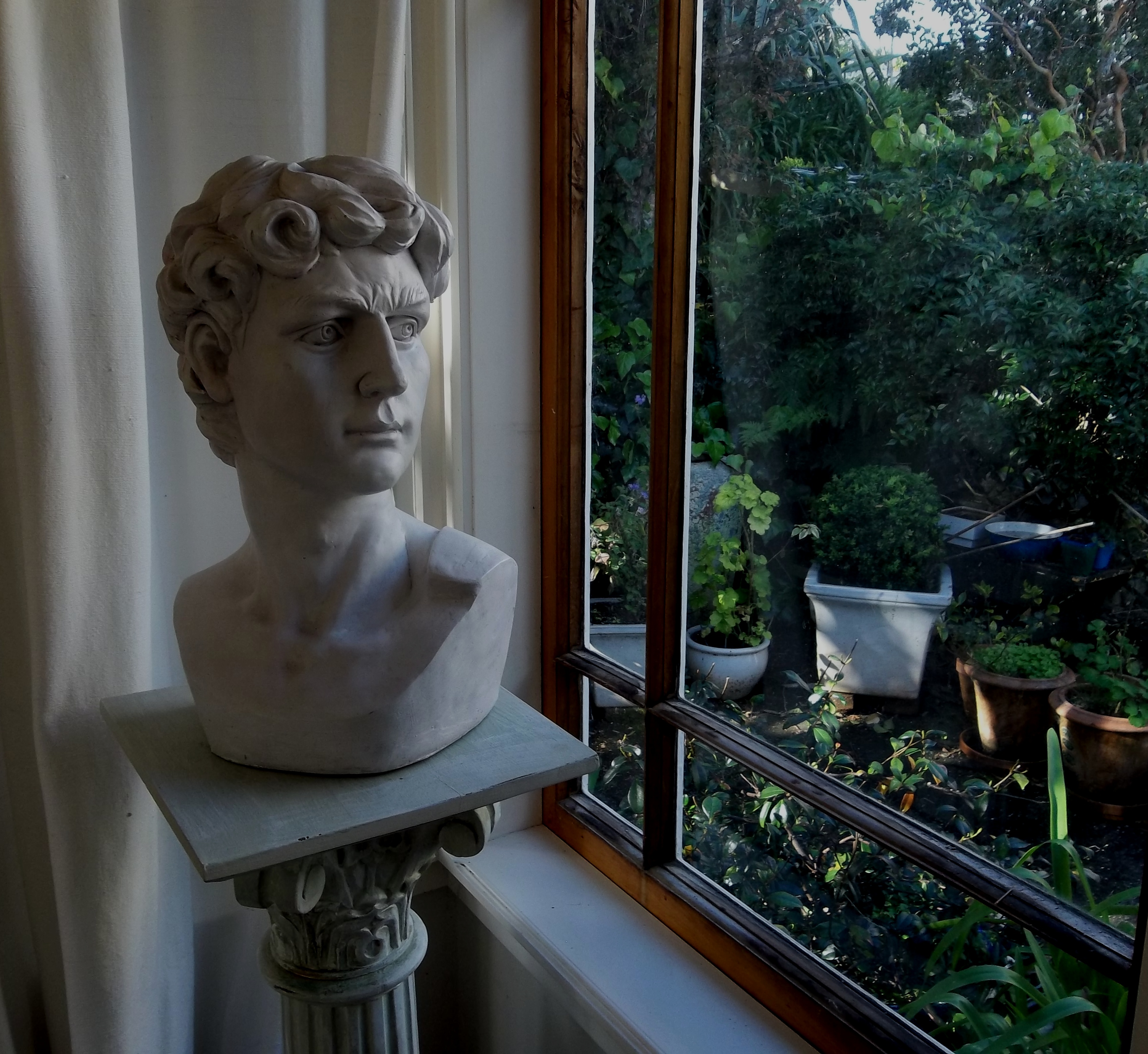
It was a Mozart opera, ‘La Clemenza di Tito‘. Then on Tuesday I spent ages poring over Clanmother’s beautiful blog with Renoir’s pictures. On Wednesday I went back to see the opera again, unable to resist it, and on Friday I rushed in to see the film ‘Anna Karenina’  before it went off. A week you could say, of culture and art. The theme of the opera was goodness and mercy, though it took even worse liberties with history than Hollywood does. This didn’t matter.

The music was sublime, the costumes and scenery a feast for the eyes, and the voices were among the best in the world. Two of the parts were what are known in opera as trouser roles – that is they were written for women’s voices, but the characters were men. Anyone who saw singer Susan Graham all in white as the long legged elegant Rosenkavalier will know just how ravishing women dressed up as men are, and these two were delectable.

Opera singers are born, not made, but to achieve the mastery needed to sing opera well takes years of voice training, learning music theory and music history, if possible mastering an instrument, learning French, German and Italian since most operas are written in these languages, learning drama, acting skills, and sometimes ballet, and for men, sword fighting  skills. For the rest of their lives, opera singers have to continue to practise and train their voices to sing different sorts of opera. Mozart’s music is the most testing and the finest training according to singers. And many have to work at day jobs to make a living.

This opera was written in the last three months of Mozart’s life, when he was travelling around the music capitals of Europe looking for a post to support his family in 1791. It appeared in the first week in September; a week later he produced another great opera,’ The Magic Flute‘, and then some cantatas, a clarinet concerto, a piano concerto, and finally his great Requiem before dying on the 6 December. What inspired creativity in the last three months of his life, and typical of his lifelong astonishing output, having begun composing when he was five .

The pictures of Renoir throb with joie de vivre and utter beauty. Each exquisite picture, whether flowers, dancers, portraits or landscape are radiant with life and light. To see one is exciting, to see a collection of them is breath-taking … In spite of acute arthritis in his hands, Renoir went on painting into extreme old age, and the joyousness and celebration of beauty are always there.

‘Anna Karenina’ is considered to be one of the greatest novels in western literature… though some beg to differ, myself among them. At the end of this sumptuous production, with jewels and dresses to die for, I felt a distaste at having watched a collection of worldly people with no self awareness make a hash of their lives! This novel, along with ‘War and Peace’ are Tolstoy’s masterpieces, for he spent most of his later adult life trying unsuccessfully to reform his errant ways, and then trying to reform the world, gaining a controversial reputation as a reformer. He preached peace and inspired both Ghandi and Martin Luther King.

So in one week I had had a feast of some of the world’s great artists. Beverley Sills, the American soprano once said that: “arts are the signature of civilisation”, and it worries me sometimes that this signature is getting more and more illegible. In a film on Beethoven a couple of years ago, I heard a magnificent German bass agonising over what he called the dumbing down of our culture – referring amongst other things to cheap music, Facebook communication,  and the shallow snippets of sensational news on radio and TV – he was comparing them with the profundity of Beethoven .

I would also have added to his list new Bible translations which are no longer literature, but banal religious tracts, and the sort of art that wins prizes these days – someone’s unmade bed adorned with stubbed out fag-ends and grubby sheets, or a skull covered in diamonds. Both the perpetrators of these masterpieces are now rich and famous on the strength of them…

Taoist philosophy suggests that art awakens a response in the mind and soul and it is important that it should evoke the higher not the lower nature. And that is what the art that I revelled in this week did for me. It lifted me above the daily round and common task, the disappointments and frustrations of a rather difficult week, and reminded me of actress Stella Adler’s words: ‘Life beats down and crushes the soul, and art reminds you that you have one.’ Yes, I think art matters…


Food for Threadbare Gourmets

Frangipane is the delicious almond base in many fruit tarts. It’s easy as…you just need four oz of butter and four oz of sugar, two eggs, one oz flour, 5 oz ground almonds, one teasp vanilla essence, and half a teasp of almond essence. Just beat them all together, and spread on top of the pastry. Then press down in it the fruit of your choice. This is only one of many recipes, some use more eggs, others use more almonds. I keep my ground almonds in the deep freeze so that they are fresh and don’t go rancid.


Food for Thought

Oh great Creator, grant us one more hour to perform our art and perfect our lives.     Jim Morrison 194 – 1971  Poet and songwriter who died unexpectedly in Paris at 27
 

57 Comments

Filed under bloggers, cookery/recipes, culture, films, great days, life/style, literature, music, philosophy, spiritual, The Sound of Water, Thoughts on writing and life, Uncategorized

Bullied by the birds

100_0117

It’s two months since I wrote a blog about the drought called Summer days and thirsty hedgehogs, and since that time we have had no rain.

The country is split between those who live in towns- and so many NZ towns and cities are on the coast – and those who live in the country. The townies, as country dwellers call them, are loving every moment of the long hot summer, revelling in long days at the beach, splashing in swimming pools, lolling around in their gardens, and sitting outside at cafes and restaurants enjoying leisurely meals in the soft twilit evenings.

Families take off at weekends with their tents and boats and kayaks for old fashioned summer camping days by the sea, in the certain knowledge that there will be no rain. At the same time country folk are measuring how many inches of water are left in their water-tanks, or joining the two or three week long queues to have water delivered. I see trees and hedges dying, and my heart aches.

Farmers are selling their stock since they can’t afford to feed them, for there is no growth in the dry brown paddocks: drying off their milking herds, and worrying about hay for the winter. Gardeners like me, are carting buckets of water from their baths to moisten around trees, watering roses and hydrangeas and salvias all struggling to stay alive in the baking heat, and trying to coax dahlias and Japanese anenomes, usually the splendour of the garden at this time of year, to open their stunted blossoms.

I fill the bowls of water around the garden regularly throughout the day, and anyone foolish enough to knock on my door with census papers, Jehovah’s Witness leaflets, or to fix the faulty electric plug for me, all get their ears bashed to put out water for birds and thirsty creatures. I’ve rung the local rag, and got my daughter to Twitter, and hope the SPCA will remember my message about ringing radio stations to remind their listeners.

But one person cannot defeat climate change! This is our third drought in four years, and in the worst one four years ago, we lost so many birds and creatures. The native pigeon population was decimated, as young birds had no water, and people talked of seeing pigeons drop from the sky, dead from de-hydration. The kiwis who dig their long sharp beaks into the ground for bugs and worms starved because the ground was so hard they couldn’t break into it, and when they did, the worms and other food had retreated deep down to damper layers of soil.

This year, another native bird, the kokako, is not breeding at all – for fascinating reasons – the females can see that there are none of the berries on the rimu trees which they normally eat, and are therefore refusing to mate, knowing there’s no sustenance for their offspring. And hedgehogs are dying of thirst.

I’m thinking I’m going to have to start feeding the birds again. I used to feed the handful of sparrows and a chaffinch couple who lived around here – under a tree a little way from the house, and where I could see from the sitting room window.I also fed the dozen or so mynahs, a little way down from the tree so they wouldn’t frighten off the smaller birds. Moist wholemeal bread for the mynahs, wheat and birdseed, and when I ran out, porridge flakes for the others. They loved it all. They told their friends. Within a couple of weeks I had at least a hundred sparrows, four or five doves, some itinerant blackbirds,  chaffinches and an occasional thrush.

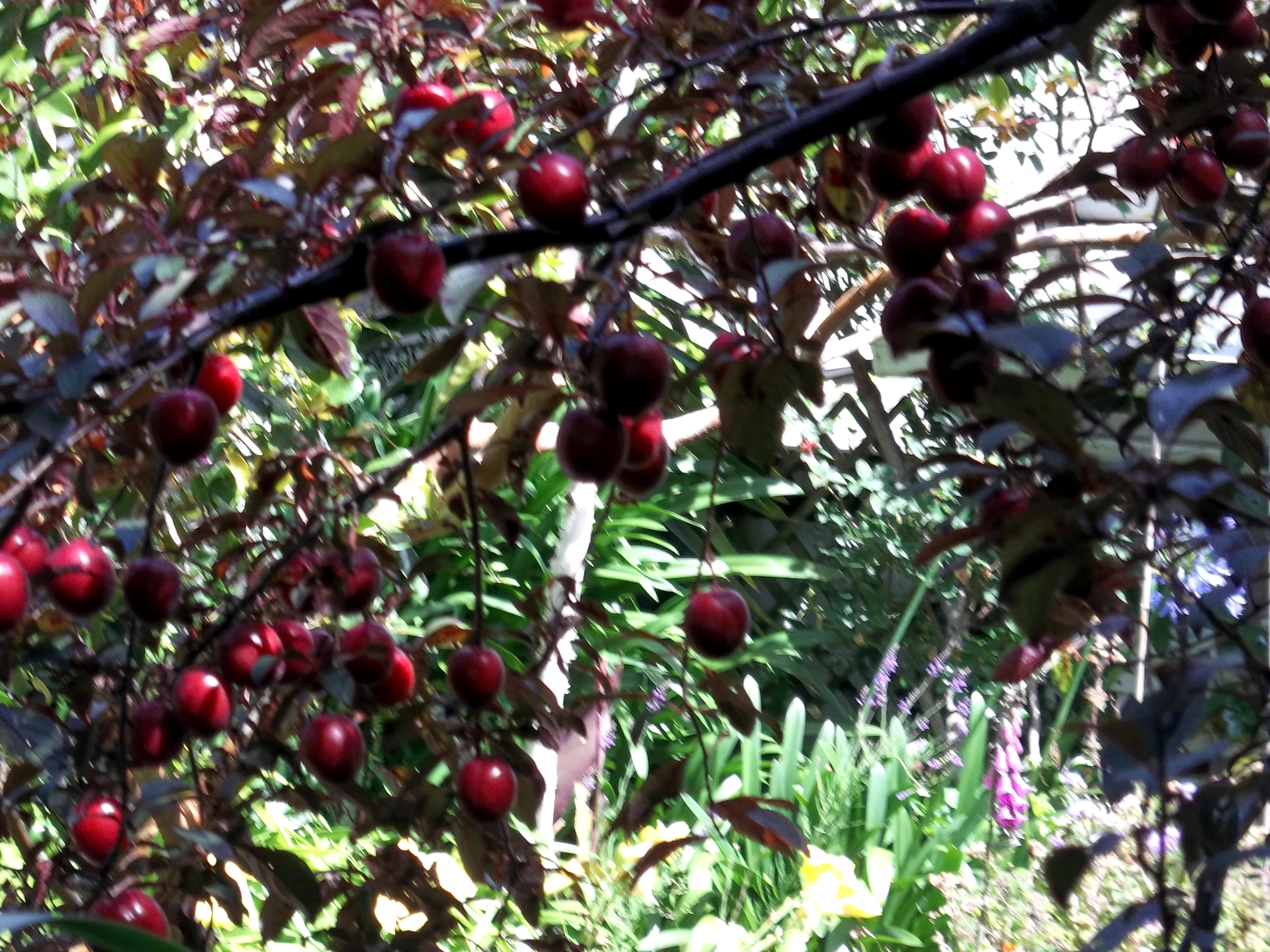
They had also worked out from whence this largesse came . They waited in the plum tree outside the kitchen window and watched me until I came out with their breakfast. And for a couple of hours they sat and barracked me from the plum tree and the garage roof in the afternoon, until I sallied forth with afternoon tea – theirs.

A great whoosh of wings accompanied me to the tree. Then I had to make sure that the neighbour’s ancient lonely dog was not hovering in hope of a dog biscuit. If she was, I had to return with the bird food, and dig out a biscuit and walk her down the road with it, away from the bird food which she would have gobbled up. Dog distracted, back to the birds.

If I was out, they would be waiting for me at the bottom of the road. They recognised my white car, and swooped from telegraph pole to telegraph pole all the way down the road with the car. They’d then hover round the garage yelling “she’s back, she’s back” till I came out. If I went for a walk, they’d fly down the road with me, and wait on the corner.

Finally the worm turned. There were so many birds I couldn’t keep up with them, and was buying a large sack of wheat from the farmers shop each week, as well as extra bread for the big greedy mynahs – money I could ill-afford. The garden was becoming white with droppings, and I was back to the chaos of when I’d had a bird table. The sparrows could probably have made a pot of tea themselves, they’d watched me so intently through the kitchen window for so long.

A short holiday in Melbourne solved the problem. They gave up waiting. I felt guilty but relieved. They didn’t need the food out here in the country. It was just my hobby which had got out of hand. But now, with a hearty respect for the intelligence of bird brains, I think I’m going to have to soften my heart and help them out in this emergency.

That heart sinks at the thought of being bullied by them all again. I’ve done a lot of inner work over the years about letting go of being victim, and preserving myself from being bullied any more, but I’m not sure I can handle being bullied by the birds. It may be a step too far for my fragile self esteem, and feeding the birds may be my last big challenge!


Food for Threadbare Gourmets

We had some lovely summer pears from a neighbour which cried out to be transformed into pear and almond tart. I used the wonderful recipe for pastry which doesn’t involve rubbing the flour into the butter. Instead I melt and cool the butter and just stir it into the other ingredients. The resulting dough doesn’t need rolling, but is just pressed gently into a shallow greased tart dish. It doesn’t need pricking or weighting. Just pre-cook for ten minutes in a moderate oven. You then add the frangipane and the sliced pears and cook for three quarters of an hour or more until the frangipane is just firm.

The pastry takes 125 gm butter, melted and cooled, a generous 100 gms of sugar, pinch of salt, half a teasp each of almond essence, and vanilla essence, two generous tablesp of ground almonds and 180 gms of flour. I love frangipane, and will give the recipe in the next post. It’s the perfect base for pears, plums, apricots, peaches, and I love the sound of the word… it sounds…fragrant!


Food for Thought

An old pond  –  a frog tumbles in  –  the splash of water

One of the most famous haiku  by the most famous haiku master, Matsuo Basha  1644 -1694 He spent much of his life wandering through Japan, like the medieval troubadours and minnesingers of Europe, three hundred years earlier.


65 Comments

Filed under birds, cookery/recipes, environment, food, great days, humour, life/style, poetry, The Sound of Water, Thoughts on writing and life, Uncategorized, village life, wild life

Voices from the Void

100_0190

My accident was a fascinating experience – in retrospect! I was driving happily down the main highway to the village crossroads in my little silver car about ten years ago, when a large, heavy old car – solid as – shot out of the side road, without stopping at the Stop sign.


The daffy woman driving it was oblivious to me, and was going to hit me right in the driver’s seat. I had less than a second to brake, turn the wheel to the left to try to lessen the impact and hurl a prayer into the void as I faced what I thought was certain death. “Help me”, I silently implored. The braking meant that she hit more of the right side of the bonnet than me, and the deafening sound of the impact nearly shocked me into the next world.


In what felt like slow motion my car ricocheted away from hers, with my hands still on the wheel, and I just wanted to hit the brake and stop. But if I did, I was going to hit a line of parked cars. As the impact shot my car towards a parked blue car, I heard a voice say: “keep going, keep steering”. I did as I was told, using every ounce of my shattered will power to do it, and as I longed to stop, a red car loomed in front, and the voice said: “keep going, keep steering”. I thought, at the end of my endurance, surely I can stop now, but another car loomed. “Keep going”, the firm imperative voice instructed. I did as I was told, and finally, still steering, still going, came to rest safely 180 degrees from the impact, on a  side road where there was nothing. And by now people were running out of their shops having heard the big bang.


I was reminded of that Voice last night, when I was re-reading Joe Simpson’s incredible account of nearly dying, and surviving, on a Peruvian mountain. He had broken his leg and his ankle, and then slipped into a crevasse, so deep and dark he had no idea where it ended. His climbing partner thought he was dead and cut the rope between them in order to survive himself, and Simpson fell even deeper into the terrifying black space.


Somehow, using climbers’ skills I don’t even understand, using his ice axes, he eased himself endlessly up the icy sides of the crevasse and out onto the cruel mountainside. Then, without food or drink for over three days, he dragged, hopped, and hauled himself over rocks and glaciers, ice and snow; he got himself back to base camp about eight miles away over terrain, and through cold that I cannot even imagine. And he would never have made it without the Voice.


” It was as though there were two minds within me arguing the toss. The Voice was clean and sharp and commanding. It was always right, and I listened to it when it spoke and acted on its decisions. The other mind rambled…. as I set about obeying the orders of the Voice….”


When he wanted to rest or sleep, the Voice would wake him : “go on, keep going… faster. You’ve wasted too much time. Go on before you lose the tracks”… Later, as he fumbled blindly, wanting just to sink into the snow and sleep, the Voice urged him on: “don’t sleep, don’t sleep, not here. Keep going. Find a slope and dig a snow hole… don’t sleep”.


The Voice got him back to base camp the night before the other climbers were leaving first thing in the morning. The rest of the story is in his book ‘Touching the Void.’


His story reminded me of Charles Lindbergh’s experience when he flying The Spirit of St Louis over  the Atlantic on his historic 34 hour flight across to France. Lindbergh, not noticeably a spiritual man, but one who was very impressed by the Nazis, had a unique experience, in which, unable to keep awake, his conscious mind fell asleep, while a mind entity standing “apart” held firm.  This state gave way to a new extraordinary mind, which at first he feared to trust, and which took over.


‘He became conscious of other presences, advising him on his flight, encouraging him, conveying messages unattainable in normal life… He felt himself in a transitional state between earthly life and a vaster region beyond, as if caught in the magnetic field between two planets and propelled by forces he cannot control, “representing powers incomparably stronger than I’ve ever known”.’


Battered by winds and storms, and guided and supported, he arrived safely in France. This was like the experience of some of Ernest Shackleton’s men. As they struggled through the Antarctic snows at the extremity of their strength they became conscious of another member of the party, ‘who could not be counted,’ but who was always with them.


Whatever we call them… angels, spirits, voices, these visitations are always helpful and benevolent. In each of these cases – and there are many more – these unseen energies are rescuing us from situations in which we are powerless. Regardless of belief in a god or not, these inexplicable and indefinable happenings make me feel that the world is a supportive and benevolent place, with Resources to help us all, whatever our beliefs, if we are open and available for help.


Sometimes we ask, sometimes the help comes unbidden, as when an accident happened in Wellington at a Christmas party a few years ago. A balcony collapsed on a two story house, hurling all the party-goers to the ground. A heavily pregnant woman said she felt perfectly safe because a great white angel was holding her, and put her safely on the ground. She was unhurt.


Some people find it hard to believe these things. But it doesn’t really matter. When they happen, they happen because they’re needed. But a faith that there is help available does seem to make things fall into place quickly and more often. I sometimes think that there is more preventive thinking in that other Reality than we realise, so that we don’t have to be rescued from the big dramas. So deciding to drive another way today, may mean we’ve been prodded to avoid an accident. Locking a door we never normally lock, may be a message from our helpers because we need protection on that day. When we listen, there are so often messages to hear, and when we look, so many subtle signposts.


Food for Threadbare Gourmets


Not much in the house until I go shopping, so I’ll cheer us up with a cheese soufflé – quick, cheap and easy. The most difficult thing about it, is tying some greaseproof paper round the outside of the soufflé dish so that the soufflé stands up above the brim of the dish, and looks spectacular.


Next step is to separate three eggs. After greasing the dish, I make a thick white sauce, with two ounces of flour, two ounces of butter, and half a pint of milk, salt and pepper. When it’s bubbled a few times, so you know it’s cooked, stir in four or five ounces of grated cheese with a pinch of cayenne. I often add Parmesan to strong cheddar.


Stir in the egg yolks. Putting this aside, whip the egg whites until stiff in a large bowl. Then gently stir in the cheese mixture in three lots. I use a slotted spoon to make this process as gentle as possible. All you have to do now is pour it into the soufflé dish and cook in a moderate oven. Serve at once. I often make a little tomato sauce to go with this, and maybe some thinly sliced green beans. Salad if you’re feeling healthy. This is enough for three, and masses for two- but easy to eat too much…


Food for Thought


Notice in the grandest and stuffiest club in London, the Athenaum: Will the clergyman who stole my umbrella kindly return it. This club consists half of gentlemen and half of clergymen, and it is clear that no gentleman would steal an umbrella.


53 Comments

Filed under books, cookery/recipes, great days, life and death, philosophy, spiritual, The Sound of Water, Thoughts on writing and life, Uncategorized

Is less really more – or less?

100_0223

To keep or not to keep – that is the question. I look around my tiny kitchen and think I should de-clutter, simplify, get rid of all the surplus stuff overflowing on shelves and in cupboards. No good asking the question, do I need it – of course I don’t … next question – do I want it? That’s the trouble, I think I do…

So do I need the cream Italian stuff we eat off every day? It’s also perfect for summer meals to be served on the veranda when we have guests, the bowls are perfect for pasta and winter stews, and I love them. So do I need or want the white French provincial china, which looks so elegant when I want to serve a dressy meal to guests, and looks wonderful on a white lace table cloth? … Yes, I do, and the big carving plates which make mounds of summer vegetables or heaps of roasted winter vegetables look utterly delicious.

I particularly love the deep white pudding bowls – perfect for my comfort food  -cornflakes,  or for porridge, on a white tray with all white cup and saucer, milk jug, and coffee pot. And sometimes I yearn to treat myself to eating off the antique French flowered plates… some I bought myself as a Christmas present, and that same Christmas my daughter thought to herself: “she’d like these,” and gave me matching ones which completed the set.

Or I want to serve pumpkin soup in the big shallow blue and white Victorian soup plates with a wide brim, so much more enticing than pouring the hot orange soup into something small and plain. My husband loves to have his lunch on a big square green modern French plate, and on those days I eat mine on a pale turquoise and amber coloured pasta plate I bought in Melbourne.

I don’t need those earthenware dishes, I think to myself, but cauliflower cheese looks lovely in the big one, and then the vegetables look perfect served in the smaller dishes, all found in junk shops and markets for the proverbial song. Each one is imprinted with a memory of the person who gave it to me or the place I found it. And I do need the little white dishes for chocolate mousses for the grand-children.

Then there’s the glasses – big green glass goblets for water with the cream plates, generous French country wine glasses for smart occasions, fragile cranberry pink champagne glasses for special events, the old crystal glasses which are so old fashioned nowadays, but look so charming on the aforesaid lace cloth with silver and the oval white china dinner plates. I could pare down the whole collection and we could use one set of this or that… I don’t need them all, but I enjoy them all.

I could split up the beautiful antique tea service with pink Chinese pattern – ten cups and saucers with all the bowls and jugs that go with them. I could sell six and keep four for myself… but it seems like vandalism to split up something that’s been intact and unchipped for over two hundred years … and what about my old jugs … some of them cracked, but all loved.

In the end, it’s the enjoyment which wins…. no trouble getting rid of gadgets – there are few, and the only ones I really use are the hand held beater, and the new stick beater. I find that the  crock pot makes all meals taste the same, I don’t need the blender now I have the stick, and the really expensive juicer I hardly use since I discovered that drinking so much vegetable and fruit juice was making my arthritis worse from all the sugar in the fruit and veg. The coffee grinder which I also used for grinding nuts, can go… the ancient hand – held cheese grinder can do the same job for nuts, and I was never much of a one for grinding my own coffee beans, though coffee afficionados may wince at hearing this.

Wooden spoons stay! As does the old-fashioned boy – scout tin-opener. I’ve never mastered the efficient modern variations. The same old saucepans for thirty or more years need no sorting … I know exactly what I can cook in each different size, and would be thrown into confusion if I had to start with something new, or cope with fewer. Ancient saucepans and baking tins stay.

And as I look at this inventory of my kitchen I can see that it’s the looks that count! Few nods to super duper efficient kitchen gadgets and inventions… a pop-up toaster and a wooden spoon were the only gadgets I had until I was nearly fifty, until the day I discovered a blender… which is obsolete now anyway with my new simple stick blender.

But all of this is dodging the point… that in a world where we are trying to come to terms with less is more, as the scale of the waste and destruction of the planet becomes more apparent, to harbour so much stuff seems counter-productive. Consumerism is what is driving the rush to planetary ruin, chopping down more forests for furniture and newspapers, using all our resources for more clothes, more sheets, more gadgets, more cars, more of everything, even when we don’t need it.

So far my one step towards the goal of less is more, is to announce to the family that I’m not buying any more stuff at Christmas and birthdays… what they will get is things of mine they like, books of mine that they’d enjoy, or pots, jars and bottles of food made by moi – or a cake – also home-made. Or I will grow them a plant. Not only does this save me money, but it also means one less consumer buying useless stuff to give to people who already have more than they need, and whose houses are also filled with stuff.

And yet in the meant-time I’m still indulging my whims using different plates and dishes and cups. I think to myself of William Penn, a swashbuckling young cavalier when he became a Quaker. The one thing he couldn’t let go from his former courtly life, was the sword which  he wore every day, like all his contemporaries.

He discussed this problem with George Fox, founder of Quakerism, who being a true mystic was also profoundly common sense, and understood that deprivation is bad psychology. George Fox gave William Penn this wise counsel: “I advise thee to wear it as long as though canst.” Not long after this they met again, when William had no sword. George said to him, “William, where is thy sword?”  “Oh!” he said, “I have taken your advice; I wore it as long as I could.”

So I placate myself with the thought of these two men, and think that I’ll take George Fox’s sensible advice. When I am ready I will be able to part with these things that I love, at the perfect time and in perfect peace. Until then, I will savour the enjoyment of them, comforting myself with that Hebrew saying that when we arrive at the other side, we will be called to account for all the permitted pleasures that we failed to enjoy…

Food for Threadbare Gourmets

In the last post I gave a recipe for rice salad. We eat it with cold chicken in a lightly curried mayonnaise dressing. Allow enough chicken for each person. I steam a chicken for this, or if there’s only a few of us, poach a couple of chicken breasts in water with an onion, carrot, bay leaf and garlic clove. If I’m really up against it I might use a cooked organic chicken from the supermarket. Cut the chicken into bite-size pieces. In a deep bowl put two generous table sp of good bought mayonnaise for each person. Add a few tablsp of cream, a good tablsp of golden syrup, a tablesp of curry powder and mix together. Taste and adjust – more curry powder, more golden syrup, more mayonnaise, until it’s to your liking. Mix in the chicken. I put this in the centre of a large carving platter and surround it with the rice salad.

For the vinaigrette for the rice, (this is vital to the taste) mix one third wine vinegar to two thirds olive oil, stir in a good teasp of Dijon mustard,  sugar to taste (I use about a desert sp) a very generous grinding of black pepper, and then some salt. Mix this through the rice just before serving, and eat with a green salad. It makes a lovely summer lunch with friends.

Food for Thought

Give us the honesty to examine our own acts and thoughts as scrupulously and severely as those of other people.

Pierre Ceresole  1879 – 1945    Quaker, and son of a former Swiss president. An engineer, who in 1920, dedicated himself to working for peace, and who founded The International Voluntary Service, working wherever there was need. He was imprisoned many times for refusing military service, and for entering Germany several times with messages of peace.

48 Comments

Filed under cookery/recipes, environment, food, life/style, philosophy, spiritual, sustainability, Thoughts on writing and life, Uncategorized

Books and real people

100_0233

So many bloggers write about their experiences writing fiction that I’ve begun to look long and hard at what I read.  Mostly diaries, letters, biography, autobiography and history.

Why? I’ve been asking myself. I think of a panorama of people, living and dead and what I love about these accounts of real life are the moments of humanity and truth that emerge, lighting up the character of each person, and giving me such an insight into the goodness, variety, and endless capacity for living which we humans are capable of.

Though fiction gives us these moments too, I love to see them embedded in the life of people we know in history, and to see how we have changed so much – and not changed at all.

So there’s the Venerable Bede, who introduced the terms AD and BC into our language and wrote dozens of books in ‘Englisch’ for the first time in history. This gentle, scholarly man was a foodie in the seventh century, and spiced up the basic monastery fare in remote Northumbria by using rare and expensive peppercorns. He bequeathed his little store to his fellow monks when he died…and also his handkerchiefs… another luxury in that far-off century.

And talking of food – what an intriguing insight into the character of Ulysses Grant – to read that this great soldier, who was responsible for sending hundreds of thousands of men to their deaths in the struggle between the Union and the Confederates – hated the sight of blood. All his meat was overcooked to the point of being crisp. He never went hunting, refused to attend a bull – fight held in his honour in Mexico when he was president, and was probably the first horse whisperer, a superb horseman who could do anything with any horse.

Another great general, Wellington – whose horse Copenhagen, was as famous as Robert E. Lee’s Traveller – loved dancing, and any officer on his staff had to fulfill the job description of being a good dancer. Onlookers were surprised by their frivolity and their dedicated efficiency, but between battles, these dashing young aristocrats danced their way around Vienna, Brussels and Paris, their most famous dancing date being the Duchess of Richmond’s ball on the eve of the Battle of Waterloo. When Napoleon surprised Wellington (“Humbugged, by God!” exclaimed Wellington) many of these officers had to rush straight from the ballroom to the battle in their dancing shoes.

I read seventeenth century John Evelyn’s diaries, and his account of passing Stonehenge in a carriage, and attempting an act of vandalism, hammering at one of the huge stones, and failing to make a dent. He reaches across the centuries when his eldest son, five year old Jack died suddenly, and he wrote what so many bereaved parents feel: “Here ends the joy of my life, for which I go mourning to the grave.”

On the other hand, famous philanderer, English MP Alan Clark, shows that the hard arrogant swashbuckling man is a complex unpredictable human being, when he writes of seeing the heron who’s been poaching the fish in his moat. (He lived in a castle… doesn’t everyone?) and seizing his rifle shoots it. He describes the slow dignified ebbing of life as the beautiful creature keels over, and he weeps in horror as he feels the enormity of what he has done.

I love the story of Lincoln’s Secretary of State, William Seward, who had had a dreadful carriage accident with two bolting horses. As he lay in pain in bed at home, missing all the action and excitement around the start of Lincoln’s second term, Lincoln came to visit him, on his return from Richmond. He lay down on the bed, alongside the agonised man, propped himself on one elbow, and told him all that was going on, asked his advice, and made him feel he was still an important and valuable cog in the wheels, instead of a sick bystander. The tenderness and sensitivity of the long, lanky President lying on the bed, looking into the eyes of his suffering colleague moves me deeply.

As does the picture of Isabella Burton, the famous explorer Sir Richard Burton’s wife, sitting on the dusty ground in her voluminous Victorian skirts at their house in Damascus, cradling her pet panther in her arms until he died. He’d been poisoned by a neighbour.

Yes, I love fiction, especially the oldies like George Eliot, Thomas Hardy, the inimitable Jane, and others, but it’s that feeling of recognition and empathy that I love when reading about the humanity of these ordinary, or great or historical people. Like crusty old King George V complaining about his eldest son’s suits, with turn-ups on his trousers, and Queen Victoria writing to her second son Alfie ticking him off for his smoking, putting his hands in his pockets, parting his hair in the middle, as well as his “frightful stick-ups” – high collars – they remind us that parents’ disapproval of their childrens’ clothes and habits is a long- standing tradition.

Waiting in a stuffy men’s club, I saw a book- case filled with old books. One title jumped at me – the memoirs of Count Lichnowsky. I had no idea who he was, and became entranced by his historic and vivid descriptions of being German Ambassador in England on the outbreak of World War One. He wrote of his heartbreak as he left London where he admired and respected all the statesmen there, and I read all his frantic telegrams to the Kaiser, trying to stop the immoral invasion of Belgium which triggered the conflict in France.

But best of all, I read his description of Sir Edward Grey, the British Foreign Secretary who spoke those immortal words on the eve of World War One: “The lights are going out all over Europe.” Sir Edward, a humble and rich man who rode a bicycle to get to and from friend’s houses – up to thirty miles away –  used to feed by hand the red squirrels who came to the window of his house in Scotland.

Tender glimpses of real people, moments of gentleness, of love and goodness… these are the reasons I love non-fiction … insights into men and women’s souls, windows into their lives… the history of the human race in these moments of truth and intimacy. And this, of course, is why blogs are such addictive reading. They give me the same connection with truth and reality.

Food for Threadbare Gourmets

One of the things that I’m never without are packets of chipped or slivered almonds (not flaked). They make a difference to every dish I use them in. I toast them in a dry frying pan  and sprinkle them over cauliflower cheese, and they give it a wonderful crunch to contrast with the smooth cheese sauce and soft cauliflower. I toast them to add to raw cauliflower salad for that crunch too.

And they are wonderful in rice salad. This is the basis for a cold chicken salad, which I’ll share in the next post. The rice has peas, juicy soaked sultanas, chopped parsley- plenty – and lots of toasted almonds for the crunch factor. At the last minute, add a vinaigrette dressing and gently mix it through.

Food for Thought

“Oh King, when we compare the present life of man on earth with that time which is unknown to us, it seems like the swift flight of a sparrow through the banqueting hall wherein you sit at supper in winter with your thanes and counsellors.

In the midst there is a good fire to warm the hall; outside, the storms of winter rain or snow are raging. The sparrow flies swiftly in through one door of the hall, and out through another.

While he is inside, he is safe from winter storms; but after a short space of fair weather, he vanishes out of your sight into the dark winter from which he came. So this life of man appears for a short space, but of what went before or what is to follow, we know nothing.

The Venerable Bede  AD 672/3 – 735   Monk, historian, teacher

61 Comments

Filed under books, cookery/recipes, great days, history, literature, philosophy, The Sound of Water, Thoughts on writing and life, Uncategorized

Carrying on with the army

100_0179

Nasturtiums in my garden

My brilliant career in the army, making unconscious mayhem as a recruit and scrambling through officer training, had not quite lived up to my expectations of discovering gorgeous young men, eager and willing to escort me into a glamorous high life of dancing and dates,  which was what women’s magazine of the fifties sold as the ideal preparation for marriage.

They also suggested that a touch of white around the neck, and spotless white gloves were the final touches needed for any ambitious girl to find her beau. So far the army had not given me much scope to achieve these dreams of social success. First recruit training in an all woman training depot, and then a year at an all woman officer training unit cut off from all other human contact in the middle of a bracken – covered heath dotted with silver birch woods.

Absolutely beautiful, but at nineteen I didn’t have the same thirst for nature and for beauty that I have fifty five years later. So it was a blow when I found myself back to the nunnery for my first posting, at my old stamping ground, (literally) the Depot. There were still people there who remembered me enraging the Colonel by marching around in a red coat because I’d arrived on the wrong day, and ingenuously behaving as though I was in Harrods when fitting my marching shoes at the Quartermaster’s store.

But they let this pass now that I sported one lonely little pip on my brand new officer’s uniform. They even saluted me, and I gingerly returned the courtesy knowing that I hadn’t actually earned the respect they were forced to give me.

The one bright spot was that I was simply one of half a dozen girls like me, even though I was the youngest, and some of them are still friends after a life-time. Our main ambition was to escape the depot and get a posting overseas, which was our idea of heaven. But we had to make the best of it in the mean-time, and an intermediate stage of paradise was to get oneself on a course – this could be anything from a pay course to a signals course.

The unspoken idea was that while we were escaping from our nunnery, we would meet some of these gorgeous young men we were sure were lurking in the rest of the army, and while they were there to learn about pay or signals and maybe further their careers, we went to enjoy ourselves.

I immediately put my name down for a religious leadership course – that seemed an easy one, and a fire-fighters course – this happened to be with the Maidstone Fire Brigade, and I was the envy of the other girls because I actually had a long distance boyfriend who was ADC to a general not far from Maidstone. I planned to see plenty of him during the course.

I was accepted for both courses, and accepted the congratulations of my friends. All I had to  do now was wait for the time to come round – they both were six months away. Anticipation kept me soldiering on through the regular rituals of documenting recruit intakes, inspecting said recruits and their barrack room floors and giving them boring lectures on pay scales, army routines and regulations; signing pay books on pay parade, and getting myself on parade  every day on time to march the recruits round the huge parade ground. Not exactly romantic, but you have to start somewhere.

December came at last, and all excitement I set off for the religious leadership course. It was set in a large country house, Bagshot Park. Then, it was the headquarters of the Royal Army Chaplain’s Department and sported a notice by the lake saying ‘Please do not walk on the water’. It had been a royal residence for hundreds of years, before being pulled down and rebuilt for Queen Victoria’s third son, the Duke of Connaught. He died in 1942 and the lease went to the padres. Today this Queen’s third son, Prince Edward, lives there with his wife and two children in the 120 room mansion.

I arrived on a cold foggy day, when the depressing rhododendrons were dripping damply around the red brick house. Inside it was swarming with young men – very heaven!!! There was one other girl on the course. We had this concourse of young men to ourselves! However, on closer inspection, few of them were up to scratch for the destiny we had in mind for them.

Not many of them were dashing, only one of two had glamorous little sports cars – and only some of them seemed interested in us. However, bearing up, we made the most of our opportunities, and I for one, enjoyed the luxury of a huge bedroom and bathroom which had once belonged to the dead Duchess of Connaught.

We now had ten days of getting up at dawn for Holy Communion, and attending various services like Matins and Evensong throughout the day in the chapel, ending with Complines (a lovely service) at ten o clock and lights out. In between all this church going we listened to unmemorable lectures, which never seemed to actually give any information on how to be a religious leader in one’s community (I am in still in the dark fifty five years later).

I nearly starved to death, the food was so awful. A handful of us were driven to bribe the cooks to leave  the side door unlocked, and we sneaked out in search of food, sometimes as far away as London … The only places open for a hearty meal at that time of night tended to be transport cafes, catering to long distance truck drivers. We pigged out gratefully on fried bacon, egg, chips, sausages and tomatoes, before tiptoeing back to the sleeping padres.

After two days of what felt like fasting, and churchgoing, we were called together for an announcement. The padres considered it unseemly that the two young maidens (us) should be using the same staircase up to our bedrooms as the young men. Forty of them and two of us. So the in-offensive young men were banished to the back stairs up which once valets and skivvies and ladies maids had toiled, while we used the grand heavily carved main staircase which led down into the great hall where we gathered before meals and lectures.

Josie and I sailed down this great staircase in our high heels and solitary state several times a day, the cynosure of all eyes. Head held high, straight spine, carefully nyloned legs, manicured hands sliding gracefully down the smooth stair-rail, we made the most of it, especially at night when we had to change for dinner.

What the prim padres, anxious to protect our virtue didn’t know, was that my soaring bathroom had a spiral staircase up to the maid’s room above. And in the maid’s bedroom were crammed five lusty young men. On the nights when we weren’t roaming the streets desperately looking for food, and sometimes on those nights too, the trapdoor would open. The chaps would all perch on the narrow steps of the spiral stairs, while Josie and I sat on the edge of the bath in our dressing gowns, and made ovaltine for us all with hot water from the tap, using our tooth-mugs.

We shuddered to think what the padres would think of this depravity. Honi soit qui mal y pense.

(The next instalment of this thriller/chick lit/ dubious autobiography will come when I can’t think of anything else to write. Previous instalments are under the headings of A Soldiers life is Terrible Hard..)

Food for Threadbare Gourmets

Tomatoes are still cheap and plentiful, and when we had a celebration dinner for our national day, Waitangi Day this week, I used this tomato recipe with roast chicken legs tossed in flour and fried to make the skin crisp; plus roast potatoes parboiled and thrown around the saucepan in flour to give them a rough edge so that when they were cooked in hot oil they were crunchy and crisp, leeks and carrots. The tomatoes, which should have been a starter, lubricated the meal so we didn’t need any gravy. We followed this unusually elaborate meal for two with a left- over Christmas pudding – sweet, aromatic and enhanced with glorious brandy butter!

The tomato recipe comes from a French doctor and cookery writer Eduard de Pomiane. I’ve used it for the last fifty years or more, but he is now becoming a bit of a cult, and I saw this recipe re-produced recently in an article by English novelist Julian Barnes.

It’s simple as, and de Pomiane suggests it as a starter. Slice six tomatoes and put them cut side down in a frying pan with a knob of butter. Puncture the skin at intervals with a sharp knife. After five minutes turn them over and cook for five more minutes.  Then turn them back again for ten minutes, and finally turn them again, cut side up. The juices run out of the slits in the skin. When they are cut side up the last time, pour about three ounces of thick cream into the pan to merge with the juices. As soon as it bubbles, slide onto a dish and serve immediately. The taste is utterly unique.

Food for Thought

You know quite well, deep within you, that there is only a single magic, a single power, a single salvation … and that is called loving.        Herman Hesse 1877 -1962   German – Swiss writer and painter, winner of the Nobel Prize for Literature


42 Comments

Filed under army, cookery/recipes, great days, humour, The Sound of Water, Thoughts on writing and life, Uncategorized

Goodness, peace and bloggers

100_0185

Last night I read a novel by a distinguished prizewinning writer. I polished it off in a few hours, turned over and went to sleep.

This morning I awoke thinking how depressing it was… not one man or woman who was inspirational, kind, or good – everyone ambivalent and self-absorbed. And then I remembered one peripheral historical character, whose real life contribution to the care of the wounded in World War One is one of the more fascinating true stories of that time. He was a man of integrity, compassion and genuine goodness.

And as I thought about him, I could feel my whole body relaxing, and a smile on my face. I thought to myself how much I love reading about goodness.

I thought about Mildred Norman, the Peace Pilgrim, that amazing woman who for twenty-eight years walked the length and breadth of the States seven times. She carried nothing but a few items in the pockets of her jerkin which was emblazoned with the words Peace Pilgrim. From 1953 to 1981 when she was killed in a car crash, she walked to remind people of peace.

She walked through the Korean War, all through the Vietnam War, and on through all the other conflicts, until the day she died. She had no means of sustenance, she ate when she was given food, and slept wherever she was, and usually people recognised her goodness and gave her a bed…” walking until given shelter, fasting until given food”. When she reached 25,000 miles in 1964, she gave up counting.

Wherever she went she talked of peace, saying: “We who work for peace must not falter. We must continue to pray for peace and to act for peace in whatever way we can, we must continue to speak for peace and to live the way of peace; to inspire others, we must continue to think of peace and to know that peace is possible.”

Ironically she was killed in a car crash while being taken to speak to a meeting. But her disciples carry on her message. She was seventy -one, a gentle, silver- haired blue-eyed woman with a tanned complexion.

Then there was Don Ritchie, ‘The Angel of the Gap’. I can’t read about this beautiful man without tears blurring my eyes. He retired as a salesman, bought a house with a marvellous view of the ocean just outside Sydney, which also overlooked a famous suicide spot. He spent the rest of his life looking out of the window at that famous view. Not to enjoy the view, but – “for a far greater purpose,” as one obituary put it – to rescue those who came to end their lives.

As soon as he saw someone lingering there, he walked across to them smiling, with his hands out, palms up (what a beautiful, instinctive gesture of peace and non-violence). “Is there something I can do to help you?” he asked.  He talked to them until they were ready to pick up their shoes and their wallet and their note, and to come back to his house where his wife had a cup of tea waiting for them.

Sometimes he risked his life struggling with those who were determined to jump. The official count of the lives he saved is 164, but those who knew him believe the figure to be nearer 500. Bottles of champagne and cards arrived for him for years after from those whose lives he’d saved.

He used to say: “never under-estimate the power of a kind word and a smile”. He died last year at eighty-six, proof that no-one needs special training to serve their world, that love makes a difference, that great goodness is to be found in ‘ordinary’ people ( if indeed they are ordinary) as well as in spiritual mentors…

And then there are some of the bloggers whose posts I never miss… not witty or intellectual or spiritual, but filled with a sweetness and a simple goodness that lights up my day… they make me think of that haunting little Shaker hymn ‘Simple Gifts’… because their goodness is a gift, and it’s a simple uncomplicated sort of goodness, spontaneous and undemanding. Reading these gentle blogs about ordinary events and everyday lives filled with weather and  animals and growing things is like smelling a flower.

But unless one is a Pollyanna, I have a shadow to face too – cyber-bullying. It’s hard to remember that we are all one, when  encountering words and actions of destructive malice, and this is when the words of the sages like the Peace Pilgrim help me keep my balance. It’s then that I try to be thankful for this shadow, because it shows me that there must be some place in me where I don’t love myself as my neighbour, and so some inner work to do. And it’s that test of one’s character and integrity to be unmoved by such psychic attacks.

Miguel Ruiz’s words carry me through these moments that could unbalance me. His second agreement reads: “Don’t take anything personally. Nothing others do is because of you. What others do and say is a projection of their own reality, their own dream. When you are immune to the opinions and actions of others you won’t be the victim of needless suffering”.

These words of wisdom are what can keep me on the path of peace… because though the Peace Pilgrim talked about world peace, and the end of war, the wars won’t end until our own lives are at peace and ‘peace is every step’, in the words of Thich Nhat Hahn… Peace to us all.

Food for Threadbare Gourmets

Summer means lots of tomatoes, and I often use them the way I remember from living in Vienne, Central France as a child. I remember huge – probably- beefsteak tomatoes, with their middles cut out, and filled with thick golden mayonnaise. If I do them today, one each is enough for us, for a light lunch, served with some crusty rolls. If I do them as a starter, I use smaller tomatoes, and surround them with glorious sweet smelling basil. I serve them on green plates, and they look gorgeous.

The mayonnaise is the usual. Using a stick beater, in the beaker break one whole egg – both yolk and white – plus salt, pepper, a good slurp of white wine vinegar or lemon juice and a good teasp of mixed mustard. Pour in some grape oil or other gentle tasting oil but Not olive oil, to just under halfway up the height of the beaker, and then press the button! Whizz, whizz, and mayonnaise is ready! This process spoils the taste of the olive oil – hence the need for alternatives.

Food for Thought

The more faithfully you listen to the voice within you, the better you will hear what is happening outside. And only she who listens can speak.

From ‘Markings’ by Dag Hammarskjold, second UN Secretary General. 1905 – 1961 Diplomat, and writer, son of a Swedish Prime Minister, descendant of generations who had served the Swedish crown and people since the 17th century.   A spiritual man, during his time at the UN he organised and supervised every detail of a meditation room there. His plane crashed in suspicious circumstances on a peace mission in Africa. He’s the only person to have been awarded the Nobel Peace Prize posthumously.

I’m learning to take pictures, but haven’t got the hang of captions yet!  This is the crepuscule rose in my garden

59 Comments

Filed under bloggers, cookery/recipes, happiness, life and death, love, peace, philosophy, spiritual, The Sound of Water, Thoughts on writing and life, Uncategorized

Lincoln’s wife – ‘that woman’

This is the story that Isn’t in the film on Lincoln. But I couldn’t look at Robert Lincoln in it, without thinking of how he betrayed his mother and had her certified as insane and bundled into a mental home ten years after her husband died.

After her husband’s death and then the death of Tad, Robert was her only son. He left her to grieve alone in her cheap hotel when Tad died and went off on holiday for a month. Later, after she had had a premonition that he was in danger, he decided he’d had enough.

Reasons for certifying her were her obsessive grief, belief in spiritualism and premonitions  – her husband had dreamt of his death shortly before his assassination – compulsive shopping, and embarrassing efforts to raise money – like selling her clothes – because she couldn’t afford to buy a house when she left the White House, and was lobbying for a pension..

Two men arrived at the hotel where she lived, took her off to court, where Robert had bribed six doctors who’d never seen her, to say she was insane, and the jury – of men – certified her. After three months, she managed to smuggle a letter to a woman friend who was also a lawyer though barred from practising because she was a woman, and finally extricated herself from the asylum. She went to live with her sister.

The actor playing Robert was a remarkable likeness, as was Sally Field, who wore copies of the same clothes that Mary Lincoln had been seen in, and also looked uncannily like her. Mary Lincoln, for all the slurs and vicious attacks on her in the newspapers of the time, was her husband’s most loyal and percipient supporter. She’d seen his greatness from the days of their courtship, when she turned down another suitor – Stephen Douglas –Lincoln’s political rival, and said she intended to marry a man who was going to be President, and it wasn’t him!

When her confidant Elizabeth Keckley, and she fell out, Keckley wrote a book about Mary’s years in the White House. Who of us would want our lives exposed by a friend we’d fallen out with? Over the years newspapers picked up every piece of malicious gossip, true or not and ran with it, while Robert’s explanations for his behaviour added to the picture of an unbalanced and unlovable woman. The lasting effects of all this negative publicity shows in her entry in Wikipedia in which all the slurs of that time are repeated as though they were true.

One of the last massive  public snubs this unhappy and difficult woman endured was when one of my favourite people, Ulysses Grant, and his wife Julia, were given a triumphant reception in Pau, where Mary Lincoln was living in frugal exile in France, and they failed to even call on her.

In psychological terms, she never got over her feeling of being a victim, which she was, attracting the very events which re-inforced her victimhood. She was a victim both of the times she lived in, and of her own frequently tactless behaviour. Displaced as a year- old baby by two more brothers, she became the forgotten middle child in a family of six, and then her mother died when she was six years old.

A new stepmother arrived swiftly in the family and one of her methods of dealing with her unwanted stepchildren was to shame and humiliate them, which to a vulnerable six year old would have been devastating. As more and more children arrived in the family via the stepmother, the older children became more side-lined and alienated.

Mary became a boarder at a school in walking distance from her home, and at seventeen left this unhappy house to live with her sister. She was pretty, mad about fashion, accomplished, speaking French fluently,  highly intelligent, and fascinated by politics, an unusual quality at a time when most girls left school and thought of nothing but clothes and who they would marry .

When she met and married Lincoln, unlike most other women then, Mary had neither slaves not servants. She kept her house like a new pin, became a noted cook and hostess for her husband’s political supporters, and brought up their children in a very modern way, easy-going and tolerant, as was Abraham. But the deaths of three sons and her husband devastated her already scarred psyche.

After each death she did become emotionally unbalanced, no doubt driven by that first deep wound of her mother’s death. And history has not been kind to her.  Today, she would have been understood and received the counselling and therapy she needed to exorcise her pain. Today we would have understood that her extravagant shopping was an attempt to comfort herself… who of us has not enjoyed some retail therapy at some time in our life?

Today, her child-rearing methods would have been accepted, as would her need for an outlet for her talents and energy. Today it would not be possible to bundle her off out of sight into a mental home because she was an embarassment. But it was okay to do that to a woman in the 1870’s.

Today, she would have received proper medical treatment for the post childbirth problems she suffered for the rest of her life, as well as for her constant migraines. She would not have been treated as a hysterical neurotic with no rights. (“Get that woman out of here,” a man said when she was weeping over her dying husband.)

Today, she would not have had to leave the White House with no means to buy a house for herself and her children, would not have had her husband’s estate withheld from her for two years because of dilatory executors, and she would not have had to beg for a pension. After leaving the White House she lived in cheap hotels for the rest of her life.

She had a happy marriage and a devoted husband, and had no need of VAWA, and the protection against violence that so many women need today all over the world. She needed the protection of rights and respect, and in Western countries at least, today women can no longer be treated like chattels or second class incompetents – they are equal under the law, they have a vote and a voice.

The contrast between Mary Lincoln’s treatment then, and women’s rights and opportunities today shows us that we have made progress, that civilisation is inching its way to a better world, and that though there are still so many areas of pain and poverty that need to be tackled, we can still hope to ease the suffering, knowing that we’ve achieved so much already.

Don’t miss that film ‘Lincoln’!

P.S. If I seem neglectful at reading your blogs, it’s I’m having great trouble with Word Press. According to the teenage son of the garage proprietor I’ve lost my cookies or something, but he can’t fix it… So it means a long drive into the nearest town to the computer man to get it done… I have visions of a computer buff scoffing a plate of chocolate brownies, but presumably computer cookies are something else….

Food for Threadbare Gourmets

Summer and salad days. We have a glut of cauliflower, thanks to a generous neighbour. We’ve done cauliflower cheese of course, but my favourite way with cauliflower is raw. This recipe is for one person, just increase the amounts for each person. Grate a cup, to a cup and a half of cauliflower, chop lots of parsley, hard boil one egg and chop three or four dates. Pour a tablsp of almond chips – not flakes- into a non stick frying pan, and watch carefully until the almonds brown in their own oil. Tip into the grated cauliflower immediately or they go on cooking, and mix everything together gently with enough good mayonnaise to bind it. Sometimes I add grated carrot, sometimes chopped banana, but this is the mix I like best. It’s filling enough on its own for a meal.

Food for Thought

The success of any great moral enterprise does not depend on numbers.              William Lloyd Garrison   1805 – 1879     One of the great heroes of Abolition, whose life was sometimes endangered by his crusade against slavery. He also campaigned for women’s suffrage, and civil rights for blacks.


53 Comments

Filed under cookery/recipes, great days, history, love, politics, slavery, The Sound of Water, Thoughts on writing and life, Uncategorized, womens issues

The challenge of meditation

When a Korean soldier went berserk many years ago, and shot sixteen of his mates, his excuse was that they’d been making a noise when he was meditating.

My children roared with laughter when they read this, and said they knew exactly how it would have happened, remembering all the times I had exploded out of my bedroom when I couldn’t stand their unconscious attention seeking noise every time I went to meditate. (It was the same if I was on the phone to a friend – sure as eggs were eggs, they’d end up squabbling or making some commotion to get my attention again)

I learned to meditate in the palmy days of the Maharishi and his disciples the Beatles. Transcendental Meditation they called it. ‘Transcendental’ being the word that hooked us all in, thinking we’d find bliss in meditation and transcend our normal consciousness… it sounded safe and blissful at the same time… better than drugs…

It wasn’t like that of course… I went to a tatty hippy house, where a motley collection of us tackled the mantra, with lots of hocus pocus about it being specially designed for each one of us, hibiscus flowers, joss sticks and candles setting the scene for the whispering of this magic word.

And so I began, and found for the first few weeks that I fell into a deep sleep each time I meditated, but I felt ok about that, as they’d warned us that we’d catch up on what they called our sleep debt. Now with some experience behind me, I think that the tiredness which came up could have been the life-time’s effort of keeping feelings bottled up – for meditation, as it relaxes us – puts us in touch with our buried feelings. Then that anger started to rise, and I couldn’t handle the children’s noise. But I persevered, and had had so much practice at bottling up my feelings all my life that the meditation didn’t do too much harm. I remember a friend telling me she’d started meditating too: “I thought it was meant to make you feel peaceful, but I feel so angry.”

Some years later serendipity meant that I helped set up a personal growth movement in NZ, run by a talented and inspired couple who had realised what a powerful and sometimes dangerous practise unsupervised meditation can be ( see Korean policeman). They devised a series of courses designed to handle the emotions and buried feelings that meditation brings up in people. I remember at the end of one weekend a psychologist who’d just done the course, saying that people had cleared in a weekend what would have taken seven years in therapy.

One of the important lessons I learned  was not to treat meditation lightly. I read some comments the other day from people who said they’d given up meditating, they felt uncomfortable and didn’t enjoy it. I felt  sad – because they’d been given a powerful tool and not enough knowledge to use it, a bit like being given a piano and not knowing how to play it.

Meditation was the basis of the courses I did, and on one course, an old woman (she was about sixty, and I was a heedless forty-five) couldn’t settle while we meditated on the first day. As she fidgeted and shifted in her seat, the teacher signalled to me to take her out. We went into a counselling room where she lay on a mattress and I asked a few questions.

She started to tell me about her childhood with the step-mother she hated as much as she felt the woman had hated her. I noticed as she was talking, her right hand was fidgeting, so I suggested that she let it shake as much as it wanted. The hand took over, then her arms, then her whole body, and she shook all the bottled up rage of her childhood out of her body, on and on…  when she’d finished, she was gasping with joy at having shifted this huge burden, her eyes were sparkling, she moved quite differently, and went back to meditation calm and happy.

It was a graphic example of how powerful meditation can be, and why some people find it an uncomfortable experience. In all the great religions in which meditation is practised, it’s done with a mentor, precisely because it is a technique which can’t be treated lightly. It has to be done consciously, with awareness. But if we’re on our own, and aware of what meditation can do, we can start to deal with its side-effects.

When we feel fidgety or have some discomfort, it’s possible to look at where this energy block is. Some people become so in touch with their inner self that they can immediately identify what the feeling is, when they first felt it, what it’s about and then let it go.

Another way of dealing with it is to use something called the pain banishing technique which was very popular in the eighties, and even used in some hospitals, but now seems to have fallen into disuse. It can be used on a head-ache,(unless it’s a de-hydrating head-ache, in which case, drinking is the answer) discomfort in the body, or any sort of physical pain. If it doesn’t work then you need to see a doctor. So when I sprained a knee skiing, it contained the pain for three days until I got to a doctor, but when I fell last year and used it on the pain in my arm it didn’t work, because I ‘d broken it and needed immediate treatment.

The pain banishing technique consists of six questions. The person can ask the questions themselves, or they can get someone else to ask them.

Where is it? This needs to be answered in detail. “On my left leg two inches below the knee, on the left hand side….

How big is it? Sometimes it’s enormous. When I scalded my finger-tips, the pain was ten inches out from my fingers …

Has it got a shape? Has it got a colour? Has it got a texture? … like wire wool, steel, rubber?

On a scale of discomfort from one to ten, where would you rate it?

You do this three or four times, by which time the pain has diminished or it’s gone.

It works because the place that was crying out for attention has got the attention… whether it’s a physical pain or an emotional pain. With a child who’s fallen over, I say “Does it really hurt?” ”Yes,” they’ll answer tearfully. “Is it still there?” You can see them thinking at this point, and then they’ll say “No”, and skip off happy.

Any time a person is fidgeting during meditation, something is coming to the surface, and this is why it helps to have a technique to use if a person is meditating without a mentor. Sometimes even talking or reading about it makes a person feel uncomfortable. It brings up in us what we’ve been trying to ignore all our lives, which is why it often feels disturbing. But properly used, meditation does bring – if not transcendent bliss – certainly peace of mind, a calm spirit, and an ability to find a different way of being, instead of fight or flight.

People have written whole books about it, so it’s presumptuous of me to write this inadequate description. But if it helps explain why it isn’t always easy to meditate, it may have been useful to someone.

Food for Threadbare Gourmets

I needed a cake to take to a summer gathering, so made my quick standby, a lemon and olive oil cake – a Spanish recipe from Elizabeth Luard, an English food writer who lived in Spain with her children. Take 175 gms of flour, sugar and olive oil, three eggs, a pinch of salt and the zest and juice of a lemon. I also put in some drops of vanilla in memory of my grandmother who put vanilla in all her cakes! Mix everything together, and tip into a greased lined tin – I use a loaf tin. I then add a thick dredging of sugar on the top to cheer it up, and cook it in a moderate oven for forty five minutes or more, or until cooked.

Food for Thought

‘Do you pray for the senators, Dr Hale? ‘No, I look at the senators and pray for the country.’ Dr Edward Everett Hale 1822-1909  Chaplain of the US Senate

47 Comments

Filed under cookery/recipes, great days, happiness, life/style, spiritual, The Sound of Water, Thoughts on writing and life, Uncategorized

Blogging and Eating !

I’ve put on weight since I started blogging. There aren’t enough hours in the day, so that instead of going for a walk I catch up on reading blogs – for as we all know – writing a blog is the quickest part.

But even walking doesn’t wear off the pounds gained by sitting still, gazing at the seductive screen, tripping the light fantastic across the blogs, there a ‘comment’, here a ‘ like’, there a ‘follow’.

This morning I read a story about a massively obese young man going on the Paleo diet when he was refused life insurance. He sat in front of a computer all day, and snacked. Eating like a caveman, he lost kilos almost immediately. Aha, I thought. The Paleo diet consists of meat, fish, nuts, seeds, fruit and vegetables and oils. No-no’s are dairy, grains and carbohydrates, salt, sugar.

But this morning I also got up early to go the Saturday morning food market in the next village, to visit one stall for a delicious round artisan wholemeal loaf, and then the cheese truck, where I bought two generous hunks of Brie and Havarti for half the price I’d pay in the delicatessen. So Brie for lunch with a nice glass of chilled Pinot Gris.

And this is the dilemma. I eat because I enjoy food and savour the infinite variety that modern man has access to, unlike cavemen. It seems to me that cavemen – or Paleos, if I want to sound up to date- ate a vegan diet if you leave out the meat. I’d be happy to leave out the meat, but that doesn’t leave much nourishment for the likes of me…

I have friends who’ve become dedicated vegans recently, or vegetable strong, I think it’s called – but I don’t like the beans you need to eat in order to get enough protein. I also find the food rather bland, and I love my flat white coffee and my hot cups of freshly brewed lapsang souchong tea with milk.  Sometimes my flat white or my lapsang are the only things that keep me going! Paleo food with no salt, would be hard to stomach – p’raps that’s why people do lose weight on it!

But I’d hate to live without the occasional delicious pasta supper, or a tasty risotto, and what are potatoes without a little butter? No heavenly aoli, or the odd pancake when I can think of nothing else… no scrumptious rhubarb crumble, or soothing crème caramel, no lovely kedgeree or curry… no boiled egg and toast fingers for breakfast, no tomato omelette when there’s nothing in the larder? No hot buttered toast when all else fails? No,no, Paleo is out.

So how am I to combine blogging with a diet that doesn’t put on weight? Organise my time better, and get a pedometer is one solution. But that still leaves a self – indulgent diet which isn’t doing me any favours. My thoughts go back to my war-time childhood, when no-one ever got fat, and dentists had no patients, while rickets and crossed eyes from malnutrition disappeared from poverty-stricken slums. All teenagers earned the description lanky, no-one even had puppy-fat.

We all ate the same food because that was all there was. Being rich was no advantage. Go shopping without your ration books, or lose them, and you could buy no food. Ration books were stamped when you bought the necessities of life, while coupons which allowed you luxuries like jam or a tin of salmon, bully beef and the like if there were any available, were cut out. When you’d spent your coupons for the month – no more luxuries – if you could call jam, or cocoa a luxury.

We had five ounces of meat per person per week, four ounces of butter, two ounces of cheese, one egg per week. So little sugar that we had golden syrup on our porridge. Tea was rationed, there was no coffee, no chocolate – an orange at Christmas.We also had a small allowance of dried fruit in December, so as to cook a Christmas cake – they thought of everything!

If the butcher made some sausages, word would go round, and there would be a long queue until they ran out, and many times we went home empty handed. Bread went on the ration during the hardships after the war, so you couldn’t even splash out on toast then. Orange juice was supplied for small children. Milk was plentiful, and free for under-fives, so we had milk puddings galore. I know about this, because when I was old enough to go shopping, I was sent out with the ration books. This went on until the end of the forties, and I remember the day sweets came off ration in 1953, when I was fourteen, and I gorged on Maltesers.

But this sparing diet meant no obesity and healthy people… should I be looking at eating like I did when I was a child? Would it be possible to turn back the clock? Could I ration myself to strong cheddar instead of imported camembert? Sausages, instead of smoked salmon? Water instead of wine? Would such a diet be conducive to my blogging lifestyle? You had to cook back then – no pasta for a quickie,  and no ready- made meals or frozen suppers to whip into the oven when blogging has got the better of me.

(I lost another frying pan two days ago, mushrooms bubbling gently away in cream and garlic with fresh chopped sage and rosemary, to have on toast for a light lunch. When I remembered it, the mushrooms were just charred relics, and the pan was crusted with burnt everything else, and being non- stick incapable of being scoured – c’est la vie for this blogger – at the screen I’m oblivious to the real world)

So it looks like a pedometer and some plodding, plus self discipline, of which I have very little these days. But at least blogging takes my mind off the problem!

Food for Threadbare Gourmets

I’ve just perfected a recipe for sea-food risotto after enjoying it in my favourite riverside restaurant. In fact, I think I’ve improved on it by adding the herbs which give it depths… and it’s still a cheap meal. The one extravagance is making sure you have a few ounces of moist, melting smoked salmon – not the thin bright orange slices, but the smoked hunks. I keep it in the deep freeze. I always have a packet of frozen shrimps and prawns in the deep freeze too.

So chop an onion finely and fry in a little oil and butter until soft. Add a cup of Arborio rice or similar, and fry for a few minutes.Pour in half a glass or so of good white wine, and let it bubble away. Then start adding hot vegetable stock in small amounts. Chop very finely a few leaves of fresh sage and a small spring of rosemary and add to the rice.

While the rice is absorbing the stock, get  half a cup of frozen shrimps or prawns or both from the deep freeze. Let them thaw. (I’ve also used a tin of shrimps if I have no others) Chop the smoked salmon. A small piece is enough for flavour. When the rice is cooked, pour in half a cup of cream, gently fork in the sea-food, and cover for about five minutes. Serve with freshly ground Parmesan and a glass of chilled white wine. Paleos stay in your cave, rub your sticks together and roast your dinosaur.

Food for Thought

The first pre-requisite for education is a willingness to sacrifice your prejudice on the altar of your spiritual growth.

Luisah Teish, African-American writer, teacher and priestess. She is an Oshun chief of the Yoruba-Lucumi tradition


72 Comments

Filed under bloggers, cookery/recipes, great days, life/style, spiritual, The Sound of Water, Thoughts on writing and life, Uncategorized