Category Archives: british soldiers

Footprints of the Nazis

Image result for hanover in world war two
Post-war Hanover

A life – This is the seventh instalment of an autobiographical series before I revert to my normal blogs)

Postwar Europe was a unforgettable monument to Hitler’s destructive genius. The train which was supposed to take us to Hanover got lost in the chaos that still existed in Europe in 1947. We took a wrong loop of the track and traversed areas of Northern Germany, reaching Hamburg before turning back.

We arrived at Hanover eight hours late, having rattled uncertainly through endless suburbs of ruined cities, nothing but mountains of broken bricks, and half houses still standing, looking like the half of a doll’s house where you can re-arrange the furniture. In these grotesque rooms, pictures were askew on walls, and cupboard doors hung open, chairs still sat round marooned dining tables and empty fireplaces waited to be lit by ghosts.

I was awed into silence by these gross and hellish scenes. But at nine, I couldn’t even begin to guess the human tragedies, the broken lives, the blasted families, and never realised that maimed and starving people were actually trying to live in these apocalyptic holes and hills of smashed bricks and rubble. At the station where we stopped to disgorge some of the people crushed into the crammed carriages, thin white – faced children banged on the windows begging for food, and scrabbled at the side of the tracks looking for odd lumps of coal.

We were seated in the restaurant car, eating the first white bread that we had ever seen, quite unlike our war- time rations, but the thrill of this exciting new food was dulled by the pale dust- smeared faces outside the window.

Finally, Hanover at midnight. The station was the usual bedlam, the engine hissing and roaring, people calling and shouting and waving, and the lighting so poor that it took longer than usual for everyone to sort themselves out and find each other. When everyone had trickled off and the train had pulled away again, my stepmother and sister and I were still waiting on the platform.

My father was nowhere in sight. What felt like a very long time later, loaded down with our luggage, we found our way to the Ahtee-o, which I later learned meant RTO, or Railway Transport Office. We didn’t seem to be particularly welcome at that time of the night, but something had to be done with us.

The telephone lines through to Belsen to contact my father were simply the military ones, and though Belsen was only about twenty miles away, it seemed to be a very difficult operation to find him. Every conversation was filled with a hail of military terms and abbreviations which flew back and forth like a secret code. Through bleary, sleep-filled eyes I watched the impatient RTO sergeant trying to raise a distant Orderly Officer, who had to get through to the Officers Mess to find my sleeping and delinquent father.

Halfway through, my sister wanted to use the loo. This caused consternation. The nearest ladies was miles away in another part of the station. But we three females set off. The next shock was ready to rise up and hit us. I had assumed that all the people I had seen at the station were in the process of going or coming – to catch a train or leave one. Now we discovered that they had all settled down for the night again, thousands and thousands of people sleeping on every available bit of floor- draped up and down stairs, propped up against walls where there was no room to stretch out.

We had to step over all these sleeping bodies, avoid their belongings and move half a dozen people out of the public lavatory in order to use it. The ragged, hungry refugees did not seem very happy to be woken by three well- dressed English females in the middle of the night. It certainly wasn’t a comfort stop for us. My stepmother seemed to be as anxious and insecure as I felt. And then there was the long drag back to what seemed now, like the comfort and familiarity of the RTO.

Finally, at three o clock, unable to raise my father, it was decided that we should be taken to spend the rest of the night in a transit camp – another unfamiliar military term. Once again, we braved the sleeping, homeless hordes, and emerged at the front door of the station to climb into a waiting jeep. As we walked down the steps, I looked out towards the city, and there through the black ruined outline of a broken church window, the moon shone in a clear pale sky.

We were awakened next morning by the embarrassed arrival of my father, who had given up waiting for the train to arrive the previous afternoon, since no-one knew what had happened to it. I knew my stepmother felt that he had let us down, and I thought so too. He took us to our new home where my sister and I had to feel out a whole lot of new rules. Not only was my new parents’ honeymoon over, but so was ours.

When we had lived in Yorkshire my stepmother had worn very fashionable clothes, to my old- fashioned eyes, which I knew my grandmother would have thought were ” very fast”. But my stepmother would wear these wonderful clothes to breakfast, and when she heard a favourite tune on the wireless, she would jump up and waltz round the room with my father, humming and laughing and even kissing him. My sister and I hardly knew where to look during this extraordinary adult behaviour, but now, that was all over. No more smart grey trousers, no more incredibly high -heeled, navy suede court shoes, which I hoped she would leave to me in her will. Just the same boring old skirts and flowered tops day after day. No-one told us that these were maternity clothes.

On the 11 February, 1948 our stepmother was not at the breakfast table. While the maid served breakfast, our father told us she had gone into hospital in the night. When we asked why, he said he didn’t know. At school we felt both scared and important. At play-time everyone discussed it, with guesses as to what the matter might be. They ranged from appendicitis to her death bed.

Finally, someone said: ” She was getting a bit fat. D ‘you think she’s going to have a baby?” “She wasn’t getting fat”, I replied indignantly. “And anyway, they’d have told us if they were going to have a baby.” Back home for lunch, our father was sitting at the dining table waiting for us. He was smiling broadly. “You’ve got a baby brother,” he said.

By then, we knew the right way to behave, so we both exclaimed with excitement. But underneath I felt a little pain in my chest. I never examined it, but I knew that it was because they hadn’t wanted to share it with us. After that we seemed to be two groups in the family. My sister and I who were there because there was nowhere else to be, and my father, stepmother, and the baby, who I adored. Them and us. We had bread and jam at afternoon tea. “They” had biscuits or cake.

And now life took on a darker tone… We slept on one side of the house, my parents at the other end. Every night they would march into the bedroom to say good night. If we had been good, it was okay, and it was usually okay for me as I was chronically law-abiding.

But my sister was always in ‘trouble’, and every night after the post mortem she was spanked. Then the two tall adults who seemed to tower over us, marched out again, leaving my sister to cry herself to sleep. To my eternal shame I didn’t cross across to her bed to comfort her, but lay wretchedly curled up in my own bed trying not to hear her sobs.

After my best friend was murdered by her father, who shot the whole family one night, I was moved to a small bedroom near my parents. I was the first person at the scene, I had knocked repeatedly on the door to collect Mary for our early morning riding lessons, but there was no answer. By the time I got to school later, the door had been broken down and the heart-rending scene discovered.

I suppose my parents thought I might need some support, but I never talked to them about it, as I was worried that Mary and her brother had gone to hell, and used to send myself to sleep praying that they had gone to heaven instead. Since my parents didn’t believe in God there was no point in talking to them about it. It’s only now as I write that I realise how it must have been for my eight -year- old sister left alone to cope on her own at the other side of the house when I was moved.

We lived in the only residential street in the concentration camp, known as Hoppenstadt Strasse with notices each end in German and English – Langsam fahren kinder – Drive slowly children.

The houses we lived in had been the homes of the German prison guards during the war. Now, one side of the street was reserved for officers’ families, and we each had one floor of the houses, which meant that we had two flats which had been roughly connected to make a roomy home. Our home, I learned many years later from my stepmother, had had the distinction of having housed Josef Kramer, the notorious commandant of the camp, known as the Beast of Belsen. It never felt like a happy home.

To be continued

 Food for threadbare gourmets

 Having a long car journey to and fro from a very sad funeral, leaving at 5am, I couldn’t face eating bready sandwiches for breakfast -on- the -run during the dash to be there by 10am, so the day before, I made something from my recipe book, called Jenny’s zucchini slice, to eat instead.

Grate three good sized zucchini/courgettes. In a large bowl, beat five eggs, and add three chopped slices of bacon, a cup of grated cheese, a cup of self- raising flour, half a cup of oil, and an onion (did my usual, and pre-cooked it in the micro wave), the grated zucchini, salt and pepper. Stir everything together and spread in a shallow, greased baking tin. The mix should be about an inch and a half deep. Bake in a moderate oven for roughly three quarters of an hour, or until a knife slides out clean. It’s delicious hot or cold, eaten with salad for a meal, or cut into slices to eat on a journey like ours.

 Food for thought

 “I can choose either to be a victim of the world or an adventurer in search of treasure. It’s all a question of how I view my life.”            Paul Coelho


46 Comments

Filed under army, british soldiers, cookery/recipes, family, fashion, life and death, spiritual, Thoughts on writing and life, uncategorised, Uncategorized, world war two

War-time and Peace-time

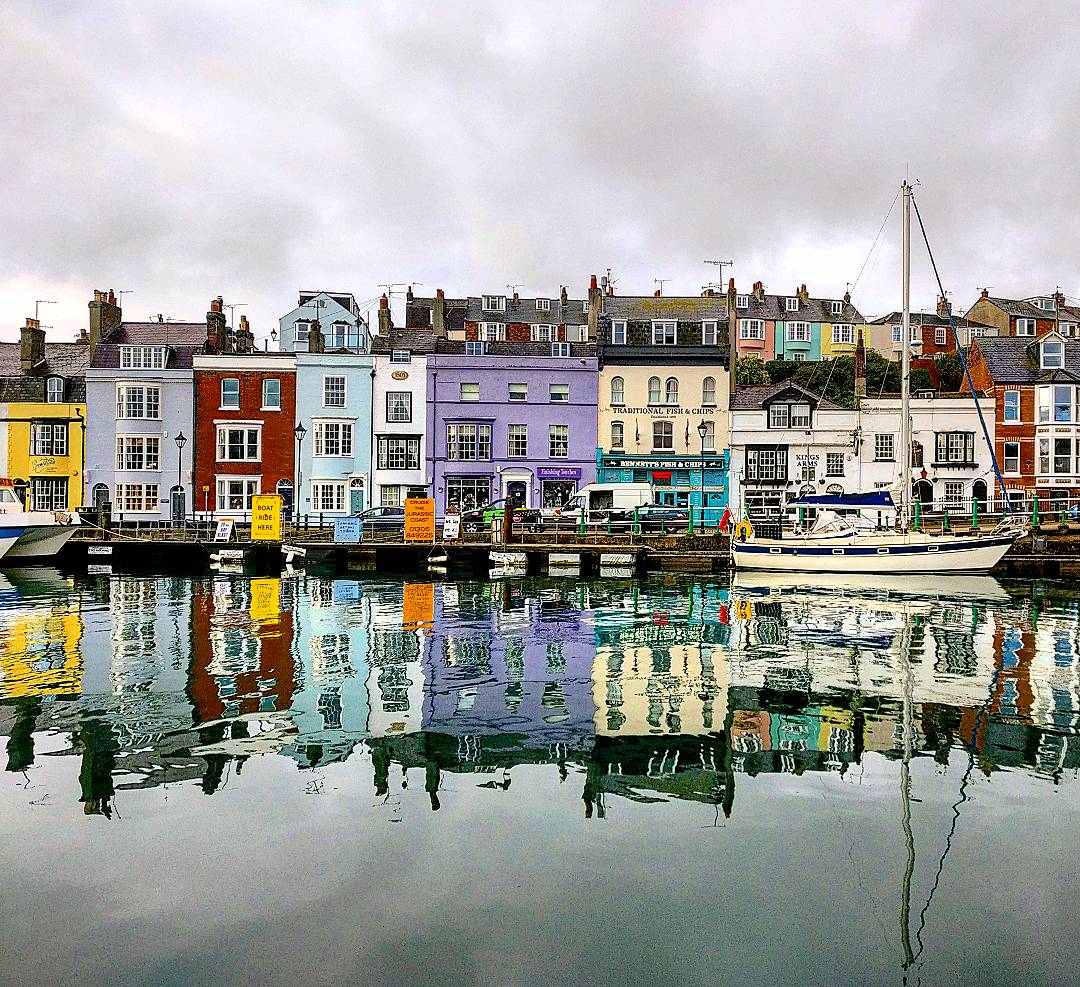
Image result for weymouth harbour


A life – part five

Adults talked of ‘War-time’ and ‘Before the War’, and ‘When Peace-time comes’. I couldn’t imagine what Peace-time was like, since it had always been War-time for as long as I could remember. Peace-time sounded something like Christmas, when we would have plenty of food, no clothes coupons and lots of toys.

But when it came, it didn’t seem like that at all. There was a big parade for something called VE day, which had something to do with Peace-time, a lot of fireworks, which I’d never seen before, and then life went back to all the same old things, only worse. The grownups seemed to be worrying about not having enough bread and potatoes, shuddering over tinned meat called Spam and outraged over the idea of eating whale-meat. But the toys, the sweets, the goodies they’d all talked about, never came.

The first big change had actually come as soon as all those hundreds of planes had flown over us to D-Day almost frightening me out of my wits. When we went down to the beach to play in the sand in the small area cordoned off with high rolls of barbed wire, the barbed wire had gone. So had all the thousands of armoured cars, tanks, lorries, guns, jeeps that had covered the beach as far as the eye could see, and all the American soldiers. (They had all gone to the dreadful ordeal of Omaha Beach I learned many years later).

All the spikes in the sea to stop the Germans coming and which stretched all along the line of beach had also gone. Until then I had thought that all beaches were covered in khaki war machines, with camouflage netting stretched over them and that all seas were ringed with big black spikes. But now we had the whole beach and were allowed to walk along the pier, attend concerts on the grandstand and meander round the ancient harbour where the Black Death had first entered England, killing up to sixty per cent of the population, and where the first death had occurred in June 1348.

Now in 1945, the next big change was when my uncle came home from Prisoner of War camp. He was no longer the gay, carefree and happy- go- lucky young man who used to bring me coloured chocolate smarties when I was a toddler. His experiences in POW camps, his life- threatening escapes and starvation in Italy behind the German lines, where he hid in a goat- hut in the mountains, and then in Florence until the allies and his brother with the 8th army liberated it, had of course changed him.

Back home at the end of the war he took up civilian life again, and began his new career as a reporter on the local newspaper. Like so many returned soldiers he was deeply hurt and angry. I was the nearest soft target for this anger and I didn’t realise that the teasing I endured was indirect anger and the result of his war… to me it felt harsh and hurtful, and I often ended up in tears.

When my father returned for a brief leave it was the same, and he was as strict as my grandmother had warned. No more Enid Blyton. No more reading the Express and the Mail, my grandmother’s favoured newspapers. Only the Telegraph or the Times. He only had a fortnight’s leave before he went back to Egypt, but had a good go at under-mining my belief in Christianity, Brown Owl and the Brownies. He drew pictures of fat angels standing on clouds with harps and in long nighties with flies on their noses, hoping that mockery would dislodge the horrifying belief in religion he had discovered in this unknown daughter. All that happened was more tears from me.

Unbeknown to me until many years later, my grandmother dissuaded him from putting these unknown children into a convent, and an orphanage for the toddler son he didn’t know, so he went back to Egypt with our futures unresolved.

It wasn’t a very good basis for beginning a new life with him and his new wife, in the spring of ‘47. I was already frightened of him, and though I had longed to have a mother, I eventually became even more terrified of my new one than of my father. In the beginning it had been different. My father was coming home with a new mother, we were told. I was so excited at the idea of being like everyone else again, with a mother and a father, that I rushed out of the house and told some complete strangers passing by, that we were going to have a new mother.

Later I pieced together the facts, that they had met on a blind date at the legendary and glamorous Shepheards Hotel in Cairo – now famous after appearing in The English Patient – but actually burned down in the riots of 1952 . My stepmother was in the Red Cross, and keeping her best friend company. The best friend and her boyfriend broke up in the end, and the two blind dates married. Like Tess of the D’Urbervilles, they spent their honeymoon at Woolbridge Manor, the beautiful Elizabethan manor I used to pass with my mother on the way to the village. Now they were now coming to claim us.

My father arrived and took us to meet her. They were staying at a hotel in town, and when my sister and I stepped out of the taxi at the foot of the long flight of white steps, a very tall lady in a navy- blue coat and very high heeled court shoes, ran down the steps towards us, and swept us into her arms with a hug and a kiss. I just loved it.

Then we spent the afternoon together, first of all having lunch and fizzy lemonade – which seemed a bit more like I’d imagined Peace-time, – and then we went for a walk round the ancient harbour, into a park, and for afternoon tea back to a place by the harbour with big oil-paintings on the walls. For the first time I looked at paintings and saw the brush strokes and the way the painter had used colour. The whole afternoon felt like stepping into a magic new world.

A week later my father came to collect us for good. I left behind my dolls and dolls pram, black board and easel, my bicycle, and our brother, on the understanding that all these things would be collected later. I never saw them again, never had another doll, and didn’t see my brother or grandmother again for years as she refused to part with my brother, causing a huge family rift. Neither did I see my uncle for many years as he had become an energetic Communist, and association with him would have destroyed my father’s security rating in the army.   So now we went to London, where our new mother was waiting. She gave us beef stew for lunch, which neither my sister or I liked, and we refused to eat it.

After lunch the father we hardly knew, except for the fortnight the previous year, took us for a walk around grey, London streets in the cold April afternoon. He told us grimly that from now on we would eat everything that was put in front of us. And from now on, we would do exactly as we were told – immediately. The afternoon seemed to get colder and greyer as he spoke, and when we went back I was totally crushed. My sister, clever, feisty and quick tempered like my grandmother, had more spirit.

The next day we went shopping, and came home with shorts and shirts like the children in Enid Blyton’s ” The Adventurous Four”, three blue summer dresses for me, blue and white stripes, blue and white checks, and a blue silk dress with tiny flowers on it. I had a new tweed  coat in blue, with a dark blue velvet collar, and my fair haired, blue-eyed sister had a yellow tweed coat with a red velvet collar.

The clothes my grandmother had made for us disappeared, my favourite tartan skirt and bolero and fine ninon blouse that went with it, a primrose coat, a pink satin party dress – all went, regardless of entreaty. I had immediate remedial exercises for my lisp, elocution lessons to rid us of lingering Dorset accents, and physiotherapy and exercises for the splay feet which I had carefully cultivated to be grownup like my grandmother. I had what would be called today, a complete makeover. It seemed after a few weeks that I was a different child… and even more insecure and uncertain. And I loved both my new parents. Especially my harsh, handsome father.

He loved books as I did. He must have learned it from his mother who he couldn’t stand.

To be continued…

 Food for threadbare gourmets

Sometimes I just want a plate of roast vegetables, but also feel I must need some protein. I kid myself that this pea-nut sauce will fill the gap. It’s quite unlike the traditional pea-nut sauce, and was dreamed up in front of me by a chef at a demonstration.
In a stick blender,  spoon a cup or more of pea-nut butter, the skin thinly peeled from a lemon, plus the juice, a good teaspoon or more to taste of dried thyme, a couple of garlic cloves, a tea-spoon of fish sauce, a dessert-spoon or more to taste of brown sugar, plenty of salt and black pepper, and a cup or more of olive oil. Just whizz everything together. And add more olive oil, thyme, pea-nut butter if you need it. It lasts for plenty of time in the fridge, and is good with baked or sauted vegetables for a light meal, and also with baked or poached salmon.

Food for thought

Most people die before they are fully born. Creativeness means to be born before one dies.                                               Erich Fromm, German philosopher, writer, psychologist and psychoanalyst who fled Nazi Germany, eventually seeking refuge in the US.


21 Comments

Filed under army, beauty, british soldiers, family, happiness, history, peace, Uncategorized

Dancing to the music of time

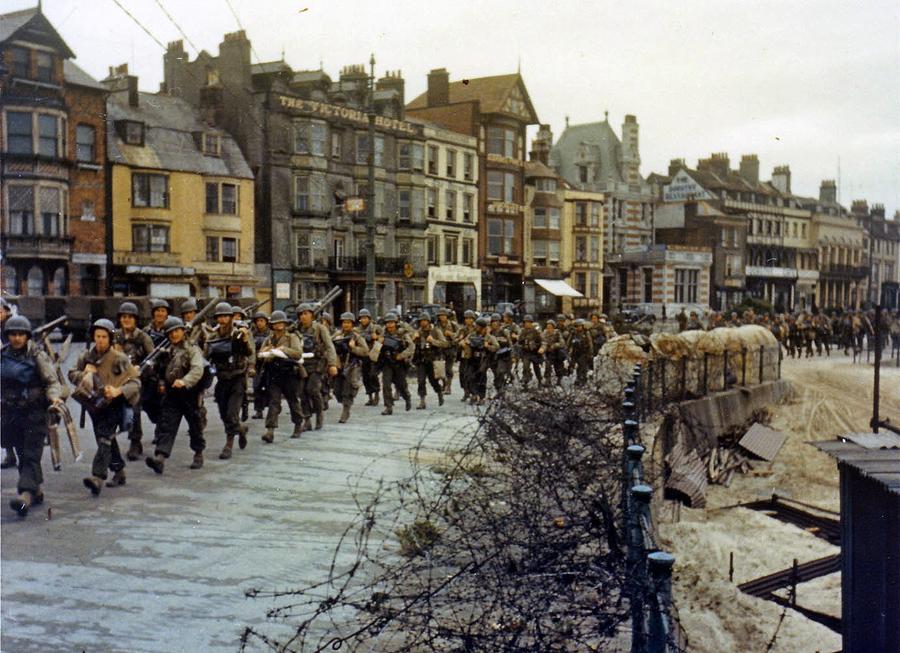
Image result for world war two photos of us soldiers marching to the docks before d day

I was born in 1938, and have always been fascinated by what was happening in the world at that point in time when I was conceived and born, because the atmosphere and events of those times would have had huge and unknown emotional pressures on the people who bore me.

My father was an army reservist and had been re-called to the army by the time I was ten months. He didn’t return home until I was nearly nine, and when he did, came with a new step-mother. It was like being adopted by strange people who didn’t know me. My own mother had disappeared when I was six.

And in that time of first emerging into this world –  my world, and the world of everyone else – was convulsed by war. That world was on fire and I didn’t know it. Battles raged in the sky overhead, warships ranged the sea a few miles away, the country-side and the towns prepared for siege. And I didn’t know it.

So I have tried to track what was happening when I lived in this world, but was unconscious of it, and have read so many diaries which tell me far more than official histories…  I’ve read the inner stories of housewives and politicians, pacifists and generals, and have a shelf of books telling how it was for those who lived through the mayhem.

I’ve just finished reading the diaries of Sir Alec Cadogan, who was Permanent Under-Secretary at the Foreign Office from the last two years of Appeasement, and then during, and after the war. I learned so much from him that isn’t in the history books.  I’d first come across him, when Churchill was wrestling with Stalin over the Russian plans for that tragic country, Poland. His advice, based on the fact that Britain had gone to war to defend Poland, put the moral viewpoint un-erringly.

And the tragedy was that Britain was in no position to risk a third world war by defying Stalin, supported as Stalin was at that time, by Roosevelt. The Free Poles had been based in London throughout the war, and Churchill, Eden, Cadogan and company had had to placate, comfort, and put up with – what I hadn’t realised until reading Cadogan’s diary – the Poles, nagging away all the time, plus fending off the aggressive resident Russians at the Russian Embassy.

The British were also juggling de Gaulle and the internecine rivalries of the resident Free French, plus the touchy Dutch, the slippery Turks, trying to keep them neutral, the belligerent Yugoslavs, the Americans and their suspicions of the English, as well as of de Gaulle, (Roosevelt and his advisers preferred the Vichy government),  the Spanish and problems over them supplying the Germans with wolfram, the Portuguese and negotiations to use the Azores, and the Greeks and their Communists, to mention only a few of Cadogan’s continuing diplomatic challenges. And then there were all the floating kings and queens who had fled Europe, been deposed, or abdicated. London must have been a fascinating place to be then.

Reading of the sixteen hours a day spent in cabinet meetings and conferences, puzzling over how best to handle Hitler during the last period of Appeasement was a revelation to me. Appeasement has been seen as so shameful, but as Cadogan kept advising his political masters, they just didn’t have the military muscle to do anything But negotiate. While they had only ten out of fifteen battleships with the other five in dry dock, the navy was impotent, as was the non-existent air force, and the tiny ill-equipped army, still managing on World War One weapons. On the other hand, Germany, after breaking the Versailles agreements, had built up a modern army and air force equipped with the latest weapons.

To read the endless agonising over the exact words of a telegram to Hitler, trying to gauge the impact of each word, whether it would conciliate, offend, alienate, deter, appease, buy time to re-arm, while at the same time juggling with Roosevelt’s imperious interference, even though at the time he had no intention of becoming involved, left me awed and admiring at the brilliance, industry, patience, and implacable integrity of Cadogan.

He was a direct descendant of the first Earl Cadogan who had been the principal Staff Officer and Director of Intelligence in ten campaigns for the Duke of Marlborough, Churchill’s famous ancestor. On the eve of a battle in Flanders in 1702, Marlborough reconnoitred the positions. He threw down his glove, and harshly told Cadogan to pick it up, which he did. That night, when Marlborough said he wanted the main battery set up at the place where he dropped his glove, Cadogan was able to say that it was already in place. His intuition was so finely tuned to his chief, that he had understood immediately the purpose of the supposed insult.

On 13 June 1940, Churchill took his Cadogan with him to Tours when he flew over to try to stiffen the collapsing French Government.  Seeing them together as “they listened to the agonising tale at Tours”, Sir Edward Spears, who was interpreting, wrote: “ here were the descendants of the two great leaders, brought together as their forebears had been by virtue of the services their Houses have rendered, generation after generation, to the country…. I thought how fortunate England has been to be served through the centuries by such men, and by others imbued with the same transcendent loyalty, though bearing lesser names… at that moment… the old story of the Flanders battlefield… flashed in my mind… as I watched the two men in that small room at Tours.”

It was Cadogan who framed the formulae at Dumbarton Oaks which became the basis of the UN Charter. And at San Franscisco, Cadogan, who was the permanent British representative, despaired over the obstructions of the Russians. I particularly enjoyed the story of the UN being broadcast all around America, and as a particularly verbose bore got up to speak, Cadogan could be heard groaning to himself in his clipped English tones, “Oh God!”

I finished the book last night, and regretted doing so. I read it slowly over about three weeks, all seven hundred pages or more. He would go down to Kew Gardens in London like we used to do, to see the magnolias out, or the bluebells, or the autumn trees. He never failed to notice the first crocuses of spring, and watched with approval the progress of the tulips and the wall flowers in the gardens as he paced through Green Park and St James on his way to his office in Whitehall. His idea of relaxation at the end of a tough week, if he wasn’t painting, was to dig over a garden bed, and plant it. This book was a good two dollars- worth from Trademe, and worth ten times the price.

More than any of the books I’ve read as I’ve tried to piece together the world as it was when I entered it, this one filled in many blanks and felt like a logbook of human experience. And more than that, while I was reading it, it gave me the experience of living with someone of the utmost integrity and unself-conscious goodness. In a world still convulsed with problems of an immensity that mankind seems to feel powerless to solve, goodness is precious and inspiring.

Fifteen-year-old Anne Frank, who was destroyed by the world I grew into, wrote these indestructible words back then: ‘In spite of everything I still believe that people are really good at heart. I simply can’t build up my hopes on a foundation consisting of confusion, misery, and death. I see the world gradually being turned into a wilderness, I hear the ever- approaching thunder, which will destroy us too, I can feel the sufferings of millions and yet, if I look up into the heavens, I think that it will all come right, that this cruelty too will end, and that peace and tranquillity will return again.’

This is the sort of goodness and optimism that we needed then and we still need now too.

The picture is of US troops marching to the docks to embark for D-Day… It looks like Weymouth where I spent the war years.

Food for threadbare gourmets

I want to eat masses of vegetables at the moment, and cook meals consisting of nothing else some days… wilted greens, a mix of broccolini, spinach, grated or sliced courgettes or asparagus lightly steamed, is one of my favourite combinations at the moment, and is good with meat or eaten on its own. Lightly cook the broccolini and asparagus, gently fry the courgettes in a little butter and then add the torn spinach leaves. When all these vegetables are lightly cooked, toss them together in a little dijon mustard. In a separate bowl mix together a table spoon of horseradish sauce, quarter of a cup of sour cream, and a few table spoons of cream, pour over the vegetables and boil up quickly. I sometimes slice cooked new potatoes into this mix too, and it’s satisfying and filling. It’s good with grilled chicken.

Food for thought

We are each made for goodness, love and compassion. Our lives are transformed as much as the world when we live these truths.

Archbishop Edmund Tutu


29 Comments

Filed under army, books, british soldiers, cookery/recipes, history, life and death, military history, Thoughts on writing and life, uncategorised, Uncategorized, world war two

The truth about Dunkirk

Image result for dunkirk images


Dunkirk is a word that probably means something to some Britons these days, and very little to the rest of the world. But to people of my generation the word conjures up a tragic and magic moment in British history that means courage and fortitude and dignity which transformed defeat into something shining and inspirational.

These thoughts, of course, were triggered by watching the film of that name. I’d read the rave reviews by historians I’d thought were knowledgeable, and laughed with the rest of the world with the American critic who enjoyed the film, apart from commenting that there no women or people of colour portrayed in this epic retreat from the French port of Dunkerque.

Well, there were plenty of women in the Forces at that moment but not overseas on active service. All women between eighteen and forty were called up for service, unless they had children. They had freed men up for fighting by doing all the jobs men used to do – working as drivers, cooks, clerks, interpreters, cipher clerks, aircraft plotters, signals operators, radar operators, working at ammunition depots, firing Ack-Ack guns – anti-aircraft guns – Mary, Churchill’s daughter manned such a post in Hyde Park, shooting at Goering’s planes. Women worked in munitions factories,  factories, on the land, and were nurses, Red Cross workers, and did many other vital jobs.

And yes, there were no blacks in the army either… once the Lord Chief Justice Lord Mansfield made his historic ruling in 1772 that any slaves arriving in the country automatically became free men, few negroes came to England for the next century or more. The fourteen thousand or so black slaves already there, now intermarried with the English, so that the ethnicity of their descendants was not obvious in the society in which they were born.

With no slave trade allowed in England, and the Royal Navy maintaining a permanent squadron patrolling the seas for sixty years to try to stamp out the infamous traffic in people – at a cost of 22,000 sailors’ lives as they fought with traders, and millions of taxpayer’s pounds – people of African descent had disappeared by 1940. The Africans rescued by the navy, chained to each other in the bowels of slave ships in horrendous conditions, were taken to Sierra Leone where an African king had sold a strip of land to the British for the purpose of re-settling them. Plenty of ‘diversity’ in the UK now, but that didn’t start until the emigration of West Indians to England in the early nineteen fifties.

So, no women or  people of colour– no ‘diversity’- as the young American critic had called it. But I had other misgivings as I watched this much- praised epic.

The ‘ornery’ Brits sailing their tiny boats across the Channel to save their fellow men were the stars in this film! The chap and his son in their fair isle pullovers and polo ribbed sweater moved me to tears… the sheer ordinariness, and utter decency and lack of pretentiousness of them, their deep in- the- bone goodness, and their amazing kindness,  forbearance and understanding of the rescued shell – shocked nut- case –  in spite of his shocking actions – were so typical of their time and class….

But some things bugged me. Anyone who’s served in the army knows that every ten men in a regiment are a section and they have a corporal to look after them. Three sections make a platoon, who have a sergeant and a second lieutenant to look after them. Three platoons means nine corporals, three sergeants and three lieutenants. Three platoons make up a company with a captain and a company sergeant major to look after them, plus all the adjutants, 2/i/c’s (second in command) plus colonel of the regiment, etc.

There was no trace of all these chaps who actually were the ones who kept the lines in order, going forward over the sandy dunes to the rescue ships, and who, importantly, kept up their men’s morale. Not to mention the staff of all the generals in an army of 300,000 (those numbers were not obvious on the beach in the film either – it was packed to the gills in real life)

Alan Brooke was there, Montgomery was there, Lord Gort, C-in-C was there, and a host of others. Most poignant of all, and what would have made a wonderful moment of film, was General Harold Alexander, who was commanding the last troops on the beach. When everyone had gone, he travelled along the shoreline in a small motor boat at two am in the morning, with a loud hailer, calling out to check if there was anyone left. Few historians ever mention this revealing moment of character.

These people, I felt didn’t get their rightful due, and the order and dignity and courage of the retreat would probably not have happened if they hadn’t done their duty…

The navy didn’t get its due either -there were over four hundred  Navy ships shuttling to and fro, and on the worst day, seven out of ten navy ships taking on troops  were sunk at the Mole… my partner noticed there seemed to be only three ships used over and over again in the film…  being a navy man himself ! Funny they didn’t do some skilled computer generated imagery to make it look more realistic ….

Nit picking, perhaps, but I felt the film was somewhat one dimensional because of these omissions… Kenneth Branagh made a wonderful  character, which I felt owed much to Kenneth More in  ‘The Longest Day ‘, who played the Beachmaster on one of the British beaches on D-Day… with his bull dog!!!.

There are so many stories about this time in history that now are lost, and have never been recorded by historians. Reading Francis Partridge’s autobiographical ‘A Pacifist’s War’, I discovered one of the most intriguing and  little- known stories about the real Dunkirk. Her brother- in- law was the officer in charge of everyone landing at Dover and siphoning wounded and dead and living to their destinations. He told her he realised that so many troops had brought rescued dogs with them, that he organised a dogs’ cage on the beach where each dog was given labels and addresses before going to quarantine and then being sent to their owners!!  Such a typical story of British soldiers… reminding me of all the pi- dogs, as they were called, that my father’s tank regiment rescued and adopted in the desert in North Africa.

And then there was the story my brother’s general used to tell at Guest Nights in the officers’ mess. The general had been a young second lieutenant at Dunkirk, and when he’d got his men stowed away safely on a passenger ferry, he staggered up to the bar, absolutely exhausted, and put his elbows on the counter, his head between his hands, and asked the barman who was busily polishing glasses with bombs going off, ships sinking all around them, if there was any chance of a drink. To which the barman replied righteously: “Good gracious, no sir – we’re still within the three -mile limit “!!

Another little- known book told me of a father who woke in the night dreaming of his son. A very rich man, he donned his clothes, and drove off in his Rolls- Royce to the bewilderment of his wife. Abandoning the expensive car at a port, he wangled his way determinedly on a rescue ship returning to pick up more men at Dunkirk. Once at Dunkirk he strode off over the beaches, up into the town and onto the outskirts. On the side of a road, he found a mangled motor bike and his dead son – a dispatch rider – beside it, as he had seen in his dream. Somehow, in a daze he made his way back to England, a changed man.

These are the stories that fascinate me, stories of truth and courage and heartbreak and fortitude. They are stories which have now almost disappeared as those men have now disappeared too. Some will have been handed on by word of mouth to children as bored probably, as I was, in my ignorant, arrogant salad days when my father tried to tell me something of his long war. They are not stories telling of brave deeds in battle, but accounts of how people survived and coped and rose above terrible circumstances in terrible times. That famous, much derided stiff upper lip often saved them.

And the lesson of Dunkirk was that even when all seems lost, imagination, courage and determination can still save the day, even if it meant having to decide then, in Churchill’s words, to: ‘fight on the seas and oceans ….
we shall defend our Island, whatever the cost may be,
we shall fight on the beaches,
we shall fight on the landing grounds,
we shall fight in the fields and in the streets,
we shall fight in the hills;
we shall never surrender’.

Those simple powerful words were a turning point in the history of the free world and western civilisation… this is a small thank you to those men who made that history.


Food for threadbare gourmets

A grass widower for supper, so I needed not a grand show-off turn,  but something tasty and welcoming and above all simple. I prefer not cooking at night these days. I found an old recipe I’d forgotten about and have no idea where I found it.

Rice and chicken, but all cooked together. I fried an onion and garlic until soft, and spread them in the bottom of a shallow casserole with plenty of butter. Add a cup of long grain rice, and two cups of hot chicken stock, salt and pepper. Cover and bake in a moderate oven for twenty minutes.  Score skinless chicken thighs with a mix of chopped garlic, ginger and grated lemon, and add the chicken to the rice, fluffing it up. At this point I add some more knobs of butter to the rice. Bake for another twenty to twenty- five minutes, adding hot water if the rice needs it.

Served with salad, this is an easy satisfying dish. Pudding was the ersatz rum babas from a previous recipe. It went down a treat..  rum puddings never seem to fail!

Food for thought

Elegance is usually confused with superficiality, fashion, lack of depth. This is a serious mistake: human beings need to have elegance in their actions and in their posture because this word is synonymous with good taste, amiability, equilibrium and harmony. Paul Coelho


44 Comments

Filed under animals/pets, army, british soldiers, cookery/recipes, films, history, life and death, military history, slavery, Thoughts on writing and life, uncategorised, Uncategorized, world war two

“Old soldiers …”

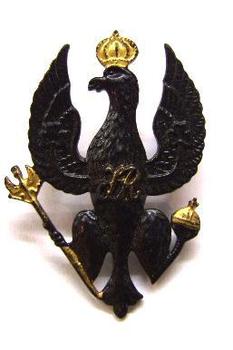
Image result for 14/20th king's hussarsLeafing through an old notebook looking for a blank page to pull out to write a shopping list, I found these words I’d forgotten I’d written.

Timing isn’t always everything I decided, and though I’m late, these words still count…

Parade on Armistice Day

Behind that stern moustache

And row of clinking coloured medals

And Desert Rat insignia,

Service dress, and highly polished Sam Browne belt and sword holster

Stood a man.


A man who loved and laughed and grieved and swore and smoked and drank,

And played poker sitting on a petrol drum

Beside his tank in the desert.

He hated the beat of the Funeral March from ‘Saul’,

And he never forgot the ones who were ‘brewed up’.

This was the nightmare he fought most nights for the years of peace.


It had been a daily nightmare back then.

It had loomed while he shaved in half a mug of water,

And haunted his thoughts as he drank a mug of strong tea

To cut that terrible desert drought.

And he never forgot the spring flowers that bloomed in Tunisia.


Just like five weary years before,

He had never forgotten the women of Plymouth,

Who waited with steaming mugs of tea

For the cold, hungry men who landed at dawn

After escaping from Cherbourg,

Three long weeks after the miracle of Dunkirk.


In all the years between, he had been there,

And the names of his battles had

Reverberated through my childhood:

Bardia and Benghazi, Sidi Rezegh, and Sidi Barani,

Tobruk, Tunisia, Salerno and all the others…

He loved his friends and didn’t hate his foes.

Like Abou Ben Adhem, he loved his fellow men.

This was my father.


He was a cavalryman, and proud of the history of his historic regiment – an officer from his regiment was dispatched by the Duke of Wellington to take the news of Waterloo to London. It’s the regimental  cap badge at the top of this piece.

Though he survived the war, he didn’t live to old age, and like his other children I still miss him, and I regret not talking to him when I was old enough, or mature enough, to appreciate him the way his friends and his soldiers did. Both groups loved him.

One soldier in the British Army took leave from his posting in Gibraltar to come to London and find my father in his office at Whitehall to give him a watch. Ten years earlier, when we  were in Malaya, this man had been fighting the British. My father on patrol in the jungle, captured him, starving and nearly dead from scurvy.

My father helicoptered the ‘bandit’, as the insurgent communists were called, out of the jungle, and rushed him to the only grocery store for miles around, where we happened to be shopping at the time. He leapt out of the army vehicle, calling to my stepmother to buy a box of oranges. While she did this, he carried the soldier from the jeep into the back of our saloon car. Peeling an orange, he fed segments to the nearly unconscious ’bandit’, and then, as he began to revive, gestured to him to go on eating the oranges.

The man was taken to a rehabilitation centre, where he regained his health, renounced his communism, learned English, and finally joined the British Army. He never forgot my father and came to London ten years later to thank him for saving his life.

Armies and soldiers are sometimes reviled, often by people who do not know soldiers. But like most of his fellows, my father was a good and courageous man, a kind and tolerant man  – like most of the men of all ranks, that I grew up knowing on army camps around the world. Honor virtutis praemium.

Food for threadbare gourmets

For a celebratory birthday lunch the other day that wouldn’t take hours to cook, even though I felt roast chicken would be appropriate, I compromised. I had a couple of chicken breasts in the deep freeze, so after de-frosting slowly in the fridge, I trimmed them open a bit more, and spread a stuffing of whole grain breadcrumbs, onions and mushrooms chopped and cooked in butter, and lots of chopped sage and parsley, salt and pepper on one breast.

Placing the other breast on top, I wrapped them in rashers of bacon, making a parcel, and holding the rashers in place with toothpicks. Scrubbing a couple of Agria potatoes, I pricked them all over, rolled them in olive oil, and cooked them in their skins at the same time as the chicken. (Hot oven for about 45 minutes, or until ready). When cooked, the potatoes were mashed with lots of butter, salt and pepper.

Spinach and carrots completed the meal, along with good gravy made from chicken juices in the pan, while the chicken was ‘resting’ in a warm place. It was as good as if I’d cooked a whole chicken, and took half the time to cook

Food for thought

I am not interested to know whether Vivisection produces results that are profitable to the human race or doesn’t. … The pains which it inflicts upon unconsenting animals is the basis of my enmity towards it, and it is to me sufficient justification of the enmity without looking further.

Mark Twain. American writer, publisher, river boat pilot and many other things. One of his claims to fame was that he was born when Halley’s Comet showed up in 1835 and died, as he predicted, the day after it came back in 1910.


14 Comments

Filed under animals/pets, army, british soldiers, cookery/recipes, food, history, love, military history, peace, Thoughts on writing and life, uncategorised, Uncategorized, world war two

The Royals, the truth, and The Crown Part 2

She does a marvellous job conveying the goodness, sincerity and intelligence of the Queen, but Claire Foy’s performance misses one thing – the Queen’s sparkling wit and flashing smile which lights up her whole face.

I was lucky enough to experience this wit and its quickness, and that wonderful smile at a reception on board her royal yacht Britannia. It’s an accepted convention not to repeat the conversations had with Royalty, one often ignored nowadays, so I won’t repeat my conversation with the Queen, any more than I will repeat the fun and intelligent talk I enjoyed with the Duke. Even at fifty he was still the good looking, charming man who married his princess, and quite unlike the charmless, bad-mannered person he was portrayed as in The Crown.

Since the series opens with their wedding I’ll go back there too, when Philip, who only had his navy pay to live on at that point, had enough innate self- esteem to be married in his old well-worn navy uniform, rather than borrow or cheat on rationed clothing coupons for the sake of looking smart for the in-laws, courtiers or anyone else.

The muttered conversation between Queen Mary and the Queen Mother denigrating Philip and his background could only have been a figment of the writer’s imagination, since Philip was far more royal than the then Princess Elizabeth. His pedigree goes back to the Tsars of Russia on one side (Nicolas II and the Tsarina attended his parent’s wedding in 1905 – the last big Royal wedding) plus a more direct line of inheritance from Queen Victoria than Elizabeth.

Of the two Queens who were supposedly bemoaning his background, Elizabeth’s mother was an aristocrat with no royal blood, and Queen Mary had been born a Serene Royal Highness, since her Hungarian father was not royal, though her mother, known as ‘Fat Mary’ (she was enormous, and no-one wanted to marry her until Francis of Teck was winkled out of Hungary) was George III’s grand-daughter.

Just as inaccurate were Churchill’s muttered remarks about Philip’s sisters being ‘prominent Nazis’ … One sister had been killed in an air accident that claimed her whole family in 1937, and a teenage Philip had walked to their funeral as he later walked with his grandsons at Diana’s funeral. Another sister’s husband had been a Nazi from the beginning, since like many others he thought Hitler would protect them from the Bolshevism which had assassinated their close Russian relatives – the Tsarina was his aunt.

But as time went on the relationships with Hitler and the Nazis foundered, this sister’s husband was killed in a mysterious air accident, while his brother was imprisoned in the concentration camp at Dachau, and his wife, Princess Mafalda had died in Flossenberg, another notorious concentration camp.

Liberal Prince Max of Baden – married to another sister – had funded Dr Hahn into his progressive Salem School. He lay low after the Nazis closed the school and Hahn escaped to Switzerland, and thence to Scotland via England. There Hahn had founded Prince Philip’s old school Gordonstoun. So that’s all the sisters and their husbands accounted for, and so much for that imaginary throwaway remark.

The apparently reluctant ennobling of Philip by the King was also very unlikely… the Royal family had known Philip even before he  was a frequent visitor to Windsor on his navy leaves, during the war. He always remained his own man, and when required to wear a kilt at Balmoral like all the royal family, curtsied to the King when he met him, causing great laughter all round.

As the years went by (with none of the marital aggro constantly featured  in the Crown) – no affairs – as Philip once famously responded to a reporter questioning him: “Good God, woman,” he thundered at her, “have you ever stopped to think that for the past 40 years I have never moved anywhere without a policeman accompanying me? So how the hell could I get away with anything like that?”

Pat Kirkwood, who had spent a night dining and dancing with Philip and her current boyfriend, the photographer called Baron, who’d brought Philip along with them, used to say that that one night in Philip’s company had ruined her whole life and even robbed her of a medal in the honours list. But as Philip wrote to her when she wanted him to issue a denial about a supposed affair, “Short of starting libel proceedings there is absolutely nothing to be done. Invasion of privacy, invention and false quotations are the bane of our existence”.

It’s true Philip was deeply hurt by the establishment opposition to his name, but his marriage remained the love match that it still is after seventy years. Staff tell of a younger Philip chasing Elizabeth up the stairs pinching her bottom, and her laughing and protesting before they disappeared into their bedroom.

Andrew Duncan, in his book ‘The Reality of the Monarchy’, tells of a fracas at a Brazilian reception, where he watched the Queen look miserably at Philip as he tried to restore order. ‘He smiled, touched her arm, and she relaxed, smiling nervously back, a tender look of tragic implications… theirs was a relationship… scrutinised everywhere, derided by critics, devalued by schmaltz’…  Andrew Duncan saw this ’non-public smile’ and wrote he was  reminded that ’this was a genuine love story and love match.’

Philip had resolved to support his wife while finding his own niche, which would lead in the following decades to the active patronage of more than 800 different charities embracing sports, youth, wildlife conservation, education, and environmental causes.

Within the family, Philip also took over management of all the royal estates, to “save her a lot of time,” he said. But even more significantly, as Prince Charles’s official biographer Jonathan Dimbleby wrote in 1994, the Queen “would submit entirely to the father’s will” in decisions concerning their children, so Philip became the ultimate domestic arbiter in their family.

Another biographer has described Philip’s caring fathering. He was recorded for example, saying amongst many other useful parenting tips, that one should never immediately say no to anything children want to do, but to think it over, and if eventually you have to say no they will accept it more easily … for contrary to popular belief he was not an authoritarian father.

In ‘The Crown’  when the couple were in Kenya before her accession, much was made of the Princess claiming  that she knew all about cars as she’d trained on them in the army. This is a well-honed legend, which doesn’t stand up to much scrutiny. I was in the army too, and know how such things work.

For six months the Princess was chauffeured to an ATS  (Auxiliary Territorial  Service) detachment near Windsor every day and collected to return to the castle in the late afternoon. In her well pressed uniform or clean fresh dungarees cleaned and ironed by a maid, she joined carefully screened army personnel like Mary Churchill, the Prime Minister’s daughter, but she never lived in an army unit, got close to ordinary soldiers, polished her own shoes, or actually experienced army life.

In those moments in Kenya when she became Queen, I wondered where were the staff – Lady Pamela Mountbatten, lady in waiting, Mike Parker, Philip’s aide, Ruby MacDonald, the Queen’s dresser, Martin Charteris, private secretary, the housekeeper, maids, butler, waiters and so on?  I blenched at the incredibly dowdy mac and chiffon scarf Claire Foy was decked out in on her way to the airport having just become Queen, looking like a fifties suburban housewife going shopping.

The Queen had a full bosom, a tiny waist and elegant legs, and she wore dresses that displayed them to advantage. She would have died of heat wearing that tatty mac in Kenya. Neither did she wear all those dowdy blouses and cardigans. Only at Balmoral did she wear tailored shirts with kilts and cardy, though in her young days she was photographed playing with Prince Charles and Princess Anne wearing an elegant suit with nipped-in waist.

And I felt for the ghost of Sir Anthony Eden, played by a grim faced Jeremy Northam. Eden,  the famously handsome, charming, well dressed foreign secretary, was sporting  in-appropriate town clothes when in-appropriately barging into the King’s shooting party. After a life-time as a tactful diplomat, he’d never have worn the wrong clothes or turned up at the wrong moment!

And with all this whimpering about the series, I loved it for the beautiful interiors photographed in stately homes, lovely furniture, fabrics, scenery, and play of character… though the history was rickety, the drama was fascinating. But as one of the commenters in my last blog said so cogently: ‘If characters are not strong enough to stand on their own history as the stuff of narrative, then find other subjects. If they are, then why not stick to the facts?’

Thank you for those words, good friend at https://colonialist.wordpress.com/

I’ll round off this series next week when I can’t resist covering Princess Margaret’s shenanigans…  pity the producers didn’t use that wonderful line from the inimitable Sir Alan Lascelles, who, when Townsend told him he was going to marry the Princess, replied using that famous phrase about the poet Byron: ‘Are you mad, or bad?”

Food for threadbare gourmets

I had enough pasta for two left over from supper with friends, but instead of preserving it in cold water a la advice from those who know, I mixed it with enough olive oil to stop the lasagne from sticking, and it was much tastier than if it had had a cold bath.

For a quick lunch the next day I sauted an onion in good olive oil, and when soft added a tin of Italian tomatoes, plenty of garlic, a squish of balsamic vinegar and sweet stevia powder to taste, to give it that tangy and sweet flavour. Salt and freshly ground black pepper of course.  When it had all bubbled up, and become a nice thick mixture, I sprinkled lots of grated cheese over the lasagne in a casserole, poured the tomato mix over it, and then tipped plenty more cheese on top of that.

Three minutes in the microwave, cheese melted, and lunch was hot and ready to eat…. with a glass of the Riesling from last night too…..

Food for thought

To every thing there is a season and a time to every purpose under heaven… a time to keep silence and a time to speak. Ecclesiastes III verses 1 and 7

33 Comments

Filed under army, british soldiers, cookery/recipes, fashion, history, love, Queen Elizabeth, royalty, The Sound of Water, Thoughts on writing and life, uncategorised, Uncategorized

The love of three women who changed the world

Taking a small blue hard back book down from my parent’s shelves I began reading Robert Louis Stevenson’s book: “Travels with a Donkey”. I persevered, but the relentless beating and prodding of what he described as the ‘delicate little donkey’ upset me too much to find out how their journey progressed.

I tried it again as an adult, but the same heartless beatings had the same effect on me. Quite different to the way I felt about Black Beauty – that eminently sensible Anglican horse – as H.G. Wells referred to him. Black Beauty is one of the best sellers of all time I’m glad to say, and must have affected the attitudes of people to horses and animals in general for all time too.

Since I read it at ten years old, I’ve always been grateful for the motor car, tractors and other machines, no matter how much they clog up streets, create pollution, or are responsible for dreadful accidents. At least no horses suffer now the way they did, as Quaker Anna Sewell so graphically describes in the one book she wrote, and which was published just before she died, always having suffered from ill health.

It was written in Black Beauty’s voice, itself a sensation at the time, and his story showed how horses were not just the victims of the vagaries or cruelties of their owners, but that if they became scarred they were no longer valued, and then began the downward slide to become worn- out under-fed beaten cab horses, flogged and half-starved until they dropped dead from exhaustion.

Anna, who lived from 1820 to 1871, didn’t live through a major war, so she didn’t mention the use of horses in war. But anyone who has seen the 1970 film of Waterloo, which was filmed in Russia, will have seen the horror of a war horse’s life, as they charged and were shot dead in battle, or left to die untended from their wounds. (No-one is quite sure whether the horses were as endangered as they looked in this violent film, only that fifty circus stunt riders performed with the horses in bloody battle scenes on churned- up muddy slopes. But we do know that a hundred horses died in the making of Ben-Hur)

It wasn’t much better for horses in World War One and even in World War Two, when the Germans were still using horses and mules to pull guns and supply vehicles, and the British took their beautiful hunters and cavalry horses out to the Middle East, and then had to leave them there when their regiments became mechanized -ie supplied with tanks and armoured cars.

In her delicious diary: ‘To War With Whittaker’, Lady Hermione Ranfurly writes a heart-breaking description of going to say goodbye to her husband’s two precious hunters and then going to each other horse in the regimental stables to farewell them.

A decade before Hermione’s description of the Sherwood Foresters’ horses, Dorothy Brooke, another Englishwoman   who loved horses, and whose husband commanded the cavalry in Cairo, discovered the old war horses sold off to local Arab tradesmen and workers after the previous war. She decided to seek out and rescue the starving, broken- down old horses, who had formerly known kindness and consideration instead of blows, but had spent the years since being worked to death by owners who often didn’t know how to care for them or didn’t have the means or the will to feed them well.

In 1934 Dorothy Brooke formed the Old War Horses Memorial Association, and with the help of many people, including senior officers and other wives and locals – and even George V after she wrote to the Telegraph – she tracked down and raised the money to buy back five thousand emaciated old horses from their owners, who she never blamed or judged. They were all that remained of the 22,000 sold off after the Allenby campaigns and other cavalry operations in the First World War. They’d already had a hard war, carrying as much as 22 stone in weight, suffering rationing, piercing cold, extreme heat, dust clouds and exhaustion as well as some wounds.

Now she wrote : “As their ill-shod misshapen hooves felt the deep tibbin [broken barley straw] bed beneath them, there would be another doubting disbelieving halt. Then gradually they would lower their heads and sniff as though they could not believe their own eyes or noses. Memories, long forgotten, would then return when some stepped eagerly forwards towards the mangers piled high, while others, with creaking joints, lowered themselves slowly on to the bed and lay, necks and legs outstretched. There they remained, flat out, until hand fed by the syces ( grooms).”

Dorothy Brooke never gave up, and her small animal hospital continued to grow. She died at her Heliopolis home in 1955, but her work continued and was eventually re-named the Brooke in 1961. It now operates out of London, all over Africa and employs nine hundred people who do their best to rescue and treat horses and donkeys and re-educate their owners.

When it comes to donkeys, they too owe a debt of gratitude to another woman, Doctor Elisabeth Svendson, who died in 2011. Since setting up her Donkey Sanctuary in Devon, starting with one rescued donkey, it’s now visited by over 300,000 people a year, and her donkey rescue missions have also spread all over the world, from Belgium to Egypt, Ethiopia to India, and of course in the British Isles.

The Donkey Sanctuary has given over 15,500 donkeys and mules in need, lifelong care in the UK, Ireland and mainland Europe. Donkeys are rescued and cared for and sometimes re-homed or given to guardians, for donkeys live till fifty, which is a long time to guarantee a pet’s welfare or well-being.

Donkeys have always been overworked and under-valued, unlike their noble cousins the horse, who does get loved and admired. I remember the creaking of a treadmill above a well just below the bedroom window of the hotel where I was staying in Majorca, many years ago. In the blazing afternoon sun while we all took siestas, a little black donkey trudged around the treadmill with no respite. I lay there listening in agony, unable to slip into a happy afternoon nap while he laboured alone and unrelentingly.

The gentle donkey with his big ears and delicate legs, staggering along under huge loads has been the object of derision for centuries, but as Chesterton wrote:

The tattered outlaw of the earth, Of ancient crooked will;

Starve, scourge, deride me: I am dumb,

I keep my secret still.

Fools! For I also had my hour;  One far fierce hour and sweet:

There was a shout about my ears,

And palms before my feet.

. ‘Mighty oaks from little acorns grow,’ and these three women, Anna, Dorothy and Elisabeth, could never have known how their small actions for the creatures they loved would have such great and noble outcomes. In her Christmas speech, Queen Elizabeth quoted Mother Teresa’s words about doing small things with great love. No-one knows how their small actions will change their own world, or the larger world around them, but these women who had so much love, are an inspiration for us all.

Food for Threadbare gourmets

One more day before the turkey would have been past its use-by date, so instead of freezing it, we ate it – a sort of turkey hash, eaten with noodles – I think they’re called Remen noodles in the U.S.

It was very quick and easy. While I fried an onion in olive oil, I chopped some bacon, mushrooms, and the remains of the turkey – in this case just over a cup full. I put one packet of noodles in a basin with boiling water, and put a plate over the basin to keep the steam in.

Cook the bacon, mushrooms with the onion and finally add the turkey when the onion is soft. When the mixture is hot pour over it two beaten eggs. Drain the noodles, and after stirring the eggs through the mix for about a minute, stir in the noodles and add soya sauce and sesame oil to taste. Serve straight away… this makes enough for two, but you could stretch it out to four with another packet of noodles and a bit more turkey…but now: P.S. I forgot to include nutmeg to taste in the recipe for turkey in the last blog. I’ve amended it now in case anyone decides they want to try it…

Food for thought

Looking after oneself, one looks after others.
Looking after others, one looks after oneself.
How does one look after others by looking after oneself?
By practicing mindfulness, developing it, and making it grow.
How does one look after oneself by looking after others?
By patience, non-harming, lovingkindness, and caring.

(Samyutta Nikaya 47.19) a Buddhist scripture

29 Comments

Filed under animals/pets, books, british soldiers, consciousness, cookery/recipes, great days, history, kindness intelligence, life/style, love, military history, Queen Elizabeth, The Sound of Water, Thoughts on writing and life, Uncategorized, world war one, world war two

The power of one

100_0347Continued from Eyewitness to history…

Christmas at Belsen was rather different to homely war-time Christmas in the quiet Dorset village where I’d lived before being uprooted to join my new parents.

Having been at war since I was a baby, my father had more experience of leading tanks into battle than bringing up a shy nine- year- old girl, while my stepmother knew nothing about children. We all had to make the best of it, and one of the best things was visiting the Duke of Hanover’s palace, a little way out of Belsen – and splendid it was. (What had he made of the concentration camp on his doorstep?)

I was taken occasionally for Sunday lunch there, and for the children’s Christmas Party. We played games like pass- the – parcel, and then musical chairs in the ballroom lined with huge gilt mirrors, under shining chandeliers, slipping and sliding on the marble floor while little gilt chairs were subtracted from the circle. Then, when the party ended, like nearly every other party of my childhood, we danced Sir Roger de Coverley, with the parents standing round clapping in time to the music.

Some weekends, we drove out to the Duke’s hunting lodge in the middle of a dark pine forest, where deer darted out onto the road, and wild boar lurked. This gemutlich little pile was now the officers club, run by a friendly middle-aged German couple.

Had they always been the stewards of this place, I wondered later? Did they transfer their loyalties to their new employers in the interim, and hold the place in trust until the Duke regained his ancestral homes – if indeed he did? Anyway, their speciality was delicious, lavishly sugared doughnuts, stuffed with butter icing. The glory of these doughnuts in a life of total gastronomic deprivation and war-time rations was utterly memorable (Did the Duke enjoy them too, before and after us?)

Doctor Muller, the German vet, called on us regularly, whether our various dogs needed his attentions or not. He regarded my parents – or at any rate, their gin bottle – as friends. In return for the generous helpings of gin and tonic he sipped – unobtainable in civilian Germany – he would bring my stepmother specimens of the many amazing varieties of exotic orchids which he grew. I thought they were awful, not like flowers at all, but fantastically petalled and bearded and contorted in strange sharp pinks and acid greens and yellows. He would arrive bearing this gift, and bend over my stepmother’s hand, clicking his heels together and bowing.

After some months of laborious social intercourse – his English became more broken with the quantity of gin consumed – we were invited to his house in Bergen to meet his wife.

We had tea on exquisite Meissen china, but because they could get sugar at the time, but no flour, we had no cakes or biscuits, but dipped sour apples from the garden into the sugar, as a substitute for cake. The grownups managed with a cup of tea. The doctor’s wife was a fair-haired, washed-out, melancholy woman. When I exclaimed over the beautiful porcelain, she explained that they’d hidden it with all their other treasures in a hole under the cellar, so the invaders wouldn’t loot them.

Even as a child I thought this was rather tactless. Invaders? Was she talking about us? She also reminisced about the awfulness of the war to my parents, and she and her daughter Suzanne, described the anguish of seeing their poor, wounded soldiers in blood- stained bandages in passing trains. Back home I heard my stepmother snort: “If they saw those trains, how come they didn’t know about the others!”

Years later, I realised she was referring to the trains of the condemned heading for Belsen. In her book: ‘The Children’s House of Belsen, Hetty Verolme described the platform at Celle lined with thirty SS men and Alsation dogs straining at the leash as the train pulled in. They then, eleven hundred young and old from Holland, sick or exhausted, straggled all the miles to Belsen on foot and apparently unobserved by the local population, who denied all knowledge of the camp when the British authorities discovered it and questioned them.

But the friendship limped on. One summer’s day, the vet’s two younger children, Hildegarde and Carljurgen, thirteen and fourteen, the one in dirndl skirt and long, white lace socks, the other in leather lederhosen, long, white lace socks and black boots, took me driving in their farm cart.

We rumbled and swayed down narrow farm tracks between fields of blazing blue and purple lupins shimmering with tiny butterflies in the sunshine. Carljurgen let me hold the reins. He avoided that other field, where there were miles and miles of burnt -out German tanks my parents had shown me one dank winter’s day.

It was another ten years before I read Anne Franck’s diaries. It came as a shock to me then, to realise that I had been living in the same place where she had lived briefly, suffered and died.

I’m a chronic re-reader of most books I’ve read, yet I cannot bear to re-read her chronicle of life lived beneath the terror of Nazi inhumanity. But as the years have gone by, her shining spirit has risen above the degradation of that Nazi oppression, and has become a beacon of light.

Though the evil that was Nazism destroyed her physical body, the power of her courage, intelligence, thirst for life, and sheer goodness was not destroyed. She still inspires people from all over the world to visit the building where she and her family hid, and they travel to the memorial to her and her sister Margot at Bergen- Belsen.

It‘s mainly due to Anne Franck that the world today is conscious of Bergen- Belsen… there were many other concentration camps just as bad all over the Nazi empire – nearly three hundred – and many of them are forgotten. But Bergen- Belsen has become symbolic of them all, and serves to remind us all of events and atrocities that must never be repeated.

Teenager Anne wrote prophetically: ‘I want to be useful or bring enjoyment to all people, even those I’ve never met. I want to go on living even after my death! And that’s why I’m so grateful to God for having given me this gift, which I can use to develop myself and to express all that’s inside me.’
In death this is exactly what she did achieve, she has gone on living, her words have been both useful and enjoyable, and her life and her death an amazing and triumphant testament to the power of One.


Food for threadbare gourmets
Winter and comfort food, and a love affair with the crock pot. Last week I discovered it was possible to bake whole potatoes in their jackets in the crock pot, instead of using the oven for just one potato! Just prick them with a fork, drizzle a bit of olive oil over them and wrap them in foil. I cooked two medium sized potatoes on high for three to four hours… it depends on the size… but they come to no harm when checked for softness towards the end of the cooking time. Sliced in half horizontally, gently mashed with butter and sprinkled with grated cheese they’re a filling, comforting meal on their own. Naturally, virtuous people have some green vegetables with them… I had some Brussels sprouts!

Food for thought
To be nobody but yourself in a world that is doing its best night and day to make you everybody else means to fight the hardest battle any human being ever fights and never stop fighting.
e.e.cummings.

21 Comments

Filed under army, british soldiers, consciousness, cookery/recipes, history, life and death, spiritual, Thoughts on writing and life, uncategorised, world war two

Eye witness to history

100_0101
I noticed a report last week that after the Queen left Berlin in a bright yellow outfit, she then changed into a sombre, slate grey coat and hat by the time she reached the concentration camp of Bergen- Belsen.

We just called it Belsen in my day. We had travelled through Hitler’s monument – Post- war Europe – which seemed from the train to be nothing but mountains of bricks and ruined suburbs with a few half houses still standing. They looked like half a doll’s house where you can re-arrange the furniture. In these grotesque rooms, pictures were askew on walls, wardrobe doors hung open, chairs still sat round marooned dining tables and empty fireplaces waited to be lit by ghosts.

I was awed into silence by these gross and hellish scenes. But at nine, I couldn’t even begin to understand the human tragedy, the broken lives, the blasted families, and never realised that maimed and starving people were actually trying to live in these apocalyptic holes and hills of smashed brick and rubble.

At a station where we stopped to disgorge some of the passengers crushed into crammed carriages, thin, white-faced children banged on windows begging for food, and scrabbled at the side of the track looking for odd lumps of coal. We were seated in the restaurant car, eating the first white bread I had ever seen, quite unlike our war-time rations, but the thrill of this exciting food was dulled by the sight of the pale, dust-smeared faces outside the window which didn’t open.

Finally Hanover at midnight. The station was the usual bedlam, the engine hissing and roaring, people calling and shouting and waving, and the lighting so poor that it took longer than usual for everyone to sort them-selves out and find each other, I thought. When all the debarking travellers had trickled off and the train pulled away again, my stepmother and I were the only people still standing waiting to be met. I had assumed that all the people I had seen were in the process of coming or going – now I discovered that they had all settled down for the night again, thousands and thousands of people sleeping on every available inch of floor, draped up and down stairs, lying propped up against walls where there was no room to stretch out.

When we had picked our way over the ragged, hostile bodies to the main entrance of the station to get into a military jeep to take us to a bed for the night, I stood momentarily at the top of the steps. Straight ahead, the moon was shining through a large, gothic-shaped empty window high in the wall of a bombed church. There was no sound of traffic in the ruined city and no street lights, just silence and the un-earthly beauty and light of the silver moon. And then blessed cold fresh air sitting in the open jeep after the foetid atmosphere of the station.

The next day we arrived at the site of the former concentration camp and moved into our new home, the spacious former digs of Josef Kramer, the notorious Beast of Belsen. Hoppenstadt Strasse was the only residential street in the camp, and had been the quarters of the prison guards and their families before the liberation by shocked British soldiers.

We children were not told the history of the place, but it was as though the energies of the past were impregnated in the walls and streets and trees and stones. It felt like living on shifting sands of uncertainty and fear of all the things we didn’t understand and that no one ever explained.

Violence seemed to be the atmosphere we breathed. There were different layers of this violence. One was when I went to collect my best friend for our early morning riding lesson, and couldn’t raise her. Later at school I learned that her single father had shot her and her brother and himself – Mary in the kitchen, her younger brother on his way to the front door. I had nightmares for months about Mary and whether she had gone to heaven or hell, and what her brother’s last moments of terror were like as he fled from his murderous father. I didn’t feel I could discuss this with my new parents, my father just back from ‘abroad’ after seven years overseas, and a new stepmother.

There were hordes of unpredictable Yugoslav guards in navy-blue greatcoats who patrolled the place guarding it, though I never knew what they were guarding it from. They had a reputation for being dangerous, and every now and then one would shoot himself or a comrade. And yet another aspect of the incipient violence was that a single British car on the road at night was such an irresistible target for angry defeated Germans, that my father was run off the road and injured several times travelling between Hanover and Belsen.

Behind our house I played for hours in a pine forest, rich in bilberries, where the hungry Germans would come in autumn to pick this source of food in a starving land and demolish at the same time my little ‘huts’; while a mile down the road was the Displaced Person’s camp, which had previously been a well-appointed Panzer training depot. DP’s, as they were known, were the survivors of Belsen, still waiting for passports or permission to make their way back home across the bomb-blasted continent to find the survivors of their scattered families. To a puzzled child they seemed un-accountably unfriendly when our paths crossed.

One fine summer’s day the DP’s torched the pine forest and our homes were in danger until the fire was checked. They were trying to hurry up the authorities, and it was a desperate gesture to show their frustration. But the Allied authorities were dealing with twenty million people trying to get back to homes and families, and many of the refugees had no homes, families or even countries to return to. The problem grew under our eyes, as German refugees, another two million in the next few years, fled from the eastern sector and the Soviets.

They came straggling down Hoppenstadt Strasse with bundles wrapped in tablecloths, or blankets tied on the end of poles like giant Dick Whittington bundles. Sometimes they were found sleeping in our empty garages, or taking desperately needed clothes off the washing line, and were hurried on or arrested by the implacable Military Police.

These were the times of tension too when Russia began the process of harassing and interfering with traffic to and from Berlin, which finally culminated in the Berlin Airlift with thousands of planes ferrying food into besieged and beleaguered West Berlin. I didn’t understand it, but I felt the anxiety of the grownups. And we had to learn to use new money, which had changed from one set of cardboard to another, I never knew why.

We, the victors, shared the hardships of starving Europe. Our meagre rations were delivered once a fortnight in a cardboard box. I remember my stepmother looking at a small pile of cucumbers, our vegetables for the next two weeks, and asking in despair what we could do with cucumbers for a fortnight. We drank revolting tinned milk, as there was no organised milk supply and no pasteurised herds.

We sat in the dark every night for two hours when the electricity was switched off, and played games like twenty question to while away the pitch black hours. Like everything else, candles were in short supply. We had a puppy who seized the darkness as another opportunity to chew the rubbers that my father used for the Daily Telegraph crossword.

Horses were still an integral part of country life in this part of Germany, and this is where I learned to ride. The British regimental riding stables were run by an aristocratic Prussian officer – not of course using his military rank now- but known merely as Herr Freiser.

I was his star pupil and my father said I was learning to ride like a Prussian officer. Herr Freiser took great pains with me, never guessing that I was terrified of the huge jumps he put me over. Fear runs along the reins, I remembered from reading ‘Black Beauty’, and hoped I was bluffing the far-too-big cavalry horse I rode regularly. A big brushwood jump was one thing, but the fence on the wall was too much, and I came off every time, never knowing what had happened until it was all over.

Herr Freiser’s tall, blonde, classically beautiful Prussian wife regarded me with loathing, as though I was a pet cockroach he was training. I decided she hated all English, and was probably still a Nazi lady.

They lived in the groom’s cottage by the stables and were lucky to have a home and a job in their ruined country, though she obviously didn’t think so. Their gilded furniture, rescued no doubt from their ancestral Prussian schloss, was piled right up to the ceiling in one room, while they lived in the other. Herr Freiser seemed as frightened of her as I was. I realised that he was probably a collaborator with the enemy in her eyes. She would stalk through the stable yard in her immaculate jodhpurs, her glare like a blue flame from her icy blue eyes and thankfully ignored me.

Next week – part two -Belsen – The power of one


Food for threadbare gourmets

Sometimes the pine nuts in pesto are a bridge too far for a tight budget, so I use walnuts instead. Grate half a cup of walnuts in a grater, and then grate half a cup or more of Parmesan. Finely chop about two cups of basil, plus three chopped cloves of garlic, and mix it all together with enough extra virgin olive oil to make the consistency you want- about half a cup. I then add a few table spoons of the hot pasta water help it all amalgamate. I also like this mixture over broccoli.

Food for thought

‘Ruskin had the romantic’s gift for seeing the inanimate world as if it had that moment left the hand of the Creator’.
Oliver van Oss, scholar, man of letters and great headmaster.

27 Comments

Filed under army, british soldiers, consciousness, great days, history, life/style, spiritual, Thoughts on writing and life, uncategorised, world war two

A tearful (sob) tale !

100_0223
If I’m going to cry I want it to be when I’m laughing. I think that may be one of my favourite pleasures, to laugh till I cry… but it’s not something that can be planned… such moments seize us out of the blue, and swoop down without any warning. And then it’s bliss…I love it – having laughed my way not just to good health but to aching sides and streaming eyes.

Tears come more easily to some than others… my tear ducts are the sort that let me down and embarrass me constantly… it was about the only thing I had in common with Princess Diana, being neither blonde, rich, thin, Royal or any of the other things she was…. but she cried easily… she cried waving goodbye to her fiancée when he flew off to NZ for a couple of weeks, she cried, bless her, when the band played God Bless the Prince of Wales on her honeymoon, and she cried among other times, when she was complimented on her work on the day her separation was announced. By contrast her sister-in-law Princess Anne has only gone on record crying once… when she waved farewell to any more cruises on the royal yacht Britannia as it was de-commissioned.

The tough and the strong are sometimes tempted to despise we weaker vessels, and that’s when tears are so humiliating, if we forget that some of the sweetest moments in life, and the most memorable, are those which move us to tears. Tears are one of the things that make us human beings – though I have watched that heart-breaking video when an elephant who had been starved and beaten for fifty years was finally freed, and he wept – rivers of tears slowly trickling down his wrinkled old grey cheeks -and I wept too.

So yes, tears reveal us as feeling human beings… and though times of hormonal change… those teenage years, pregnancy, post-natal months, menopause, depression, even the wrong medical drugs can cause unexpected floods of tears, nevertheless, tears should not be sniffed at. A baby’s tears are his only means of showing his hunger, hurt, fear, anger, discomfort, insecurity and other problems…. but as we grow older and find less direct forms of communication, tears assume a different place in our lives.

They still mark emotions like fear, misery, anger, grief, hurt, but as we grow older – joy too. So why does our culture sneer at tears and try to train children not to cry, with the jeer: ‘cry baby’ or ‘softie’ being an allowed insult in the playground or even worse: ‘don’t be such a girl’.

When I landed in New Zealand in the middle of winter many years ago, my luggage two small children, tears of fright flowed behind my huge black sunglasses in spite of all my efforts at control. And there have been many other moments since when tears marked unforgettable moments of joy and sorrow… including watching first my children, and then my grand-children’s nativity plays… I cried when I watched my tall, skinny thirteen year old son walking away from his childhood into ‘big’ school, head and shoulders above the others his age… at my daughter’s wedding, and my grandchild’s christening… a perfect watering can.

‘Don’t cry when you say goodbye to us’, my eight year old daughter had said before they took off across the world to see their father. So I smiled and waved, and tried to pretend tears weren’t coursing down my cheeks in great rivers. Later, the exquisite voice of Joan Sutherland singing in concert brought tears to my eyes and to many others. Few of us could define what these involuntary tears were triggered by but they were precious, and the moments memorable. I’ve heard other great singers in person including the incomparable Kathleen Battle, but none of them drew that spontaneous tribute.

When my first baby was born the midwife who delivered her did so in floods of tears… she said she always cried when a baby was born. Now, tenderised by life, I know what she means. I only have to see a new born to feel those tears start gushing. It’s hard not feel embarrassed or humiliated by these ever-ready tear ducts.

I am famous in the family for beginning to cry in the cinema at the beginning of a film. As the credits went up on the film ‘The Young Winston’… the traditional ride of the Adjutant on his white horse, up the flight of steps to the library at the end of the Passing- Out Parade at Sandhurst filled me with such nostalgia for my military childhood that I was lost at the first frame.

And I remember lingering in the cinema loo mopping my eyes with my best friend as we tottered out after Disney’s ‘Old Yeller’ (about a Labrador) had ended, ravaged with tears and nearly blinded with clogged mascara. I can go to a funeral of someone I hardly know, as a courtesy to a family member, and become a tearful wreck… not quite sure whether I’m crying in sympathy with those who are really mourning, whether tears are contagious like yawns, or whether I’m touching into old and forgotten griefs.

In the end it’s animals who really pull the heart-strings and have provoked so many gallons of tears I could fill buckets with them … I was ten when I wept over the shooting of the ponies in the film ‘Scott of the Antarctic’… blow the men dying heroically in the snow, it was the ponies I cried over. The deaths of our fifteen or more rescued dogs and a cat was always a tear- streaked nightmare over the years, and it isn’t just me who’s reduced to an emotional wreck by animals.

On one particular personal growth course, a man who had remained unmoved by harrowing moments supposed to break down our innermost defences, went home one night to find his precious bull terrier fighting for her life, and losing it in child birth. The next day, as he told us all about his beloved ‘Maggie’, he dissolved into heart- broken sobs, as did all the women and most of the strong men in the room. Loved animals in distress can make even the toughest weep.

Broken with grief, this man was then able to do the inner work he had come for, the tears had dissolved his emotional barriers, and he became a softer, kinder, warmer person overnight. So in spite of the superiority of those who have well controlled tear ducts, it does seem that weeping is good for the soul, even though it’s terrible for the complexion. Doesn’t seem to matter whether we’re weeping from laughter or weeping from grief, or weeping from any other emotion, tears seem to loosen us up.

Yet mostly, tears don’t seem to come in the moments of great crisis… then the mind is focussed. Shock and intense attention keep us icy cold, functioning unhampered by anguish or emotion… so maybe tears are a bit like Wordsworth’s definition of poetry: emotion recollected in tranquillity, but in the case of tears: emotion when there’s time for it. I rather treasure the words of Kahlil Gibran, who puts tears and laughter into perspective, as ever… that they are both – in the pompous self-mocking phrase of a friend – part of ‘life’s rich pageant’!

Gibran says: “I would not exchange the laughter of my heart for the fortunes of the multitudes; nor would I be content with converting my tears, invited by my agonized self, into calm. It is my fervent hope that my whole life on this earth will ever be tears and laughter.”

So weepers of the world – unite! Hang onto your sodden tissues, and leave off your mascara. Don’t feel intimidated by the stiff upper lips or cold embarrassment of stronger mortals, our ability to cry at the drop of a hat means that we’re living, breathing, sentient beings,
Yours tearfully…


Food for threadbare gourmets

A friend for supper on a cold winter’s night meant that I wanted to spoil her with comfort food, and what more comforting than blackberry and apple crumble?

I had the apples, and a tin of blackberries, though I prefer fresh or frozen, and also often use boysenberries instead. I tipped the cold, cooked sliced apples and the blackberries into a pie dish, with plenty of juice, and sugar to taste; then the crumble was spread on top, baked in a moderate oven for forty minutes, tested with a knitting needle to make sure the crumble was cooked, and served with cream… delicious and she loved it.
The trick is the crumble… eight ounces of flour, four ounces of cold butter, grated and mixed with the flour, six ounces of brown sugar, the grated rind of a lemon, and two ounces of ground almonds. Mixed altogether, it only takes a few minutes to prepare, and not much more to eat!


Food for thought

All children long for recognition and acceptance of their essence – secretly so do most adults. The insistent question inside all of us is: do you see me, not only my body, but my essence; the gifts, potential, needs, wounds, character and quality of soul that shape me individually?
Professor Richard Whitfield

49 Comments

Filed under animals/pets, army, babies, british soldiers, consciousness, cookery/recipes, family, films, food, happiness, humour, love, princess diana, royalty, self knowledge, spiritual, Thoughts on writing and life, uncategorised