Category Archives: Thoughts on writing and life

World on Fire

South Vietnamese troops battling the Viet Cong in Saigon during TET offensive

A life- another instalment of my autobiography before I revert to my normal blogs

My husband’s affairs – in every sense of the word – meant that he and his intended had stumbled into a mine field. When Candida, as I’ll call her, told her naval husband of her plans, he hit the roof. He had no intention of parting with his elegant sweet-natured wife. The thing began to take on diplomatic proportions, and the General and the local naval boss now got involved, and Candida and husband were posted hastily back to England to avoid further scandal.

This meant that my husband was storming tactlessly and angrily around the place, and the padre came to see this cold, unloving wife who had driven her handsome, charming husband out of his unloving home. There was probably more than a grain of truth in this by now, as I certainly didn’t love him any more!

It was that tense turbulent year of 1968 when the world seemed on the edge of drama month after month. After North Korea captured the US ship Pueblo, imprisoning and torturing all eighty- five of her crew at the end of January, the ripples of the surprise Viet Cong Tet offensive in Saigon then reached us. Friends from the office were holidaying in Saigon, and were caught up in that murderous mayhem which continued all through February.

When Martin Luther King was shot in April, I hurried up to see Pat Hangen to somehow try to comfort her. When Robert Kennedy was shot in June, it seemed unbelievable. I shall never forget the silent shock in the newspaper office, before I rushed up to see Pat again…it seemed a devastating thing to be American at this time…

This was also the time of the Prague Spring when another mid European country tried to throw off the Russian yoke. And now in August, we listened with anguish and watched television as the Russian tanks rolled into Prague to crush freedom, as they had done into Hungary nearly nine years before.

We were in the middle of a very destructive typhoon, and in spite of the wooden shutters over the windows, the towels laid along the window sills and carefully led into bowls, were soaking wet. I went from window to window wringing out wet towels and feeling intimidated by the storm while I watched the Czechs being intimidated by the tanks. My heart was wrung for Anton Dubjek as my hands wrung my wet towels!

A few weeks later, I went to the doctor who gave me some pills to check the constant nausea I’d been feeling, and taking one straight away, I only just managed to drive home. Tottering into bed, I woke to consciousness in the evening, having slipped into a coma with pills that had apparently knocked out my liver. The next day the doctor rang and said he was sending an ambulance round straight away – my tests had come back – and I had hepatitis with secondary infections of glandular fever and jaundice.

The children went to play school in the mornings, and before this happened, I’d just organised a gentle, friendly, eighteen-year-old school leaver out from England to come every afternoon to read to the children and play with them. I was worried that their vocabularies might stagnate with just their loving Chinese amah to talk to, and I hoped now that my husband would stay with them in the evenings.

In hospital in Kowloon, I lay in my room overlooking the harbour, and watched the glittering water sparkling in the magical light of the sun at the change of the season. I also put myself together and found my inner strength again. My doctor had given me a book of D.H. Lawrence’s poems, and ‘The Song of the man who has come through’ became a sort of prayer and affirmation.

Not I, not I, but the wind that blows through me!

A fine wind is blowing the new direction of Time.

If only I let it bear me, carry me, if only it carry me!

If only I am sensitive, subtle, oh, delicate, a winged gift!

If only, most lovely of all, I yield myself and am borrowed

By the fine, fine wind that takes its course through the chaos of the world….

And his other words… ‘It is not easy to fall out of the hands of the living God…”

The Red Cross trolley with library books came round every day, and along with the biographies and books on travel and exploration I gobbled up, there were some Elizabeth Goudge. ‘The Dean’s Watch’, about the power of love, shifted me on from my little local world into a larger perception of all that is, and I was ready after five weeks to go back and transform my little world.

I wrote to my step-grandfather who was still writing to me, and asked him if he could loan me five hundred pounds to get started, but he replied rather pompously that he would have no hand in breaking up a family with young children. (Many years later, when an old man, he wrote to say he had a guilty, nagging feeling that he had let me down over something, and I spared him and wrote to say he had always been a loving friend)

Meanwhile my husband, who was still marking time over his enforced separation from his intended, every now and then suggested that we have another go with our marriage. Not convinced that leopards change their spots I told him that I would be gone in a month, after Christmas, and his response was that he would smash me mentally and physically before then.

Still feeling frail and ill I managed to find a flat for us. It was always hard to compete with Americans who had large housing allowances and lots of money compared to the rest of us. But I drove round Repulse Bay, hoping to find ‘flat to let’ signs. By a miracle I found one hanging outside twelve -foot high, brightly painted gates, with painted peacocks embossed on them, the mansion behind hidden by high walls. It had been built by a Chinese millionaire for his family to come and live with him, but they had refused.

When he showed me the flat, and told me the price, I said I couldn’t afford it. So he said, what can you afford? And when I told him, he said I could have it for a year. I lived for that first year of independence beneath the splendour of chandeliers, with an elegant panelled walnut entrance hall and an amazing, huge, pink marble en-suite bathroom.

Back home, my husband came to me in tears. His bank was threatening to foreclose on his debts, and this would mean being cashiered by the army, and no financial help at all from him for the children. I wrote him a cheque for half my savings and feeling sorry for his humiliation said he didn’t need to write an IOU as he offered, but that I would trust him. I never saw the money again.

I persuaded my husband to ring England and tell his parents what was happening,  and the first response of my father-in-law was to ask if his son had got good legal advice. Yes, he’d been to see an old school friend who was a lawyer. As I listened, I felt a cold hand over my heart. No concern for me, it was going to be a power struggle aided by the law and family. I felt truly alone.

I thought I’d better get some legal advice too. But when I went to see the army legal services, my husband had been there first, so they would have no truck with me. It was the same at the navy and the RAF. All the free legal services were closed to me. My husband had been to see them all, and this debarred them from giving me advice, they each insisted.

The establishment had closed ranks. In those days male chauvinism was alive and well, and it felt as though all the men had ganged up on me. The army lawyer then sent me a letter telling me I was no longer allowed to set foot in the garrison. Being an army daughter, a serving officer and an army wife was a part of my heritage, and I was devastated by what felt like a gratuitous insult.

The result of these snubs was that I was driven to find expensive, civilian legal advice. I contacted a friendly solicitor who I’d met at a party. He felt there was some urgency when I rang him, so that Sunday I spent at his stylish flat, curled up in an elegant orange Arne Jacobson ‘Egg’ chair, dictating my divorce petition to him.

It was a cold winter’s day, and still feeling fragile a couple of weeks out of hospital, his warm, cosy flat in the Mid-levels seemed like a safe haven away from the stress of my own home. As I dictated, my eyes wandered over stacks of beautiful fabric -covered boxes on the bookshelves. They housed his collection of precious snuff bottles, but as a philistine, I thought then the boxes were prettier than the bottles.

He rang a few days later. There was an alarming hitch. It seemed that no woman had ever divorced her husband in Hongkong before – this was 1968 – and there were no legal precedents. He was at a standstill but would try a few other avenues. He came up with something from Indian and Colonial law. It was possible for an Englishwoman in India to get a divorce in that country if she had been resident there for at least three years.

Peter said he would try to get me a divorce quoting this Indian precedent. The element of uncertainty was unnerving. By the date of the hearing my husband had followed his intended wife back to England, so it was a very empty court I attended. I had already left the army quarters, packing all my belongings into the Red Cross ambulance the doctor lent me. I realised as I looked back that nearly every other army wife was standing on her veranda watching the astonishing sight of another wife leaving her husband under their very eyes.

Before the divorce Peter told me the judge was homosexual. I didn’t know how this would affect the outcome in which the custody of the children was at stake. I dressed very carefully in a demure, white dress with a hem at knee level, in this year of mini skirts. When the case began, the judge questioned the validity of it, and Peter provided him with the Indian and Colonial volumes.

I sat in suspense while the judge pored over the pages, and finally agreed the case could go ahead. Called into the witness box, for some routine questions, to my horror I could feel tears coming. I had left my handkerchief in my handbag on my seat, so had to sniff through my answers. The tears were pouring down my cheeks by the time I returned to my seat. And the white dress was wasted, the judge didn’t even look in my direction.

On the way home in my battered Morris Minor convertible – all I could afford after I’d given my husband half my savings – it broke down and ran out of control down the hill to Repulse Bay. Apparently, the rust which held the chassis together had finally weakened, and there was no connection between the steering and the wheels.

It took thirteen monthly instalments to pay the huge bill to patch it up. The floor in the back seat had rusted away, so I tucked cardboard over the holes, and the children would complain their feet were getting wet when it rained. I always had to drive over the Peak in wet weather, as low-lying Wanchai would have flooded it.

I discovered quite by chance that some of my rich American friends thought I’d chosen this broken-down form of transport as part of my English eccentricity. It never crossed their minds that the South China Morning Post paid women so badly that I earned two thirds what a cub reporter earned. Another subtle local distinction was that people recruited from overseas for their jobs earned far more than impecunious “locally employed”.

The first months were tough. The doctors hadn’t told me I would be depressed for six months after my illness, so I didn’t realise until my six- monthly check-up that the fatigue and depression I was felt was normal. Instead, when I thought longingly of walking into the sea and never coming back, it was only the thought of the children that had kept me going. I was so run down that my teeth packed up and I racked up big dentist bills, while my husband’s American bank – one of the many he had swapped around – wanted me to pay his debts.

I worried that I couldn’t afford my son’s play school anymore, and I worried when my husband’s small cheque didn’t arrive, which spelt disaster on my tiny salary. I kept a pocket diary which I filled in every day at the office. No words, just two colours – red for good red-letter days, blue for bad blue days… at first the blue days far outnumbered the red.

I had copied two quotations into it – one from William the Silent: ‘There is no need of hope in order to undertake, or of success in order to persevere’… and the other from Clement of Alexandria: ‘We may not be taken up and transported to our journey’s end, but must travel thither on foot, traversing the whole distance of the narrow way…’ I read these rather grim exhortations regularly to inspire me to ‘just get on with it!’

And with all the struggle, I would gloat to myself that I was an independent woman now. I had two beautiful children, a home through my own efforts, a car, and a job I enjoyed. I knew that life could only get better. And, of course, it did. The worst was behind me.

To be continued

 Food for threadbare gourmets

When I make one of our favourites, feta cheese and courgette fritters, I usually serve them with chilli jelly, salad and hot rolls. But I really love beetroot relish with them too and decided to stop buying it from the supermarket and make my own.

Place in a pot three peeled and roughly grated beetroots, one finely chopped onion – red if you have it – a cup of brown sugar, half a cup of cider vinegar or balsamic, quarter of a cup of water, a table spoon of olive oil, half a teasp of ground cumin, salt and black pepper. Heat gently for thirty minutes or until the liquid has been absorbed. If it dries up, add enough water to keep it moist and juicy. Place in a jar or bowl and refrigerate until ready to use.

Food for thought

 A certain percentage of those who have survived near-death experiences speak of a common insight which afforded a glimpse of life’s basic lesson plan. We are all here for a single purpose: to grow in wisdom and to learn to love better.

We can do this through losing as well as through winning, by having and by not having, by succeeding or by failing. All we need to do is to show up open-hearted for class. So fulfilling life’s purpose may depend more on how we play than what we are dealt…  Kitchen Table Wisdom by Rachel Naomi Remen

34 Comments

Filed under army, books, colonial life, consciousness, cookery/recipes, great days, happiness, history, The Sound of Water, Thoughts on writing and life, uncategorised, Uncategorized

Life and loss, love and death

Image result for south  bay hk

Deepwater Bay

Another instalment of my autobiography before I revert to writing my normal blogs

Ensconced in Deepwater Bay, life now took on the tone and routines that shaped our lives until the final disintegration of our marriage. My husband would go off to University every day and return home in time for dinner. After dinner he would take off back to Victoria – to the officers mess, he would say, to see Henry or Richard or whoever… I assumed for some time that he was bonding with the other people on his course, in spite of having spent all day with them.

Later he would say there was a party or a get together. And later still, when the whole saga had ended, friends would tell me that I had no idea of how many girl- friends there had been – “You didn’t know the half of it”….

I tried everything, and one night I remember in despair taking the car before he did and driving round to beautiful South Bay, an empty semi- circle of still water, ringed with flame trees, and where I watched the flaming sunset. The beauty was so moving, I felt I must share it with him, and drove back home, and persuaded him to come back to South Bay with me. He did, and then took the car and drove off- somewhat delayed – to whatever rendezvous he had in town.

Two things helped me through this time. I had found a wonderful amah, Ah Ping, a shy eighteen- year- old girl with very little English, and a lovely nature. She adored the children, and we had a little competition at bath-time over which of us was going to enjoy bathing the youngest, still very much a baby. She learned to speak English with my accent and tone, so that people thought it was me when she answered the phone. She helped to maintain the happy atmosphere for the children and they  loved her.

The other thing that sustained me, was my first foray into writing. I studied the woman’s pages of the South China Morning Post, the main English speaking newspaper in Hong Kong, and realised that the one element missing was cookery.

Cheekily I offered my services to the woman’s editor, a childless and fashionable young woman, Jane, the same age as me. Feeling plain and boring by now, I somehow managed to keep my end up with her at my interview and got the go ahead to write a cookery column on Fridays. I had no qualifications for this of course, apart from an abiding love of food, but I managed to make it sound as though I knew what I was talking about.

After six weeks, I was offered another bite of the cherry, when Jane suggested I write a story to fill Thursday’s page – she wanted something about bringing up children, and now she had as it were, a captive mother, I filled the bill. This was meat and drink to me and writing about children and parenting became one of my areas of expertise and was something I only stopped doing fifty years later at seventy- seven.

My husband’s social life was costing us, and debts had begun to pile up, so the money I now earned was important to me, as I knew I could always feed the children with it. I could also afford to visit the famous alleys, and find cheap lengths of gorgeous fabric, which I sewed by hand, making glamorous new summer dresses. I had new friends, and was making a life, but I still felt miserable and longed to be loved. I tried to fill the emptiness by playing Bob Dylan and the Beatles and they left me feeling even more alone and bereft. I also started having blinding migraines which took five days out of life every time they struck.

One evening my husband came home and said we’d been invited to a party at the naval base on the commander’s ship. I put on a red dress from my pre-marriage party days and set off, feeling like I always did these days, in-adequate and plain.

At the gangplank we were warmly greeted by a man with piercing blue eyes and golden hair. His wife was a ravishing blonde ex-ballet dancer with huge brown eyes, beautiful features, and a pile of hair pinned up,   so long that when it fell to her ankles when we were dancing, she looked like Rapunzel. Her chic little black dress showed off her ballet dancer’s figure to perfection. I was in awe of both these glamorous people.

Later we went back to their house where we all sat down at the dining table for an impromptu dinner. Our host sat me at his right hand and talked to me as though I was actually interesting. I felt such gratitude for his kindness. We continued to meet at parties as our friends were old childhood friends of them both. At each occasion he sought me out, raising his glass to me across many crowded rooms before making his way through the throng to us.

And then one night as he handed me out of his car after a party, he squeezed my hand. The next party we went to was at a French officer’s house. He and his wife were a gentle couple, and we played silly childish games, since we were a mixture of French and English couples with few of us speaking each other’s language, so conversation was difficult.

During one game if a player won some sort of forfeit, they placed a cushion in front of the person of their choice and knelt and gave them a kiss. My naval friend placed his cushion in front of me when it was his turn, and I said to myself if he does it again, I will know that he meant it. And he did. The next two months were a dizzy time of love and longing set against the back drop of riots and curfews and water rationing and our move into army quarters in Repulse Bay, where we became neighbours. Neither of us ever said a word but were drawn to each other at every meeting.

At the same time, I was fascinated by his ravishing wife, and couldn’t believe that he could care for me, when he had such a spell-binding partner, who I knew he’d loved since they were children. I could see that she was scatter-brained and sometimes strangely childish, but still found her beauty entrancing.

The night before they left to return to England we all met for one last time. As we danced he told me he loved me. I said I thought it might have been a sailor’s girl in every port, and he reproached me. He told me that his fey, feckless wife was a millstone round his neck, and that we both had “to make a go of it”.

They flew out the next day, and I went into a sort of collapse. I literally couldn’t get out of bed for a few weeks, and somehow struggled on into the grey winter like a zombie. The migraines ambushed me more and more often. I felt too fragile and depressed to write to my father.

My husband now asked me not to leave him alone with the husband of a woman I’d thought was my best friend because he feared being beaten up. The husband had discovered that my husband and his wife had been having an affair. I felt shocked and betrayed by my friend, but then, I found my husband was having another affair with another colleague’s wife, and I stopped caring.

After Christmas Jane, the woman’s editor offered me a fulltime job, and I began in January. A few weeks later, I woke up one morning, looked out at the sea, watched the fishing boats streaming back after their night’s fishing, and felt different. It was as though a huge grey cloud had lifted from me, and my first thought was – now I can write to my father. Because I was still trying to juggle my job and the children, and learning the ropes at work, I put it off until I had a moment to sit down and enjoy communicating again.

A few nights later I dreamt that one of my father’s good friends who was in Hong Kong, was sitting on my bed with its beautiful blue and green patterned Venetian bedspread, with his arms around me, comforting me. When I awoke in the morning I inwardly castigated myself that I was so desperate that I was dreaming about my father’s friends!

That night, as I slept, I heard the phone go, and my husband answer it. I heard him say: “Thank you, I’ll tell her.” When he walked into the bedroom I sat up in bed, and cried out, “Don’t tell me. I don’t want to know.”

“Your father’s dead.” he said. The War Office had rung.

I immediately rang my father’s friend Ian, and unwittingly destroyed a dinner party. Ian came straight round, and as he sat on the bed and put his arms around me, my dream came back to me.

It felt as though the bedrock of my life had been ripped from beneath me. It seemed like the worst thing that had ever happened to me, even though I knew it happened to everyone.  But he was only fifty- four. My siblings who were scattered around the globe on various rocks – Gibraltar, St Helena, Aden gathered, but I was too far away. No-one contacted me. I never heard from my stepmother again for nearly forty years when she was in her late eighties. My father-in-law wrote and told me about my father’s funeral, and now I was alone.

I had leant Pat Hangen my copy of Towers of Trebizond in which was a poem I felt I needed. As soon as day broke after the phone call, I rang and asked her to return it. The poem was like a lifeline back to sanity. Every time I was overwhelmed with grief, I read it again and it brought me back to a place where I could still stand being alive. It was John Davies of Hereford’s dirge for his friend Thomas Morley:

Death hath deprived me of my dearest friend.

My dearest friend is dead and laid in grave.

In grave he rests until the world shall end.

The world shall end as end all things must have.

All things must have an end that nature wrought.

Death hath deprived me of my dearest friend.

The rhythm of these lines helped somehow, while the words of the gurus did not. “Participate joyfully in the sorrows of life.” Joseph Campbell once said, and: ‘we can choose to live in joy’. But had he ever  experienced the sorrows of life, in his long, happy,  childless relationship (with none of the agonies and ecstasies of parenthood) and his sheltered affluent university life-style? Words like his seemed to mock.

In my world, enduring the sorrows of life, it took weeks to move beyond the pain of grief and despair, and my husband lost patience with me. Then both children developed bad cases of measles. It took the spots ten days to come out for my son, and with his high temperature I feared he’d develop encephalitis. A little knowledge is a dangerous thing. My daughter developed bronchitis and was very sick at the end of her bout of measles.

One night, as I lay by her side in bed anxiously watching her, my husband came to the bed room door. I’d been so pre-occupied with the children’s sickness, that I hadn’t really noticed that his party round had been even more frenetic that usual. He stood in the doorway, looking dreamy and dazed, and said to me, “I’ve just met the woman I’m going to marry.”

I replied coldly, “Well, you’re still married to me.” But inside, I felt a surge of relief. We must be on the home straight! We were. I even stopped having my debilitating migraines. I began saving my earnings for when I would need then.

Now too, my job became really interesting. I began interviewing all the interesting people who came to Hong King. They included charming, handsome Dr Seuss, a man of goodness and integrity. Writer Iris Murdoch was a challenge, and I wish I could do it again now that I know more about life. But then I was so naive that I wondered how such a plain woman could have found a husband! John Bailey, the husband who later betrayed her when she had Altzheimers, was vague and donnish when I met him. Robert Helpman, the great ballet dancer was a joy, gentle, charming, and kind.

Barbara Cartland, so exuberant and full of life at seventy- four (honey and vitamins she told me) took me to her bosom- literally – when I mentioned one of my closest friends who was her son’s best friend. When Raine, Lady Dartmouth, her daughter, came to Hong Kong a few months later, she was just as friendly and charming, seeking me out with all eyes on her as she walked across the dining room to greet me while I was lunching in the Eagles Nest of the Hilton. She was radiantly beautiful, tall and elegant, with big china blue eyes and peaches and cream complexion like the Queen’s. It was hard to see her as the wicked stepmother of Princess Diana in the years that followed.

I don’t think I was very good at writing interviews, but I did uncover a talent for writing columns which blossomed when I moved to another country. I also discovered that journalism could be a powerful force for good when a woman rang me one day and asked to see me at my home. She gave me what she said was a false name.

I opened the front door to a tall, fair-haired sweet-faced woman with great poise and dignity. She wanted to talk to me about setting up Alcoholics Anonymous and Al-Anon, the family support group in Hong Kong. I ended up attending meetings of both, and then writing several stories. Both groups took off, and today, the woman, who became one of my closest friends, tells me there are at least seventeen groups now flourishing in the territory, three of them for Europeans.

To be continued

 Food for threadbare gourmets

 I’m still on my what to do with lettuce and greens jag and have adapted this recipe for lettuce soup from my old copy of the one and only Mrs Beaton. I use four spring onions if I have them and soften them with a couple of thinly sliced onions, a chopped garlic clove and a finely chopped carrot. When this is soft I pour in three cups of heated chicken stock. The lettuce then goes in, torn into small pieces, and a cup and a half of frozen peas, salt and pepper. Cook for eight to ten minutes and remove from heat while the soup is still bright green. Whizz in the blender until smooth. One of my oldest friends combs the hedgerows in the Forest of Dean for edible wild plants, and she would add leaves like nettles to this soup. I am not so brave…

Food for thought

You start dying slowly
If you do not change your life when you are not satisfied with your job, or with your love,
If you do not risk what is safe for the uncertain,
If you do not go after a dream,
If you do not allow yourself,
At least once in your lifetime,
To run away from sensible advice… by poet Pablo Neruda

30 Comments

Filed under army, colonial life, cookery/recipes, family, life and death, love, poetry, The Sound of Water, Thoughts on writing and life, uncategorised, Uncategorized

Sunset over Hong Kong

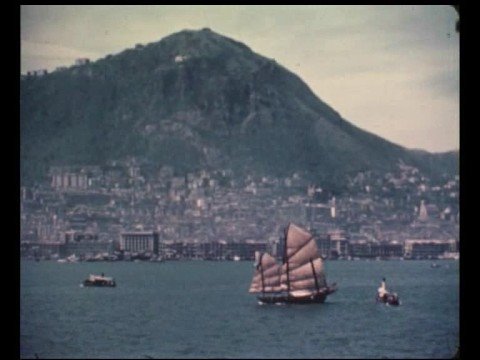
Image result for images of old hong kong harbourHong Kong in the mid-sixties

A life – another instalment of my autobiography before I revert to my normal blogs

Before we left England, we enjoyed two quintessential English events. The in -laws gave us their tickets for the Summer Exhibition at the Royal Academy, one of the glamorous fixtures on the London calendar fifty years ago. I watched with interest the people and clothes, as well as the pictures. Standing next to a woman dressed in exquisite soft pale blue suede with matching knee length suede boots, I recognised the heiress Tessa Kennedy, famous for her elopement at eighteen with painter Dominic Elwes.

They had fled to Havana to escape the English courts and marry there, before eventually fleeing Cuba on a raft during the anarchy of Castro’s era… I watched the President of the Academy reverently ushering through the galleries the fascinating Dorelia, Augustus John’s mistress, then partner for over fifty years. She was tall and stately, her gypsy beauty undimmed, her bright draperies fluttering as she moved. The famous and the fashionable thronged the beautiful galleries.

Earlier in June I had sat in Whitehall- dressed in a big navy straw hat, coral linen dress, and navy court shoes, feeling deliciously elegant- this time in seats obtained by my father, for us to watch the Queen’s Birthday Parade close up. She rode side saddle into the great parade square, escorted by the Royal Dukes on horseback, all gold braid, chain mail, spurs, bearskins and majesty. The Guards and the Household Cavalry trotted and wheeled and manoeuvred in their timeless rituals as the colours were trooped, and we sat spellbound on a perfect summer’s day, the glorious trees of the parks all around framing the pageantry and splendour.

We returned to old Thomas Twining’s two hundred and forty-three year old house down by the Thames, also surrounded by ancient trees, where squirrels scampered along the top of the high Georgian garden walls. A hundred yards away, a small boat was moored. This was an ancient ferry crossing, and a boat had waited there since medieval times, ready to ferry passengers across the river to Ham Common and the beautiful country on the other side of the river.

History and historic houses, parks and woodland dotted the banks along this stretch of the river. I loved it all. And had I known then that I was leaving this blessed plot, this beloved place, ‘this precious stone set in a silver sea’ – this England – forever, I would have been rent with grief.

But then, simply looking forward to our next adventure I set blithely off. Expecting the gentle energy and rich tropical environment of Malaya, I had a terrible shock when we landed in Hong Kong. The army had laid on a bus to take us from Kaitak airport and deposit us at our hotel and as I looked out of the windows in horror at the traffic, black exhaust smoke, pollution and shoddy blocks of flats, there just below our window, was a truck filled with bloody red animal carcasses covered in flies. This nauseating sight accompanied us the whole way to Kowloon and coloured forever my feelings about this extraordinary place.

Our hotel turned out to be plum in the middle of the thriving and noisy red- light district of Kowloon. The girls whose beauty had bowled me over at first with their elegant cheongsams, beautifully coiffed chignons of shining black hair and immaculate make -up turned out to be prostitutes plying what looked like a prosperous trade with the legions of cropped headed American servicemen on R and R – Rest and Recreation – from Vietnam.

Nights were made hideous with the sound of rows and roistering in the bedroom next door, as well as the traffic outside, and honking of horns and shouts of hawkers who never seemed to go to bed. But after various vicissitudes, we eventually found a beautiful flat in Deepwater Bay, across the harbour on Hong Kong Island. It was ideal, as all the other flats were occupied with young families like us, and there was never any lack of playmates.

We had arrived in the blistering heat of summer, but in September something magic happened. The humidity dropped, and the air became crystal, clear and shimmering and the light glittered on the blue and silver sea. The atmosphere changed too and became charged with a beautiful and haunting nostalgia.

After that first year, I waited for the day, and every year the same magic suddenly returned to the strident city, and transmuted for a few glorious weeks, the raucous harshness of the place and people. Some people never noticed the poetry which suddenly flooded those days and nights. Those who did, likened it to the light of the Greek islands. It lasted for a month to six weeks, before ebbing away into the grey mistiness of winter.

The rest of the time for me, Hong Kong was a place to be endured. Yet now, since China has grasped the prize, I sometimes think back with nostalgia to those years spent on that amazing rock, ten miles by five miles, where then, nearly four million people hawked and spat and bargained and gambled and drank and starved and jockeyed for the biggest profits and built the highest high rises.

In the mid-sixties, with Vietnam and flower power both at their zenith, Hong Kong was both a place of rest and recreation for American troops slogging it out in Vietnam, and a place too, where some draft dodgers quietly eked out an alternative life style.

There were also the  grand, old-established British families of several generations who had built up the great English Hongs, or business houses, there were colonies of newsmen, especially from most of the top American news agencies, from CBS and NBC, Life and Time, Newsweek, The Washington Post and Los Angeles Times – to name a few – there were birds of flight from New Zealand and Australia, working their way across to Europe for their OE – overseas experience- refugees from South Africa and apartheid, army and navy contingents, the Foreign Office and government clusters, the Indian community, Portuguese- Chinese immigrants from Macau, the rich Chinese and the endless army of poor Chinese, most of whom had fled China in different waves, ever since the Communist takeover.

This was also the beginning of the Cultural Revolution. Just before coming to Hong Kong, I’d read the history of the Boxer Rebellion. It struck me then, even in the mid-twentieth century, that China was a good place to stay away from. At a dinner party one night soon after we had arrived, a handful of us farewelled a lowly foreign office official, named Ray Whitney.

After learning Chinese like my husband and all those dining with us, he’d left the army to join the foreign office and was now posted to what was still known as Peking. Sitting next to Ray after dinner I naively suggested to him that it was a dangerous posting with the Cultural Revolution in full swing, and shades of the Boxer Rebellion. He swung his whole person round to look at me. “My dear young lady”, he exclaimed, ” I regard this as an adventure”.

A few days later, we read the reports of him and his colleague being beaten up on Shanghai Station and smeared with glue. When they reached the British Embassy in Peking, it became their prison. The diplomats there were beaten up while hordes of Chinese Red Guards chanted Kill! Kill! and part of the embassy was set on fire. Back inside, they were besieged, and no-one could leave for nearly eighteen months.

Requests would reach Hong Kong for Italian cook books and the latest novels with which to while away the captivity of an embassy of bored, beleaguered, idle diplomats. (Ray Whitney, a lovely man, had a distinguished career after this, knighted for his very real services, becoming an MP and a member of many influential offices and commissions.)

Reports were also reaching us of cruel mock trials of intellectuals and artists and other Enemies of the People. Old men were made to parade around in dunce’s caps at their trial and sentencing. It was a grotesque gesture by Chinese hooligans who had no idea of the history of Duns Scotus’s medieval hat. The Red Guards had now transformed the symbol for a dunce into a ritual for sadistic humiliation.

This was the year too of the Star Ferry Riots, when the government tried to raise the price of the Star Ferry tickets by one cent, the first rise since 1947. Those riots were just over when we arrived, and the next riots were soon to begin, fuelled by the unrest in China.

A curfew was laid upon the island. Everyone had to be in their homes by some ridiculously early hour like six o clock. I climbed into our turquoise Volkswagon and drove round from Deepwater Bay to a look-out on the Peak. I was the only disobedient soul outside and as an army wife, I felt slightly guilty. I looked down to Victoria, the town centre. Nothing moved.

Trams sat abandoned on the sides of the roads, cars were left empty and parked. The streets were silent and empty. The throngs of shoppers, the hurrying workers, the hawkers and Hakka women in their rattan hats trimmed with black, the street vendors, the prostitutes and the students, the toddlers who lived and played on the pavements, the school children crouched on the side-walk doing their homework in the shelter of a sewing machine or street stall, the rick-shaw men, and the porters in white vests and black shorts and wooden clogs, the business men in grey suits, the camera-laden tourists – all had disappeared.

It was eerie and frightening in the same decade as films of nuclear war and lethal clouds of radio-active dust destroying all life, leaving cities full of dead but still standing. That was how Hongkong looked that night, silent and empty. The silence was almost more un-nerving than the emptiness.

The unrest went underground, and suddenly erupted one hot summer’s afternoon. Perhaps as karma for disobeying the curfew, I found myself in the middle of the next round of dissent. I was driving up Garden Road with the children to see Pat Hangen. She and her children lived on the Peak with her husband Welles, NBC Bureau chief, always away in Vietnam and who later disappeared forever in Cambodia.

I had only recently learned to drive, and uphill starts were still a challenge, though there was only one junction where I might be called upon to use them, I thought. But, as I passed the Helena May Hostel for Young Women, I came on a mass of white-clothed Chinese youths, all shouting and waving Mao’s Little Red Books in the air.

I slowed down, and another group converged from another direction. I tried to edge out of the crowd, but more and more columns kept coming from all directions. I slowed right down to walking pace, and realised I was in the middle of a hostile, fanatical mob, and if I made one mistake, like running back or edging forward too quickly, it would be more than dangerous for me and the two now very silent toddlers in the back.

I wound all the windows up so that air came in through only a crack at the top, and the heat became stifling.   Sweat ran down my face and spine in rivers, soaking my thin cotton dress. The children’s hair was plastered to their heads with sweat and I could smell the musty smell of their damp scalps, and something else – our fear.

There were thousands and thousands of young men shouting in unison and waving their red books in the air. As they moved at slow walking pace, I was obliged to shift the car at the same speed, crunching the hand brake on and off, as we slowly revved up the steep incline. Then, suddenly, I could see where it all ended. They were all advancing on the Governor’s Residence off to our right. Thankfully I left the Governor to it, and made our way to Pat, shaking all over from the tension.

And after that, things took on another momentum, with bombs exploding all over the place, and many areas placed out of bounds to Europeans. The Bank of China in the middle of the city began a propaganda war of noise, blaring out raucous, Chinese communist marching songs and party chants. The deafening noise was augmented by the childish response of the authorities, who used the tower of the Hilton Hotel across the road from the bank, to play decadent, western rock and roll to drown out the Chinese music.

It seemed to go on all summer. What also went on all summer, was the Chinese water torture. Hongkong and the New Territories relied on water supplies from China, and some years, flexing her muscles, and also to annoy, China restricted the water. This revolutionary year was no different and for the four long hot months of sweltering summer, we were severely rationed in order to survive.

There was no water for three days out of four. On the fourth day, water was piped for four hours in the evening, during which time we had the opportunity to fill baths, buckets and every available jug, bottle and kettle with water to last for the next four days. We all also seized the opportunity to shower or bath during this precious four hours.

Unfortunately, our flat was at the top of a twelve-storey building, and the pressure didn’t build up until the water had been on for two hours, so we only had the precious stuff for two hours every four days.

And we were the lucky ones. The Chinese living down in Wanchai and among slums built on the sides of hills from boxes and cardboard, queued for several hundred yards by the intermittent taps. They had to manage with buckets and containers small enough to carry back to their dwelling places. These were the people who had fled China after the Communist takeover and it was their teenage children who were now demonstrating in Hong Kong, mimicking the excesses of the Red Guards under Mao.

The much-maligned Colonial rule in Hong Kong prevented the same victimisation and destruction here. Yet at the same time that these rebellious Hong Kong teenagers were enjoying their Maoist demonstrations, dissidents were risking their lives to escape from China, in the continual exodus which had never ceased since the Nationalists under Mao Tse Tung had driven out the Kuomintang under Chiang Kai Check back in 1949. In 1949 alone, the population of Hong Kong had  doubled.

Since then, the borders had been closed, and now most people slipped across the border in darkness or swam across, and were picked up in the New Territories. These refugees arrived undernourished and dressed in patched rags, testimony to the poverty that reigned in China under Mao. The society they now joined was a heartless one. Many once penniless Chinese had made good in the years since they too had arrived destitute.

They had obliterated their peasant past and educated their children at western schools and universities, penetrating established, rich society. Others had arrived from places like Shanghai with all their riches and built lordly homes on the upper slopes of the great rock which meant safety to them all. But they were indifferent to the plight of the newest arrivals. There were no charitable organisations to help them or the struggling poor. Philanthropy was not a characteristic of Hong Kong society.

A hundred and fifty years before, in 1812, the city of London with a population of a million, had free hospitals, alms houses, dispensaries and nearly three hundred free schools educating, feeding and clothing nearly twenty thousand children. Arthur Bryant, the historian who gathered these facts, wrote that ‘London could claim her real palaces were hospitals. Wren’s Greenwich and Chelsea; Gibb’s St Bartholomew’s with its Hogarth staircase; St Thomas’s with its four great quadrangles treating and discharging 11,000 patients a year; the new “Bethlem” and St Luke’s for the insane, with their enormous classical facades, were buildings that a king might have been proud to inhabit.”’

By contrast there were only two hospitals provided by the government here in Hong Kong for three and a half million people – huge rabbit warrens – not palaces. There were no facilities for the handicapped or insane at all. In a population of four million, there would have been a minimum of 200,000 mentally and physically handicapped, judging by the normal ratio of such figures per head of population. No-one knew where they were, though there were stories of deranged figures chained to verandas.

There were stories of goodness too. Two English teachers received a divine message to go to Hong Kong where a task lay before them. Obediently they packed up and came. Once in the colony, they had no idea what the task might be. They ‘waited on the Lord,’ and seemed to feel they should buy an old house in the New Territories. This they did, still having no idea why.

After a few weeks, they found a baby girl on the doorstep one morning. They took her in. And then the unwanted babies kept coming. They knew their task now, but they had no money. So they prayed for what they needed. And whenever they needed money or assistance, they prayed and it arrived. They called this place the Home of Loving Faithfulness.

The Dean of Hong Kong Cathedral and his wife were very pleased to have a new house built for them among the old trees just behind the Cathedral. It was handy, central, and of course, unlike most vicarages, new and efficient. In order to build this house, a destitute old lady who squatted beneath the trees, and scavenged enough food to cook small meals on a tiny stove, had had to be moved on.

But she always came back. The dean, a good man, and his wife, equally good, then organised a real home in a new block for the old lady, and there she was taken. By the following week she had found her way back, squatting where she had always squatted, which was now the veranda of the brand-new house. There she stayed, her acrid cooking smells drifting through the windows into the house. This was her home, so we have no right to force her to leave, said these worthy representatives of a sometimes-maligned church. So she stayed.

To be continued

 Food for threadbare gourmets

 I love the idea of thrifty ways to avoid wasting food. I found a recipe the other day in one of my scrapbooks for using up the remains of salad leaves to make a good pesto. Whatever the leaves, and someone else tells me she’s used radish leaves – put them in a blender with olive oil, garlic, and grated walnuts, salt and pepper. Whizz enough to make a textured mix – I use it over pasta, or with poached salmon. Amounts of olive oil etc depend on how much wilting lettuce you have in the fridge !!! I grate the nuts in my parmesan cheese grater.

 Food for thought

 This poem by Wendell Berry soothes my soul and brings me peace:

I go and lie down where the wood drake
rests in his beauty on the water, and the great heron feeds.
I come into the peace of wild things
who do not tax their lives with forethought
of grief. I come into the presence of still water.
And I feel above me the day-blind stars
waiting with their light. For a time
I rest in the grace of the world, and am free.”


29 Comments

Filed under army, colonial life, cookery/recipes, family, history, life/style, The Sound of Water, Thoughts on writing and life, uncategorised, Uncategorized

Sacred space

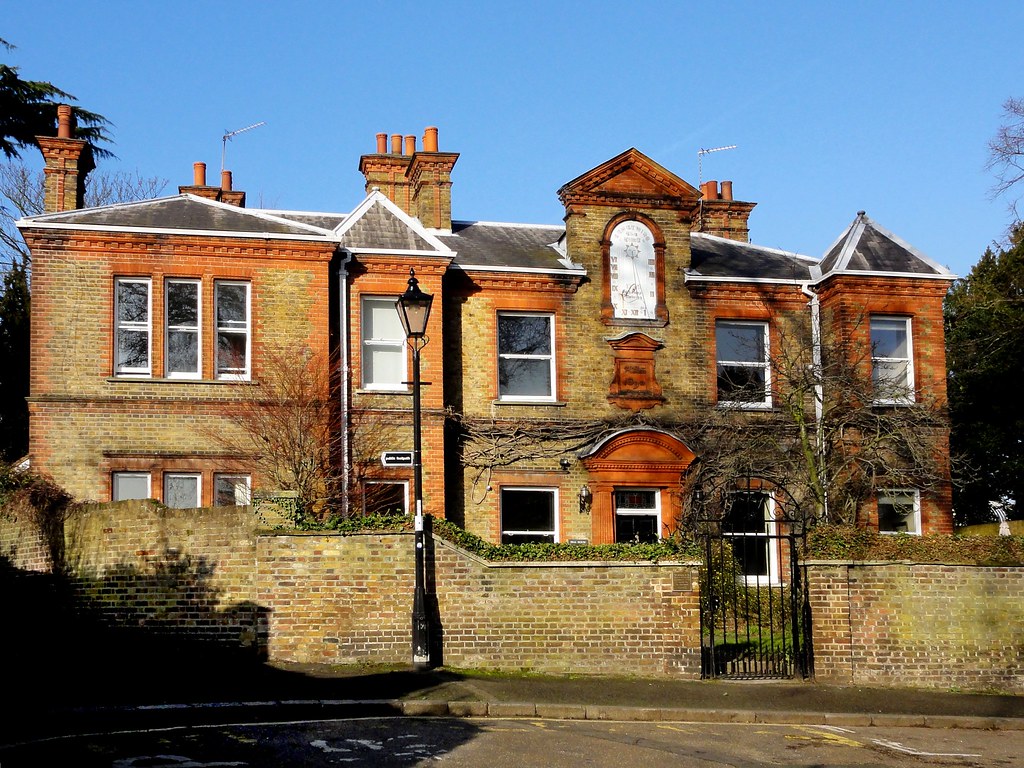
Image result for dial house twickenham londonRambling house down by the River Thames where my in-laws lived and I spent much time.
A life – another instalment of my autobiography before I revert to my normal blogs

I loved the ordinariness of the countryside. It wasn’t spectacular country, but it contained all the elements of the things which are now becoming rarer. There were thick hedgerows, and wild flowers and long grass in the orchard where the fox sometimes slipped through, on his way to the field where the donkey grazed: little copses, with their bare, spare branches etched against the pale winter sky, or billowing with green foliage against a blue sky in summer: woodpigeons cooed, cuckoos called, thrushes sang, and the smells of cut grass and manure, of wet leaves and sweet lilacs scented the clean air.

There was no hum of traffic from a distant motorway and few  sounds apart from the occasional drone from a tractor, the creaking braying of the donkey, and contented cows mooing on their way to  milking.

There were other things which showed me the dark side of modem farming. Henry the farmer, who gently patted his thirty prize cows on their rumps as they slowly filed past to the milking shed, where they stood and gave up their warm, creamy milk to the strains of Viennese waltzes, showed me with pride, his solitary calves. Each one was alone and imprisoned in iron cradles where they stood unable to move, turn or lie down, trapped in compartments in pitch-dark sheds, preparing to become white veal. I’ve never eaten veal since.

The house had no mod cons – everything was as it had been since the Victorian aunt’s childhoods. We had never been able to afford a washing machine for the babies’ nappies, so the lack of one was no drawback for me. So, while each baby luxuriated in smocked viyella nighties from the White House in Bond Street and was aired daily in the expensive pram bought by doting paternal grandparents, their nappies were washed the old-fashioned way. In a boiler.

This was filled with a hose from the kitchen tap. I then switched on the heater in the boiler and let the water boil, bubbling and swirling the soap-sudded nappies. They always had the same smell, those boiled soap suds. At the end of the boiling operation which filled the kitchen with steam, I wheeled the pulsating monster to the kitchen sink, and gingerly prised the lid off. Then, with a pair of wooden tongs in theory, but in practise with a wooden spoon, I poked around the scalding nappies until one became hooked on the spoon. With a quick swing it was transferred from boiler to sink, and then the endless rinsing process began.

Nappy by nappy was hooked and swung from boiler to sink, steam misting up the windows, and billowing out through the kitchen door to the rest of the house. My fingers became so swollen that I couldn’t wear my rings any more. Some days I was only one dry nappy ahead of the babies. Now Newney Hall didn’t even have a boiler, but at least Napisan, (hurray,) had arrived on the market, and banished my boiling days forever, however un-hygienic the nappies may have been.

The amenities of the house began and ended with the calor gas stove, while the bathroom and loo were directly above the kitchen, presumably to economise on plumbing. Since the staircase was the other end of the house, this meant walking or running the whole length of the house twice to get upstairs to the bathroom, but at twenty- seven years old the inconveniences didn’t seem to matter.

Living so far away from the shops didn’t matter either. The village grocer delivered our food for the week on Friday afternoons. The butcher called in his van three times a week, as did the baker. The greengrocer called twice a week, and the milkman called every day to supply not just milk to use up the baby coupons, but also yogurt and butter.

My husband left first thing in the morning for the London train, taking the old Morris Traveller with him to the station. I found expensive purchases hidden in the back of that car – a hat from Lock’s, the oldest hat makers in the world, who’d been in business since 1676 – Nelson was wearing one of their tricornes at Trafalgar). There was a shirt from Gieves  (Nelson was wearing a suit made by the original Mr Gieves at Trafalgar too). I worried my extravagant husband was getting into debt again while I couldn’t afford a new lipstick). When we’d waved him away, toddler peeping over the stable door of the kitchen, the baby perched on my hip, we returned to the kitchen table to finish our breakfast.

After hastily scrubbing the high chair before the spat- out cereal set like concrete, polishing the chrome on the pram so my mother- in- law would not silently notice spots or rust marks, I handwashed cobweb-like shawls and lacy matinee jackets in cold water so that my mother-in-law could not suggest I’d turned them yellow by washing them in hot water.

And then more vacuuming, (why did I think it all had to be done every day? – ready for inspection, ma’am – my mother-in-law lived miles away ) sweeping, dusting, regular stoking of the fire, the acres of red and white tiled kitchen floor to be washed free of mud, all kept me busy till the baby woke and lunch loomed, and then the sieving and straining and mashing began, before more face-washing and bib-tying and strapping baby into his high chair and hoisting the toddler onto a cushion on a kitchen chair.

The slow routine of spooning and cooing to the baby and answering the toddler’s continuous eighteen- month- old chatter ended, with more face-washing and changes of nappies, before putting both children down for an afternoon sleep. This was the one hour in the day to myself. I ate my lunch standing at the draining board – cheese and biscuits – reading the newspapers –  Guardian and Telegraph from front to back – I’ve never been better informed. I didn’t dare read a book as I would have forgotten the time and my duties.

I was so tired I didn’t dare sit down either, or I would never have got up again. I hadn’t had an unbroken night’s sleep since the first child was born, and now, with the baby’s night feeds and the other’s broken nights ever since her father had returned from Cyprus, I was so ground down that I couldn’t imagine what it felt like to be normal. Staying for Christmas with the in -laws, my mother- in- law told her son, who told me – how plain I had become. She was right!

The newspapers only lasted till the first child woke, and then their faithful slave would bound up the stairs or rush outside to the pram, checking the nappies, and freshening up their faces before we got dressed for our walk.

Living in a northern climate one becomes accustomed to the hours spent preparing to go outside into the cold or the rain. It must have taken twenty minutes or more to swathe each child in coats, hoods and zip-up jackets, ease tiny, bunched feet into warm boots, and wriggle fat, plasticine-like fingers into gloves or mittens. Then the strapping into the pram, buckling the harness, propping baby up on the pillows, tucking in the rugs to keep out the draughts, and finally, flinging on my sheepskin and gloves, wandering out at snail’s pace or toddler-pace, to gasp fresh air in lanes where the pram would go.

We never met another soul, looking across the frosty, bare, ploughed fields. We were five miles from the village and buried in primeval privacy. Back home, we watched the cows go past for milking, which was the signal for our tea-time. This meal, composed of much the same ingredients as lunch, but including any cakes I might have found time to make during my lunch break, began around four- thirty. This I know, because I switched on the radio when we started, to catch the five ‘o clock news, and so as not to disturb the children’s concentration by leaping up to switch on during their meal.

So I became a captive listener to ‘Mrs Dales’ Diary’, as I waited for the news to come on, and spooned food and baby talk into thrush-like, open mouths around the fireside. I listened with stilled breath to the Congo disasters, the Rhodesian Declaration of Independence, the bombing in Vietnam, the mistakes and injustices of authority all over the world, it seemed, yet these were almost incidental. The pressing reason for listening to the news was for the sheer pleasure of hearing another adult voice, to break the boredom and monotony of the endlessly repeated trivial tasks.

In summer, at twenty- past five every day, we watched the goose spoon water with her beak over her two goslings at the duck pond, before climbing the stairs for our baby bath-time and bed- time. It was always early – because they were ready for it, I said, and needed their sleep. So by six o’clock every night silence reigned. Perhaps they did need it – they certainly never argued and fell asleep straight away – but the real reason was that I needed it. People used to comment on how beautifully behaved they were – because they were always attended to – instantly!

Before the words ‘suburban neurosis’ had been coined, I’d have been ashamed to admit the boredom to anyone, but a wave of relief swept over me, unacknowledged every night, as I walked downstairs and poured a drink into a civilised, crystal sherry glass, for my one leisurely tot before beginning the cookhouse stint for my husband’s  dinner.

My marriage was breaking down already though my husband refused to go for counselling with marriage guidance. But before we left for Hong Kong, I had made a life for myself and found a circle of friends, Margery, the farmer’s wife who wrote poetry and read her poems aloud with a group called Poetry in Pubs. My nearest neighbour, was the Hon Jean, who had children the same age, which was the only thing we had in common, but she seemed to need me. Lady Selina, who divided her time equally between her painting, the stables and her children, and was both a Quaker, and a sort of enfant terrible was stimulating, while sweet Jennifer, whose children always fought with mine, shared a passion with me for interior decoration and gardening.

Eventually we left that enchanted house to go to Hong Kong, where the hectic life and chaos of those times almost obliterated the memories of that year in the country. But for years I have dreamt of that beloved house. In my dreams it’s bigger, and there are many more rooms. The furniture is more elegant and the rooms more beautiful.

There’s one room which is filled with such treasures that I only go into it sometimes… it feels sacred. I have no idea why I dream so often of this house I lived in for a short year so long ago. I don’t know what it symbolizes. I’ve lived in other houses and places just as magical…  no doubt a psychologist would mine some profound Jungian theory from these dreams, delving into the unconscious and maybe coming up with an archetype!

We spent the last few weeks in England with the in-laws at their rambling red brick Georgian house down by the river Thames. Built by Thomas Twining of the tea family in 1722, a big sun dial told the hours on the front of the house above the front door. Inside it was decorated with glorious colours and filled with treasures and exquisite antiques and china collected by my deaf, difficult, demanding mother- in- law, whose creativity and taste taught me so much.

The night we left, as we sat in a big car lent by friends of the in-laws to accommodate all our luggage, we four and the in-laws who were seeing us off on our plane, I looked up at the old house, illuminated by the street lights and wondered when I would see it again. No presentiment warned me it would be twelve years before I saw that sun dial again, after what had seemed like a life-time of heart-break, adventure, life in a far country, second marriage and extraordinary experiences.

To be continued


Food for threadbare gourmets

 A friend who has her mahjong foursome to stay here in the forest for a weekend once a year, usually brings them to my place for afternoon tea and we have a great girls natter. They always love my scones and want the recipe. This is it, so quick and easy: eight to ten ounces of SR flour, pinch salt and two to two and a half ounces of butter – I simply grate it cold from the fridge. Mix this altogether with an egg beaten in a cup of milk until it all comes together. Use more milk if you need, to make a soft dough.

I don’t bother to roll it or use a pastry cutter. Just gently knead it into a square, about an inch thick, cut it into small squares, and place with a space between them on a greased baking tin. Some say leave it in the fridge to cool… sometimes I do – if I don’t have time – que sera sera. Bake in hottish oven for fifteen minutes or until risen and done. Serve hot with butter, strawberry jam and whipped cream if you have it. If there are any left over (not often) I fry them with bacon and fried egg… nice…

Food for thought

You can never get a cup of tea large enough or a book long enough to satisfy me… CS Lewis – a man after my own heart.


37 Comments

Filed under army, babies, beauty, cookery/recipes, environment, family, life/style, The Sound of Water, Thoughts on writing and life, uncategorised, Uncategorized, village life

The Land between the Rock and the Hard Place

1962.jpg

Am too technically incompetent to reduce the size of this outrageously large picture

A Life – another instalment of my autobiography before I revert to my normal blogs

I loved my time in the army. I made friends I still have today. I could afford holidays with them in Provence, and Majorca when it was still empty and unknown. I had beautiful clothes. I had a social life that swung between visiting married friends at weekends, to parties with dashing cavalry officers and staying with their titled parents, to holidays on my own roaming the beloved dales and the moors of Swaledale, or riding across Exmoor and Lorna Doone country on my best friend’s horses with her family.

My army career blossomed, I received promotions very early and was given responsibility far beyond my rank and years, being promoted to captain when I was twenty- two. My last dream job was lecturing all over England and Wales armed with a car and a driver, which also meant staying in the best hotels and in my spare time exploring cathedral towns and remote villages in glorious country-side.

It all came crashing down one day at home on leave. A letter arrived for me from my step-grandfather. I thought it might be a suggestion to meet for lunch as we sometimes did. But it was a deeply underlined request to come to his flat secretly one evening – and tell no-one – in capital letters.

My stepmother saw her father’s hand-writing and insisted on reading it. She hit the roof and accused me of having a fully- fledged affair with him. Her dislike for me – we could only be in each other’s company for short periods before her hostility began to manifest – now crystallised into loathing, and she blamed me for leading him on, and aiming to get my hands on his money – a gold digger she called me.

I left home feeling I could never return, and when my father, who had never taken the episode seriously, began secretly coming to see me I felt that I must be causing trouble between him and my stepmother. I felt the only way out of the impasse was to get married and make a home of my own, and then it would be natural that I wouldn’t be coming home.

With that intention I soon met someone, convinced myself that I loved him, and we became engaged. The engagement survived the freezing legendary winter of ‘62/63, driving around in his unheated MG in a sheepskin coat, and I was grateful too, that this was the year woolly tights were invented.

My engagement ring somehow symbolised the future. I had just wanted an in-expensive antique ring, but my future mother- in- law apparently deemed this unsuitable. She invited me to tea, and as we finished our cherry cake, a knock on the door produced the local jeweller with a tray of conventional rings with no price tags. I was mortified, but chose the ring I disliked least, feigning delight, and knowing that she was paying for it, not my fiancée.

Trying to be like all my friends and pretending that I had a normal loving home like everyone else – it had always felt so shameful not to be loved – I organised a traditional wedding and paid for it…from the engagement notices in the Times and Telegraph and printed invitations, to the flowers and church, the wedding cake and reception, the cars and the white satin dress. During this time, I had returned home, and paid my stepmother an in-ordinate sum for the privilege of sleeping on the sofa, since my step-grandmother now lived in my bedroom.

My new husband had grandiose ideas, so we were booked into the Savoy Hotel for the first night of our honeymoon, before travelling first class to Cornwall, where after a night in another expensive hotel we caught a plane to the Scilly Isles for two weeks in another expensive hotel.

Our first night in the Scilly Isles life came crashing down again.                                             My husband asked me for a cheque to pay for the honeymoon, pay off all his debts, and his overdraft at the bank. “I promised the bank manager I’d pay it with your money as soon as we were married”, he told me. (I’ve sometimes wondered what the bank manager must have thought of this promise)

The amount swallowed nearly all my savings after the expense of the wedding. It felt as though a prison cell door had just banged shut behind me. I wept and rolled around on the bed in agony. My husband simply couldn’t understand why I was so upset. He simply couldn’t see why it felt like a betrayal. And I was right to fear the future. This was only the first of many betrayals awaiting me.

Somehow, I put the misery to one side, and tried to make the best of things. Just as well, as within a couple of weeks I was felled with morning sickness. Only it wasn’t morning sickness. It was all day sickness. I carried a saucepan around with me, in the house and in the car. In 1963, two years after thalidomide had been withdrawn, the doctor was not going to give me anything to help, he just said it would pass, so I tried every folk remedy from raw carrots to ginger biscuits!

I also got hopelessly behind with things like the washing! Being something of a dandy, my husband owned fifty- two shirts, and one hot June day we came to the end of them. They were all piled into the dirty linen basket. With a handful of other young married couples, we had gathered in someone’s army quarter to pass round The News of The World and read the latest instalment of the Profumo scandal.

My husband was down to his last shirt – so old it had no sleeves, but he’d hidden this deficiency with a tweed sports jacket. Everyone ribbed him mercilessly until he ruefully took off the jacket – with an apologetic glance in my direction – revealing the humiliating shirt and my in-adequacy!

It was worse when we were visiting his mother at Christmas. She was a perfectionist who ruled her family with an iron hand, but not with that velvet glove. She found her precious son was wearing summer pyjamas in winter. She was mystified – I gave him lots of warm viyella pyjamas – she kept saying until I confessed they were all stuffed in the dirty linen basket… but pregnancy was no excuse for not looking after her son properly!

Towards the end of November, sitting on the sofa, feeling ill as usual, and waiting for my husband to come home, he arrived through the door in some haste at twenty-past seven. He hurried to the radio and turned it on saying President Kennedy had been shot. As I was pooh-poohing any truth in it, citing De Gaulle’s escape from 140 bullets the year before, the Archers – the long running farming serial –  was interrupted.

An announcer told us that President Kennedy had just died. Like everyone else, we were stunned – it seemed unbelievable. The life and light of a leader who personified hope for the world just snuffed out. The inspiration of our generation gone, with no warning. Only grief and disbelief left to us.

Two days later we were at dinner in Winchester with my oldest school friend from Malaya. Her husband turned on the television to watch the news. As we watched, still shaken and shocked from the assassination, we saw Jack Ruby shoot Lee Harvey Oswald, there under our very eyes as we watched – at that very moment in time. That, too, seemed unbelievable. The whole world seemed to rock.

Lack of money beset us from the start of the marriage, as my new husband was a year too young to receive ration allowance, which started when officers were twenty-five. The idea was to discourage early marriage so young officers were keener to go out and be killed fighting than if they had a wife and family!

With all my savings gone, in the last few weeks of pregnancy we were so skint, that I gave my husband the only good piece of jewellery I had ever bought for myself – an amethyst ring – to go and sell to raise some money. Predictably we didn’t get very much… just enough to buy food for that weekend.

We had moved house, from a posting in Wiltshire to an army quarter in Essex, in the last month of pregnancy, and I had managed to get a bed in a London teaching hospital. Still vomiting to the last, I weighed a stone less the day after the birth. To the envy of the other mothers, my clothes were hanging off me after the baby was born – unscathed by her mother’s ordeal- bouncing, bonny and over seven and a half pounds.

I had never gone back to the unhelpful doctor, so had missed out on pre-natal information, and had no idea what birth was actually about, my best information being from’ Gone with the Wind’ and Melanie hanging onto a knotted towel so as not to groan.

No knotted towel, but gritted teeth meant that I heard the nurse in the labour ward tell my husband he might as well go home since I was asleep. So he did, even though I raised my head and said I was awake! When the baby was born later that night, it was one of the most beautiful moments of my life when she was placed in my arms already sucking her thumb.

That beautiful moment was somewhat marred some hours later when a trainee African doctor from Khartoum who hardly spoke any English, and didn’t seem to have heard of anaesthetics, marched in, ignored my protests and sewed me up with nothing to dull the pain.

When that was over, I was handed a telegram which had just reached the hospital. The words simply said: “Gone to Cyprus”. My husband’s regiment had been sent – as the last men standing – to douse the flames of civil war in Cyprus. The month before in January, after  Zanzibar had exploded, the armies of Tanganyika, Uganda and Kenya had  mutinied over pay and conditions, and each government had asked Britain to send troops to help. It felt as though half Africa was in a state of insurrection with British troops flying everywhere.

My husband’s regiment was on standby for the next emergency, and it had arrived- Greeks and Turks at each other’s throats in Cyprus. The Daily Express wrote that “25,000 Turks have already been forced to leave their homes”, and the Guardian reported a massacre of Turkish-Cypriots at Limassol on 16 February 1964, the day my daughter was born.

It’s hard to explain how vulnerable I felt – psychologically I needed someone to care for me while I cared for the new baby, while we were suddenly much worse off financially with me in one place, and him in another. I hardly knew the house we had just moved to, and I was terrified of my new born baby, not having any idea how to care for her.

I left hospital after a week and went to stay with my in-laws for two weeks. Then my father drove me back to the army quarter I’d briefly lived in. Painters had come in while I was away, and the house was cold, damp and depressing with white paint spots over everything, including my bright new, stainless steel, wedding present pop-up toaster. The painters had obviously not bothered to use drop cloths. All my neighbours –  other army wives – had packed up and gone home to their families, so I was high and dry and alone.

I couldn’t drive the car parked in the garage, had no phone, and had to walk pram and baby through the cold foggy February weather to the village shop two miles away, to get shillings to feed the gas meter for heating. I was frightened and depressed. And the baby had colic. She cried for most of the day and night while I paced up and down with her in my arms, before collapsing with a fierce migraine when she was six weeks old.

So now, like the other wives, I packed up too and went to stay with my in-laws in London for a few weeks before taking the train to Manorbier at the furthest tip of Wales, where my best friend from our army days now lived. Her baby was a year older, and the weeks spent here were full of joyful jokes, as though we were still carefree and unmarried. Her friendly husband watched us in tolerant amusement. We still hark back in our letters to the fun we had then, and I turned my life around in that time. My daughter thrived and I got my courage back again.

When I returned to the house in Essex, I had enough energy now to tackle the over grown lawn, mowing three square feet with a push lawn mower every night after the baby was in bed, until I completed it. I began walking the pram into town a couple of miles away and attending the baby clinic every week for weighing and measuring, until they said I only needed to bring the baby every two weeks. It never occurred to me to tell them that this was the only time I saw anyone to talk to.

And now a few old friends came to stay, and one or two families trickled back into neighbouring army quarters.  I stopped fearing that my husband would be shot by Greeks or Turks. His regiment had now become part of the UN peacekeeping force, patrolling the Green Line.

After six months he returned and I was rather taken aback to find a cache of new clothes made by a local tailor in his luggage, and also to discover that he had learned to swim, thanks to the friendship of a girl from the Foreign Office. He hadn’t mentioned either of these things in his in-articulate weekly letters, but I pushed my surprise to the back of my mind.  The second day he was back, I realised as we sat in the sunshine in the garden, that I was bored, and supposed that this was one of the inevitable stages of marriage.

To be continued…

 Food for threadbare gourmets

 I’m not really a meat eater, especially when it comes to beef. So cooking one of Himself’s favourite things – spaghetti Bolognaise  – is always a bit of a chore. But I’ve just discovered the answer for me – in the Daily Mail of all places. Only three ingredients needed, and the whole thing can bubble away while I beef up the Bolognaise! I halved the amount, so used one tin of tomatoes, the recommended onion, and three tablespoons of butter. For four people, double the ingredients, apart from the onion. Don’t chop the onion, just peel and cut in half. Put everything in a saucepan and let it all bubble gently for forty -five minutes, stirring occasionally. Just before serving, fish out the onion. The resulting rich smooth tomato sauce over pasta and sprinkled with freshly grated parmesan is food for the gods. Who needs beef?

 Food for thought

‘Life beats down and crushes the soul, and art reminds you that you have one.’ Stella Adler – actress and acting teacher


41 Comments

Filed under army, babies, british soldiers, cookery/recipes, family, happiness, life and death, The Sound of Water, Thoughts on writing and life, uncategorised, Uncategorized

A soldier’s life is terrible hard! (says Alice)

Image result for duchess of kent in wrac uniform

A life  – another instalment of my autobiography before I revert to my normal blogs

Gentle in manner, resolute in deed, was the motto of the lady-like group of women I now joined – no rifles, mud-covered faces, raucous corporals or killing fields for us. The picture above is our Colonel Commandant, the Duchess of Kent, and my company commander, Major Betty Metcalfe- veteran of the war, and a blonde, elegant blue- eyed woman.

The recruiting officer had sent me to the Regular Commissions Board to see if I was officer material. Here I had had a pleasant surprise – though I was the youngest, everyone else was young and full of fun –  and life began to look up. I jumped through all the hoops for three days, and was eventually informed that I was indeed officer material.

Back home waiting for the date to join up, when I continued to drive my parents mad dreaming around the place, and my father had uttered with relish threats like: “they’ll wake you up when you join the army”, and: “you’re going to get the shock of your life when you get there”, I wasn’t too worried.

I got to the WRAC Depot on the wrong day, just as I’d got the dates wrong all my life, taking half term holidays when every-one else was at school, arriving to catch the plane as it landed the other end, taking a train to Chester instead of York, or Birmingham instead of Cardiff.

My unheralded arrival at the depot caused great consternation, and several anxious conferences I discovered later. It was decided to park me with the recruit company which was already half way through its training. The quartermaster resolutely refused to issue me with a uniform, because it would screw up her account books, but was prevailed upon to allow me a pair of shoes in order to do all the marching I was about to embark on.

Not knowing the procedure, when they took me to the quartermaster’s stores, I took fitting my shoes as seriously as though I was in Russell and Bromley buying some fabulously expensive gear. I pinched the toes, checked the heels, worried about the width, and walked up and down trying several different ones for size, while the quartermaster’s staff looked on in dumb disbelief, and allowed me to get away with it, since I was obviously away with the fairies! Later I discovered that it was just a question of saying your size and taking what you were given. Ignorance/innocence was bliss…

I was then escorted to the barrack-room, with a corporal helping me to carry my suit case. As we neared the entrance, I heard the clatter of seventy pairs of shoes thundering along wooden floors, and can still remember my subconscious thought, “Oh, they must have taken the carpets up for cleaning…”

Since the quartermaster – a fearsome figure – had dug her toes in over my uniform, I had to trail around at the end of the squad in my old red raincoat, the only thing I had to wear. Every time the Colonel – another fearsome figure – saw my red mac, it was worse than a red rag to a bull, because she then trounced the harried Adjutant for the incompetence of everyone down the chain of command who hadn’t issued me with uniform. Thus, unbeknown to me, I became famous or rather, infamous throughout the depot.

Meanwhile I solemnly got on with the job of being a recruit, with a lot of help from my fellows, who thought I was going to be a clerk or a cook like them. Since I was out of sequence with the other officer cadets, I was in with a room of diverse and fascinating girls, some escaping the slums, some escaping their parents, others escaping an unhappy marriage, or a cruel employer. There were also two girls from the Gorbals, the notorious Glasgow slums, whose speech was salted with curses and swear words – most of them new to my ears.

One night, after another exhausting day of: “by the right, by the left”, right wheeling, left wheeling, right form, and lectures, with the same programme awaiting us the next day, I got tired of their strident voices and obscenities keeping us all awake while we tried to get our much- needed sleep. I said to them very crisply in my pukka Queen’s English, down the length of the barrack room – “Good Bloody Night !” There followed a deafening silence and I went straight off to sleep.

At lunch-time the next day, a deputation from the barrack room came to me, and asked me very seriously not to be corrupted, and start using bad language. They gently told me I’d been brought up properly, and they didn’t want me to be influenced by people who didn’t know any better! I promised them I’d be a good girl, thinking of my father, and wondering if he would think I was getting that shock to the system that was going to wake me up!

Because I’d muddled up my dates, when I emerged as a fully- fledged recruit, my fellow officer cadets were still some weeks behind me, so I was a spare wheel. They invented a temporary rank for me, and I was called a Senior Private. I had the job of marching the new recruits to the cookhouse, which was no sinecure, because you had to remember the right military words of command, shout them loud enough for a long column to hear, and get them timed for the right feet to come to a halt in sequence.

My counting was a shambles so the girls stumbled instead of coming to a brisk halt, and the worst time was when we’d reached the cook house and I couldn’t remember the word for Halt! Finally, as they were in danger of piling up against the door, continuing to march with no word of command to halt them, I shouted “Stop!” in desperation, and I could hear them all muttering things like, “we didn’t get the right foot… she didn’t give us the right command… what’s wrong with her”… responsibility is a terrible thing, I would have told Alice.

By now I was in a new barrack room with all the tough old hands, and one morning in the first week, someone dropped their highly polished shoes for parade, and exclaimed: “Shit”. There was a heavy intake of breath around the room, and then silence. She turned to me and said “I’m sorry”. “Why apologise to me?” I asked in amazement. “Because we all decided we wouldn’t swear when you came into this room,” she said!

My poor father would have been sadly disappointed – coddled and protected, when was I going to wake up?  But a soldier’s life was terrible fun! So after my somewhat chequered career as a recruit I set off for officer cadet school with the rest of my intake – all eleven of us who had surfaced from the forty other applicants.

I learned later that it was no coincidence that the Colonel happened to come past the transport as we left, looking keenly at me! Oblivious to the impact I had had on various unfortunates at the depot, I discovered that officer cadet school was just like going back to boarding school, only better – I got paid!. As the youngest, and just out of school, I probably found it easier than the rest who had enjoyed their freedom. But to me, regular study periods, meals in the dining room, putting on uniform every day, was just more of the same.

Cadet school was set in a camp left behind by the Canadians after D –Day. Our nearest neighbours were the TB patients in the next- door sanatorium. No potential there for hobnobbing with the opposite sex. The camp was surrounded by silver birch woods, which stretched for miles to the nearest village, and on still June nights I would wake to hear nightingales singing in the moonlight.

The only difference to boarding school was the hours spent on the huge parade ground being drilled by a tiny sergeant major, less than five feet tall, whose mighty voice echoed not just around the parade square but on and beyond to the main Portsmouth road. As the eleven of us wheeled and drilled, and right formed, and fell into line, came to a halt, and about turned, a line of lorry drivers would pull up on the side of the road to watch us for their amusement, while they ate their sandwiches for lunch.

Thus it felt all the more humiliating, when dreaming about the un-read pages of the timid love letter stuffed hastily into my battledress top to read in our break, that I missed a step, failed to hear the word of command and carried on marching in the opposite direction when the rest had about turned. Love letters – or what passed for them – were a fairly scarce commodity at cadet school, as we might as well have been in a nunnery, we saw so few men or even boys.

The highlights of each term were the invitations to the house of an elderly couple who invited batches of Sandhurst cadets and us girls to hear talks on Moral Re-Armament. Their house just missed being stately, their servants were helpful, their food was heavenly, the worthy talks were utterly boring to frivolous young women, but the chaps might be interesting, we hoped. They never were but hope always sprang eternal.

Apart from the daily morning parades, and the hours spent perfecting our drill and learning to shout commands that one day would be directed at our platoons when we took them on parade, we spent a great deal of time in lectures on arcane subjects like pay scales, army regulations, map-reading and leadership.

No rifle drill for us, but instead lectures from a series of university lecturers on constitutional history, current affairs, scientific trends and something called Clear Thinking, which involved logic, and fallacies and syllogisms – all considered necessary for a well-educated officer back in 1957!

Constitutional history was taught by the scion of a famous German intellectual family who’d escaped Hitler before the war, but the name of this gentleman was so long that generations of philistine and irreverent cadets just called him ‘Footy’, which he pretended not to know. He also pretended not to know that we never listened to a word he told us about constitutional history and the balance of power between the Commons and the House of Lords, but sat instead endlessly practising our signatures, or planning what to wear on our next trip to London.

Scientific Trends was taught by another mid-European lecturer, only unlike Footy who’d grown up in England, this very gentle man had a very thick accent and a deadly monotone. He showed films to illustrate the latest scientific trends, and as his lectures were conducted in the cadet sitting room, where there was a film screen, we just curled up in an arm chair in the dark with a bar of chocolate, and usually dozed off.

The rest of the syllabus was devoted to giving us an understanding of life, and the background many of our future charges came from, so we visited a Lyons Swiss roll factory to see what life on a conveyor belt was like, attended a Petty Sessions where we saw sad souls parade before the magistrates, and I felt like a voyeur, and worst of all, went to the Old Bailey. The day we were there we watched a murderer condemned to death, after a crime passionel. His voice after sentence had been passed was like the rustling of dry leaves.

The most challenging part of officer training was the two days I spent in the cook house, discovering how hard life really was. My worst crime was to leave the potatoes so long in the potato peeling machine that they came out the size of marshmallows. The kindly cooks who actually had to deal with this catastrophe, covered up for me, and my copybook was not as blotted as it might have been.

A handful of lectures on strategy and army organisation at Sandhurst were memorable for the lunch breaks when we mingled with the Sandhurst cadets. My most lasting memory is going for a punt on the lake, and it sinking, and my partner in this exploit – John Blashford-Snell, who has since become a famous explorer who did the first descent of the Blue Nile, explored the whole Congo River, and the Amazon, shooting many rapids unscathed – had to wade ignominiously back to shore, towing me sitting on the end of the leaky vessel.

The one thing I did master while at cadet school were the steps to the Charleston, then back in fashion. I perfected the knock knees, pigeon toes and tight sideways kick by holding onto the back of my chair in the lecture room as we waited for the next lecturer to arrive. I practised my dancing until I was foot perfect, and by the time we Passed- Out was acknowledged as top of the class by my peers in this useful social accomplishment.

At the end of this gruelling training, interspersed with dances, parties and uniformed guest nights – when we practised the solemn ritual of Passing the Port – you Never lift the decanter from the table and only slide it in the coaster from right to left so it goes around in a circle, using Only the right hand – five of us emerged as second lieutenants. And now reality hit us.

Second lieutenants, we discovered, were despised by all, except new recruits. Everyone knew we hadn’t the faintest idea of what we had to do, from the regimental sergeant major down to the newest corporal. We were saluted, and called ma’am, but we knew that behind this ritual was the thinly concealed contempt of ‘old hands’.  Wet behind the ears, my father would have called us.

Many of the old hands had been through the war, like my motherly platoon sergeant who told me they knew D-Day must be in the offing, when they had to give up all the sheets from their beds, so that the huge new detachments of American soldiers arriving nearby could have the same sheets on their beds! And in the end, it was my platoon sergeant and the company sergeant major who taught me what I needed to know. Which seemed to be mostly to do what they told me!

Their commands varied from: “Here’s the pay books to sign, ma’am”, to: “Time to inspect the recruits, ma’am”, to: “Time to have your tea ma’am”. My requests varied from: “What shall I do now, Sergeant Major?” to: “D’you know where Private Smith is ?  She hasn’t made the tea yet.” A soldier’s life is terrible hard…with apologies to AA Milne and Christopher Robin

To be continued

 Food for threadbare gourmets

 Raw food isn’t really my thing, but I found this recipe for mushroom pate rather delicious. Chop twelve to fifteen baby mushrooms or two really big portobello mushrooms, and marinate them in two tablespoons of olive oil and the same of tamari soya sauce, for half an hour. Put half a cup of walnuts in a food processor and pulse until slightly broken down, and add the mushrooms and a clove of garlic. Pulse until the mixture is slightly chunky and add salt and black pepper to taste. Good on crackers with a glass of wine, or sherry…

Food for thought

Clanmother sent me this time ago, and I love it.  She wrote:   ”  J.R.R. Tolkien lost his best friends in WWI. One of my favourite quotes on war comes from his work, “The Return of the King,”
‘It is not our part to master all the tides of the world, but to do what is in us for the succour of those years wherein we are set, uprooting the evil in the fields that we know, so that those who live after may have clean earth to till. What weather they shall have is not ours to rule.’


34 Comments

Filed under army, british soldiers, cookery/recipes, humour, military history, Thoughts on writing and life, uncategorised, Uncategorized

A heroine, an eccentric, a Muslim attack and a paradise

Image result for la times muslim sultans torchlight birthday parade

A life – another instalment of my autobiography before I revert to my normal blogs

The last holidays were spent in Kota Bahru, where my father had been exiled after another stoush with another commanding officer. In his game of snakes and ladders with his career, he was heading towards the top of the ladder again, when he landed on a snake, picked an unnecessary and unreasonable point of principle with the colonel, and slithered down the board again, missing out on a medal, ending up with a mere mention in dispatches and a posting as far away from the regiment as possible.

Kota Bahru, up on the east coast near what was then the Siamese border, was idyllic, with long, unspoiled beaches edged with casuarina trees, and gaily -painted fishermen’s boats lined up beneath them. The men wore piratical- looking turbans in bright oranges and reds and blues, and the women’s clothes were richly- coloured unlike the drab, brown batiks of the sarongs on the rest of the Malayan peninsula. Thanks to a mixed Siamese/ Malay heritage, the women here were famed for their beauty, combining the voluptuousness of the Malay with the sculptured bone structure of what are known as Thais now.

We lived in a pink stucco house near the mouth of the river, some way out of the town, and not far from the airfield which had seen hard fighting when the Japanese landed. The house looked across at a peaceful little kampong beneath the trees. Great clumps of purple water hyacinth often drifted slowly down river, and we watched the bronzed, brown bodies of children jumping and playing in the water. Early in the morning, or at dusk, the girls would stand and discreetly bathe beneath their sarongs, and their grandfather sat and fished all day, a still, meditative figure across the water.

The house still bore the machine gun holes from twelve years before when the Japanese had made their sudden appearance from the sea at dawn in December 1941. The hub of the community we were now part of, was the Kelantan Club, where Europeans gathered to meet each other. They were a mix of the local judge and policemen, diplomats and doctors, nurses and rubber planters, and representatives of various historic far eastern trading houses.

The rubber planters had mostly lived here since before the war, and were in many ways, thirtyish Somerset Maugham characters. They had all been interned together at Changi Camp in Singapore during the war, and those who had survived were a close -knit band of brothers.

There was Ted Kurtain, famous for swearing, whose waterfall and rock pool was a favourite picnic spot for the favoured few, including us. His closest friend was a dignified quiet man, Hugh Jackson, who had had a Thai mistress for nineteen years before the Japanese came. She waited for him during the war years he spent in Changi, and they were re-united when he came back to his rubber plantation.

Deaf to the misgivings of his well- connected English family, he sent his mistress to a Swiss finishing school, and then married her. On visits to his spacious bungalow, filled with books and English china and antiques, she entertained us as though it was an English country house party. She was beautiful, dignified, her grooming immaculate, and exquisitely dressed.

Alf, one of the two eccentric local police chiefs, had a head as bald as Yul Brynner’s, and underneath his intimidating exterior was a gentle, kind and lonely man. When his mandatory leaves came around every three years, he took a boat to Aden where he disembarked and bought a flock of goats. These he would drive north up the Arabian Peninsula, using the goats as food and currency, and when he reached Port Said took a boat to Liverpool.

Here he would spend a fortnight with his sister before returning to his post in the East. The other police chief was a much younger Englishman who had converted to the Muslim faith and kept his distance from we alcoholic and godless infidels!

As well as the Kelantan Club, the other meeting place was the Palm Court Hotel, a complete contrast to the old wooden club house with its planter’s chairs and rattan furniture. Palm Court was all concrete and tiles and chrome, and run by Mammy, a giant White Russian lady in late middle age. She wore ankle length caftans before they had been invented, had frizzy, short hair and thick pebble spectacles. But behind her facade of jolliness, I noticed loneliness and sadness.

When writing a blog, I pieced together the remarkable story of this unusual woman. Luba Ruperti was a White Russian born in 1896. She fled with her parents from the Bolshevik Revolution in 1918 via Shanghai to the safety of British Singapore, after her sister had been killed by a revolutionary mob.

In those years before the war, Luba would have felt safe in this seemingly impregnable British colony. She married a Russian rotter, who bankrupted them both and left her. Then after their grim appearance in Kelantan, the Japanese reached Singapore, and in that mayhem of murder and bombings, killing of patients in hospital beds, raping of nurses, and killing of all Chinese, somehow Luba got to the dock and managed to board SS Kuala. It was overloaded with five hundred or so other women, children and babies, including a number of Australian and New Zealand nurses.

The next day the Japanese sank the ship, setting it on fire and mothers threw their children overboard trying to get them into the rafts below. As women and children struggled in the sea, wounded, bleeding, drowning, trying to hold onto rafts and floating debris, the Japanese machine-gunned them in the water.

Those who survived terrible thirst, hunger, horrendous wounds, madness and burning sun to make it to shore, were machine gunned in the water and as they staggered over rocks and up the beach into the shelter of the trees. They had reached Pom Pong Island which had no food, and only a tiny source of fresh water, after three hours in the sea. “My fat be blessed for that!” Luba told a reporter after the war.

A few days later the SS Tandjong Pinang arrived at Pom Pong Island from Sumatra to rescue the small band of between a hundred and a hundred and fifty survivors from the original five hundred. Hardly had they embarked than the Japanese were back, and sank this ship too. Luba was one of only handful of survivors of this second disaster.

The few the Japanese captured on shore ended up suffering and usually dying in the terrible conditions of internment. Luba got away, and somehow ended up in India, via Ceylon, where she made her living cooking for thousands of U.S. troops in Delhi, before returning to Singapore after the war.

While in India, in February 1943, Luba gave her great gift to all those who had died, suffered or survived. She had compiled a long list of the names of the people who had boarded the SS Kuala at Singapore and who had survived to board the SS Tandjong Pindang. In the chaos and panic during the bombing of the docks in Singapore as frantic passengers tried to board the ship, no records had been taken.

No-one knew who had boarded, escaped, drowned or survived. Families would never have known if their loved ones were still alive in some corner of the world. Luba must have started compiling her lists during their terrible ordeal on Pom Pong island, as there was no way otherwise that she could have known so comprehensively who was there.

It was an act not just of heroism in those hellish days, but of responsibility and altruism in conditions when it could very well have been everyone for himself. Her act of witnessing and recording rescued both the dead and the living from oblivion, telling their story – a story that no one else was able to share with the world for another three years when the war ended, when a pitifully small handful of survivors could then tell of their sufferings.

In an archival story I found a reference to her being back in Singapore by 1958, and by the mid-1960’s nearing seventy, she was: “utterly dependent for her living by making and selling exquisite dolls dressed in the costumes of old Russia, complete with tiny earrings, bracelets and rings on the dolly fingers,” according to quotes from a story in the Singapore Straits Times. The same archival entry comments that: “she appears at this stage of her life to have been still the exuberant woman who had lived through so much fear, chaos and loss without losing her innate spirit”.

This feisty open-hearted woman… who never seemed to be defeated by the perils and tragedies of her extraordinary odyssey from Czarist Russia to post- Colonial Malaya, via Shanghai, Singapore, Indonesia, India and back to Singapore, surviving death, abandonment and poverty, loneliness, bombings, torpedoed ships and dangerous journeys was the person most people thought was a joke.

But in spite of Mammy’s joyful welcome at the Palm Court, most people preferred the relaxed, slightly ramshackle atmosphere of the Kelantan Club. Everyone turned up for the weekly cinema show on Friday when an old black and white film was shown on an ancient and not very efficient projector.

On Saturday nights, we enjoyed Scottish dancing, and there was a full complement of balls to mark every possible occasion. At Christmas I was asked to paint two huge festive murals on the walls, with red-coated Father Christmas, reindeers, sleighs, snow and the rest.

The most enjoyable part of this creative endeavour was at lunchtime when all the chaps would drop by to chat and share a fresh lime with me… to be the only unmarried female under forty in a town crammed with young men was a fate worth enjoying! None of these nice young men ever crossed the line with a naive and ignorant seventeen- year -old schoolgirl and they treated me with respect and consideration.

By contrast, one evening we left our peaceful riverside to go into Kota Bahru and watch the colourful Sultan’s Birthday Torchlight procession. My small fair- haired brother sat on my father’s shoulders so he could see. When we’d finished watching we turned to go back to the car, and as we pushed our way through the tight throng of mostly Malay men I felt a slight ripple as though they were converging on us. With my brother high on my father’s shoulders acting as a beacon, they pressed up against us as we struggled along in single file, my father, I think, unaware of what was happening behind him. My stepmother clung to him and behind her, I clutched her hand tightly.

I became the focus of this angry hostile crowd. They had hands and knowing fingers so hard I felt I was being punched as they prodded, pinched and poked me, finding soft places that no-one had ever found before. I was terrified and humiliated at the same time. When we got to the car and out of the melee I was too shocked and shamed to mention this ordeal to my parents.

It was only fifty years later, yarning with my brother, that I talked for the first time of what had felt like a shocking and unprovoked attack by angry hostile Muslims… was it my sex, my race or my religion which provoked it – or all three?

One memorable day the British Resident invited us to join him and General Bourne to sail out to the deserted Perhentian Islands. Thousands of brilliantly coloured and richly patterned tiny tropical fish swirled through the clear turquoise waters, so clear that thirty feet deep looked like three. A solitary fisherman climbed a coconut palm for us to drink the ice- cold coconut milk in the heart of the great green globe. No other soul was there. It seemed like the most beautiful place on earth, untouched, unspoiled, a pristine, perfect paradise.

Yet now, it’s impossible to find a photo of the islands which doesn’t have hotels and boats and people and jumbled sand from footsteps on every silver beach. Shortly after this idyll, we returned to Penang and the Runnymede, which felt like home, before setting sail for England in a Blue Funnel ship, where we enjoyed utter luxury once more.

I look at old photos of that time and the memories return so vividly – my stepmother wearing a purple linen dress which looked wonderful with her black hair and pale skin, sitting in a rattan chair chatting to charming Tungku Abdul Rahman, the ‘father’ of Merdeka. They both held the inevitable cigarette between their fingers, he with his de rigueur glass of orange juice for a Muslim in the other hand, the orange juice fortified, my stepmother told me with a laugh, with a big slug of whisky.

There’s my father, hot, tired and unkempt, squatting on a beer box in the jungle stripped to the waist, about to eat his bread and cheese and drink his beer, the food he had dropped into the jungle instead of army rations… nearby butterflies hovered over the sweaty socks he’d just taken off, savouring the delicious pheromones.

And my small half- brother and I, me standing to attention in a new dress I was so thrilled with, at a parade on the padang at Kota Bahru, and he, sitting cross-legged at my feet, looking puzzled, not sure what he was supposed to be doing.

Penang is like most thriving eastern cities these days… as busy, crowded, built up and polluted as any western city – no longer the elegant peaceful place I once knew. Yet back then as we sailed away from Penang, and it faded into the misty blue distance my heart hurt so much that I couldn’t bear to say good-bye to all that beauty, and I promised myself I would return. But I never have.

To be continued

 Food for threadbare gourmets

Re-cycling is one of my favourite hobbies, whether it’s re-cycling from the rubbish tip or leftovers from the fridge. In this case, I had a cup of leek and potato soup left over from the day before. Waste not, want not – I checked out a pea soup recipe, and found that leeks were one of the  ingredients.

I also had a big cup of steamed cauliflower in the fridge, so tipping it into the soup, I added a good gob of garlic from a jar, a couple of cups of good chicken stock, salt and pepper, and when hot, two cups of frozen peas. When the peas were cooked in a few minutes, I whizzed it all smooth in the stick blender, and hey presto, we enjoyed a delicious pea soup that took only five minutes or so to cook.

I love croutons that always cheer up a soup, but didn’t have any good sour dough bread for them, only soft white sliced sandwich bread bought for sandwiches. I simply cut a slice into four and fried the pieces in olive oil. Sprinkled with salt, they were better than croutons, crunchy and satisfying.

Food for thought

Nothing living should ever be treated with contempt. Whatever it is that lives, a man, a tree, or a bird, should be touched gently, because the time is short. Civilization is another word for respect for life…

Elizabeth Goudge , writer


30 Comments

Filed under army, colonial life, cookery/recipes, history, Japan, life and death, the thirties, Thoughts on writing and life, travel, uncategorised, Uncategorized, world war two

Tropical learning curves

15

A life – another instalment of my autobiography before I revert to my normal blogs

We sometimes played hockey on the padang at Tanah Rata, the nearby township where I quickly learned to play on the wing after my first attempt at playing centre. As we bullied with our hockey sticks in the slight dip where water had collected, my legs became covered with small red leeches. Trying to prise these horrifying bloodsuckers off was a practical demonstration of the phrase ‘he stuck to him like a leech.’

I also played fast and furious tennis with three teachers (one who had been a Junior Wimbledon champion) who needed a fourth on Saturday afternoons, and as head girl started the school magazine; I made a wonderfully arrogant and stupid Lady Catherine de Burgh in the school play of Pride and Prejudice, arranged the flowers for church every week, and ignored various nice boys (in retrospect) who tried to get my interest.

My best friend and I also enjoyed infuriating two young but frumpy teachers who we knew thought we were bumptious and too big for our boots. Apart from this friendship with my best friend which has lasted our life-times, the greatest gift I took away from this school was the ability to write clearly.

The man who tried to teach me to write was a very patrician academic, who wrote book reviews for The Times and was also an army officer. He was our charismatic headmaster – tall, elegant, witty and charming. He didn’t normally teach but he decided to coach me himself for the newly introduced A levels.

I quickly discovered that I was a sloppy thinker, with very little idea of how to write. This uncomfortable realisation hit me after my first essay, when I referred to ‘the naked truth’. Robin (I learned to call him this later) made me look up the meaning of the word ‘naked’ in the dictionary, and it was a lesson I never needed to learn again – to make sure I actually knew the meaning of a word before I used it and forget about clichés!

He taught me to write short simple sentences, to use short Anglo -Saxon words, and never pompous, pretentious Latin words. He’d say chuck instead of throw and tried to teach me not just to write good direct prose, but to think for myself too, and once when I had written an obsequious essay on Anthony and Cleopatra, he teasingly wrote at the bottom: “Beware too slavish an adulation of the Bard!”

The best training he gave me was to write a précis nearly every day, of a piece of weighty Elizabethan or Restoration prose, reducing each piece to a third of its length. It was a rigorous exercise, which trained me to express meaning in the most efficient and simplest way. It taught me to understand the meaning of words so I could translate them into a simpler briefer version and sharpened up my whole writing style. And that was it – the nuts and bolts of writing.

When I hear or read of people’s experiences with gifted teachers today, I marvel at the creative opportunities they have; but on the other hand, these simple rules he gave me have been a useful scaffolding on which to build a writing life. Yes, I missed out on the metaphors and similes, and creative flights of fancy. I just had simple guide-lines for communicating clearly, with no tiresome tics of speech or writing, no frills or clichés, no worn-out phrases, un-necessary words, purple passages or exhibitionist long words.

I learned to write truthfully, and to avoid sentimentality – I think! And this for me, is still the challenge of writing, over half a century later; truth means finding the exact word with no compromises, which means knowing how I truly feel.

Every holidays, I seemed to go back to a different house or hotel. One Easter, my parents met me at the station, and I was whisked back to the rest house at Port Dickson, situated right on the beach. We spent a week here, with the usual routine of lazy morning, tea and bananas served after siesta, shower and change for dinner, dinner, post -prandial stroll along the empty moonlit sands, before moving to Malacca and a government bungalow on a cliff edge outside the town.

It was a big, two-story house with magnificent views. At night, looking out over the sea, and up into the clear night sky, my father pointed out to me the North Star and the Southern Cross in the same starry sky as we stood almost on the equator.

Malacca by daylight had the charm which was missing from every other Malayan town. The Malayan kampongs in jungle clearings were attractive, traditional communities constructed from indigenous materials, wood and coconut leaves, and composed of small groups of dwelling places on stilts. By contrast, the towns were simply concrete shells with shops in the bottom usually owned by Chinese merchants, and crude dwellings over the shop.

Garish signs and raucous music from the radio were also elements of these depressing environments. To enter these un-attractive townships, or rather, small tropical slums, one ran the gauntlet of terrible smells from rubber factories, and then from durian, a fruit whose smell is legendary. Brave people said it tasted delicious, but few were brave enough to battle past the smell.

Malacca had an architectural European past, both Portuguese and Dutch. The Portuguese buildings, dating from 1511, included the old fortress, parts of which were still standing when we explored in 1954, over four hundred years later. Eventually Protestant Dutch traders arrived in 1641.

The Dutch built much of the old town that remained when I saw it, a little corner of the Netherlands transplanted to the tropics. Fifteen years later, when I stayed in Macau, occupied by the Portuguese in 1557, it too had the same charming atmosphere of an alien architecture dreaming far from home.

But whereas Macau was Portuguese and Mediterranean, and the architecture had a certain suitability for the climate, the little Dutch red-tiled buildings were derived from a northern style designed to keep the warmth in. It was strangely incongruous in the humid sunshine of the old sea-port, by then silted up, trade gone and only Malayan fishing boats crowding the moorings.

The British got here in 1795, and in spite of the modern tendency to sneer at all colonial activities, the policy of the British then was to preserve the sultanates, the Muslim faith and the Malay way of life, and those aspects of Malayan life still dominate the modern country of Malaysia today.  We visited the Malacca museum and listened to a music box playing Mozart which Dutch exiles would have heard nearly two hundred years before, admired the Dutch-built church, now Anglican, the old Dutch government offices, and explored intriguing little shops for jewellery and non-existent treasures.

In the afternoons while every-one else slept, I read dog-eared orange and cream -covered Penguin books left behind by previous visitors, including the unforgettable Ambrose Bierce and, in cheap editions, Helen Waddell and Mary Webb, Robert Graves and Stefan Zweig. Or I’d play Beethoven’s Ninth Symphony on 78’s, piling them up on the long central column, so that they plonked down one after the other.

Or I’d walk along the golden, empty sands below and swim, till one day I foolishly swam half a mile out to a fish trap, not realising that it was sited there precisely to catch the current. I slowly became aware that no matter how much I swam, I was getting no nearer the fish trap, but a very long way out to sea.

Trying not to panic, I remembered that to get out of a current you have to swim with it, and across it. It took me over an hour to get back to shore, miles away from the rest-house, pursued, I was quite sure, by sharks. Jack London’s horrible book ‘ The Sea-Wolf’ had already made an indelible impression on me. That afternoon, it haunted me, with every splash of my tired feet probably being the snap of a shark’s jaws. Once back at the rest-house, I kept this escapade to myself.

The next holiday was spent in an army quarter in Mentekab, a garrison built in the middle of a clearing in the jungle, it seemed. Now, I felt I had finally emerged as an adult. I was sixteen, and one of the subalterns in the regiment asked my father if he could take me out. I didn’t know him at all, apart from a dance the previous week, but I jumped at this opportunity for my first grownup date.

The day arrived, and so did he. My stepmother had provided us with a picnic basket. He drove to Temerloh, where we embarked in a long Malayan rowing boat, and he rowed us down the wide, muddy brown river edged with endless palm trees down to the water’s edge. Mile after mile was the same.

Two complete strangers faced each other in the boat, with nothing to even remark on as the miles slipped past. I sat, apparently entranced, as he described in a self- conscious monotone, stories about Japanese opera which he had seen while on leave in Tokyo. Now I’ve seen some myself, I’m even more amazed that he should have bothered to watch. The women’s magazines I had read said that men liked girls who listened to them, and who hung on their words.

They also said men liked a touch of white at the neck, and the daisy- fresh look of white gloves. No hope of that in this dripping heat, alas. I sweltered in a tight, waist- cinching, fashionable, elastic waspie, and a frou of frilly white petticoat I’d made myself – all the rage in northern climates, but as unsuitable for the tropics as the Victorian crinolines and Edwardian bustles of previous memsahibs and missies in this sticky climate.

The young man suddenly spied a small patch of what passed for grass in this part of the world and rowed across to it. By the time we had tied up, spread the prickly wool tartan rug, undone the flask and poured the hot tea which brought out fresh beads of sweat on brow and upper lip, the inhabitants of the nearest kampong had materialised and stood around us in a circle, giggling and chattering in Malay.

They must have thought we were deaf, or that they couldn’t be heard in a foreign language, for they called out to friends who hadn’t yet arrived, and generally carried on as though we were the afternoon’s entertainment. As we were. They were obviously deeply interested in European courting rituals, observing every bite of our picnic, and commenting loudly to each other on our every movement.

Finally, I opened the raffia box in which my stepmother had tastefully packed an iced chocolate cake and started back horrified as a horde of ants tumbled out with it.

At this, we abandoned the whole expedition and followed by waves of what felt like derisive laughter from the indigenous peoples, made our way painfully back up the river. At the other end, my father was waiting mischievously with his speciality, dinner of spaghetti Bolognaise made with the longest spaghetti he could find – extremely difficult to eat with dignity, his subtle plan to embarrass the poor young man and sabotage an occasion which was already an anti-climax to put it kindly.

To be continued

 Food for threadbare gourmets

I love Caesar salad, but don’t like bought Caesar dressings. This dressing is worth the little extra effort for a delicious salad.

Place the following ingredients in a stick blender: one egg yolk, one tbsp Dijon mustard, two to three cloves crushed garlic, one small chopped shallot, four or five chopped anchovies fillets, and the juice of one lime. I use a lemon if I haven’t got a lime. Gradually add 75ml oil –  extra virgin olive oil and canola oil mixed, and continue to blend. When thick stir in a few handfuls of finely grated  Parmesan.

If you have time, make the dressing ahead and let it sit for a while so the flavours meld together.

 Food for thought

 “When a relationship stops working, it usually means that someone has grown.
Someone is now ready to receive more and have more than the relationship offers.
Someone is ready to be loved, honoured, and treated the way they really want to be treated. Could that someone be you?”

~ Iyanla Vanzant


29 Comments

Filed under army, colonial life, cookery/recipes, family, history, life/style, literature, Thoughts on writing and life, travel, Uncategorized, writing

Guns and exams, ancient peoples and bandits

https://i0.wp.com/www.slimschoolmalaya.com/cliffphillipsphotos/convoywaits.jpg

A life – an0ther instalment of my autobiography before I revert to my normal blogs

The first eclipse I ever watched was at school in the Cameron Highlands in Malaya. School was on a plateau surrounded by tea plantations and hill farms, and we had a clear view. They were dangerous times, the hundred and twenty children who attended the school were transported from all over the Malayan Peninsula in the greatest secrecy so that ‘the bandits’ wouldn’t ambush us. ( ‘Bandits’ were Communist Chinese guerrilla/freedom fighters who wanted to take over the country). We never knew the date of the beginning of term or the beginning of the holidays until the last minute.

When I lived in a remote jungle station in the middle of Pahang, I travelled in a convoy especially convened for me. The army sat me in an open jeep (stupid in hindsight) with my officer escort, in the middle of a long convoy of armoured cars escorting me to Kuala Lumpur. Here I stayed the night, before joining everyone else on the school train to Ipoh. We were then taken to Tapah, the staging post at the foot of the Cameron Highlands, where we gathered from all over the country.

After lunch at Tapah we were all packed into what were known as ‘coffins’ for the forty- mile drive. The coffins were armoured boxes on wheels with a few narrow slits about a foot wide, which could be opened when it was supposed to be safe. There were low, narrow wooden benches to sit on, and a dozen of us would crouch on them, sweltering in the tropical heat, locked up in these metal cages with nothing to eat or drink. Between each coffin in the convoy was an armoured car, and overhead a plane patrolled back and forth, until one term it crashed, so the authorities decided that one danger outweighed the other and didn’t replace it.

Halfway up the 600 or so hairpin bends of the mountain road, the convoy stopped for us to crouch behind clumps of pampas grass on the side of the road to have a pee. Since we were ringed with soldiers with their rifles cocked, ready to spring into action when the bandits fell on us, I could never muster much enthusiasm for this so -called break. I was never sure that I would actually be in private for the occasion. We’d finally reach our destination after dark, having travelled for two days. When my family moved to Kota Bahru up on the East Coast, the journey took even longer, beginning with the flight to Kuaka Lumpur in an Auster light plane via Bangkok, where I caught a connecting flight.

The bandits had a more sinister effect on our lives than anyone realised. It was only after I left, that the authorities discovered that our cook, Mr Su, Mrs Su, his wife. Ah Yu his son, and his two minions Wong and How, were feeding the bandits our food. Every term we were weighed at the beginning and end, and I would always have lost half a stone. I nearly died of hunger, I felt so ravenous all the time. But the food we were given was inedible. I realise now that everything was mixed with water or oil, to stretch it, so that the bulk of the rations could be sent to the bandits who invisibly surrounded us m the deep jungle.

Some children managed on this diet, but those of us who were accustomed to good food couldn’t stomach what was served. Mr Su and his team were several times given an in-depth cooking course, and while the team of instructors were there, we feasted like kings. But as soon as they left, we were back to watered down baked beans, butter that tasted like lard, grey- black potatoes, thin watery jam and stale bread. I used to hang around the staff room after break and afternoon tea, in the hope that the teachers had left some of their dainty sandwiches. A quick dive in before Wong or How came to clear the table, and the raging hunger might be momentarily cheated. But not for long.

Every night a platoon of soldiers arrived to guard us, and the thud of their boots as they patrolled past our dormitories in the moonlight punctuated our sleep. In retrospect, our food guaranteed our safety much more effectively than their guns.

One of the few privileges of being a senior girl was that one could get permission to go for a run before breakfast. Our route went around the golf course overlooked by the Cameron Highlands Hotel. My best friend and I did this, not because we had the slightest interest in athletics, but because on our return we could ask for an extra piece of toast to keep us going till breakfast.

Early one morning while dawn was still breaking we were stopped in our tracks in the cold mist. From out of a thicket a single file of  very small people emerged from the trees, like no others we had ever seen. We were riveted to the ground with fear. We didn’t know whether if they saw us there, they would raise their blow-pipes and dispatch us with their poisoned darts. There were half a dozen lean, long-legged, warriors leading the tribe carrying their long blow-pipes, the women and stick-like old people following, bearing large loads, while the children kept up in the middle of the group.

They moved swiftly and silently, practically naked. Unlike the known indigenous Sakai tribes, this tiny handful of people were a much older race, the Senoi, a tribe of Orang Asli, and were long-limbed, delicately made, almost pygmy people. We had heard of them by repute, but they were rarely seen back then. Looking neither to right or left, they disappeared as quickly as they had appeared, and we were released from our spell of fear and amazement. And I think we forgot about them after we’d eaten our hot toast back at school.

Thanks to a wonderful music master, music was one of the passions that lightened our days, and we sang to Gilbert and Sullivan, listened with delight to Dvorak and Greig, marvelled over Beethoven’s Fifth Piano Concerto, swooned to Rachmaninov’s Second Piano Concerto, danced to Scottish reels, waltzed to popular songs and sang in the school choir. When the music master acquired a copy of Beethoven’s Ninth Symphony, conducted by Toscanini, we senior girls were invited to listen to the sacred record. It was a Sunday afternoon and we sat shyly and solemnly in the staff-room and were overwhelmed by it.

And when the music master found the art master thundering out the last movement on the piano in the assembly hall, a great feud erupted between them which lasted the whole term, the art master seeing no reason for not extemporising on the piano, and the music master condemning him for bowdlerising and cheapening Beethoven’s masterpiece. It seemed to matter terribly. Those who liked the art master were on his side. Those who didn’t like him were for the music master.

This was in 1954. Music was hard to come by then, and so far more significant than it is today. And we made our own. Some nights during the holidays we sat outside our house by the river at Kota Bahru, when a group of chaps used to come, and all the generations sat and sang to someone’s flute – songs like ‘The foggy, foggy dew’, ‘On top of Old Smoky’. Lots of Burl Ives.

We didn’t sing well, we just enjoyed singing. Where we sat under the stars by the river, the Japanese had passed in their motor boats at dawn, twelve years before, on the morning they invaded Malaya at the same time that they bombed Pearl Harbour. The line of bullet holes from their machine guns was still there in the pink stucco walls, testimony to their random brutality.

Guns also punctuated my exams. Artillery had been positioned on a ridge across the valley from school, and when the guns aimed into the jungle, the thunder of their firing was followed by the terrible crashing of trees, cries of birds and endless echoes around the mountains. It was a continuous and thunderous bombardment which totally destroyed concentration or peace of mind. This went on for weeks.

The firing began again during my A level exams, which lasted for  three hours. When the overwhelming noise began, the head master came quietly into the exam room where I scribbled alone with an invigilator, the only one taking English A levels. He took my paper, noted the time when the firing began, and came back to log the time when the thunder of the barrage ceased several hours later. I always hoped these unusual entries would cause the examiners to deal leniently with me… and maybe they did as I was pleased with my marks.

Living in the remote places that we did, my parents didn’t often manage to get up to the Cameron Highlands Hotel, though they, like everyone else so soon after the war, were tickled by the address book, with its historic page dated ‘January 1942’ and inscribed with what felt like an arrogant flourish: “Nippon”.

There were no further entries until 1945, when British troops re-took the hotel, and triumphantly defaced the next page with the scrawl -” Nip-off”.

My father had now transferred to a Malayan regiment, which like the Gurkhas, was staffed by English officers and NCO’s. So we left Penang and all moved to a clearing in the jungle in Pahang, which was called Mentekab. It’s a thriving town now, but then, it was just lines of barracks, officers and sergeants messes and families quarters.

My father quickly achieved the highest “kill” of bandits, being extremely good at jungle warfare, in spite of having spent the war in tanks. One day, we were shopping at the local Chinese grocery store in Temerloh, Tek Seng’s, the only source of food in the middle of the Pahang jungle. My father was spending the normal six- week spell in the jungle, so we were surprised when he arrived at speed, and with company – a Chinese man in tattered clothes.

He practically lifted the man into the back of our car and told my mother to run back into the shop, as quickly as possible and get a box of oranges. When she returned, he peeled one, and fed segments to the wilting man in the back seat, put the rest of the oranges on the seat beside him, telling him with hand signals to eat them, and then drove off. I had to follow in the army vehicle.

The wilting man turned out to be a Chinese bandit, and the policy of starving bandits out of the jungle was working so well in this particular area, that this one was half dead and suffering from starvation and scurvy. Hence the oranges. With hospital treatment he eventually recovered and went to a rehabilitation camp. Here he recanted his Communist beliefs and then joined the army.  Seven years later, my father was in his office at Whitehall in London, when a Chinese soldier asked to see him. It was the bandit. He was now serving in the Royal Signals in Gibraltar and had got leave to come and present my father with a wrist watch as a thank you for saving his life. We wondered later how he had managed to track down my father.

Gallivanta sent me the link to this photo of the convoys up to school with the coffins and armoured cars

To be continued

 Food for threadbare gourmets

 Invited for lunch with a group of neighbours, I volunteered to bring pudding. Carrying food is always a challenge, so I decided on a tart which couldn’t spill or spoil. So pear and almond tart it was. This is my quick fix on it short cuts and all. I used some quality bought short crust pastry for a base. Spread a layer of plum jam on this cooked base. Drain a tin of pears, and when about to use, pat them as dry as possible with kitchen paper, and slice horizontally, keeping the shape of each pear half.

Cream 6 ounces of butter and seven good tablespoons of sugar together, then stir in an egg. When smooth, add a teaspoon each of vanilla and almond essence, then an ounce of SR flour, and eight ounces of ground almonds. Mix well and spoon this mixture into the pastry case, and gently arrange the pear halves in the almond mixture – don’t press them down or they disappear during baking. Bake for 55 minutes in a moderate oven or until cooked. Good hot, cold, or warm with cream.

Food for thought

 “If you are depressed you are living in the past. If you are anxious you are living in the future. If you are at peace you are living in the present.” Lao Tzu, reputed author of the Tao Te Ching


30 Comments

Filed under army, british soldiers, colonial life, family, history, life and death, philosophy, Thoughts on writing and life, uncategorised, Uncategorized

Coronation, luxury, opera and Latin

Image result for runnymede hotel penang
The Runnymede Hotel from the sea

A life – another instalment of my autobiography before I revert to my normal blogs

The Queen’s Coronation was big in Malaya and it was big for me too! On our drive down to Taiping to join my father and his regiment for the celebrations we passed through one kampong after another, with a richly coloured Coronation arch festooned with flowers and streamers and pictures of the Queen welcoming us into every village … everyone seemed to be involved.

When we had arrived from the train and ferry at the Runnymede Hotel several months before, it was discovered that the porter who picked up the trunk with my clothes in it amongst other things, had disappeared with it. This meant that my new summer dress and my new and unworn swimming costume had gone, and I now had little more than the clothes I stood up in- a well-used green striped skirt cut down from a summer dress of my stepmother’s two years before, and a green air-tex shirt.

My stepmother had coped with this disaster with insouciance, but I was in despair since I knew my clothes were unlikely to be replaced any time soon. I managed to make a new skirt with some fabric given to me, and as time went on, different people bequeathed dresses which they said they no longer wanted and which I learned how to alter to fit me.

But the loss of the swimming costume was a misery in the tropics where everyone swam most days. Now in Taiping for the week of the Coronation, I was staying with a couple whose daughter was in hospital with appendicitis, and after we had visited her once a day, these two lovely people took it upon themselves to spoil me. Not only did they buy me a swimming costume, but a pair of shoes – I had been managing with some humiliatingly ugly tartan cloth ones my stepmother had bought for me in the local Chinese market. The wife also gave me one of her dresses and let me try on all her evening dresses and her makeup. It all felt wonderful.

When I turned up for the Coronation Parade and re-joined my parents in my new finery, I saw my stepmother looking rather coldly at these kind people and I, but my cup was overflowing, and I didn’t worry.

After the festivities and two weeks holiday spent amid clouds and cool forests at the top of a mountain called Maxwell Hill we all went back to Penang, where I waited another three months before being accepted into the boarding school in the Cameron Highlands. Apart from my school terms I spent eighteen months living beside the water in this beautiful environment.

Each day began with the long walk between pillars which seemed as big as those on the portico of St Paul’s Cathedral, but in this case, they were holding up the huge ballroom, about a hundred feet long. At the end was the dining area, where the Chinese maitre d’hotel met each family and conducted them to their regular table with as much flourish as though they had been pre-war English milords, miladies, famous writers and intrepid tourists in the thirties. (He had probably been on the staff then himself, having somehow survived the Sook Ching massacres -the wholesale killings of the local Chinese – by the Japanese during the war) My step-mother was one of the ladies he met with particular deference and a favoured smile.

Our service was always quicker than less favoured mortals. It had nothing to do with my father’s mediocre rank or mediocre income. I supposed it had something to do with my step-mother’s unbending dignity and courtesy -she ‘nothing common did or mean’… it took me a while to see that others did do mean things, I was so used to her being, as my father’s sergeant -major put it -” a lady.” (Which didn’t mean to say I found it pleasant living with her. She might not manage anything common or mean, but she had ways of dealing with people like me who she didn’t like!).

After a hearty English breakfast beginning with cereal, ending with toast and marmalade, and bulked out with sausages, bacon and egg in the middle, coffee or tea, we all filtered back up the stairs to our rooms. The amahs had already tidied them and made the beds, so we prepared ourselves for the day – for the wives, a little shopping, ending at the Cold Storage Co. for feasts of iced coffee and sundaes in blissful icy air-conditioning to which I was sometimes invited. Or it might be a trip to the swimming pool, and hot curry puffs and ginger beer shandies in deck chairs round the pool… having no swimming costume I just sat around enviously.

Wives who were happy to leave their toddlers with an amah would sit on the hotel verandah by the sea, just by the huge flame tree where the children took turns on the swing, while their mothers played canasta or mah-jong. Or they just gossiped over coffee.

Husbands sometimes managed to get back for a weekend with their families every few weeks. One regiment stationed at Alor Star had its hands full with constant bandit activity, and at the last minute their leave would be cancelled for an emergency. A mock groan was the only outward sign of disappointment the wives allowed themselves when the message came, and when one young woman, newly- pregnant, couldn’t bite back her tears of disappointment before the others noticed, there was much comment at her lack of control.

There were some who didn’t follow the regular routines of the others… they were outsiders, who didn’t join the regimental groups or the more exclusive cliques. They may have been free spirits, and seemed to have busier, more satisfying lives than the daily routines of the others, but, sometimes too, I felt their loneliness.  The other women wordlessly disapproved, as though being an army wife was being part of a team that the outsiders were refusing to join.

After a generous lunch with several courses from soup or a starter through to pudding and cheese in the great dining room, the hotel would fall silent. Every-one retired to their room for a nap – including, I suspect, all the staff -because the place was deserted between two and four. Except for the amahs and house-boys, who were busy whitening  shoes and doing the dhobi, washing, ironing, and starching our full-skirted cotton dresses – Horrockses were the prettiest and most sought- after. Some wives had their dresses made up locally but you could tell at a glance when fashion trends took about two years to reach us.

During this silent two hours in the afternoon, the various teenagers in the hotel would coalesce, playing tennis, giggling, talking, and sharing, I remember, the whole series of books on Tarzan in the jungle. Unfortunately for me, I quickly became bored with them and Tarzan, and after a few weeks was back on my own, stemming boredom with what my stepmother dismissively called, my highbrow pleasures- whatever poetry and history I could find, all and any literature. This left me indifferent to Tarzan.

Some childless friends of my parents who lived in Penang permanently took a fancy to me, and began inviting me to their fascinating house filled with books and art. They introduced me to opera on their new-fangled long- playing records and took me to a film of Faust. I was hooked and took back with me to school a precious gift from them of a 78 record of Joan Hammond’s standard, “Oh, my beloved daddy”. I never got to play it. It warped in the heat during the way up from Tapah on the journey to school in the Cameron Highlands.

Between four and four-thirty, all over Malaya, in rest-houses and residencies, homes and hotels, the amah knocked on the door of every bedroom, and deposited a tray with a pot of tea, a plate of rich tea biscuits and a clump of the tiny, sweet, Malayan bananas. This we would consume at leisure, dressed in a cool cotton housecoat, and if we were lucky, enjoy for an hour the coolness of convection rain which fell at the same time every day, in sudden sheets. The coolness lasted only as long as the rain, and then the sun would return, and steam would rise and it would feel hotter and stickier than before.

Simultaneously with the tea-tray, the house-boy would deliver the clean laundry, our stiff, rustling, starched dresses, and white shoes cleaned with white Meltonian polish. After a shower, we dressed for dinner, and descended the stairs for the ritual of salted pea-nuts in cut glass saucers and drinks before dinner. Sometimes one of my father’s friends would ask if they could include me in a round of Pimms, which I thought the height of sophistication, but usually it was lemonade for me, or better still, a delicious fresh lime.

And then for the third time in a day, the long walk down the pillared ball-room for another stately meal at our own tables, before sitting on the veranda under the stars in the warm tropical night, sipping coffee with dreadful tinned and boiled milk from tiny, old fashioned coffee cups. The scent of frangipani hovered amidst the inevitable cigarette smoke, and sometimes a sampan with a single fisherman would drift silently past where the sea lapped against the garden wall, and as he scooped his net, or dragged his oars, a shower of gleaming phosphorescence would show us where he was on the dark water.

During the months I was waiting to be accepted into boarding school in the Cameron Highlands, my parents arranged tutoring for me in the mornings. To keep up with my Latin, I attended a Chinese convent where they had a Latin class every morning at seven o’clock, so I set out to walk through the deserted streets at six thirty. I nearly died  of embarrassment as no European was ever seen actually walking at that hour in the morning, and everyone stared at me.

It was a pointless exercise, because I couldn’t understand the accents of the Chinese nuns reading Latin. I was completely defeated, and never kept up with the place in Virgil that we were supposed to be translating.

I came up against this problem again, during my French oral exam for School Certificate the following year. We were laboriously ferried down from school to Tapah, with all the palaver of armoured transport, troop carriers, guns and all, and on to Ipoh to visit a Chinese convent where the nuns spoke French, and were accredited to examine us.

This was a ponderous joke, which we all mutually recognised but never acknowledged, because they knew that our school-girl French was not up to understanding their Chinese -French, and they couldn’t understand our clumsy Anglo- French. So they gave us the benefit of the doubt and we all passed our French oral.

To be continued

Food for threadbare gourmets

When we’d eaten all we could of the roast chicken at Easter, I boiled up the carcass. The resulting jelly was too good to put in a soup. I made a risotto with it instead. I pre-cooked an onion in the micro-wave, and then tipped ut into a frying pan, lubricated with chicken fat from the roast chicken. Three chopped mushrooms and a teaspoon of garlic (from a jar!) went in next, and adding more chicken fat, I poured in a cup of Arborio rice.

When it was translucent I added a glass of good white wine, and before it had all boiled away started adding the chicken stock which also had small chunks of chicken from the carcass in it. There was enough to cook the rice completely, and when I started to run out at the end I added some milk… then cream, then a good knob of butter. When the rice was soft, I stirred in a couple of table spoons of freshly grated parmesan, and covered the pan for five minutes.

When we tucked in, I nearly swooned with greedy delight… each grain of rice glistening with stock and butter and cream was sumptuous. It didn’t even need any more parmesan, it was so delicious. I will never cook risotto again unless I have real chicken stock… bouillon cubes just don’t cut it any more!

Food for thought

 Always say “yes” to the present moment. What could be more futile, more insane, than to create inner resistance to what already is? what could be more insane than to oppose life itself, which is now and always now? Surrender to what is. Say “yes” to life — and see how life suddenly starts working for you rather than against you.                               Eckhart Tolle, spiritual teacher


21 Comments

Filed under army, colonial life, cookery/recipes, culture, family, The Sound of Water, Thoughts on writing and life, uncategorised, Uncategorized