Category Archives: culture

Tour de France

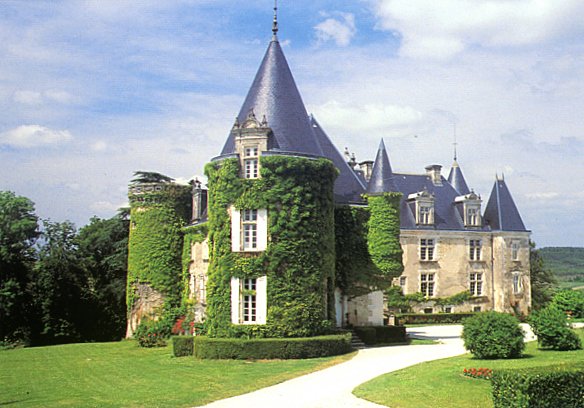
Image result for french chateaus


France in 1950 was unspoilt by either holidaymakers or tourists. I was there to spend a month with friends, and improve my French.

Alex, the son of the friends, came to stay with us first, a sophisticated fourteen- year -old who bullied me, took shameless advantage of my literal interpretation of my father’s instructions to be a good hostess, and used me as dogsbody, maid and batman all in one. After one of our regular rows he came downstairs from his room and his dictionary, and in front of my parents announced to me: ” You are ‘aughty, arrogant and proud.”

Coming from a quiet Yorkshire country town, Paris seemed a massive city of radiant light and celebration. Looking down from the family home in the heart of the city, I watched rainbows of light rolling along the wide roads, as hundreds of cars sped round the boulevards.

Having a bath that night was an ordeal in which I seemed to be accompanied by a crowd as my reflection followed me round a huge, mirrored bathroom. The flat was empty except for a resident maid and the chauffeur who was to drive us down to the chateau. It was huge and overwhelming and Alex was more arrogant than ever. It seemed that his father hadn’t briefed him on being a good host.

However, the next day, he and the chauffeur took me on a whirl around Paris – Notre Dame, cavernous and crowded and Catholic. I was disappointed. I had expected the sacred silence of empty Anglican cathedrals, but this was bustling with chattering people treating the place like their home, and selling souvenirs at stalls by the door. Twelve-year old-righteousness remembered stalls being overturned in another temple.

Today, of course, every Anglican cathedral in England  bustles with tourists too, the whispers and commentaries coiling up the perpendicular arches, and bouncing off the roof and coming back down magnified a million times. But in Notre Dame that day they managed to pray amidst the din.

From the steps of the cathedral we drove past the Louvre, circled the Arc de Triomphe and ended up at the Eiffel Tower – which turned out to be closed on Sundays. It didn’t matter – Paris in summer, nearly seventy years ago, was a beautiful, fragrant city, where people lounged outside on the pavements beneath the trees, and where, when we walked beside the Seine in the sun-shine, it was uncrowded and peaceful.

After lunch, I persuaded Alex to show me how to get out of the flat, and wandered onto the streets, looking for a bookstall. A terrible thought had suddenly wriggled into my consciousness. I had nothing to read! The worst thing that could happen to me! At a corner shop, my eyes raced over the shelves as the full horror of my situation became clear. Everything was literally a closed book- it was all in French. I came out with the only two English language publications in the shop- a copy of Life magazine, which was mostly pictures, and the August 1950 copy of Reader’s Digest, a magazine I’d never seen before.

Though I soon became bored with its banal, monotonous, uniform prose, I read it regularly for the next month, until I knew most of it by heart. I read ad nauseam about some chap called Billy Graham and how he had met and married his sweetheart, ‘The Most Unforgettable Character I’ve Met’ finally palled, the jokes got worse as the month went by, but ‘How To Improve Your Word Power’ was a winner, I got a hundred per cent before the month was out.

The first reading got me through the evening in Paris, and the next morning we set off for Vienne. Our destination at the chateau was everything that a romantic, unformed imagination could have visualised. We approached it down a long avenue of ancient trees. Those which had succumbed to old age had been chopped down to a height of three feet, hollowed out, and planted with foaming pink geraniums spilling out over the stumps.

The chateau was a moated, ivy-covered, turreted, thirteenth century family home. The moat had been filled in with sand, where the smaller children played. Where the drawbridge had once been, there was now a wide bridge leading to the iron- studded front door which was always open. From the high, dark hall hung with family portraits and armour and weapons, one door led to the dining room, a very solemn place, and the other to the salon, a light, airy room furnished with a variety of gilt sofas and chairs of different periods, mirrors, and objets d’art, while at the end of the hall, a staircase rose to the family quarters.

All seven brothers and sisters returned every summer with their families for the shooting, and they all had their own family accommodation. Alex and his family had a self-contained flat at the other end of the chateau but I was placed in one of the spare bedrooms of the main chateau, a beautiful room hung with toile de jouy in pale green with its own bathroom. The elegant, shuttered windows were hung around with more ivy, and from it would emerge huge, black, long-legged spiders, bigger and hairier than any English variety that had terrorised me in the bath at home, and which perched themselves on the mouldings in corners of the ceiling.

The ceiling was far too high to reach with a broom and a chair, so Alex and his cousins would troop in every evening with their pop guns and have great sport shooting the hairy beasts. I went to bed every night in this gorgeous room, wondering if I would wake and find another monster had somehow insinuated itself through the shutters and into the hangings round my bed.

Breakfast was taken en famille, and was the one meal of the day I enjoyed, though I didn’t do as they all did, and dip my buttered toast into my bowl of coffee. The bread was freshly baked and brought from the village by one of the maids when she came on duty before breakfast. In the afternoon, another delivery of fresh bread was made by a boy on a bike, and we would eat it for gouter at about three o’clock, we children standing around in the kitchen, illegally eating great slices of this heavenly bread, spread with runny home- made confiture which I called jam.

Those were the good times. Lunch and dinner in the stately main dining room, with at least thirty of us round the enormous, oval table was a long drawn- out ordeal. No allowance was made for an Anglo-Saxon barbarian who was accustomed to eat with a knife and fork. Every course was eaten with a fork only and I fought a losing battle with pastry and delicate vegetable dishes served whole, or legs of chicken and partridge.

My appetite would go before we began these marathon meals, so it was with no pangs that my half-eaten courses were taken away, after I had given up the struggle to keep the food on the plate while I chased it round with the fork. But then a solicitous adult, or maid serving the next course would enquire if I hadn’t enjoyed it, or try to coax me to eat a little more. Neither could I stomach the richness of it all after a life-time of grim war-time English rations.

Every lunch time began with a slice of orange melon. In the beginning, I loved it, but by the end I could scarcely bear the smell of it when the maid placed it in front of me. No-one ever skipped or left a course, so neither could I. The melon was followed by vegetable courses or soup, and then the meat course. I hated the meat on its own without the vegetables, it tasted too rich for my austere war-time palate. After cheese and fruit, we would have what everyone else considered a great delicacy. It was called fromage blanc. It looked like whipped meringue, and we could sprinkle a little sugar on it to mask the sourness. I could barely swallow it without retching.

Dinner was a variation on lunch, but whereas after lunch the adults retired to snooze in the hot afternoon, after dinner, we all trooped into the salon. Coffee was served in exquisite little coffee cups, and the children had to sit and make polite conversation until we younger ones were sent to bed.

I had a particular friend, one of the cousins, the same age as me. She spelt her surname for me and wrote it down with pride, telling me she had a very proud surname. She was right and it was only years later that I recognised it as one of the great names in French history. Josephine and I had very little of each other’s language but we made it work for us.

She took me with her maid to pick champignons one misty morning, and as the sun rose, the mist rolled away, and revealed a field of tiny, blue flowers shimmering with hosts of tiny, iridescent blue butterflies the same blue as the flowers. The dusty, country lanes were festooned with sweet, juicy bunches of blackberries as big as grapes, and everywhere there were shrines and crucifixes.

We played tennis together on the court set a little way back from the chateau. In the afternoon when the adults and toddlers were resting, we were roped in for deadly games of croquet on a long lawn well away from the shuttered windows where dozing parents wouldn’t hear the vicious battles and bullying of the victors, and tears and tantrums of the defeated. The girls were mostly the defeated. I tried desperately to hold back my tears as my ball disappeared regularly into the rhododendrons. They were all such terrible sports I felt it my duty to try to maintain the Anglican tradition of good sportsmanship, but my sang froid crumbled very easily.

Other days, we were lined up for the partridge shooting, and issued with white rags on sticks. We then had to advance in line across the vine yards and fields, driving the birds in front of us in the cruel time- honoured method. I did it without a pang, because I had no idea what we were doing, since the instructions were in rapid French. It wouldn’t have made any difference if I had understood, I was too handicapped by trying to be a good guest to voice any objections.

It was fun of course. We grabbed bunches of purple grapes to stuff into our mouths as we advanced slowly, and then dropped them as we came upon a bigger and better bunch a few yards on. When the shoot was over, we children were transported to the chateau whose land we were shooting over. There were four or five other chateaus within a few miles of our village, several which I could see on the sky-line – romantic and elegant eighteenth century pavilions.

On one day after tumbling around and sliding down the hay in the barns, frightening the hens, we were taken to clean up, and then ushered into the salon for afternoon tea. I was fascinated, for not only was our hostess beautiful, but so was the room. Whereas the salon at Persac was a higgledy-piggledy mixture of French furniture of different styles which had simply accumulated over the centuries in order to seat the family, this was a room with great style and elegance, even to my ignorant eyes.

The colours were clear, pale pastels, with gleaming gilt or pale, painted furniture. The portraits were not heavy oils, and sturdy worthies, like Persac, but delicate, gilt- framed frivolous likenesses, and translucent miniatures. The chairs and sofas and gilt tables were arranged with a wonderful sense of symmetry. There were flowers everywhere and big windows with the light streaming in – I fell in love with the place. I wanted to ask them how come they hadn’t they been obliterated in the French Revolution and the chateau destroyed? How come you got away with it, I longed to ask, but didn’t dare.

These people were cousins, as were all the people in the neighbouring chateaux, but they had quite a different atmosphere to the rather provincial heaviness of Persac. I was sad to go back to the ivied, spidered chateau. But it was necessary. I was secretly feeding the farm dog, who slunk around the farm yard some way away from the Chateau, but within the grounds. It was a real French farm yard, with ducks and geese waddling around, a dung heap and a fetid pond, chickens clucking over their new laid eggs in the hay filled barns, and an assortment of cows, pigs and horses.

Patou, the starving farm dog, seemed the only animal who wasn’t looked after, presumably because he wasn’t intended for eating. The maids in the kitchen let me have a few stale crusts, and I lobbied them every day for more for the poor creature. Patou -which the mads said meant ugly – was the first of many animals who have ruined my holidays.

One afternoon I was herded with the other children into the narrow  grey cobbled streets of the village at the gates of the chateau. The whole village seemed to be standing there, including old ladies dressed entirely in black, and others who leaned out of shuttered windows overlooking us. As I stood there feeling bewildered, a column of bikes suddenly  hurtled past us to the cheers and waves of all the spectators. That, I was proudly informed, when they had passed, was the Tour de France. No outriders, no loudhailers, no crowd control, no yellow jerseys – just tanned -looking men on bikes pedalling hell – for- leather.

Shortly after, I caught an early plane back to London, driving through grey, early morning streets of Paris craning to see elegant ladies of fashion. ” There weren’t any,” I told my parents disgustedly. My stepmother pointed out that they hadn’t even woken at that hour in the morning, and all I had seen was people going to work. This was my tour de France.


Food for threadbare gourmets

 I love cake, but if I’m making one myself it has to be easy. So this recipe which I found years ago was perfect. It’s called Hurry-up coffee cake and uses left-over percolator coffee. I particularly love coffee and walnut cake with lashings of coffee icing…

In a large bowl put one and a half cups of self -raising flour, two table spoons of cornflour, a good cup of brown sugar, 125 grammes of softened butter, half a cup of strong black coffee, two eggs beaten, a few drops of vanilla, and three quarters of a cup of chopped walnuts. Beat all this together until smooth, spoon into a greased cake tin and bake in a moderate oven (180C or 350F) for thirty minutes. When cool, cut in half and spread with coffee icing – a cup of icing sugar, two tablespoons of softened butter and one tablespoon of strong black coffee.

Food for thought

“And remember, as it was written, to love another person is to see the face of God.”  Les Miserables by Victor Hugo


14 Comments

Filed under beauty, cookery/recipes, culture, history, life/style, love, travel, Uncategorized

The necessity of beauty

Image result for images of gardeniasImage result for gardenias


Pamela was my lodger. She was living in the third bedroom in my flat for the same reasons that Mr Micawber pronounced the immortal words:” Annual income twenty pounds, annual expenditure nineteen pounds nineteen and six, result happiness. Annual income twenty pounds, annual expenditure twenty pounds nought and six, result misery.”

I’d tried to fill the gap between my meagre salary (women were paid far less than men in the Hongkong I lived in ) and my expenditure, by doing TV quiz shows,  radio programmes, using the children as photographic models and even doing PR for the Anglican church until I could stand being hypocritical no longer. So Pamela was my next attempt at solvency. While she lived with me my life was filled with her dramas, love affairs, crises and disasters.

She arrived with one fiancée, dressed demurely in twinset and pearls, tweed skirt and silk head – scarf. Soon she found a more exciting prospect, and changed her style  to newly fashionable jeans, her hair swung up into dashing styles and lots of makeup. The new fiancée lent her his new VW while he went back to England to sort out his divorce, and hereby hangs the tale. Pamela rolled the car her first night in possession of it, and I was awakened in the middle of the night by a Chinese policeman who couldn’t speak English.

I pieced together that Pamela had had an accident, and was in a Chinese hospital since she had no insurance to cover her for a European one.  The next morning the children, four and five years old, and I, packed up a few things for Pamela and made an expedition to the enormous  building which housed some thousands of sick and penniless Chinese.

We found our way through a maze of corridors to Pamela’s ward, and by the time I reached her bed I was deeply shocked. The ward held eighty women. They were all dressed in faded brown cotton shifts including Pamela. The noise was horrendous. Cantonese is the noisiest language on earth. To hear our amah chatting to another outside the kitchen was deafening. To hear seventy- nine women chatting in a confined space was probably higher than the safe decibel level.

Pamela was bruised and shocked but not injured. After doing our duty, and promising to return that afternoon with more things she wanted, the children and I went home, leaving her with a little bunch of gardenias I’d picked. Only six blossoms because that was all that were flowering.

When we returned in the afternoon, something had changed. There was a hush in the ward and a sense of peace, and all eyes were on the gwailo (long- nose) and her children. Being watched was something one accepted as part of life then, but this felt different. And the hush was a sort of reverence. Pamela whispered to me what had happened after I left.

When we walked out of the ward, the women came crowding round her to see the flowers and smell the fragrance. They were ecstatic at this exquisite beauty in their harsh unfriendly environment. Deprived as the women were, of all colour and texture and smell and beauty, the flowers brought something like heaven into their lives.

They didn’t speak English, and Pamela didn’t speak Cantonese, but with the aid of the ward sister’s few words of English, they worked out a roster for the flowers. Each woman would have one gardenia by her bed-side in a glass for three hours in every twenty-four. Pamela had one all the time, and the sixth flower which had fallen off its stem, the ward sisters had in their office, floating in a saucer.

Back at the office the next day I rang the dean of the cathedral and several hotels and they agreed to send their flowers to the hospital whenever they changed them. I wonder if they still do.

The great Catholic thinker Monsignor Hildebrand wrote that: ‘the poor need not only bread. The poor also need beauty’. But it’s not just the poor. We all need beauty.

It’s strange to me that Abraham Maslow in his hierarchy of vital needs didn’t include beauty. Sometimes beauty is the the only thing that keeps us going. As Resistance fighter Odette Churchill was being locked back in her cell after a bout of torture by the Gestapo, she snatched up the skeleton of a leaf being blown in the door with her. The beauty of that leaf sustained her and gave her hope and courage and a belief in goodness that carried her through her dreadful ordeal.

Quaker writer, Caroline Graveson wrote that: ‘There is a daily round for beauty as well as for goodness, a world of flowers and books and cinemas and clothes and manners as well as mountains and masterpieces.’ She talked of beauty: ‘not only in the natural beauty of the earth and sky, but in all fitness of language and rhythm, whether it describe a heavenly vision or a street fight, a Hamlet or a Falstaff, a philosophy or a joke: in all fitness of line and colour and shade, whether seen in the Sistine Madonna or a child’s knitted frock…’

The sad thing is that those deprived Chinese women in that joyless hospital ward, came from a culture, which before the blight of industrialisation and the tyranny of plastic, was incapable of producing anything that wasn’t beautiful – from their baskets to their bowls, to their porcelain and their poetry.  And there was something very beautiful about buying a kati of vegetables in the markets and watching them being skilfully wrapped in a beautifully folded sheet of re-cycled Chinese newspaper, or a large leaf, and tied with a knotted reed.

Perhaps their own sage should have the last word, Confucius said that everything is beautiful, to those who can see it….

I published this post nearly four years ago … it’s one of my favourites and many readers will have forgotten it, or never seen it….

Food for Threadbare Gourmets

I needed a quick pudding for unexpected guests, so I took out of the deep freeze a couple of brioche I’d stored for such an occasion. Once thawed, I gently fried them in butter, then made a sauce with rum and brown sugar, and poured it over the brioche. I served  them hot with whipped cream, and though not rum babas, they  tasted almost as good.

Food for Thought

People travel to wonder at the height of mountains, at the huge waves of the sea, at the long courses of rivers, at the vast compass of the ocean, at the circular motion of the stars; and they pass by themselves without wondering.       St Augustine  199 AD


34 Comments

Filed under beauty, colonial life, consciousness, cookery/recipes, culture, flowers, happiness, perfume, spiritual, The Sound of Water, Thoughts on writing and life, uncategorised, Uncategorized

Do we have a choice between technology or love?

Am I a dinosaur – surely not … or a flat earther – perish the thought … or maybe a Luddite… perhaps!

I’ve just been reading about the latest ideas in schooling… apparently instead of teaching children to spit out facts like a computer, we should be teaching them the six C’s.  They are defined as collaboration, communication, content, critical thinking, creative innovation and confidence – listed in order of importance.

And this is why I sometimes feel as though I was born into the Stone Age or something similar… I’m not even sure the people who taught me had even heard of the now unfashionable 3R’s. And my grandmother, a Victorian, was firmly of the belief that if I could read, there was nothing  I couldn’t learn… but she had probably never heard of calculus, Einstein’s theory, or even Pythagoras, though she was a mathematical whizz unlike her grand-daughter.

I look back to my school days, when I was so shy and retiring that it actually never occurred to me to tell the infant teacher I could read, so I spent the first year in total boredom chanting letters of the alphabet with everyone else, and following rudimentary stories on an illustrated frieze around the classroom wall. I remember feeling indignant too, when a girl called Manon Tipper started, and the teacher told the rest of my awed classmates that Manon’s parents were teachers and had taught her to read. So can I, I remember thinking to myself.

Things looked up the next year with a wonderful history teacher who galloped through the Ice Age, the Beaker people, Romans, right up Henry V in enthralling lessons that I soaked up, getting ten out of ten on the narrow strip of torn off paper (no exercise books because of the war) on which we wrote short answers to his questions at the beginning of every lesson.

The art lessons were a disappointment to my way of thinking. Lesson one was learning to draw a straight line using short feather strokes. This skill acquired by the class of restless six- year olds, we went on to mastering the perspective of drawing a rectangular box in succeeding lessons. Then the joy of bursting out into colour arrived (no finger painting for us) we had to bring a mottled, spotty, yellowy -green laurel leaf to school, to paint it, red berries and all. But our uncooperative front garden hedge had no berries, so no red for me. I think we were learning to observe as well as train the hand and eye…

Besides the boring, daily chanting of the times tables, (which has stood me in good stead!) we had a bout of mental arithmetic which I hated, but I quite enjoyed learning to write the copper-plate handwriting demanded of us. We spent hours copying a letter of the alphabet in our printed copybooks, using a dip pen and ink – often crossing the nib during our efforts (does anyone know what a crossed nib is anymore?) Using ‘joining up’ writing, nowadays called cursive, instead of printing was a sign of maturity for us.

A waste of time? Perhaps not – again – it taught both concentration and hand and eye coordination. And talking of such things, the boring throwing of bean bags and balancing on an upturned bench as well as bunny hops over them in our regular physical training sessions may not have been as interesting as today’s adventure playgrounds, but they did the job.

We had singing lessons when we learned the folk songs that had been handed down for generations, as well as some of the great classics like ‘Jerusalem’, which meant that everyone could sing together like they still do at the Last Night of the Proms in London every year; and we learned poetry which trained our memories and fed our souls.

For lack of a cell phone so we could ring each other from one end of the playground to the other as my granddaughter explained to me, we played games. We would swing a long rope and run in and out to skip until we missed a beat and tripped, or join a line of others skipping at the same time. At the same time, we chanted: ‘Wall flowers, wall flowers, growing up so high, we’re all the old ones, and we shall surely die, excepting:’ – and here we chanted the names of all the girls who were still skipping, until they tripped and fell out. We practised ball games, and at home alone, bounced it against a convenient bit of wall, swinging it under our legs or swiftly turning around, and learning to juggle two balls or more.

We couldn’t exercise our thumb muscles the way today’s children do on their phones and game boys (which I’m told are a thousand years old now) but we learned the dozens of variations of cats cradles, and played five stones, catching them up in the air on the back of our hand, holding them between our fingers, and tossing, and catching… there were many more and more difficult variations  – it took extreme skill and hours of practise and concentration – much more, it seems to me, than pressing a button on a computerised toy.

Then there were the hopscotch crazes, chalking the squares and numbers on the playground or a pavement when we were home, hopping, jumping – more muscle skill –  the marble crazes, the tatting sessions, French knitting – pushing coloured wools in and out of four tacks nailed into the top of a wooden cotton reel and making a long woollen tube (plastic reels nowadays, and useless for this ) and learning to knit properly. My grandmother taught me dozens of sewing stitches (yes, there are dozens) including hemming stitch, running stitch, herring bone, blanket, daisy chain and more.

When we went to birthday parties we played games like musical chairs and memory games like Kim’s game (a tray of small objects displayed for a minute, then whisked away while we quickly wrote down what we’d seen. I usually won this one). And when we left after dancing Sir Roger de Coverley, the only person who had had a present was the birthday girl herself – no party bags back then..

The difference between that rich but simple life with no TV, computer games or pop concerts, and the life of an eight-year -old today can best be illustrated by one of my first memories – watching a great tired dray horse pulling an overloaded hay wain along the narrow country lane where we lived, leaving horizontal drifts of hay draped along the high hawthorn and hazel hedges. Today I look on fields where huge green plastic rolls lie around waiting to be gathered up in the prongs of a tractor and delivered to a pile of more giant things, while farmers haven’t discovered a way of disposing or re-using the efficient, beastly plastic.

The latest theory on education, the six C’s – collaboration, communication, content, critical thinking, creative innovation and confidence sounds wonderfully vague, and idealistic too. I’m sure creative arguments can be raised for these C- words. But I rather fancy a way of assessing children’s abilities that I read a few years ago.

More educationalists are now taking into account other aspects of life and learning apparently, and as I remember them, apart from assessing children’s reading, writing and general knowledge, other talents are now being recognised. They included musical ability, physical skills, ethical understanding, and empathy with animals and the environment. Spiritual aptitude, which has nothing to do with religion, theology or dogma, was the last quality listed, and is perhaps the crown of a civilised life – which surely should the point of education/civilisation ….

The qualities of genuine spiritual understanding would and could encompass many of the ideals of the six C’s, I feel.  In fact, sometimes I think most of the qualities of the six C’s could be reduced to one or two simple, spiritual four-letter words, which cover sensitivity to the needs of others, and therefore collaboration, communication, content, confidence and creativity. Those two four letter words are kind and love. Kindness is easier than loving – love being the highest gift or skill or quality of all, and the simplest and most important. We ask if children are clever or talented, but do we ever ask if they are loving?

Food for threadbare gourmets

Deciding to fall back on my store cupboard for supper, I un-earthed a tin of pink salmon and decided to make pancakes filled with salmon. First make the pancake mixture… six ounces more or less of flour, an egg, and milk. Gently beat the egg into the flour, adding the milk in several goes. Beat until there are no lumps and leave for half an hour in the fridge. Beat again before using.

While the pancake mixture is settling, drain off the liquid from the salmon and make a fairly thick white sauce, using the salmon juice as well as warm milk. Chop plenty of parsley and stir into the sauce, then add the salmon, salt and pepper.

Keeping this warm, begin making the pancakes. As each is cooked, spoon some salmon mixture down the centre, and fold over each side. Sprinkle with grated parmesan, and lay on a fire-proof dish. When you’ve used up the pancake and salmon mixtures, put them in a moderate oven for a few minutes to melt the parmesan cheese, and enjoy… salad or green vegetables make this a cheap and filling meal.

Two pancakes a person is usually more than enough… this makes five or six generously, or more if the mixture is stretched out.

Food for thought

Your pain is not prescribed by your creator, He is the healer thus not giver of misery.
…. lay the blame where it belongs.
Mankind is responsible for its environment and culture….                                                   The day we take responsibility for our actions, will be the day God walks through the door smiling.”

Zarina Bibi – Sufi


33 Comments

Filed under consciousness, cookery/recipes, culture, environment, history, kindness intelligence, life/style, love, spiritual, technology, uncategorised, Uncategorized

Words, words words…

100_0360

William Shakespeare was ‘the onlie begetter’ of those words, which have been in my mind in this month of poetry.

I’ve discovered that in the United States, very few children learn poetry by heart any more, and I suspect that the same is true of education in most Anglo- Saxon cultures. I think it’s a shame… my mind still teams with the phrases and rhymes,  and the glorious words of poets and prayers learned throughout my distant childhood. They sustain me in good times and in bad… and though there’s so much beautiful poetry written today, does anyone recite them anymore?

I go back to my childhood, learning my first poem when I was four… Charles Kingsley’s, ‘I once had a dear little doll, dears’ – it came from a fat book of children’s poems – with no pictures. By eight I had decided to become a poet, by nine I was learning the poems of Water Scott and Elizabeth Barret Browning, at eleven we were learning ‘Quinquireme of Nineveh’, ‘doing’ ‘A Midsummer Night’s Dream’, at school, and learning the exquisite poetry of Shakespeare …’ I know a bank whereon the wild thyme grows’… the next year it was ‘The Tempest’… ‘Come unto these yellow sands,’… ‘Julius Caesar’… ‘I come to bury Caesar, not to praise him’, and ‘Henry V’… ‘Now all the youth of England are on fire, and silken dalliance in the wardrobe lies,’… ‘Once more into the breach, dear friends,’… ‘we few, we happy few, we happy band of brothers,’… ‘Richard II’… ‘This royal throne of kings, this scept’red isle,’… ‘The Merchant of Venice’… ‘The quality of mercy is not strained, it blesseth him that gives and him that takes,’… ‘Hamlet’, ‘words, words, words’, indeed, and not least that amazing speech, ‘To be or not to be, that is the question’, and so many phrases we still use today…including: ‘the slings and arrows of outrageous fortune’… ‘to shuffle off our mortal coil’… ‘’tis a consummation devoutly to be wished’…

And finally, in the Upper Sixth, Anthony and Cleopatra… ‘Age shall not wither her, nor the years condemn’, words I have hugged to myself as a hope and example, as I near four score years. Our acquaintance with Shakespeare was cursory but better than the nothing that seems to rule in schools today.

It was a matter of pride among my friends to be able to recite poetry – in the third form we all learned Walter de la Mare’s long poem ‘The Listeners’…. ‘Is there anybody there? asked the Traveller, Knocking on the moonlit door,’… and some of us even tackled ‘The Ancient Mariner’, and though no-one got to the end, we never forgot phrases like ‘A painted ship upon a painted ocean’. No difficulty remembering the exquisite rhythms and quatrains of Omar Khayyam… ‘Awake ! for morning in the bowl of night has flung the stone which put the stars to flight’….

‘Lo! some we loved, the loveliest and best
That Time and Fate of all their Vintage prest,
Have drunk their Cup a Round or two before,
And one by one crept silently to Rest’…

‘They say the lion and the lizard keep the courts where Jamshyd gloried and drank deep’…

But poetry was more than beautiful words and pictures and ideas. It opened up our hearts and minds to deeper meanings, ideas and symbols, and to the beauty of rhyme and rhythm. When my father died unexpectedly when I was in my twenties, and far from home, I turned to John Davies of Hereford’s dirge for his friend Thomas Morley:

‘Death hath deprived me of my dearest friend,

My dearest friend is dead and laid in grave.

In grave he rests until the world shall end.

The world shall end, as end all things must have.

All things must have an end that Nature wrought…

Death hath deprived me of my dearest friend…

I rocked to and fro to the rhythm of the words, and found a bleak comfort to tide me over into the next stage of grief. The insistent beat of that poem was a distant memory of the comfort of the rhythmic rocking which all babies receive, whether floating in the womb, rocked in their mother’s arms or pushed in a rocking cradle. Rhythm is one of the deepest and oldest memories for human beings. And rhyme is a joy that even toddlers discover as they chant simple verses, before stumbling onto the deliciousness of alliteration as words become their treasure.

For my generation the glory of words, poetry, rhyme and rhythm didn’t stop in the classroom. Every day in assembly we sang hymns with words that still linger in my memory, and swim to mind appropriately… like the glorious day looking from my cliff-top cottage and the lines, ‘cherubim and seraphim , casting down their golden crowns beside the glassy sea’ made land. We sang ‘Morning has broken’ long before Cat Stevens made it famous.

We listened to daily readings from the King James Bible and the poetry embedded itself in our consciousness… ‘to everything there is a season and a time to every purpose under the heaven’…. ‘If I ascend up into heaven, thou art there; if I make my bed in hell, behold thou art there. If I take the wings of the morning, and dwell in the uttermost parts of the sea; Even there shall thy hand lead me, and thy right hand shall hold me’…’And the peace of God, which passes all understanding, will guard your hearts and your minds’…

When we weren’t listening to our daily dose of the Bible, we were using the exquisite words of Archbishop Cranmer’s 1553 Prayerbook,… ‘now lettest thou thy servant depart in peace according to thy word’… ‘come unto me all ye that are heavy laden, and I will give you rest’… ‘Oh God, give unto thy people that peace which the world cannot give…’Lighten our darkness, we beseech thee oh Lord, and by thy great mercy defend us from all the dangers and perils of the night’… words and phrases that lifted the spirit and gave comfort when needed, in times to come.

The vocabulary of roughly eight thousand words of the King James Version of the Bible, printed in 1611 had a ‘majesty of style’… and has had more influence on the English language that any other book, apart, perhaps, from Shakespeare’s works, with a vocabulary of sixty thousand or so words. In the past, the words, the rhythms and cadences of these two influences shaped the speech and the writing, and seeped into the consciousness of people all over the world, who grew up speaking English.

They thought and wrote and spoke without even thinking, in the beautiful, simple rhythmic prose they heard every week at church, and throughout their schooldays. Sullivan Ballou’s famous and profound letter written to his wife before his death at the First Battle of Bull Run in the American Civil War, is as much a product of that heritage as the wonderful last lines of John Masefield’s ‘The Everlasting Mercy’.

It saddens me that this common heritage of prose and poetry and prayer, those wonderful words of beauty and meaning, has dribbled away under neglect, lack of appreciation and understanding. Modern education seems to treasure instead new and shallower ideas.

Alan Bennett’s brilliant play and film, ‘The History Boys’ encapsulates my point of view perfectly! It made me feel I was not alone in my regrets at the passing of our rich poetic literature, and so much that has added to the sum of civilisation.  I love much that is new – too much to list –  and there’s so much to explore… but the learning by heart, the exploration of the genius of Shakespeare, the absorption of great prose and poetry often seems less important in today’s education system, than technological expertise and business knowhow, women’s studies and sporting prowess.

This is called progress I know, and I know too, I am old fashioned, but in these matters, I am a believer in not throwing out the baby with the bath-water. Hic transit gloria mundi… thus passes the glory of the world.

PS I completely forgot to answer the comments on my last blog while we were cleaning up after our massive storm/cyclone.. apologies, I loved them, and will be answering them shortly

Food for threadbare gourmets

Saturday supper with friends, and something we could eat on our laps round the fire. So, it was salmon risotto. Just the usual recipe – onions in butter, arborio rice added and fried until white, plus garlic, then a glass of good white wine poured in. I no longer bubble it away, but add the hot stock quite quickly, plus a teaspoonful of chicken bouillon.

For a fishy risotto, it should be fish stock but I had some good leek and potato stock saved, and I also used the liquid from poaching the salmon. All the recipes tell you to use lots of different types of fish, but I only had prawns, and salmon. I had thought I’d also use smoked salmon, but at the last minute changed my mind, and then wished I had more of the poached salmon … (which I’d eaten for lunch with freshly made mayonnaise!)

Anyway, I added cream and some fennel when the rice was almost soft and just before serving, threw in a grated courgette to get some green colour from the skin in, plus a handful of baby spinach leaves… and after stirring around, added the fish and more cream…. forgot parsley! And then the Parmesan of course….

Amounts? To one large onion, I used a cup of rice, several garlic cloves – medium sized – glass of dry white wine, hot stock as it needed it… a cup of prawns, and half a fillet of salmon – should have used more – plus the courgette and spinach as you fancy. Half a cup of cream, depending on how moist the risotto already is …  or I might use a big knob of butter and not so much cream…This doesn’t stick to any of the recipes… I just use what I have…this was enough for four.

Food for thought

“I want to be as idle as I can, so that my soul may have time to grow.” Elizabeth von Arnim, author of ‘Elizabeth and her German Garden’ and other books

31 Comments

Filed under books, consciousness, cookery/recipes, culture, happiness, history, human potential, literature, love, philosophy, poetry, self knowledge, shakespeare, Thoughts on writing and life, uncategorised, Uncategorized, writing

Eating for Easter

Image result for pics of hot cross buns

A beloved friend coping with laryngitis wrote to say she intended to cure herself by eating Easter eggs. An idea, which, as my delicious daughter would say, ‘had legs’, but which was not one which appealed to me.

My preference for Easter is hot cross buns, spicy, and with a good, sweet cross, heated up gently in the oven, and eaten with lashings of butter for breakfast on Good Friday.

Food marks the seasonal calendar as much as the religious reason for the various festivals. One of my favourites, Pancake Day, aka Shrove Tuesday, evolved in order to use up the butter, eggs and sugar which were no-no’s during the penitential Lenten days leading up to Easter.

In England, it was once known as a half holiday which began when church bells were rung at 11 am. and then pancake races were and are run in towns and villages all over the country, even today. Legend has it that in 1445 a housewife in Olney, Buckinghamshire was so busy making pancakes that she forgot the time until she heard the church bells ringing.

She raced out of the house to church, still carrying her frying pan and tossing the pancake so as to stop it burning in her hot, probably iron, pan. Today, the rules for the race are strict, and it’s mostly run by women, who must wear an apron and a head scarf, and must toss the pancake at the beginning and end of the race.

This jollification is not so different from the Lenten carnivals held in more extrovert Latin countries…. The word carnival evolves from the Medieval Latin carnelevamen  – “the putting away of flesh”, and this was the last opportunity to put away not just meat, but also the pleasures of the flesh, eating and drinking and celebrating before the hard, hungry, deprived days of Lent.

Easter, marking the end of the forty days of Lent, is, as everyone knows, never the same date every year, but is calculated according to a full moon, and what are called The Golden Numbers which are too complicated for me as a maths  dud, to even try to explain. (I have an antique Anglican prayer book printed in 1745, in which the golden numbers and the dates of Easter, have been worked out up to the year two thousand, which must have seemed like an infinite eternity to the mathematician who calculated these figures).

Then there was a brief opportunity to indulge the pleasures of the flesh on Mothering Sunday, which fell on the third Sunday before Easter. I remember as a girl picking wild daffodils to take to my step-mother on this Sunday, which has now evolved into another wholesale commercial festival with bought flowers, chocolates, and gifts of every description, including taking mum out to tea or lunch.

In the eighteenth century, servant girls were given the day off to visit their mothers, and were usually given some food or clothes by the ‘big house’ to take with them.  But long before then, joyous people had been celebrating Mothering Sunday with a simnel cake, a delicious confection with two layers of marzipan (not your pallid shop-bought stuff, but the real thing, almonds pounded with an egg white… sweet and rich). One layer went inside the cake for the baking, and one layer went on top to be toasted. Yum…

Apart from the Christmas feasting, there’s another delicious foodie ritual for those who observe the rhythms of the Christian calendar, and that’s ‘Stir-up Sunday’. This happens on the last Sunday before Advent, (meaning the coming of Christ) which means it’s five Sundays before Christmas… often the last one in November, but like everything else in the Christian calendar, it varies every year, and so is a moveable feast.

The name comes from a prayer that Christians have been using for over a thousand years, originally in Latin, and translated into Archbishop Cranmer’s beautiful English in 1549. It goes: ‘Stir up’, we beseech thee, O Lord, the wills of thy faithful people”… but for centuries the stirring has also been associated with the making of the Christmas pudding. Stir-up Sunday means mixing all the spices, fruits, suet, sugars, in a big bowl, and everyone takes a turn in stirring the mixture, and usually making a wish. There are religious rituals too, but I’m talking food here.

Some families leave the bowl for a week to ‘mature,’ and also leave a bottle of brandy by the bowl, for passing family members to sling a slug into the pudding, and give it a stir. Eventually the flour and other ingredients are added, and then the whole thing is bundled into basins, wrapped and boiled and stored for Christmas.

We always had a goose for Christmas when I was a child, much more delicious than the turkey which has become fashionable since then. On Boxing Day, my father used to give me a slice of good bread covered in cold goose dripping sprinkled with salt and pepper. Few children today would ever know how utterly delicious this simple pleasure was. I tried to re-create it one Christmas in this country, but when the farmer’s wife told me the goose she had decided some weeks earlier to fatten up to sell to me, knew, and ran off all over the farm to escape her, I never ate goose again!

Which brings us full circle back to Easter, and those chocolate Easter eggs. Most people know Easter eggs have an association with a pagan goddess called Eostre, and the Easter egg custom percolated into Europe from Mesopotamia, and the Greek Orthodox church, but my interest is in chocolate Easter eggs. I discovered that a splendid old Quaker, Joseph Fry, started a chocolate business in 1759, and his sons later invented not only my favourite chocolate – Fry’s Cream in 1866 – but the chocolate Easter egg in 1873, getting on for a hundred and fifty years ago.

Quakers dominated the chocolate industry in England, Cadbury, Rowntree, Terry, Fry, were all owned by Quakers, just as so many banks were, including Barclays and Lloyd’s, and firms like Clarks Shoes and Bryant and May matches. This was because Quakers, as non-conformists, were barred from universities and the professions, but because their word was their bond, they prospered because everyone trusted them.

They became incredibly rich, which bothered them, so their money went into charitable causes, including the first model town Bournville, for Cadbury employees who were given free health and dental care amongst other advantages.

And the reason all these Quakers were in the chocolate business was because they invented chocolate drinks for the poor to drink, instead of beer and alcohol. This meant that the poor had to boil their water, a healthy practice in a time when water was not always pure, and the chocolate flavour was neither addictive nor debilitating, unlike alcohol.

Which is a good and Christian thought, that we all enjoy our chocolate treats because a group of high-principled men tried to find something delicious but not in-ebriating for us all to eat and drink! So yes, let us eat chocolate Easter eggs, even if they don’t cure laryngitis!

Food for threadbare gourmets

I’m still thinking in emergency mode, since our region is officially in a state of civil defence emergency as we endure Cyclone Cook.… and thinking of all the things I can do to improve the taste of tinned or packaged food, if necessary. I have a packet of pumpkin soup which I will jolly up with some chicken bouillon, a knob of butter and a little cream, and either some curry powder to ‘hot’ it up, or nutmeg to spice it.

Tins of tomato soup I jazz up with vegemite or marmite, about half a tea-spoon, plus the butter and cream. A tin of baked beans I’ll ‘improve’ by stirring in tomato puree, a slurp of balsamic vinegar, and some stevia to taste, even a little molasses…and then there’s tins of salmon – well I could write a whole book about ways to use a tin of salmon, but will curb my enthusiasm now, as we batten down our hatches. I’m posting this blog early, while we still have electricity.

 Food for thought 

Learn to wish that everything should come to pass exactly as it does.

Epictetus Ad 50 – 135  Roman Stoic philosopher, whose teaching sustained the late Rear-Admiral James Stockdale throughout his seven years captivity, torture and solitary confinement during the Vietnam War.

20 Comments

Filed under cookery/recipes, culture, great days, history, humour, life/style, philosophy, Thoughts on writing and life, uncategorised, Uncategorized

Who cares?

Image result for images old cottages in uk

While other squires were out raping maidens and oppressing the poor, or so legend has it, John Scrimgeour, the lord of the manor who lived at Stedham Hall, occupied himself instead with spreading cheer and happiness in the village he owned.

At the end of Queen Victoria’s reign, he was busy putting in the village’s water supply and installed a bathhouse and a reading room for his tenants. He gave the villagers an eight-acre playing field, and he built three-bedroom houses for newlyweds.

And when he built the houses for his parlour maids, he realised they were sited alongside the road facing east, which is one of the coldest angles in a climate like England. So he ordered them to be built end-on to the road, so they faced south. Back-to-front houses, with day-long sunshine.

When I read the story of John Scrimgeour and his community, I felt a warm glow. But I didn’t feel a warm glow when I saw a picture of the latest super-yacht with its helipad, swimming pool, guest bed-rooms for twelve – and so on – you’ll be familiar with these sort of stories which go right back to Aristotle Onassis and his Impressionists and Old Masters dotted around the walls of his yacht… they weren’t called super-yachts back then… perhaps because they weren’t.

I happen to know a chef on one of these floating palaces, and his stories shock me … not just the lengths he has to go to satisfy the outlandish whims of his employers and their guests, but the outrageous demands made on him too – dragged out of bed at three a.m. to rustle up bacon and eggs for a guest who can’t sleep; having to put up with the rudeness and lack of courtesy of spoiled children who complain to their autocratic parents if the staff don’t comply with their childish tantrums and demands; meals with half a dozen starters, entrees, main course, pudding and bonne bouches…

My friend is continually head-hunted from yacht to yacht by owners who want to enjoy his expertise, so he has seen a number of these billionaire establishments, and they are all similar, with no expense spared for personal trivial self-indulgences by these newly rich billionaires.

When I saw the picture of the latest and biggest super-yacht, my thoughts went back to a young man I saw in photos at his father’s funeral. I had already been struck by the sensitivity and goodness as well as his good looks in photos of him as godfather to Princess Charlotte of Cambridge. On the death of his father a few months ago, this twenty-six year old young man became Duke of Westminster. Not only is he now one of the richest men in England, but he inherits a dukedom with an astonishing reputation for philanthropy over several generations.

In one impoverished area of Scotland bought by a previous Duke, he and his agent planted thousands of trees, bought a redundant fishing business, developed the harbour and established transport which created a new community, so the Duke also built a school, and gave it to the local council. There was little, if any gain to the Duke from this enterprise, which was, and still is, typical of the activities of this rich family.

In another example the Duke bought Annacis Island in Canada and developed it, providing employment for thousands. The Dukes have given land in London to the Westminster City Council so work people could be housed near their place of work, and in the Depression they gave back fifty per cent of their rents to their tenants. Over the last seventy years this family have developed many schemes with no thought of gain – one of the most touching examples of their noblesse oblige being their generosity  to Norman Tebbitt after the Brighton bombing by the IRA in 1984….

Five members of Margaret Thatcher’s government were killed, while Tebbitt has limped ever since from his injuries, and his wife was permanently paralysed and has lived in a wheelchair ever since. The 6th Duke gave the Tebbitts a beautiful house near Parliament at a peppercorn rent (an old English term meaning literally a peppercorn) so Tebbitt could continue his ministerial duties, as well as care for his wife, and this generosity has continued ever since.

This 6th Duke has always repudiated the word philanthropy for his activities and simply calls it ‘caring’. Now his young son has taken over this mantle of caring while his three sisters are all involved in careers which involve service to others and ’caring’. The family, whose surname is Grosvenor, has an unbroken pedigree stretching back to 1066, when Gilbert le Gros Veneur landed in England with William the Conqueror.

The present descendant is the inheritor of a thousand years of both riches and responsibility. How long will it take the billionaires floating around the world, to develop that same sense of caring? At this moment eight billionaires own fifty percent of the world’s riches. Some of them, like Bill and Melissa Gates, and Warren Buffet are indeed the inheritors of aristocratic generosity and responsibility, but many others seem more intent on safeguarding their gains and living as though there were no tomorrows.

Unlike so many of the rich men of previous eras, these are men whose very businesses have nothing to plough back into the world. In previous ages, rich English landowners cared for the land, for this was where their riches came from; rich men endowed schools and art galleries, universities and homes for the poor. They  supported artists, collected art, built architectural gems to live in, planted beautiful parks and gardens, and as early as seventeen hundred were opening them and sharing them with the public, just as they do now. Altruism was common when Christianity united communities.

Today, generosity seems to be a characteristic of the internet instead, when the generosity of people with little to give when compared to the rich, becomes a groundswell of many small contributions to help individual cases of need. But the grand gifts, those that last for generations or change whole communities, as in the case of the English benefactors I’ve mentioned, don’t seem to be so common among today’s Russian oligarchs, internet moguls or mega- rich pop stars.

There are of course, many film stars and other celebrities who do ‘care’ and who work for caring organisations and green causes,  and it’s up to the rest of us to ‘care’ too, in the words of the Duke of Westminster. We CAN take responsibility, and though we think our voice or our efforts can’t make the difference we long for, this is not true.

I do believe the inspiring words of writer, Dean Koontz, who has given over two and a half million dollars to charity: “Each smallest act of kindness reverberates across great distances and spans of time, affecting lives unknown to the one whose generous spirit was the source of this good echo, because kindness is passed on and grows each time it’s passed, until a simple courtesy becomes an act of selfless courage years later and far away … Likewise, each small meanness, each expression of hatred, each act of evil.”

Few of us are capable of acts of evil, but it is easy to fall into the trap of hating oppressors like Assad and others. But this doesn’t help the world, while these reminders do. They sound like the perfect blueprint for the good life, be we billionaire or happy blogger!

Food for Threadbare Gourmets

After several episodes of global warming , or once- in-a – fifty-year storms, or Cyclone Debbie flooding, (however the weather forecasters explain it) in which we were cut off by landslips on one road, and flooding on the other, I’m planning a sort of mini-hoard for the next once -in- a -fifty year storm, whatever ‘they’ call it  – iron rations, emergency rations, whatever we choose to call them.

I searched my soul and found that there are several things I depend on… always plenty of cheese, some bacon and some Parmesan cheese in the fridge … plenty of olive oil, pasta, tins of tomatoes, and maybe minced beef in the deep freeze. With these staples, we can have spaghetti Bolognaise, lasagne, and when really up against it, pasta with butter and parmesan, or pasta with an egg, cream and Parmesan whisked together, and stirred immediately into the hot spaghetti. Simple, but one of my favourites … especially with crisp chopped bacon sprinkled on top. And there’s nothing like grilled cheese on toast when the cupboard is bare.

Food for thought

We can’t help everyone, but we can all help someone.    Ronald Reagan

23 Comments

Filed under bloggers, cookery/recipes, culture, environment, great days, happiness, history, kindness intelligence, life/style, The Sound of Water, Thoughts on writing and life, uncategorised, Uncategorized

The gifts that keep on giving

100_0101

I’m always slightly envious when people reminisce lovingly about their mothers, since mine disappeared when I was six, not to be found again until I was in my fifties when it was too late to rebuild bridges.

But when I look back over my memories of the gifts that different people gave me, I realise that my rather erratic mother gave me a gift that is still valuable today. My earliest memories of her are the songs she sang as I went to sleep. I didn’t hear them again for years, but recognised them as soon as the notes rang out…among them, ‘Where the bee sucks, there suck I’, and ‘One fine day,’ from the opera Madame Butterfly, and even: ‘You are my sunshine,’ a pop song from the forties that moved me to tears when I heard it again in middle age.

That gift – a love of good music – has been my pleasure and companion ever since, so I was ripe for Beethoven and Bach, Handel and Purcell as soon as I heard them when growing up, while opera became a passion, which I learned when I met her again, had also been a passion with my mother.

As I mused about this gift she gave me, I remembered all the other gifts that so many other people gave me. When my grandmother came to look after us, she brought with her, her collection of precious Meissen and Staffordshire china, and I learned to love china, a love which anyone visiting my house would recognise.

She also collected books, and many of them were illustrated and designed with prints and patterns from William Morris and fine artists like Aubrey Beardsley and Arthur Rackham, so that from the age of six, my eye was educated by their exquisite artistry. This discrimination meant that when I was introduced to Walt Disney – staple children’s fare – I found the cartoons crude, and the lack of light and shade and detail bored me.

The other gift my grandmother gave me was the love of reading, and for lack of children’s books, I devoured classics like ‘John Halifax, Gentleman’, ‘Robinson Crusoe’ in an original edition, a huge heavy book with engravings protected by flimsy tissue paper, the dreadful ‘Foxe’s Martyrs’, ‘Pilgrim’s Progress,’ ‘Gulliver’s Travels’ – all these in magnificent antique quarto versions, apart from many other history books and even the Bible.

A man gave me my next gift, a dry, elderly, retired history teacher who had taught in boy’s prep schools all his life, and who came to help out at my little private school during a war-time dearth of teachers. At seven, he introduced me to history, and I soaked up every period he ran through with us, from the Beaker people and the Stone Age, to Julius Caesar and the Romans, Boadicea  and Caracticus, Pope Gregory on captured Anglo-Saxon children with blonde hair and blue eyes, dragged through Rome in triumphal marches, saying, ‘Not Angles but angels,’  Alfred the Great, and Aethelred the Unready, Harold and the Conqueror, the Black Prince and English archers,  and all the march of history up to Agincourt and Henry V.

Living in Yorkshire when the war was over, our gardener, Mr Appleby, took a fancy to me, and spent much time teaching me the names of all the flowers…hearts-ease and snow-in-summer in crevices amongst paving stones, the herbaceous borders crammed with red hollyhocks, blue delphiniums and pastel pink and blue lupins, ravishing red peonies and pastel coloured grannie’s bonnets,  multi-coloured snapdragons and delicious sweet smelling pinks, the rose Dorothy Perkins scrambling over the trellis hiding the dust-bins … I revelled in this knowledge and his gift to me.

We didn’t go to school while we were in Yorkshire, and had lessons at home in the afternoon. My new stepmother, who was a physiotherapist and had no idea of how to teach children – or how to bring them up for that matter – gave me an extraordinary gift, apart from teaching me social skills, and that was how to spell. She demanded that at nine I could spell words like phlegm and diarrhoea, rhododendron and diaphragm. This is a gift that keeps on giving, like all the gifts that these adults gave me.

My father returned from the war in ’47, when I was nine, and his gift was to give me all the books he had enjoyed, so I went from a diet of Lord Lytton and books like ‘Harold’ (killed at Hastings) to Kingsley’s ‘Hypatia’, and ‘The Last Days of Pompei’, to Walter Scott’s ‘Ivanhoe’ and ‘Guy Mannering’ ( “go thy ways Ellangowen, go thy ways”… cursed the gypsy) and Napier’s history of the Peninsula Wars with Wellington, to CS Forester’s riveting: ‘The General’, about the First World War, and many more. Enid Blyton and Rupert the Bear were banned !

When I was ten and eleven years old I was put in a train from Yorkshire to Kings Cross, to spend a couple of weeks of the summer holidays with my step-grandparents. My grandfather took me walking around London nearly every day. We explored places like Threadneedle Street and the City, tramped down Constitutional Hill and through Hyde Park Corner, passing No I Piccadilly – Apsley House – the Iron Duke’s home, as well as the King’s home – Buckingham Palace (still George VI then).

We spent blissful hours loitering in front of Duccio, da Vinci and Van Gogh in the National Gallery, and wondering over the Turners in the Tate, gazing at all the statues of historic figures, from beautiful Nurse Edith Cavell at Charing Cross, to tragic Charles I, examined the famous poets and painter’s monuments in Westminster Abbey, and climbed around inside the dome of St Pauls. London was still the bombed, shabby city of the Blitz, with rose bay willow herb flourishing on empty desolate sites. But I know that great and ancient city more intimately than any other. And I have known my way around it ever since.

The following year I went on another solitary journey via Air France to spend the summer with French friends in their chateau in Vienne. There, the gift was an insight into French food and French architecture… while my first mother-in-law, a fearsome lady, was a talented amateur interior decorator. From her, I absorbed a knowledge of antiques, a love of colour, fabric and design and have enjoyed restoring and decorating houses ever since.

As I look back at all these gifts, which have enriched the fabric of my life, expanded my mind, and given me pleasures that never fade, I realise how blessed I’ve been. I’ve had many vicissitudes, bitter sorrows, painful partings, terrible decisions to take, and terrifying leaps off that metaphorical cliff in my life. But I’ve also had some sweet joys and learned how to be happy. And the music, the books, the flowers, the history, the beautiful china are all extra gifts that have made life rich and bearable in the bad times.

I wonder what gifts I’ve been able to pass on to those both near and dear, and even just to those casually encountered. We all have such rich gifts to share with others, and sometimes we do it knowingly, and other times, unconsciously. This is how our civilisation endures, and is handed down from every generation.

And maybe it’s more important than we know… the handing on and handing down of simple pleasures, facts and names, skills and events… these things are the handing on of our past, the hard-won experience and knowledge of our ancestors, and even of the fabric and treasures of our civilisation. That civilisation is changing fast, but it could go into future shock unless we value the past as well as the future. The gifts we can share may be more valuable than we can ever guess or measure or imagine.

Footnote. I took this picture for a blog several years ago. It illustrates perfectly different strands of my life.. the flowers are magnolias, the books are on France and French food, Axel Vervoordt is a famous Belgian interior decorator, the china is antique Crown Derby  Imari, while the portrait in the tiny frame comes from the medieval Book of Hours.

Food for threadbare gourmets

It’s that time of year here in the Antipodes when the delicious  Victoria peaches are available. I always snap them up. I don’t bottle any more, I freeze them instead. They have a different texture but are just as good. Being a lazy cook too, I just take out their stalk and then boil them whole, with a syrup made of water, stevia to taste, and a few star anise and a stick of cinnamon. When the peaches are soft I leave them to cool before parcelling them out into various plastic receptacles (I know, I know, sometimes we have to live with parabens!)

When I want them, I un-freeze them, and gently re-heat them with some brown sugar or maple syrup, and ginger wine, rum or brandy added to the syrup… served with ice-cream or crème fraiche, a whole peach drenched in the unexpected flavours of the syrup is a good easy pudding.

Food for thought

“There is divine beauty in learning… To learn means to accept the postulate that life did not begin at my birth. Others have been here before me, and I walk in their footsteps. The books I have read were composed by generations of fathers and sons, mothers and daughters, teachers and disciples. I am the sum total of their experiences, their quests. And so are you.”

Elie Wiesel, writer, academic, activist, concentration camp survivor and Nobel Laureate

28 Comments

Filed under books, cookery/recipes, culture, flowers, food, gardens, great days, history, life/style, literature, Thoughts on writing and life, uncategorised, Uncategorized

Simple pleasures- they may not be what you think !

Image result for pics of nasturtiums

For some it’s a nice hot bath, for others it’s sitting in front of a roaring log fire – surely one of the most primeval pleasures – so what are your simple pleasures? One of mine is a hot croissant eaten with unsalted butter, good apricot jam, accompanied by a pot of freshly made coffee, and delivered to me in bed… perhaps not so simple, given the various components required to deliver this perfection!

Then there is the simple pleasure of sitting in the sun on the garden bench by the profusion of rambling nasturtiums, and gently feeling beneath the round flat leaves to find the clusters of green ribbed seeds left by the flowers that have bloomed… my harvest to sow for next year’s pleasure.

These thoughts were prompted by browsing through one of my favourite books which positively encourages hedonism, though hedonism of the sweetest, simplest kind… most of these simple pleasures cost nothing. It’s an anthology by sixty fine writers, and they’ve given their thoughts and services to the National Trust, the body which maintains and protects historic sites and buildings in England.

In the introduction, Dr James le Fanu, after discussing how our genomes are virtually inter-changeable with either a mouse or a primate, goes on to write: ‘It is remarkable the difference it makes to acknowledge that we no longer know… the nature of those genetic instructions. Suddenly the sheer extraordinariness of that rich diversity of shape and form jostling for attention on the fishmonger’s counter – and the florist’s and the greengrocer’s and the whole glorious panoply of nature – is infused with a deep sense of wonder of ‘how can these things be?’

So since one of the simple pleasures of reading an anthology is flicking back and forth, sampling the joys and wonders it holds, I dive into a page which reads: …’and as you take the long single track road snaking down the shady side of Inkpen Beacon, it’s as though you feel the centuries fall away behind you.

‘You pass the ramparts of an Iron Age fort, and then the gibbet  on the Beacon, a reminder of the eighteenth century. You twist  between hawthorne and wild brambles, and now you’re in Civil War Britain. Pass the old church, and you’re back in Norman times. Then in the village itself, there are flinty tracks and beech hedges, and what Orwell in exasperation called the deep, deep sleep of the English countryside … an unspoilt, timeless view of fields, safely grazing sheep and the sound of rooks chattering contentiously in the beech trees overhanging the lane …old Wessex, Alfred’s ancient kingdom…. Watership Down just over the hill…King Charles fought the battle of Newbury in nearby fields’ … this from Robert McCrum who has written a book on P.G.Wodehouse amongst others.

And then to a delicious essay by Sally Muir, knitting designer…’I was taught by Mother Mary Joseph… it was the sort of thing you did in a convent in the 1960’s. It wasn’t all Carnaby Street and The Beatles for most of us. I think the nuns were working on ‘the devil makes work for idle hands ‘principle, and in a way they were right. One great advantage of an evening spent knitting is that you can’t easily smoke, play video games, buy things from Amazon, or inject drugs at the same time. In fact there are all sorts of things you can’t do, as both hands are fully occupied….’

I dip into ‘Grooming the dog’, and ’In love with the clarinet’, savour ‘Collecting the eggs’, and ‘Picking up litter’, and the arcane discussion of the best litter-picking-up devices, and relish ‘In praise of zoos’, much as I hate them. Philosopher Alain de Botton writes: ‘A zoo unsettles in simultaneously making animals seem more human and humans more animal… in May 1842 Queen Victoria  visited Regents Park zoo, and in her diary, noted of the new orang-utan from Calcutta: ‘He is wonderful, preparing and drinking his tea, but he is painfully and disagreeably human.’ (reading this, I imagine being captured and placed in a cage like a room in a Holiday Inn, with three meals a day passed through a hatch, and nothing to do other than watch TV – while a crowd of giraffes look on at me, giggling and videoing, licking giant ice-creams, while saying what a short neck I have.)’

Alain de Botton, I learn, having enjoyed many of his books, is also the founder of two organisations, Living Architecture and The School of Life, the first dedicated to promoting beauty, and the second to wisdom – oh Yes !!!

As I flick the pages of this tiny book – five inches by three and a half – Christmas stocking size, which I bought six copies of to give to friends, I can’t resist ‘Gossip’, written by journalist Sarah Sands. She discovers by chance that historian Simon Schama is ’an A-grade gossip’. ‘How exciting that a man of such an elevated mind is happy to trade in gossip as well as ideas… Gossip is what makes a great historian a delightful dinner companion… the bond of intimacy. One shares gossip as one should share good wine. It is an act of pleasure.

‘There is an art to gossip, which is really a moment of memoir. Philosophers of the human heart… or heartless but comic diarists …, tell us more about social history, politics and humanity than autobiographies of public record… I always learn more from a gossip than a prig. Life is a comedy, it is not Hansard.’ (Hansard is the English Parliamentary record)

The two most thought-provoking of these simple pleasures come at the end of this delicious little book. Historian Anthony Seldon was the headmaster of Wellington College when he wrote his essay. Wellington College is one of the tougher English private schools. I wonder if he changed that reputation, for he writes of the joys of meditation and yoga.

He ends by saying: ‘Most exciting of all is the sense I have that the happiness and joy I experience are only the tip of the iceberg. They cost nothing, harm nobody and I feel connected to life in all its fullness. The future promise is that the joy will only get deeper year by year, and the fear of crossing that divide from dry land into the water, from life into death, fades into utter inconsequence.’

Sue Crewe has edited the splendid magazine English House and Garden with zest and skill since 1994 –  not the sort of person I would have expected to write the exquisite little gem that ends this book. Over the years I’ve followed from afar her career, and noted that she had had what she bravely describes as a ‘period of turbulence’, and which I knew had been full of heartbreak.

She describes how a friend gave her a little book in which she had to write five things she was grateful for, every day. A simple practice which over the years has grown into what she describes as ‘several feet of bookshelves’. She tells how for the first five years she kept to the five one-liners, and how at first she groped for entries, and fell back on being grateful for her warm bed, or being well fed. Then she felt brave enough to branch out into what she calls ‘free-range gratitude diary-keeping’ and expanded her thoughts.

Now she writes: ‘Almost imperceptibly, free-floating anxiety and feelings of discontent with myself and the world were replaced by contentment and a clearer understanding of what I found acceptable and unacceptable about my own and other people’s behaviour…. It did and does help me keep things in perspective…

‘But the most transformative revelation is the power of gratitude itself: it takes up so much room that everything corrosive and depressing is squeezed to the margins. It seems to push out resentment, fear, envy, self-pity and all the other ugly sentiments that bring you down, leaving room for serenity, contentment, and optimism to take up residence.’

On this glorious note, one of my favourite books ends… full of such simple pleasures, those which don’t just add joy to life, but also enlightenment. I feel nothing but gratitude to all these writers when I re-read this little book yet again… and gratitude too, for the reminder of the power of words. The right words can transform our own thoughts and lives, and this reminder of the power of words, reminds me too, of the power of our blogs – each one mostly written with pleasure, and with words from the heart, to reach other hearts in that extraordinary network of friends and souls around the world.

Simple Pleasures – Little things that make life worth living. Published by Random House.

Food for threadbare gourmets

Made a pile of ham sandwiches for lunch, and some were left over. My thrifty soul decided to wrap them tightly in silver foil and store them in the fridge to have for supper that night. But I forgot, and several days later found this anonymous packet of foil on a shelf with butter and yogurt. Cautiously opening it, I discovered the now somewhat stale ham sandwiches. Undeterred, I decided it was ham sandwiches for me that night. I dunked them in egg like French toast and fried them in a little olive oil and butter. They were absolutely delicious – the best way to have ham sandwiches!!!

Food for thought

‘The world will never starve for want of wonders, but only for want of wonder.’    G.K.Chesterton

30 Comments

Filed under bloggers, books, cookery/recipes, culture, great days, happiness, life/style, literature, love, philosophy, spiritual, The Sound of Water, Thoughts on writing and life, uncategorised, Uncategorized, village life

Rubbing shoulders with the rich, the famous, and the forgotten

I wish I could remember what Dr Seuss said when I was interviewing him back in the late sixties. (I’ve never kept clippings of my articles, which I sometimes regret)

All I can remember at this distance is his shining energy, his charm, good looks, good humour and integrity. I know we talked about his books – my children were young fans of four and five at the time – and how this childless man tried to give a subliminal positive message in many of his stories, like: “trust yourself”, or “be kind to everyone”.

Then there was the other doctor – Doctor Spock. At a moment’s notice, I was sent out to interview him, along with the newspaper’s star writer … the editor suddenly had a brainstorm and thought he’d like a different angle from a practising mother! No time to do any research. And now, how I wish, thanks to Google, that I had – he was so much more than his famous child-rearing book, a radical and protester at the time of the Vietnam War amongst other things.

When I had finished my probably rather pallid interview, Dr Spock’s gentle, lady-like wife took me aside, and asked me to interview her, to my amazement. I did, and listened to a hurt, angry woman, who said that her husband’s great reputation was based on her hard work bringing up their sons practically alone, while he picked her brains and dispensed her wisdom/experience from behind his desk. I couldn’t write this, and wasn’t surprised when they divorced a few years later.

Then there was the inimitable Barbara Cartland, who took me to her bosom when I told her that one of my best friends, John, was her son’s best friend, who she was devoted to. Her son and John had been at Harrow together, and when John married she lent him a cottage at the bottom of her garden. (with no plumbing)

As she roamed around her hotel bedroom talking animatedly, I decided that her crusade about honey and vitamins must work, she was so lithe and her movements so youthful at seventy-four. She was still writing prolifically her romantic novels, which she told me laughingly had their biggest sales in India.

When she died at ninety-nine, she had had over seven hundred bodice-rippers published, and left the manuscripts of a hundred and fifty more, which her sons are releasing as e-books every month. She wasn’t just a one trick pony though, one of her interests being gliding, and back in the early thirties she invented the idea of them being towed for long distances which led to troop carrying gliders. Later she was awarded a medal by the flying industry.

When her daughter, Lady Dartmouth – not yet married to Lord Spencer and so becoming Princess Diana’s stepmother – came to Hongkong, she was just as kind to me as her mother had been. She was a ravishing beauty with the kind of porcelain pink and white complexion and huge blue eyes that actress Valerie Hobson also had. (both utterly charming and beautifully mannered)

My interview with Raine, Lady Dartmouth, (known as ‘acid -rain’ by Diana and her siblings) was not as predictable as many others.  I had some juicy material to work with, like her famous scene at Heathrow airport over dirty tea-cups in the restaurant, her campaign to save Covent Garden, at twenty three being the youngest County Councillor for Westminster, and becoming a member of the United Nations Conference on the Human Environment. A life less ordinary than the traditional fashionable life with ladies who lunch.

Iris Murdoch, famous author, was another interesting person to interview. I did so where she was staying and met her donnish husband – played so beautifully in the film ‘Iris’, by Jim Broadbent –  after she had died of Altzheimers.  Being young and crass, I wondered how such a plain woman could have found such a devoted husband, and only later discovered that not only she did have lovers male and female, but that her fierce intelligence was as sexy as a pretty face!

It was with great trepidation that I approached Robert Helpmann, the famous ballet dancer, producer, and great talent. I had been terrified by him in the famous film: ‘Tales of Hoffman’ as a child, and could never get his Mephistophelian power out of my mind as he flicked his long, black velvet cloak with its long tassel out of the door… even the tassel seemed to convey malice.

With no Google in 1969, I had no idea that he had started his career in the legendary Anna Pavlova’s company, but at least I knew that in the ballet world he had an enormous reputation. He was a delight –  elegant, kind and charming –  and even gave me advice about my ballet-mad daughter… don’t let her start until she’s at least eight, and no en point until after fourteen.

So many fascinating people … from princesses to prime ministers … feminists and activists. Princess Alexandra, the Queen’s cousin, appalled that I was a single mother. “How do you manage? ” she asked… presumably because as well as no husband, I had no chauffeur, nanny, cook, housemaid, butler, or gardener!  She was exquisite and elegant in a pale lavender suede coat and matching lavender wide brimmed hat… the Maori Queen, a plain, ordinary woman who grew into a beautiful, wise one; a glamorous, blonde Italian round-the-world yachtswoman, a Polynesian prime minister’s wife; a glorious Indian woman with yard-long black hair that hung loose, vivacious and intelligent, her greatest claim to fame being lover of racing driver Stirling Moss – then a household name – now, like so many of these people – forgotten.

And yet, of all the people I met and interviewed, the one I treasure most is another forgotten name now, even by the organisation he helped to found. On a cold, wet Sunday afternoon in June 1972, I went down to Westhaven marina in Auckland, at the request of Quaker friends.

Leaving the children in the car with snacks and books, I threaded my way along the gang-planks to the 38 foot yacht, Vega. On it, I met David McTaggart, one of the founders of Greenpeace, just setting off on his historic journey to Mururoa to protest against the French atomic tests. He was in a great hurry, loading last minute supplies before setting sail, but we did it, and I gloat that that was one of the first stories about Greenpeace to get into print.

McTaggart was a hero… in spite of their unwanted presence and refusal to be bullied away, the French set off the deadly bomb anyway. The following year when he returned, they beat him so savagely that he lost the sight in one eye for several months. That story went around the world. And yet these days when I am approached outside the supermarkets by eager young enthusiasts to get me to sign up for Greenpeace, they’ve never even heard of David McTaggart.

Meeting such people was one of the special privileges of being a journalist, but so often, as a single mother I didn’t make the most of such opportunities, being too pre-occupied with how to make ends meet, or if the amah would remember to meet my tiny daughter from the school bus. These were not celebrities in today’s use of the word, but people of character and substance who had carved a niche for themselves, and by their talent or originality become well known.

I look back to my young, ignorant self and cringe. If only I had known then what I know now. And I also look back and see these people so differently… I understand more about them as I understand more about myself. If only I had had the ability then to really do them justice. This feels familiar – of course – it’s what most parents say about their parenting – if only I had known then what I know now!

Greater understanding, insight, knowledge – even wisdom – are  gifts we acquire if we’re lucky, as we grow older. Yet it’s when we’re young that we have to step up, and so often blunder blindly into the unknown, sometimes realising fearfully that we don’t know, or often, thinking we know better.

So now, new generations and bright young people are setting off on their own journeys to follow their own dreams, and they will find their own heroes – talented innovators, creators and explorers in their brave new world. Some of their heroes will become rich, some will become famous, and many of them will inevitably be forgotten … and like the heroes of my day – in the words of Ecclesiasticus – they too will have no memorial.

Food for threadbare gourmets

An unexpected gathering of the neighbours for drinks the next day, and no time to do a dash into town, half an hour away, to find something to take with me. Remembering an intriguing recipe for sardines I’d used years ago, I rummaged in my store cupboard and found two tins of sardines in olive oil, and then rummaging on the internet for a recipe for sardine pate spread, I found a blog by someone called Manami. I’m grateful to her for digging me out of my hole.

Picking out the little silver bits and bones, I drained the sardines and mashed them up with two tablespoons of mayonnaise, two teaspoons of finely chopped onion, quarter of a teaspoon of Dijon mustard, a teaspoon of lemon juice and a teaspoon of black pepper.

Apart from sprinkling it with chopped parsley, that was all there was to it. Served with small cracker biscuits – I used rice crackers, they filled a need.

Food for thought

The Highest Thought is always that thought which contains joy. The Clearest Words are those words which contain truth. The Grandest Feeling is that feeling you call love.

Joy, truth, love.

These three are interchangeable, and one always leads to the other. It matters not in which order they are placed.

Neale Donald Walsche. Conversations with God Book I

39 Comments

Filed under army, ballet, cookery/recipes, culture, environment, fashion, history, human potential, life/style, love, Media and interviews, princess diana, The Sound of Water, Thoughts on writing and life, uncategorised, Uncategorized

Kintsugi, art and life

I wrote a column about my collection of cracked and chipped blue and white china thirty years ago. Some people received the idea of a collection of cracked china with derision and laughter… something cracked or chipped had lost its value, usefulness and good looks was the unspoken message, or I must be too poor to have such a pointless collection instead of perfect objects.

Undeterred, in the years since, I’ve saved shattered fragments of blue and white china when I’ve dropped or broken something, intending to stick them all together in a splendid mould and make a bird bath. I still have all the bits … but though the spirit has been willing, the body has been weak, alas.

So when a few weeks ago a possum knocked a precious piece of pottery off the bird table I was heart-broken. It was a large platter given to me by its maker, a potter of some renown, whose pieces now on sale in the national museum cost more than I could ever have dreamed.

But my platter came into my hands over thirty years ago when I used to take my daughter for piano lessons with a beautiful woman who played the cello in the city orchestra and taught the piano. While my daughter tackled the music of civilisation’s finest composers, I whiled away the time chatting to her teacher’s husband, the potter, admiring his work which was all around and even then, out of my reach to afford.

They lived in an enchanting house he had built himself, and where in the romantic rambling garden black and white speckly bantam hens roamed, kicking up the flower beds with their stubby tufted legs and fearsome claws. One day the potter gave me one of his platters and a few months later by chance, another came into my hands.

I’ve always treasured them, and since I love using beautiful things for mundane purposes have always used them as bird baths. Now in our forest, I use them as bird tables for bird seed, balanced on pedestals made from other treasured ceramics. A possum must have clambered up and knocked the platter off. It had broken into three pieces. I found it when I awoke and got up to fill it with bird seed and scatter seed on the ground for our visiting quails.

Going back to bed with my early morning tea I brooded over this unexpected event, and idly let my mind roam over the five hundred-year-old Japanese art of kintsugi, when cracks or breaks in a piece of pottery or porcelain are pieced together again with glue and gold… the name means golden repairs. They become so beautiful that some pieces have been broken deliberately in order to restore them with veins of gold.

Mentioning this to my love, he immediately Googled, and over the weeks he mastered the technique, and the platter was returned to me on Christmas Day with beautiful veins of gold now holding the broken pieces together… the platter is even more beautiful than before… which is the idea … this exquisite art form has developed to become part of the Japanese philosophy of life… where respecting the past with ‘awe and reverence’ adds to the beauty of the object. It is not seen as flawed or broken, but as re-stored… not to wholeness, but to a beauty reflecting life, its impermanence and poignancy.

Since discovering the concept of kintsugi I’ve thought how though it is an old instinct brought to perfection by Japanese craftsmen, it’s also been used by so many others for so many centuries … I thought of the ancient ruined monasteries scattered around England, dissolved by Henry VIII in the 1530’s in order to enrich himself and turfing out the monks, leaving them homeless and destitute.

Local people were the ones who ruined those abandoned monasteries, dismantling exquisite abbeys, priories and friaries, and using the stones to build or enrich their own homes. Even in this day and age, I have stopped the car in a muddy lane in Cumberland to exclaim over a carved Gothic window blocked up to make part of the wall in a rough stone barn – relic of a local monastery.

I used to walk in a Devon village where the red post box was set into the thick wall of a house rising straight out of the street, which would once have been a cart-track, and next to it in the wall was a small beautifully carved blocked up window from another medieval building. These small architectural gems ennobled the old stone walls they were set in – another Japanese concept – ‘wabi sabi ‘– finding beauty in old or broken things

Shakespeare found beauty in old things, and using the principles of kintsugi, rewrote the ancient legends he had learned in his classical education at Stratford Grammar School, re-creating and transforming the stories of Anthony and Cleopatra, Julius Caesar or Troilus and Cressida – to name a few – into enduring works of art.

Not sublime works of art, but definitely kintsugi, are the pre-loved clothes – as they’re sometimes called – which a friend finds. By changing the buttons, adding a trimming, altering the neckline, edging hemlines or cuffs with contrasting fabric she turns each found item into an enviable work of art as well as a desirable item of clothing.

And there’s something touching and very sweet about the darns or patches in a piece of old linen, or a carefully repaired scrap of precious old lace. I love the chips and worn places on old painted furniture and the scratches on the polished wood of an antique table, or the kicked legs of a well-used chair.

These are the scars of a life well lived, and to iron them out, re-paint, sand them away and restore them to what is so often wrongly called ‘their former glory,’ chills my heart.  I know this means their honourable scars have been destroyed, and their character obliterated. In trying to make things look as good as new we are not honouring their past… the spirit of kintsugi.

When we were told on our personal growth courses to turn sour milk into yogurt, this was the same thing, re-creating and restoring the broken, cracked or scratched parts of our lives, and using them to teach us strength, compassion, insight. Acknowledging the hard places and tough times we had come through, and the buried pain, we were able then to see how they had shaped us.

We learned to face these times with ‘awe and reverence’, and with gratitude too, since without these scars, we would not be the people we had become. Our lives regained both magic and poignancy as we learned to see the mysterious patterns of events which we had endured and previously dismissed or de-valued.

Patterns of pain, loss, anger or despair, once recognised, became our golden repairs, our kintsugi, which enriched us and gave us a sense of the beauty of our lives. The cracks of character and kindness round our mouths, the lines of laughter softening our eyes, the deep furrows of thought and intellect above our brows became testimony to strength of character, to acceptance of the challenges faced, and rejection of bitterness or resistance.

Maybe this is why I find the faces of celebrities who have had a face lift or a botox injection rather sad… they are not honouring the medals earned by a well-lived life.

The most precious example of kintsugi in this place where we live is a diver’s rusty old tank, found while we scoured a demolition yard for re-cycled goodies. It was brought joyfully home, carefully cut in two, sanded, gently polished and re-painted, so it is a dull antique grey, with a few antique coins stuck to the circumference.

It’s mounted at the bottom of our drive with a striker made from an old fishing weight attached to a handle of weathered wood sitting by it. When visitors arrive, they ring the bell to tell us they’re here. Every day at dawn, and in the gloaming we ring our bell in gratitude. It reminds us that life is precious. And so we honour life.

Food for threadbare gourmets

We always used to have goose at Christmas when I was a child, but on the one occasion we had turkey I remember my father saying he wasn’t going to eat cold turkey or turkey sandwiches for the next week. So he devised a rechauffe of turkey eaten on rice.

Faced with lots of left-over turkey this year, I decided to follow his example. I had saved all the turkey juices, so after frying mushrooms and chopped bacon in butter, I stirred in a table spoon of flour to thicken the mixture and added the turkey juices. When this had thickened, I added chopped turkey and a little cream, salt and pepper, nutmeg to taste, and a small chicken bouillon cube.

Served on boiled rice, with peas, chopped parsley and butter stirred through, it was much better than cold turkey sandwiches!

Food for Thought

The self-actualising person is not a normal person with something added, but a normal person with nothing taken away.         Abraham Maslow

25 Comments

Filed under birds, cookery/recipes, culture, food, great days, happiness, history, kindness intelligence, life/style, love, philosophy, self knowledge, The Sound of Water, Thoughts on writing and life, uncategorised, Uncategorized