Category Archives: humour

Snakes alive !

100_0513

Mrs Tiggywinkle, her rounded figure enveloped in her apron, sweet face framed by a ruff of prickles and a frilly white bonnet, quizzical grey eyes gazing kindly out on the world, catching up with her ironing and piles of laundry is one of those childhood images that remain with most children who have encountered her.
Thanks to the genius of Beatrix Potter this little creature who has snuffled around the planet for thirty million years or so, is one of the most beloved of small animals. Fluffy little red Squirrel Nutkin isn’t far behind in the beloved stakes either, another creature with a pedigree going back fifty to thirty million years. Their images, once impregnated in the memory in early childhood ensured their imperishable hold on the imagination and affection of anyone who encountered them.

But there’s another even older species, a hundred million years old, which enjoys none of this fondness and protection. Instead, in the western world, it is reviled and seen as an object of evil. Thanks to the Old Testament – a late Bronze Age work of literature as some see it, or the words of God according to others – and the legend of Adam and Eve and the Temptation, snakes have had a bad time through the ages… through no fault of their own. The sin of the original apocryphal snake has been visited upon them for millennia.

Even as a child I felt sorry for the snake… that he got the blame, as well as Eve, for wanting to know… since I always wanted to know I couldn’t see what the problem was…

Many who’ve never touched a snake assume that it’s slimy… but it isn’t…its skin is dry and supple, and when it loses its skin this has become a metaphor for spiritual transformation for those who can accept the snake as an innocent creature who only bites when attacked, and for the most part lies curled up in beautiful sinuous folds and curves. Different species have exquisite markings and colours which is not surprising since they are a part of the glorious beauty of creation, and it’s not logical to exclude them on the strength of the ancient and apocryphal story.

Other cultures untouched by Judaic snake prejudices have seen the snake as a healing symbol both in ancient Egypt and in Greece, where it was used as a symbol of healing, twined around the staff of Aesculapius, the god of medicine. Even the unprejudiced talk about our reptilian brain -the earliest part of our evolutionary growth – describes a rather unlovable set of qualities –  and the very word reptilian evokes thoughts of coldness, calculation, and lack of emotion…

My dearest friend had a garter snake as a pet as a child. It lived in a terrarium, with stones and branches to give the snake a feeling of home from home. The lid was perforated with holes. My friend hadn’t realised that the snake was pregnant and it quickly gave birth to lots of small four inch long baby snakes. The mother snake then did the most extraordinary thing.

She coiled herself around the branch, so that the top of her body and head reached the roof, making a bridge across the gap from the branch to the roof. Her babies then slithered up the branch and then up their mother’s body out into freedom and fresh air.

There was nothing reptilian about this amazing behaviour, it was pure unconditional mother love, combined with incredible intelligence and imagination. She knew that freedom for her children lay beyond the roof of her prison, and she worked out the way for them all to escape. They all disappeared before my friend had time to prevent their exodus from the snake pit or catch any.

I used to think that eels were a branch of snake species, but they are actually fish. When my grandsons were seven and eight, a river ran past the bottom of our garden, and one day they announced they wanted to go fishing. I found some bamboo poles, and string, and we tied some scraps of bacon on the end of the string, and off they went.

They came back shortly after, bursting with excitement … a couple of eels had come and eaten the bacon. So they wanted more of course. We tied a chicken carcase to the string, thinking it would last them forever. But to their delight, not one, not two, but thirteen eels appeared from beneath stones and rocks and the over- hanging river bank.

Every time the children went down to the river with their fish food supplies (my bacon bill soared during their stay) the eels appeared as if from no-where. They were all sizes from eighteen inches to more than four feet. How did they know… how did the message pass downstream or upstream that the goodies were on offer again.

Eels are still one of nature’s unsolved mysteries… after fourteen or more years, depending on whether they are male or female, the full- grown New Zealand eels return to their breeding grounds, there to spawn and die. No-one knows where these breeding grounds are, though they think it may be near New Caledonia. Having spawned, the eels die, and their progeny, armed with their inherited memory or instinct, set off on the long journey back to where their parents came from. They begin life as larvae, then grow into tiny glass eels, which finally mature into elvers – young eels. These young eels are capable of making their way up waterfalls to reach their ancestral homes. And there they stay until they hear the call to go back to their spawning ground and pass on new life.

My grandsons were so entranced by our eels, that when I found an extraordinary story about a German eel, I made one of those grandmotherly illustrated letters telling them the tale. A German father caught an eel, and brought it home alive, intending to kill it and serve it up as fresh eel. But his children raised such a clamour, that he put off the evil day and popped it in the bath over-night. And there it stayed, for 25 years until someone dobbed them in with the local animal protection society.  He was called Elie.

When anyone wanted a bath, they simply put a bucket in the water and Elie would swim into it and lie coiled up until he was lowered back into the bath and could swim out again. By the time he was discovered, the children had long gone, but there can be no doubt that he must have felt loved, by that peculiar osmosis that other creatures have and we can only guess at.( You’d have to love him to live with an eel in your bath for twenty five years !) I never heard the end of the story – whether he had been separated from the people he knew and loved, and sent off to swim in strange cold waters or not….

The most unbelievable and beautiful story about an eel and love is contained in this one minute video below:
http://www.wimp.com/befriendeel/#comments

If this isn’t love, then as Shakespeare wrote:
If this be error and upon me proved,
I never writ, nor no man ever loved.

Food for threadbare gourmets
One of my closest friends and neighbours is a Frenchwoman, and we spend long satisfying hours talking about food. We both love making soups out of nothing, having kept in the fridge all the stock our vegetables were boiled in.

I made such a soup last night. I had a big dollop of cauliflower cheese left over, not enough for another meal, so I thought it would be a good start for one of these soups… I gently fried in butter some chopped onions, a stick of chopped celery, the heads of the green leaves from two leeks, a grated carrot and a couple of garlic cloves.

When they were soft, I added the cauliflower cheese, the stock, a chicken bouillon cube, salt and pepper, and gently brought it to the boil. When it was soft I whizzed it with the whizz stick, but still left plenty of texture. With some good bread I made croutons in olive oil and with a sprinkling of parmesan, and a dash of cream it was a light satisfying supper.
Food for thought
Your best is going to change from moment to moment; it will be different when you are healthy as opposed to sick. Under any circumstance simply do your best, and you will avoid self-judgement, self-abuse and regret.      Miguel Ruiz

17 Comments

Filed under animals/pets, cookery/recipes, great days, humour, kindness intelligence, life and death, love, shakespeare, The Sound of Water, Thoughts on writing and life, uncategorised, wild life

Pit-stop for blogging

100_0809

The vicissitudes of the life, the overwhelming winter, the pressures of people – friendly or otherwise, have caused me to go into overload, to take my eye off the ball, or in this case, my focus off the blog. Like the notice in the door of our village shop occasionally, this is a coded one reading ‘ back in five mins’, or ’gone for lunch,’ or ‘bak sun’.

But since this blog is like an opportunity shop, with a ragbag of ideas and opinions strewn around ( probably second-hand), I invite any readers who stray into the op-shop to feel free to rifle through the shelves of old or pre-loved blogs if they have nothing better to do …

In Auckland in the late sixties, early seventies there was a Love Shop. One of my first assignments on arriving here in NZ, was to cover the closing down of the Love Shop. Queues of people lined the pavement outside to take for free, or in exchange for a metaphorical song, the odds and ends cluttering the shelves.  Similarly, if anyone strays into this little op-shop, they too are welcome to the pre-loved blogs lining the shelves of the archives…

Among my favourites were: ‘Precious Objects’, ‘Places in the Heart’ and ‘Storms of Delight’… though a real delight is when sometimes people write and tell me they’ve re-read an old blog.

So I will leave any stray readers/ shoppers who pop in, to roam through shelves of blogs from the past if they wish, while I hang up my notice – Bak (quite) Sun.


Food for thought

..” It is in our idleness, in our dreams, that the submerged truth sometimes comes to the top”…    Virginia Woolf

13 Comments

Filed under bloggers, humour, life/style, love, The Sound of Water, Thoughts on writing and life, Uncategorized, village life

My drug of choice

0000621
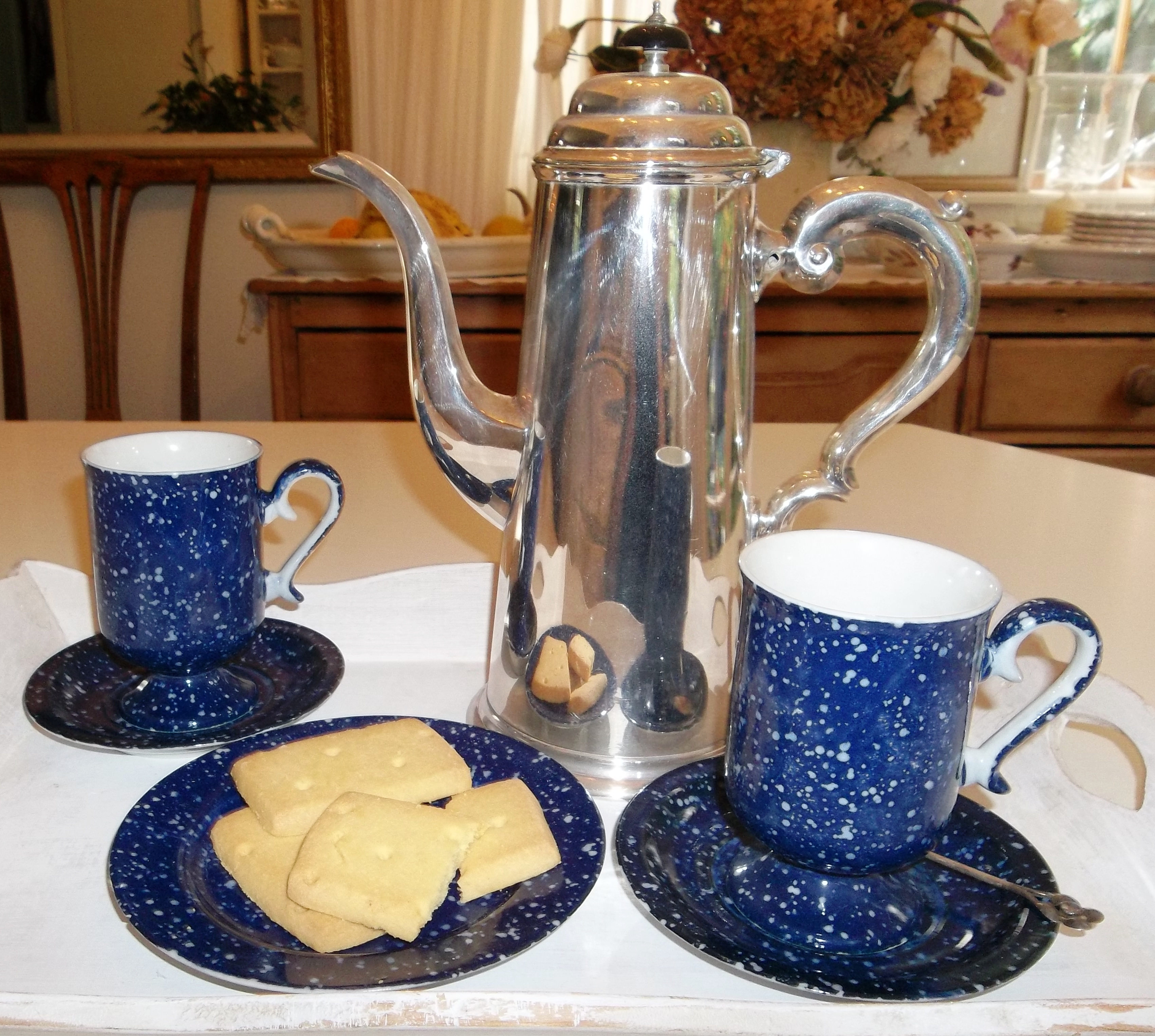
“I thought I’d make a cup of tea”, were the last murmured words of the mother of Janet Frame, NZ writer, as she died in her husband’s arms in the kitchen. They could well be mine… tea for me marks waking up and going to bed, a break mid-morning and that indispensable cup in the afternoon, the cup that cheers when a friend calls, or the one that sustains after a shock or a long day’s retail therapy.

I felt the would-be murderess Mrs McWilliams who shot her enemy Mrs Dick in the Tudor Tea Rooms in Christchurch NZ was a kindred spirit. When she was disarmed after her pot- shot she retorted: “Oh, give me a cup of tea, that’s what I came here for.”
When told that her victim was not dead or even much hurt the redoubtable Mrs McWilliams replied, “Oh isn’t she, what a pity.” (She got seven years jail for her failed attempt to eliminate her enemy)

We can sheet back this country’s addiction to tea to our discoverer Captain Cook, who concocted the first brews from leaves of the manuka tree, which he called, and many still do, the tea tree. He experimented with it in 1769, brewing the leaves in the hope of preventing scurvy, and wrote in his journal ( men write journals – women are downgraded to writing diaries): “The leaves were used by many of us as tea which has a very agreeable bitter scent and flavour when they are recent…. when the infusion was made strong it proved emetic to some in the same manner as green tea.”

In some ways, tea was the answer to coffee… men had gathered to gossip in coffee houses in London and elsewhere, for several centuries, while women had nowhere acceptable to congregate. The first tea-rooms opened in Glasgow in the 1870’s and tea-rooms quickly became as important to women as coffee houses to men in previous centuries.

Afternoon tea at home also became an institution… it was a relaxed time when women took off their corsets before changing into finery for dinner, and wore soft floating tea gowns. The great French food philosopher Brillat-Savarin called afternoon tea: “an extraordinary meal … in that, being offered to persons that have already dined well, it supposes neither appetite nor thirst, and has no object but distraction, no basis but delicate enjoyment…”

I’ll say – and not just for tea but for chocolate cake and shortbread, meringues and cucumber sandwiches. I used to think tea was an occasion just for ladies to enjoy… I couldn’t imagine inviting a man to tea… but then I remembered the delicate courtships conducted over silver tea- pots by the fireside in Edwardian times, and realised what pleasures we have forfeited in our nine to five world. I also wondered if this was the raison d’etre for those loose floating tea gowns… easier for making love?

Portly philanderer, Edward the Seventh used to visit his lady loves for afternoon tea, arriving in an elegant black carriage with his coat of arms on the door. Inside, his inamoratas awaited him. They could be the ravishing Lily Langtry, the Jersey Lily, as famous for her beauty which adorned postcards, as Kim Kardashian is today; or others, like Winston Churchill’s gorgeous mother Jennie, or even Camilla Parker Bowles’, (aka Prince Charles’ second wife) great-grandmother, Mrs Alice Keppel. She was Edward’s mistress for twelve years and was invited to his death-bed by his generous wife, Queen Alexandra.

Afternoon tea for me has never been graced by the presence of king, prince, or even lover… my most un-forgettable afternoon tea was at a Catholic convent in Ipoh, Malaya. The Chinese nuns in this little convent had been accredited to examine children taking GCE, the Cambridge University secondary schools exam, in oral French. So accordingly, I and nine classmates, embarked on the day- long journey in stifling armoured vehicles (to protect us from lurking Chinese bandits) and then by train, from the Cameron Highlands down to Ipoh.

Arriving in the early evening after travelling all day, we went to sleep in a dormitory with other Chinese teenagers who all, to our amazement, managed to get undressed and shower without showing an inch of flesh. This proved quite a challenge to us less inhibited girls trying to do in Rome as the Romans did. The next day we hung around until afternoon in the steamy convent grounds, and then I was first in alphabetical order for the exam.

I was shown into a little room, where a bowing, smiling, gentle little Chinese nun in heavy black horn-rimmed spectacles and starched veil awaited me. It would have been bad enough trying to understand a Chinese person’s French, spoken by someone who had never been to France or met a French person, but worse was to come. She made a cup of tea and offered me a cake, baked especially for us all, she explained in broken English.

So there we were, an Asian nun, performing, not the tea ceremony of her culture, but an adulterated version of a western ritual, and speaking a foreign language to a person who couldn’t make out a word she was saying, and who knew that shortly an even greater ordeal awaited, in which two people who already couldn’t understand each other, were about to embark on a conversation in a language foreign to them both.

But it was the preliminary that almost silenced me. I bit into the cake, and discovered with horror that the nuns knew no more about baking English cakes than they did about speaking French. They had obviously used sawdust held together, not with butter and eggs, but with some sort of inedible glue. With the first bite drying out my mouth and clogging my throat, I realised that now I had to struggle through the whole of this un-eatable culinary disaster, as well as bluff my way through the exam. Each bite nearly choked me, and I still had to look as though it was delicious.

Somehow I got to end of this terrible experience, and there seemed to be an unspoken agreement that if I ate the cake, she would find my school girl French understandable and acceptable to her Chinese ears. I left with us both bowing and smiling, with great good humour, and walked into my classmate waiting to go in. She raised her eye-brows questioningly, and I smiled maliciously, which she optimistically took for re-assurance… later our profane school- girlish post mortems and accusations would have curled the ears of these innocent kindly nuns.

Other teas, with silver teapots, even a white-capped maid, tiers of scrumptious cakes, and lace napkins have never blotted out the memory of this ordeal. And now, a law unto myself, I break all the rules of the English ritual afternoon tea, which is a very different thing to tea ceremonies in parts of the world where tea drinking originated. My most daring break with convention is to put the milk in first, considered so vulgar by generations of tea drinking aficionados.

And having discovered that tea tastes much nicer when the milk goes in first, I have now also discovered that science supports my taste buds. According to research carried out by the Royal Society of Chemistry in 2003,”… if milk is poured into hot tea, individual drops separate from the bulk of the milk and come into contact with the high temperatures of the tea for enough time for significant denaturation or degradation of the milk to occur.” There you go, as they say in this country…

I have n’t space to touch on one of the most thrilling aspects of drinking tea, which used to be illegal in this country, and provoked fiery debate by male Members of Parliament; and now since 1981, it’s become illegal again ( MEN !!!). I refer to the innocent pastime of reading the tea leaves… but that is too vast and esoteric a subject for this little blog to tackle!


Food for threadbare gourmets

Cucumber sandwiches are de rigueur for the ritual English afternoon tea, and very dull they can be too. These I served for a friend’s birthday party, and we gobbled them up… with relish….
Apart from white bread sliced as thinly as possible – even supermarket sliced does the job… you need peeled and thinly sliced cucumber, eight ounces of softened cream cheese, quarter of a cup of mayonnaise, a good sprinkling of onion powder, garlic powder and a pinch of lemon pepper if you have it.
Mix everything except the bread and cucumber, spread the mix on the bread, and arrange the cucumber on top. Cover with another slice of bread also spread with the mixture. Press down firmly, and cut into dainty bite-sized sandwiches. Irresistible.

Food for thought

By experts in poverty I do not mean sociologists, but poor men.
GK Chesterton

35 Comments

Filed under addictions, colonial life, cookery/recipes, culture, great days, humour, life/style, love, The Sound of Water, Thoughts on writing and life, uncategorised

A tearful (sob) tale !

100_0223
If I’m going to cry I want it to be when I’m laughing. I think that may be one of my favourite pleasures, to laugh till I cry… but it’s not something that can be planned… such moments seize us out of the blue, and swoop down without any warning. And then it’s bliss…I love it – having laughed my way not just to good health but to aching sides and streaming eyes.

Tears come more easily to some than others… my tear ducts are the sort that let me down and embarrass me constantly… it was about the only thing I had in common with Princess Diana, being neither blonde, rich, thin, Royal or any of the other things she was…. but she cried easily… she cried waving goodbye to her fiancée when he flew off to NZ for a couple of weeks, she cried, bless her, when the band played God Bless the Prince of Wales on her honeymoon, and she cried among other times, when she was complimented on her work on the day her separation was announced. By contrast her sister-in-law Princess Anne has only gone on record crying once… when she waved farewell to any more cruises on the royal yacht Britannia as it was de-commissioned.

The tough and the strong are sometimes tempted to despise we weaker vessels, and that’s when tears are so humiliating, if we forget that some of the sweetest moments in life, and the most memorable, are those which move us to tears. Tears are one of the things that make us human beings – though I have watched that heart-breaking video when an elephant who had been starved and beaten for fifty years was finally freed, and he wept – rivers of tears slowly trickling down his wrinkled old grey cheeks -and I wept too.

So yes, tears reveal us as feeling human beings… and though times of hormonal change… those teenage years, pregnancy, post-natal months, menopause, depression, even the wrong medical drugs can cause unexpected floods of tears, nevertheless, tears should not be sniffed at. A baby’s tears are his only means of showing his hunger, hurt, fear, anger, discomfort, insecurity and other problems…. but as we grow older and find less direct forms of communication, tears assume a different place in our lives.

They still mark emotions like fear, misery, anger, grief, hurt, but as we grow older – joy too. So why does our culture sneer at tears and try to train children not to cry, with the jeer: ‘cry baby’ or ‘softie’ being an allowed insult in the playground or even worse: ‘don’t be such a girl’.

When I landed in New Zealand in the middle of winter many years ago, my luggage two small children, tears of fright flowed behind my huge black sunglasses in spite of all my efforts at control. And there have been many other moments since when tears marked unforgettable moments of joy and sorrow… including watching first my children, and then my grand-children’s nativity plays… I cried when I watched my tall, skinny thirteen year old son walking away from his childhood into ‘big’ school, head and shoulders above the others his age… at my daughter’s wedding, and my grandchild’s christening… a perfect watering can.

‘Don’t cry when you say goodbye to us’, my eight year old daughter had said before they took off across the world to see their father. So I smiled and waved, and tried to pretend tears weren’t coursing down my cheeks in great rivers. Later, the exquisite voice of Joan Sutherland singing in concert brought tears to my eyes and to many others. Few of us could define what these involuntary tears were triggered by but they were precious, and the moments memorable. I’ve heard other great singers in person including the incomparable Kathleen Battle, but none of them drew that spontaneous tribute.

When my first baby was born the midwife who delivered her did so in floods of tears… she said she always cried when a baby was born. Now, tenderised by life, I know what she means. I only have to see a new born to feel those tears start gushing. It’s hard not feel embarrassed or humiliated by these ever-ready tear ducts.

I am famous in the family for beginning to cry in the cinema at the beginning of a film. As the credits went up on the film ‘The Young Winston’… the traditional ride of the Adjutant on his white horse, up the flight of steps to the library at the end of the Passing- Out Parade at Sandhurst filled me with such nostalgia for my military childhood that I was lost at the first frame.

And I remember lingering in the cinema loo mopping my eyes with my best friend as we tottered out after Disney’s ‘Old Yeller’ (about a Labrador) had ended, ravaged with tears and nearly blinded with clogged mascara. I can go to a funeral of someone I hardly know, as a courtesy to a family member, and become a tearful wreck… not quite sure whether I’m crying in sympathy with those who are really mourning, whether tears are contagious like yawns, or whether I’m touching into old and forgotten griefs.

In the end it’s animals who really pull the heart-strings and have provoked so many gallons of tears I could fill buckets with them … I was ten when I wept over the shooting of the ponies in the film ‘Scott of the Antarctic’… blow the men dying heroically in the snow, it was the ponies I cried over. The deaths of our fifteen or more rescued dogs and a cat was always a tear- streaked nightmare over the years, and it isn’t just me who’s reduced to an emotional wreck by animals.

On one particular personal growth course, a man who had remained unmoved by harrowing moments supposed to break down our innermost defences, went home one night to find his precious bull terrier fighting for her life, and losing it in child birth. The next day, as he told us all about his beloved ‘Maggie’, he dissolved into heart- broken sobs, as did all the women and most of the strong men in the room. Loved animals in distress can make even the toughest weep.

Broken with grief, this man was then able to do the inner work he had come for, the tears had dissolved his emotional barriers, and he became a softer, kinder, warmer person overnight. So in spite of the superiority of those who have well controlled tear ducts, it does seem that weeping is good for the soul, even though it’s terrible for the complexion. Doesn’t seem to matter whether we’re weeping from laughter or weeping from grief, or weeping from any other emotion, tears seem to loosen us up.

Yet mostly, tears don’t seem to come in the moments of great crisis… then the mind is focussed. Shock and intense attention keep us icy cold, functioning unhampered by anguish or emotion… so maybe tears are a bit like Wordsworth’s definition of poetry: emotion recollected in tranquillity, but in the case of tears: emotion when there’s time for it. I rather treasure the words of Kahlil Gibran, who puts tears and laughter into perspective, as ever… that they are both – in the pompous self-mocking phrase of a friend – part of ‘life’s rich pageant’!

Gibran says: “I would not exchange the laughter of my heart for the fortunes of the multitudes; nor would I be content with converting my tears, invited by my agonized self, into calm. It is my fervent hope that my whole life on this earth will ever be tears and laughter.”

So weepers of the world – unite! Hang onto your sodden tissues, and leave off your mascara. Don’t feel intimidated by the stiff upper lips or cold embarrassment of stronger mortals, our ability to cry at the drop of a hat means that we’re living, breathing, sentient beings,
Yours tearfully…


Food for threadbare gourmets

A friend for supper on a cold winter’s night meant that I wanted to spoil her with comfort food, and what more comforting than blackberry and apple crumble?

I had the apples, and a tin of blackberries, though I prefer fresh or frozen, and also often use boysenberries instead. I tipped the cold, cooked sliced apples and the blackberries into a pie dish, with plenty of juice, and sugar to taste; then the crumble was spread on top, baked in a moderate oven for forty minutes, tested with a knitting needle to make sure the crumble was cooked, and served with cream… delicious and she loved it.
The trick is the crumble… eight ounces of flour, four ounces of cold butter, grated and mixed with the flour, six ounces of brown sugar, the grated rind of a lemon, and two ounces of ground almonds. Mixed altogether, it only takes a few minutes to prepare, and not much more to eat!


Food for thought

All children long for recognition and acceptance of their essence – secretly so do most adults. The insistent question inside all of us is: do you see me, not only my body, but my essence; the gifts, potential, needs, wounds, character and quality of soul that shape me individually?
Professor Richard Whitfield

49 Comments

Filed under animals/pets, army, babies, british soldiers, consciousness, cookery/recipes, family, films, food, happiness, humour, love, princess diana, royalty, self knowledge, spiritual, Thoughts on writing and life, uncategorised

Ordeal by wardrobe

100_0800

There will not be many people wearing soft fuchsia coloured leather gloves in the North Island of New Zealand this winter, but I will be one of them.

They were a gift from my daughter last Christmas. She brought forward the present giving ceremony, and insisted that I open my presents first before anyone else opened theirs, because she wanted to see the look on my face when I saw them. She’d brought them back from London months before. I hoped my face showed everything she hoped when I unwrapped them. I can’t put them away. They sit on my dressing table – a symbol – of many things.

But her solicitude for my wardrobe doesn’t stop at leather gloves. This weekend she pounced, and said that the following day we were going to go through my clothes, and I was going to sort everything into keep, store and throw away! I had a friend who had also undergone this ordeal by wardrobe, when her daughters dismissed all her lovely clothes as ‘tragic,” so I knew what I was in for.

I had to agree that something had to be done, as I was always losing things in the muddle of too many hangars on the rail. As the morning wore away, it got easier and easier to let go.

“You’ve got too many white T-shirts.” was the first pronouncement. “There are five days in the week, how many do you think you can wear?” Resisting the temptation to correct her arithmetic I feebly tried to think why I would want more than a dozen white T-shirts, but nothing came to mind…

“No more brown, or dull sludgy colours” was the next diktat. “They don’t suit you. You need bright clear colours.” No arguing with the considered opinion of an expert… so out went two thirds of my wardrobe.

I tried to salvage a few comfortable jumpers and slide them into the store –and- second- thoughts pile. “No,” said the arbiter  – “how long is it since you bought that? – fifteen years?  – Well it may have looked nice then, but it’s hopelessly out of date now – anyway, it’s got moth holes”…

No, that’s worn, no, that’s got pilling, no, that’s the wrong colour … gradually the wardrobe emptied, and the to-keep pile was pitifully small. The throw- out pile (for the womens’ refuge) was huge.

“No, you have to give up labels”, she pronounced. “But I always cut mine out,” I protested… “Yes, but look – you just said ‘but that’s a Jaeger, ‘when I tried to throw away that jumper.”

“Okay, I get it”, I sighed. “I can’t believe you’d have bought this,” she exclaimed, holding up a black and gold embroidered evening coat.” “No, I can’t either,” I agreed, “so I’ve never worn it”. “Right, Trademe”, she said. “Anything with tags you haven’t worn we can sell and just think, even if you only get five dollars each for all this stuff you’ve never worn, it’s all money towards a new wardrobe!”

By now she’d found various un-worn shirts I had had made that had never worked.“I hope by the time I’m your age, I’m not making these sort of mistakes,” she muttered…“What are these?” she cried, holding up a pair of well tailored tartan pyjamas beautifully piped in red. “What on earth have you got these for? How long have you had them?”

“Exactly nineteen years,” I replied truthfully. “I saw a picture in a magazine of a model wearing pyjamas like these, cuddled up in front of a log fire with a cup of hot chocolate, looking so cosy and glamorous.” She looked at me disbelievingly. “Have you ever worn them, have you ever done that?”“Not yet”, I admitted, “but I might.” She opened her mouth to say something withering, but then took pity on me –“OK, you can have your dreams,” she said, and dropped the pyjamas on the to-keep pile.

By now we had descended into the bottom of the wardrobe to the shoe department. While I sat on a small stool scrabbling around in the darkness, she took the opportunity to tweet her friends. “Sorting my mum’s wardrobe” went the message – “keep, store and throw.” Back came a flutter of twitters from people who obviously had time on their hands that morning. The opinion seemed to be unanimous – too hard basket for them… I thought to myself, now at least one third of Auckland knows I’m throwing away my clothes.

There had been a time when my daughter needed a whole cupboard for her shoe fetish, but no more, it seems. “If I buy a new pair, I gash another pair,” she lectured me… so out went shabby oldies,  Moroccan slippers, shoes that pinched, boots that had the wrong sort of heel… the good news was that I found a pair of beautiful black suede indoor shoes that I’d never even worn and had lost about seven years ago. Needless to say a whole harvest of handbags was dissipated. “But you know I’m a bag lady,” I whimpered….

At the end she shook her head in a tolerant and kindly way.  ”I’m proud of you, I never thought you’d do it so quickly and easily – now don’t you feel better?” she coaxed…” A lot lighter?”  “Definitely a lot lighter”, I answered, looking at the giant pile destined for the womens’ refuge… a smaller pile that I could have second thoughts about and store, and then the  emasculated line of shirts and skirts, trousers and jackets hanging on the rail.

But as I looked, I had to admit she was right. She’d even hung them so I could see what to wear with what. Best of all, I’d found the three jackets she’d lavished on me last year that I’d forgotten about – one Jaeger and two Ralph Lauren… labels, I said!

Yes, there is nothing like a daughter… and thankfully, they keep you on your toes, as they can always see room for improvement. I do hope she approves of what I choose to wear with the fuchsia pink leather gloves when winter comes. Maybe I‘d better get her advice – after she‘s finished stacking the three metres of fire-wood sitting in my garage…  there really is nothing like a daughter!

PS. She checked out this story, and said she could add a few more items – what about that lost evening bag you were so thrilled to find under a pile of jumpers? Enough is enough, I said firmly.


Food for threadbare gourmets

Our neighbours have a banana tree which is weighed down with small sweet bananas, and they don’t eat them. This largesse comes our way, and I use this recipe when we have too many to eat.

Mash a cup of bananas, and melt 150gms of butter. Put both in a dish and add two eggs and a cup of sugar… I often use brown for the taste. Mix them together and then add two cups of self raising flour. Dissolve a teasp of baking soda in 3 tablspns of milk, and stir that in too. Beat lightly, before tipping the mixture into a greased 20cm cake tin, the base lined with baking paper. Bake at 180 degrees for 50 to 55 minutes. It’s cooked when the cake springs back when lightly touched. Lovely with thick lemon icing.

Food for thought

Comparison is the thief of joy. Anonymous


66 Comments

Filed under cookery/recipes, family, fashion, food, great days, humour, life/style, The Sound of Water, Thoughts on writing and life, Uncategorized

Poignant symbolism

100_0812

‘Mummy doesn’t like carnations,’  the nine year old told him coldly, her information holding a world of meaning as she correctly assessed that the man at the front door was a suitor.

She was right, and though he persevered on that occasion, he never gave me carnations again. It’s a shame about carnations, but at the time I could only see the sad, scentless etoliated versions wrapped in cheap cellophane and sold on garage fore-courts. They symbolised the  capitalism and commercialism that exploits and corrupts even beauty.

The real thing has a big, heavy deliciously clove- scented head, with a tangle of frilly petals, and was originally used by the Romans for wreaths and garlands, known in Latin as corona. When these flowers first came to England with the legionaries nearly 2000 years ago, their name was coronation, until the word evolved into carnation.

I was just as dismissive about daffodils, when I was presented with a bouquet – or rather some bouquets – which I rather regret now. In my salad days when I was a twenty two year old in the army, and stationed outside a beautiful village in Shakespeare country, I was the only girl in an all male officers’ mess. I had my own little cottage where I lived with the mongrel I’d rescued and dignified by calling him Rupert.

Late one night there was a loud knocking, so I dragged myself from deep sleep, hurried on my pink dressing gown, and stumbled to the door.  Grouped there were all the young officers who had gone to watch a rugby match at Twickenham. It had taken them many hours to get back here, judging by the time – two o’ clock in the morning – and one of the things which had delayed them, apart from merrymaking at every pub on the way back, was that they had also stopped at every roundabout, it seemed, between my cottage and London.

Each roundabout they had stripped of its spring flowers, and here at my door was the result of their labours. Each young man was wearing a proud grin and holding a big bunch of golden daffodils in the moonlight. Sadly, I was not amused, deeply disapproved, and was more intent on getting them to go away, and stopping Rupert from barking and waking senior officers slumbering nearby, than in being grateful for their generosity at the expense of every town council between here and London!

So I did know how my three year old grand- daughter felt when I gave her a disappointing bunch of flowers. I’d chosen a big blowsy thank you bouquet  for her mother, and had as much pleasure in choosing the flowers as my daughter- in –law had in receiving them. My grand-daughter was also ravished by them, so I decided to walk back to the shop through the bitter Melbourne winter’s day and get her the little bunch of flowers I’d refrained from getting on the first visit.

I brought home a posy of exquisite purple violets, the perfect symbol, I thought, for my exquisite flower-like little grand-daughter. She took one look at the dainty flowers and burst into indignant tears, and then threw an uninhibited tantrum in which she expressed her un-utterable disappointment at not having a big grown-up bunch of flowers like her mother’s. Mortified, I could see her point.

Two years later a small posy of white rosebuds with one word ‘Mummy’ on Princess Diana’s coffin reduced half a world to tears.

The symbolism of flowers is far more profound that the sentimental Victorian descriptions of the language of flowers. The flaming red poppy, whose name is now synonymous with the word Flanders, is a poignant reminder still, of every young man who died in the terrible war that my grandmother called The Great War.

And in the next terrible war  flowers softened another battlefield. I remember my father telling me how the hills of Tunisia were smothered in glorious spring flowers as his tank regiment fought their way to join up with Montgomery’s army.

Bruce Chatwin painted an unforgettable image of flowers in that same war, in his book ‘The Songlines’. On the first page he wrote of a Cossack from a village near Rostov on Don, who was seized by the Germans to be carted off for slave labour to Germany. One night, somewhere in the Ukraine, he jumped from the cattle-truck shunting him and other captives away from their homelands and fell into a field of sunflowers.

Soldiers in grey uniforms hunted him up and down the long lines of yellow sunflowers, but somehow he managed to elude them. I can still see in my mind those rows of strong, towering green stalks and leaves,  great, yellow tangled- petalled heads benignly sheltering the fugitive crouched beneath.

I can never forget the endless fields of shimmering purple lupins alive with dancing blue butterflies, stretching along- side thousands of burnt -out tanks near Belsen concentration camp in Germany just after the war.  And I could never bear the pink rose bay willowherb, which grew on every English bomb site… the only plant that seemed to thrive in those derelict tragic places. They came to symbolise for me as a small girl, all the horror and sadness and destruction of the war I didn’t understand.

But perhaps the most powerful flower image of all, is that glorious girl on an American campus in the sixties, walking up to a row of armed, helmeted men, and tremblingly pushing a flower into the barrel of a gun pointed at her, her hand shaking slightly as she dared the outrageous.  A girl and a flower speaking the in-effable language of peace.

Food for threadbare gourmets

Sometimes home-made mayonnaise can seem a bit heavy, but I use a quick and easy French recipe to lighten it up, learned from my French neighbour. After making the mayonnaise, beat the white of an egg until stiff, and then gently beat it into the freshly made mayonnaise. It gives it a lovely creamy texture, and is particularly good with fish like freshly poached salmon. Another variation is to use a clove of garlic when making the mayonnaise and then add finely chopped avocado with the egg- white. This is a good accompaniment to the chicken mousse from the last post.

Food for thought

That is at bottom the only courage that is demanded of us: to have courage for the most strange, the most singular and the most inexplicable that we may encounter. That mankind has in this sense been cowardly has done life endless harm; the experiences that are called ‘visions’, the whole so-called “spirit-world,” death, all those things that are so closely akin to us, have by daily parrying been so crowded out of life that the senses with which we could grasp them are atrophied. To say nothing of God.         Rainer Maria Rilke 1875 – 1926  Austrian mystical poet

45 Comments

Filed under army, cookery/recipes, family, flowers, gardens, great days, history, humour, life/style, philosophy, princess diana, spiritual, The Sound of Water, Thoughts on writing and life, Uncategorized, world war one, world war two

The eternal search – for the perfect coffee

100_0834

I lost my wallet the other day. Going to pay for the dry cleaning, I found my big red Guy Laroche wallet given to me by my generous daughter had disappeared. Panic. The last place I’d had it was at the garden centre a mile away. And since I’d paid for the plants, the wallet must still be sitting in the trolley. More panic.

I ran through the things that mattered in my mind… credit cards … but ‘they’ wouldn’t know my pin number. Pain to have to cancel… forget them for now. Money? Who cared. But oh, my photographs of the grandchildren and moments caught in time that I wanted to remember… they were irreplaceable… and the two little love letters with terrible spelling and seven year old scrawls from them … one which I had found written in the diary they always used to keep when they came to stay with me… on this occasion they had decided that they would stay permanently and be home-schooled by me:

‘Five time a week I have fun. It can be so wonderful. I will like to say that I am writing this because it came from my hart and I kodn’t get it out of my hed….I hope that we can stay heer for homeschool it will be so fun and it will asol be fun because I love my granny so much it can be fun every day but I love staying heer and I like feeding the eels’… how could I replace a letter like that? My heart curled over at the thought of such a loss…

What else?  Oh … my collection of coffee cards. Each one stamped for every coffee I’d had, and nearly ready for a free coffee. The restaurant down by the river, the cafe in the garden where they make pottery, the lovely place where they also make hand-made chocolates, my stopping off place in town…

Zipping up my stiff upper lip I hurried back to the garden centre, and there was the red wallet, waiting for me at the office. (gardeners are good  people!) “It was my coffee cards I was worried about,” I explained when I picked it up, and everyone laughed because they knew how I felt.

I have travelled the length and breadth of one country, which shall remain nameless for fear of hurting millions of people’s feelings, looking for a decent cup of coffee. I finally found one in a far-flung cathedral crypt cafe.  I will drive for miles for the sake of that elusive perfect cup.

I know as soon as it’s put in front of me if it’s going to be a good one. The cream will be thick and won’t just dwindle into a thin froth when stirred. It will be smooth and not too creamy and not too strong. The most memorable coffee I’ve ever had was in an Italian restaurant in Melbourne.

Creating this ambrosia obviously came naturally to the maker… and in that search for the perfect cup, I’ve discovered that the maker actually matters. Yes, I know the machine has to be properly cleaned so the coffee doesn’t taste bitter, and the milk the right temperature, but there’s more to it than that. And the deciding factor in the quality of a cup of coffee for me, seems to be the person.

Everyone makes the coffee the same way on the same sort of machines I’m assured, but it doesn’t work out like that. Every barista is different and so is their coffee. A grumpy barista does not produce a good cup of coffee. A good cup of coffee is hand-crafted and a work of love, so I know if it’s going to be delicious by the quality of the barista’s smile. A nice person makes great coffee! They even do lovely patterns in the froth, like a Christmas tree at Christmas time, or a flower or smiley face at other times!

And what despair and thwarted desire when I arrive at a favourite coffee place to find a new member of staff, or the nice coffee person has taken off overseas, and we have to start all over again, with a learner driver as it were!  Or the tantalising times when the best coffee maker is busy cutting cake or sorting spoons, and not at her post, and I have to make do with a cup which I know won’t be as good as hers.  C’est la vie, but coffee is so much more than beans, milk and water!

And when the perfect coffee arrives, what sybaritic pleasure – the delicate sinking of the spoon into the froth, and a gentle stirring. Sometimes a fragrant teaspoon of coffee crystals for the sheer pleasure of stirring and dissolving them in the glorious liquid. And then a sip, and a contented settling into satisfaction as I slowly savour one of civilisation’s minor works of art.

Sadly the second cup never reaches the same level of pleasure as the first. And I’ve even read that scientific research has proved this to be true. No wonder it matters that that first cup is as good as it can get!


Food for Threadbare Gourmets

One of my favourite coffee places serves gingerbread with their coffee. I love it. To make it myself, I use two eggs, a cup of sugar, a cup of milk and a cup of golden syrup (the cup rinsed out with oil before measuring the syrup). Beat them together. Melt 225g butter. Mix two cups SR flour, two teasp or more of ground ginger, a teasp each of mixed spice and of cinnamon, and a teasp of baking soda into the egg mixture and then stir in the melted butter.

Pour into a loaf tin with the base lined with baking paper. Bake at 180 degrees for an hour. If you’re using a fan-bake oven test after 45 minutes. Let it cool in the tin for 30 minutes before turning out. You can ice it, but I like it cut into slices and spread with a little butter.

Food for Thought

“The artist’s task is to save the soul of mankind; and anything less is a dithering while Rome burns. If artists cannot find the way, then the way cannot be found.”
Terence McKenna  (1946 –  2000) was an American philosopher, ethnobotanist, lecturer, writer and author of several books.. He was also the creator of a mathematical theory of time based on patterns found in the I Ching which he termed novelty theory.[1]


65 Comments

Filed under cookery/recipes, culture, great days, happiness, humour, life/style, love, philosophy, The Sound of Water, Thoughts on writing and life

Nuns and their habits

100_0807

I can’t help feeling that nuns are getting a bad press at the moment after seeing the film Philomena, and like everyone else in the cinema, running out of tissues. I thought back to the nuns at my convent… mostly French or Belgian, a couple of English and a few Polish ones. Some were old, some were beautiful, some were wise and some were silly – at least to a bigoted ten year old.

My father didn’t know about my past in which I’d  read all my grandmothers anti-Popish books, which included Westward Ho, and Foxe’s Martyrs, a catalogue of the three hundred people Mary Tudor burned for being Protestant. So sending me to a convent for a good education seemed a good idea to him.

I didn’t discuss it with him, for on our first day with our new parents, I’d been told I had to do exactly as I was told – always – so there didn’t seem to be any room for discussion. So a prejudiced Protestant got to observe the strange Catholic goings-on at her new school!

The nuns all looked wonderful in their no-expense spared rich plum-red gabardine habits, with wide swinging pleated skirts and wide sleeves. They wore a long snowy  white veil over the wimple which framed their faces and had a splendid thick knotted red cord round their waists to which they attached their rosaries.

We had a roller skating rink where we skated most days, and obsessed about how many ball-bearings our skates had. At night when I boarded for a while, and when everyone was supposed to be in bed and asleep, we could look down from the gabled windows, and see the nuns swirling round the rink on our borrowed roller skates,red  habits swinging, veils flying. An unforgettable sight.

The order had been formed by three aristocratic Belgian ladies, and we heard their history interminably when we sat in silence in the refectory at lunch, while tall, serious, severely beautiful Mother John stood at the carved lectern and read it to us during retreats. Retreats and the numerous saints Feast Days were a wonderful way of not doing schoolwork, which my parents disapproved of, since they were paying school fees.

During retreat, for several days we never spoke (which I loved even then), and did nothing but pray, draw holy pictures, tally what good deeds we’d managed to perform each day, using a flower as a symbol (I used a violet), process around the school grounds singing hymns, and if we were Catholic, celebrate mass with a portly priest imported for the job. I couldn’t bear him and the way all the nuns fawned over and spoiled the only man who ever came into their orbit! Apart from no speaking and mass, Feast Days were the same round of prayers and processing.

Mother Michael was our housemistress, a tall bony woman, English, and almost the only nun there who had no charm. She wore thick horn-rimmed spectacles, and I noticed uncharitably that in the chapel at prayers every day after lunch, she twiddled her Bride of Christ gold wedding ring and didn’t seem particularly devout.

I rather enjoyed this lunch-time prayer ritual, it also cut into time for lessons, as we walked in a long crocodile along the corridors on miles of polished linoed floors, passing numerous statues of saints frequently adorned with rosaries or necklaces. I thought most of the statues were ‘soppy’, a word we used then, and actually I think they probably were – mass-produced, sentimental, pastel- coloured and idealised images. I glared at them all like a latter-day Cromwell.

Chapel however, with its scent of incense was a pleasure, and a respite from effort and intrigue. Yes, the convent was a hotbed of intrigue and occasionally swept by gusts of vague hysteria – what convent girls would probably call ‘scharmerei’ – with favourites, crushes and gossip part of the mix.

I was Mother Michael’s favourite for more than a term. It was, in a good Catholic phrase – purgatory – because I was imprisoned every day in the airy second floor cloakroom in the Georgian house which was the home of the junior girls. It was a pleasant sunny room, but it might just as well have been a dungeon because I was chained, as it were, to a chair, and every lunch break Mother Michael undid my long dark brown plaits and spent the rest of the lunch hour break brushing my hair.

Friends came and went, washing their hands and changing their indoor shoes, but I was pinned to my penitential chair with my hair loose. Just before the bell Mother Michael would re-plait it, dragging it round my face like a Victorian orphan, and every day when I got home my stepmother would ask what was going on, and when I told her, say it had to stop. I would have loved it to stop, but I didn’t know how to make it stop.

It went on until Mother Michael found another pair of promising plaits, not as long as mine, but long enough. The new favourite was rather smug to me, but I knew what she was in for, and watched with some pleasure as Barbara found herself nailed to the chair, and like me,  unable to join in the games of skipping and hopscotch, playing five stones and weaving cats cradles going on outside. Mother Michael had seriously interfered with my social life, and I felt no pity for her next victim.

The other nuns were civilised and kind, unbigoted and happy. Unlike the only teacher who wasn’t a nun, and who constantly tried to outdo them in piety and holiness. She was the maths teacher, so it was inevitable that our relationship would founder.

In fact it never recovered from the day when I finally rebelled and tried to speak my mind. As an Irishwoman, her constant theme was the ‘puir’ persecuted Catholics and all the dreadful things Protestants had done to them, including  executing Guy Fawkes and his co-conspirators – we never celebrated Guy Fawkes day at the convent – and ‘puir ‘ St Thomas More, beheaded by Henry VIII.

Baulking at having to pray for the souls of my Protestant parents because they weren’t Catholic – after we’d interrupted long division yet again to recite the Angelus – my stroppy ten-year old self started to tell her about the Inquisition, and Borgia Popes etc.  But I got no further than the Inquisition. “Oh what a pack of Protestant lies!“ she shrieked dramatically, clapping her hands over her ears.

Not only was my relationship soured with Miss Cummins, but it never recovered from the disapproval of all the other Catholics in the room either… I paid the price for this rebellion, and was always left until last to be picked for rounders teams and  netball. I left the convent after a year without regret, and yet looking back I’ve had more fun from my memories of that unique environment than from some of my more conventional schools.

The beautiful High Victorian Gothic building, which housed the foreign nuns so far from their homes in Europe, and generations of schoolgirls, has now been turned into smart flats, surrounded by the glorious trees and grounds where we played so happily, watched by little red squirrels perched in the black branches of bare trees silhouetted against the snow.

I wonder if the skating rink is still there. I think no-one since would have enjoyed it as much as those gentle souls swirling silently around in the dusk, plum coloured habits swaying, veils flying and rosaries swinging. I do hope they bypassed purgatory and skipped straight into heaven.


Food for threadbare gourmets

Going cold turkey day after day post Christmas is not my idea of enjoying food. So after the second day I chop it into small pieces and freeze it. Yesterday we were ready to eat more turkey, so I defrosted it, stirred small pieces into a thick white sauce with plenty of nutmeg, some parsley and plenty of chopped mushrooms fried in butter. Served over savoury rice, it was good. Into the hot basmati rice I stir a chopped fried onion, plus a handful of peas, a handful of sultanas soaked in boiling water to plump them out, and plenty of toasted slivered almonds, salt and pepper plus more parsley. It beats the boredom of cold turkey.

Food for thought

The angels keep their ancient places;

Turn but a stone, and start a wing!

‘Tis ye, ‘tis your estranged faces,

That miss the many splendoured thing

Francis Thompson 1859-1907, great English poet, mystic, vagrant who lived on the streets for most of his drug-addicted life.


49 Comments

Filed under cookery/recipes, happiness, humour, life/style, spiritual, Thoughts on writing and life, Uncategorized

The magic of a letter

100_0214

You cannot tie up an e-mail in blue ribbon and place it tenderly in a casket containing others like it, to leave for a grateful posterity to find and marvel over its touching sentiments, and even write a blog about their great-grannie and the beautiful or scandalous love letters she received!

I miss letters which aren’t bills and rates demands. There was so much more to decipher in a real letter than just words. First of all there was the paper it was written on. Cheap, thin, lined paper or coloured paper was a no-no, and spoke volumes about the taste of the unfortunate writer. Discriminating letter writers used a thick writing paper like Basildon Bond in white or pale blue. Even fussier ones tried to afford thicker, expensive, crisp, cream deckle- edged paper, bought from specialist stationers. Yes, there were shops in those days that sold nothing but high quality stationery, often beautifully boxed, and of course, fountain pens.

Fountain pens had the same competitive edge then, that an Apple or an I-Pad has now (or am I out-of date?)… sporting a gold nib, a gold hook to clip it into your suit pocket if you were a man, and a gold clip to pull back for the ink to be sucked up into the pen. You had to remember to empty it if you were flying, or the pressure caused the ink to flood out and stain the suit. I particularly loved the mottled versions, a bit like the marbled end papers on old books.

The ink had to be black or blue…green was vulgar, red was for money matters! The hand –writing was usually based back then on a form of copper-plate. From the age of six onwards, we used horrible crossed nibs from over-use, and dip pens to copy rows and rows of letters in long-hand. It was actually good hand- to- eye co-ordination in retrospect, and there was all sorts of etiquette round that too.

A capable girl named the ink monitor (never me) filled the inkwells and handed them out. The pens were shared out, and our copy books sorted. Woe be-tied the careless child (usually a tiresome boy!) who spilled his inkwell over the desk. And unless you learned to hold the pen correctly, it was impossible to actually form the letters – so you had to learn – unlike the way children hold pencils nowadays, in all sorts of strange postures.

There was a lot of un-official lore around hand-writing. We gathered that a hand that sloped backwards, showed the person was deceitful – oh dear – that when the dots to ‘I’s’ were flung wildly far from the ‘I,’ that showed the person was wildly imaginative. My dots remained firmly in place over the ‘I’s’ in my tightly controlled handwriting, which disguised the anxious persona underneath my vivacity.

I read that if a person used the word ‘ I’ more than every seven words in a sentence, this showed how egotistical they were… I wonder if that’s why it was so popular to say, “one thinks”, instead “I think.” I even had a friend who referred to herself in the third person.

Graphology, the art of reading character from hand-writing, turns out to be rather accurate in the hands of a skilled practitioner. When my brother worked for a London recruitment agency, a potential employer asked for a graphologist’s report on a possible employee.  Sceptical, my brother had his hand-writing analysed first, and was amazed when the report came back even detailing the problems he had had at birth!

But even an unskilled interpreter could enjoy the impressions that hand-writing displayed… scrawling, well-formed, exuberant – to un-readable – lots of that! Old people’s handwriting often became indecipherable, and what was always called ‘crabbed’, which seemed to mean it looked a bit spidery and wavery, thanks to arthritis.

Then there was the envelope – which had to match the writing paper, and here we come to one of writer Nancy Mitford’s famous jokes, or teases as she called them! She decreed that non-U (Non-Upper class) people called it ‘notepaper’, while the others opted for ‘writing paper’. Envelopes which displayed their owner’s regimental crest on the back were particularly prized when we were young – a symbol of the boy-friend’s status. But the fat envelopes stuffed with a thick wodge of pages of scrawl, sharing, gossip, and fun written by girl-friends were even better. They came through the letter-box, until I came to NZ, where we have boxes by the gate and I used to enjoy a stroll out to the letter-box to find these treasures.

Inside, the greeting obviously varied from dear, dearest and darling, to the more formal,’ dear sir or madam’, while the endings – here etiquette ruled with an iron hand. ‘Yours faithfully,’ and a full signature if a business letter… I think ‘yours truly’ was next in line, before getting to ‘yours sincerely’, which could be signed with full name or just Christian name depending on the level of intimacy.

No-one ever signs off: ‘I am, sir, your obedient servant’, these days or: ‘yours respectfully’, or even: ‘yours affectionately’, which rather appeals to me. And how I loved in those old romances the signing off by rejected suitors: “I beg of you to believe that now and always I am your very obedient servant to command” …those were indeed the days. Such chivalry seems dead when most of our e-mail communications seem to end either with Kind Regards – or Regards – so formal, so cold, so colourless.

Some of my favourite books are collections of letters. Will there ever be such collections again? Who keeps e-mails? Maybe some print them off or transfer them into a Keep File. But too often, it’s too easy just to hit ‘delete’ when the in-box gets too full. The one good thing about e-mails is that they’re easy to write so maybe we are in touch more often.

I had one friend whose hand-written letters were delightful puzzles. She was dyslexic and there were great and crucial gaps on every page where she’d left a space in order to go and check the spelling in the dictionary, and had then forgotten and sealed it and sent it. Dear Jackie would have loved the spell-checker… maybe she’s found a heavenly spell-checker in the land of her fathers, where she now rests in peace!

Food for threadbare gourmets

Home after another day gadding about with friends, and feeling guilty about leaving my husband with a scratch lunch, and I hadn’t planned a decent supper either. In the freezer I found some cooked pork sausages which he loves, and thought I’d better dress them up to make a decent meal. Lots of leeks gave me inspiration, and I adapted a recipe of Elizabeth Luard’s.

I sauted several large chopped leeks in butter till almost soft. I added some stock, and let it boil to finish cooking the leeks. At this stage I put the sausages into the leek mixture, then added a teasp of Dijon mustard, and a good sprinkling of nutmeg, salt and black pepper, plus plenty of cream to bubble up and thicken. Delicious, eaten with new potatoes, and green vegetables.  I was having a little cold salmon, so I used some of the leeks as a sauce with it, and that worked well too.

Food for thought

There is no greater sin than desire, no greater curse than discontent,
No greater misfortune than wanting something for oneself.
Therefore he who knows that enough is enough will always
have enough.

Lao tsu

63 Comments

Filed under cookery/recipes, culture, great days, humour, philosophy, spiritual, The Sound of Water, Thoughts on writing and life, Uncategorized

So what is gumption?

100_0509“Use your elbow–grease,” my grandmother would chide me good humouredly… or ask: “where’s your gumption?” Where indeed? I searched my somewhat limited seven year old soul but could find no trace of these desirable qualities – whatever they were – for I had no idea. I was completely puzzled, and sad to disappoint her.

However the lack of these mystifying gifts ceased to matter when at a fortnight’s notice, I left my grandmother forever, to join my father just returned from Egypt with his new wife. After a month he disappeared to Germany, and my stepmother and I waited for his summons until a house had been found for us. During those months, instead of going to school, my stepmother gave me lessons in the afternoon. Looking back, though a fully trained physiotherapist, she may not have been quite so well qualified to teach small children, but those were more carefree times, when anything went, and often did.

In my case, we didn’t do much maths, thankfully, but I learnt lots of poetry, mainly, I think, the poets my stepmother had ‘done’ at school in the thirties. These included Sir Walter Scott, Elizabeth Browning, Wordsworth and chunks of Longfellow’s Hiawatha. She was hot on spelling – and as a nine year old, lists of words like phlegm, diaphragm, diphthong, delphinium, rhododendron, asthma, psychology, diarrhoea had to be memorised every day. If I’d ended up in the medical profession this vocabulary might have stood me in good stead, but since then I’ve often wished that I had instead mastered how to spell ‘receive’ and all the exceptions of’ ie’, as well as ‘commitment’, both my constant stumbling blocks.

When it came to composition – as it was called – I was a disappointment to her, the way I’d felt with my grandmother, when I lacked elbow grease and gumption. But what I was lacking now, was imagination. “Use your imagination,” she’d say, and once again, I had no idea what imagination was, though I thought it might have something to do with writing about fairies, which I felt was childish.

I felt mysteriously depressed, as at school I’d always been quite good at composition. But the problem of imagination didn’t seem so important once we got to war-torn Europe. We travelled through apocalyptic scenes – cities of mountains of bricks, with half buildings with crooked pictures still on the wall, a door open and chairs still at a table, and skeletons of ruined churches –  before finally reaching the infamous place called Belsen, where our new home was the Beast of Belsen’s old digs.

Those were bleak times in Europe and I often felt bleak too. Now my father, almost unknown after years away at war, expected me to have common sense. This seemed more important than gumption, elbow grease, or imagination all put together, and just as un-attainable. I think they thought I was sensible when my best friend was murdered. I had gone to fetch her for our early morning riding lesson, but she didn’t answer the door. When I got home after riding, Mary had been found shot in the kitchen, and her younger brother was shot at the door as he had tried to escape. Her father had then shot himself because his wife had left him.

I never spoke to my new parents about this, my chief worry being Mary’s brother’s  feelings as he dashed for the door, and also that Mary mightn’t have made it into heaven, which I knew my parents didn’t believe in. I cried every night in bed, and begged God to let her in. But though I was apparently phlegmatic, the magic of common sense still eluded me – as in: “do use your common sense, child,” or the unanswerable question: “haven’t you got any common sense?”  When I joined the army as a teenager at my father’s behest, I knew he hoped I might now discover some hidden well of this commodity which he seemed to think I really needed for a successful life.

But here was another pitfall. An officer was supposed to have initiative and to use it! This, as a very young officer, I quickly realised, was dangerous. Initiative was a two-edged sword, with unknown consequences, which not everyone appreciated. So it was with relief that I looked forward to marriage, when, I supposed with blind optimism, none of these things would be required of me.

But on the third day into married life, I discovered that things were not as I had thought they were, had to write a big cheque which cleaned me out, and then faced an unpredictable, precarious, and impoverished life on shifting sands. The upside was that I discovered I did have gumption after all! And I needed it.

Elbow grease, on the other hand, was something quite prosaic I came to realise, and was only needed for wax-polishing antique furniture, the idea being that the intense pressure of the elbow grease created friction, and the resultant heat melted the invisible wax crystals, causing them to meld together and create those shining surfaces. Frankly, it was easier just to put the dusters in the oven, and polish with hot dusters instead of elbow grease. The only other use for elbow grease seemed to be for scrubbing burnt saucepans, an activity I have always strenuously avoided.

Common sense? Well I’ve discovered that common sense is merely a matter of opinion, and that one man’s common sense is another man’s madness… so to take a somewhat extreme example, Hitler’s idea of common sense would not be mine – so I’ve flagged common sense. And initiative doesn’t bother me any more – I’m in sole command, and don’t have to answer to any superior officers!

Which leaves me with that lack of imagination. Well, it’s something I’ve got used to, and have had to realise that I never could produce an interesting imaginative novel! I recognise imagination in great works of art, both literary and artistic, in fine blogs, in glorious architecture and opera, in gardening and interior decoration, even in solving problems… but I’m still digging for it in myself…

Jane Austen has sometimes been un-imaginatively accused of lacking imagination, and I used to cling to her definition of her art in a letter to her brother Edward, in which she refers to her: ‘little bit (two inches wide) of Ivory on which I work with so fine a Brush’, but to be brutally realistic, this is not really much comfort, since she painted masterpieces on her little bit of ivory with her fine brush. For me, lacking the flights of fancy that come with a soaring imagination, all I can do is to notice and to describe, and I did find some consolation in these words by the enigmatic writer Fernando Pessoa.

He wrote: “What moves lives. What is said endures. There’s nothing in life that’s less real for having been described. Small-minded critics point out that such and such a poem, with its protracted cadences, in the end says merely that it’s a nice day. But to say it’s a nice day is difficult, and the nice day itself passes on. It’s up to us to conserve the nice day in a wordy, florid memory, sprinkling new flowers and new stars over the fields and skies of the empty, fleeting outer world.”

These words hearten me for I too, can at least conserve the day in wordy, florid memories, try to sprinkle new flowers over the fields and skies of the fleeting outer world, and thoroughly enjoy myself while I’m sprinkling! So here’s to florid memories and new flowers!


Food for threadbare gourmets

This is the strawberry season, so it’s crazy to serve anything else for pudding besides these luscious fruits. Friends for dinner meant a quick foray to the nearest strawberry fields. The ones I wanted, where the strawberries are grown by a Vietnamese genius, whose berries are the biggest, sweetest and cheapest, hadn’t opened, so I had to fall back on the other strawberry fields. I usually find theirs a bit tough and tart, but solved the problem by hulling them, and putting them in a dish out in the sun. As the day went by, the delectable scent of soft, sweet, ripe strawberries warm from the sun tempted my taste-buds every time I passed them.

With them I usually do Chantilly cream. One of my grandsons will eat this neat, and has learned how to make it for himself, a useful skill when he goes flatting at University! Take one cup of thick cream, two table spoons of icing sugar and a few drops of vanilla and whip them together. I usually make three times this amount, just tripling all the ingredients.


Food for thought

So long as a bee is outside the petals of the lotus and has not tasted its honey, it hovers around the flower buzzing. But when it is inside the flower it drinks the nectar silently. So long as a man quarrels about doctrines and dogmas, he has not tasted the nectar of the true faith; once he has tasted it he becomes still.

Sri Ramakrishna  1883- 1886 Famous Hindu teacher and mystic, who believed that all religions led to the same God, and who practised  both Christianity and Islam


51 Comments

Filed under army, cookery/recipes, food, great days, humour, jane austen, life and death, life/style, philosophy, The Sound of Water, Thoughts on writing and life, world war two