Tag Archives: food

Carrying On With The Army Again (part 4)

100_0179

This is the continuing story of ‘my brilliant career’ in the army! I had returned from my regime of prayer and fasting, otherwise known as a Religious Leadership course, none the wiser, but many times lighter from the in-edible food provided along with regular religious services by the Army Chaplain’s Department..

Back at my all women unit I prepared for my next adventure, and another opportunity to meet the young men we yearned to fall in love with, but never got within coo-ee of. Going on a  course was the only opportunity of meeting the opposite sex, so this time I’d sent my name in for a fire fighting course.

The instructions told me to bring a boiler suit. This did not bode well for a non-athletic person, but I accordingly went to the quarter-master, a grim north countrywoman who’d served all through World War Two, and didn’t approve of frivolous young things like me. Accordingly she issued me with a khaki boiler suit with its outrageous measurements listed on a label stitched to my bottom. It was so huge I had to wear a belt round the middle of my newly skinny frame to keep it up, and was, as I assumed the quartermaster had intended, a perfect antidote to any masculine interest!

Arriving at the squalid house where a harpy ripped off the army by giving us abominable food and beds, I walked into the ante room, where a group of attractive -looking young men stopped talking and sat in frozen silence, while I wondered what on earth to say or do. Luckily an old boy friend arrived and took me out to dinner (my last decent food for a fortnight), and told me that while he waited for me to go and change, one of these young men addressed the room, and declaimed: “What was that!”

The next day we all gathered at the Maidstone Fire Station. We began with a long introductory lecture, the gist of which I found hard to follow, as the Chief Fire Officer repeatedly emphasized that there would be no blue jokes and sexual innuendo. Every time these remarks were re-iterated, the various young men stole sideways looks at me, and I sat there completely mystified. But after a few days of lectures, when the practical work began, light dawned. From now on, as we reeled hoses, and ran up and down directing icy water, and manhandled female couplings, man holes, male-female connections and a number of other technical terms, I realised what these kindly firemen had tried to spare me!

Every day when we staggered back to our digs on freezing foggy December afternoons, I for one, was absolutely shattered with reeling and running and sliding down greasy poles and even climbing out of a tower on what seemed to be a piece of white cotton, and being lowered to the ground. (where my knees gave way from the aftermath of terror, and I fell on them).

I made sure I was first into the bathroom to warm up with a hot bath, and it was only on the last day, I discovered that the extreme chivalry of my fellow sufferers had caused them to hide from me the fact that that was the only hot bath in the cistern. There was no more hot water until the next morning when I had my early morning bath! On the last day too, the lovely men at the Fire Brigade staged a ceremony at which they gave me their badge mounted on a piece of leather for me to wear as a medal, and said I could come back and join their brigade any time I wanted.

Back to my nunnery at the depot, I thankfully forgot about fire fighting, and never gave it another thought. Two years later, when I had unexpectedly been made a captain at the early age of twenty two, I was posted with this rank to another all-women unit – the training centre! Did they have something against me at the War Office?

When I was taking over the job from a much older and rather sporty woman who drove the latest model expensive sports car – a cream TR4 –  she pointed out that I would also be taking over as fire officer from her as well.  “Did you do that awful course at Maidstone?” she asked in her clipped tones.  I nodded, feeling slightly intimidated by this very assured person. “Some bloody Amazon had done it just before me,” she continued, “and I was expected to run around and climb out of towers and generally behave as though I was on an outward bound course.”

Good heavens, I thought to myself. That must have been me. Didn’t I have to do all those hefty horrendous fire- fighting exercises? No wonder the Maidstone Fire Brigade had taken me to their hearts, given me their badge and offered me a job! My fire fighting duties here at Liphook were not too onerous, and consisted of regularly inspecting the seven rather dim General Duties soldiers, allotted to us to do any heavy work. When lined up for inspection they looked rather like the seven dwarfs. Our fire-fighting equipment consisted of rows of three red – painted galvanised steel fire-buckets filled with sand lined up outside each hut, along with a stirrup pump. Naturally we made sure that the ancient stirrup pumps were in good working order!

The camp was surrounded by bracken covered heath which often caught fire, and I would hear the Liphook volunteer fire fighters sounding their siren. One night I turned over hearing the siren again, and was just sleepily thinking that it sounded much nearer than usual, when my bedroom door flew open, and there stood my stout colonel, fearsome in riding breeches and a duffle coat flung on over her pyjamas. “That’s Our fire alarm,” she barked!

To be continued ! Three previous instalments of this account of my brilliant army career are in the archives under: ‘A Soldiers Life is Terrible Hard’ and: ‘Carrying on with the Army.’


Food for Threadbare Gourmets


I’ve spent the Easter break knocking up dinners, lunches and morning teas for relays of family and friends who’ve come every day of the holidays. At the beginning of the holiday I baked a fruit cake which would last for the whole holiday, moist and too filling to gobble up.

It’s simplicity itself. The basic recipe is one pound of mixed fruit, half a pound of butter and a bit less of sugar, three eggs, half a pound of flour, pinch of salt and vanilla. You simmer the fruit in a little water until soft, then add sugar, butter, essence and salt, and when cool add the beaten eggs and the flour. Bake in a medium to slow oven for an hour or until cooked.

I’ve never made the basic recipe. I add extra fruit, things like chopped dates, finely chopped figs and sometimes prunes, a spoonful of fig and ginger jam or apricot, I use brown sugar, treacle or golden syrup instead of some of the sugar, and sometimes add spices and nutmeg, or orange and lemon juice…ginger marmalade…  sometimes ground almonds, or oatmeal or whole meal flour – anything that I think will be delicious! It never tastes the same, but it’s always moist and more-ish. I dredge the top with sugar, so it has a nice crisp sweet top. Simple!


Food for Thought

Let all the strains of joy mingle in my last song – the joy that makes the earth flow over in the riotous excess of the grass, the joy that sets the twin brothers, life and death, dancing over the wide world, the joy that sweeps in with the tempest, shaking and waking all life with laughter, the joy that sits still with its tears on the open lotus of pain, and the joy that throws everything it has upon the dust, and knows not a word.

Rabindranath Tagore, the very sound of whose name is poetry, is one of my favourite poets. He was a Bengali, and lived from 1861 to 1941


43 Comments

Filed under army, british soldiers, cookery/recipes, great days, humour, life/style, love, poetry, The Sound of Water, Thoughts on writing and life, Uncategorized

The good enough life


0000787

Back in the last century, a psychologist called Dr Winnicott coined the comforting phrase ‘A good – enough mother’ …. I looked back at yesterday, and thought, yes, I suppose it was a good enough day …

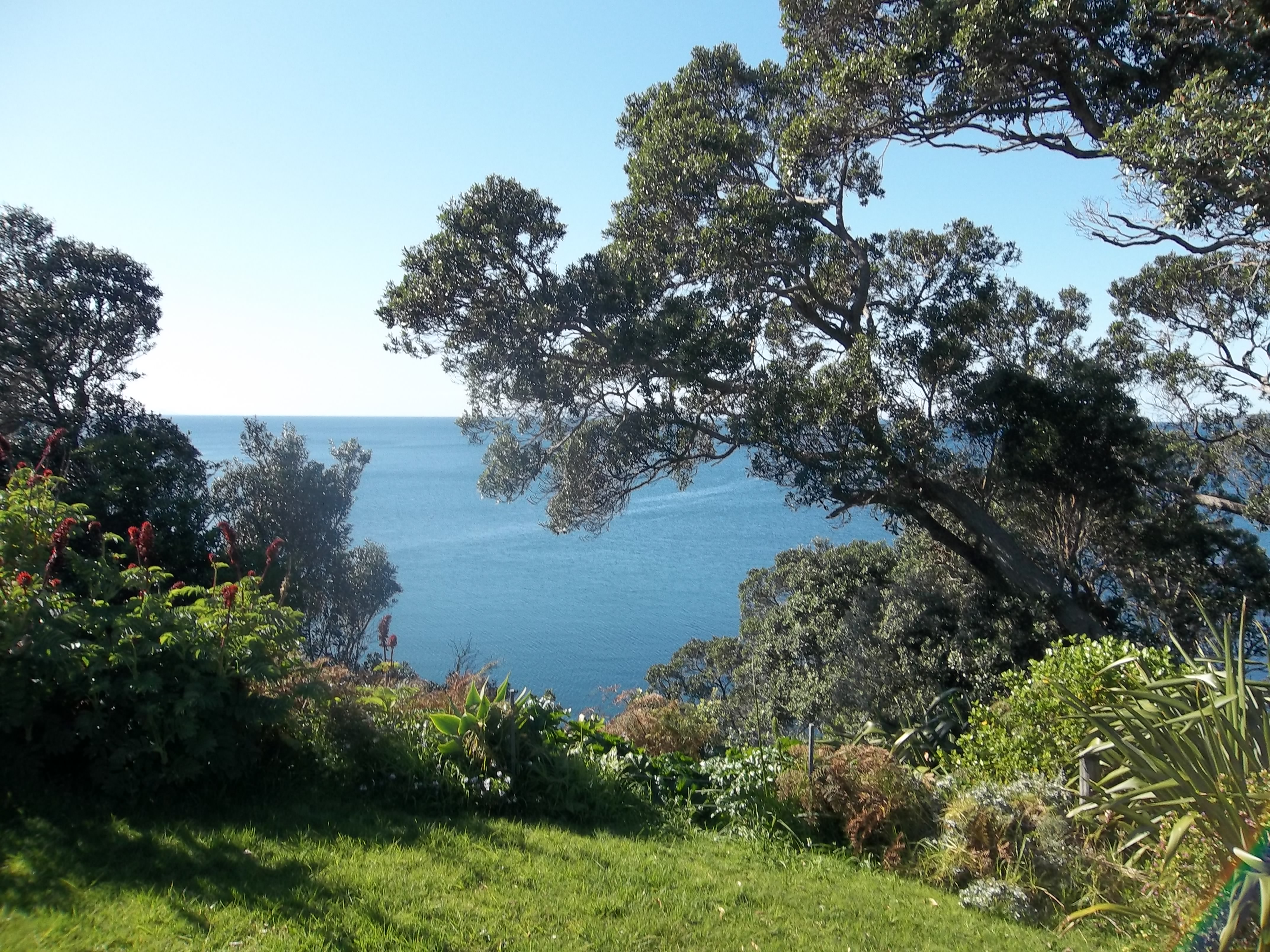
I woke to the sound of the sea smashing onto the rocks. Good, I thought. I love it when there’s a thundering sea running. Up early to take my husband for minor surgery, I went to the cliff edge to see the white foam breaking over the rocks, and looked out to the horizon. The sun was just rising, a flaming red band above the sea, fading to amber, and then to palest turquoise, the few clouds black in the pearly lightening sky. Still. Not a breath of wind in spite of the pounding waves.

I fed the birds and then drove into our nearest country town, and it was chill enough for rags of white mist to drape the hollows, and drift across the dips in the road. By the time we had reached the surgical centre, the sun was up and the burnt gold and brown fields were lying defenceless in the baking heat again. Animals lying heaped in scraps of precious shade …

Leaving the old chap to the anaesthetic and the knife, I searched for a cafe open at 7.30 to have some breakfast, and decided that Eggs Benedict would help to while away the two hours  until I fetched him. But by the time I’d picked up the invalid and driven back home with my wonky liver making its grumpy presence known, I realised that Eggs Benedict that early in the day was not a good idea.

Later the morning soared into joy with a long phone call from eldest grandson, completing a double degree in arts and science at Uni. By the time we’d debated GM experimentation and the environment, knocked off Schopenhauer and his will to live, breezed through Nietzsche, explored  his theory of the nature of pain, tried to define happiness a propos Nietzsche and his fulfilment of will,  covered the architecture of Paris, categorised various behaviours as schizoid, narcissistic etc,  explored Maslow’s concept of peak experiences, agreed on beauty, argued about the number of different species of birds, butterflies and animals, discussed his fitness regime and the nuances of rock climbing, I felt as though my brain had had its own peak experience and a mental workout as well.

I put down the phone smiling like a Cheshire cat. Nothing – not even a peak experience – beats talking to my grandchildren.  Lunch was a breeze, as a neighbour had dropped in some hot savoury scones and cheese turnovers, so I didn’t have to cook. I replenished the bird’s various feeding bowls with wheat, and then tooled back into town to the surgeon for the invalid’s dressing to be changed, and various instructions for his care. At the chemist, picking up the prescriptions to administer, I was greeted warmly by another customer, a youngish woman in a huge multi-coloured caftan to disguise her weight, and only one arm. As her joyful goodness enveloped me, I felt ashamed of my livery grumpiness.

So I’m now not only cook, bottle-washer, car-washer, gardener, log- carrier, accountant, chauffeur but also nurse. Not, my friends tell me, the sort of cheeky flirty sort that they were in their young days, “ All the men in my ward fell in love with me,” giggled one still beautiful seventy- year- old on the phone…

Stopping at the village shop for milk on the way home I found a parcel waiting for me. It was ‘Carolina Cavalier’, the biography of James Johnston Pettigrew, the other General who led Pickett’s Charge at Gettysburg. One of his descendants, a dear friend, had sent it, knowing my fascination for the Civil War.

Early to bed, too tired to start my new book – I just needed some mental knitting – so skipped happily through a Georgette Heyer. Before putting out the light, and opening the window wide so that the sound of the sea would fill the room and all the spaces of the night, I thought about that phrase, a good enough day… and remembered that old legend about the poor man who had a horse he treasured.

One day it disappeared, and all the villagers commiserated with him about his bad luck. But he brushed aside their sympathy saying it wasn’t good and it wasn’t bad. A few days later the horse re-appeared bringing with him a herd of wild horses. Everyone congratulated the old man on his good fortune, but he again brushed it off, saying it was neither good nor bad. His son began breaking in the horses, so that they could sell them, but one day he was thrown, and broke his leg.

More commiserating moans from the villagers, and once more the old man shrugged and refused to judge what had happened. While the son was laid up, the king levied a call on all young men to join the army to fight for their country. How lucky you are that your son can’t go, exclaimed the villagers. And the old man made no comment again. He never judged anything that happened, recognising that he actually never knew whether what happened was fortunate or unfortunate. Life just is.

So I looked back on another daily round filled with common tasks, which furnished all we ought to ask, in the words of the hymn, and there were unexpected gifts as well as the expected challenges. I don’t know what the hidden significance of any of it is… maybe one day I will. Maybe I will never know. Maybe I will know when I reach the other side. It was simply another good enough day. Neither good nor bad. The stuff of life.


Food for Threadbare Gourmets

I have people coming for dinner on Sunday. It started out as four of us, but visiting overseas mutual friends, means that we’re now eight. So I’ve decided to haul a small turkey out of the deep freeze. I’m also going to Benjamin Britten’s War Requiem in Auckland on Saturday night with my daughter, and a party afterwards, and know I won’t be as on the ball on Sunday as I’d like to be. So I cooked the pudding today and it will reheat perfectly. Because it’s a sort of Christmas turkey, I thought I’d do one Christmassy- type pudding, and one refresher – a lemon cream. The Christmassy option is apple crumble, the stewed apple mixed with Christmas mincemeat. It lifts apple crumble into another realm, especially with a little brandy added to the apple- mincemeat mixture, and the crumble a really rich one.

For the crumble – a big one – I used ten ounces of flour, and two of ground almonds, six ounces of butter and eight ounces of sugar, plus grated lemon rind. Mix the butter into the flour, add the rest of the ingredients, tip over the fruit in an ovenproof dish, and bake for forty minutes or so in a medium to hot oven. It will wait in the fridge, and re-heat on the day. I’ll serve it with crème fraiche.


Food for Thought

Life will give you whatever experience is most helpful for the evolution of your consciousness. How do you know this is the experience you need? Because this is the experience you are having at the moment.

Eckhart Tolle  born 1948  Influential teacher, philosopher, and best- selling author of spiritual books


55 Comments

Filed under birds, cookery/recipes, family, gettysburg, great days, happiness, life/style, philosophy, spiritual, The Sound of Water, Thoughts on writing and life, village life

The upsides and the downsides of being a woman

100_0101

Something made me re-read a book for girls which my Victorian grandmother had pressed on me when I was seven. It was about a girl who’d lost her mother, and whose military father was absent. It pressed a few buttons for me, though at seven I didn’t realise why. ‘The Wide Wide World’ by Miss Wetherell, was published in 1850, and became an instant best seller on both sides of the Atlantic. It’s a vivid picture of rural America in the 1840’s, and the forerunner of all those other girls books. Jo March reads it in ‘Little Women’.

Ostensibly the story of an orphan who becomes a fervent Christian and whose faith sustains her throughout constant miseries and trials, re-reading it I saw something else. It was a perfect picture of the powerlessness of women, and of how ingrained this powerlessness was.  Ellen, the heroine, never has any choices, and even when she finds happiness with the upright Christian, John Humphreys, she is totally subservient to him, and finds her greatest happiness in pleasing him. So powerlessness was held up to generations of girls as being a virtue.

This theme of powerlessness was on my mind, after reading a wonderful list in another blog, of a person’s rights, which included having the right to say no, to remove oneself from an abusive situation, not have to explain oneself etc. And as I thought about these rights, and how I’d painfully allowed myself to claim them over a long life of invalidating myself, I realised that the reason most people – but especially women – have to be reminded of these rights is because they do feel powerless, and this is too often the result of the way we bring up our children.

We don’t allow them to be angry and say no, or choose what foods they eat, or what subjects they will take at school… too often from the day they are born, children are treated like brown paper parcels, and rarely given information about where they’re going or what they’re going to be doing; often their needs are secondary to the needs of parents or other pressures, and in so many tiny ways we unwittingly make children feel powerless and without a voice. They learn to please their parents by giving away their power and conforming. I’m not talking about permissive parenting here, but about the courtesy we give to adults, but not to children

In the book, Ellen is often in floods of tears, which reminded me of my childhood, and it’s only well into life I realised that I was always in tears as a child because I so often felt powerless and therefore angry. Saying how we feel, expressing anger, was not allowed, and it’s a skill that many of us haven’t mastered or taught our children.

So the only other way people can express their anger and powerlessness, is to be destructive, and we see this constantly in the courts, on the roads, and in relationships. But it was comparatively safe for a child to cry, so many children from Ellen onwards, learned to divert their anger into tears. As a mature adult whenever I was angry, to my annoyance I would cry…  until I realised that this was the way I’d dealt with anger as a child. They were tears of powerlessness.

It was gentle Anne Bronte in ‘The Tenant of Wildfell Hall’, published two years before ‘The Wide Wide World’, who challenged this powerlessness of women in her book which was considered shocking when it was published, and instantly became a best seller! In the book, which is about a woman trapped and terrorised by a drunken and sadistic bully, the wife, driven to desperation, slams the bedroom door in his face and locks him out, before eventually escaping.

This one act of slamming the door in her husband’s face reverberated throughout Victorian society. She had violated her husband’s rights, and broken the law at the same time. Some have called this the first feminist novel. This heroine had defied the centuries old acceptance that a woman was a father’s property until she married, when she became her husband’s property.

When Mrs Caroline Norton, whose husband was also a drunken bully, famouslyleft her husband in 1836, she not only had no rights to her children and no rights to divorce him, but when she earned money to support herself it became her husband’s property. The Married Women’s Property Act in 1870, finally allowed women some independence in England. But women were still powerless in many other ways, as Mary Lincoln’s incarceration in a lunatic asylum for no reason other than eccentricity, unresolved grief, and falling out with her son over money, showed.

While slavery – owning a person, buying and selling them, breaking up their families and working them to death  – became illegal in the western world, it wasn’t for many more years that women achieved the vote and a measure of freedom. And still, in some places in the west women are struggling for equal pay and equal rights.

Religion has not been on the side of women – as President Jimmy Carter has said:  “The truth is that male religious leaders have had – and still have – an option to interpret holy teachings either to exalt or subjugate women. They have, for their own selfish ends, overwhelmingly chosen the latter.”

They have in fact chosen to play the power game. And it isn’t just Christianity which has made this choice. There’s hardly a religion in the world which doesn’t rate women as lesser beings. In Jerusalem these days, women are now segregated on buses, not allowed to pray at the Wailing Wall, and subject to increasing discrimination by extreme members of the Jewish faith. And we all know the fate of too many women in Muslim, Hindu and other religious societies.

Marve Seaton in her courageous blog about the abuse of women, continually draws attention to female circumcision, breast ironing, gang rape, acid attacks, stoning and “honour” killings, (a euphemism for male sadism, ego, and heartlessness) amongst other outrages inflicted on women. Most religions, including extreme Christian sects, still think that it’s okay, and a husband’s right to beat his wife.

The UN figures show that two thirds of illiterate people in the world are women, that women work harder and longer hours than men as well as being responsible for their households, and  that men own most of the land in the world, and most of the money.

Women in the west who feel powerless, who are struggling with low wages, male chauvinism and hostility from the far right of some Christian churches, have it easy compared with their sisters in the third world and elsewhere…  and women everywhere are often too emotionally connected to the needs of their children to find any way out of their dilemmas of poverty and powerlessness.

But when I look back at the position both of slaves and of women and children a hundred and fifty years ago in the west, I can see how far we’ve come. And now it’s the time for our sisters in the rest of the world to start to edge towards their freedom too, which for many of them means feeling safe. Anne Bronte’s book also preached universal salvation, and it must have seemed an unattainable vision when she wrote ‘The Tenant of Wildfell Hall’.

But western men did change their minds, and western women are well on their way now. So it IS possible that things can and will improve for our sisters in the rest of the world, that the climate of thought can change other men’s minds. Changing the way men think is the challenge for those women, and it’s our challenge to support them in doing it. We’ve come so far, that we can be optimistic that the time will come when we will all be free. Progress does happen. Change does happen. This is the blessing of modern times.

As Emily Dickinson said back then: “Hope” is the thing with feathers—
That perches in the soul—
And sings the tune without the words—
And never stops—at all—


Food for Threadbare Gourmets

Deep disappointment today! Desperate for something sweet, I decided to make myself a banana split. I knew I had some ice-cream in the deep freeze, because I’d seen the plastic container. Alas. It wasn’t labelled, and turned out to be soup. Undeterred, I dashed up to the village shop and bought a packet of vanilla ice-cream. By the time I was home I’d changed my mind, and instead of banana I made a quick hot chocolate sauce to pour over the ice-cream. It’s heaven, and used to be the children’s favourite pudding outside chocolate mousse.

It comes from Mrs Beeton, the famous Victorian cookery writer. All you need is one rounded dessertsp of cornflour, two of cocoa and three of sugar, half a pint of water, half an ounce of butter and some drops of vanilla. Mix the cornflour, cocoa and sugar together with a little of the water. Boil the rest of the water, and pour over the chocolate mix. Pour into a saucepan and boil for two minutes, add the butter and vanilla, and pour over the ice-cream. Delectable and cheap.


Food for Thought

Looking after oneself, one looks after others.
Looking after others, one looks after oneself.
How does one look after others by looking after oneself?
By practicing mindfulness, developing it, and making it grow.
How does one look after oneself by looking after others?
By patience, non-harming, loving-kindness, and caring.   Samyutta Nikaya 47.19  Verse from the Buddhist scripture


58 Comments

Filed under books, cookery/recipes, great days, history, life/style, literature, philosophy, slavery, spiritual, The Sound of Water, Thoughts on writing and life, Uncategorized, womens issues

Hollywood, Ruined Reputations and Truth

100_0273

In the New Zealand Parliament this week the leader of one of the parties put up a motion congratulating the New Zealand  Ambassador and his second secretary for “their courageous and commendable” role in offering refuge and “significant help”  in 1979, at their Tehran embassy during the US hostage crisis in Iran.

He termed the film ‘Argo’ a “grave misrepresentation” of the part the NZ diplomats had played, which had placed both themselves, and their country’s policies and trade at risk.

The motion was passed unanimously. Ben Affleck has admitted in a press conference that he had been unjust both to the British and to the New Zealanders, who’d both risked themselves and their countries by helping the US hostages. But he said it was a better story if he falsified the facts.

I can’t imagine how it must feel to be held up as a coward to the whole world, when you’ve actually acted generously and courageously. But such thoughtless arrogance  is nothing new. Hollywood has been falsifying history and making heroic war films about Americans using the exploits of British servicemen for years.

And this is why I prefer facts to fiction. The story I tell now is true, and is such a perfectly rounded story with a neat plot and unexpected ending that if it was fiction it would be said to be too neat, and therefore improbable.

It’s about my father who belonged to a distinguished cavalry regiment, and had fought in tanks throughout the war. After the war, playing a leading role in a huge military exercise, the last of its kind ever held in England, he was concerned about the lack of proper treatment of the real accidentally wounded, as opposed to the dummy wounded, and he became a whistleblower.

We all know that whistleblowers are not popular, and like many another whistleblower, he had ruined his career. So he left his regiment in which he now had no future, and volunteered to go to Malaya as an infantryman, to serve where communist Chinese guerrillas were terrorising the local populations and killing British rubber planters and the like. The conflict in Malaya was called an Emergency at the request of the planters, as otherwise the insurance companies wouldn’t cover them for losses, if it was a war!

The Chinese guerillas called themselves a Liberation Army, and received their orders from Moscow. Their leader was a Chinese called Chin Peng, who had trained in guerrilla warfare against the invading Japanese during the war. These guerrilla “freedom” fighters were ruthless and brutal in their methods of intimidation.

Vulnerable and frightened Malays and Chinese labourers living on the edges of the jungle were re-settled in safe New Villages, where they had better conditions and pay than ever before – and after British pressure, were allowed to buy land and have the vote – so they didn’t need to support the ‘bandits’ as everyone else called them. Measures were put in place to stop the bandits getting food from the terrified local populations, and since the bandits also extorted food from the Sakai’s  – the aborigines – in the jungle, the Sakai’s hated them too.

This meant that in the end the bandits could be starved out of their hideouts. A lot of thought went into winkling them out of the dense jungle, while not antagonising the local populations. Troops, who consisted of some British and Ghurka regiments, and some Malay regiments, tracked them down in the jungle. My father was in a Malay regiment, and small detachments were dropped into the jungle at the end of a rope by helicopter, to spend six weeks tracking, hoping to find bandit camps, disband them and send the demoralised and hungry bandits to rehabilitation camps. Inevitably there was shooting. But while the British authorities offered surrender, no Britons who were captured by the bandits ever survived. The military operation was called ‘Winning Hearts and Minds”….

We lived in a tiny military camp in the middle of the jungle in Pahang, central Malaya. I came home for school holidays with a large armoured car escort, in case of ambush. On this day, we had gone to the nearest village where the only grocery shop for hundreds of square miles was to be found. The shop was owned by a magnificent old Chinese trader, known as Mr Tek Seng, and when shopping there we all had to go into his back room and drink tea while our groceries were packed up.

As we left Tek Seng’s, my father, who we thought was still in the jungle, raced up to the entrance in an army jeep, and called out to my stepmother to get some oranges and hurry, hurry. When she returned with a box a few minutes later, he was half carrying an emaciated Chinese man in ragged clothes, and putting him into the back seat of our car. He sat the man down, and sat on the seat beside him, peeling an orange. He then gave the man segments to eat. When he’d finished one orange, my father indicated to the man to go on eating them, and help himself from the box. We then drove home with him.

Back at camp, the man was taken to the guardroom, and I heard later that as soon as he began eating the oranges, he began to recover. He was at death’s door with starvation and  scurvy when my father had found him in the jungle. (Early Renaissance explorers lost two thirds of their crews from scurvy, as did all the navies until the 18th century) But as soon as a person gets some vitamin C into them, they start to recover. And that was that with the bandit, I thought.

We returned to England after Merdeka – self government – was declared in Malaya in 1956, and got on with our lives. Chin Peng, meanwhile, the Communist leader, eventually retired to live in Beijing since there was nothing to fight for since Malaya achieved peaceful independence without him!

A few years later, my father retired too, and took a job in Whitehall, central London. Some seven years after the bandit had been captured and rescued from the jungle, a soldier from the Royal Signals Corps came to my father’s office, and asked to see him. It was the bandit.

He had emerged from rehabilitation camp a changed man, and had joined the British Army. He was now stationed with his unit in Gibraltar, and he came to London to seek out my father and to give him a watch. To thank him.

I love this story for its humanity and decency.


Food for Threadbare Gourmets

The threadbare gourmets in this house feasted rather well today. Friends had brought us some fresh fillets of fish which they had caught this morning. We ate them with buttered new potatoes bought from a stall on the road home, and local tomatoes also bought from a road-side stall. And afterwards we had fragrant ripe figs, from another friend’s garden. They were beautiful to look at, stained with dark purple and green on the outside, and inside, pale pink and translucent green.

I cooked the fish quickly in butter and with chopped dill. I also cooked the soft little tomatoes with them so the juices would flavour the cream. When both were not quite cooked, I tipped a tblsp of brandy in the pan and let it bubble up, then added salt and pepper and thick cream and let it bubble and thicken a bit more. We ate it immediately with the new potatoes and parsley, and some green beans.


Food for Thought

If you lose touch with nature you lose touch with humanity. If there’s no relationship with nature then you become a killer; then you kill baby seals, whales, dolphins, and man either for gain, for sport, for food, or for knowledge. Then nature is frightened of you, withdrawing its beauty. You may take long walks in the woods or camp in lovely places but you are a killer and so lose their friendship. You probably are not related to anything but to your wife or your husband…

Jiddhu Krishnamurti  1895 – 1986 Teacher, philosopher


40 Comments

Filed under army, british soldiers, colonial life, cookery/recipes, films, great days, history, life/style, military history, philosophy, The Sound of Water, Thoughts on writing and life, Uncategorized

Zen and the Art of House Maintenance

100_0218

I think house maintenance has a better ring to it than boring old housework… this way, instead of being a housewife I could even be called a house maintenance executive, or a house maintenance CEO.

But dressing it up in fancy names doesn’t get me away from the essential boringness of cleaning the bath, vacuuming the house, dusting picture frames and the rest. A recent survey in the UK reported that women spend a year and a half doing housework, men half that. This amounted to four and a half hours a week housework… pea-nuts… In my incarnation as a fifties- type housewife, I did at least two hours housework a day, not including the washing, ironing, cooking and baby care.

When I was first married in 1963, I did it all automatically, every day, and without thinking. Brought up by a dedicated exponent of house maintenance who when I was a child made me strip the bed to the mattress every day, and leave it to ‘air’ before being allowed to make it again, conditioned me to being a domestic automaton. It was a habit I found hard to break as an adult. But becoming a single mother and working full time put the brakes on vacuuming and dusting every day. And later the entry of duvets into our lives changed mine!

I once read that the late Jean Muir, an English fashion designer with a perfectionist ethic, had been taught to make her bed by the nuns at her school somewhere in the West Indies. She said it was then and there that she learned about perfectionism and attention to detail. I have this vision in my mind of a long, high-ceilinged, calm, white convent dormitory with a white robed nun, watching the creation of these little works of art – a perfectly made bed with a white counterpane – and making each child re-make their bed until it really was the best they could do.

I can imagine the atmosphere in a room like that, where everyone was putting their hundred per cent into what they were doing… when something like that happens in a room, it affects the atmosphere. When I did a series of personal growth courses for seven years, one of the things we had to learn to do on a gruelling two week residential course, was to ‘Zen’ our rooms. It was the same thing that the nuns were teaching the children.

We had to leave our room in the most perfect state of cleanliness and harmony possible. Few of us managed to achieve this state of indefinable perfection… and most of us were still mystified or defeated by the concept at the end of the course. But over the years it’s something I’ve come to understand and treasure, and it lifts mere housework or house maintenance into another sphere.

When I was a helper on another of these residential courses, and we were packing up to go after all the course participants had left, someone came in while we were having lunch, and said: “Have you seen Hut Number Ten’s woodshed? We all piled out, and one by one stood in the doorway, and experienced an indefinable sweetness… the wood was piled around the shed, and the shed was spotless… but no more spotless than anyone else’s wood shed. I decided that what made the difference was the love and commitment that had gone into stacking the wood and this left the woodshed in a perfect state of equilibrium. Nothing you could see or describe, but something you feel.

These days that’s how I feel about housework/ house maintenance. I want the place to feel ‘Zenned’, as we used to say. That’s difficult with my amount of clutter, but I know it has more to do with the way I feel about cleaning the house than what’s in it. Though there is also a sense of rightness about the things that are in the room… maybe a touch of William Morris’s dictum, “ have nothing in your house that is not beautiful or useful”.

Sometimes I move and do everything at half speed, which means that I have to stay totally present and conscious, and though I’m doing it slowly, somehow everything gets done in good time, and in far better shape than if I’d just done a quick tidy-up.

Sometimes I just do it with my whole heart, not cutting any corners, doing it as thoroughly as I can. And I find when I’m doing this, I don’t find it boring. Something about paying attention to the detail and doing it without resistance, changes the whole equation. If I do the vacuuming grudgingly, it’s a chore. But if I can make that leap of will and give up the resistance to it, it’s a different experience.

More than that, I find chaos or dusty rooms depressing. And sometimes I want my home to feel like sacred space. Needless to say I’m not consistent in my efforts. In fact sometimes I feel like Sisyphus forever pushing his stone uphill before it rolls down again… this is because though children, grandchildren, seventeen dogs and one cat can make a mess, none of them can compare with a husband.

Robert Pirsig in his  ‘Zen and the Art of Motorcycle Maintenance’ wrote that: “Peace of mind produces right values, right values produce right thoughts. Right thoughts produce right actions and right actions produce work which will be a material reflection for others to see of the serenity at the centre of it all.” But I wonder if you work backwards if the same applies… by doing the right actions, do we discover peace of mind and all the steps in between?

And the right action seems to have a lot to do with detail. I remember our teacher on one of these courses saying how he had travelled from the US to Japan to do an advanced  course with Zen monks, and he was thrown off it on the first day… he had failed for not paying attention to detail… as I’ve grown older and fractionally wiser I can understand this.

God is in the details, and it’s in the details that the satisfaction and the perfection resides. I was reading Celi at www.thekitchensgarden.com  and her blow by blow description of feeding lambs and the best milk mix and best timing for their well-being was a most moving testament to the beauty in the detail.

This every moment of the twenty- four- hour – seven- days- a- week commitment to keeping the lambs alive and thriving, warm in their coats, and cherished in their sheltered corner of the barn, was a demonstration of how attention to detail becomes a labour of love – and maybe not even a labour – but a journey of love.

Unless Celi did this marathon task with love, I wonder if she’d even be able to keep it up, with feeds every few hours day and night, trips to and fro through the snow and the dark between house and barn, heating the milk- not in the easy micro- wave but in hot water – giving the four lambs colostrum from her cow which she milks, and keeping them hydrated through the day with endless sips. But when we do a task with love in our hearts, the love gives us the energy to do it.

It feels as though by paying attention to the detail, we are actually being a channel for love. And this is what can carry me through the washing up and the bed-making. It certainly carries me through the three meals a day routine of feeding an always hungry husband. I do find it impossible to cut corners and give him an overcooked fried egg, or a soup bowl with a splash on it. And though I don’t manage to keep up a constant commitment to Zen and house maintenance, at least I know the recipe for making it less of a chore and more of a commitment to beauty…. which somehow must make a difference to the world, since we are all connected.


Food for Threadbare Gourmets

Chicken mince was on special at the grocer- cum- delicatessen in the nearest village so I took some home for supper. Mixed with chopped onion, garlic  and celery, grated carrot, mixed herbs, salt and pepper, and fried in little patties, they’re good either hot or cold. We ate them with new potatoes and smashed peas, one of our favourites. Fry a chopped onion and some garlic. When soft, add lots of thyme, frozen peas and enough chicken stock ( I used a chicken stock cube) just to cover the peas. Boil until the peas are soft, and the stock almost disappeared. I used to just mash them with a potato – masher, now I whizz them in my new stock blender. Any left over goes into a green soup.


Food for Thought

“Men occasionally stumble over the truth, but most of them pick themselves up and hurry off as if nothing ever happened.”
Sir Winston Churchill 1874 – 1965 Leader of the free world against Hitler until the US and USSR joined in two years later.

He also said:” I like pigs. Dogs look up to us. Cats look down on us. Pigs treat us as equals.”


47 Comments

Filed under cookery/recipes, environment, great days, life/style, love, philosophy, spiritual, The Sound of Water, Thoughts on writing and life, Uncategorized

The Queen!

100_0205This post has been re-blogged for the reasons in my latest post The Tragic and Hilarious Life of a Blogger

I’ve just seen a photograph of this radiant elderly woman coming out of hospital, her immaculate white hair shining against the bright red, exquisitely tailored coat which she wore adorned with a simple diamond brooch( if any diamond brooch is simple). Her eyes were shining and her smile sparkling.

She’s eighty-six and the most photographed woman in the world, one of the busiest and most active, and these days, one of the best dressed women in the world too. Once Bobo, her Scottish nursery maid from childhood -who became her dresser – died at 89, Angela Kelly, the new dresser arrived. Suddenly instead of the frumpy clothes chosen by the un-imaginative Bobo who was the despair of all the couturiers who dressed the Queen, the vibrant and now beloved Angela, has transformed the Queen’s clothes and her image.

Angela, who has a broad Liverpool’ Scouse’ accent, and was the daughter of a crane driver, is a creative and vivacious woman with a wonderful sense of colour and design. She designs most of the Queen’s clothes now.

So the once dowdy but beautiful Queen has now blossomed into this stunning looking woman who wears clear jewel-like colours – purple,  primrose, turquoise and leaf green, bright red, and pure white with the matching hats that define her inimitable style. Her see-through umbrellas have a matching coloured handle and are edged with the matching colours.

She wore white decorated with sparkles like her predecessor Elizabeth 1, on her Jubilee cruise down the Thames, gold to echo the gold statue of Queen Victoria at the Buckingham Palace Jubilee concert, shamrock green to go to Ireland, and a smashing pale primrose for her grandson’s wedding, each outfit beautifullly cut and tailored. And of course black with diamonds to Diana’s funeral. (I’ve wanted some fabulous diamonds to wear with black ever since) Her eyes are still as blue as when she was young and her complexion still as clear, though she’s lost her tiny waist and elegant legs in old age – haven’t we all?

But nothing much else has changed. She still walks her corgis every day and feeds them herself, cutting up their meat and dishing it out. She still rides her favourite horse, though not as energetically as she did, and still refuses to wear a hard hat, preferring her trademark  head-scarf.  She still breeds her racehorses and gundogs (black Labradors to you and me) and goes to the races. She still  adores her ninety-two year old husband. She still performs investitures and receives ambassadors, foreign sovereigns, dignitaries, heads of state and travels on Royal tours.

She still carries out between four and five hundred engagements a year; she still spends hours every day reading and signing all the documents in her red boxes, and she still receives her prime ministers every week for an audience to bring her up to date. Actually it’s usually the other way around. She’s so well informed that both Churchill and Wilson left discomfited after their first audiences, having assumed it would be a walk in the park, not a penetrating inquisition.

She’s had twelve prime ministers, and they all loved her – even Maggie Thatcher – and valued her support, knowing she was the one person who really wanted them to succeed for the country’s sake. Rab Butler, often described as the best prime minister England never had ( like the late Adlai Stevenson in the US ) often had audiences when he was acting prime minster.

No mean intellect himself, he was impressed by her intelligence, and also said that she never tried to behave as anything but a woman. He was fascinated by her constant anxiety over inflation as prices began to rise, saying it struck him as “inconsistent in someone who did not do her own shopping.”  But this was the frugal mother who sent her small son Charles back to the garden at Sandringham to look for a lost dogs lead – saying “ Leads cost money.” This was also the little girl whose nursery maid Bobo taught her to unwrinkle and fold the wrapping papers on Christmas presents, and re-use the paper and ribbons – in the depths of the Depression.

When she came to NZ for her 25 year Jubilee tour in 1977, a hard-boiled cynical anti -royalist was assigned to cover her visit to Auckland, the thinking being that there would be no sickly sycophantic reports. He came back to the office a shaken man. “I’ve just stood in the crowd as they walked up Queen Street and felt wave after wave of happiness,” he marvelled. He was amazed and mystified by the joy and excitement of the people overflowing the pavements on both sides.

On board the Royal Yacht Britannia I stationed myself at the end of the line of guests being received and was fascinated to watch the Queen. The first impression was one of innate shyness being overcome with a huge effort of will. She began shaking hands with a long line of people she would probably never see again in her life. As each person bowed or curtseyed, she gazed penetratingly at them, and followed them with her eyes as they moved on, before giving the next in line the same full attention. It was a simple act each time, but she gave it her total concentration. It made it a special moment for each person she met.

Later, as she circulated, chatting, and joined the group I was standing with, she was asked how she had enjoyed drinking kava, the Fijian fermented drink in a huge wooden bowl. She and the Duke had just come from Fiji. She laughed, and started to say: “Oh it tasted like” – when she stopped, remembered she could be reported and it would hurt the feelings of the Fijians, and ended mischievously – “like a nice cup of tea”.

Those who know her say she has a wicked sense of humour and is a brilliant mimic. Angela Kelly, who has become one of the people closest to her, says she’s very good at mimicking her Scouse accent. Nobody knows what books she reads, or what music she likes, and she hides her boredom at what must be excruciatingly boring banquets, lunches, receptions, concerts, parades, factory and hospital visits, and she never tries to be charming or popular.

She sees herself as the servant of her people, so along with presidents and prime ministers, she’s also had to entertain crooks and clowns – including the late and unlamented Romanian dictators, the Ceauscescus, who were preceded by a phone call from Paris where they’d been staying, warning that they’d steal everything, including the gold taps – and Berlusconi at a conference, who she ticked off when he was loudly showing off, asking why he had to make so much noise.

The one thing we do know is that she loves things to go wrong… and then the routine is disturbed, the pomp and ceremony are disrupted,  people become real, they stop being formal and become spontaneous, and she really enjoys herself!  She’s a countrywoman, who is happiest living in her country houses enjoying picnics and field sports (stalking deer, fishing, shooting and generally killing for fun) in the Highlands like all her ancestors before her; and riding and presiding over shooting parties (perish the thought) in Norfolk. She dotes on her grandchildren and is a devout churchgoer..

She’ll be 87 this year, and it’s hard to imagine a world without her… which was how people felt about her great- great- grandmother Victoria. Informed sources comment that she’s fitter than her mother was at this age, yet her mother lived to a hundred and four. So it looks as though she’ll probably outlive me, and I never will experience the world without her. God Save the Queen!

Food for Threadbare Gourmets

I read an article about sandwiches in the paper yesterday, and it had all my taste buds twitching. But to my mind all the mixtures and combinations people said were their favourites just didn’t compare with a simple egg sandwich. So while my husband chomped through his chicken salad for supper, I made myself the perfect egg sandwich.

It has to be fresh soggy white bread! Thinly sliced. Buttered right up to the edges so that the butter acts as an impermeable layer between filling and bread. Hard boil the eggs, chop and mash them up with salt and pepper and enough good bought mayonnaise to moisten them. Spread this mix over the bread, cut off the crusts and cut into four. (soak the crusts in water to give to the birds) Some people would add lettuce, but that’s a different sandwich – this is my comfort food, what we always ate on childhood picnics.

Food for Thought

Close your eyes and you will see the truth,

Be still and you will move forward on the tide of the spirit,

Be gentle and you will need no strength,

Be patient and you will achieve all things,

Be humble and you will remain entire.              Taoist meditation

43 Comments

Filed under cookery/recipes, fashion, great days, history, life/style, philosophy, Royals, royalty, The Sound of Water, Thoughts on writing and life, Uncategorized

Art and soul – do they matter?

100_0106

On Sunday I discovered that I am a member of a tiny minority. I belong to a group of around three million people world- wide who watch the live performances of opera filmed from the New York Metropolitan Opera House! And when I watched film of the Met audience, I decided that I must also belong to an even more select group, a blogger who watches opera.  I don’t know what a blogger actually looks like, but to my mind, this collection of elegant, groomed rich people didn’t look like bloggers- would they have the time to sit over a computer? Not did my home audience of mostly elderly people look like bloggers either!

It was a Mozart opera, ‘La Clemenza di Tito‘. Then on Tuesday I spent ages poring over Clanmother’s beautiful blog with Renoir’s pictures. On Wednesday I went back to see the opera again, unable to resist it, and on Friday I rushed in to see the film ‘Anna Karenina’  before it went off. A week you could say, of culture and art. The theme of the opera was goodness and mercy, though it took even worse liberties with history than Hollywood does. This didn’t matter.

The music was sublime, the costumes and scenery a feast for the eyes, and the voices were among the best in the world. Two of the parts were what are known in opera as trouser roles – that is they were written for women’s voices, but the characters were men. Anyone who saw singer Susan Graham all in white as the long legged elegant Rosenkavalier will know just how ravishing women dressed up as men are, and these two were delectable.

Opera singers are born, not made, but to achieve the mastery needed to sing opera well takes years of voice training, learning music theory and music history, if possible mastering an instrument, learning French, German and Italian since most operas are written in these languages, learning drama, acting skills, and sometimes ballet, and for men, sword fighting  skills. For the rest of their lives, opera singers have to continue to practise and train their voices to sing different sorts of opera. Mozart’s music is the most testing and the finest training according to singers. And many have to work at day jobs to make a living.

This opera was written in the last three months of Mozart’s life, when he was travelling around the music capitals of Europe looking for a post to support his family in 1791. It appeared in the first week in September; a week later he produced another great opera,’ The Magic Flute‘, and then some cantatas, a clarinet concerto, a piano concerto, and finally his great Requiem before dying on the 6 December. What inspired creativity in the last three months of his life, and typical of his lifelong astonishing output, having begun composing when he was five .

The pictures of Renoir throb with joie de vivre and utter beauty. Each exquisite picture, whether flowers, dancers, portraits or landscape are radiant with life and light. To see one is exciting, to see a collection of them is breath-taking … In spite of acute arthritis in his hands, Renoir went on painting into extreme old age, and the joyousness and celebration of beauty are always there.

‘Anna Karenina’ is considered to be one of the greatest novels in western literature… though some beg to differ, myself among them. At the end of this sumptuous production, with jewels and dresses to die for, I felt a distaste at having watched a collection of worldly people with no self awareness make a hash of their lives! This novel, along with ‘War and Peace’ are Tolstoy’s masterpieces, for he spent most of his later adult life trying unsuccessfully to reform his errant ways, and then trying to reform the world, gaining a controversial reputation as a reformer. He preached peace and inspired both Ghandi and Martin Luther King.

So in one week I had had a feast of some of the world’s great artists. Beverley Sills, the American soprano once said that: “arts are the signature of civilisation”, and it worries me sometimes that this signature is getting more and more illegible. In a film on Beethoven a couple of years ago, I heard a magnificent German bass agonising over what he called the dumbing down of our culture – referring amongst other things to cheap music, Facebook communication,  and the shallow snippets of sensational news on radio and TV – he was comparing them with the profundity of Beethoven .

I would also have added to his list new Bible translations which are no longer literature, but banal religious tracts, and the sort of art that wins prizes these days – someone’s unmade bed adorned with stubbed out fag-ends and grubby sheets, or a skull covered in diamonds. Both the perpetrators of these masterpieces are now rich and famous on the strength of them…

Taoist philosophy suggests that art awakens a response in the mind and soul and it is important that it should evoke the higher not the lower nature. And that is what the art that I revelled in this week did for me. It lifted me above the daily round and common task, the disappointments and frustrations of a rather difficult week, and reminded me of actress Stella Adler’s words: ‘Life beats down and crushes the soul, and art reminds you that you have one.’ Yes, I think art matters…


Food for Threadbare Gourmets

Frangipane is the delicious almond base in many fruit tarts. It’s easy as…you just need four oz of butter and four oz of sugar, two eggs, one oz flour, 5 oz ground almonds, one teasp vanilla essence, and half a teasp of almond essence. Just beat them all together, and spread on top of the pastry. Then press down in it the fruit of your choice. This is only one of many recipes, some use more eggs, others use more almonds. I keep my ground almonds in the deep freeze so that they are fresh and don’t go rancid.


Food for Thought

Oh great Creator, grant us one more hour to perform our art and perfect our lives.     Jim Morrison 194 – 1971  Poet and songwriter who died unexpectedly in Paris at 27


57 Comments

Filed under bloggers, cookery/recipes, culture, films, great days, life/style, literature, music, philosophy, spiritual, The Sound of Water, Thoughts on writing and life, Uncategorized

Bullied by the birds

100_0117

It’s two months since I wrote a blog about the drought called Summer days and thirsty hedgehogs, and since that time we have had no rain.

The country is split between those who live in towns- and so many NZ towns and cities are on the coast – and those who live in the country. The townies, as country dwellers call them, are loving every moment of the long hot summer, revelling in long days at the beach, splashing in swimming pools, lolling around in their gardens, and sitting outside at cafes and restaurants enjoying leisurely meals in the soft twilit evenings.

Families take off at weekends with their tents and boats and kayaks for old fashioned summer camping days by the sea, in the certain knowledge that there will be no rain. At the same time country folk are measuring how many inches of water are left in their water-tanks, or joining the two or three week long queues to have water delivered. I see trees and hedges dying, and my heart aches.

Farmers are selling their stock since they can’t afford to feed them, for there is no growth in the dry brown paddocks: drying off their milking herds, and worrying about hay for the winter. Gardeners like me, are carting buckets of water from their baths to moisten around trees, watering roses and hydrangeas and salvias all struggling to stay alive in the baking heat, and trying to coax dahlias and Japanese anenomes, usually the splendour of the garden at this time of year, to open their stunted blossoms.

I fill the bowls of water around the garden regularly throughout the day, and anyone foolish enough to knock on my door with census papers, Jehovah’s Witness leaflets, or to fix the faulty electric plug for me, all get their ears bashed to put out water for birds and thirsty creatures. I’ve rung the local rag, and got my daughter to Twitter, and hope the SPCA will remember my message about ringing radio stations to remind their listeners.

But one person cannot defeat climate change! This is our third drought in four years, and in the worst one four years ago, we lost so many birds and creatures. The native pigeon population was decimated, as young birds had no water, and people talked of seeing pigeons drop from the sky, dead from de-hydration. The kiwis who dig their long sharp beaks into the ground for bugs and worms starved because the ground was so hard they couldn’t break into it, and when they did, the worms and other food had retreated deep down to damper layers of soil.

This year, another native bird, the kokako, is not breeding at all – for fascinating reasons – the females can see that there are none of the berries on the rimu trees which they normally eat, and are therefore refusing to mate, knowing there’s no sustenance for their offspring. And hedgehogs are dying of thirst.

I’m thinking I’m going to have to start feeding the birds again. I used to feed the handful of sparrows and a chaffinch couple who lived around here – under a tree a little way from the house, and where I could see from the sitting room window.I also fed the dozen or so mynahs, a little way down from the tree so they wouldn’t frighten off the smaller birds. Moist wholemeal bread for the mynahs, wheat and birdseed, and when I ran out, porridge flakes for the others. They loved it all. They told their friends. Within a couple of weeks I had at least a hundred sparrows, four or five doves, some itinerant blackbirds,  chaffinches and an occasional thrush.

They had also worked out from whence this largesse came . They waited in the plum tree outside the kitchen window and watched me until I came out with their breakfast. And for a couple of hours they sat and barracked me from the plum tree and the garage roof in the afternoon, until I sallied forth with afternoon tea – theirs.

A great whoosh of wings accompanied me to the tree. Then I had to make sure that the neighbour’s ancient lonely dog was not hovering in hope of a dog biscuit. If she was, I had to return with the bird food, and dig out a biscuit and walk her down the road with it, away from the bird food which she would have gobbled up. Dog distracted, back to the birds.

If I was out, they would be waiting for me at the bottom of the road. They recognised my white car, and swooped from telegraph pole to telegraph pole all the way down the road with the car. They’d then hover round the garage yelling “she’s back, she’s back” till I came out. If I went for a walk, they’d fly down the road with me, and wait on the corner.

Finally the worm turned. There were so many birds I couldn’t keep up with them, and was buying a large sack of wheat from the farmers shop each week, as well as extra bread for the big greedy mynahs – money I could ill-afford. The garden was becoming white with droppings, and I was back to the chaos of when I’d had a bird table. The sparrows could probably have made a pot of tea themselves, they’d watched me so intently through the kitchen window for so long.

A short holiday in Melbourne solved the problem. They gave up waiting. I felt guilty but relieved. They didn’t need the food out here in the country. It was just my hobby which had got out of hand. But now, with a hearty respect for the intelligence of bird brains, I think I’m going to have to soften my heart and help them out in this emergency.

That heart sinks at the thought of being bullied by them all again. I’ve done a lot of inner work over the years about letting go of being victim, and preserving myself from being bullied any more, but I’m not sure I can handle being bullied by the birds. It may be a step too far for my fragile self esteem, and feeding the birds may be my last big challenge!


Food for Threadbare Gourmets

We had some lovely summer pears from a neighbour which cried out to be transformed into pear and almond tart. I used the wonderful recipe for pastry which doesn’t involve rubbing the flour into the butter. Instead I melt and cool the butter and just stir it into the other ingredients. The resulting dough doesn’t need rolling, but is just pressed gently into a shallow greased tart dish. It doesn’t need pricking or weighting. Just pre-cook for ten minutes in a moderate oven. You then add the frangipane and the sliced pears and cook for three quarters of an hour or more until the frangipane is just firm.

The pastry takes 125 gm butter, melted and cooled, a generous 100 gms of sugar, pinch of salt, half a teasp each of almond essence, and vanilla essence, two generous tablesp of ground almonds and 180 gms of flour. I love frangipane, and will give the recipe in the next post. It’s the perfect base for pears, plums, apricots, peaches, and I love the sound of the word… it sounds…fragrant!


Food for Thought

An old pond  –  a frog tumbles in  –  the splash of water

One of the most famous haiku  by the most famous haiku master, Matsuo Basha  1644 -1694 He spent much of his life wandering through Japan, like the medieval troubadours and minnesingers of Europe, three hundred years earlier.


65 Comments

Filed under birds, cookery/recipes, environment, food, great days, humour, life/style, poetry, The Sound of Water, Thoughts on writing and life, Uncategorized, village life, wild life

Voices from the Void

100_0190

My accident was a fascinating experience – in retrospect! I was driving happily down the main highway to the village crossroads in my little silver car about ten years ago, when a large, heavy old car – solid as – shot out of the side road, without stopping at the Stop sign.


The daffy woman driving it was oblivious to me, and was going to hit me right in the driver’s seat. I had less than a second to brake, turn the wheel to the left to try to lessen the impact and hurl a prayer into the void as I faced what I thought was certain death. “Help me”, I silently implored. The braking meant that she hit more of the right side of the bonnet than me, and the deafening sound of the impact nearly shocked me into the next world.


In what felt like slow motion my car ricocheted away from hers, with my hands still on the wheel, and I just wanted to hit the brake and stop. But if I did, I was going to hit a line of parked cars. As the impact shot my car towards a parked blue car, I heard a voice say: “keep going, keep steering”. I did as I was told, using every ounce of my shattered will power to do it, and as I longed to stop, a red car loomed in front, and the voice said: “keep going, keep steering”. I thought, at the end of my endurance, surely I can stop now, but another car loomed. “Keep going”, the firm imperative voice instructed. I did as I was told, and finally, still steering, still going, came to rest safely 180 degrees from the impact, on a  side road where there was nothing. And by now people were running out of their shops having heard the big bang.


I was reminded of that Voice last night, when I was re-reading Joe Simpson’s incredible account of nearly dying, and surviving, on a Peruvian mountain. He had broken his leg and his ankle, and then slipped into a crevasse, so deep and dark he had no idea where it ended. His climbing partner thought he was dead and cut the rope between them in order to survive himself, and Simpson fell even deeper into the terrifying black space.


Somehow, using climbers’ skills I don’t even understand, using his ice axes, he eased himself endlessly up the icy sides of the crevasse and out onto the cruel mountainside. Then, without food or drink for over three days, he dragged, hopped, and hauled himself over rocks and glaciers, ice and snow; he got himself back to base camp about eight miles away over terrain, and through cold that I cannot even imagine. And he would never have made it without the Voice.


” It was as though there were two minds within me arguing the toss. The Voice was clean and sharp and commanding. It was always right, and I listened to it when it spoke and acted on its decisions. The other mind rambled…. as I set about obeying the orders of the Voice….”


When he wanted to rest or sleep, the Voice would wake him : “go on, keep going… faster. You’ve wasted too much time. Go on before you lose the tracks”… Later, as he fumbled blindly, wanting just to sink into the snow and sleep, the Voice urged him on: “don’t sleep, don’t sleep, not here. Keep going. Find a slope and dig a snow hole… don’t sleep”.


The Voice got him back to base camp the night before the other climbers were leaving first thing in the morning. The rest of the story is in his book ‘Touching the Void.’


His story reminded me of Charles Lindbergh’s experience when he flying The Spirit of St Louis over  the Atlantic on his historic 34 hour flight across to France. Lindbergh, not noticeably a spiritual man, but one who was very impressed by the Nazis, had a unique experience, in which, unable to keep awake, his conscious mind fell asleep, while a mind entity standing “apart” held firm.  This state gave way to a new extraordinary mind, which at first he feared to trust, and which took over.


‘He became conscious of other presences, advising him on his flight, encouraging him, conveying messages unattainable in normal life… He felt himself in a transitional state between earthly life and a vaster region beyond, as if caught in the magnetic field between two planets and propelled by forces he cannot control, “representing powers incomparably stronger than I’ve ever known”.’


Battered by winds and storms, and guided and supported, he arrived safely in France. This was like the experience of some of Ernest Shackleton’s men. As they struggled through the Antarctic snows at the extremity of their strength they became conscious of another member of the party, ‘who could not be counted,’ but who was always with them.


Whatever we call them… angels, spirits, voices, these visitations are always helpful and benevolent. In each of these cases – and there are many more – these unseen energies are rescuing us from situations in which we are powerless. Regardless of belief in a god or not, these inexplicable and indefinable happenings make me feel that the world is a supportive and benevolent place, with Resources to help us all, whatever our beliefs, if we are open and available for help.


Sometimes we ask, sometimes the help comes unbidden, as when an accident happened in Wellington at a Christmas party a few years ago. A balcony collapsed on a two story house, hurling all the party-goers to the ground. A heavily pregnant woman said she felt perfectly safe because a great white angel was holding her, and put her safely on the ground. She was unhurt.


Some people find it hard to believe these things. But it doesn’t really matter. When they happen, they happen because they’re needed. But a faith that there is help available does seem to make things fall into place quickly and more often. I sometimes think that there is more preventive thinking in that other Reality than we realise, so that we don’t have to be rescued from the big dramas. So deciding to drive another way today, may mean we’ve been prodded to avoid an accident. Locking a door we never normally lock, may be a message from our helpers because we need protection on that day. When we listen, there are so often messages to hear, and when we look, so many subtle signposts.


Food for Threadbare Gourmets


Not much in the house until I go shopping, so I’ll cheer us up with a cheese soufflé – quick, cheap and easy. The most difficult thing about it, is tying some greaseproof paper round the outside of the soufflé dish so that the soufflé stands up above the brim of the dish, and looks spectacular.


Next step is to separate three eggs. After greasing the dish, I make a thick white sauce, with two ounces of flour, two ounces of butter, and half a pint of milk, salt and pepper. When it’s bubbled a few times, so you know it’s cooked, stir in four or five ounces of grated cheese with a pinch of cayenne. I often add Parmesan to strong cheddar.


Stir in the egg yolks. Putting this aside, whip the egg whites until stiff in a large bowl. Then gently stir in the cheese mixture in three lots. I use a slotted spoon to make this process as gentle as possible. All you have to do now is pour it into the soufflé dish and cook in a moderate oven. Serve at once. I often make a little tomato sauce to go with this, and maybe some thinly sliced green beans. Salad if you’re feeling healthy. This is enough for three, and masses for two- but easy to eat too much…


Food for Thought


Notice in the grandest and stuffiest club in London, the Athenaum: Will the clergyman who stole my umbrella kindly return it. This club consists half of gentlemen and half of clergymen, and it is clear that no gentleman would steal an umbrella.


53 Comments

Filed under books, cookery/recipes, great days, life and death, philosophy, spiritual, The Sound of Water, Thoughts on writing and life, Uncategorized

Is less really more – or less?

100_0223

To keep or not to keep – that is the question. I look around my tiny kitchen and think I should de-clutter, simplify, get rid of all the surplus stuff overflowing on shelves and in cupboards. No good asking the question, do I need it – of course I don’t … next question – do I want it? That’s the trouble, I think I do…

So do I need the cream Italian stuff we eat off every day? It’s also perfect for summer meals to be served on the veranda when we have guests, the bowls are perfect for pasta and winter stews, and I love them. So do I need or want the white French provincial china, which looks so elegant when I want to serve a dressy meal to guests, and looks wonderful on a white lace table cloth? … Yes, I do, and the big carving plates which make mounds of summer vegetables or heaps of roasted winter vegetables look utterly delicious.

I particularly love the deep white pudding bowls – perfect for my comfort food  -cornflakes,  or for porridge, on a white tray with all white cup and saucer, milk jug, and coffee pot. And sometimes I yearn to treat myself to eating off the antique French flowered plates… some I bought myself as a Christmas present, and that same Christmas my daughter thought to herself: “she’d like these,” and gave me matching ones which completed the set.

Or I want to serve pumpkin soup in the big shallow blue and white Victorian soup plates with a wide brim, so much more enticing than pouring the hot orange soup into something small and plain. My husband loves to have his lunch on a big square green modern French plate, and on those days I eat mine on a pale turquoise and amber coloured pasta plate I bought in Melbourne.

I don’t need those earthenware dishes, I think to myself, but cauliflower cheese looks lovely in the big one, and then the vegetables look perfect served in the smaller dishes, all found in junk shops and markets for the proverbial song. Each one is imprinted with a memory of the person who gave it to me or the place I found it. And I do need the little white dishes for chocolate mousses for the grand-children.

Then there’s the glasses – big green glass goblets for water with the cream plates, generous French country wine glasses for smart occasions, fragile cranberry pink champagne glasses for special events, the old crystal glasses which are so old fashioned nowadays, but look so charming on the aforesaid lace cloth with silver and the oval white china dinner plates. I could pare down the whole collection and we could use one set of this or that… I don’t need them all, but I enjoy them all.

I could split up the beautiful antique tea service with pink Chinese pattern – ten cups and saucers with all the bowls and jugs that go with them. I could sell six and keep four for myself… but it seems like vandalism to split up something that’s been intact and unchipped for over two hundred years … and what about my old jugs … some of them cracked, but all loved.

In the end, it’s the enjoyment which wins…. no trouble getting rid of gadgets – there are few, and the only ones I really use are the hand held beater, and the new stick beater. I find that the  crock pot makes all meals taste the same, I don’t need the blender now I have the stick, and the really expensive juicer I hardly use since I discovered that drinking so much vegetable and fruit juice was making my arthritis worse from all the sugar in the fruit and veg. The coffee grinder which I also used for grinding nuts, can go… the ancient hand – held cheese grinder can do the same job for nuts, and I was never much of a one for grinding my own coffee beans, though coffee afficionados may wince at hearing this.

Wooden spoons stay! As does the old-fashioned boy – scout tin-opener. I’ve never mastered the efficient modern variations. The same old saucepans for thirty or more years need no sorting … I know exactly what I can cook in each different size, and would be thrown into confusion if I had to start with something new, or cope with fewer. Ancient saucepans and baking tins stay.

And as I look at this inventory of my kitchen I can see that it’s the looks that count! Few nods to super duper efficient kitchen gadgets and inventions… a pop-up toaster and a wooden spoon were the only gadgets I had until I was nearly fifty, until the day I discovered a blender… which is obsolete now anyway with my new simple stick blender.

But all of this is dodging the point… that in a world where we are trying to come to terms with less is more, as the scale of the waste and destruction of the planet becomes more apparent, to harbour so much stuff seems counter-productive. Consumerism is what is driving the rush to planetary ruin, chopping down more forests for furniture and newspapers, using all our resources for more clothes, more sheets, more gadgets, more cars, more of everything, even when we don’t need it.

So far my one step towards the goal of less is more, is to announce to the family that I’m not buying any more stuff at Christmas and birthdays… what they will get is things of mine they like, books of mine that they’d enjoy, or pots, jars and bottles of food made by moi – or a cake – also home-made. Or I will grow them a plant. Not only does this save me money, but it also means one less consumer buying useless stuff to give to people who already have more than they need, and whose houses are also filled with stuff.

And yet in the meant-time I’m still indulging my whims using different plates and dishes and cups. I think to myself of William Penn, a swashbuckling young cavalier when he became a Quaker. The one thing he couldn’t let go from his former courtly life, was the sword which  he wore every day, like all his contemporaries.

He discussed this problem with George Fox, founder of Quakerism, who being a true mystic was also profoundly common sense, and understood that deprivation is bad psychology. George Fox gave William Penn this wise counsel: “I advise thee to wear it as long as though canst.” Not long after this they met again, when William had no sword. George said to him, “William, where is thy sword?”  “Oh!” he said, “I have taken your advice; I wore it as long as I could.”

So I placate myself with the thought of these two men, and think that I’ll take George Fox’s sensible advice. When I am ready I will be able to part with these things that I love, at the perfect time and in perfect peace. Until then, I will savour the enjoyment of them, comforting myself with that Hebrew saying that when we arrive at the other side, we will be called to account for all the permitted pleasures that we failed to enjoy…

Food for Threadbare Gourmets

In the last post I gave a recipe for rice salad. We eat it with cold chicken in a lightly curried mayonnaise dressing. Allow enough chicken for each person. I steam a chicken for this, or if there’s only a few of us, poach a couple of chicken breasts in water with an onion, carrot, bay leaf and garlic clove. If I’m really up against it I might use a cooked organic chicken from the supermarket. Cut the chicken into bite-size pieces. In a deep bowl put two generous table sp of good bought mayonnaise for each person. Add a few tablsp of cream, a good tablsp of golden syrup, a tablesp of curry powder and mix together. Taste and adjust – more curry powder, more golden syrup, more mayonnaise, until it’s to your liking. Mix in the chicken. I put this in the centre of a large carving platter and surround it with the rice salad.

For the vinaigrette for the rice, (this is vital to the taste) mix one third wine vinegar to two thirds olive oil, stir in a good teasp of Dijon mustard,  sugar to taste (I use about a desert sp) a very generous grinding of black pepper, and then some salt. Mix this through the rice just before serving, and eat with a green salad. It makes a lovely summer lunch with friends.

Food for Thought

Give us the honesty to examine our own acts and thoughts as scrupulously and severely as those of other people.

Pierre Ceresole  1879 – 1945    Quaker, and son of a former Swiss president. An engineer, who in 1920, dedicated himself to working for peace, and who founded The International Voluntary Service, working wherever there was need. He was imprisoned many times for refusing military service, and for entering Germany several times with messages of peace.

48 Comments

Filed under cookery/recipes, environment, food, life/style, philosophy, spiritual, sustainability, Thoughts on writing and life, Uncategorized