Tag Archives: food

The end of the golden weather

https://upload.wikimedia.org/wikipedia/commons/a/a6/The_ruined_Church_of_St_James%2C_Lancaut_-_geograph.org.uk_-_202262.jpg

A life – another instalment of my autobiography before I revert to my normal blogs

So we sailed away from the golden weather and un-ending sun-shine, back to a world that had changed since we had sailed east three years before. The journey reflected this. We couldn’t leave the ship at beautiful Colombo, there were strikes on the docks, and it was deemed unsafe for us to land. At Aden we were allowed to land but not to roam the town. We were whisked straight up to the RAF Officers club where we enjoyed a swim in the blazing heat and sun.

Sailing through the desert on the Suez Canal in late February meant scarlet dawns and blazing sunsets seen across the desert sands in sparkling clear air. These were the last moments of golden weather and beauty. At a cold rainy Port Said the presence of two menacing uniformed Egyptian guards at the top of the gangway deterred us all from leaving the boat…we were warned there was no guarantee we would get our passports back or be able to re-board. This was just a few months before the nationalisation by ‘The Dancing Major, ‘as President Nasser was known then. I realised then that Pax Brittanica had passed.

We landed in a cold misty dawn amid the grim grey docks of Liverpool, and by the time we reached London on the boat train from the docks, I was so cold and so depressed that England seemed very unwelcoming. I still had some months to go before taking my last A  levels, so I was enrolled in the University Entrance Department of the Regent Street Polytechnic, my scholarship still opening doors for me.

My first day there felt so bleak and intimidating, that by lunch-time I had fled, and walking blindly down Park Lane, head down dodging the icy rain, sought refuge in Apsley House, The Iron Duke Wellington’s London pad where it was warm. When it was time to go back home, I caught the tube, and didn’t divulge where I’d spent the time. Days passed, the only heating in the whole building seemed to be the miniscule coal fire in the common room, which I could never get near.

I shivered uncontrollably with cold, prompting one student who arrived every day in a chauffeur driven Daimler to chide me kindly and ask why I didn’t wear warmer clothes. I was wearing all I had – a short-sleeved white muslin blouse, thin white cardigan and grey flannel skirt donated by my step-grandmother with whom we were staying. I was already at my new educational establishment when the rest of the family had taken themselves off to Simpsons in Piccadilly to get kitted out with warm clothes.

I felt totally intimidated by my fellow students –  including the sophisticated girl delivered every day in the Daimler. I noticed a beautiful Indian youth from a princely family, a woman in her thirties who attended classes as a way of passing the time instead of working, an exquisitely mannered and groomed Jewish girl I became friendly with, some arrogant young chaps from Eton, a blonde elegant girl famous for being a general’s daughter, and a plain young man, the inheritor of a shoe – making empire who took me out in his green MG until I couldn’t bear being with him just for the sake of the MG.

There were others too, like the charming Polish girl who told me of starving in the ruins of bombed out Berlin as they fled west from Poland to escape the Soviet soldiers; and another Polish girl -this one fair-haired, blue eyed, and Jewish -who had endured unspeakable things.

These hard-up refugee girls somehow knew their way around a sort of student underground, knowing where to buy good second- hand clothes before the term vintage had been invented, getting their hair beautifully styled by trainee hairdressers needing models, having their teeth done by trainee dentists needing someone to practise on and getting free tickets to concerts and student activities.

Eventually I became part of a foursome who stuck together, Vera, a Hungarian Jewish refugee with a cloud of fair curls, blue eyes, and an anxious manner, Joanna, a calm gentle girl who lived in Hampstead, and Winifred, slim, elegant and as naïve as me. Joanna had been at school with Jackie Collins, before the budding actress had been expelled at fifteen and Joanna regaled us with stories of both Jackie and her older sister, Joan Collins. My history teacher was Mary Quant’s father, while one of the rich girls was the daughter of the man at the head of the cool new TV station, ITV.

All these hints of a larger world made us feel as though we lived on the fringes of glamour and excitement. Bill Haley’s Rock around the Clock shocked our elders, when teenagers – a term just invented – began dancing in the cinema aisles to this song. We would gather to dance this new rage of rock and roll too, at the central hall in the Regent Street Headquarters, though I was still too shy to dance and watched from a balcony with Winifred.

When we broke up for the Easter holidays, I caught the tube to Acton, where I had heard there were lots of factories. I walked down a long road lined with them and seeing a sign saying ‘vacancies’ went in and signed on. When I got back to my step-grandmother’s where we were staying, every one reacted as though I had said I was joining a brothel, but I ignored the disapproval and went anyway.

I lasted the week until Easter, packing thousands of yellow plastic lemons that would hold lemon juice. I became so bored that I ended up scribbling verses from Omar Khayyam inside the cardboard boxes, in the hope that someone, somewhere, would read them… sort of message in a bottle sent from a factory…

With the five pounds so hardly earned I took myself off to Marks and Spensers and bought a blue and white pinstriped blouse, a grey flannel pleated skirt and a cardigan. Back at Regent Street, I ended up making other good friends as well as my close foursome, and having lots of fun, skipping classes to see Ingmar Bergman’s incomprehensible ‘The Seventh Seal’, an exquisite Russian version of Twelfth Night, great lover Rudolf Valentino in The Sheik and The Four Horsemen of the Apocalypse and lots of goodies at the Baker Street Classic. The wondrous Wallace Collection was just around the corner, and museums and art galleries all within walking distance.

One day Joanna said her parents were away, and invited the four of us to their rambling house in Hampstead to try out a oujia board. With great enthusiasm and much ignorance, the four of us gathered around a table, and wrote the letters of the alphabet on separate squares of paper which we arranged in a circle. In the centre we placed a glass. We then each put a finger on the glass and sat in silence.

When the glass began to move, we each laughingly accused one another of pushing it with our finger, but then it seemed to gather a momentum all its own. In silent disbelief we watched it glide from letter to letter, and then hurried to write down each letter so we could work out the words and the sentences. As the séance progressed we all became more and more un-easy. The messages we were getting seemed rather malevolent, telling us that people we knew were untrustworthy, another was entangled with the wrong person, and other personal details.

Feeling we were playing with danger we broke off the session, made ourselves some coffee and dispersed across London to our various homes. I was so frightened by what felt like a mischievous and unpredictable energy that I didn’t dare switch off the light in my bedroom back at my step-grandmother’s flat that night. Nor did I switch it off for some weeks until the memory of the nastiness had faded.

As for my education – I never caught up with my Latin – though I  enjoyed the lessons, as the Anglican church in North Audley Street was just through the classroom wall, and the organist was always either rehearsing or playing for a wedding – mostly the wonderful Trumpet Voluntary – a small compensation for my struggles with the subjunctive and ‘The Aeniad’.

My lovely history tutor, Mr Quant – didn’t teach my history period. I begged him to just let me swot myself and recommend some reading as I couldn’t face starting somewhere else, and we hobbled towards the finishing line together, and somehow I passed. Thus ended my schooldays, but not my education.

I now joined my parents in Monmouthshire, where they were living in a house belonging to friends who were overseas. Here I walked in a field golden with buttercups, edged with high hawthorn hedges. Here I felt again the sweetness and gentleness and ancientness of the English countryside that I had hungered for in the tropical heat when the only flowers apart from frangipani, were yellow cannas, purple bougainvillea and the scarlet flame tree.

I was eighteen and this was how I had remembered the scenes of my childhood… shades of Sir Walter Scott’s:

Breathes there the man with soul so dead

Who never to himself hath said,

This is my own, my native land…

We were living in a house lent to us by friends, far out in green hills and deep valleys. The name of the house revealed that it was built on the site of an Iron Age fort. Offa’s Dyke was reputed to end in our garden, just above a huge S-bend in the River Wye. Offa lived from 757 to 796 and invented the penny. His dyke separated Mercia from Wales and stretched for ninety-eight miles from north to south. Whatever the truth of the rumour, behind the un-used stables there was a large mound stretching into the back garden from the fields and woods beyond and covered in hazel and hawthorn.

The house was part Victorian and part Georgian, with a charming regency style wrought iron porch stretching along the garden side of the house. It looked over a lawn, where two ancient lime trees hummed with bees in summer, and which seemed like silent sentinels in the wintry mist which hovered among their thick tangle of branches in  winter. Beyond the lawn was a ha-ha, but not deep enough to keep out the piebald pony who led a small herd of young steers through the gate-posts, up the drive, avoiding the ha-ha and across the lawn while every-one else was at church parade one Sunday morning.

By the time I’d rushed downstairs to shoo them away, they had meandered on into the little sheltered garden with a sundial, and pushed their way through the scraggy hedge which gave onto a lane, leaving only their deep hoof-prints.

The lane led down to a farm house, but before I got there, I would branch off through the woods with my puppy and take the winding path which meandered down to the river. Just below the tree-line, and in the grass which bordered the riverside was the ruin of the tiny sixth century church of St James, only its outer walls still standing, empty windows framing the sky, ivy climbing part of the grey stone walls, and tangled brambles guarding the foundations. In spring the woods were filled with bluebells and windflowers.

The house was faded and gentle, dreaming in the silence of the country-side, no neighbours within sight. My bedroom had pretty flowered wallpaper, pale green painted thirties furniture and long windows looking over the garden. It had a soft sweet atmosphere. The other place that I loved, and where I spent solitary afternoons engrossed in a book was the so-called ballroom. Not a grand one, its claim to fame being the ceiling which had been copied from some famous library in a country house.

Apart from the large and somewhat threadbare faded old carpet on the polished floor, the only other furniture in the room was a big drab-green brocade-covered Knole sofa, and a large gilt mirror hanging over the carved fireplace. That was all I needed. On sunny days I sat on the cushioned window seat, on other days I curled up on the sofa. When I shut the door the silence and the solitude were absolute.

So I dreamed around the place, head in the clouds or in a book, picking flowers, adopting two wild kittens as well as the puppy, my dreaminess driving my parents mad. I didn’t know anyone, but once a boy nearby invited me to a hunt ball at Tintern, and the rather erudite and elegant bachelor who lived on the corner further down, in a house filled with books and good furniture invited us to a pre-ball party. I thought he was much more interesting than my escort, and found the ball very dull, spoiled with too many in Malaya.

It was around now that both the Suez crisis blew up, and the Hungarian revolution was crushed by Soviet tanks. The Suez crisis didn’t bother me much… there had always been tanks and guns rumbling somewhere throughout my life, though this felt nearer, having so recently traversed that contested strip of territory. It seemed to get tangled up in the drama of the Hungarian tragedy. I cried my heart out when I heard on the radio the last words that came out of Budapest from Radio Rakoczi on October 23:

“This is Hungary calling! The last remaining station! … For the sake of God and freedom, help Hungary.” Then a horrifying silence.  It felt unbearable that the west that I was part of, wouldn’t lift a finger to help the Hungarians.

I mooned around, not sure what to do with my life. I wanted to go to university but didn’t know how to go about it, and also shrank from more difficult years of trying to mask my scanty wardrobe and lack of funds. I’d never been able to save as my stepmother used to ask me if I had any money when she sent me shopping, and so my Christmas and birthday postal orders had dwindled away on potatoes and bacon and sausages.

I tried to repeat my factory stint by signing up to work in a local brush factory, and also tried to apply for a job interview at the local hotel for a receptionist. Both these schemes were vetoed by my father, who said he didn’t want to see his daughter behind the hotel desk when he fetched up there for a drink with his friends. So I continued to drift, until the day my father came home and said he’d made an appointment for me with the recruiting officer in Cardiff.

Which was how I ended up joining the army. I left home in the dark at six thirty, one cold January morning.  My parents put me on the bus to the station with my suitcase, gave me three pounds, and I left my childhood behind.

( the picture is St James Church with acknowledgements to Mercurius Politicus)

To be continued

 Food for threadbare gourmets

To cheer up lunch, which was just bread and cheese and chutney, I decided to knock up a courgette and cheese loaf to make life more interesting!

So easy… two cups of SR flour, a cup of grated cheese, a cup of  grated courgette, quarter of a cup of oil, an egg, salt, a teaspoon of mild curry powder and a cup and a half – or more if needed – of milk. Just mix them altogether, and tip into a greased loaf tin. Cook for forty minutes or so in a hot oven, and there you have it… serve warm or cold, it’s just as moist the second day, and particularly delicious with soft blue cream cheese. I’ve also served it with cold meats…

Food for thought

 There are three forms of culture: worldly culture, the mere acquisition of information; religious culture, following rules; elite culture, self development.  Revelation of the Mystery by Sufi master Al-Hujwiri

18 Comments

Filed under army, beauty, birds, colonial life, cookery/recipes, culture, family, films, gardens, history, uncategorised, Uncategorized

A heroine, an eccentric, a Muslim attack and a paradise

Image result for la times muslim sultans torchlight birthday parade

A life – another instalment of my autobiography before I revert to my normal blogs

The last holidays were spent in Kota Bahru, where my father had been exiled after another stoush with another commanding officer. In his game of snakes and ladders with his career, he was heading towards the top of the ladder again, when he landed on a snake, picked an unnecessary and unreasonable point of principle with the colonel, and slithered down the board again, missing out on a medal, ending up with a mere mention in dispatches and a posting as far away from the regiment as possible.

Kota Bahru, up on the east coast near what was then the Siamese border, was idyllic, with long, unspoiled beaches edged with casuarina trees, and gaily -painted fishermen’s boats lined up beneath them. The men wore piratical- looking turbans in bright oranges and reds and blues, and the women’s clothes were richly- coloured unlike the drab, brown batiks of the sarongs on the rest of the Malayan peninsula. Thanks to a mixed Siamese/ Malay heritage, the women here were famed for their beauty, combining the voluptuousness of the Malay with the sculptured bone structure of what are known as Thais now.

We lived in a pink stucco house near the mouth of the river, some way out of the town, and not far from the airfield which had seen hard fighting when the Japanese landed. The house looked across at a peaceful little kampong beneath the trees. Great clumps of purple water hyacinth often drifted slowly down river, and we watched the bronzed, brown bodies of children jumping and playing in the water. Early in the morning, or at dusk, the girls would stand and discreetly bathe beneath their sarongs, and their grandfather sat and fished all day, a still, meditative figure across the water.

The house still bore the machine gun holes from twelve years before when the Japanese had made their sudden appearance from the sea at dawn in December 1941. The hub of the community we were now part of, was the Kelantan Club, where Europeans gathered to meet each other. They were a mix of the local judge and policemen, diplomats and doctors, nurses and rubber planters, and representatives of various historic far eastern trading houses.

The rubber planters had mostly lived here since before the war, and were in many ways, thirtyish Somerset Maugham characters. They had all been interned together at Changi Camp in Singapore during the war, and those who had survived were a close -knit band of brothers.

There was Ted Kurtain, famous for swearing, whose waterfall and rock pool was a favourite picnic spot for the favoured few, including us. His closest friend was a dignified quiet man, Hugh Jackson, who had had a Thai mistress for nineteen years before the Japanese came. She waited for him during the war years he spent in Changi, and they were re-united when he came back to his rubber plantation.

Deaf to the misgivings of his well- connected English family, he sent his mistress to a Swiss finishing school, and then married her. On visits to his spacious bungalow, filled with books and English china and antiques, she entertained us as though it was an English country house party. She was beautiful, dignified, her grooming immaculate, and exquisitely dressed.

Alf, one of the two eccentric local police chiefs, had a head as bald as Yul Brynner’s, and underneath his intimidating exterior was a gentle, kind and lonely man. When his mandatory leaves came around every three years, he took a boat to Aden where he disembarked and bought a flock of goats. These he would drive north up the Arabian Peninsula, using the goats as food and currency, and when he reached Port Said took a boat to Liverpool.

Here he would spend a fortnight with his sister before returning to his post in the East. The other police chief was a much younger Englishman who had converted to the Muslim faith and kept his distance from we alcoholic and godless infidels!

As well as the Kelantan Club, the other meeting place was the Palm Court Hotel, a complete contrast to the old wooden club house with its planter’s chairs and rattan furniture. Palm Court was all concrete and tiles and chrome, and run by Mammy, a giant White Russian lady in late middle age. She wore ankle length caftans before they had been invented, had frizzy, short hair and thick pebble spectacles. But behind her facade of jolliness, I noticed loneliness and sadness.

When writing a blog, I pieced together the remarkable story of this unusual woman. Luba Ruperti was a White Russian born in 1896. She fled with her parents from the Bolshevik Revolution in 1918 via Shanghai to the safety of British Singapore, after her sister had been killed by a revolutionary mob.

In those years before the war, Luba would have felt safe in this seemingly impregnable British colony. She married a Russian rotter, who bankrupted them both and left her. Then after their grim appearance in Kelantan, the Japanese reached Singapore, and in that mayhem of murder and bombings, killing of patients in hospital beds, raping of nurses, and killing of all Chinese, somehow Luba got to the dock and managed to board SS Kuala. It was overloaded with five hundred or so other women, children and babies, including a number of Australian and New Zealand nurses.

The next day the Japanese sank the ship, setting it on fire and mothers threw their children overboard trying to get them into the rafts below. As women and children struggled in the sea, wounded, bleeding, drowning, trying to hold onto rafts and floating debris, the Japanese machine-gunned them in the water.

Those who survived terrible thirst, hunger, horrendous wounds, madness and burning sun to make it to shore, were machine gunned in the water and as they staggered over rocks and up the beach into the shelter of the trees. They had reached Pom Pong Island which had no food, and only a tiny source of fresh water, after three hours in the sea. “My fat be blessed for that!” Luba told a reporter after the war.

A few days later the SS Tandjong Pinang arrived at Pom Pong Island from Sumatra to rescue the small band of between a hundred and a hundred and fifty survivors from the original five hundred. Hardly had they embarked than the Japanese were back, and sank this ship too. Luba was one of only handful of survivors of this second disaster.

The few the Japanese captured on shore ended up suffering and usually dying in the terrible conditions of internment. Luba got away, and somehow ended up in India, via Ceylon, where she made her living cooking for thousands of U.S. troops in Delhi, before returning to Singapore after the war.

While in India, in February 1943, Luba gave her great gift to all those who had died, suffered or survived. She had compiled a long list of the names of the people who had boarded the SS Kuala at Singapore and who had survived to board the SS Tandjong Pindang. In the chaos and panic during the bombing of the docks in Singapore as frantic passengers tried to board the ship, no records had been taken.

No-one knew who had boarded, escaped, drowned or survived. Families would never have known if their loved ones were still alive in some corner of the world. Luba must have started compiling her lists during their terrible ordeal on Pom Pong island, as there was no way otherwise that she could have known so comprehensively who was there.

It was an act not just of heroism in those hellish days, but of responsibility and altruism in conditions when it could very well have been everyone for himself. Her act of witnessing and recording rescued both the dead and the living from oblivion, telling their story – a story that no one else was able to share with the world for another three years when the war ended, when a pitifully small handful of survivors could then tell of their sufferings.

In an archival story I found a reference to her being back in Singapore by 1958, and by the mid-1960’s nearing seventy, she was: “utterly dependent for her living by making and selling exquisite dolls dressed in the costumes of old Russia, complete with tiny earrings, bracelets and rings on the dolly fingers,” according to quotes from a story in the Singapore Straits Times. The same archival entry comments that: “she appears at this stage of her life to have been still the exuberant woman who had lived through so much fear, chaos and loss without losing her innate spirit”.

This feisty open-hearted woman… who never seemed to be defeated by the perils and tragedies of her extraordinary odyssey from Czarist Russia to post- Colonial Malaya, via Shanghai, Singapore, Indonesia, India and back to Singapore, surviving death, abandonment and poverty, loneliness, bombings, torpedoed ships and dangerous journeys was the person most people thought was a joke.

But in spite of Mammy’s joyful welcome at the Palm Court, most people preferred the relaxed, slightly ramshackle atmosphere of the Kelantan Club. Everyone turned up for the weekly cinema show on Friday when an old black and white film was shown on an ancient and not very efficient projector.

On Saturday nights, we enjoyed Scottish dancing, and there was a full complement of balls to mark every possible occasion. At Christmas I was asked to paint two huge festive murals on the walls, with red-coated Father Christmas, reindeers, sleighs, snow and the rest.

The most enjoyable part of this creative endeavour was at lunchtime when all the chaps would drop by to chat and share a fresh lime with me… to be the only unmarried female under forty in a town crammed with young men was a fate worth enjoying! None of these nice young men ever crossed the line with a naive and ignorant seventeen- year -old schoolgirl and they treated me with respect and consideration.

By contrast, one evening we left our peaceful riverside to go into Kota Bahru and watch the colourful Sultan’s Birthday Torchlight procession. My small fair- haired brother sat on my father’s shoulders so he could see. When we’d finished watching we turned to go back to the car, and as we pushed our way through the tight throng of mostly Malay men I felt a slight ripple as though they were converging on us. With my brother high on my father’s shoulders acting as a beacon, they pressed up against us as we struggled along in single file, my father, I think, unaware of what was happening behind him. My stepmother clung to him and behind her, I clutched her hand tightly.

I became the focus of this angry hostile crowd. They had hands and knowing fingers so hard I felt I was being punched as they prodded, pinched and poked me, finding soft places that no-one had ever found before. I was terrified and humiliated at the same time. When we got to the car and out of the melee I was too shocked and shamed to mention this ordeal to my parents.

It was only fifty years later, yarning with my brother, that I talked for the first time of what had felt like a shocking and unprovoked attack by angry hostile Muslims… was it my sex, my race or my religion which provoked it – or all three?

One memorable day the British Resident invited us to join him and General Bourne to sail out to the deserted Perhentian Islands. Thousands of brilliantly coloured and richly patterned tiny tropical fish swirled through the clear turquoise waters, so clear that thirty feet deep looked like three. A solitary fisherman climbed a coconut palm for us to drink the ice- cold coconut milk in the heart of the great green globe. No other soul was there. It seemed like the most beautiful place on earth, untouched, unspoiled, a pristine, perfect paradise.

Yet now, it’s impossible to find a photo of the islands which doesn’t have hotels and boats and people and jumbled sand from footsteps on every silver beach. Shortly after this idyll, we returned to Penang and the Runnymede, which felt like home, before setting sail for England in a Blue Funnel ship, where we enjoyed utter luxury once more.

I look at old photos of that time and the memories return so vividly – my stepmother wearing a purple linen dress which looked wonderful with her black hair and pale skin, sitting in a rattan chair chatting to charming Tungku Abdul Rahman, the ‘father’ of Merdeka. They both held the inevitable cigarette between their fingers, he with his de rigueur glass of orange juice for a Muslim in the other hand, the orange juice fortified, my stepmother told me with a laugh, with a big slug of whisky.

There’s my father, hot, tired and unkempt, squatting on a beer box in the jungle stripped to the waist, about to eat his bread and cheese and drink his beer, the food he had dropped into the jungle instead of army rations… nearby butterflies hovered over the sweaty socks he’d just taken off, savouring the delicious pheromones.

And my small half- brother and I, me standing to attention in a new dress I was so thrilled with, at a parade on the padang at Kota Bahru, and he, sitting cross-legged at my feet, looking puzzled, not sure what he was supposed to be doing.

Penang is like most thriving eastern cities these days… as busy, crowded, built up and polluted as any western city – no longer the elegant peaceful place I once knew. Yet back then as we sailed away from Penang, and it faded into the misty blue distance my heart hurt so much that I couldn’t bear to say good-bye to all that beauty, and I promised myself I would return. But I never have.

To be continued

 Food for threadbare gourmets

Re-cycling is one of my favourite hobbies, whether it’s re-cycling from the rubbish tip or leftovers from the fridge. In this case, I had a cup of leek and potato soup left over from the day before. Waste not, want not – I checked out a pea soup recipe, and found that leeks were one of the  ingredients.

I also had a big cup of steamed cauliflower in the fridge, so tipping it into the soup, I added a good gob of garlic from a jar, a couple of cups of good chicken stock, salt and pepper, and when hot, two cups of frozen peas. When the peas were cooked in a few minutes, I whizzed it all smooth in the stick blender, and hey presto, we enjoyed a delicious pea soup that took only five minutes or so to cook.

I love croutons that always cheer up a soup, but didn’t have any good sour dough bread for them, only soft white sliced sandwich bread bought for sandwiches. I simply cut a slice into four and fried the pieces in olive oil. Sprinkled with salt, they were better than croutons, crunchy and satisfying.

Food for thought

Nothing living should ever be treated with contempt. Whatever it is that lives, a man, a tree, or a bird, should be touched gently, because the time is short. Civilization is another word for respect for life…

Elizabeth Goudge , writer


30 Comments

Filed under army, colonial life, cookery/recipes, history, Japan, life and death, the thirties, Thoughts on writing and life, travel, uncategorised, Uncategorized, world war two

Guns and exams, ancient peoples and bandits

https://i0.wp.com/www.slimschoolmalaya.com/cliffphillipsphotos/convoywaits.jpg

A life – an0ther instalment of my autobiography before I revert to my normal blogs

The first eclipse I ever watched was at school in the Cameron Highlands in Malaya. School was on a plateau surrounded by tea plantations and hill farms, and we had a clear view. They were dangerous times, the hundred and twenty children who attended the school were transported from all over the Malayan Peninsula in the greatest secrecy so that ‘the bandits’ wouldn’t ambush us. ( ‘Bandits’ were Communist Chinese guerrilla/freedom fighters who wanted to take over the country). We never knew the date of the beginning of term or the beginning of the holidays until the last minute.

When I lived in a remote jungle station in the middle of Pahang, I travelled in a convoy especially convened for me. The army sat me in an open jeep (stupid in hindsight) with my officer escort, in the middle of a long convoy of armoured cars escorting me to Kuala Lumpur. Here I stayed the night, before joining everyone else on the school train to Ipoh. We were then taken to Tapah, the staging post at the foot of the Cameron Highlands, where we gathered from all over the country.

After lunch at Tapah we were all packed into what were known as ‘coffins’ for the forty- mile drive. The coffins were armoured boxes on wheels with a few narrow slits about a foot wide, which could be opened when it was supposed to be safe. There were low, narrow wooden benches to sit on, and a dozen of us would crouch on them, sweltering in the tropical heat, locked up in these metal cages with nothing to eat or drink. Between each coffin in the convoy was an armoured car, and overhead a plane patrolled back and forth, until one term it crashed, so the authorities decided that one danger outweighed the other and didn’t replace it.

Halfway up the 600 or so hairpin bends of the mountain road, the convoy stopped for us to crouch behind clumps of pampas grass on the side of the road to have a pee. Since we were ringed with soldiers with their rifles cocked, ready to spring into action when the bandits fell on us, I could never muster much enthusiasm for this so -called break. I was never sure that I would actually be in private for the occasion. We’d finally reach our destination after dark, having travelled for two days. When my family moved to Kota Bahru up on the East Coast, the journey took even longer, beginning with the flight to Kuaka Lumpur in an Auster light plane via Bangkok, where I caught a connecting flight.

The bandits had a more sinister effect on our lives than anyone realised. It was only after I left, that the authorities discovered that our cook, Mr Su, Mrs Su, his wife. Ah Yu his son, and his two minions Wong and How, were feeding the bandits our food. Every term we were weighed at the beginning and end, and I would always have lost half a stone. I nearly died of hunger, I felt so ravenous all the time. But the food we were given was inedible. I realise now that everything was mixed with water or oil, to stretch it, so that the bulk of the rations could be sent to the bandits who invisibly surrounded us m the deep jungle.

Some children managed on this diet, but those of us who were accustomed to good food couldn’t stomach what was served. Mr Su and his team were several times given an in-depth cooking course, and while the team of instructors were there, we feasted like kings. But as soon as they left, we were back to watered down baked beans, butter that tasted like lard, grey- black potatoes, thin watery jam and stale bread. I used to hang around the staff room after break and afternoon tea, in the hope that the teachers had left some of their dainty sandwiches. A quick dive in before Wong or How came to clear the table, and the raging hunger might be momentarily cheated. But not for long.

Every night a platoon of soldiers arrived to guard us, and the thud of their boots as they patrolled past our dormitories in the moonlight punctuated our sleep. In retrospect, our food guaranteed our safety much more effectively than their guns.

One of the few privileges of being a senior girl was that one could get permission to go for a run before breakfast. Our route went around the golf course overlooked by the Cameron Highlands Hotel. My best friend and I did this, not because we had the slightest interest in athletics, but because on our return we could ask for an extra piece of toast to keep us going till breakfast.

Early one morning while dawn was still breaking we were stopped in our tracks in the cold mist. From out of a thicket a single file of  very small people emerged from the trees, like no others we had ever seen. We were riveted to the ground with fear. We didn’t know whether if they saw us there, they would raise their blow-pipes and dispatch us with their poisoned darts. There were half a dozen lean, long-legged, warriors leading the tribe carrying their long blow-pipes, the women and stick-like old people following, bearing large loads, while the children kept up in the middle of the group.

They moved swiftly and silently, practically naked. Unlike the known indigenous Sakai tribes, this tiny handful of people were a much older race, the Senoi, a tribe of Orang Asli, and were long-limbed, delicately made, almost pygmy people. We had heard of them by repute, but they were rarely seen back then. Looking neither to right or left, they disappeared as quickly as they had appeared, and we were released from our spell of fear and amazement. And I think we forgot about them after we’d eaten our hot toast back at school.

Thanks to a wonderful music master, music was one of the passions that lightened our days, and we sang to Gilbert and Sullivan, listened with delight to Dvorak and Greig, marvelled over Beethoven’s Fifth Piano Concerto, swooned to Rachmaninov’s Second Piano Concerto, danced to Scottish reels, waltzed to popular songs and sang in the school choir. When the music master acquired a copy of Beethoven’s Ninth Symphony, conducted by Toscanini, we senior girls were invited to listen to the sacred record. It was a Sunday afternoon and we sat shyly and solemnly in the staff-room and were overwhelmed by it.

And when the music master found the art master thundering out the last movement on the piano in the assembly hall, a great feud erupted between them which lasted the whole term, the art master seeing no reason for not extemporising on the piano, and the music master condemning him for bowdlerising and cheapening Beethoven’s masterpiece. It seemed to matter terribly. Those who liked the art master were on his side. Those who didn’t like him were for the music master.

This was in 1954. Music was hard to come by then, and so far more significant than it is today. And we made our own. Some nights during the holidays we sat outside our house by the river at Kota Bahru, when a group of chaps used to come, and all the generations sat and sang to someone’s flute – songs like ‘The foggy, foggy dew’, ‘On top of Old Smoky’. Lots of Burl Ives.

We didn’t sing well, we just enjoyed singing. Where we sat under the stars by the river, the Japanese had passed in their motor boats at dawn, twelve years before, on the morning they invaded Malaya at the same time that they bombed Pearl Harbour. The line of bullet holes from their machine guns was still there in the pink stucco walls, testimony to their random brutality.

Guns also punctuated my exams. Artillery had been positioned on a ridge across the valley from school, and when the guns aimed into the jungle, the thunder of their firing was followed by the terrible crashing of trees, cries of birds and endless echoes around the mountains. It was a continuous and thunderous bombardment which totally destroyed concentration or peace of mind. This went on for weeks.

The firing began again during my A level exams, which lasted for  three hours. When the overwhelming noise began, the head master came quietly into the exam room where I scribbled alone with an invigilator, the only one taking English A levels. He took my paper, noted the time when the firing began, and came back to log the time when the thunder of the barrage ceased several hours later. I always hoped these unusual entries would cause the examiners to deal leniently with me… and maybe they did as I was pleased with my marks.

Living in the remote places that we did, my parents didn’t often manage to get up to the Cameron Highlands Hotel, though they, like everyone else so soon after the war, were tickled by the address book, with its historic page dated ‘January 1942’ and inscribed with what felt like an arrogant flourish: “Nippon”.

There were no further entries until 1945, when British troops re-took the hotel, and triumphantly defaced the next page with the scrawl -” Nip-off”.

My father had now transferred to a Malayan regiment, which like the Gurkhas, was staffed by English officers and NCO’s. So we left Penang and all moved to a clearing in the jungle in Pahang, which was called Mentekab. It’s a thriving town now, but then, it was just lines of barracks, officers and sergeants messes and families quarters.

My father quickly achieved the highest “kill” of bandits, being extremely good at jungle warfare, in spite of having spent the war in tanks. One day, we were shopping at the local Chinese grocery store in Temerloh, Tek Seng’s, the only source of food in the middle of the Pahang jungle. My father was spending the normal six- week spell in the jungle, so we were surprised when he arrived at speed, and with company – a Chinese man in tattered clothes.

He practically lifted the man into the back of our car and told my mother to run back into the shop, as quickly as possible and get a box of oranges. When she returned, he peeled one, and fed segments to the wilting man in the back seat, put the rest of the oranges on the seat beside him, telling him with hand signals to eat them, and then drove off. I had to follow in the army vehicle.

The wilting man turned out to be a Chinese bandit, and the policy of starving bandits out of the jungle was working so well in this particular area, that this one was half dead and suffering from starvation and scurvy. Hence the oranges. With hospital treatment he eventually recovered and went to a rehabilitation camp. Here he recanted his Communist beliefs and then joined the army.  Seven years later, my father was in his office at Whitehall in London, when a Chinese soldier asked to see him. It was the bandit. He was now serving in the Royal Signals in Gibraltar and had got leave to come and present my father with a wrist watch as a thank you for saving his life. We wondered later how he had managed to track down my father.

Gallivanta sent me the link to this photo of the convoys up to school with the coffins and armoured cars

To be continued

 Food for threadbare gourmets

 Invited for lunch with a group of neighbours, I volunteered to bring pudding. Carrying food is always a challenge, so I decided on a tart which couldn’t spill or spoil. So pear and almond tart it was. This is my quick fix on it short cuts and all. I used some quality bought short crust pastry for a base. Spread a layer of plum jam on this cooked base. Drain a tin of pears, and when about to use, pat them as dry as possible with kitchen paper, and slice horizontally, keeping the shape of each pear half.

Cream 6 ounces of butter and seven good tablespoons of sugar together, then stir in an egg. When smooth, add a teaspoon each of vanilla and almond essence, then an ounce of SR flour, and eight ounces of ground almonds. Mix well and spoon this mixture into the pastry case, and gently arrange the pear halves in the almond mixture – don’t press them down or they disappear during baking. Bake for 55 minutes in a moderate oven or until cooked. Good hot, cold, or warm with cream.

Food for thought

 “If you are depressed you are living in the past. If you are anxious you are living in the future. If you are at peace you are living in the present.” Lao Tzu, reputed author of the Tao Te Ching


30 Comments

Filed under army, british soldiers, colonial life, family, history, life and death, philosophy, Thoughts on writing and life, uncategorised, Uncategorized

Sailing to the fabled East

EMPIRE TROOPER leaving harbour

A life – another instalment of my autobiography before I revert to my normal blogs

Southampton 1953. The first night on board ship (shown above) my father took me for a walk around the deck while my stepmother settled my brother and our luggage into our cabin. It was the first time we had gone for a walk together since that memorable and devastating day in London when we first joined him and my stepmother. He had mellowed in the six years since then. There was a joyous bustle and excitement everywhere we walked in these last few hours before we sailed.

Since I was fourteen I was allowed to eat with the adults, which meant attending the formal dinner every night. Though this was a troopship, the elaborate routines and rituals of an ocean-going luxury liner were still maintained. It had been a German ship during the thirties and when captured during the war, had been transformed into the military ship in which we were now travelling, though still with its sweeping curved staircases and ornate dining room, and a waiter who still processed around the corridors banging a soft gong to announce each meal. So every evening, we ate a full Edwardian dinner, course after course, in full evening dress.

My father had deliberately packed his uniforms, which were now buried in the ship’s hold, so he couldn’t dress up in full regimentals. This had earned him a very black mark from the captain, to which he was impervious. All around us, other officers sweltered and swaggered in mess kit, short jackets laden with gold braid, jingling spurs and tight overalls – as their long tight trousers fitting over Wellington boots were called – while my father relaxed in bow tie and dinner jacket.

With my stepmother wearing her long black silk evening dress he apologised to the others at the dining table for looking so funereal, and as he made his witty remarks, I watched the two poised and elegant young naval officers on our table fall under the spell of his debonair charm, like all his young regimental subalterns. These two young men were exquisitely mannered, especially the blonde blue-eyed one with an indefinable air of distinction, who, my father told me, came from a distinguished aristocratic family.

As the voyage progressed, and we sat with the same diners at every meal and got to know each other, both these young naval officers told me what a wonderful man my father was. By then, I was old enough to see something of what they meant. He was handsome and distinguished in his own right, witty and wicked, with a mischievous sense of humour, gay and rather gentle, and exuded integrity and intelligence. Above all, he shared a zest for life, a joy in people, and a laughing disdain for authority.

This was partly why we were on our way to Malaya, where he was going to help form the Federation Regiment. His career as a gunnery expert was soaring when he had complained to the Army Council about the lack of proper treatment for accidentally injured soldiers during a huge army exercise. Whistleblowers always suffer for their intransigence, so this had meant the end of his career. He left the cavalry and became an infantryman, an unusual career move!

He had had a long hard war, and didn’t get away from France until two weeks after Dunkirk.  His tank regiment had been ordered to support the French on the line of the Somme, but the French never turned up to be supported, and his outnumbered, outgunned regiment was in considerable peril from the swiftly advancing German army. They managed to retreat to Cherbourg, where they destroyed all their tanks and equipment, and were packed onto a cargo ship for the dangerous cross channel journey through the night.

Two thousand men were crammed on to the deck, hungry, exhausted and relieved. He said he never forgot the women of Plymouth in the WVS, waiting for them on the docks at dawn with hot tea. He was then sent to Africa, to serve in his tank regiment in the Eighth Army, and then the First Army. He was one of the famous Desert Rats. The names of his battles echoed through my childhood: Tobruk, Sidi Bahrani and Sidi Rezegh, Bardia and Benghazi, Salerno and Cassino…

I knew where he was, because he sent little cream cards with Pharaohs on them, sitting sideways with their arms bent, with long, black hair and black, almond shaped eyes. He also sent little wicker baskets of almond nuts, perhaps when he was in Tunisia. And later, when he was in Italy, he wrote letters and drew pictures of himself drinking wine at the top of steep hills. But then, after my mother disappeared, his letters stopped coming. As though the heart had gone out of him.

So I sat at table now, in the big dining room, and watched as he charmed our dining companions, who included a childless couple, he, very conscious of his grand regiment; she, still living on her memories of being ‘presented’ at court before the war, when, she told me, as a debutante she wore her long white dress with a train and two white feathers in her hair, to make her curtsey to the King and Queen at the evening courts.

I wore a smart new summer dress my stepmother had bought for these occasions, but since the rest of my wardrobe was in tatters, and my only shoes were a pair of gym shoes, she lent me a pair of flat red Russell and Bromley shoes to complete my outfit.

With a life-time of war-time rations behind me, I couldn’t believe my eyes as course after course of delicious food was served, not just at dinner, but at lunch and breakfast, and even afternoon tea. Few adults slumbering in their cabins, bothered with afternoon tea, but to me it was unmissable, with cake stands laden with mille-feuilles, meringues, slices of Battenberg cake, Florentines, petit fours and other delicacies I’d never even seen before. (The waiter named each exotic cake for me)

After the first week or so of this high life, I was approached by a group of young army lieutenants. They had asked my father first if they could include me in a play they were writing. I discovered that they called me Angelina, and I now enjoyed a court of charming young men who spoiled me and made me the heroine of a play they wrote and produced for the entertainment of the other passengers, so I enjoyed a brief moment of glory.

But I was immune to their considerable attractions, as the night my father had walked me round the deck, I had fallen hopelessly and secretly in love with an unknown naval officer with blue eyes, standing with a group of friends having a drink in the bar. I saw him through the open window as we passed. I never knew his name or anything about him, and craned to see him in the dining room, and hoped to see him in the lounge, and never passed him on the deck.

At Port Said we visited the places my parents knew for old times sake, so I never saw him there. At Aden he was nowhere to be seen, and at Columbo, as we sat and had tea at Mt Lavinia, the famed hotel by the sea, I saw he was playing tennis, and my heart turned over. When we disembarked at Singapore, and he sailed on to Hongkong, I cried for days. I must have driven my parents mad, and no doubt they put it down to hormones, since they didn’t know why I was such an emotional wreck!

Sailing into Singapore in the flaming red dawn was a little like approaching Venice from the sea, and this old port was just as fascinating back then before the skyscrapers arose, and the old streets and dwellings had been razed. It was still a maze of narrow alleys, where long bamboo poles festooned with drying clothes protruded from windows high above pedestrians and trishaws, and below them, shops crammed with intriguing foods, clothes and rugs, jewellery and carvings lined the thronged pavements.

We stayed in a hotel just around the corner from the fabled Raffles Hotel. Our hotel was built around a courtyard where tall palms grew and fragrant frangipani scented the air. In the warm, dark tropical night, I looked down from our bedroom windows to where knots of people squatted around the flames of tiny stoves on the pavement and cooked their evening meal… the scents of their spicy food, and the sound of their voices drifted up through the night, and they became a part of the palimpsest of this strange and enchanting Eastern city.

It was still recovering from the years of deprivation, persecution, and near starvation under the brutal occupation by the Japanese during the war, but then I only saw the beauty and fascination of another culture.

For a few weeks we explored the city, visited old friends in the army quarters and every day took a taxi to the beautiful Botanic Gardens in the cooler late afternoon where we fed the monkeys pea-nuts. Then we took the long train journey the length of Malaya, trundling endlessly through palms and past muddy rivers until we reached Penang, another romantic island, approached by ferry this time. We arrived in this beautiful place to another great hotel, the Runnymede, a rambling white stucco building on the edge of the sea, originally built by that splendid Georgian Englishman, Sir Stamford Raffles, as a home for his first wife and family in 1805.

He’s remembered as the founder of Singapore, but he also abolished slavery wherever he was posted, established law and order and free trade, religious freedoms and free schools. He spoke Malay and wrote a history of Java and was one of the founders of the London Zoo, and London Zoological society. Typically, he was frowned on by the English government, which refused him a pension, and fined him twenty- two thousand pounds when he retired because his land reforms meant he hadn’t made enough profit from the territories he administered! It was a risky business and didn’t pay to be a just and creative colonial official!

The Runnymede Hotel had been extended enormously since Raffles’ time and had evolved into one of the legendary hotels of the East, like Raffles Hotel in Singapore, and the Peninsula in Hongkong. Life for the wives in Malaya before independence – or ‘Merdeka’- as it was known, had a thirties flavour. Very little had changed since before the war in this tiny enclosed world. We spent eighteen months living in this luxury hotel on the edge of the sea which had been commandeered by the army to house officer families.

So while the husbands were scattered all over the Malayan peninsula, banging off at Chinese bandits or Communist freedom fighters – depending on your point of view – in steaming, leech-infested swamp and jungle, their wives and children lived lives of bored luxury in Penang. I, of course was one of these fortunate children, and since now my step-mother’s friends had amahs to look after their children my child- amusing duties were redundant.

I was at an awkward age -fourteen and a half – too young to really be included, but useful when they were short of one for canasta. Too young to learn bridge, or to be invited to join them and their friends for a pimms or gin and tonic before dinner, but too old to eat with the children. So I watched them and tried to understand the shifting friendships and social hierarchies.

To be continued

 Food for threadbare gourmets

 We’re having roast chicken on Easter Sunday, so I decided to make  bread sauce, which I haven’t bothered with for years. It’s supposed to be served with turkey or partridge, but I think it’s just as good with chicken. Stick eight cloves in a peeled onion,and put it in a small saucepan with 500mls of milk, two bay leaves and two springs of thyme. Slowly bring to the boil, and then leave to infuse for at least thirty minutes.

Strain the milk, discard the herbs and the onion. Stir into the milk a 100gms of fresh white breadcrumbs (I use sour dough) and slowly bring to the boil stirring all the time to make a thick smooth sauce. I make this the day before. On the day I will add 100 ml of cream, salt, pepper and nutmeg to taste. It can be thinned with more cream or left nice and thick which is how I like it.

Food for thought

 According to my parents, I was supposed to have been a nice, churchgoing Swiss housewife. Instead I ended up an opinionated psychiatrist, author and lecturer in the American Southwest, who communicates with spirits from a world that I believe is far more loving and glorious than our own.

Elizabeth Kubler Ross. Pioneer in near death studies


32 Comments

Filed under army, british soldiers, colonial life, cookery/recipes, family, history, life/style, The Sound of Water, Thoughts on writing and life, Uncategorized, world war two

Over the top

Image result for images battle of somme

A life – this is another instalment of an autobiographical series before I revert to my normal blogs.

My step-grandfather had been a very successful business man, and a member of the Liberal Council, who in the 1945 general election, just failed to get elected to Parliament as a Liberal. “I nearly had them,” he would regretfully say to me, about the tough Geordies who he wooed in his homeland of Northumberland.

Shortly after the election, while on a lecture tour in the US, the stock market crashed, and he lost all his money. The small amount he managed to salvage when he returned, he invested in South African gold which gave him an opportunity to carry on an enjoyable, long-running and acrimonious correspondence on the immorality of apartheid with his agent in South Africa.

He had suffered from shell shock for many years after the Great War of 1914-18, and from the results of his dreadful injuries. He and his wife were both bitter about it, she because of what she said she had to put up with, he because he felt he got no sympathy or support. As a young officer in the Northumberland regiment which was the first to go over the top and step out towards the German lines on the morning of the Somme battle, he was an irresistible target in his breeches and officer’s Sam Browne belt and holster, and was shot in the face. There were 60,000 casualties on that first day of battle, and he was one of them. Sixty per cent of officers died that day, a much higher number than their men.

Recovered, a year later in the muddy martyrdom that was  Passchendaele, he was buried for two days in a bomb crater, and when dug out, grabbed a helmet filled with liquid, gulping it down to quench his thirst. It was filled with a noxious mix of battlefield poisons which damaged his insides, and he suffered the effects of this for the rest of his life.

He was famous in the family for being bloody-minded, and his injuries may have had something to do with this. One story about him was how after an argument at lunch with a few cronies, over the meaning of Magna Carta, he stormed off to the British Museum to check on the wording. On arrival, after finding his way through the labyrinths of the Museum, he discovered it was not on display. He wrote a biting letter to the Director, who replied saying the matter had been rectified.

Uncle Bill once again made a sortie to the Museum, and finding Magna Carta on a lectern, wrote another critical letter to the Director. The next time, when he visited to check on the situation, matters were only slightly improved. There was a translation now available at the side of the famous document, but Uncle Bill was still not satisfied. On his last visit, everything was finally arranged to his satisfaction, with the lectern lowered, a translation out, and a chair provided on which to sit and read the manuscript. In these days of tight security, it’s probably back in a safe.

In his retirement he went to every rugby match of note at Twickenham, and attended every cricket test at Lords or the Oval. Afterwards, often accompanied by his son and grandsons, he would call in on his wife for a generous high tea of toasted, buttered tea-cakes and rich fruit-cake, and everyone would be regaled with the stupidities and missed opportunities of the occasion, rugby or cricket.

He would also have taken the number of any bus which had been speeding, was late, had crashed the lights or had a conductor who was not up to speed. The family suspected that the local police station probably had a file especially for his complaints.

But it was still politics which would cause his ire to rise more quickly than any other subject. As a Liberal he was often at odds with the rest of the family who were Conservative to a man, so there were plenty of bones to pick over. I could never follow a word of these heated debates.

They also caused his wife to say after he had left: “now you know what he’s like… ” as if anyone was in any doubt. He and my father tolerated each other – my father once told me he was shallow, while Uncle Bill wrote to me when my father died saying he was his own worst enemy. This hurt me, whatever the truth of it.

When I was a late teenager and in my early twenties we still rendezvoused in London several times a year… we’d go to the Tate or the National Gallery, and then he’d take me for lunch to the famous Simpson’s- in -the- Strand where we feasted. Huge haunches of roast beef and Yorkshire pudding or roast lamb were wheeled up to the table on silver domed trolleys and carved for us in the dining room which was unchanged since 1828. This was followed by delectable treacle pudding…

(P.G.Wodehouse loved Simpson’s too. A hundred years ago he wrote:’ Here, if he wishes, the Briton may … stupefy himself with food. The God of Fatted Plenty has the place under his protection. Its keynote is solid comfort. It is a pleasant, soothing, hearty place – a restful temple of food. No strident orchestra forces the diner to bolt beef in ragtime… There he sits, alone with his food, while white-robed priests, wheeling their smoking trucks, move to and fro, ever ready with fresh supplies.’)

Another favourite foodie place we visited was Charbonnel et Walker in Bond Street, chocolate shop extraordinaire since 1875, and favourite rendezvous for our family of chocoholics. In those days the truffles were numbered, and my memory is that my step-grandmother had a passion for number thirty-eight. I too loved number thirty-eight, and was mightily put out when my Christmas present was crystallised pineapple lumps instead of the truffles. We were in good company you could say, as other chocoholics who devoured these goodies included not just the Royal Family, but Noel Coward, Lauren Bacall, Sir John Gielgud and Princess Diana to name a few.

Every Christmas Uncle Bill gave the family a large, wooden box of Fortnum and Mason crystallised fruits laid out in rows on lacy paper doilies. Nothing since has tasted as delicious as those goodies. The exception to the crystallised fruits was when we lived in Malaya, when he instructed Harrods to send ten pounds of hand-made chocolates especially packed for the tropics in a very large tin, and lined with tin foil to protect them from ants, cockroaches and heat. Those were the days …

The best gift he ever gave us was for Christmas just before we went to Malaya. As well as both her parents, my stepmother had invited her brother and his wife, and her two nephews who she loved almost as much as her only son. Uncle Bill arrived first, full of enthusiasm and bringing with him two new inventions.

The first was a Black and Decker hedge cutter and he couldn’t wait to use it on our miles of privet hedge surrounding the front garden, the back garden, the vegetable garden and the grass tennis court. Alas, before long the air was blue with curses and smoke… he had chopped through the long electric cord dangling from a socket inside the kitchen window and that was the end of the hedge cutting project.

The other item he brought with him changed my life. It was a box of detergent called Tide which had just come on the market in England. It was the first heavy-duty synthetic detergent and had been invented in America, where it had been available since 1946.

Since it was my job to do the washing- up, and there were eleven of us for every meal that Christmas, this was a gift beyond price. I had always been squeamish. But now, instead of fishing around in revolting greasy water with a feeble mop-head on a stick, here was a magic white powder which dissolved the horrid mess and washed away all the nauseating aftermath of gravy, grub and grease! Hallelujah! Joy to the world, life had really changed for the exceedingly better.

And it was to change even more when we packed up our lives again six weeks later, and embarked on the adventure of Malaya during the Emergency – called the Emergency so that rubber planters could claim on insurance for their losses to the communist bandits, whereas insurers are absolved from paying out in a war!

More to come, as we used to write at the bottom of each page in the old days of print newspapers

Food for threadbare gourmets

Apples are back! it’s that time of year when the shops and way-wide stalls are loaded with freshly harvested apples-my favourite fruit. I love apple cakes and apple puddings, and this one is a goodie.

Peel a pound of Bramleys or Grannie Smiths apples and cook in a saucepan with 3 ounces of brown sugar and approximately 2 tablespoons of water. Simmer gently until soft, and then arrange this mix in the bottom of a greased baking dish.

In a mixing bowl, cream four ounces of soft butter and four ounces of caster sugar until pale and fluffy and then beat in two large eggs a little at a time. When all the egg is in, carefully and lightly fold in four ounces of ground almonds. Spread this mixture over the apples, and even out the surface with the back of a tablespoon.  Then bake on a middling shelf in the oven for exactly 1 hour.

This delicious pudding is good eaten warm or cold –  with cream. Once cooled, it will keep in the fridge for 3 or 4 days


Food for Thought

An oldie, but a goodie –An old Cherokee is teaching his grandson about life. “A fight is going on inside me,” he said to the boy.

“It is a terrible fight and it is between two wolves. One is evil – he is anger, envy, sorrow, regret, greed, arrogance, self-pity, guilt, resentment, inferiority, lies, false pride, superiority, and ego.” He continued, “The other is good – he is joy, peace, love, hope, serenity, humility, kindness, benevolence, empathy, generosity, truth, compassion, and faith. The same fight is going on inside you – and inside every other person, too.”

The grandson thought about it for a minute and then asked his grandfather, “Which wolf will win?”

The old Cherokee simply replied, “The one you feed.”

26 Comments

Filed under army, battle of somme, cookery/recipes, culture, family, history, life/style, Thoughts on writing and life, uncategorised, Uncategorized, world war one

War-time and Peace-time

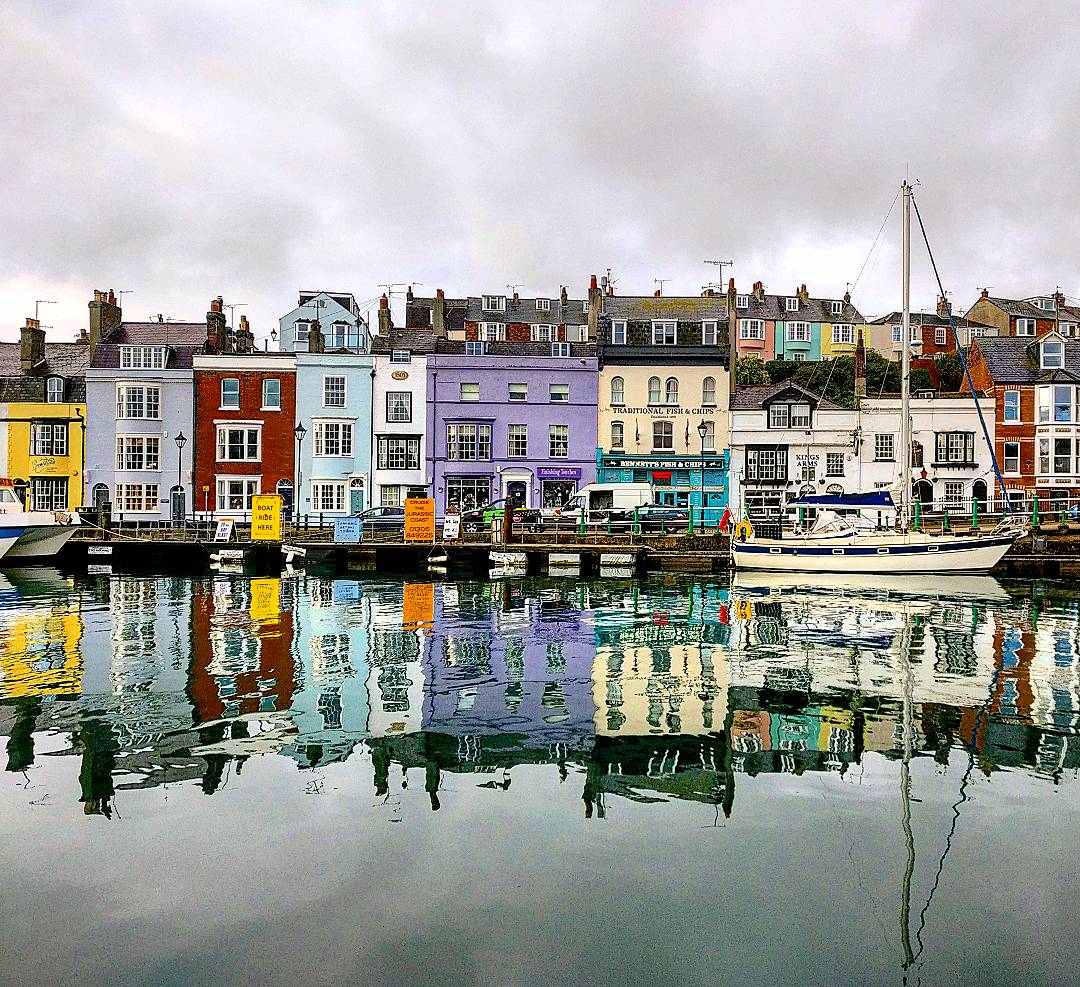
Image result for weymouth harbour


A life – part five

Adults talked of ‘War-time’ and ‘Before the War’, and ‘When Peace-time comes’. I couldn’t imagine what Peace-time was like, since it had always been War-time for as long as I could remember. Peace-time sounded something like Christmas, when we would have plenty of food, no clothes coupons and lots of toys.

But when it came, it didn’t seem like that at all. There was a big parade for something called VE day, which had something to do with Peace-time, a lot of fireworks, which I’d never seen before, and then life went back to all the same old things, only worse. The grownups seemed to be worrying about not having enough bread and potatoes, shuddering over tinned meat called Spam and outraged over the idea of eating whale-meat. But the toys, the sweets, the goodies they’d all talked about, never came.

The first big change had actually come as soon as all those hundreds of planes had flown over us to D-Day almost frightening me out of my wits. When we went down to the beach to play in the sand in the small area cordoned off with high rolls of barbed wire, the barbed wire had gone. So had all the thousands of armoured cars, tanks, lorries, guns, jeeps that had covered the beach as far as the eye could see, and all the American soldiers. (They had all gone to the dreadful ordeal of Omaha Beach I learned many years later).

All the spikes in the sea to stop the Germans coming and which stretched all along the line of beach had also gone. Until then I had thought that all beaches were covered in khaki war machines, with camouflage netting stretched over them and that all seas were ringed with big black spikes. But now we had the whole beach and were allowed to walk along the pier, attend concerts on the grandstand and meander round the ancient harbour where the Black Death had first entered England, killing up to sixty per cent of the population, and where the first death had occurred in June 1348.

Now in 1945, the next big change was when my uncle came home from Prisoner of War camp. He was no longer the gay, carefree and happy- go- lucky young man who used to bring me coloured chocolate smarties when I was a toddler. His experiences in POW camps, his life- threatening escapes and starvation in Italy behind the German lines, where he hid in a goat- hut in the mountains, and then in Florence until the allies and his brother with the 8th army liberated it, had of course changed him.

Back home at the end of the war he took up civilian life again, and began his new career as a reporter on the local newspaper. Like so many returned soldiers he was deeply hurt and angry. I was the nearest soft target for this anger and I didn’t realise that the teasing I endured was indirect anger and the result of his war… to me it felt harsh and hurtful, and I often ended up in tears.

When my father returned for a brief leave it was the same, and he was as strict as my grandmother had warned. No more Enid Blyton. No more reading the Express and the Mail, my grandmother’s favoured newspapers. Only the Telegraph or the Times. He only had a fortnight’s leave before he went back to Egypt, but had a good go at under-mining my belief in Christianity, Brown Owl and the Brownies. He drew pictures of fat angels standing on clouds with harps and in long nighties with flies on their noses, hoping that mockery would dislodge the horrifying belief in religion he had discovered in this unknown daughter. All that happened was more tears from me.

Unbeknown to me until many years later, my grandmother dissuaded him from putting these unknown children into a convent, and an orphanage for the toddler son he didn’t know, so he went back to Egypt with our futures unresolved.

It wasn’t a very good basis for beginning a new life with him and his new wife, in the spring of ‘47. I was already frightened of him, and though I had longed to have a mother, I eventually became even more terrified of my new one than of my father. In the beginning it had been different. My father was coming home with a new mother, we were told. I was so excited at the idea of being like everyone else again, with a mother and a father, that I rushed out of the house and told some complete strangers passing by, that we were going to have a new mother.

Later I pieced together the facts, that they had met on a blind date at the legendary and glamorous Shepheards Hotel in Cairo – now famous after appearing in The English Patient – but actually burned down in the riots of 1952 . My stepmother was in the Red Cross, and keeping her best friend company. The best friend and her boyfriend broke up in the end, and the two blind dates married. Like Tess of the D’Urbervilles, they spent their honeymoon at Woolbridge Manor, the beautiful Elizabethan manor I used to pass with my mother on the way to the village. Now they were now coming to claim us.

My father arrived and took us to meet her. They were staying at a hotel in town, and when my sister and I stepped out of the taxi at the foot of the long flight of white steps, a very tall lady in a navy- blue coat and very high heeled court shoes, ran down the steps towards us, and swept us into her arms with a hug and a kiss. I just loved it.

Then we spent the afternoon together, first of all having lunch and fizzy lemonade – which seemed a bit more like I’d imagined Peace-time, – and then we went for a walk round the ancient harbour, into a park, and for afternoon tea back to a place by the harbour with big oil-paintings on the walls. For the first time I looked at paintings and saw the brush strokes and the way the painter had used colour. The whole afternoon felt like stepping into a magic new world.

A week later my father came to collect us for good. I left behind my dolls and dolls pram, black board and easel, my bicycle, and our brother, on the understanding that all these things would be collected later. I never saw them again, never had another doll, and didn’t see my brother or grandmother again for years as she refused to part with my brother, causing a huge family rift. Neither did I see my uncle for many years as he had become an energetic Communist, and association with him would have destroyed my father’s security rating in the army.   So now we went to London, where our new mother was waiting. She gave us beef stew for lunch, which neither my sister or I liked, and we refused to eat it.

After lunch the father we hardly knew, except for the fortnight the previous year, took us for a walk around grey, London streets in the cold April afternoon. He told us grimly that from now on we would eat everything that was put in front of us. And from now on, we would do exactly as we were told – immediately. The afternoon seemed to get colder and greyer as he spoke, and when we went back I was totally crushed. My sister, clever, feisty and quick tempered like my grandmother, had more spirit.

The next day we went shopping, and came home with shorts and shirts like the children in Enid Blyton’s ” The Adventurous Four”, three blue summer dresses for me, blue and white stripes, blue and white checks, and a blue silk dress with tiny flowers on it. I had a new tweed  coat in blue, with a dark blue velvet collar, and my fair haired, blue-eyed sister had a yellow tweed coat with a red velvet collar.

The clothes my grandmother had made for us disappeared, my favourite tartan skirt and bolero and fine ninon blouse that went with it, a primrose coat, a pink satin party dress – all went, regardless of entreaty. I had immediate remedial exercises for my lisp, elocution lessons to rid us of lingering Dorset accents, and physiotherapy and exercises for the splay feet which I had carefully cultivated to be grownup like my grandmother. I had what would be called today, a complete makeover. It seemed after a few weeks that I was a different child… and even more insecure and uncertain. And I loved both my new parents. Especially my harsh, handsome father.

He loved books as I did. He must have learned it from his mother who he couldn’t stand.

To be continued…

 Food for threadbare gourmets

Sometimes I just want a plate of roast vegetables, but also feel I must need some protein. I kid myself that this pea-nut sauce will fill the gap. It’s quite unlike the traditional pea-nut sauce, and was dreamed up in front of me by a chef at a demonstration.
In a stick blender,  spoon a cup or more of pea-nut butter, the skin thinly peeled from a lemon, plus the juice, a good teaspoon or more to taste of dried thyme, a couple of garlic cloves, a tea-spoon of fish sauce, a dessert-spoon or more to taste of brown sugar, plenty of salt and black pepper, and a cup or more of olive oil. Just whizz everything together. And add more olive oil, thyme, pea-nut butter if you need it. It lasts for plenty of time in the fridge, and is good with baked or sauted vegetables for a light meal, and also with baked or poached salmon.

Food for thought

Most people die before they are fully born. Creativeness means to be born before one dies.                                               Erich Fromm, German philosopher, writer, psychologist and psychoanalyst who fled Nazi Germany, eventually seeking refuge in the US.


21 Comments

Filed under army, beauty, british soldiers, family, happiness, history, peace, Uncategorized

Was I a snowflake?

Image result for radipole weymouth dorset
A life – part four


When we occasionally walked past what was known as the elementary school in those days, I used to shudder. The grim Victorian building, the concrete playground and iron railings, the noise and roughness of it horrified me. I was so grateful, even as a small child, that I went to my sheltered little school.

Unlike most prep schools one reads about in that period my private school was neither cruel, sadistic or frightening – perhaps because it was owned by a woman and all our teachers were women, except for the wonderful history teacher.

Miss MacFarlane-Watts, owner and head mistress, was a tall commanding woman with thick, grey hair cut almost as short as a man’s. She wore white shirts with a tie, heavy pleated skirts, tweed jackets, thick stockings and flat lace- up shoes. Without ever having heard the word lesbian or even a discussion about genders, I knew she was different… and we all accepted her as such. School was a large Edwardian house set in tree- ringed grounds and lawns, not far from where we lived.

As a fashionista even at that age, I rather enjoyed our school uniform… white blouses and navy blue pleated tunics with a braid belt for the girls, and grey shorts and jumpers for the boys. Our hats were my real pride and joy, a big brimmed, deep crowned navy- blue, thick, velour hat for winter with a striped ribbon with the school colours, and a wide-brimmed Panama hat for summer – they were so big that we little girls must have looked like mushrooms beneath them, and it was amazing that items of such quality were still available at this point in the war. We kept these expensive hats from flying off in a wind with a piece of elastic which went under our chins. Even our gabardine macintoshes were the finest quality.

Clothes had always figured largely in my life even as a toddler, when I remember the broiderie anglais edging my white petticoat, and relished my delicate little smocked ninon dresses, one in pink, the other in blue… does anyone even know what ninon is today … a fine net covered in tiny balls of fluff is my recollection.

My grandmother inevitably had somewhat old- fashioned ideas about clothes, one of which was to kit us out in liberty bodices… a sort of cotton layer worn on top of a vest and under a jumper, with buttons round the waist to hook a skirt on. They weren’t too bad, but I shrivelled with embarrassment when she sent me to school in antique leather gaiters to keep warm. They stretched the length of my leg, and the tiny buttons running that whole length had to be prized open with a button hook to get them off… this experiment was abandoned when I couldn’t cope with getting them off for physical education!

The day we arrived at this school, the infant mistress – who seemed  enormous to me – swung my tiny blonde  sister up in the air, looked into  her big blue eyes fringed with impossibly long black lashes, and said  “Oh, what a little Topsy!”  She didn’t take to me… children always know… and a few days later, she said to my bewildered little sister: “If your sister put her head in a bucket of water, you would too, wouldn’t you?” To which my sister baldly replied “Yes”.

It was a kind environment. A few years later, when I was eight and one of the big girls, my brother started school. He was so frightened by the experience that he was sent up to my classroom, and was allowed to sit by my side at my desk for days until he was ready to cope on his own.

Lessons were archaic. We learned to write copperplate, often using badly crossed nibs to write rows of letters over and over again until we got the right angle and shape of each letter. On handwriting days, the ink monitor – (never me – I was such an introvert that no-one even knew if I could cope with such responsibility, and I was happy to be overlooked) brought the tray of inkwells in, and they were passed along the rows of desks… then the pens… inevitably there would be spills – usually by a hapless boy.

Each day began with chanting boring times tables, while we sat with our arms folded, and I sometimes think the ritual may have been a calming meditative exercise too, for we never had any rowdiness or fuss to disturb the quiet orderliness of the classroom.

Art lessons nearly broke my heart. I was so excited when it was announced that we were now old enough to begin art lessons. But it was a huge let-down. We had to learn to draw a straight line, making short feathery strokes with our pencils. After a couple of lessons when we had mastered this arcane skill, we graduated to drawing a rectangular box and tackling perspective. With this accomplishment behind us we were now ready to be introduced to colour ! Hurray! We were instructed to bring a laurel leaf with red berry attached to the stalk to school the next day. Alas, our laurel hedge had no berries, so no lovely red for me, just boring green and yellow spotted leaves.

No computers then, so we competed with pencil cases, and collections of hard-to- come- by coloured pencils. We marked our pencils by slicing off a sliver of wood to make a flat surface at the top and then inked our name on it. Indelible pencils were much sought after… you licked the lead, and this made the writing indelible… as for rubbers (erasers if you’re American) – if you lost one, or broke it in half by using it too strenuously, war-time replacements were scarce… whispers criss-crossed the classroom – “can I borrow your rubber”, “can you lend me your red pencil?”

At Christmas we were all dragooned into the Nativity play. I had no idea what it was we were doing… which was not unusual… I spent so much time dreaming that I often missed important information. On this occasion, we all trooped down to the hall nearby, and I found I was an angel along with the other small girls. I was given a triangle to ching on at various not very obvious intervals to me.

The boys seemed to have all the best parts as wise men, wicked kings, shepherds – and of course, Joseph. They also had all the best musical instruments – tambourines, and trumpets, drums and the rest- this was the moment I realised somewhat bitterly that boys/ men had advantages that we girls did not seem to have. And while we stood around in our angel nightgowns in the freezing hall, the teachers seemed to endlessly move rows of chairs around. It was all a complete enigma to me then.

The next year we passed on the nativity play as we’d lost the use of the hall to the American soldiers who used it as their dining hall. They seemed noisy and enormous – wore fur-trimmed jackets – air crew I learned later – and since our back garden abutted onto the back of this hall, showered us with chewing gum, wrapped cubes of sugar – much prized – and sometimes bars of chocolate.

My grandmother gave us three pence pocket money every week, and with this I bought a bar of chocolate every Friday from Mr Duscherer, the German grocer just up the road on the corner. Everyone knew he was German, but I never once heard a word of disparagement about him. He was a big kindly man and I used to watch with pleasure as he prized a wire through a big round of cheese when you ordered a quarter of a pound or whatever the ration was then.

He had a huge machine that cut bacon the way you wanted it – smoky, thick or thin, streaky or back… he would weigh half a pound of biscuits out from big Peak and Frean biscuit tins into brown paper bags – did biscuits not get soggy then, I’ve often wondered, as I try to break into thick layers of cellophane to get into a biscuit packet these days. He sold stamps, posted parcels – usually wrapped in scarce and re-used brown paper, tied with re-used string and sealed with red sealing wax- no ubiquitous cellotape then, and he also stocked Sunny Stories, Enid Blyton’s weekly magazine for children with the long running serial The Faraway Tree in it.

Life seemed simple and safe and satisfying, especially after my grandmother bought me a little blue bicycle, and I no longer needed to make sure that all my dolls were safely tucked up in their cot and had been kissed good night, a ritual which I needed to do when my mother was still with us, and I now recognise as psychological transference.

And with the end of the war it was all about to change dramatically.

To be continued.

 Food for threadbare gourmets

Today, I had one duck leg left over after a little feast yesterday, using a tin my son had given me, so I made a duck risotto. It was delicious. Did the usual, onions, cooked half a dozen finely chopped mushrooms, fried the rice in butter, threw in a glass of good white wine to evaporate, and then added hot stock and a good pinch of dried thyme. When it was nearly cooked, added a generous dollop of cream, some green peas, and the duck meat which shredded beautifully. And then, with duck and orange in mind, added the grated rind of an orange and the orange juice.

When ready, I covered it for ten minutes to sit and mature, then stirred in a big knob of butter and some parmesan. Served with more parmesan, green salad and glass of chilled Riesling, it was rather good.

Food for thought

It is never too late to be what you might have been.      George Eliot, great Victorian woman novelist


26 Comments

Filed under cookery/recipes, culture, family, great days, happiness, The Sound of Water, Thoughts on writing and life, uncategorised, Uncategorized, village life

The passing of an era

Image result for victorian interiors

A life – part three

My grandmother was my favourite person. Whereas I had always felt responsible for my baby brother and younger sister, when she came to look after us when my mother left, I felt I could hand over the burden.

When she moved in to pick up the reins, she brought all her Victorian past with her. Up went the heavy, red velvet curtains in the bay window in the front room where my sister and I had watched the big girls playing on their roller skates across the road, peering through the brown sticky paper, taped across the windows in diamond shapes, to stop the glass shattering in a bombing raid.

I loved the texture and the colour and richness of the velvet. I loved the shiny brass rods with the rings that clanked when the curtains were pulled, and the big brass knobs at each end. I loved the aspidistra in its brass pot standing on its tall, spindly, three -legged table. On the other hand, I hated the Staffordshire figures which were her great pride. I thought them ugly and clumsy – and still do, for that matter, though I did like her Meissen angels.

Upstairs in the bedrooms, our little utility divans were replaced with deep feather mattresses into which we sank in blissful security. The dark mahogany and rosewood wardrobes and dressing tables filled my senses with deep satisfaction. The sheen, the grain, and their generous size were comforting and solid in a world which in my experience had been bleak and insecure, able to be blown away by a bomb in the red sky of night.

I remember the pleasure of sitting at the oak dining table as I dreamily chewed my bread and jam, and gazing at her knick-knacks on the oak sideboard the other side of the room – deep, blue Wedgwood biscuit barrel for chocolate biscuits, silver- bound oak biscuit barrel for plain Vienna biscuits, and the silver stag standing at bay on a writing tray which held all her letters and bills. Brass candle sticks stood each side of the biscuit barrels. The tall, wooden, barley-sugar twisted ones on the kitchen mantelpiece over the coal range now stand on my dining table.

She boiled the kettle for afternoon tea in winter on a little cast-iron stand which hooked onto the side of the grate in the dining room fire. And there was the bliss of making toast over that fire with a long brass toasting fork. It tended to taste of flames and soot, but was warm and crisp and a great treat. The thick red and blue patterned turkey rug in front of that fire was my favourite place. Kneeling with my elbows on the rug I would bury myself in a book while I was supposed to be watching the butter soften by the fireside.

Deep in my book and oblivious to butter, duty or anything else, I would be discovered crouched by the saucer of swimming, melted, precious, rationed butter. But if I was reading I was excused. No-one ever got into trouble for reading in her house. Until the day she died she was encouraging her great-grandchildren to read, as she had always encouraged me.

Not that I needed it. I longed passionately to be able to read grownup books. My mother had already taught me to read when I finally started school at five and a half, having stayed home to keep my sister company until she was old enough to start school with me. I was forever bored as the class limped along the wall friezes which said things like ‘A for apple, ‘B’ for bat’. The teacher didn’t know I could read, and it never occurred to me to tell her. I was so shy I rarely spoke at all. I read every textbook as soon as they gave it to us, a habit I took into secondary school, so I already knew all the answers in class.

Books for children were scarce, presumably because few were printed during the war. So, when my grandmother arrived with her box loads of books, it seemed like treasure. The children’s books were my father’s First World War and Edwardian boys’ books, the plots mostly centred on some pious crisis of conscience, but which I read nonetheless. I was particularly fond of my grandmother’s bound volumes of Victorian ladies’ journals, rows of red leather binding and gold tooling, with pictures as well as stories inside.

They tended to be about Evangelical but highborn young men who possessed crisp, fair curls, and wore boaters and striped blazers, and often went punting, and they also featured swooning young women, often orphaned, but in truth, of noble blood!! I learned a lot about mourning from these tomes, and the fact that ladies wore lots of black crepe – whatever that was – and black jet jewellery for such occasions. Not that I had the faintest idea what mourning was, except that it made people cry.

My grandmother also pressed on me her books from her  Victorian childhood. ‘Froggie’s Little Brother’ was the most memorably painful, about a family living and dying in various stages of starvation and violence in the East End of London (my brother and I laughed years later that we were probably the last two people in the world to read this grim novel). There were The Wide Wide World’, ‘The Lamplighter’ and ‘Behind the Scenes’, all tales about orphans. I wept buckets over them. When I had surfaced from these agonies, there was’ A Crown of Thorns’, a suitable tale for a seven -year -old about Dutch Protestants being buried alive by the Spanish Inquisition during the time of Elizabeth 1.

I baulked at ‘Pilgrim’s Progress’. My grandmother’s big volume with the original illustrations, with Christian stuck in the Slough of Despond, and the depravities of Vanity Fair and all the rest, depressed me more than any of her other books which included ‘Foxe’s Book of Martyrs’…

Editions of Mallory and tales of Arthur, Merlin and Morgan Ie Fay in Arts and Crafts bindings, and Pre-Raphaelite illustrations with art nouveau drawings educated my eye as well as my mind. I laboriously read Defoe’s ‘Robinson Crusoe’ in one of the original editions – which my grandmother collected – another large leather-bound tome with engravings protected by tissue paper, like ‘Pilgrim’s Progress ‘and Foxe’s ‘Martyrs.’ I still remember the terrible shock when Crusoe and I found Man Friday’s footsteps on the beach!

And I read Swift’s account of ‘Gulliver’s Travels’, and later found the children’s watered-down version pallid and boring. My favourite book then is still one of my favourites, ‘John Halifax, Gentleman’. When I re- read it as an adult, I recognised many of the ethical imperatives in the novel as having influenced my thinking ever since, while ‘Uncle Tom’s Cabin’ introduced me to the concept of slavery and abolition.

Later when I unguardedly revealed to my recently returned father and his new wife  that I enjoyed ‘Little Lord Fauntleroy,’ and they laughed themselves silly over its Victorian sentiment, I feared the rest of my reading was also material for mockery, and buried its existence in the back of my mind. And since my new parents did not want to be bored with tales of our past, I never discussed these books, and much else, so was never able to put them in context.

Even the green and gold Tate and Lyle golden syrup tin which sat on the table at breakfast to use instead of rationed sugar, was worth reading and squinting at as I spooned the treacle over my porridge…’ out of the strength cometh forth sweetness’ it proclaimed. My grandmother was very pleased with me for taking her injunctions about reading so literally, and boasted to her friends about it. So whenever I was due for a present they dug into their shelves for a book suitable for a seven- year- old bookworm, with the result that I had more copies of Aesop’s fables than any other child in history, I would imagine.

She introduced me to gardening. She gave us a small plot of our own, and we went to the news-agent where they sold seeds as well as sweets, newspapers and bread, and chose the seeds we wanted to grow. I loved the name Love-in-a-mist, and since they were also blue, my favourite colour, I took several packets. Every day for the next three weeks I rushed outside in the morning to peer at my little plot of earth until the glorious dawn when I detected a faint green haze – the first sign of the green mist through which the blue flowers were going to emerge.

Like many gardeners, my grandmother couldn’t resist breaking off twigs and cuttings wherever she was, if the opportunity presented itself with dignity. But once her scruples were nearly undone by a hidden fern we passed regularly when we all walked down to the beach with my brother in his push chair. Every time my grandmother passed this wire fence with the little fern nestling there, unloved, and unseen by the people whose garden it was, she fantasised about bringing a trowel one day, and leaning over to dig it up. Finally, she couldn’t trust herself any more, and to my great relief removed herself from temptation, by going the long way round.

She was deeply religious and never missed a Sunday at the Salvation Army, which she had joined in its early days when she was a girl at the turn of the century. She told me tales of marching through the squalor of the East End being pelted with tomatoes, and trying to give the ‘War Cry ‘ to drunks outside pubs. Because the rest of the family disapproved of her ties to the Salvation Army, she sent us to a church Sunday School near us, and made sure we were as regular as she was. Consequently, I became immersed in religion. She and I were never ones to skim over a thing lightly, so I read more Bibles and Bible stories than most children of my generation.

She was obviously a highly intelligent woman who had been frustrated for most of her life – clever, feisty, quick-tempered and even in her eighties – a rebel. She could add a column of figures faster than anyone else, and her memory was phenomenal. I inherited the memory, somewhat watered down, but not the ability with figures. While her elder sister Lizzie, who was famous for being bossy, trained as a nurse, became matron of a hospital in Leeds, and shockingly for those times, lived happily with a married man, Mabel, my grandmother, married young, and unhappily. With her religious beliefs, it was a great shame to her that she was divorced.

Her memories of her late Victorian childhood fascinated me and stretched my imagination. Most important of all her stories was not her grandfather captaining the first paddle steamer up the Thames and receiving the Freedom of London when he stepped ashore, but her description of the night Woolwich Arsenal blew up.

She and her sister Jessica were in their bedroom and the windows blew out, the dressing table mirror was shattered, and the sky was red and filled with flames.’We threw ourselves down on the floor and prayed’, she said ‘We thought the end of the world had come’.

Not having the faintest idea what Woolwich Arsenal was, I was instead riveted by the phrase ‘the end of the world’. The possibility had never occurred to me, and it teased my mind with the same horror as the Victorian bogeyman she threatened to call on, who apparently had a similar facility for descending chimneys as Father Christmas.

She taught me to knit and sew and do French knitting, and embroider dozens of stitches I’d forgotten till leafing through an old Mrs Beaton cook book recently – daisy stitch, herringbone stitch, blanket stitch, chain stitch, back stitch, buttonhole stitch, cross stitch. She told me the names of flowers and saints and cousins I’d never seen, the stories of dead great uncles, of people who lived in our street – like the woman detective who went to meet the SS Montrose when it docked – to arrest the famous murderer, Dr Crippen and his mistress Ethel le Neve, who was disguised as a boy. She gave me a wealth of information and taught me prayers and proverbs and family history. Her love for me and mine for her was one of the rocks at the base of my life.

I never really knew my grandfather, her husband, and met him only a few times. He had loved another woman for seven years before my grandmother finally gave in, and they settled for divorce. The other woman’s husband was so incensed that he threw acid in her face, disfiguring her for life. My one memory of her as a four- year- old was a gentle woman with a pink blob for a face, which I had to kiss. My grandfather loved her till the day she died, some years before he did.

And since he had willed their house to her, thinking she would outlast him by years, she unwittingly made him homeless when a distant nephew inherited the house from her and turned the old man out.

To be continued.

Food for threadbare gourmets

It’s too hot to cook a meal at midday, so we’re having salady wraps instead. He has wholemeal and I have spinach, and I spread them with either mayonnaise or Caesar salad dressing. Torn crunchy iceberg lettuce leaves are spread over this, and then chopped ham, grated cheese and green peppers for him are arranged, and the whole thing rolled up and held in place with tooth-picks. I have hard- boiled egg moistened with a little vinaigrette dressing, and then chopped tomato, and grated carrot along with the lettuce and tooth-picks… filling and refreshing on a hot day. We’ll have chicken tomorrow, pastrami for him and an assortment of vegetables including cucumber, avocadoes and thinly sliced red onion…

Food for thought

When we re-examine what we really want, we realize that everything that happens in our lives – every misfortune, every slight, every loss, and also every joy, every surprise, every happy accident – is a teacher, and life is a giant classroom.   Arianna Huffington


42 Comments

Filed under books, cookery/recipes, culture, environment, family, gardens, great days, happiness, history, Thoughts on writing and life, uncategorised, Uncategorized

Bombs and a baby

 Valerie6.jpg
 A Life – Part two

We are familie-e-e-e-ee

I was staying with my grandmother when I was three. She must have had her hands full, looking after me, nursing her sister Jessie who was dying from kidney disease in the big bedroom, and coping with her maverick younger son, who was staying with her before embarking for the Western desert, to join the maverick Long Range Desert Group – a match made in heaven!

My uncle, who was unmarried, childless, and in his early twenties, spoiled me the way everyone did since I was the eldest of only two grandchildren. So now he said he would take me with him when he went to say his last goodbyes to the other side of the family. It would be an opportunity for me to meet my great-grandmother for the first time too.

We crossed London by double decker bus, and arrived at a house filled, it seemed to me, with lots of old people in dreary black and dark clothes. I was made to kiss all these tall elderly people towering over me (they were probably not more than forty!) and then we sat down to tea round a big oval table laden with cake-stands on the lace table-cloth.

The grownups got on with their conversation, and my great-grandmother, a fearsome little lady, grey and wizened, but sharp as a button, leaned down from the head of the table with a plate of small cakes, and offered me one. I reached out to take one, then drew back, realising they had currants in them. “No thank you,” I said politely.

“Why don’t you want one?” My ancient relative asked sharply.

“I don’t like currants,” I replied.

“You’ll have one,” she snapped, “I made them myself.”

So I took one obediently, and sat quietly picking out the currants so I could eat the cake parts, while the conversation flowed around me.

Suddenly a stick landed hard on my knuckles, and I cried out in pain. My great-grandmother was leaning down the tea table and had hit me with her walking stick. I pushed back my chair, slid off it, and fled into the kitchen where I buried my head in some-one’s lap (a maid?) who was sitting there, and cried my heart out. Before long, my uncle came in and I was hustled out of the house in disgrace.

When we caught the bus, with my uncle still be-rating me for my naughtiness, I was so upset, I jumped off the open double decker, and rolled into the road. I wasn’t hurt, but everyone on the bus seemed to be very angry with my poor uncle for upsetting a little girl so much that she did something so drastic to get away from him!

Back at my grandmother’s, the poor young man related the whole sorry saga to my disbelieving grandparent. “But she’s always so good”, she kept repeating as he tried to get her to understand how unfortunate the afternoon had been. My grandmother just cuddled me, and he was miffed.

Later she came to stay with us in Dorset, and I repaid her kindness by flinging myself into her lap to give her a hug, and knocking her spectacles off her nose, and smashing them. It was difficult to get anything repaired with everyone concentrated on the war effort, but she returned a few months later, and stepped down from the train smiling, wearing her repaired specs. I leapt rapturously into her arms, and knocked them off again. They lay shattered on the station paving. And she forgave me again.

When I stayed with her in London, while my brother was born back in Dorset, she taught me proverbs and rhymes and skipping games. I learned to skip down in the disused cobbled stable-yard, happily singing and chanting these traditional rhymes to myself. But I hurried inside from the garden in the dusk, fearful that Germans might be hiding behind the laurel bushes.

They might get me if I strayed too far from the big Edwardian house in which she had a flat, and I never lingered near the head- stones and graves for dead dogs, because there were so many places where the Germans might be hiding. When she visited her friends and took me with her, I overheard their conversations about where the bombs had been falling and realised that the world was a very dangerous place.

I was just four when my father came to stay before returning to North Africa after being commissioned. But then he and my mother had a row, and he packed his suitcase and strode out of the door. My mother stood weeping in the doorway, watching him go, and then she sent me after him. I ran down the lane, and he stopped, put down his suitcase, kissed me, and came home. But then it happened all over again, and this time when my mother stood in the doorway weeping, and sent me after him, he was angry, and sent me back crying.

I stood in the door with my mother and watched him go back to the war, and my heart was like a stone. I cried because he hadn’t loved me enough to come back, and I cried because I had failed my mother. There were other memories. The songs my mother sang me. She loved singing. She sang ‘Cherry ripe’, and ‘ Where the bee sucks, there suck I, and ‘One fine day’, from Madame Butterfly as lullabies…

Nine months after my father had disappeared back to the war, my baby brother was born, and we moved to a red brick villa on the outskirts of Weymouth. She used to sing the words of a pop-song then: ” You are my sunshine, my only sunshine, you make me happy when skies are grey…” It was many years before I heard those songs again, and nearly fifty years before I could bear to hear ‘you are my sunshine.’ My mother disappeared a little over a year after we moved to Weymouth. The skies had often seemed grey before she left.

After the baby was born she seemed to have lost interest in us. She had always been somewhat erratic even to a small watching child, but now she would read a book at meal-times so we couldn’t talk to her. She was often out, and we would be so hungry with no food in the house, and I felt so despairing, that I used to look for comfort at a picture in a hymnbook my grandmother had given me. It was a painting of Jesus floating on a cloud, and underneath were the words from a hymn: ‘There’s a friend for little children above the bright blue sky’.

I learned to mash Farley’s rusks with milk to feed the baby, and can remember when we had been away for the weekend with our mother, rushing in to rescue the abandoned baby in his cot, change his nappy, and make scrambled egg for the starving child. When I stood on a chair at the ironing board to iron our school uniform for the expensive private school we attended, she laughed, and said, “you’re my little slave, aren’t you – but don’t tell anyone I said that”.

The worst times were at night. If I woke I would creep along to her bedroom and very quietly open the door to see if she was there. If she was, she smacked me hard, but I didn’t mind, because she was home. If she was out, when the air raid siren screamed, I had to get my younger sister and the baby downstairs and into the air raid shelter. One night as we lay on a mattress in the shelter, my nose began to bleed heavily. I couldn’t stop it, and finally must have slipped into unconsciousness, because the next thing I knew, I was wrapped in a blanket, with my mother holding me and fire blazing in the hearth.

The worst night of all was when I lay awake for hours frozen with fear, hearing planes flying over endlessly, and certain that this was Hitler come to get us. It was only recently that I realised that this was the night of D-Day, when people all over the South of England were standing outside in their night clothes watching this great armada flying to the invasion. It was round about this time that my mother disappeared, and my grandmother left her home and friends to come and care for us – a six- year- old, a five-year- old and a traumatised fourteen- month-old baby. The next few years were the good ones.

To be continued

Food for threadbare gourmets

Having read a blog about not wasting food I felt challenged… I don’t think I do, but to be on the safe side, I used up left-overs today. I had a good serving of cooked rice, so decided to make kedgeree. Did my normal thing now of cooking the onion in the microwave before adding it to the frying pan, sprinkled a heaped teaspoon of curry powder, half a teasp each of cumin, coriander and turmeric, plenty of garlic and let them cook with the onion for a few minutes.

Having soaked half a cup of frozen peas and sultanas in boiling water, I added them to the mix to absorb the curry flavours, and then stirred in the cold cooked long grain rice. I had no smoked salmon left after making blinis endlessly for all the celebrations we’ve been attending, so opened a tin of shrimps, and stirred them in. Tasting it, I added some more curry powder, and salt. I didn’t have any fresh parsley to chop, but with a chopped hard- boiled egg each, it was a good lunch.

Food for thought

Intuition, not intellect, is the ‘open sesame’ of yourself. Albert Einstein


36 Comments

Filed under cookery/recipes, family, history, life and death, The Sound of Water, Thoughts on writing and life, uncategorised, Uncategorized, world war two

Angels and the third man


About twenty years ago a veranda on a house in Wellington collapsed under the weight of a Christmas party and all the revellers were hurled to the ground some way below.

I kept the newspaper clipping of this accident for some years to show my grandchildren. Not for any ghoulish reason, but for the story a pregnant partygoer told. She landed upright, unharmed, unlike the others, many of whom were injured. She said she felt absolutely no fear, because at the split second the veranda began to fall, a great white being held her, and deposited her safely. I wanted my grandchildren to hear from another source than their Grannie, about the reality of angels.

My lovely cleaning lady Rebecca also told me about her encounter with an angel. She was a tiny little thing, and at the time she was working on a fishing boat. It was hard physical labour for a woman trying to keep her end up in tough male society and on this voyage, she developed excruciating toothache, as well as a really bad back. Sitting on her bunk on her six- hour sleep shift, she began to weep from pain and exhaustion. Suddenly a column of light appeared beside her, and she felt enveloped in love and peace. She drifted off into a deep sleep, and when she awoke her toothache and bad back had gone, and she felt strong, happy and revived.

There are many stories of angels, and they always fill me with joy. I find the mysterious story of the extra presence on Shackleton’s expedition, when they were in dire straits very moving. As he and two other exhausted starving team members struggled over glaciers and mountains in South Georgia to get help for everyone else stranded on Elephant Island, having just endured an eight-hundred- mile voyage in an open boat through mountainous seas and hurricanes, they reported that there was always this extra person, and yet when they came to count it, it was never there.

Yet the presence was continually there, sustaining them throughout their dreadful journey, on which the lives of everyone else depended. Shackleton wrote: “during that long and racking march of thirty-six hours over the unnamed mountains and glaciers of South Georgia, it seemed to me often that we were four, not three.”

TS Eliot alludes to this in ‘The Waste Land.’

‘Who is the third who walks always beside you?
When I count, there are only you and I together
But when I look ahead up the white road
There is always another one walking beside you
Gliding wrapt in a brown mantle, hooded
I do not know whether a man or a woman
— But who is that on the other side of you.

This is sometimes called the Third Man Factor, and many survivors of shipwrecks, avalanches, fires, polar expeditions etc, describe it. Scientists and researchers rationalise that this is some sort of projection of the mind to protect us when we are in danger, or at the last gasp of our strength, which is why it happens for so many explorers, mountaineers, and in the case of the last man out alive from the World Trade Centre. That man, Ron Di Francesco described a Being who led him out of the inferno just before it collapsed on 9/11.

But what happened in what I am about to describe was different to the Third Man phenomenon, for I was in no danger, and was being cared for.

I have never seen an angel, but I felt their magic Presence on this occasion. It happened a few years ago, when I came home from a dinner party, deeply upset by the way a group of old friends had ganged up on one very vulnerable person. It was totally unlike them all, but puzzlngly, it had happened. Too churned up to go to bed, I decided to make a cup of tea, but didn’t bother to switch on the kitchen light, since the hall light dimly illuminated the space.

This was my downfall, because in the half light, I poured the boiling water from the kettle over my hand. I stepped back away from the scalding water now running over the bench, and my high heels slipped in the water spilling onto the floor. I fell backwards, pulling the kettle on top of me, thus scalding my stomach as well as both hands.

Almost insane with the pain, with the skin hanging off my fingers, I somehow rang a help-line for advice on what to do, and they sent an ambulance. Morphine and more blessed morphine got me to hospital, and once there, the doctor treating me warned me about the seriousness of the burns, and the likelihood of long-term nerve damage. My arm would be in a sling for three months and I would need long-term treatment and physiotherapy. Then I was wheeled into a side room until someone had time in Emergency to transfer me to a ward.

I lay there for three hours, during which I experienced the most blissful moments of my life. As I felt the company of heaven enveloping me in an un-earthly love, peace, joy, glory, I thanked them ecstatically over and over again for the accident, which had brought me to this place.

When I was wheeled into a ward, I felt quite wild with bliss. Back home the next day, when the nurse called to change the bandages, I knew when she took them off, there would be no wounds, and I was right. The burns were completely healed apart from some sore red patches on my stomach, on which the nurse smeared honey every day for a week, which completed the healing.

The few people I shared this experience with were divided into those who believed it, and those who said it was the effect of the morphine… except that I never needed even an aspirin for pain afterwards, since I had no pain or scars. And when I shattered my leg last year and was in hospital and on morphine for months, I never felt how I had felt that night. The Company of Heaven cannot be explained away.

So now, Christmas is here again, and probably Christmas angels are with us as usual, even though we may not see them, or feel them, or believe in them, and I remember the lovely lines of Francis Thompson:

‘The angels keep their ancient places;

Turn but a stone and start a wing!

‘Tis ye, ’tis your estranged faces,

That miss the many-splendoured thing.’

And though we may not see the many-splendoured thing, we can take comfort if we wish, in knowing that the angels do still keep their ancient places… that ’angels and archangels and all the company of heaven’ in the words of the Anglican prayer book, are not just a fancy, but a truth.

A Happy and a Merry Christmas to all my friends who read this blog.

The picture is by Guercino. An angel in flight, c.1648. Red chalk, Ashmolean Museum, University of Oxford


Food for threadbare gourmets

We had a little party to celebrate arriving in our forest two years ago… I cooked these little cheese biscuits to nibble, these amounts make about twenty. You need four ounces of butter, eight ounces of finely grated cheese, 3 ounces of plain flour, half teasp English mustard powder, quarter teasp cayenne pepper, and salt.

Cream butter and cheese with a fork, and add flour a tablespoon at a time, then the other ingredients. On a piece of baking parchment roll the mixture into a sausage about one and a half inches in diameter, and chill in the fridge. This can be made in advance and frozen if need be. Before baking, cut the roll into thin pieces the size of a coin, and cook on a baking tray for eight to ten minutes at 190C or 375 F… cool on cake rack. They’re best baked the day you need them.


Food for thought

Loveliness does more than destroy ugliness. A mere touch of it in a room, in a street, even on a door knocker, is a spiritual force. Ask the working-man’s wife, and she will tell you there is a moral effect even in a clean table cloth.

Henry Drummond, Scottish inspirational writer.


51 Comments

Filed under beauty, consciousness, cookery/recipes, life and death, love, spiritual, The Sound of Water, uncategorised, Uncategorized